

Three in four people in the U.S. say that “stress is just something I have to live with,” and that, “Bad news no longer shocks me the way it used to.”
Welcome to the New Normal for people in America: Stress for All (or most), quantified and detailed in Stress in America 2026: The Stress of Uncertainty from the American Psychological Association. 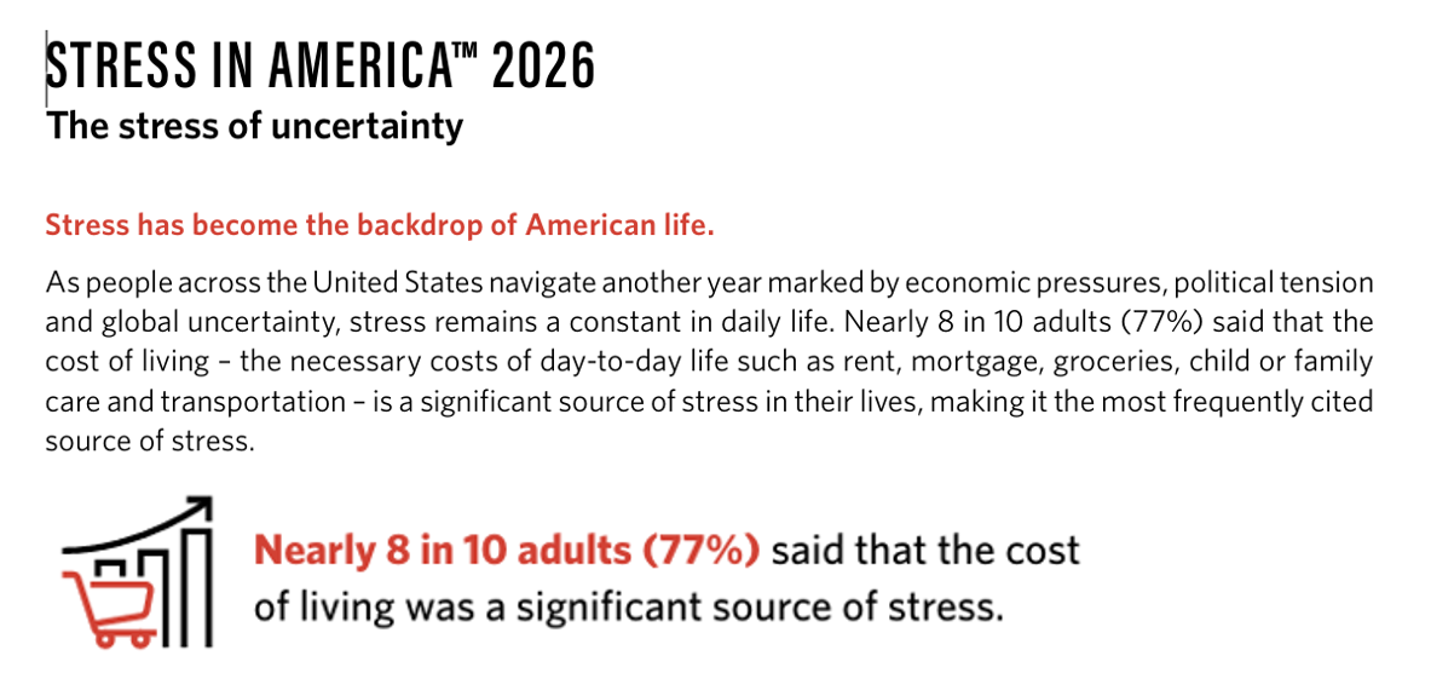
Two in three people also say they have become accustomed to living with uncertainty.
The APA conducted research online in July-August 2026 among 3,132 adults 18 years of age and over with The Harris Poll to assess peoples’ perspectives on stress.
APA has conducted the Stress in America survey for many years; I’ve covered this study perennially in the Health Populi blog, with links below the Hot Points).
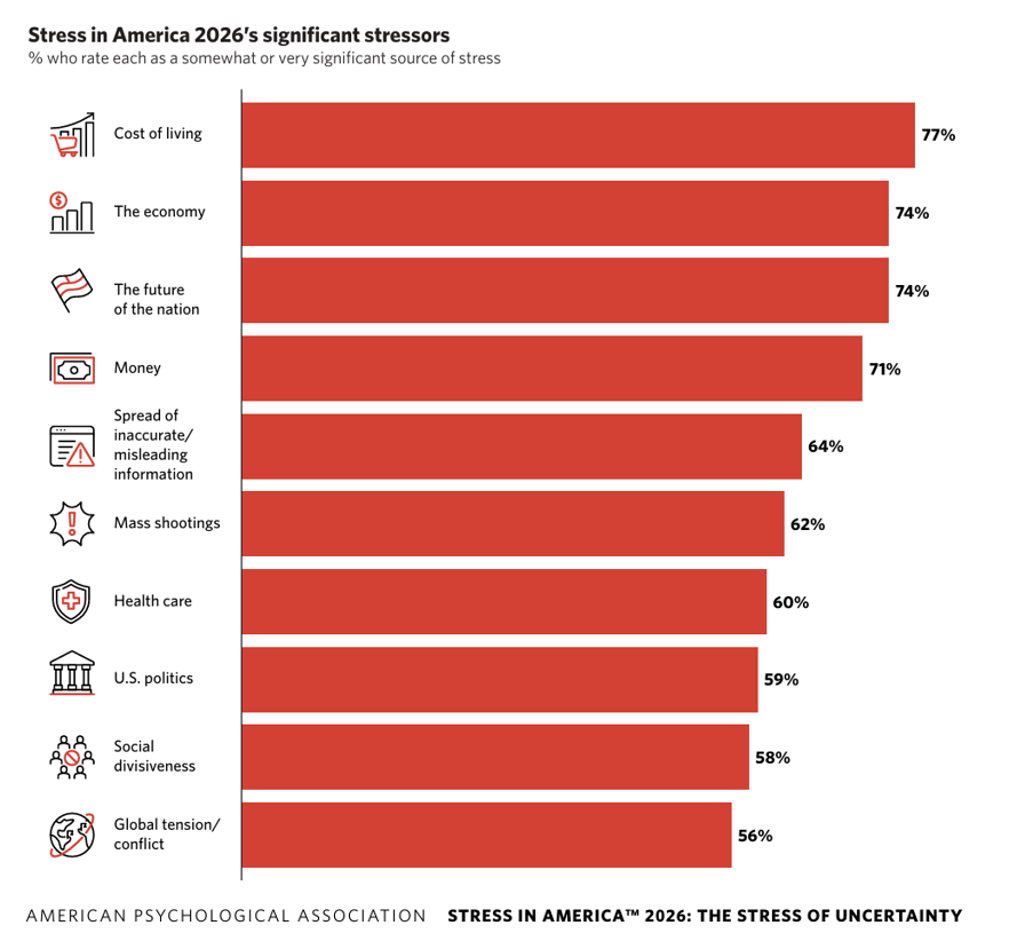
People feel stressed by many factors in daily life: in the APA poll, most Americans cited every one of the stress-items surveyed in the study, with 3 in 4 noting the cost of living, the economy, the future of the nation, and money — thus, three of the four most-cited stress factors had to do with financial matters. But even the lowest-mentioned stressor, global tension and conflict, got 56% of consumers noting that source of stress, so geopolitics are also stressful for most people in America in late summer 2026. 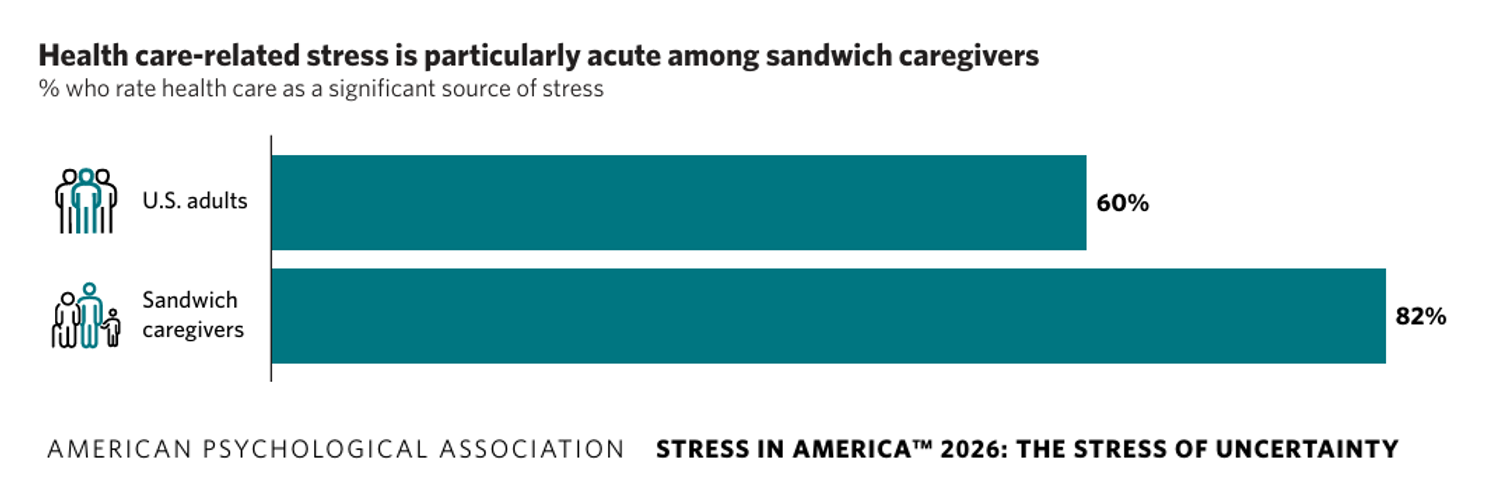
See that 3 in 5 U.S. consumers say health care is a significant source of stress: for sandwich caregivers, that spikes up to 82%. a challenge duly noted and attended to by my colleague and friend, Alexandra Drane in her work with ARCHANGELS. (Check out her latest TEDx Talk here on, Sex, Drugs, and… Caregiving?)
There are some social and mental health issues that consumers are dealing with caused by the stress they are feeling. For example, one-half of U.S. adults are withdrawing from social participation due to stress, such as 37% pulling back from social activities or gatherings, 27% reducing participation in hobbies or activities they had previously enjoyed, and 16% reducing participation in community activities.
The coping mechanism for replacing connection could be AI — with 49% of U.S. adults using AI to engage in conversations as a friend, 49% using AI to discuss relationships, and 47% using AI to act as a mental health professional. These behaviors are more commonly adopted by younger people 18-29 years of age compared with those over 30.
Health Populi’s Hot Points: For more insights into APA’s Stress in America research, you can read my past years’ takes on this always-informative, insightful research:
2024 – America in a World of Turmoil
2023 – Everyone Is Stressed in America
2022 – Mental Health Risks in 2022
2021 – Stress in America, One Year Into the Pandemic
2020 – Stressed Out by COVID-19 and Civil Unrest
 It was an honor to be
 January 2027 is in our sights, and that means we're making plans for #CES2027. I've attended the largest consumer electronics show for nearly 20 years, tracking the evolution of digital health which enables people for greater self-care and health agency and literacy. I'm looking forward to collaborating on this webcast with fellow CES experts in their fields to brainstorm what we expect in this
 Jane joined host Dr. Geeta "Dr. G" Nayyar and colleagues to brainstorm the value of vaccines for public and individual health in this challenging environment for health literacy, health politics, and health citizen grievance.