


- Content & compliant, 29% of Americans
- Sick & savvy, 24%
- Online & onboard, 8%
- Shop & cave, 2%
- Out & about, 9%
- Casual & cautious, 28% of the population.
With an eye toward the next Health 2.0 meeting convening in San Diego on 3 March, it’s great to see the category, “online and onboard.” These are the consumer digerati who are health-wired and, as Deloitte puts it, are “demanding enhanced online access to all facets of health care.” But the power of the Internet in health goes beyond these 8% cutting-edgistas; overall, 60% of Americans want online access to doctors, medical records, test results and appointment scheduling. Nearly 1 in 2 people are interested in keeping a personal health record — these tend to be Gen X folks and women. Surprisingly, 1 in 4 people said they’d pay for these kinds of services.
Health Populi’s Hot Points: What’s most exciting about Deloitte’s findings is that a majority of consumers are looking for better service, personalization, and tools to make their health care experience ‘their’ health care experience. 78% of Americans want to customize their health insurance. People are looking to health plans to help them support clinical decision making, and they’re looking for custom-fit services — not just a package at a set price, but value for a price. And that value will be determined by the consumer him/herself. Some 12% of consumer said they’d even be willing to pay something out-of-pocket to access health management tools.
There’s a phrase used in social media circles that describes consumers as, “We the People, Formerly Known as the Audience.” Now, in the context of the Deloitte study, consider: “We, the People, Formerly Known as Patients.” They’re more than ‘health can consumers,’ and we must understand them in a context beyond what’s come to be thought of as “consumer-driven health care.” The health consumer v2.0 will co-create, along with other aspects of her life, her health plan, her health services, and…her health.
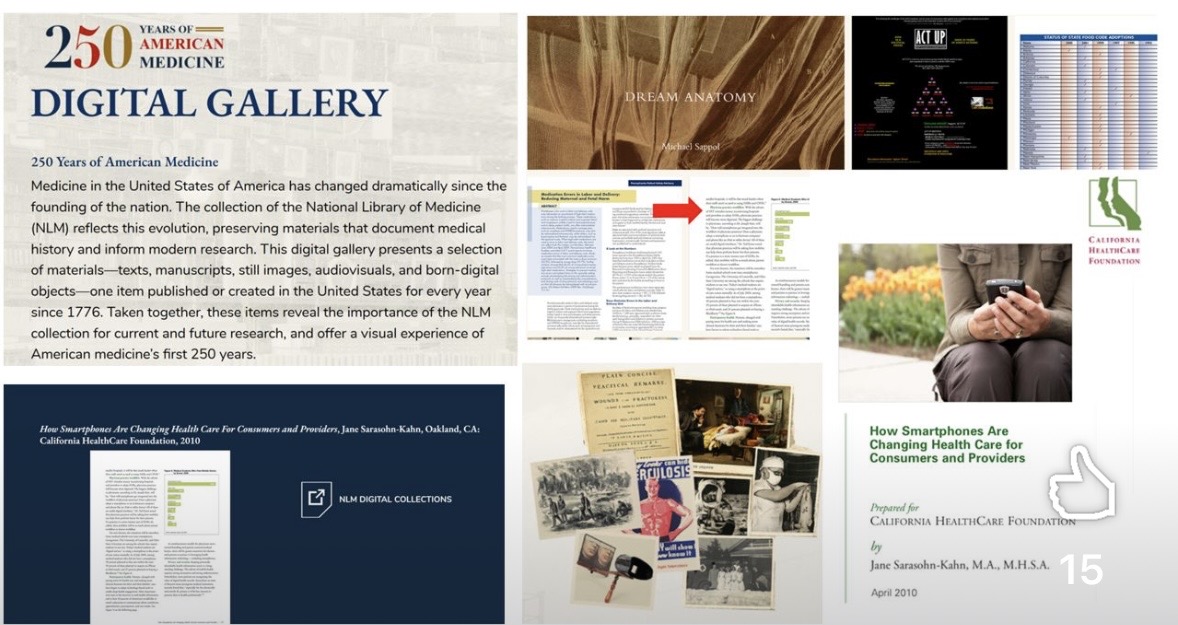 I’m celebrating America’s 250th birthday both patriotically and professionally, honored that the NLM included my 2010 paper, “How Smartphones Are Changing Healthcare for Consumers and Patients” as one of 250 items curated for the digital archive of 250 Years of American Medicine.
 I'm grateful to be part of the Duke Corporate Education faculty, sharing perspectives on the future of health care with health and life science companies. Once again, I'll be brainstorming the future of health care with a cohort of executives working in a global health care enterprise.
 Jane joined host Dr. Geeta "Dr. G" Nayyar and colleagues to brainstorm the value of vaccines for public and individual health in this challenging environment for health literacy, health politics, and health citizen grievance.