


One of the main changed behaviors for their behaviors in this situation is that 7 in 10 say they’re shopping based on price. The importance of The Brand has seriously waned. It’s all about couponing on and offline, reading peer consumer reviews online to research purchases very carefully.
Health Populi’s Hot Points: On the health front, IRI found that between 30% to 47% of consumers are buying less healthy products, and fewer fresh produce and organic items.
Furthermore, consumers are cutting health costs by deciding to self-treat at home versus visiting a doctor and increasing their use of over-the-counter meds. This finding agrees with the recent Kaiser Family Foundation poll, shown here.
Self-care includes people using the Internet for health counsel versus asking their doctors: some 44% of IRI’s surveyed consumers said they’re “trading their doctor for information on the Internet.” One-half of these people say they’ll continue to do this in the future.
In America, health care continues to morph into a consumer good. At the same time, IRI’s findings speak directly to the need for a patient-centered, primary care medical home.
 Jane will be working with EU- and UK-based clients in September and October 2026, collaborating with stakeholders in digital health, public/community health, retail health, and growing opportunities for health-at-home. Stay tuned to her updates here on Health Populi on-the-ground as she lives the digital nomadic work-life in Italy, Belgium, the Netherlands, and in London.
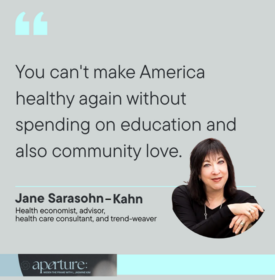 I was grateful to be Jasmine's first conversation-guest on her new podcast,
  Jane joined host Dr. Geeta "Dr. G" Nayyar and colleagues to brainstorm the value of vaccines for public and individual health in this challenging environment for health literacy, health politics, and health citizen grievance.