

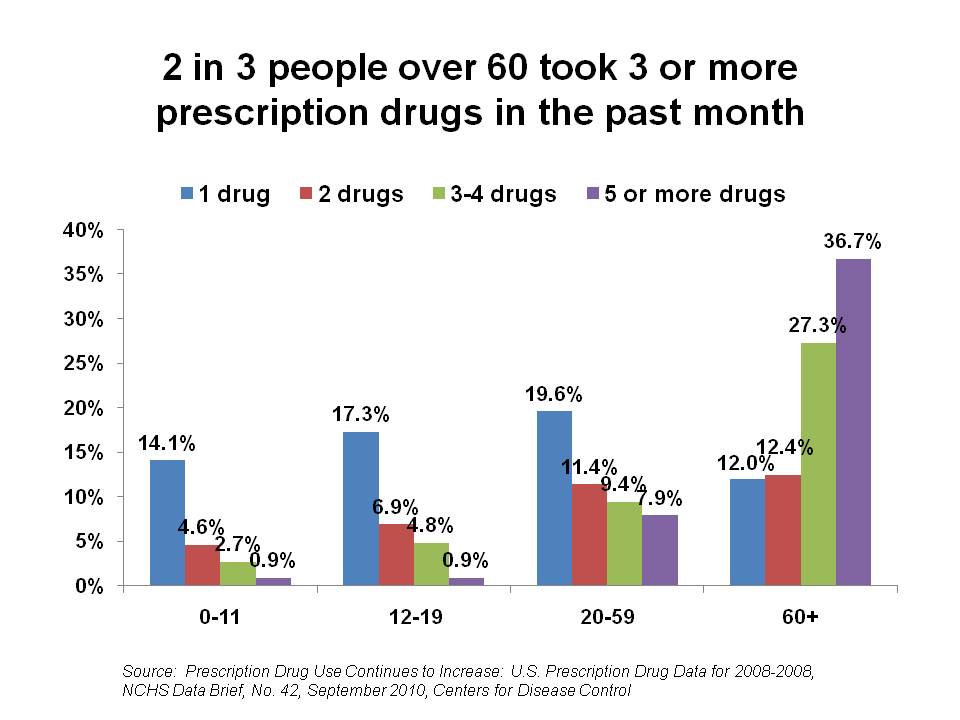
 In 2008, 2 in 3 people in the U.S. over 60 took 3 or more prescription drug medications in the past month, and 14% of kids 11 and under regularly took an Rx. The CDC’s National Center for Health Statistics latest issue brief on prescription drug use illustrates that prescription drugs are as much of American popular culture and life as fast-moving consumer goods.
It’s the more intense use of Rx drugs, 5 or more, where the most significant growth has been since 1999-2000, when 6.3% of Americans took 5 or more prescription drugs in the past month. In 2007-8, the proportion was 10.7%, representing a growth rate of 70%. Between 1999 and 2008, the growth rate of Americans taking 1 or more Rx drugs rose from 43.5% to 48.3%, only 11%.
Underneath these numbers are some interesting differences across gender and race. Women tend to take more prescription drugs than men: 53.3% of women took at least 1 Rx drug in the past month, versus 43.2% of men. White people consume more Rx drugs than Black or Hispanic Americans: 54.3% versus 42.0% and 33.9%, respectively.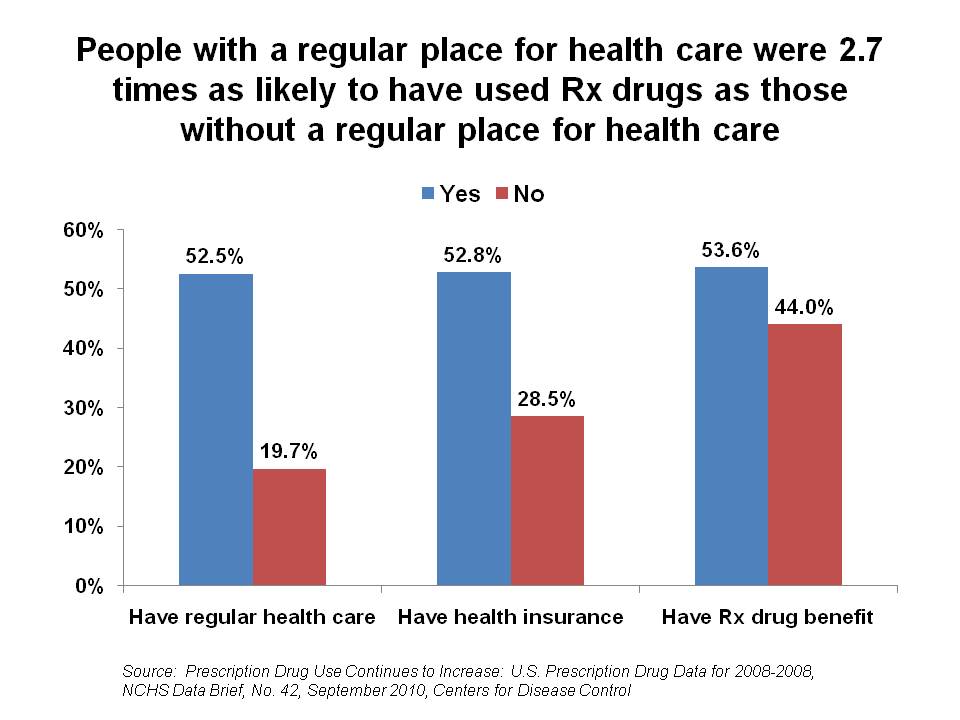
When it comes to health insurance coverage, it is not surprising that people with insurance consume more Rx drugs than people without health insurance; however, it’s the difference that’s worth noting: 52.8% compared with 28.5% for the uninsured. CDC calculates that people with a regular place for health care were 2.7 times as likely to have used prescription drugs in the past month as those without a regular place for health care.
Health Populi’s Hot Points: Note the conditions treated in Prescription Drug Nation, by age: for kids under 11, it’s about asthma and allergies; for adolescents 12-19, Rx consumption has to do with managing ADHD, asthma, and depression. For adults 20-59, the focus of prescription drugs is on cholesterol lowering, pain relief, and anti-depressants. And, for people over 60, drugs deal with heart disease: diuretics, beta-blockers, and cholesterol-lowering drugs. CDC points out that for heart disease management, the higher consumption of these drugs may be in response to updated clinical guidelines.
Think about what a medical home will do for the millions of uninsured who will have access to health insurance in 2014, and even before in the case of adult children on their parents’ health insurance plans. The logic trail leads to greater Rx consumption for the newly-insured who will have health insurance and a regular place to receive care, and thereby, a drug prescriber.
As much of a Prescription Drug Nation as the U.S. is in 2010, 2014 will undoubtedly see greater Rx utilization. However, this won’t necessarily benefit all Big Pharma companies equally, depending on their portfolio mix. The scenario will, however, benefit many generic drug companies who cover asthma, depression, and heart disease, among other well-prescription meds.
 Thank you
  Jane joined host Dr. Geeta "Dr. G" Nayyar and colleagues to brainstorm the value of vaccines for public and individual health in this challenging environment for health literacy, health politics, and health citizen grievance.
  I'm grateful to be part of the Duke Corporate Education faculty, sharing perspectives on the future of health care with health and life science companies. Once again, I'll be brainstorming the future of health care with a cohort of executives working in a global pharmaceutical company.