

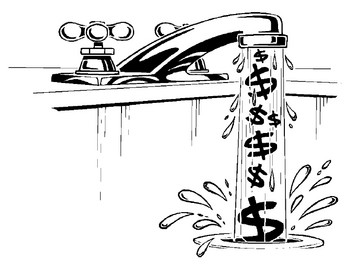
 Contrary to popular health economic wisdom, the group purchasing organization (GPO) raises costs for its constituents — hospitals — according to a study by two respected economists, Robert Litan and Hal Singer.
Do Group Purchasing Organizations Achieve the Best Prices for Member Hospitals? An Empirical Analysis of Aftermarket Transactions found that hospitals could have saved, on average, 10 percent between 2001 through 2010 when they purchased medical devices aftermarket, when GPOs supposedly negotiated the best price; and, in 2010, the savings for hospitals was as much as 18 percent for purchases. The researchers analyzed 8,100 transactions from the MEMdata database.
The authors recommend changing the incentive-payment regime for GPOs by reinstating the Medicare anti-kickback statute of the 1986 Social Security Act. Doing so would reduce private U.S. health care expenditures by up to $25 billion a year, based on Litan’s and Singer’s math. Federal spending would fall by about $11.5 billion a year.
The objective of the GPO is to negotiate the best prices for supplies and equipment for member organizations (generally hospitals and physician groups). GPOs make money by taking a share of the revenues generated under the contracts they strike for their members; that incentive ranges from 2-3 percent to as much as 18 percent, according to the Government Accounting Office (GAO). The question Litan and Singer ask is whether the margin earned by GPOs distorts healthy market competition.
The conclusion: “so long as GPOs are compensated via an equity interest in the concession, they have an inherent conflict that limits their ability to negotiate the best prices for their member hospitals and those hospitals (and their payors, including the federal government) will likely continue to overpay for medical devices.”
Health Populi’s Hot Points: As the U.S. looks to bend that stubborn, upwardly-mobile health cost curve, Litan and Singer point to yet another source of health price/cost inflation: the GPO, and its incentive structure.
There are many examples of savvy health care purchasers who have avoided joining GPOs to purchase supplies and devices on the market on their own. The L.A. Times found, in 2005, that a group of oncologists at UCLA who contracted with drug suppliers themselves saved hundreds of thousands of dollars that otherwise would have gone to Novation, the university’s drug contract GPO.
This study was commissioned by the Medical Device Manufacturers Association (MDMA). It is in their best interest to ensure as open and free a market to drive good prices to end-user customers. In this case, though, the researchers have done their homework and have come up with an important finding that should be addressed by policymakers and regulators in the larger context of health reform.
 Thank you
  Jane joined host Dr. Geeta "Dr. G" Nayyar and colleagues to brainstorm the value of vaccines for public and individual health in this challenging environment for health literacy, health politics, and health citizen grievance.
  I'm grateful to be part of the Duke Corporate Education faculty, sharing perspectives on the future of health care with health and life science companies. Once again, I'll be brainstorming the future of health care with a cohort of executives working in a global pharmaceutical company.