

 What happened when Rosie the Robot started ordering Jane Jetson around? Not a happy scenario for the Jetsons family.
The same scenarios can be played out in the future of the Internet of Things (IoT) without attending to people-centered design principles, and for the home — women-centered design and ethos. The design process can play out future scenarios and anticipate unexpected consequences that can, ultimately, inform delightful user experience.
Women are t he Chief Household Officer, making the majority of home-based financial decisions. In fact, increasingly, women are taking on the job of Chief Financial Officer at home, too.
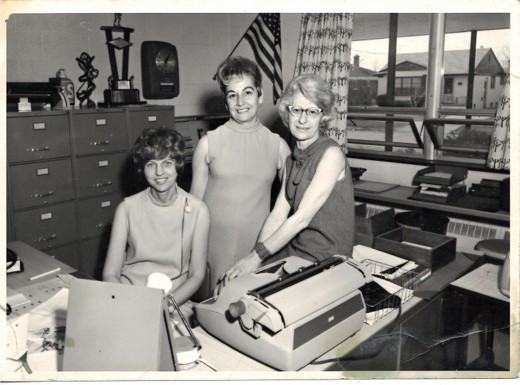
To learn more, and how my mother’s early adoption of the IBM Selectric gives us useful lessons for our future living with the IoT, read my latest column in the Huffington Post — Mom, the Selectric, and the IoT for Health. (Mom, Polly Sarasohn, is seated at left, her IBM Selectric at the ready).
Health Populi’s Hot Points: I’ve covered related issues on smarthomes and connected health-at-home in Health Populi here in the post, How Smart Do You Want Your Home to Be? and in the Huffington Post special section on IoT for the 2015 SXSW conference here – The Internet of Things for Healthcare – Technology for Good in the HuffPo.
The health and personal data privacy and security implications are only beginning to be explored. For a peek into what HIPAA-un-covered data leakages can mean, see my paper written for the California HealthCare Foundation, Here’s Looking at You.
 Jane joined host Dr. Geeta "Dr. G" Nayyar and colleagues to brainstorm the value of vaccines for public and individual health in this challenging environment for health literacy, health politics, and health citizen grievance.
  I'm grateful to be part of the Duke Corporate Education faculty, sharing perspectives on the future of health care with health and life science companies. Once again, I'll be brainstorming the future of health care with a cohort of executives working in a global health care enterprise.
 Jane will be working with EU- and UK-based clients in September and October 2026, collaborating with stakeholders in digital health, public/community health, retail health, and growing opportunities for health-at-home. Stay tuned to her updates here on Health Populi on-the-ground as she lives the digital nomadic work-life in Italy, Belgium, the Netherlands, and in London.