

 U.S. counties with better health have better performing economies. There’s a direct link between healthy people and a healthy economy, where healthier regions enjoy lower unemployment and higher incomes, according to the Blue Cross Blue Shield Health Index.
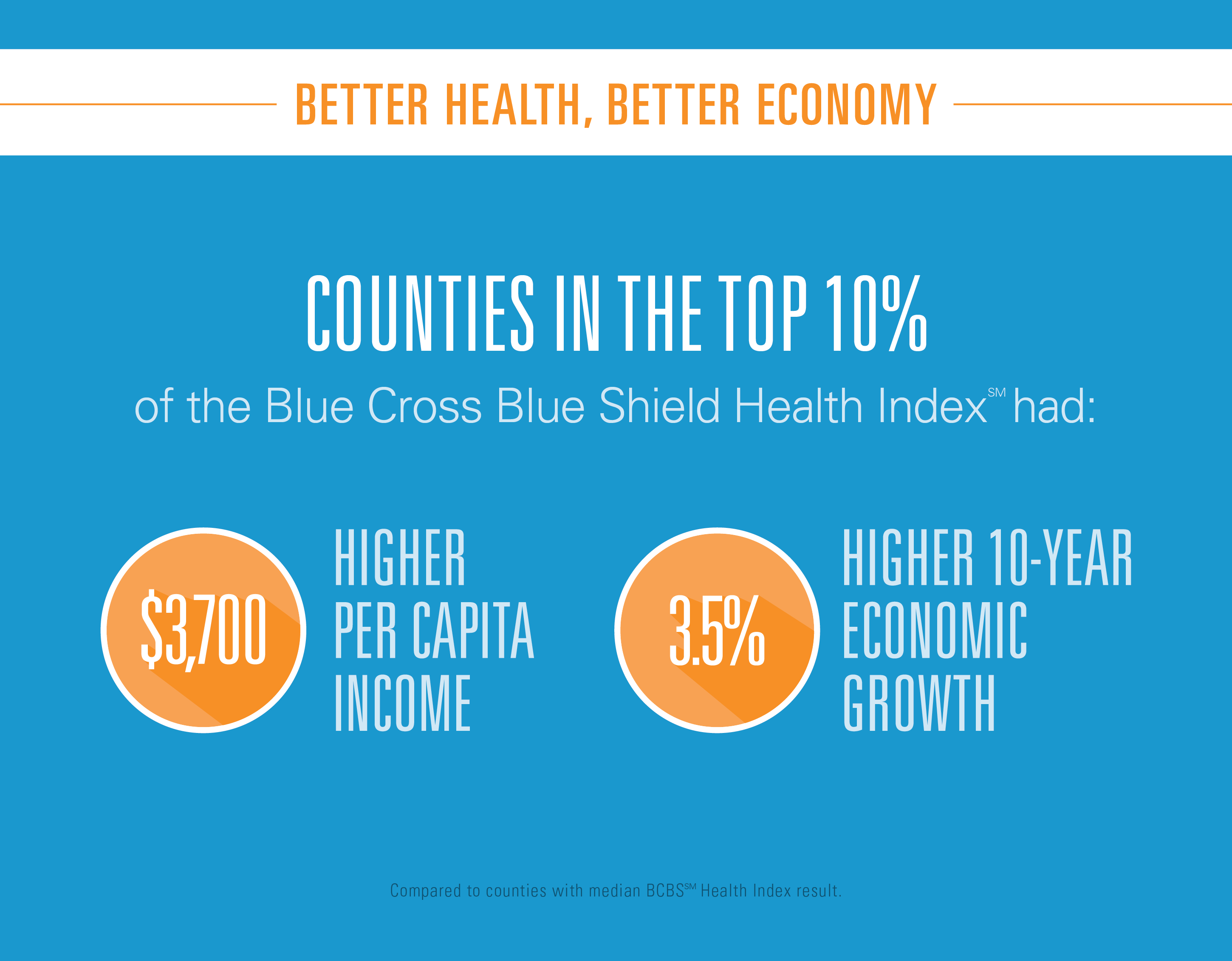
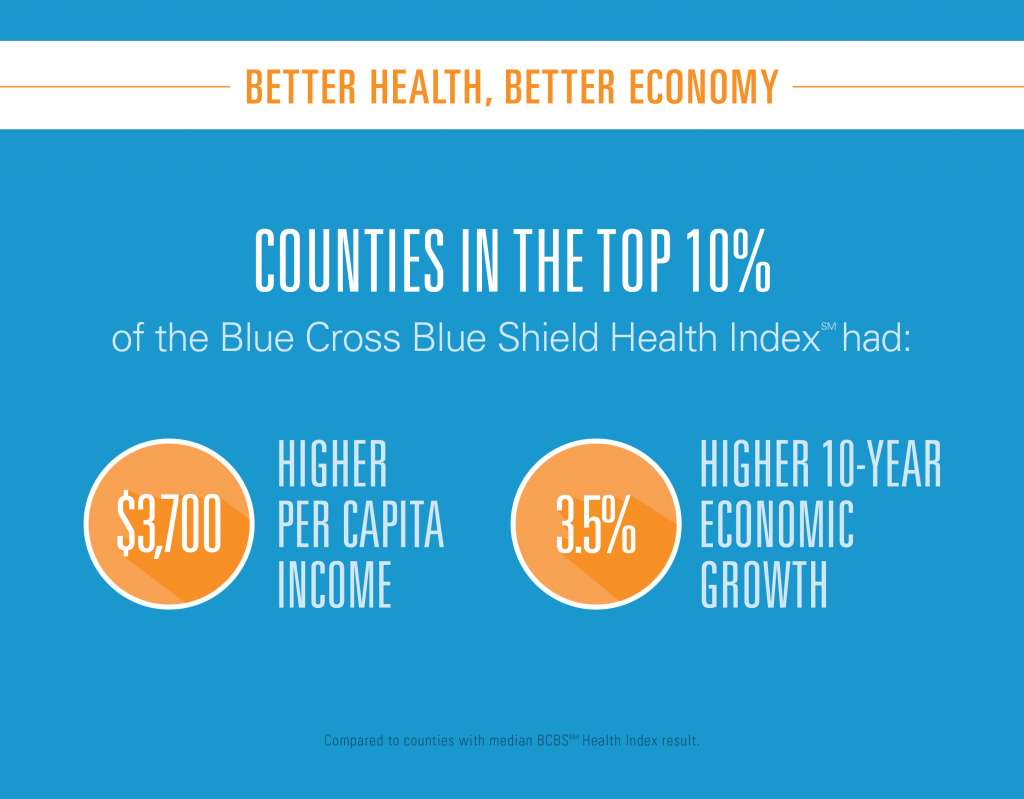
When compared to counties with a median BCBS Health Index score, counties within the top 10 percent had:
- A per capita income that’s $3,700 higher than the median
- 10-year economic growth that’s 3.5% higher
- An unemployment rate half a point lower.
The Blue Cross Blue Shield Association (BCBSA) worked with Moody’s Analytics (part of the Moody’s financial services company) on this second edition of this research.
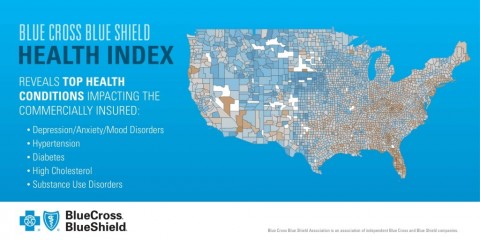
The research mined the data for 40 million commercially-insured members of Blue Cross and Blue Shield plans, and found that five conditions are responsible for 30% of peoples’ ill health: depression, anxiety and other mood disorders; hypertension; diabetes; high cholesterol; and substance use disorders.
 Health Populi’s Hot Points: Healthier populations means healthier workers, and healthier workers are more productive and employed. This drives local economic health, BCBS and Moody’s conclude.
Moody’s broke out the statistical regression analysis in the report, which demonstrates some intriguing results, including these three statistically significant data points:
- The average annual pay for people with higher health scores is $50,354, compared with people of lower health status earning $44,562 a year.
- Employment growth rate over 5 years was 8.6% for healthier counties and 5.5% for the less-healthy; over 10 years, the growth rate for jobs was 15.2% for the healthy areas but only 6.8% for the less-healthy.
- When unemployment fell in an area, its health score rose.
Note the five key conditions that most negatively impact a community’s health: depression, anxiety and other mood disorders; hypertension; diabetes; high cholesterol; and substance use disorders. In summary, mental/behavioral health, and the diseases related to cardiovascular and metabolic conditions that are largely driven by lifestyle [(food/nutrition, activity/exercise, smoking (don’t)]. Addressing the factors that underlie these areas would move the needle toward health and financial wellness.
Driving personal, population, and public health drives economic development and financial wellness to the individual and community. The BCBS/Moody’s research reinforces what many of us health economists have evangelized for decades: that health is wealth and wealth, health.
 Thanks to Jennifer Castenson for
  Jane joined host Dr. Geeta "Dr. G" Nayyar and colleagues to brainstorm the value of vaccines for public and individual health in this challenging environment for health literacy, health politics, and health citizen grievance.
  I'm grateful to be part of the Duke Corporate Education faculty, sharing perspectives on the future of health care with health and life science companies. Once again, I'll be brainstorming the future of health care with a cohort of executives working in a global pharmaceutical company.