


A new report talks about the health risks of our demand for instant-everything. “Today, we expect all information to come fast and free,” writes the Center for Medicine in the Public Interest. That expectation can lead to disastrous consequences in the context of accessing health information without questioning its source.
The “fast” expectation is proliferating every aspect of our lives. Here’s but one example I’ve been using lately with my clients: a few years ago, I noticed a proliferation of packaged foods to enable the busy householder to cook slow food, faster. One of these is pictured on the left (sorry, Betty, but it’s a prime example of what I’m talking about).
I’m a member of Slow Food, an organization dedicated to eco-gastronomy – the c onnection between plate and planet. While I’m all for convenience, and often use my helpful Rival slow cooker, the idea of getting help for slow cooking out of a box seems like a culinary oxymoron. Who doesn’t have time to slice a few carrots, dice a potato, or cut up a chicken?
 onnection between plate and planet. While I’m all for convenience, and often use my helpful Rival slow cooker, the idea of getting help for slow cooking out of a box seems like a culinary oxymoron. Who doesn’t have time to slice a few carrots, dice a potato, or cut up a chicken?
The irony of this helper-in-a-box just struck me, hard. It also reminded me that consumers of all sorts — whether busy parents shuttling kids around for after school activities, Blackberry toting working parents, or TiVO-trained immediate gratification media addicts — were all experiencing, to some extent, a form of attention deficit.
The sound byte, the instant message, the 2-minute elevator speech, the short opinion blog-as-news…the negative implications for health were becoming clearer to me. My clients — whether they were launching direct-to-consumer advertising for drugs and medical devices, IT companies developing consumer-facing health information or hardware, and health providers marketing to patients — all heard my message, over and over: note the consumer’s declining attention span, and what it means for your message and media choices.
And for the public’s health.
The Insta-Americans report from CMPI is subtitled, “The Empowered (and Imperiled) Health Care Consumer in the Age of Internet Medicine.” Based on their research on Internet health websites, CMPI concluded that, “as a culture, we are increasingly prone to want answers instantaneously. But, when it comes to our health, this may not be the wisest course of action.”
Health Populi’s Hot Points: I could not agree more with CMPI’s findings. There are certain aspects of modern life that require more than a minute or two of our time. Health is one. Perhaps we should start a Slow Health movement? One contributor to a Slow Health movement would be to pay primary care clinicians to spend more time with patients to listen and to advise. For now, though, let’s at least work on ourselves and with those whose lives we touch (who may be consumers or other health stakeholders) to slow down when it comes to analyzing and consulting with health information. Oh, and while I’m thinking about it, cooking and eating as well….
 One of the best aspects of my work is collaborating across the health/care ecosystem to address how health citizens can deal with health care costs and and care for families. I'm grateful to have collaborated with Fidelity on their research into this issue,
 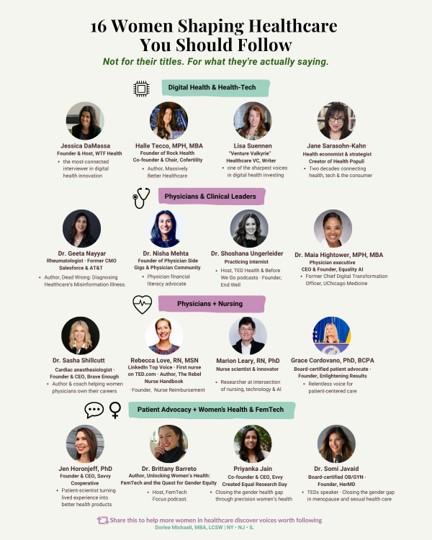 I'm gratified to be named on
 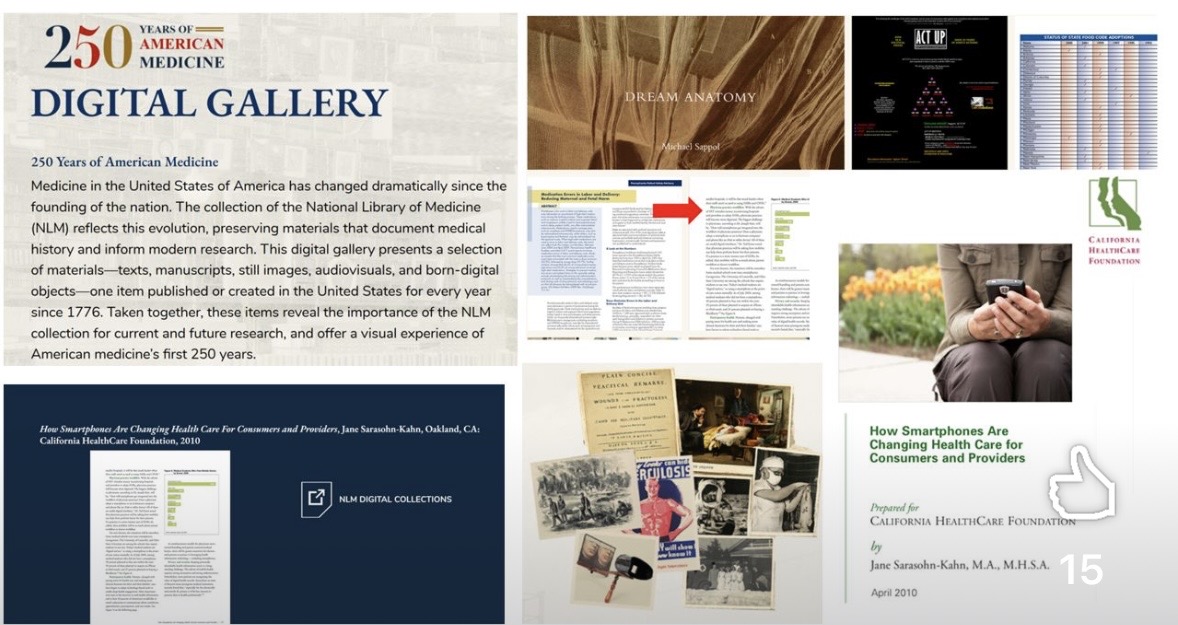 I’m celebrating America’s 250th birthday both patriotically and professionally, honored that the NLM included my 2010 paper, “How Smartphones Are Changing Healthcare for Consumers and Patients” as one of 250 items curated for the digital archive of 250 Years of American Medicine.