

I wrote my heart-health update from #CES2020 this morning, curating a little portfolio of digital health tech announced this week in Las Vegas that could put our heart-health in our hands, mirrors, clothing, and bathroom mats.
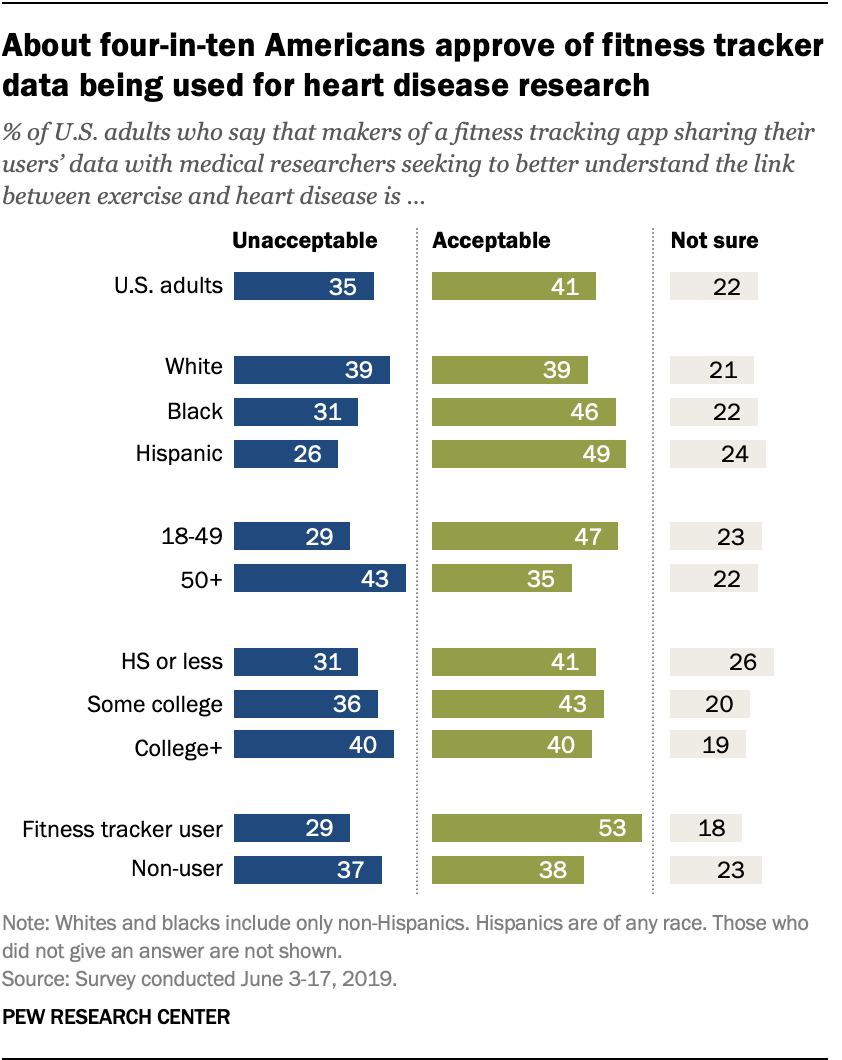
Imagine my delight to find consumer research published this week by the Pew Research Center on wearable tech adoption and perceptions. And the perfect data point to complement my CES heart-health discussion here — that 4 in 10 U.S. adults would allow a fitness tracker supplier to share the user’s personal health data with researchers to study heart disease.
It’s also encouraging that 1 in 5 people still weren’t sure if they would share their data. The downside is the 1 in 3 people would not wish to share their data.
But notice the age breaks — that many more younger people would be willing to share data for research, compared with olders — and more of those who wear a tracker more willing to share data, getting the value proposition of crowdsourcing personal health data.
 Thanks to Jennifer Castenson for
  Jane joined host Dr. Geeta "Dr. G" Nayyar and colleagues to brainstorm the value of vaccines for public and individual health in this challenging environment for health literacy, health politics, and health citizen grievance.
  I'm grateful to be part of the Duke Corporate Education faculty, sharing perspectives on the future of health care with health and life science companies. Once again, I'll be brainstorming the future of health care with a cohort of executives working in a global pharmaceutical company.