

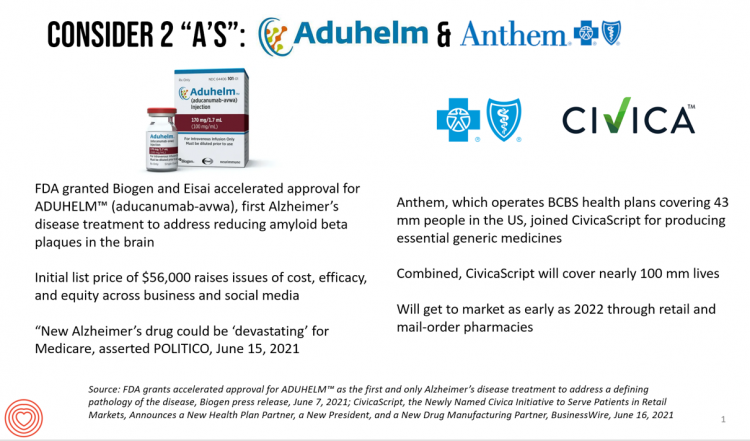
The FDA’s approval of the first therapy to treat Alzheimer’s Disease in over twenty years brought attention to a not-yet-convened debate of U.S. health care costs and spending, innovation, and return-on-the-investment (as well as “for whom” do the returns accrue).
 In my latest post for Medecision, I explore different angles on the Aduhelm and Alzheimer’s discussion, covering:
- The macro- and micro-economics of Alzheimer’s and the $56,000 list price for the drug
- The FDA regulatory process and aftermath
- U.S. consumers’ bipartisan support for drug price regulation through Medicare negotiation and private/commercial sector adoption
- Congressional legislation addressing the price of medicines in the U.S., and
- Future prospects for value-based pricing of medicines and health care.
I concluded the essay by mentioning Eli Lilly’s FDA application for expedited review for their new Alzheimer’s disease therapy, begging the question: how much will it be priced, and for which patient population(s)?
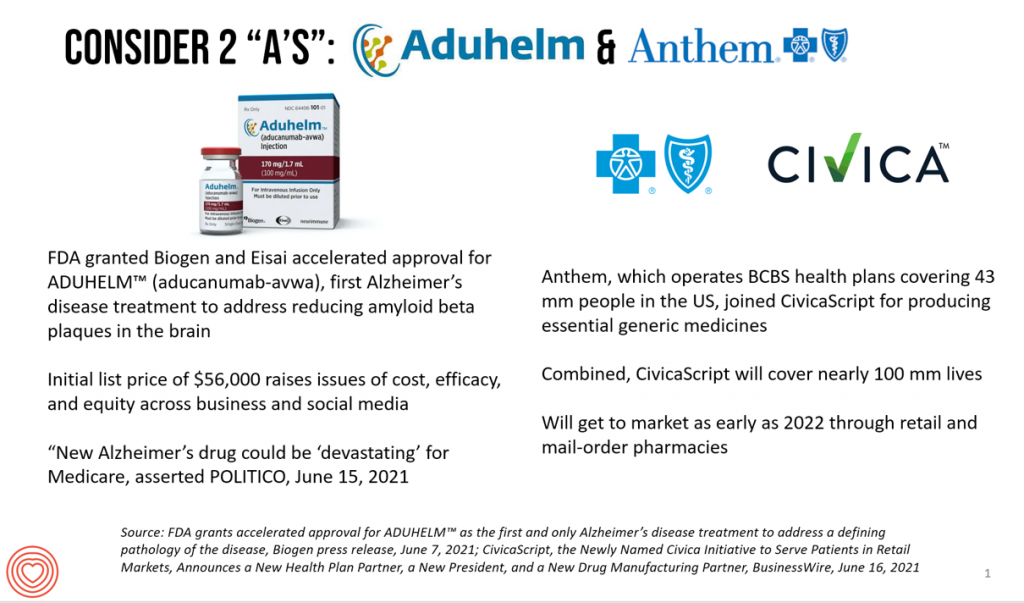
I developed this chart for a project addressing our current state of health economics and value-based health care. This illustrates the tension between the cost of specialty drugs and pharma/bio innovation vis-a-vis the role of generic medicines to expand access and deliver value-based care using proven mature therapies. Anthem’s joining up with the CivicaRx program is a signal for that trend.
Do check into the post on the Medecision site to gain insights into the specifics and larger story about who will pay for innovation in health care — in the U.S. and beyond.

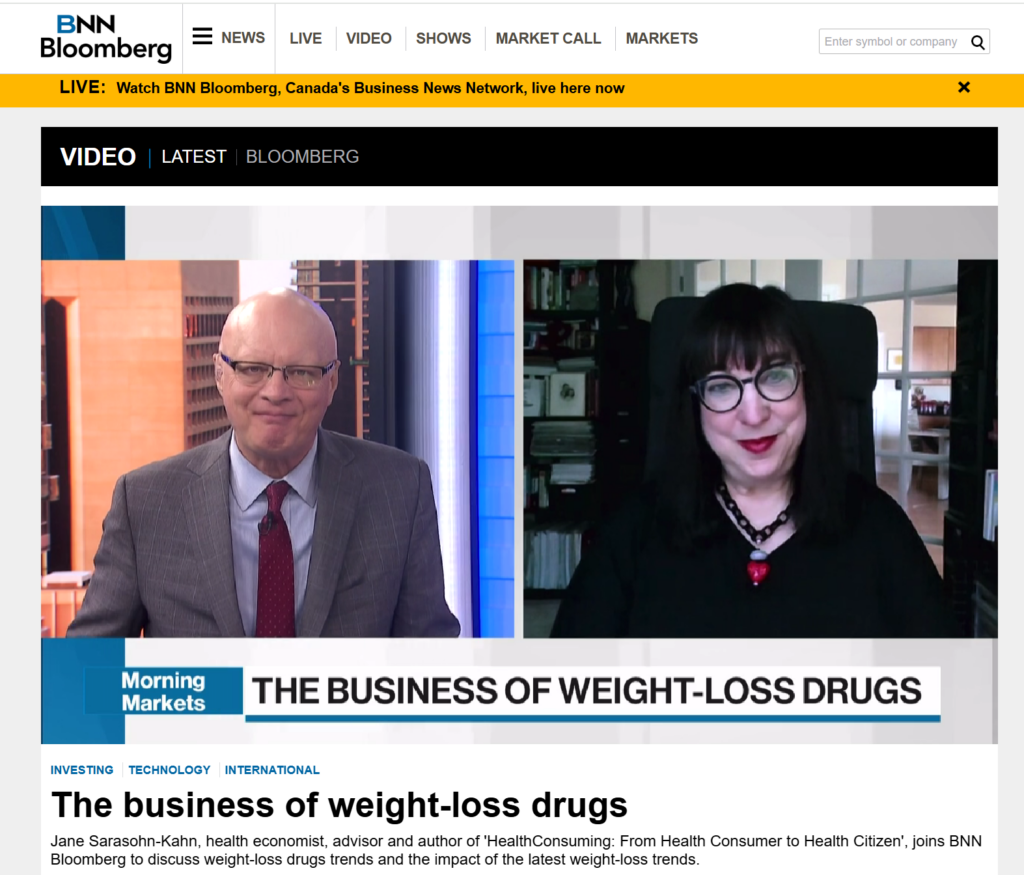 Interviewed live on BNN Bloomberg (Canada) on the market for GLP-1 drugs for weight loss and their impact on both the health care system and consumer goods and services -- notably, food, nutrition, retail health, gyms, and other sectors.
 Thank you, Feedspot, for
  As you may know, I have been splitting work- and living-time between the U.S. and the E.U., most recently living in and working from Brussels. In the month of September 2024, I'll be splitting time between London and other parts of the U.K., and Italy where I'll be working with clients on consumer health, self-care and home care focused on food-as-medicine, digital health, business and scenario planning for the future...