


Just in case you’re feeling lonely about the state of health care costs in the U.S., note that we’re in good company: medical costs will accelerate around the world over the next five years.
Watson Wyatt brings you this news based on the results of a poll conducted among 85 insurers that cover medical for global employers in the Americas, Afr ica, Asia and Europe. The benefits consulting group found that health cost increases are growing faster than rates of inflation in 80% of countries surveyed. Thus, hyperinflation of health costs isn’t just an American malaise, but a problem for most economically developed countries.
 ica, Asia and Europe. The benefits consulting group found that health cost increases are growing faster than rates of inflation in 80% of countries surveyed. Thus, hyperinflation of health costs isn’t just an American malaise, but a problem for most economically developed countries.
Watson Wyatt discovered that the factors that drive health spending up in the U.S. are the same things that increase spending elsewhere: medical technology, increased utilization of health services, and the aging of the population. Aging’s significant impact on health and pensions is particularly acute in Japan and western Europe, regions that are ahead of the U.S. on the demographic age wave.
Most of Africa and Asia, and much of Latin America (except for Brazil and Chile, which have their own health system and economic challenges) expect double-digit health cost increases this year.
When you’re feeling sick about double-digit health cost increases in the U.S. hitting 10-12%, ponder this: medical inflation in Venezuela this year will hit 25%, and in China, nearly 20%. On the hand, it’s nice to live in Switzerland and France, where health inflation is expected to be 6% and 7%, respectively.
Health Populi’s Hot Points: Health costs aren’t just a problem for small business; consider the jumbo employer who covers health insurance for a global workforce. Medical cost inflation is eating into the profits of even the most profitable global companies. In the UK, even with the presence of the National Health Service, the private sector medical cost increase is about 8%. The global reach of medical cost inflation brings with it an opportunity on a global scale to target population health management. These companies need a disruptive model for disease management. The emerging tools of social media can be used to convene groups of people in disparate places for programs to manage chronic health conditions. Companies like Resolution Health (that’s with an ‘s,’ not a ‘v’), with the recently-acquired expertise of NewSof, are developing innovations in this space.


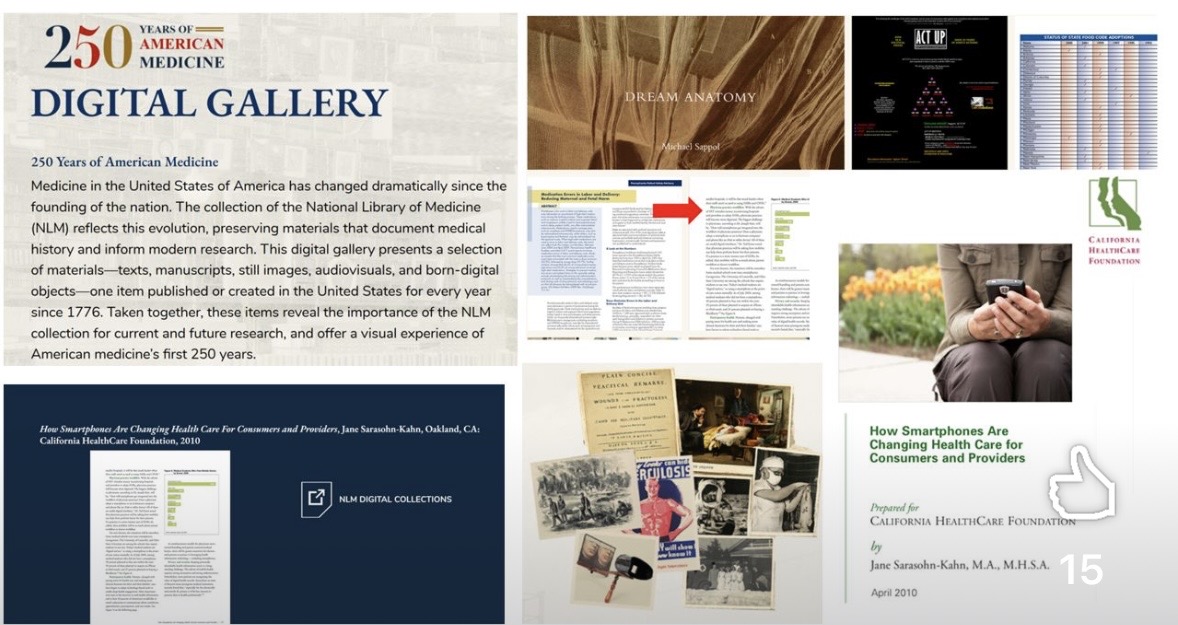 I’m celebrating America’s 250th birthday both patriotically and professionally, honored that the NLM included my 2010 paper, “How Smartphones Are Changing Healthcare for Consumers and Patients” as one of 250 items curated for the digital archive of 250 Years of American Medicine.
 I'm grateful to be part of the Duke Corporate Education faculty, sharing perspectives on the future of health care with health and life science companies. Once again, I'll be brainstorming the future of health care with a cohort of executives working in a global health care enterprise.
 Jane joined host Dr. Geeta "Dr. G" Nayyar and colleagues to brainstorm the value of vaccines for public and individual health in this challenging environment for health literacy, health politics, and health citizen grievance.