

According to the latest poll from HarrisInteractive and the Harvard School of Public Health, less than 1 in 2 Americans believe that health care in the U.S. is the best system in the world.
Harris and Harvard measured how Americans feel about the U.S. health system compared to those of Canada, France and Great Britain. The poll was taken among American adults age 18 and over in early March 2008.
In the “we’re better than you” contest, 40% say the U.S. system is better than Canada, 31% say we’re better than France, and 37% say we’re better than the UK.
Four aspects of health systems were measured between the U.S. and the 3 other nations: quality of care, waiting times, affordability, and health care costs. Just over one-half of Americans view quality and waiting times to be better in the U.S., but access and costs are not seen as strengths of the U.S. health system.
1. Quality of care patients receive, seen as “better” in the U.S. by 55%.
2. Waiting times to see specialists or to be admitted to the hospital better in America according to 53%.
3. Making sure everyone can get affordable health care seen better in the U.S. by 26%
4. Controlling health care costs, seen better in America by 21%.
In terms of who Americans would support for president, 37% say they’re likely to vote for a presidential candidate who said the U.S. system should be more like Canada, France, or Great Britain.
Overall, Republicans tend to think more positively about the U.S. health system than Democrats. But in this survey sample, Republicans made up only 26% of American adults.
Health Populi’s Hot Points: The mass media in the U.S. would do its national readers a great service by explaining in some detail the compares and contrasts between U.S. health care and the rest of the world (ROW). It’s time to get past Sicko, which did a good service top-lining the scene, and dig into details of health systems globally. We can learn much from their positive features without adopting their entire approaches. In particular, Americans don’t know much about the French health care system, which in my experience offers many features that Americans would value. Physicians working in France also tend to be a happier lot than their American counterparts. And it’s not just about wine and food.
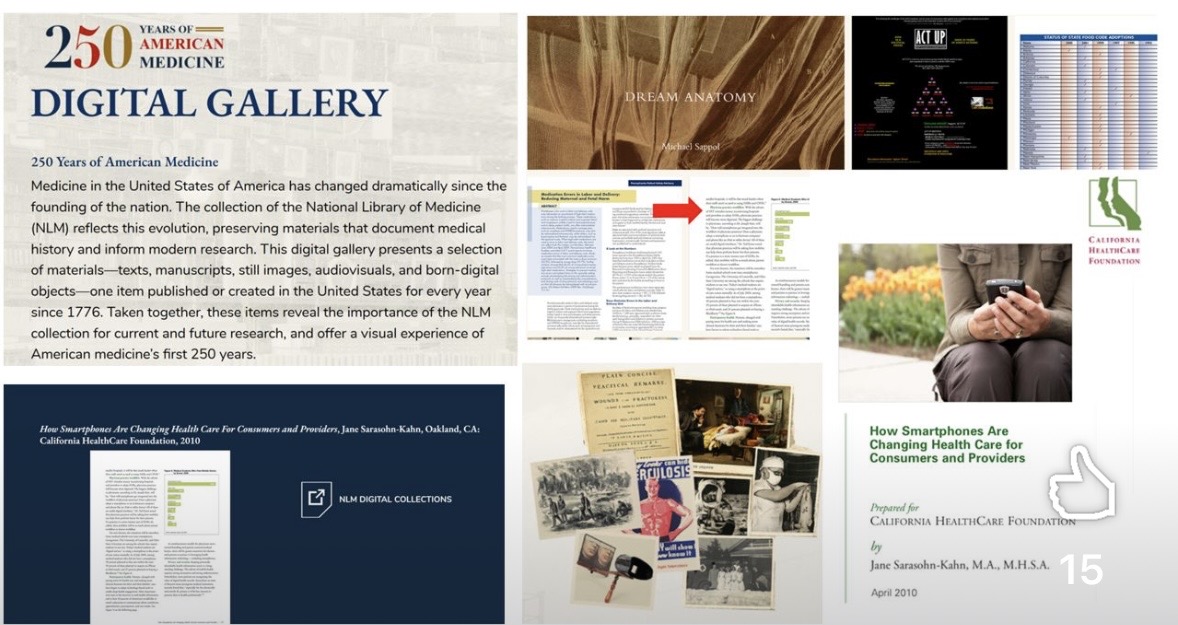 I’m celebrating America’s 250th birthday both patriotically and professionally, honored that the NLM included my 2010 paper, “How Smartphones Are Changing Healthcare for Consumers and Patients” as one of 250 items curated for the digital archive of 250 Years of American Medicine.
 I'm grateful to be part of the Duke Corporate Education faculty, sharing perspectives on the future of health care with health and life science companies. Once again, I'll be brainstorming the future of health care with a cohort of executives working in a global health care enterprise.
 Jane joined host Dr. Geeta "Dr. G" Nayyar and colleagues to brainstorm the value of vaccines for public and individual health in this challenging environment for health literacy, health politics, and health citizen grievance.