


In the land that innovated Supersizing, the U.S. has also mastered the art of wasteful health spending served up in a mega-portion of $1.2 trillion (yes, trillion). That’s over 50% of health spending. Half. About 8% of Gross Domestic Product.
This Big News is brought to you by those hardworking researchers at PricewaterhouseCoopers’ Health Research Institute (PwC) in their report, The Price of Excess: identifying waste in healthcare spending.
The topline finding is: “Eliminating waste in one sector may actually increase it in another.”
Here’s why: while individual health care organizations try their best to rationalize costs and achieve efficiencies, PwC says, it’s the fragmented nature of American health delivery that’s to blame. That fragmentation leads to a kind of synergistic waste effect that can’t be battled by individual providers or payers. They’re fighting a macro battle on a micro field. It just doesn’t compute, PwC argues.
Why can’t we eliminate costs system-wide? PwC points to American health care’s lack of care coordination, misaligned incentives, politics, medical culture.
PwC allocates wasteful spending into 3 categories: Behavioral, Operational, and Clinical. Annually, the top 3 areas of spending waste are:
- Clinical, such as defensive medicine and unnecessary ER visits = $312 billion
- Operational, including inefficient claims processing and ineffective use of health IT = $126-315 billion
- Behavioral, such as spending on preventable conditions related to obesity = $303-493 billion.
 Health Populi’s Hot Points: Consumers see themselves, government, and the industry at fault for wasteful spending. Perhaps this can be leveraged as a hopeful Pogo effect, that we are all the enemy and can all be the solution. The solution, PwC concludes, is that “Solving inefficiencies means developing system-wide incentives to encourage partnerships and networks that work toward shared value.” What will drive us to finally work together to solve this crisis of waste? Ponder that today, Tax Day, as you put your hard-earned dollars into the post box and send them off into the wasteful oblivion.
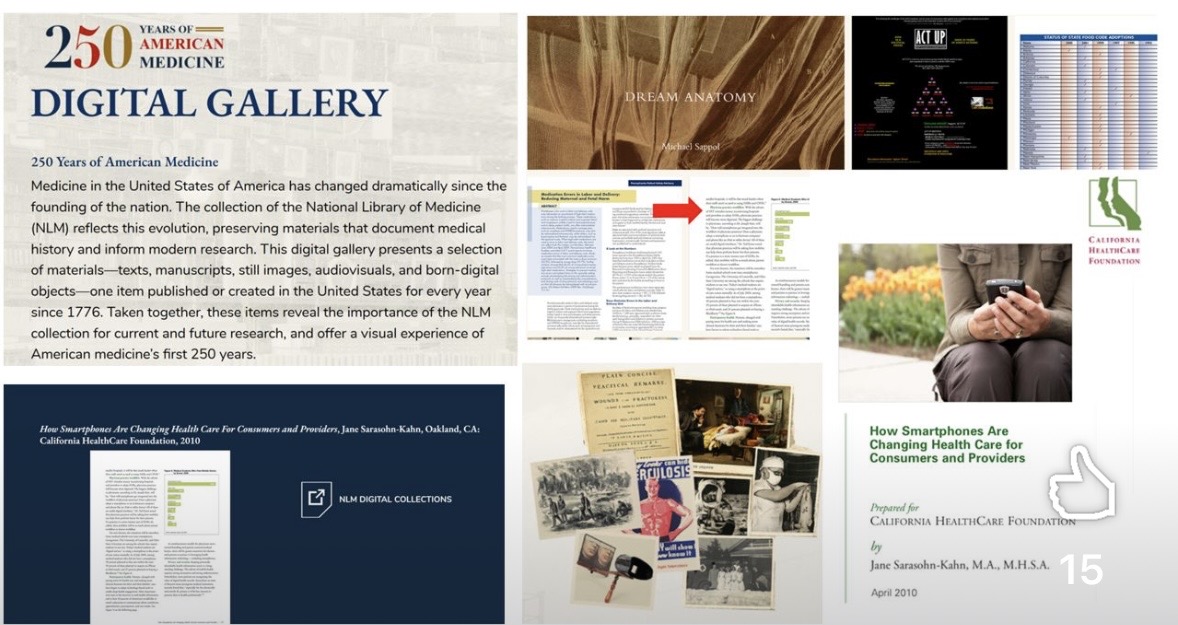 I’m celebrating America’s 250th birthday both patriotically and professionally, honored that the NLM included my 2010 paper, “How Smartphones Are Changing Healthcare for Consumers and Patients” as one of 250 items curated for the digital archive of 250 Years of American Medicine.
 I'm grateful to be part of the Duke Corporate Education faculty, sharing perspectives on the future of health care with health and life science companies. Once again, I'll be brainstorming the future of health care with a cohort of executives working in a global health care enterprise.
 Jane joined host Dr. Geeta "Dr. G" Nayyar and colleagues to brainstorm the value of vaccines for public and individual health in this challenging environment for health literacy, health politics, and health citizen grievance.