


“Patients are a largely untapped resource of medical data,” according to Farzad Mostashari, MD, MSPH, assistant commissioner with the New York City Department of Health and Mental Hygiene.
One of the biggest challenges in implementing a personal health record (PHR) is how to get a person’s health data into the record.
The solution lies in Health in Everyday Living, an ‘e-primer’ published by Project HealthDesign. Now, with the input of Observations of Daily Living (ODL), the PHR could truly reflect a 360-degree view of a person’s health. Project HealthDesign has been studying PHRs in action through grantees’ field projects. Taking a cue from anthropology, researchers are studying how people live and use data day-to-day to change their lifestyles, one behavioral choice at a time. They’re asking consumers just what information is useful to them and feeding it back into PHRs.
It seems self-evident, but is worth spelling this out: an electronic health record (EHR) is gathered and housed at a clinician’s practice, and receives patient data recorded by clinicians from one clinical episode to the next. However, people live their lives between those clinical encounters, so in those interstices they manage their health on an ongoing basis.
Examples of ODL information that can be collected in the PHRs include sensor-gathered sleep data, self-reported mood information, pain diaries, personal pollen counters, and diet and exercise specifics.
Project HealthDesign, which resides at the University of Wisconsin-Madison, is funded by Robert Wood Johnson Foundation and the California HealthCare Foundation.
Health Populi’s Hot Points: ODLs are a prime example of how a health management tool can be highly relevant, supportive and motivational to a consumer. It’s personalized — we decide for ourselves what’s useful data to use in our daily lives to benefit our personal health choices. The data inputs will become increasingly automated, using technologies like sensors and mobile phones. And while there remain some legal-ethical issues about consumer-generated data in PHRs, Project HealthDesign is laying the groundwork for the tools that can make a real difference in health outcomes and costs.
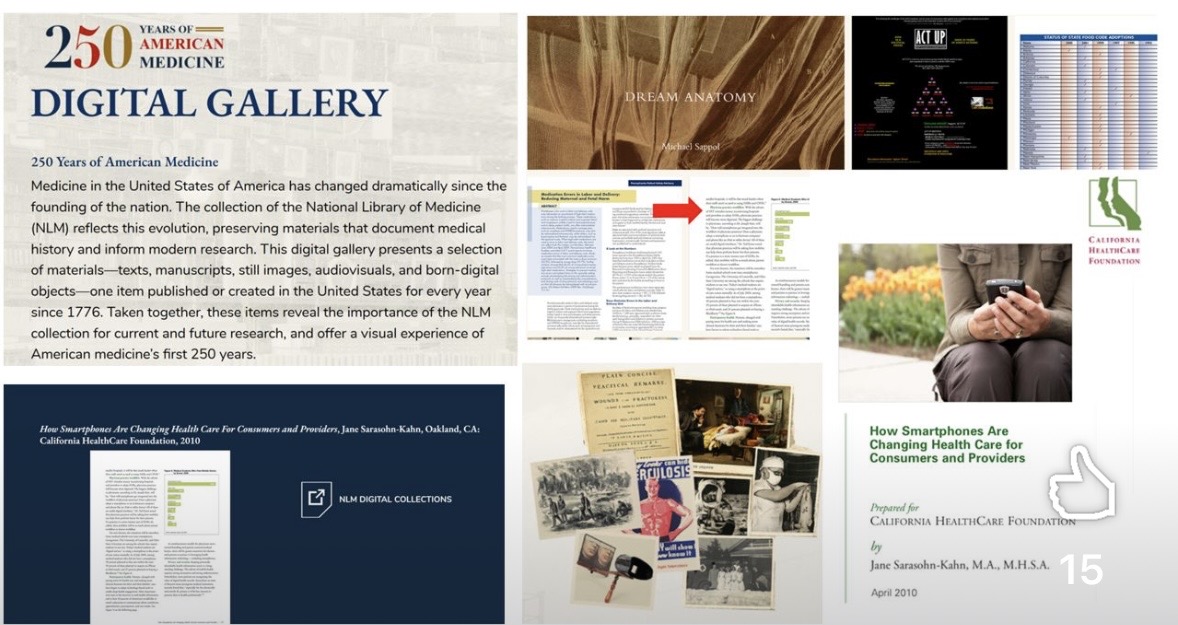 I’m celebrating America’s 250th birthday both patriotically and professionally, honored that the NLM included my 2010 paper, “How Smartphones Are Changing Healthcare for Consumers and Patients” as one of 250 items curated for the digital archive of 250 Years of American Medicine.
 I'm grateful to be part of the Duke Corporate Education faculty, sharing perspectives on the future of health care with health and life science companies. Once again, I'll be brainstorming the future of health care with a cohort of executives working in a global health care enterprise.
 Jane joined host Dr. Geeta "Dr. G" Nayyar and colleagues to brainstorm the value of vaccines for public and individual health in this challenging environment for health literacy, health politics, and health citizen grievance.