


Over 20 million American households are now wireless-only when it comes to phone connections.
Nielsen’s paper, Call My Cell: Wireless Substitution in the United States, quantifies the growth of households who are abandoning landline phones in favor of wireless.
Nielsen attributes the recent growth in this untethered segment to home economics, where the average landline phone in America costs about $40 a month ($480 a year). Increasingly, Nielsen says, households are committing to “wireless substitution” — dropping the landline.
The trend in cord-cutting consumers is growing at 3 to 4 percentage points a year and isn’t abating.
Most likely not to have a landline are people with lower incomes (46% with $50K a year or less), younger (64% between 18 and 34 years old), and smaller home sizes of 1 or 2 people. They tend to be renters, not home buyers. And, there isn’t a great racial or ethnicity difference in wireless substitution — except that Hispanic households have a slightly higher rate of doing so.
Health Populi’s Hot Points: Think: health-meets-GPS. One great example is Mayo Clinic, who has partnered with Garmin, one of the leading brands of global positioning systems. Mayo has launched an application of Digital Cyclone that allows cell phone users to download all kinds of health information through The Mayo Clinic InTouch wireless health program. For a subscription fee of $2.99 a month, a consumer enters a zip code or city to search emergency rooms, urgent care clinics, and other providers.
A fee of, say $3 a month paid by an employer or health plan, could be cost effective for all kinds of self-care programs that move with people. No longer does a patient/consumer need to be tethered to a PC or home phone. Wireless connectivity allows care resources to follow patients and improve health behaviors on-the-go.
A physician recently explained to me that the wireless phone will be critical for self-care because he can only enforce healthy behavior messages during the 15 minutes he’s with a patient. “What happens the other 23 hours and 45 minutes in a day?” he asked, rhetorically. Goin’ mobile is a way to bridge that care gap.
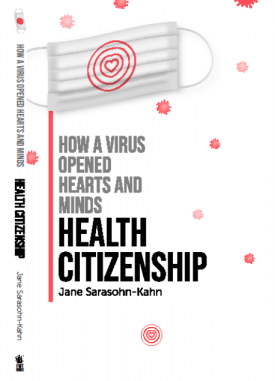
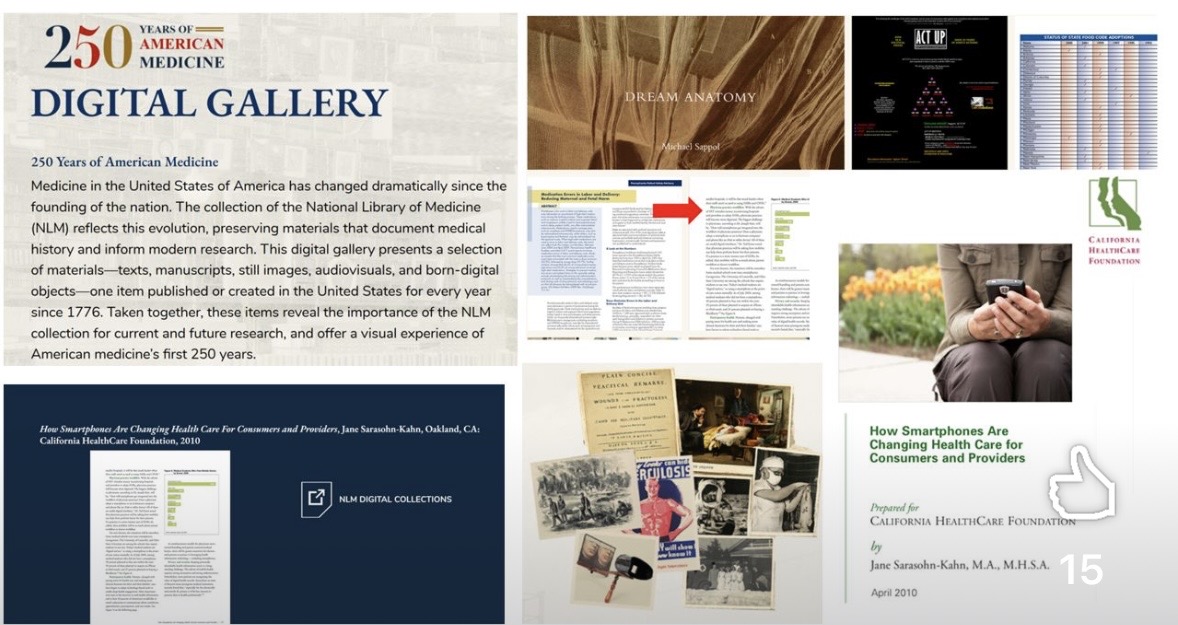 I’m celebrating America’s 250th birthday both patriotically and professionally, honored that the NLM included my 2010 paper, “How Smartphones Are Changing Healthcare for Consumers and Patients” as one of 250 items curated for the digital archive of 250 Years of American Medicine.
 I'm grateful to be part of the Duke Corporate Education faculty, sharing perspectives on the future of health care with health and life science companies. Once again, I'll be brainstorming the future of health care with a cohort of executives working in a global health care enterprise.
 Jane joined host Dr. Geeta "Dr. G" Nayyar and colleagues to brainstorm the value of vaccines for public and individual health in this challenging environment for health literacy, health politics, and health citizen grievance.