

 “There’s no such thing as a healthcare consumer. No one really wants to consume healthcare,” naysayers tell me, critical of my all health-consmer-all-the-time bully pulpit.
But, touché to my health consumer-critics! I’ve more evidence refuting the healthcare consumer detractors from McKinsey in their research report, Debunking common myths about healthcare consumerism, from the team working in McKinsey’s Healthcare Systems and Services Practice.
Their survey research among over 11,000 U.S. adults uncovered 8 myths about the emerging American health consumer, including:
- Healthcare is different from other industries
- Consumers know what they want from healthcare and what drives their decisions
- Most consumers research healthcare choices and make fact-based decisions
- Premium price is “the only” important factor in purchase decisions
- Most consumers have a primary care provider and are reluctant to change doctors
- Retail clinics will remain a niche solution
- Only young people use technology to manage health
- Most people are willing to trust insurers to store their health records.
McKinsey makes the case against each of these myths, based on consumers’ input into the company’s Consumer Health Insights Survey.
The key findings are that,
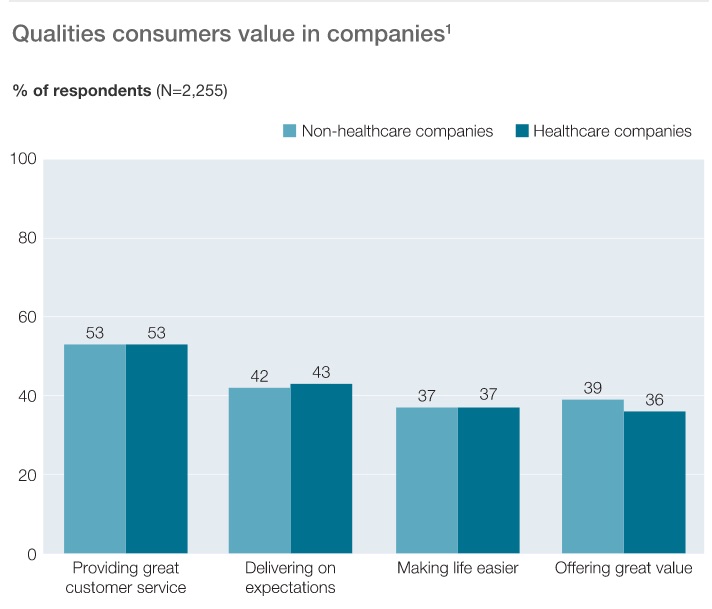
- Consumers are consumers across industry sectors, and non-healthcare companies are setting a high bar for consumer expectations in healthcare, evidenced by the first chart.
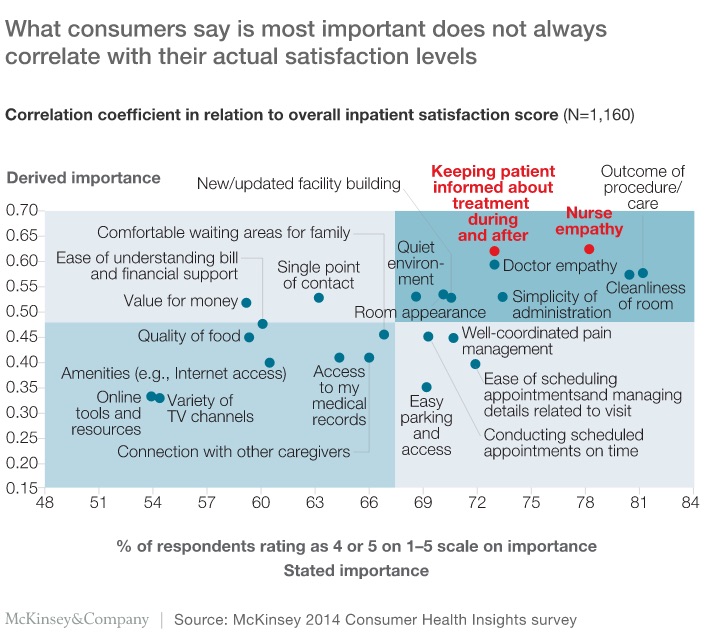
- Consumers tend to overstate tangible aspects of healthcare like parking access and pain management and under-estimate emotional issues like clinician empathy (see the second chart).
- Consumers have begun to research health care the way they looking into goods like cars and washing machines, with 44% of consumers researching the costs of maternity care and 32% researching costs for joint-replacement surgery.
- Consumers are open to receiving health care in alternative sites outside of the traditional hospital and doctor’s office, including retail and urgent care, the pharmacy, via telehealth, and other designs for primary care.
- Across all age groups, consumers are using technology devices for health-related activities, and while the largest proportion of these activities is among younger people 18 to 34 years of age, a growing cadre of people 55 years of age and over are scheduling online appointments using mobile health apps, and checking health status via tech.
 Health Populi’s Hot Points: McKinsey has a lot more data than Heath Populi has time and space to share, but the survey’s conclusions solidly show a healthcare consumer awakening, and feeling more empowered in decision-making, in America.
 Jane will be working with EU- and UK-based clients in September and October 2026, collaborating with stakeholders in digital health, public/community health, retail health, and growing opportunities for health-at-home. Stay tuned to her updates here on Health Populi on-the-ground as she lives the digital nomadic work-life in Italy, Belgium, the Netherlands, and in London.
 I was grateful to be Jasmine's first conversation-guest on her new podcast,
  Jane joined host Dr. Geeta "Dr. G" Nayyar and colleagues to brainstorm the value of vaccines for public and individual health in this challenging environment for health literacy, health politics, and health citizen grievance.