

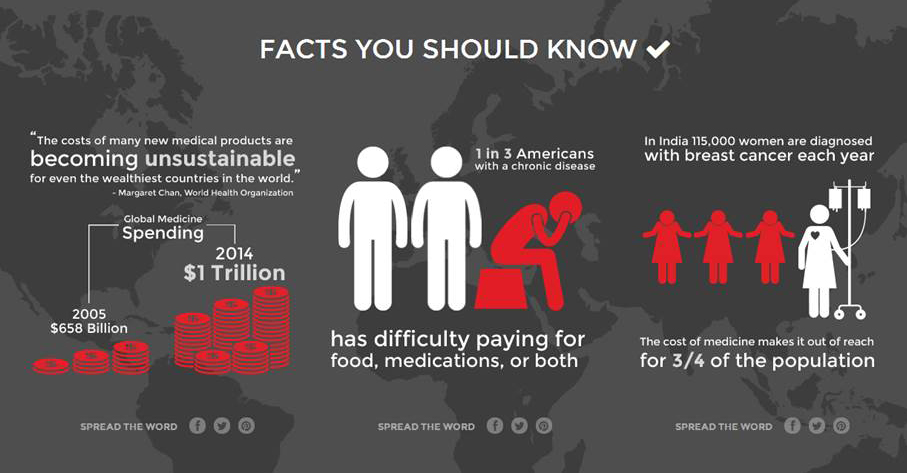
 The price of medicines is a barrier for about one billion people on the planet, for citizens in developing countries as well as middle-class families in the richest country in the world, the United States.
Today is World Health Day, when for 24 hours public health advocates (including me) are calling out key issues preventing people from fully living life.
 One obstacle for too many people is the cost of drugs and supplies that save lives and help people add life to years. For example, bug bites can be deadly if you’re talking about the 50% of the world’s population that’s at risk for malaria, dengue, leishmaniasis and yellow fever. All of these deadly diseases can be prevented with peoples’ access to bednets, long-sleeved shirts and long-legged trousers, and insect repellent. In this case, preventive “medicine” takes the form of simple supplies that can make the difference between life and death. This is today’s key message from the World Health Organization.
You can sign the declaration for universal access to affordable medicines here.
Richard Branson of Virgin (whose nonprofit, Unite, supports many good causes) signed, and wrote this letter about why he supports this effort.
The next time your physician prescribes a treatment that you get filled at a pharmacy or hospital, consider yourself a very fortunate health citizen. One in 3 people in the U.S. can’t afford food, medication, or both.
 I'm grateful to be part of the Duke Corporate Education faculty, sharing perspectives on the future of health care with health and life science companies. Once again, I'll be brainstorming the future of health care with a cohort of executives working in a global health care enterprise.
 Jane joined host Dr. Geeta "Dr. G" Nayyar and colleagues to brainstorm the value of vaccines for public and individual health in this challenging environment for health literacy, health politics, and health citizen grievance.
  Jane will be working with EU- and UK-based clients in September and October 2026, collaborating with stakeholders in digital health, public/community health, retail health, and growing opportunities for health-at-home. Stay tuned to her updates here on Health Populi on-the-ground as she lives the digital nomadic work-life in Italy, Belgium, the Netherlands, and in London.