

The coronavirus pandemic accelerated many trends and new workflows for patients and consumers, and health care providers, too. The convergence of basic needs like hygiene and safety, financial and health security, and living-working-learning-and-cooking-at-home has turbocharged a migration of more acute care delivered at home.
I explore this growing concept in my latest essay on Medecision’s Liberation blog, How the Pandemic Is Accelerating the Hospital-At-Home Concept.
The key points are that:
 Hospital-at-home services (H-a-H) combine home visits with virtual care and remote monitoring
- Think: advanced home care, enabled through virtual health technologies and wrap-around services both clinical and scaled social determinants support
- Virtual care, post-COVID-19 pandemic, is a new patient expectation as millions of consumers gained access to telehealth in the crisis — and liked the user-experience
- As the concept is emerging, there will be many types of H-a-H based on patient needs and provider missions
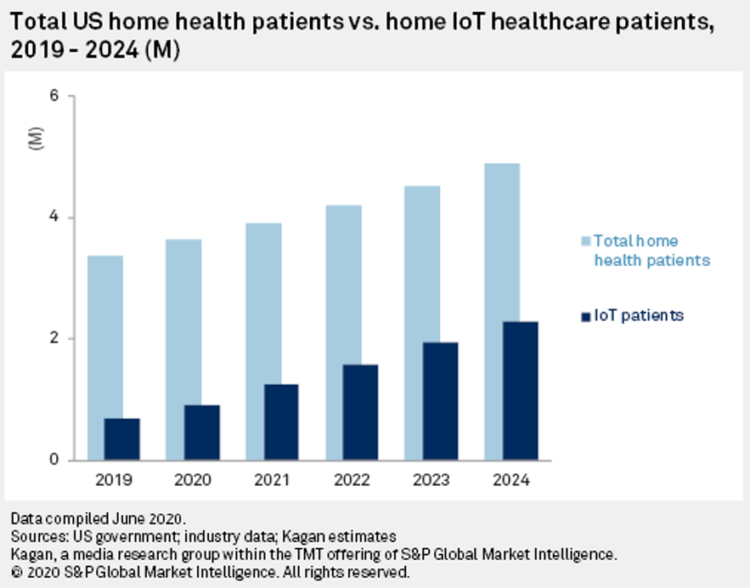
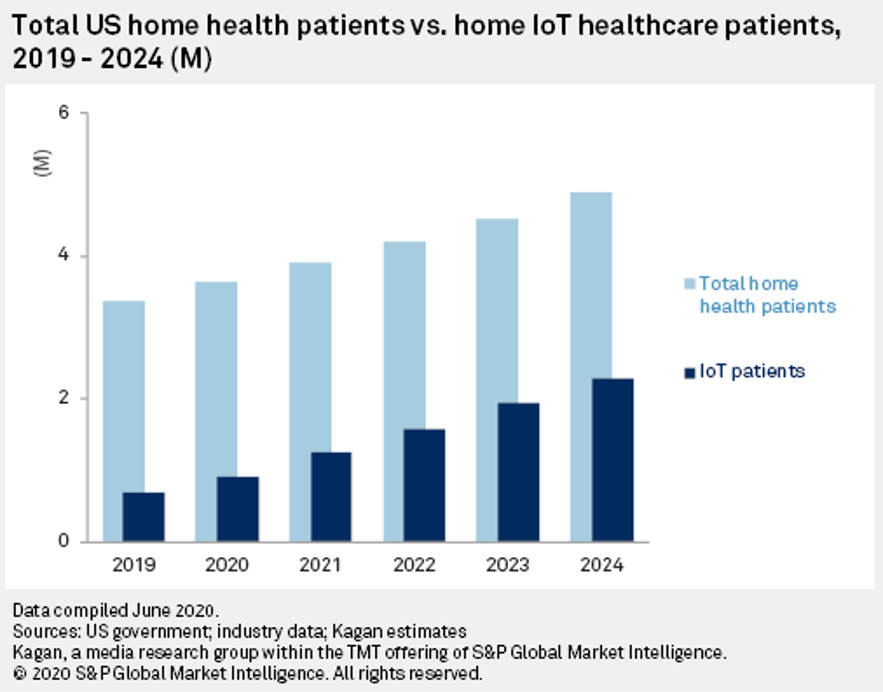
Ultimately, H-a-H is enabled through the growing Internet of Medical Things, forecasted by S&P in the diagram shown here.
Dr. John Halamka, president of Mayo Clinic Platform, recently said that “care at a distance” will persist after the pandemic. “There’s a consensus across government, academia and the industry that this is where it is going to stay,” Dr. Halamka said.
For more details on this important old-new-thing, check out my post on the Medecision site.
 Jane will be working with EU- and UK-based clients in September and October 2026, collaborating with stakeholders in digital health, public/community health, retail health, and growing opportunities for health-at-home. Stay tuned to her updates here on Health Populi on-the-ground as she lives the digital nomadic work-life in Italy, Belgium, the Netherlands, and in London.
 I was grateful to be Jasmine's first conversation-guest on her new podcast,
  Jane joined host Dr. Geeta "Dr. G" Nayyar and colleagues to brainstorm the value of vaccines for public and individual health in this challenging environment for health literacy, health politics, and health citizen grievance.