

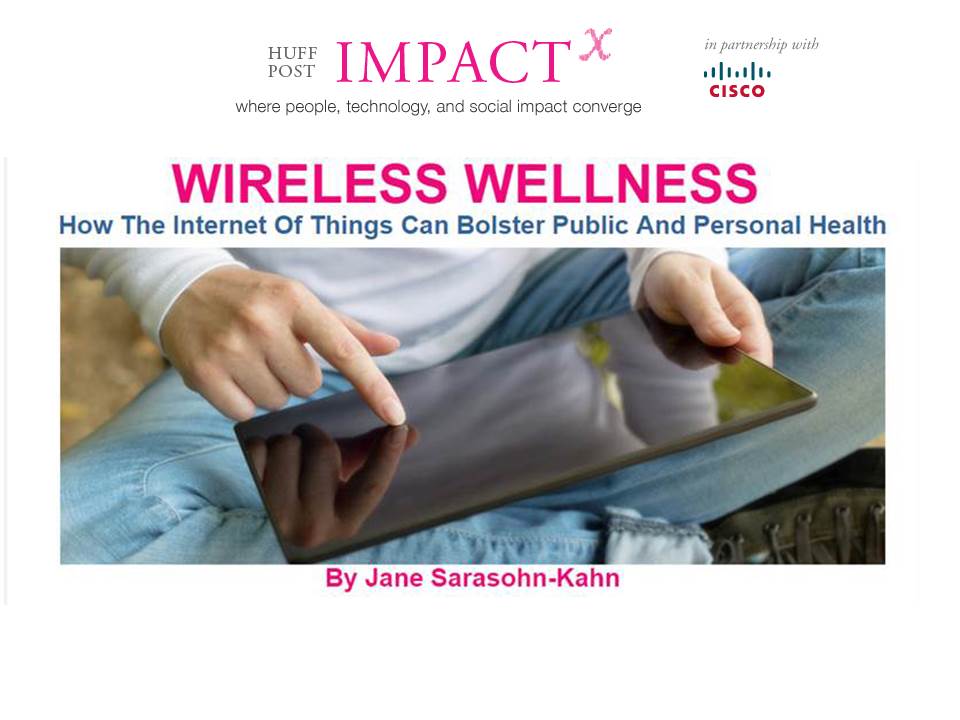
 As sensors begin to proliferate our “Things,” from refrigerators to cars, toasters to t-shirt, our health could benefit mightily.
Approaching this weekend’s South-by-Southwest Interactive meet-up in Austin, several authors have crowdsourced views on using technology for good in ImpactX, a special section in the Huffington Post sponsored by Cisco. I was asked to develop a view on using technology for good — for health and health care.
Here’s my offering: How the Internet of Things Can Bolster Health. The promise of sensor-laden stuff in our lives can work for personal and public health in myriad ways — from perceiving impending epidemics to reminding us to get up offa’ our things (the subject of my 2013 SXSW panel) when we’re sitting and binge-watching too many episodes of House of Cards or Orange is the New Black or {fill in the name of your favorite streaming media property}.
But we must also be mindful of the caveats when technology can so often run ahead in advance of human frailty, regulation (especially privacy and information security), and possible exploitation.
Check out all of the ImpactX stories that cover the gamut of tech for good here.
 Health Populi’s Hot Points: If you’re in Austin on Saturday 14th March at 5 pm, come visit Manny Hernandez, Marc Monseau, Amanda Sheldon and me when we brainstorm Why HIPAA Won’t Save You: Protecting Data Privacy in the JW Marriott, Room 203-204. We’d love to meet you and share learnings and perspectives on this important topic that’s growing with importance in the post-Snowden, post-Anthem breach, growing wearables and IoT era.
 Thank you
  Jane joined host Dr. Geeta "Dr. G" Nayyar and colleagues to brainstorm the value of vaccines for public and individual health in this challenging environment for health literacy, health politics, and health citizen grievance.
  I'm grateful to be part of the Duke Corporate Education faculty, sharing perspectives on the future of health care with health and life science companies. Once again, I'll be brainstorming the future of health care with a cohort of executives working in a global pharmaceutical company.