


How Kroger and Instacart Are Delivering Food as Medicine, and Medicine with Food
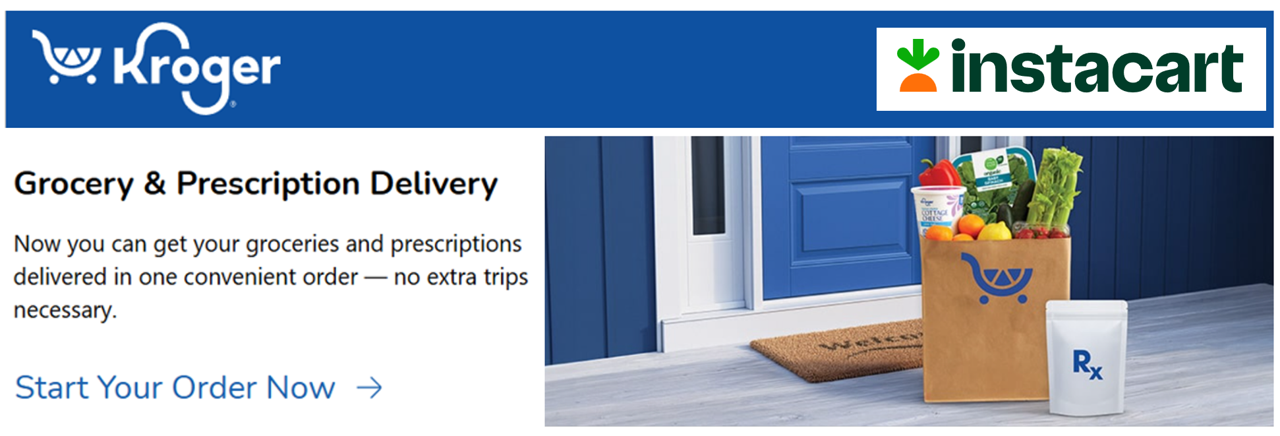
A new study in Circulation, published 10 August 2026 found that home delivery of healthy groceries significantly improved blood sugar levels for people dealing with Type 2 diabetes. Now an alliance between the major grocery chain Kroger working with Instacart can scale such an effort for consumers embracing their own approaches to food-as-medicine, combining the delivery of groceries with prescriptions by enrolling in Kroger’s My Prescriptions and Online Pay apps. Kroger operates some 2,800 grocery stores serving 11 million people a day. The banners of Kroger include at least one name you
Health in Media at FIFA World Cup 2026 – Viva España, Wellbeing, and Love
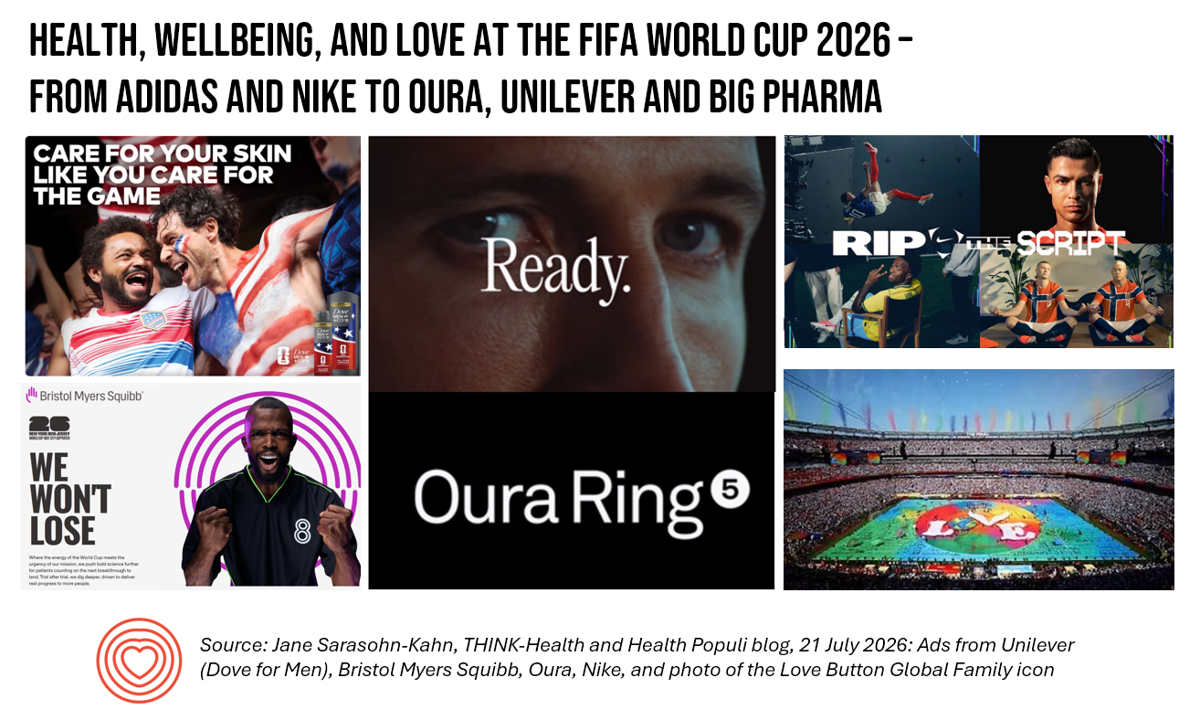
Thinking beyond hydration breaks, health and wellness featured big-time in this season of FIFA World Cup 2026. From wearable technology and digital health to prescription drugs and fitness gear, billions of global citizens were treated as health citizens by the likes of Adidas, Bristol Myers Squibb, Nike, and Unilever, the official personal care sponsor of the games. Check out Oura’s video, which supports the company’s role as the official wearables partner with U.S. Soccer with the Oura Ring being integrated into workflows for athletes, coaches and staff among 27 National Teams. Prior to opening day of this year’s World Cup,
Will GLP-1s Shift the Actuarial Curves for Life Expectancy? Swiss Re Models the Scenarios
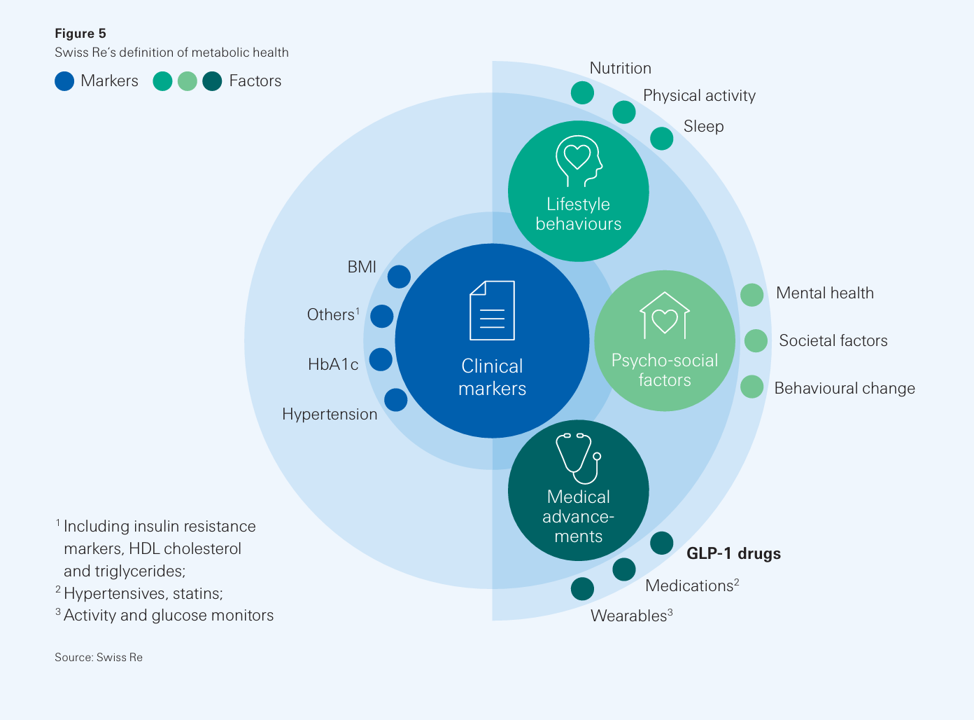
The growing adoption of GLP-1 medications has already begun to transform society and industry sectors, along with helping many patients effectively deal with managing diabetes and obesity, and other conditions. There is growing evidence that this group of medicines is also bending the actuarial curves for life expectancy, we learn in the report, The future of metabolic health and weight loss drugs from Swiss Re. In the report, Swiss Re shares the company’s vision of metabolic health, a graphic for which is shown here. The company (smartly) takes a broad ecosystem view
“The #1 longevity hack is ‘don’t be poor’” — Kara Swisher is a health economist
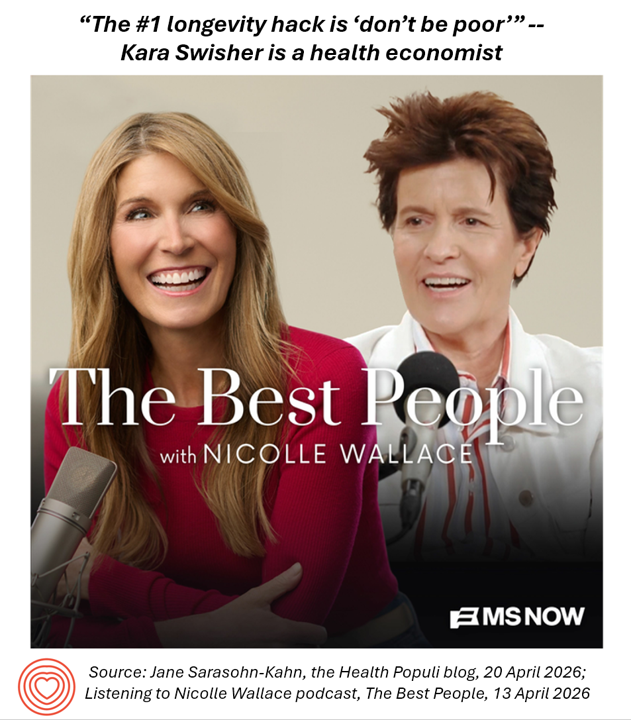
In full transparency, I’ve been a fangirl of Kara Swisher since I first read her work with Walt Mossberg and Recode, coinciding with my own work on the early adoption of the Internet in health care. Today, Swisher is everywhere all-at-once, covering technology, politics, and now, seeking truths about the so-called longevity economy. Swisher appeared with Nicolle Wallace on her podcast, The Best People, on 13th April, so I was keen to tune in. The conversation covered a lot of ground, and it was Swisher’s take on science and health that I was most
The New Era of DIY Healthcare – The State of Consumer Healthcare is Buoyant, Empowering, and Holistic, from Head to Gut to Wallet
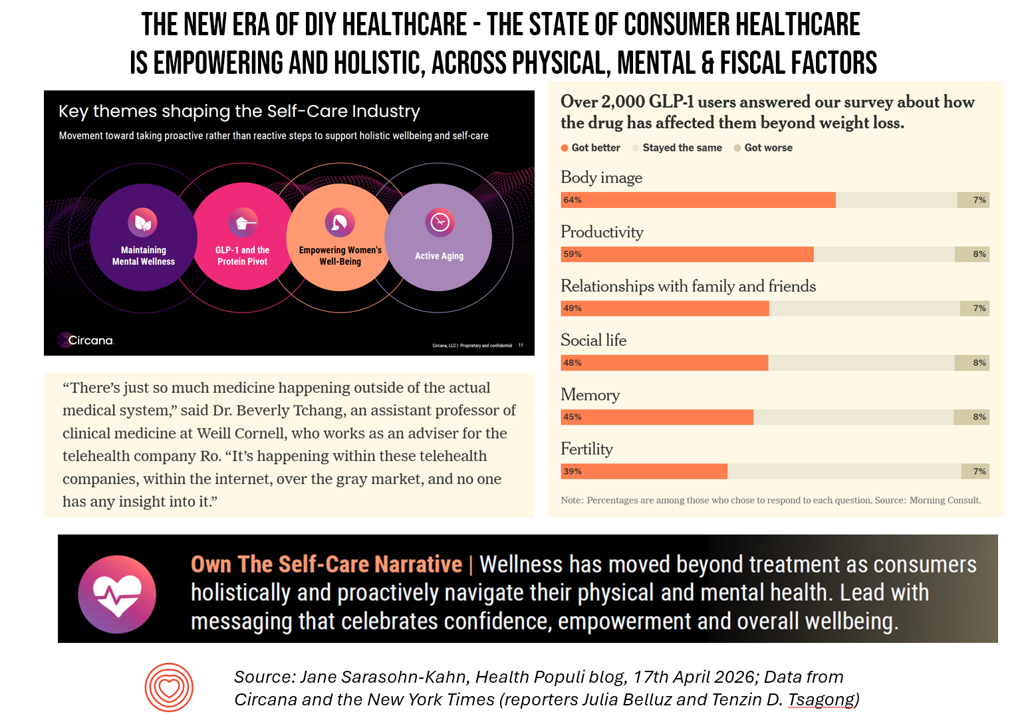
Consumers’ spending on healthcare, beyond a health insurance premium and hospital bills, is among the fastest-growing industries in the U.S. — with spending increasing faster than overall retail, Circana’s tracking data has quantified. In 2019, I published one of the early books on health care consumerism, HealthConsuming, my spidey-senses perceiving an expanding retail health landscape where patients-as-consumers, caregivers, Quantified Self’ers, and wellness aficionados were engaging with a variety of touchpoints based on their personal values and sense of value to co-create personal and family health: in grocery stores, Big
Food & Wine Magazine Features Food-As-Medicine: Good for People, Good for the (Local) Economy
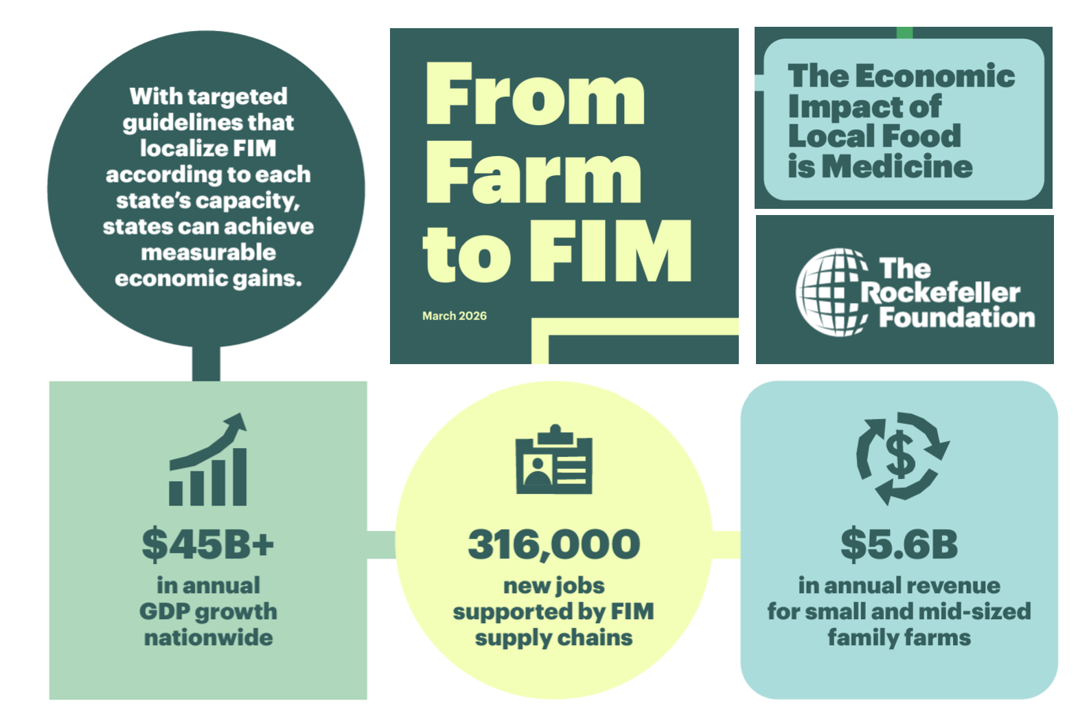
When the mainstream media food magazine Food & Wine devotes a long article to the concept of food-as-medicine, it calls to me….loudly. Here’s another proof-point for tying together public and individual health while boosting local economies. F&W featured Stacey Leasca’s essay, What Happens When Doctors Start Prescribing Food Instead of Pills?, online this month, and Stacey did her homework. One of Stacey’s go-to evidence-based resources for her column was the recently-released Rockefeller Foundation report, From Farm to FIM: The Economic Impact of Local Food is Medicine. The Foundation studied several local
The “Five-Month” Cognitive Penalty of Financial Decline: A Significant Loss of Financial Well-Being Correlates with About Five Months of Cognitive Decline A Year
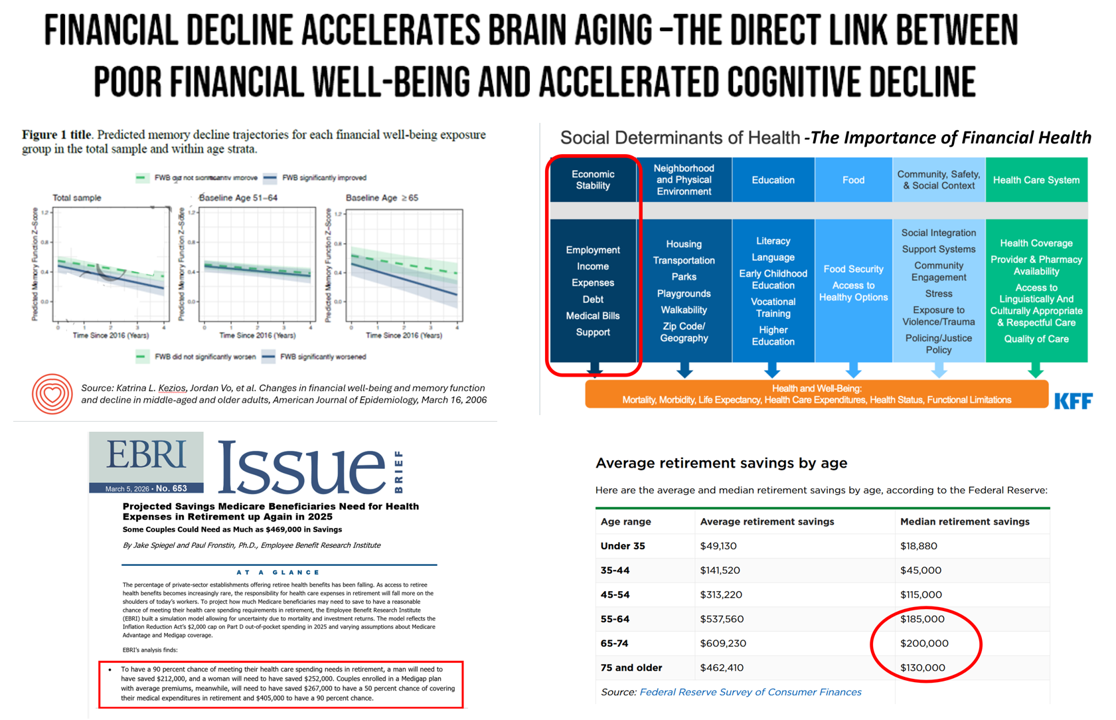
Lower financial well-being and worsening financial conditions have been linked to declining brain function, according to new research from a team at the Columbia Mailman School of Public Health. The research, Changes in financial well-being and memory function and decline in middle-aged and older adults, was published this month in the American Journal of Epidemiology. “Worse financial well-being in midlife and older age — and especially declines over time — are associated with lower memory scores and faster cognitive decline,” the study notes — among the first to scrutinize the relationship between brain
Consumers Are Ahead of Consumer Health Innovation: Insights from IQVIA
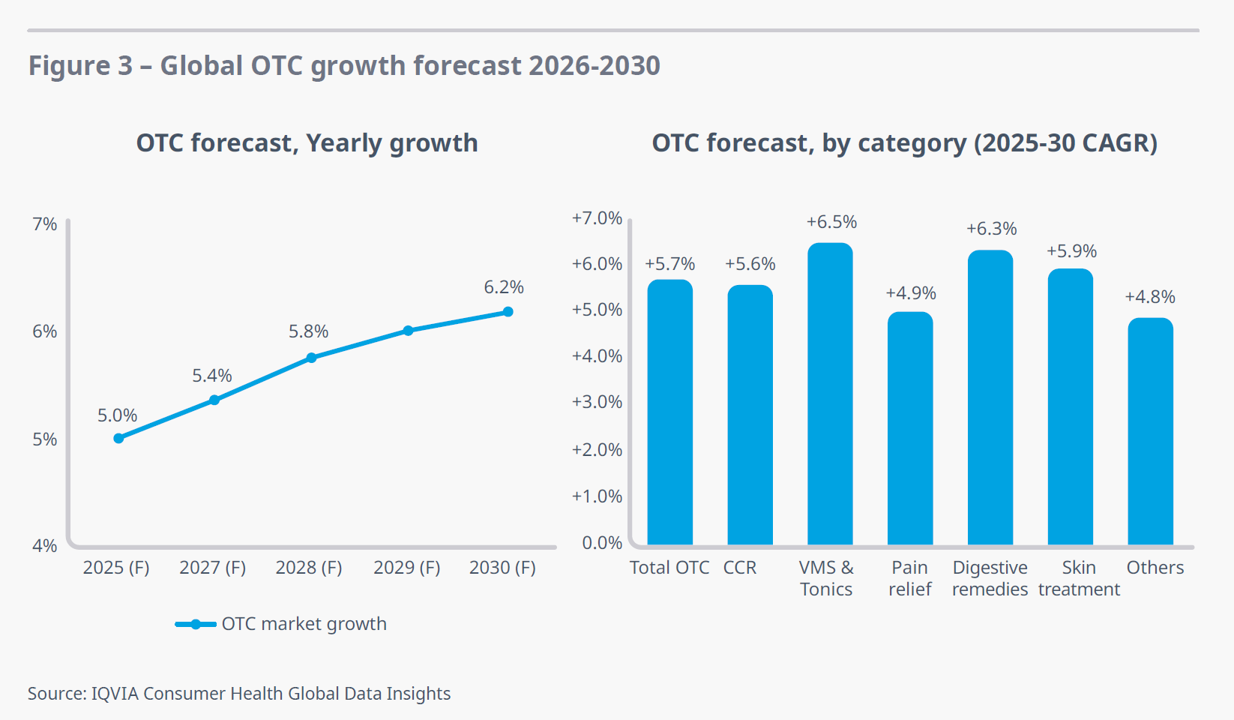
As patients in the U.S. bear more costs out-of-pocket, from deductibles to co-sharing the price of higher-cost specialty drugs (say for cancers, Parkinson’s, and so on), health care looks and feels more like a retail transaction stretching peoples’ health consumer muscles. A new report from IQVIA, whom you probably know through their data collection and analysis in the prescription drug sector, forecasts Consumer Health’s Next Phase, with the observation that the market is changing faster than its narratives (the subtitle of the report). To come to this judgment, IQVIA analyzes six trends shaping the
Why Clorox Talks about Hygiene at Home: Health, Wellbeing, and the Home as Health Hub
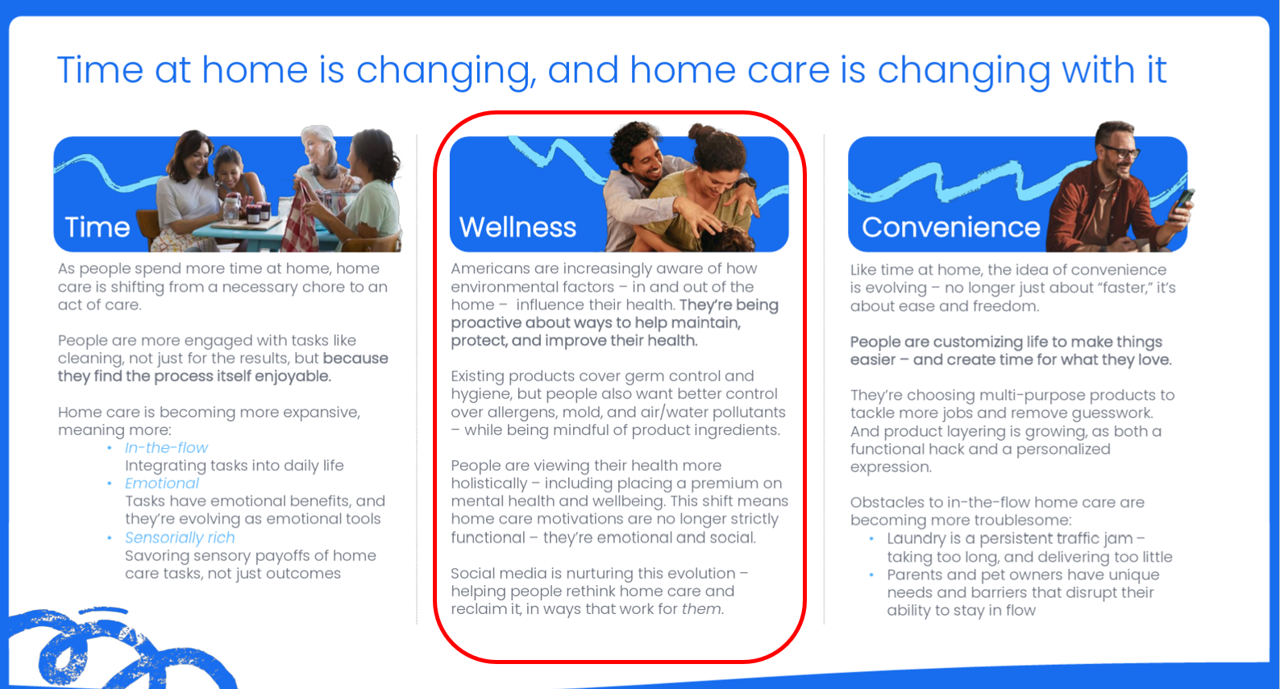
The COVID-19 pandemic was a watershed era for people re-assessing and re-imagining their homes as hubs for health, healthcare, and well-being (as well as learning, exercising, and baking sourdough bread). This graphic comes from my book, Health Citizenship: How a Virus Opened Hearts and Minds, written in the midst of the pandemic based on consumers’ newly adopted behaviors during the #workfromhome and #stayhome epoch. We experienced the digital transformation of people through life and home-based work and education, a growing sense of DIY for things we could do
When a Hotel Becomes Your Health Partner – Learning from Novotel and Accor
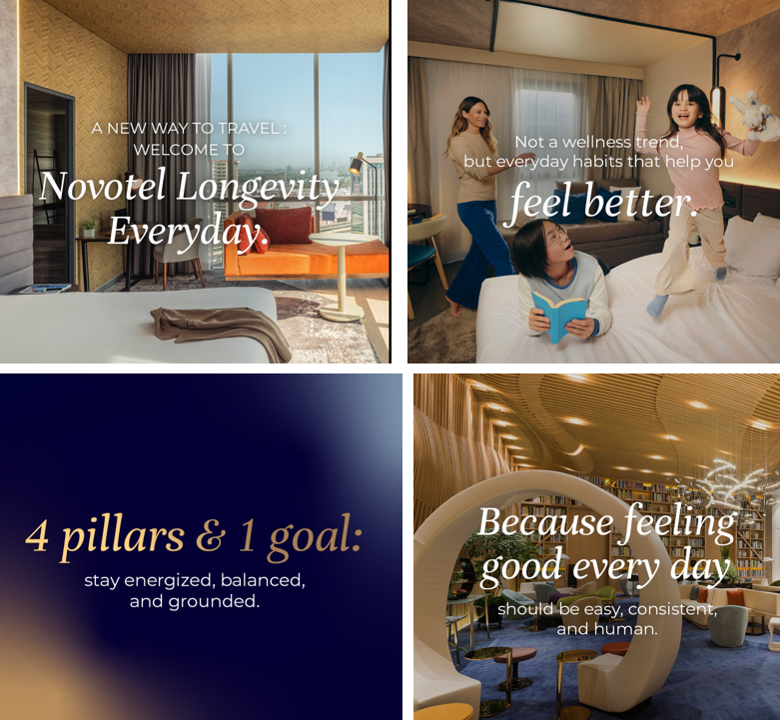
“Novotel Launches ‘Longevity Everyday.'” That’s the title of the global, France-based hotel chain’s press release, announcing the Novotel brand’s initiative to serve up healthy hospitality. Check out this video… Behind this strategic positioning decision, the hotel notes, “Accor data reveals that one in three travelers is taking daily steps to improve their mental and physical wellbeing, yet most longevity programs remain out of reach for many people. This gap between demand and accessibility has created a strategic opportunity that Novotel, Accor’s founding brand, is uniquely positioned to address.” This approach will extend to over 600 hotels operating in 67 countries
The New (Old) Long-Term Care: Intergenerational, Together at Home
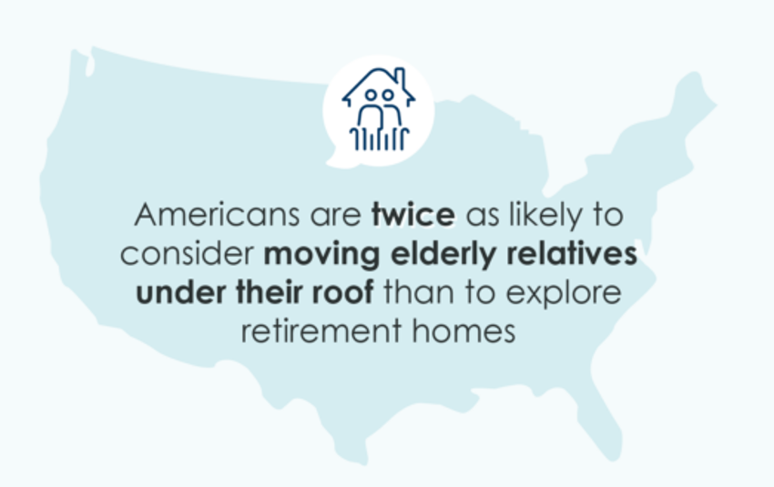
One in three adult children in the U.S. say that moving their parent(s) into their family’s home is the most likely living arrangement for their folks as they age, we hear from a study on the “Care Conversation” from LevLane, conducted by Talker Research. That’s twice as many consumers as those looking to assisted living (19%) or senior living or memory care facilities (16%). Talker Research conducted a survey of 2,000 U.S. adults, Gen X or younger with a living parent, to assess the current state of and future prospects for the senior living market.
As Adult Vaccination Levels Fall, We Must Assert the Value of Vaccines
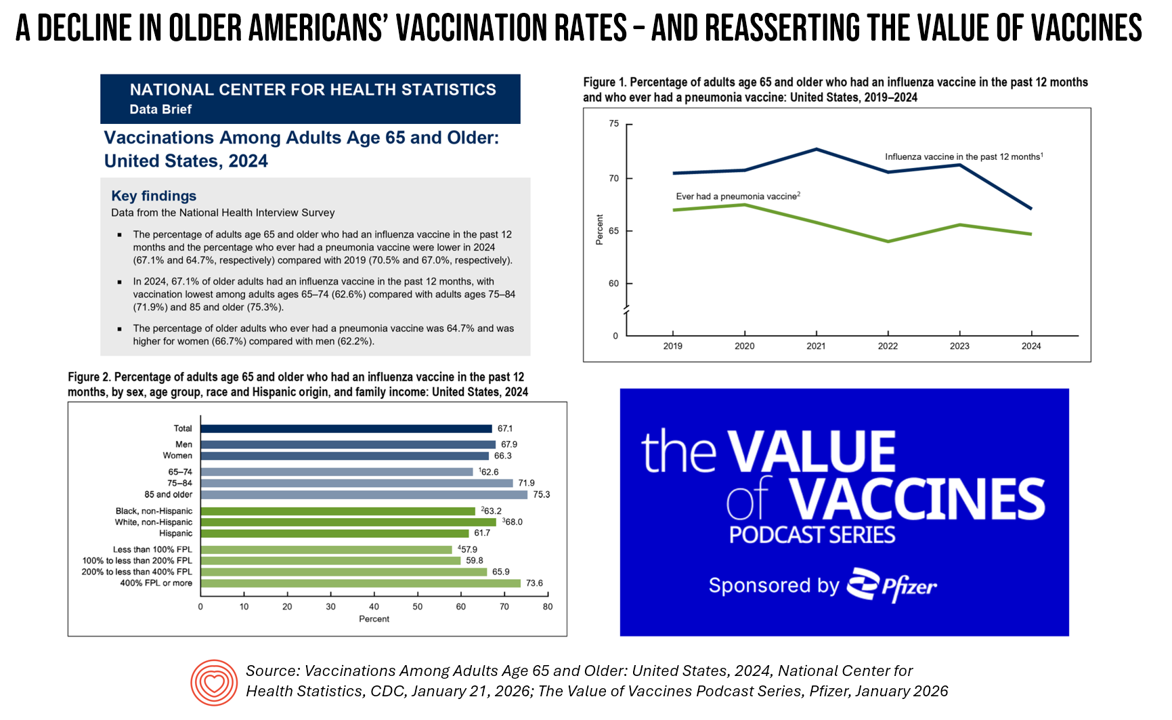
The rate of vaccinations among people 65 years of age and older has declined since 2019 — a personal health challenge for aging Americans and their caregivers and families, and a public health problem for the U.S. The Centers for Disease Control’s National Center for Health Statistics published Data Brief 547 on the situation on January 21, 2026. In the meantime, serendipity and timing are uncanny in the moment as The Value of Vaccines conversation series from Pfizer was launched this week. I am grateful to have participated in this project with several sisters-in-expertise: Elif Alyanak from Avalere, Venesa Day
Why Progresso Soup was at CES 2026: How Food is Playing Into the Evolving Health Consumer and Retail Health Landscape
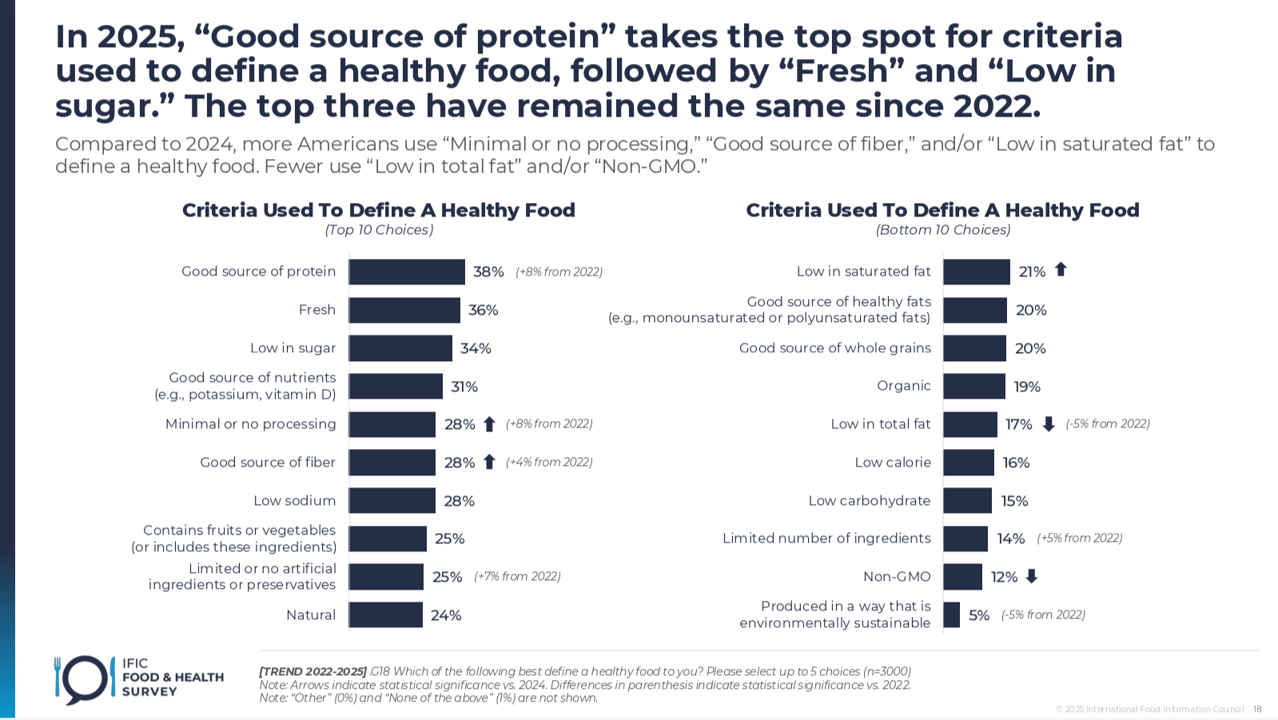
Why was Progresso Soup and its manufacturer General Mills at CES 2026? Specifically, in the AgeTech Collaborative curated by AARP? If you are part of the health/care ecosystem in any of its segments, chances are you’re attending conferences at the start of 2026 or soon to attend one. I spent last week at CES 2926 in Las Vegas getting updates on digital health, well-being, and self-care innovations. This week, hundreds of my colleagues are attending #JPM2026, the 44th annual J.P. Morgan Healthcare Conference held in San Francisco every year at this time. One conference that would not have been well-attended
Sleep as a Pillar of Health at CES 2026 — What Can Happen When A Lamborghini Legacy Mashes Up With Sleep Tech

Well-being is a new form of luxury….and sleep is an inherent aspect of well-being and health, a message reinforced during a press conference hosted by the National Sleep Foundation at CES 2026. Sleep has been an ongoing theme at CES for many years: here’s a post I wrote on sleep at CES 2025 a year ago for some historical context. In today’s growing home-as-our-health-hub ethos, sleep-tech takes on a variety of forms, from new-fangled beds and sensors, smart rings, other wearable tech (like earbuds), and circadian rhythm lighting innovations. In yesterday’s Health Populi, I focused
Tech Trends to Watch at CES 2026 – For Health, It’s About Longer Living, Smarter Living, and Better Living
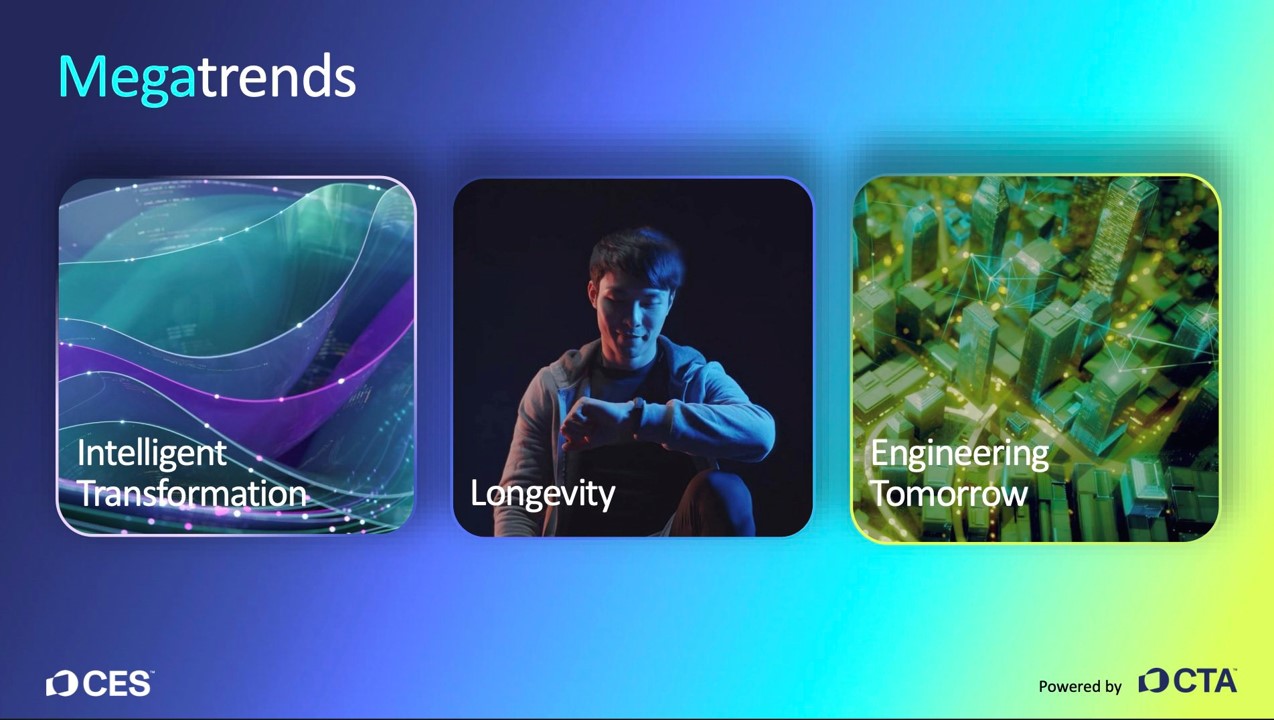
Live from CES 2026 in Las Vegas…the first day of CES Media Days preceding the big show always covers a context-setting report on Tech Trends to Watch. This is one of my annual go-to programs which helps orient media and industry analysts with a lens on CES’s key tech categories and some hard data on market size and growth expectations. While I’ll focus on the health/care specifics in the trend forecast, let me first update you on the overall technology market revenues for the U.S. which are estimated at $565 billion for 2026.
Health Tracking Wrapped Around Your Finger: All About Wearable Tech’s Growing Smart Rings Category at CES 2026
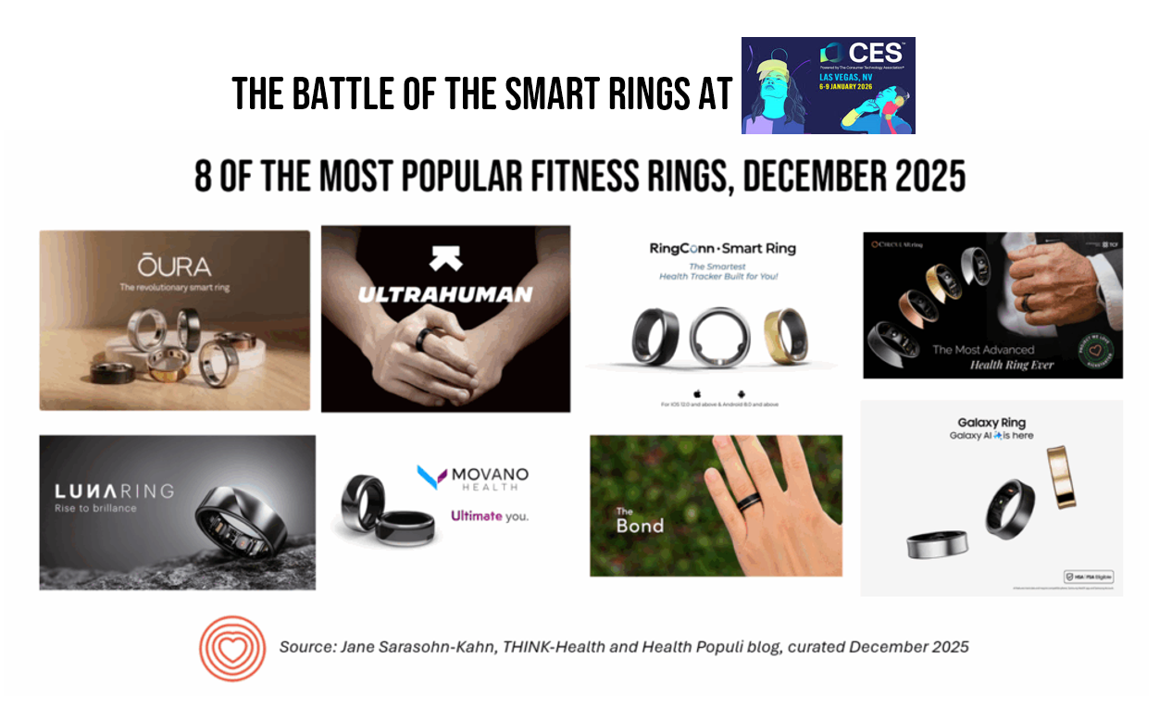
For well over a decade, wearable technologies have been developed for humans from head-to-toe — from forehead-worn bands to address stress and headaches to smart shoes with sensor-embedded soles that assess our gait and posture. In 2013, my CES coverage had a focus on “The Battle of the (Wrist)Bands.” This year, the #wearabletech category feels like a fierce competition for the human real estate of the finger — that is, a battle of the smart rings. Twelve years later, smartwatches are mainstream trackers for health embedded with sensors that are gaining clinical evidence for use in medical care well beyond
Navigating a Constellation of Uncertainties: Health/Care in 2026 (My Un-Forecast)
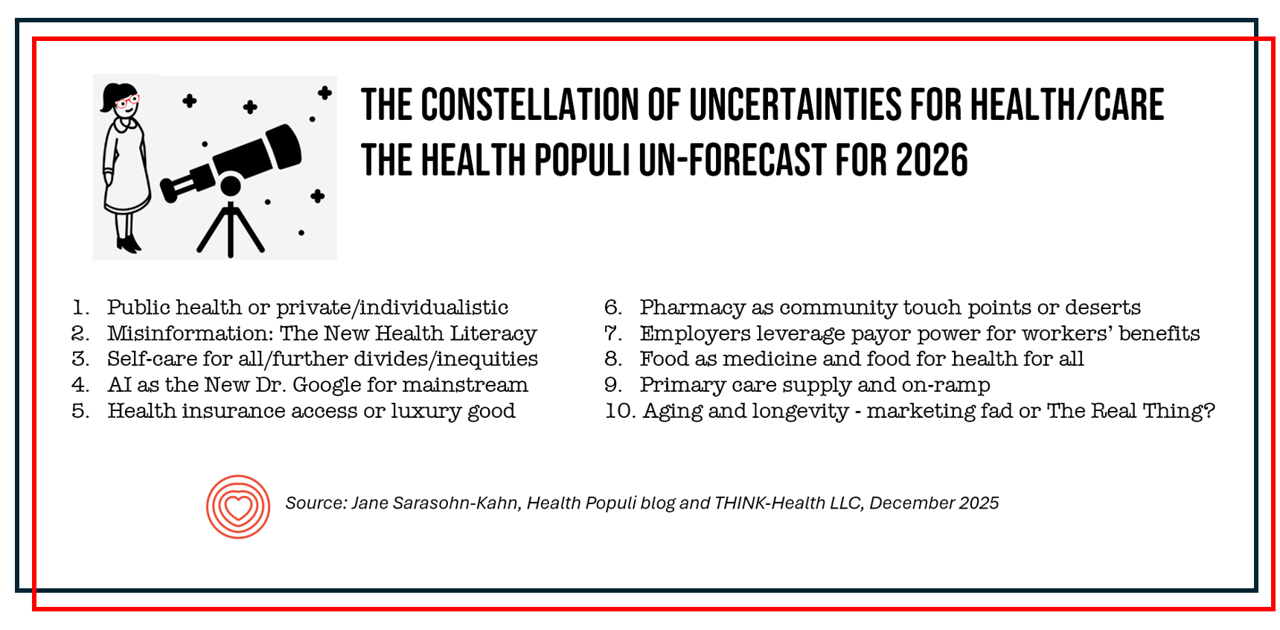
Almost from the first year of launching Health Populi in 2007, I’ve written a “TrendCast” for the coming year of health care. Over many years, there weren’t so many blogs devoted to health care which featured such prognostications, and so readers could divine signal from noise and move forward into new years with manageable lists of What To Expect Next Year in Healthcare. Here’s one from ten years ago that brings a sense of déjà vu: most of the findings are consistent with what we know for sure about 2026 and it’s useful to look back with today’s eyes to
Trust and AI in Healthcare: At a Crossroads, Edelman Finds
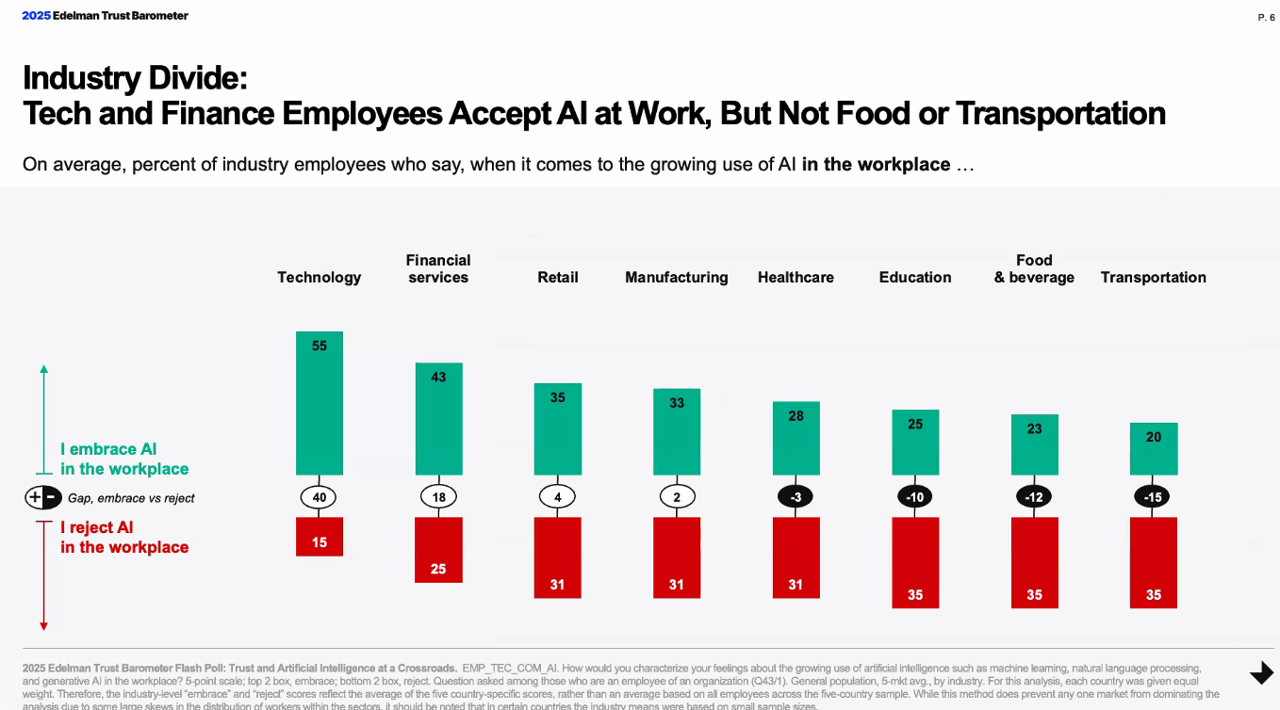
Enthusiasm for innovation is not a guaranteed thing; furthermore, trust in AI lags trust in the overall technology sector, we find in the 2025 Edelman Trust Barometer research through a Flash Poll: Trust and Artificial Intelligence at a Crossroads, discussed in a webcast on 3 December. People in the U.S. are more than twice as likely to reject the growing use of AI than embrace it, with the embrace of AI much lower than peoples’ enthusiasm for it. Edelman conducted the poll in five countries — Brazil, China, Germany, the UK and the US — with sample sizes at least 1,000+
A Month Until #CES2026 – The Journey to Our Personal Health Operating Systems

In a month, I’ll board a plane for Las Vegas to spend a week at CES 2026, the annual electronics conference that last year brought together over 140,000 global technology stakeholders to display, demonstrate, and sell the latest in consumer-facing tech. This will be my fourteenth CES (including the virtually convened meeting held in 2021). If you want to time travel, here’s a link to an early CES post featuring “The Battle of the (Wrist)bands.” Indeed, the digital health aisle at the time had many wrist-worn activity trackers, largely amped-up pedometers, with the likes
Feeling Under-Served and Overlooked: Men’s Views on Their Fertility Journeys (My Progyny Post #1)
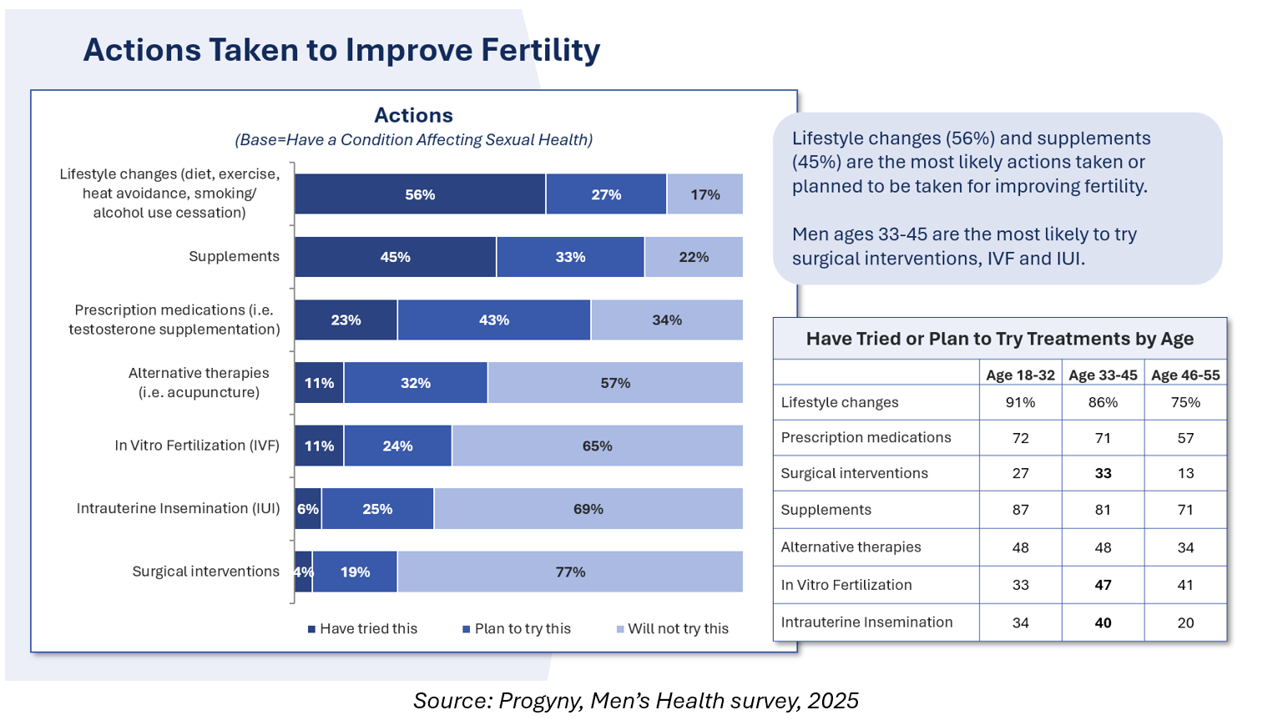
In his latest book, Notes on Being a Man, Scott Galloway discusses his personal fertility journey in the larger social context of what it means to be a man in modern America. Galloway’s infertility challenges shared with his wife inform his views on men’s health across all dimensions — physical, mental health, social health, financial well-being — and how, of course, men’s overall health is also a women’s and children’s issue. Men can feel “left out” of infertility discussions, based on results from the first and largest multi-national study into men’s feelings about their infertility revealed. “How men feel about
Where Health Meets Beauty, Mental Health, and Faith: Learning from the Farmaceutica di Santa Maria Novella
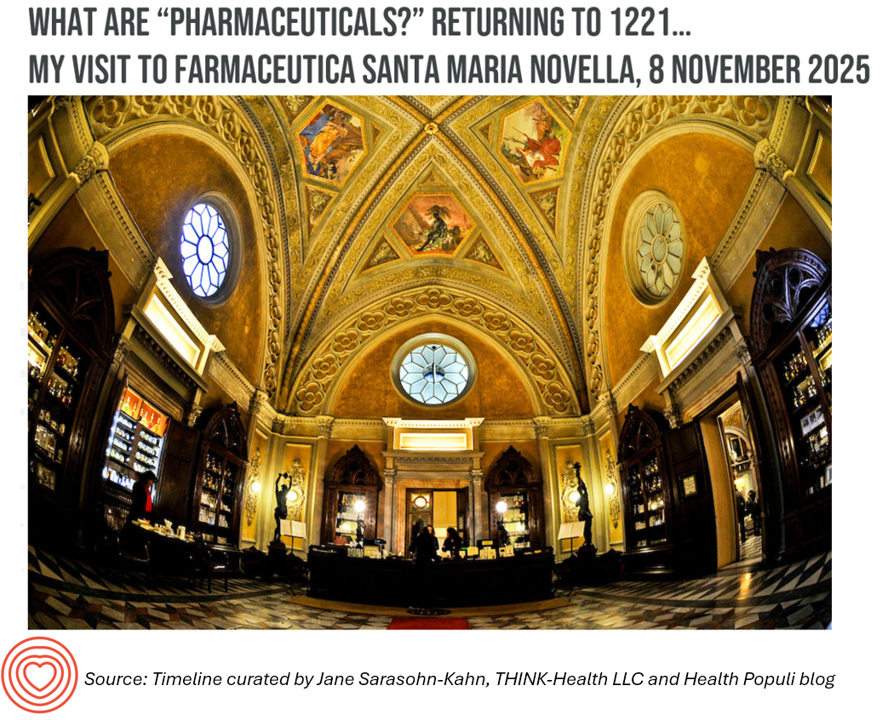
What is a pharmacy? And what are “medicines?” I’ve been thinking about this question for some time, and had the opportunity to consider this in real-time in a sort of back-to-the-past-to-the-future moment when I spent time at the glorious Farmaceutica of Santa Maria Novella (SMN) in Florence, Italy (in longhand, the “Officina Profumo-Farmaceutica di Santa Maria Novella)” on 8th November. This meet-up at this 800+ year old institution is one of many touchpoints in my work and personal life between late October and late November, where I’m working on health/care issues in 4 Euro cities: starting with London in week
Sleep in Our Lives: Self-Care, From Using PTO and Vacation Time to Tracking and Digital Detoxes

Sleep is a sort of luxury good when you don’t have it or get it: like water in a desert, it’s priceless and life-saving. When someone thinks of health, “sleep” falls into the top 3 factors, as measured by the Kearney Consumer Institute’s global survey conducted for the Consumer Goods Forum 2025. You can see from Kearney’s data shown here that physical activity (say, mobility and walking and moving about) ranks top for global health citizens, followed by diet and nutrition. Amerisleep, a sleep
How Consumers’ Access to Telehealth Impacts Medical Real Estate and Design Decisions
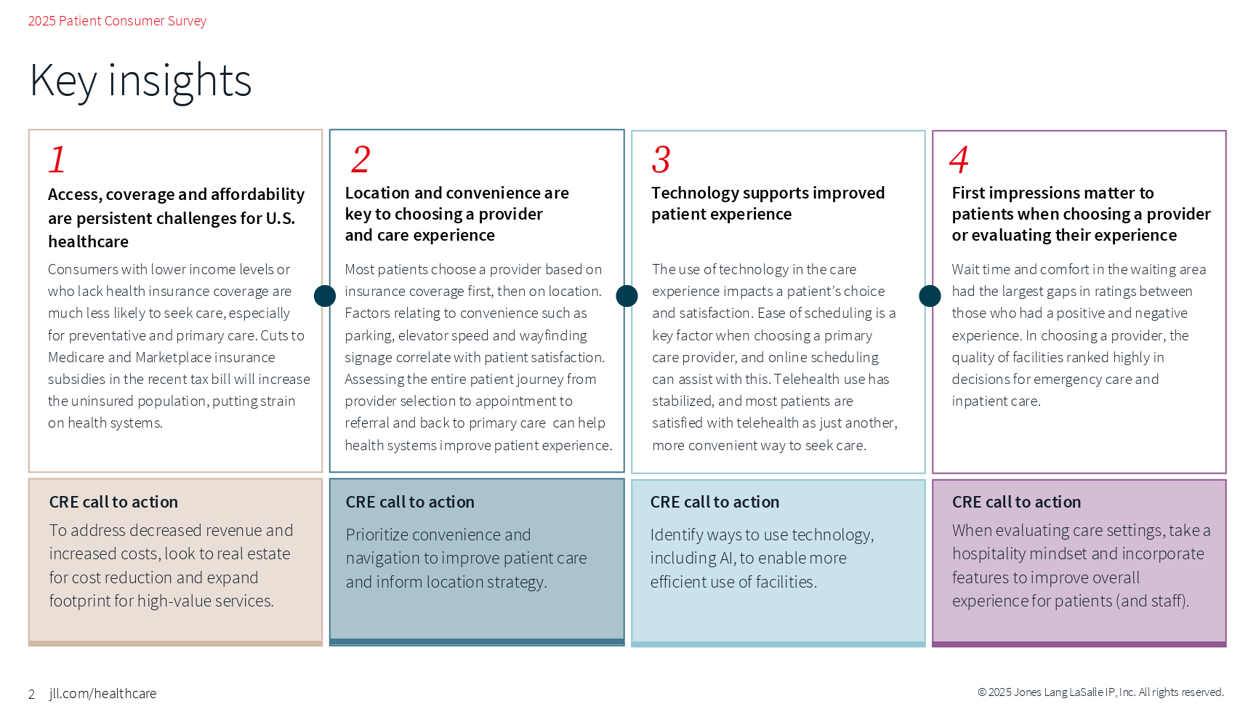
The idea of “hospitality” in health care is not new, but the nature of how patients-as-consumers are dealing with health care choices based on what looks and feels good is changing the nature of what hospitality means in technology-enabled health care delivery, we learn from the 2025 Patient Consumer Survey conducted by JLL. Jones Lang LaSalle Inc. (JLL) is one of the largest global commercial real estate firms with a strong portfolio of medical buildings. So it is worthwhile to track what the company is learning about health care delivery distributed both inside and outside of brick-and-mortar medical buildings.
Dr. Osterholm Explains “The Big One” – A Deja Vu Moment with a True North Public Health Expert
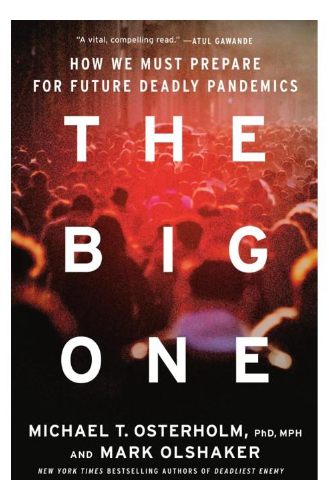
“The truism that no one is completely safe until everyone is safe is a truism because it happens to be true.” So caution Michael Osterholm, epidemiologist, professor at the University of Minnesota School of Public Health, and director of CIDRAP (the Center for Infectious Disease Research and Policy at the U-MN) and collaborating writer Mark Olshaker in their new book, The Big One. (In this post, for the sake of brevity, I’ll refer to the two authors as “O&O”). Simply put, the tagline tells us what we are about to read: a
What the Growth of Single-Person-No Children SNAP Beneficiaries Means for Health in America
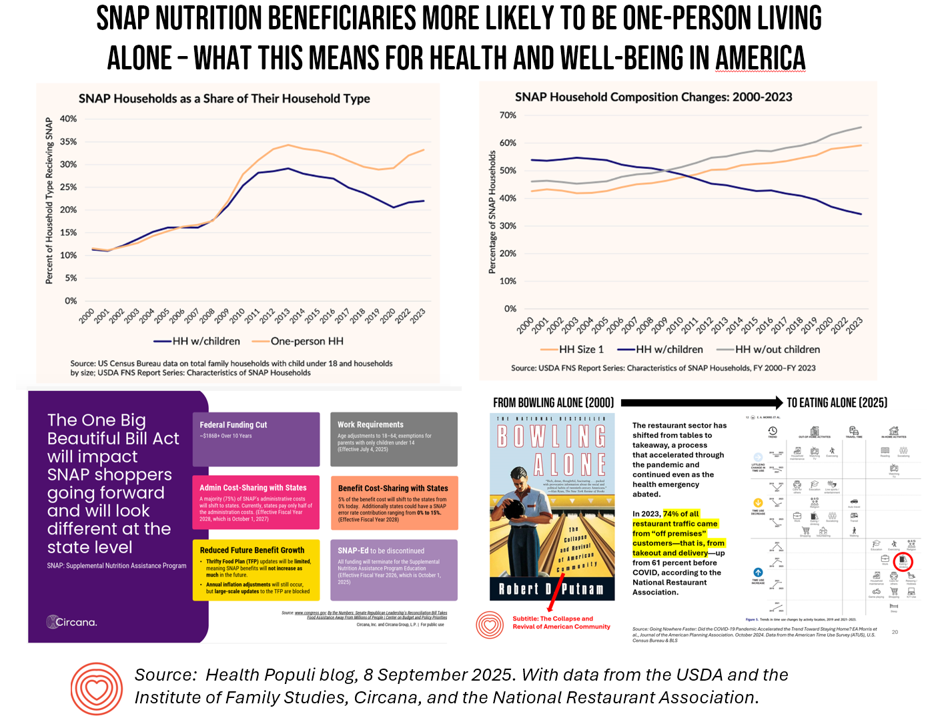
“SNAP has moved away from primarily serving families with children toward serving households without children, particularly those consisting of just one person,” an analysis from The Institute for Family Studies observes, giving us some food-for-thought on what these changing demographics of SNAP beneficiaries could mean for the health and well-being of people in the U.S. The Institute looked at data from the U.S. Department of Agriculture and graphed this top-line trend of households with children declining as a percent of SNAP households compared with growth among households without children. SNAP has significant
Most People Would Choose Food Over Meds to Get Healthy. But Barriers to Consumers Doing So Will Require Collaborative Approaches That Get Closer and Personal
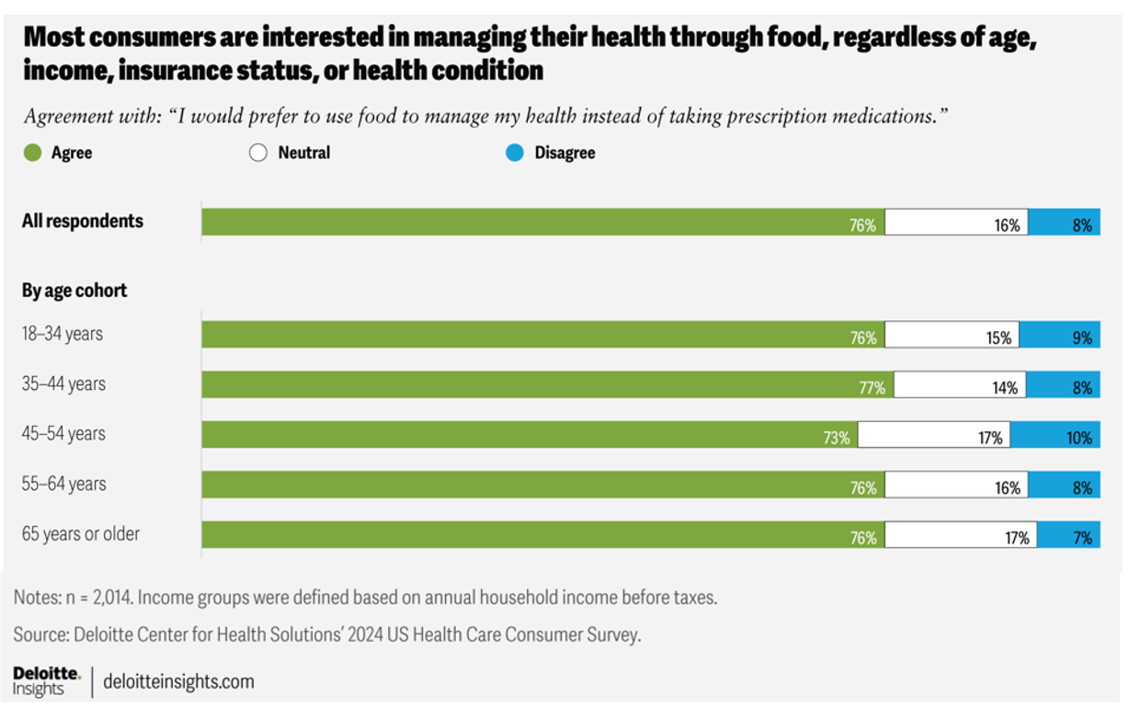
The pandemic era re-shaped consumers’ views on food as an input for health across all dimensions. We look back with affection for our local grocery stores and pharmacies which played leading roles as first responders f0r our health and, quite literally, the basic needs at the base of our personal hierarchies the way Maslow conceived them. As I tracked home-bound consumers’ behaviors from the start of COVID-19 in March 2020, I hunted-and-gathered data from Nielsen, Acosta, Circana, Gallup, Harris, and other sources of consumers @ retail. The DIY food-health concept, coined by Nielsen, was the build-up of our “pandemic pantries.”
Consumers Look to Brands to Both “Do Good” and Help Me “Feel Good” – Another Riff on the Edelman Trust Barometer and What This Means for Health Care
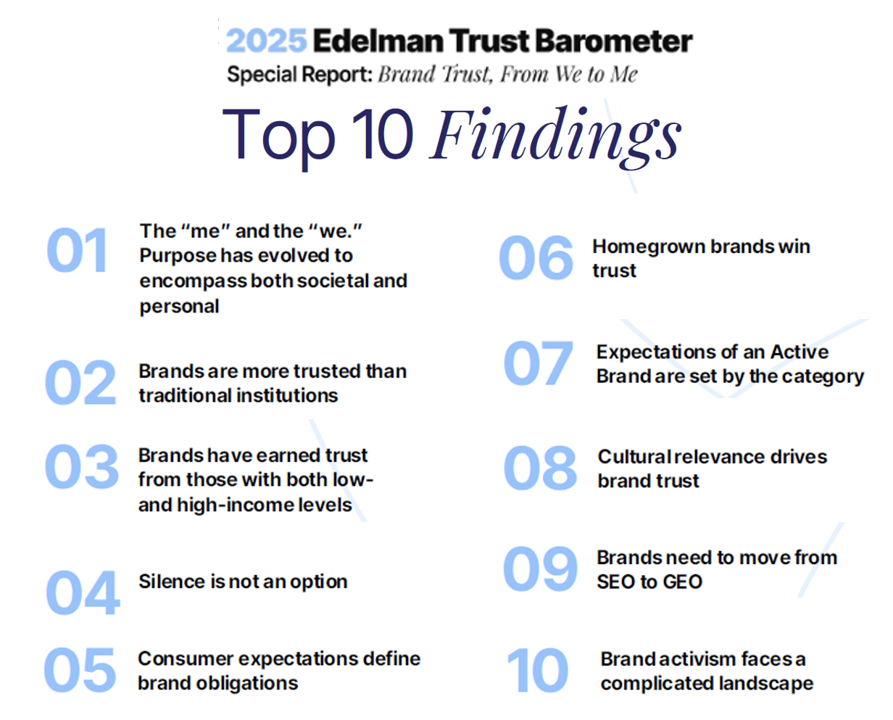
With consumers the world over feeling greater financial stress and social chasms in 2025, people are trusting brands more than institutions to help them both feel good and expecting them to “do” good, we learn in Brand Trust, From We to Me, a special report from the 2025 Edelman Trust Barometer. The overall theme of this year’s Trust Barometer was “Trust and the Crisis of Grievance.” One artifact of peoples’ grievance is their shift from “we” to “me;” in this new report with a lens on brands, Edelman finds that consumers expect
Consumers’ Favorite Brands for 2025 Look a Lot Like Pandemic Times: All About Hygiene, Safety, Personal Care, and Packages

Shades of the year 2020; it’s déjà vu all over again when it comes to consumers’ most trusted brands in 2025 featured in Morning Consult’s Most Reputable Brands report. Here’s the list of the top 25 most trusted brands across all consumer touch-points and industries for all adults, ages 18 and older. A quick calculation reveals that consumers most trust brands covering, Home keeping and hygiene – Dawn, Clorox, Lysol, Mr. Clean, Home Depot Self- and personal care – Dove, Oral-B, Kleenex, Colgate Health – BAND-AID, Tylenol Packages
That Big Beautiful Bill’s Healthcare Proposals Aren’t So Pretty in the Views of Most People in the U.S. – Including Josh Hawley (R-Mo.) – Listening to the Kaiser Family Foundation June Health Tracking Poll

Across all U.S. voters, the so-called “Big Beautiful Bill” Act (BBB) is seen unfavorably by nearly a 2:1 margin. Underneath that top-line, Democrats, Independents, and non-MAGA Republicans oppose it, while MAGA supporters favor it. But favorability erodes when people hear about possible health impacts, we learn in the June 2025 Health Tracking Poll from the Kaiser Family Foundation. The details on views of the BBB Act are shown in the first bar chart, with overwhelming disfavor among Democrats and Independents, and majority unfavorability among non-MAGA GOP supporters. Next check into partisans’ lenses
Americans Hear More Frequently About GLP-1 Drugs Than About Menopause, Sleep, or Bird Flu
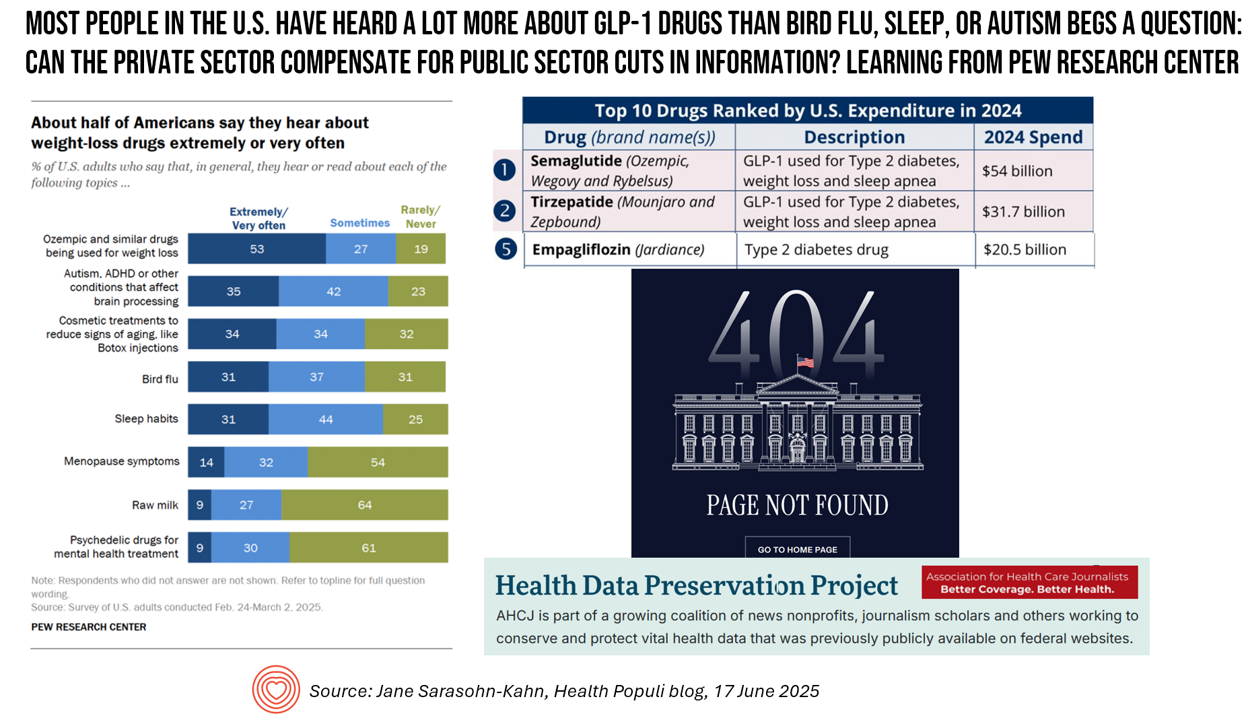
Yu In a sign of our health communications times, GLP-1s are a much more frequently health topic Americans hear about than autism and ADHD, cosmetic treatments like Botox, Bird flu, sleep issues, or menopause. The Pew Research Center polled 5,123 U.S. consumers in February and March 2025 to gauge peoples’ perspectives on health information and communications trends in America. In the study summary titled, From weight-loss drugs to raw milk, Americans hear more often about some health topics than others, the Pew Research team. The finding that
The Spirit for Eating Healthier Is Willing, But the Cost of Doing So “Outweighs” the Will – Listening to Escoffier

It’s been a full week’s coverage on food-as-medicine and food as a driver of health in America this week on the Health Populi blog. Today we turn to the chefs at Escoffier who know food, teach food, and now offer programs in holistic nutrition and wellness through the lens of culinary arts. With that lens, Escoffier recently published a report on the future of healthy eating, which will round out this week’s Health Populi landscape on food and health. In the paper, the Escoffier team curated data points from many studies — via Gallup, Mintel, Innova,
In Health Care, Consumers Are Seeking Kindness Coupled with Efficiency

Kindness + efficiency + listening + personalization: together, these are the most important experiences consumers seek from health care touchpoints, we learn in Humanizing Brand Experience: Healthcare Edition from Monigle. In this 8th volume of the company’s Humanizing series, Monigle tracks a different pattern of patient engagement — to be sure, built on trust, yet not just as a health consumer dealing with a diagnosed condition — but more holistically for getting me and keeping me healthy and well. The implication and recommendation here is to deliver even more personalized care
Health, Wealth, and How Business Can Support Consumers in an Era of “Uncertainty on Steroids”

Facing uncertainties across everyday life flows, U.S. consumers look to economic and health security — and welcome businesses to support these, we learn in an analysis from The Conference Board. The Conference Board (TCB) polled 3,000 U.S. consumers gauging their perspectives on uncertainties emerging out of the new Trump administration’s policy changes introduced in the first quarter of 2025. The chart details people’s financial/fiscal responses in blue, and the health (mental, social, and physical aspects) in yellow: Consumers’ fiscal strategies for coping with uncertainty are to seek out more affordable brands and retailers, adjusting
Americans’ Trust in Public Health Agencies Has Become Politicized, Though There is Bipartisan Support for Many Public Health Priorities

While health citizens’ trust in the “messengers” of health information has become polarized by partisans’ political views, there is real concordance of support for many public health priorities. We weave together two current studies to come to this realization: the latest (April 2025) KFF Tracking Poll on Health Information and Trust, KFF’s ongoing health survey (published 6 May); and, the de Beaumont – Harvard Chan School of Public Health poll into Americans’ views on public health in “the first 100 days” of President Trump’s presidency. First, consider the KFF study, conducted among
How Consumers’ Economic Sentiments Are Shaping Peoples’ Financial and Emotional Well-Being (Spoiler: Not So Good): Learning from CivicScience
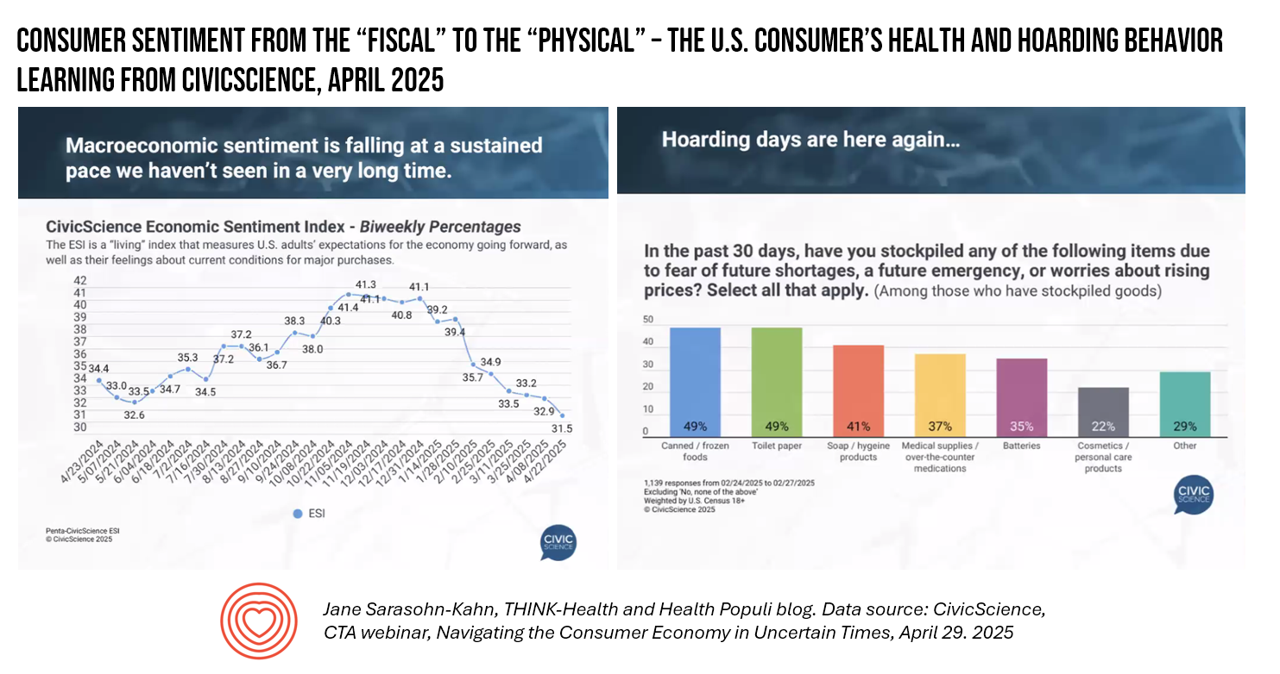
When it comes to health, the words “fiscal” and “physical” are morphing as peoples’ economic feelings (the “fiscal”) are shaping physical and emotional health, we find in U.S. consumer data presented by John Dick, Founder and CEO of CivicScience. The Consumer Technology Association convened a special session with John, who painted a portrait of the U.S. consumer at a point in time — late April 2025 — reminding us more than once during the hourlong session that, “Everything is constantly changing.” One certainty that we can be sure of, in the dismal-scientist way
A Profile of Health Consumer-Generations’ Use of Digital Health – Rock Health Takes Us Through the Ages

In the past year, most consumers in the U.S. have used virtual care, tracked at least one health metric digitally, and own a wearable or connected health device. Digital health has certainly gone mainstream across U.S. consumers, with varying utilization and motivation by generation, we learn in the report, Screenagers to Silver Surfers: How each generation clicks with care from Rock Health. To segment health consumers by age/generation, the RH team mined the firm’s 10th Consumer Adoption of Digital Health Survey which polled over 8,000 U.S. adults in 2024 on peoples’ perspectives
“The Church As Field Hospital” – Learning from Pope Francis About the Power of Loneliness and Connection

“I see the church as a field hospital after battle.” The death of Pope Francis gives me reason today to turn to one of the key themes he spoke about during his years leading the Catholic Church. That is, the Church as Field Hospital. Healthwise, the Pope had a history of respiratory conditions which began in his early 20s when he had surgery to remove a piece of his lung affected by an infection. Still, he lived to a ripe 88 years of age, participating in Easter Sunday’s morning mass at The
The Biggest Opportunity for Sporting Goods is Consumers’ Physical Inactivity: Learning from McKinsey (with a personal nod to pickleball)
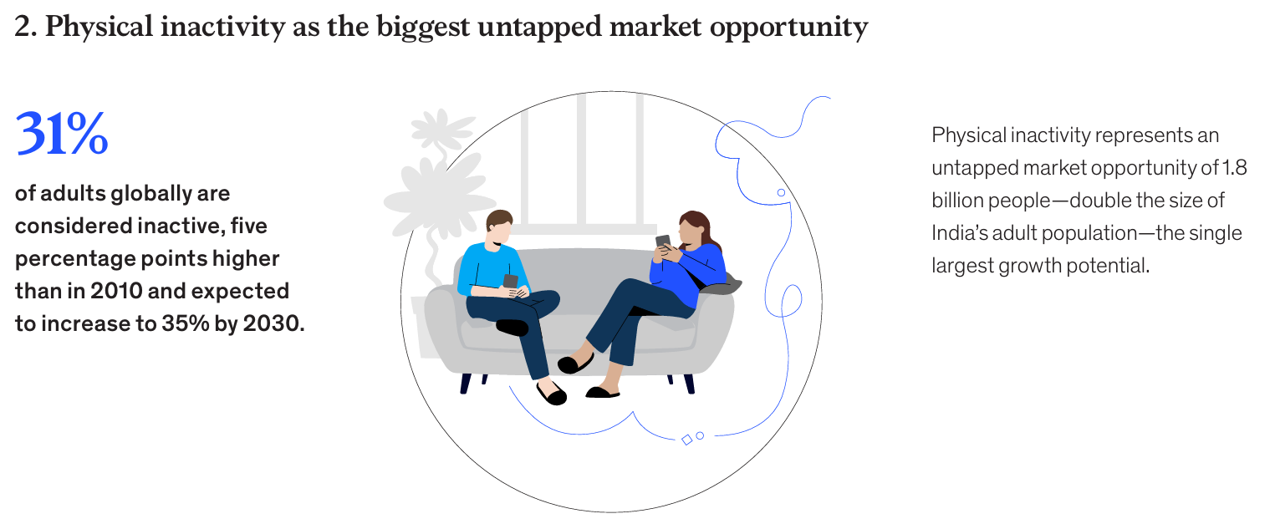
McKinsey just published a detailed report into Sporting Goods 2025, which the firm calls a “new balancing act” that must turn uncertainty into opportunity. The report is based on five key observations: Only a few sporting goods companies have expanded growth and margins since 2018 — and must “rethink the value chain” in the face of challenging geopolitical headwinds One-half of so-called “active consumers” say that fitness is a core element of their identity, with emotional connections to brands they purchase for the lifestyle Incumbent sporting goods companies are losing market share to
Are We Liberated Yet? Tariffs Can Impact Financial Health (Riffing on MoneyLion’s Health Is Wealth Report)
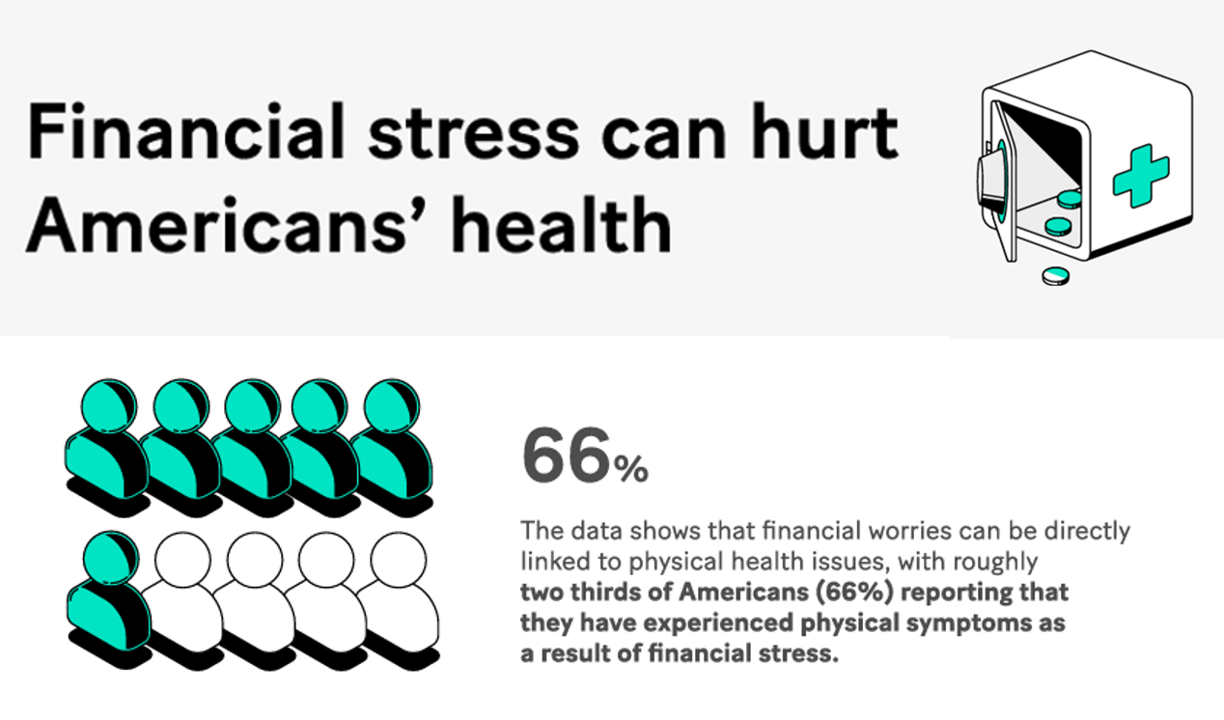
Americans’ financial health was already stressing consumers out leading up to Liberation Day, April 2nd, when President Trump announced tariffs on dozens of countries with whom the U.S. buys and sells goods. A new report from MoneyLion and Mastercard called Health is Wealth is well-timed for today’s Health Populi blog. The study was fielded by The Harris Poll online among 2,092 U.S. adults 18 and older between February 28 and March 4, 2025, so it was completed a month before the tariffs came to hit peoples’ 401(k) savings and employers’ company stock market caps.
What is a Consumer Health Company? Riffing Off of Deloitte’s Report on CHCs/A 2Q2025 Look at Self-Care Futures
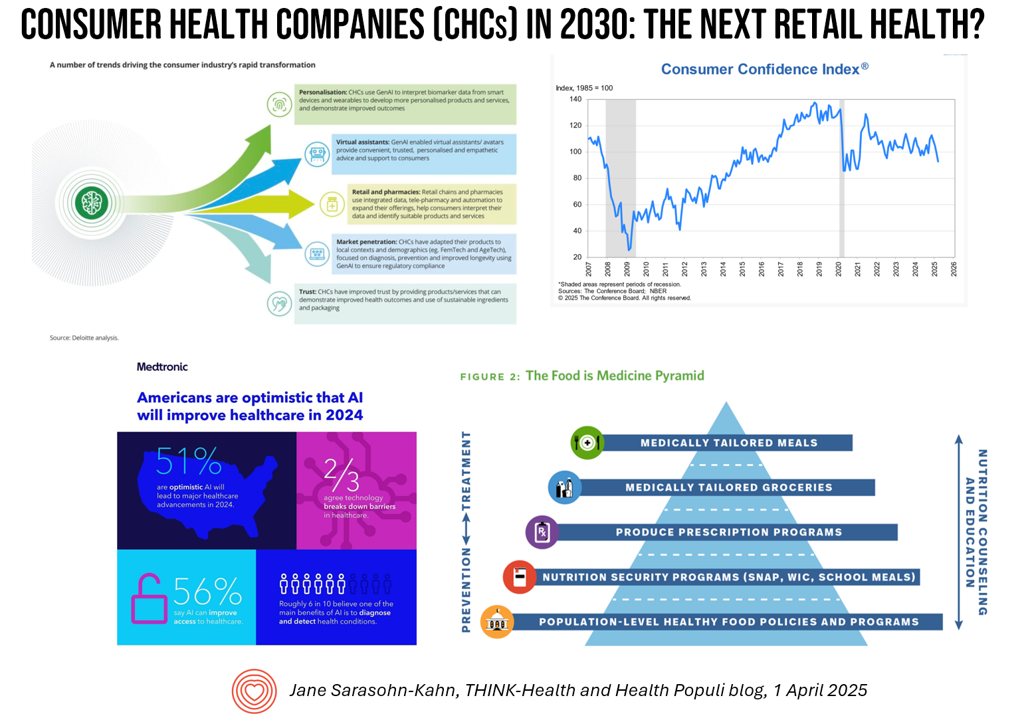
The health care landscape in 2030 will feature an expanded consumer health industry that will become, “an established branch of the health ecosystem focused on promoting health, preventing, disease, treating symptoms and extending healthy longevity,” according to a report published by Deloitte in September 2024, Accelerating the future: The rise of a dynamic consumer health market. While this report hit the virtual bookshelf about six months ago, I am revisiting it on this first day of the second quarter of 2025 because of its salience in this moment of uncertainties across our professional and personal lives — particularly related to
Still Life in Need: Art, Food Justice, and Health

As Thomas Jefferson reminded us, travel makes us wiser…but less happy. And so it is when you confront a piece of art that makes you stop in your tracks, swim in it, and know what it’s saying in terms of what you know you know. Such was the case yesterday during a walking meeting through the Frist Art Museum in Nashville when I passed by this quilt, a multimedia work titled “Still Life in Need” by Lee Colvin, a local artist. This work was part of a
The Growth of DIY Digital Health – What’s Behind the Zeitgeist of Self-Reliance?
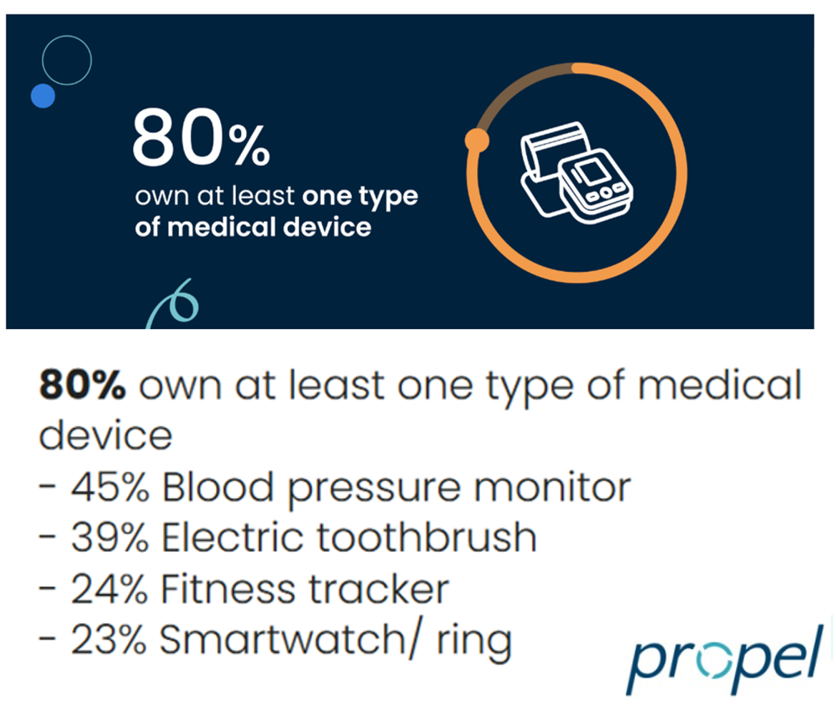
Most people in the U.S. use at least one medical device at home — likely a blood pressure monitor. used by nearly one-half of people based on a survey of 2,000 consumers conducted for Propel Software. The Propel study’s insights build on what we know is a growing ethos among health consumers seeking to take more control over their health care and the rising costs of medical bills and out-of-pocket expenses. That includes oral health and dental bills: 2 in 5 U.S. consumers use electric toothbrushes (a growing smart-device category at the
Health/Care at Super Bowl LIX, GLP-1s, Kaiser and Tufts on Food-As-Medicine, and the RFK, Jr. Factor: A Health Consumer Check-In
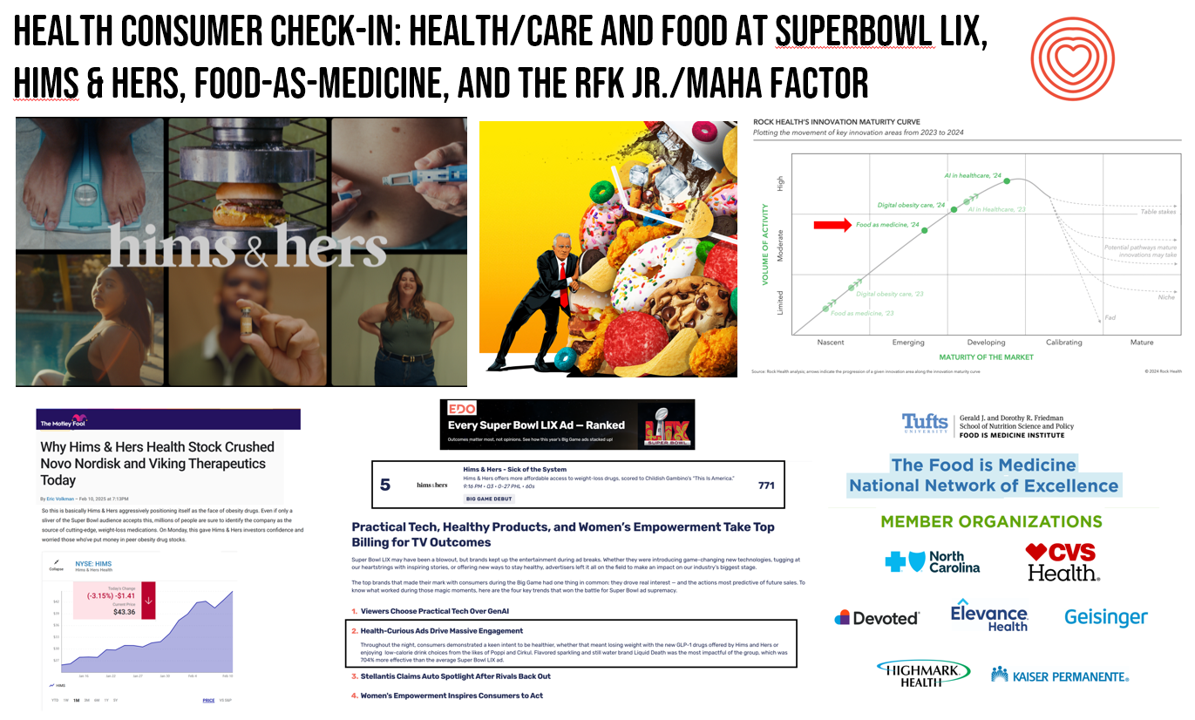
In the wake of the always-creative ads for Super Bowl and last Sunday’s LIX bout, game-watchers got to see a plethora of commercials dedicated to the annual event’s major features: food and game-day eating. Oh, and what’s turned out to be the most controversial commercial, the one on GLP-1s from Hims & Hers. In that vein, and converging with many news and policy events, I’m trend-weaving the latest insights into that most consumer-facing of the social determinants of health: food, and in particular, health consumers viewing and adopting food as part of their health and well-being moves. First, to the
Measuring Progress for Life Sciences: Trust, Patient Access, and Prevention at a Fork in the Road of Public Health
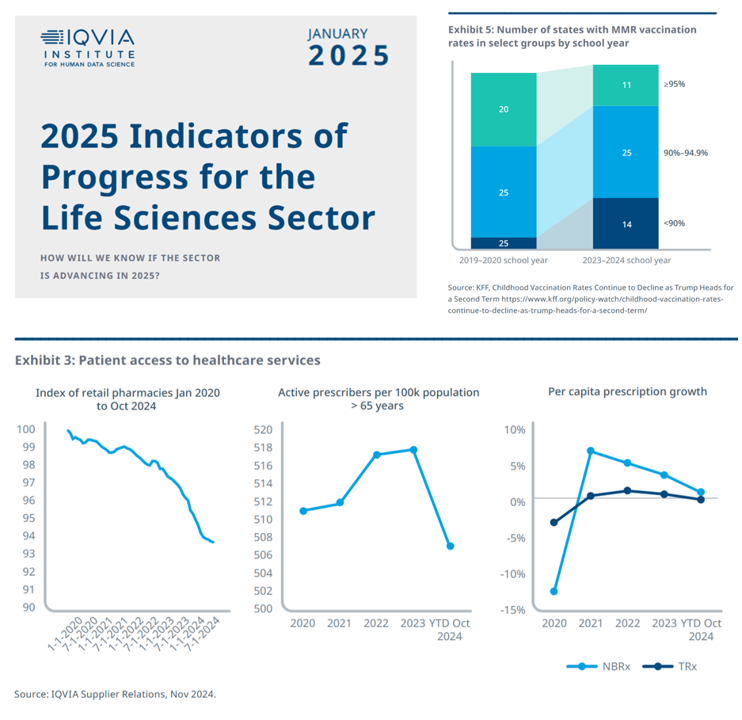
How will we know if the life sciences sector is advancing in 2025? This is the question asked at the start of the report, a Research Brief: 2025 Indicators of Progress for the Life Sciences Sector, from the IQVIA Institute for Human Data Science (IQVIA). To answer that question, IQVIA identified ten indicators for this 2025 profile on the life sciences sector. I selected four key data points for this discussion which provide particularly informative insights for my advisory work right now at the intersection of health, people/consumers, and technology: Trust for/with/in life science
Connecting for Health at Home: A Unified Field Theory from #CES2025 (On Samsung, Withings, and Panasonic)
There were over 4,500 exhibitors on the show floor of the 2025 CES in Las Vegas last week, addressing every imaginable aspect of consumers’ daily lives as we increasingly coexist with technology to support life, liberty, and our personal pursuits of happiness….. ….and health. My focus is always on health, and in the past decade and a half, health/care, everywhere. So my lens on #CES2025 looked out for specific point solutions for health, medical care, fitness and well-being, along with adjacencies for mobility/auto, environmental health (think: clean air, clean water), kitchen appliances and food-tech, and home care (not the medical
The Evidence for Gratitude and Health, 2024 Giving Thanks
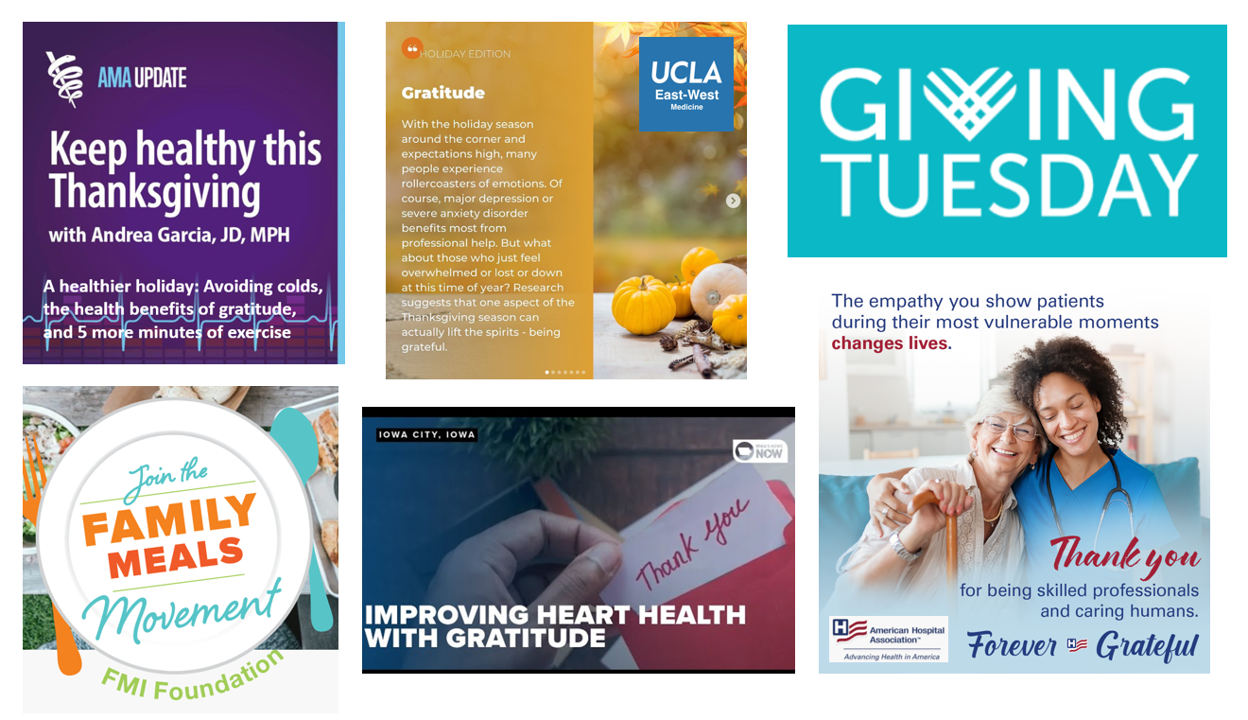
In our home, we’re feeling very grateful for our healthy lives and work-flows right now, being very mindful about seeing blessings around me and within me…. So I’m sharing the love (or “scaling the love” as I recently coined at OSF’s Digital Health Symposium!) to honor American Thanksgiving 2024 here in Health Populi pointing out several sources highlighting the evidence on gratitude and health….underpinned with love, the ultimate driver of health and well-being. Leslie Sarasin, President and CEO of FMI, the Food Industry Association, reminds us that, “Our immigrant ancestors, the pilgrim settlers, worked hard
Workers Feel “Stuck,” Under-Insured, Financially Stressed, and Neglecting Mental Health
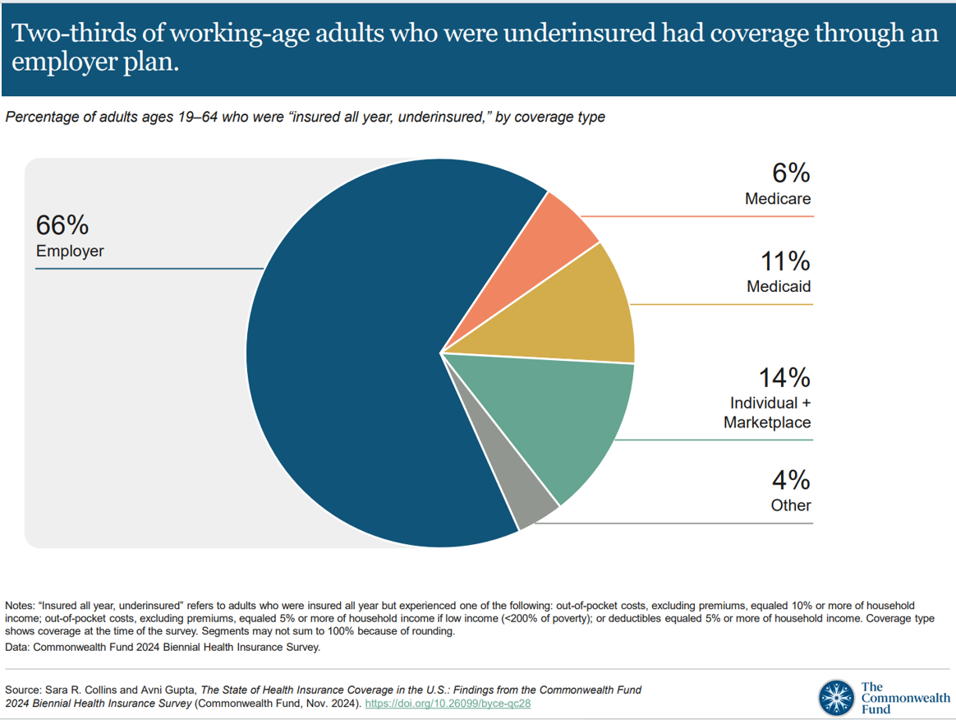
“It’s the economy stupid,” Jennifer Tescher, CEO of the Financial Health Network, titles her latest column in Forbes. Published two weeks after the 2024 U.S. elections, Jennifer’s assertion sums up what, ex post facto, we know about what most inspired American voters at the polls in November 2024: the economy, economics, inflation, the costs of daily living….pick your noun, but it’s all about those Benjamins right now for mainstream American consumers across many demographic cuts. With that realization, we must remind ourselves as we enter a new year under a second-term President Trump that health care spending for everyday people
“People will seek wellness, peace and healing” – Reading the GWI Future of Wellness Report, 2024 Trends
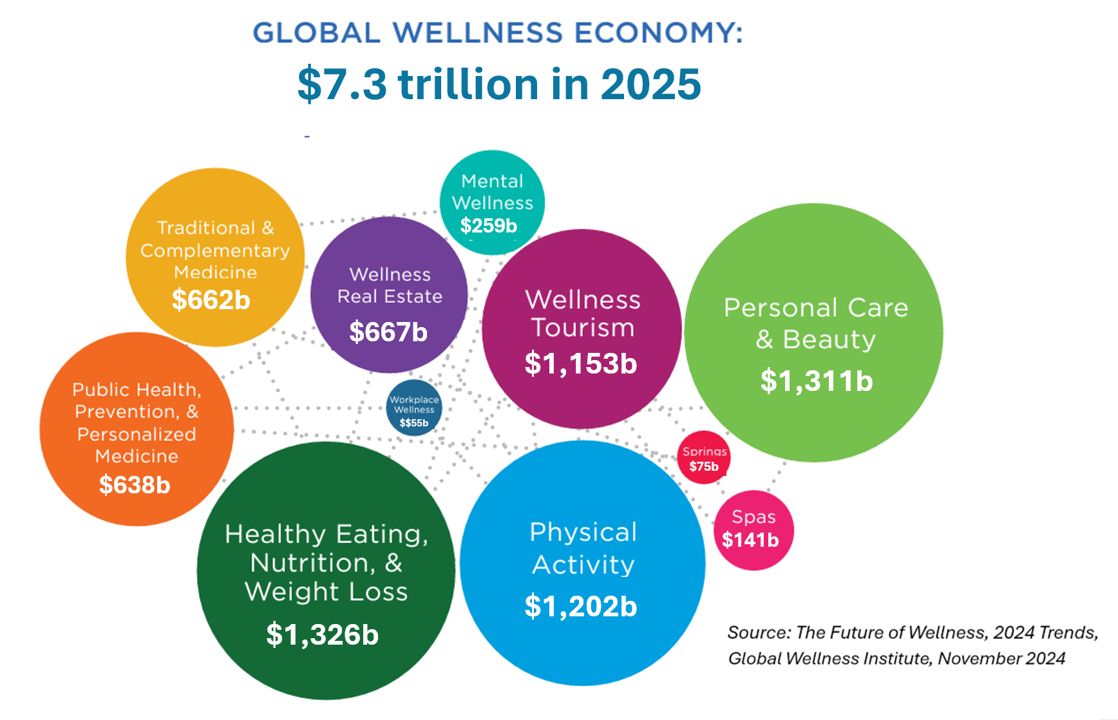
Healthy eating and weight loss, personal care and beauty, exercise and physical activity, and wellness tourism are the four biggest components of the world’s wellness economy, quantified in The Future of Wellness, 2024 Trends, the perennial report from the Global Wellness Institute (GWI). Here’s the bubble chart, which I’ve updated with the 2025 data so we get a sense of what the coming year will bring for the eleven total segments that make up the global wellness market. The fine print of the projections for these areas identifies the annual growth rates for
Health Care Costs and Access On U.S. Voters’ Minds – Even If “Not on the Ballot” – Ipsos/PhRMA
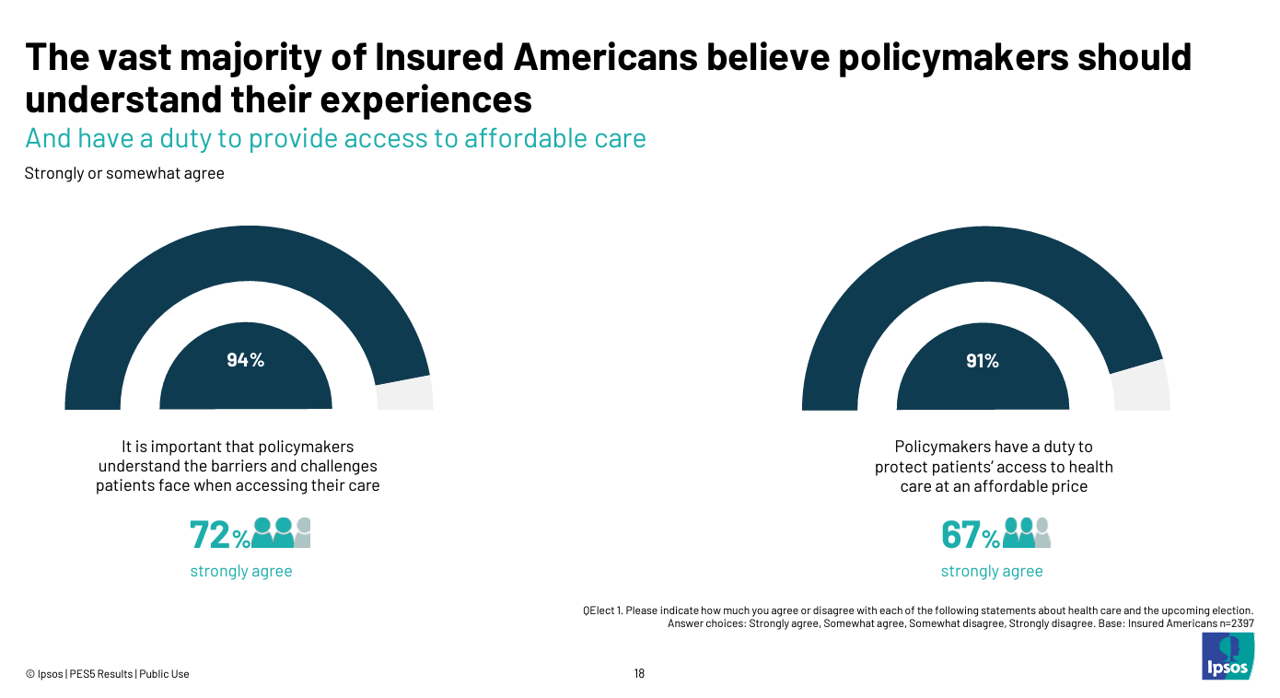
Today marks eight days before #Election2024 in the U.S. While many political pundits assert that “health care is not on the ballot,” I contend it is on voters’ minds in many ways — related to the economy (the top issue in America), social equity, and even immigration (in terms of the health care workforce). In today’s Health Populi blog, I’m digging into Access Denied: patients speak out on insurance barriers and the need for policy change, a study conducted by Ipsos on behalf of PhRMA, the Pharmaceutical Research and Manufacturers of America — the pharma industry’s advocacy organization (i.e., lobby
What is a Pharmacy? What We Can Learn from Babylon, Botanicals, and the Human OS

In the past week, a few major events bring the nature of pharmacies and the market for retail pharmacy into sharp view: First, news that CVS is undergoing self- and market-scrutiny about its business — specifically, the company’s vertical integration and financial punishment wrought by the organization’s insurance group, Aetna, leading to considering the break-up of the company into certain parts (whether the insurance business, the retail pharmacy, the specialty pharmacy unit, etc.). Second, the PBM (pharmacy benefit management) business has come under harsh light from the FTC and Congress, most recently resulting in a lawsuit filed by the FTC
Peoples’ Lack of Trust in Science Extends to Views on Food and Nutrition
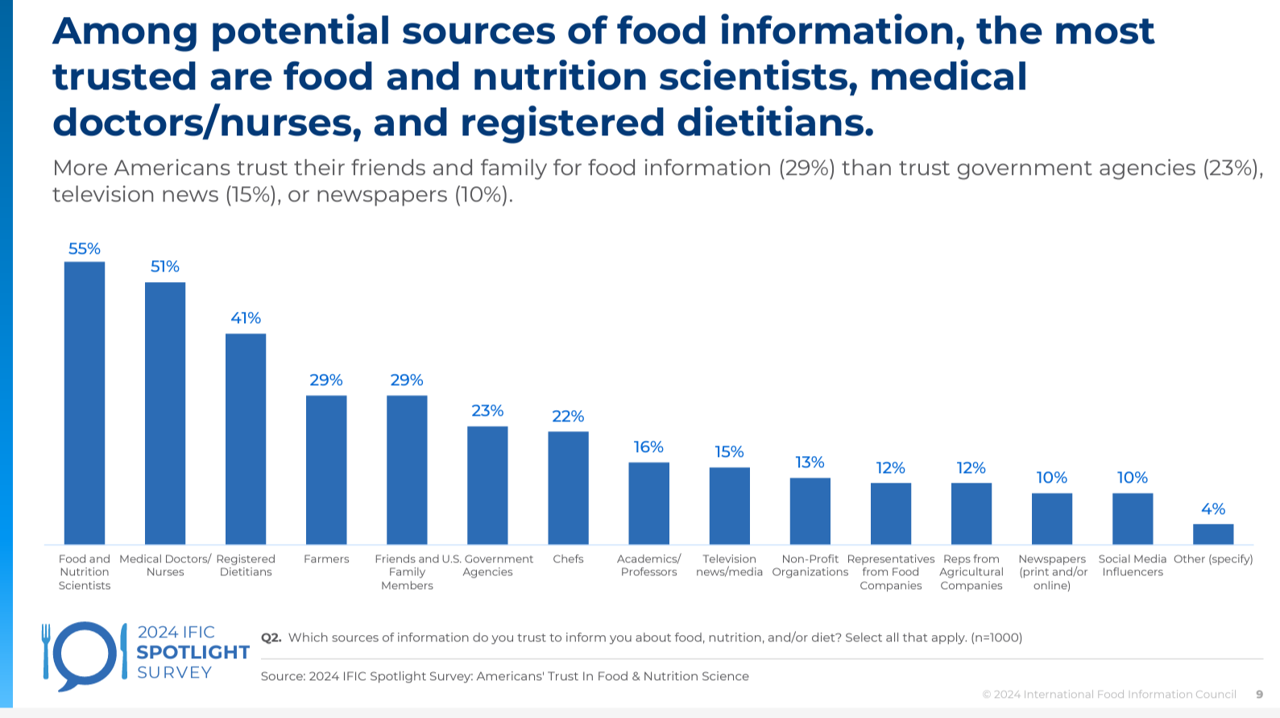
Only 2 in 5 people in the U.S. strongly trust science concerning food, nutrition, or diet, we learn from the 2024 IFIC Spotlight Survey: Americans’ Trust in Food & Nutrition Science, published in October. IFIC is the International Food Information Council, a non-profit organization with a mission of communicating science-based information about food safety, nutrition, and sustainable food systems. IFIC surveyed 1,000 U.S. adults online in July to gauge consumers’ views on food and science. The most-trusted sources of food information are the scientists involved in researching nutrition,
Well-Being Burnout – Lululemon’s 4th Annual Study Into Our Pressured Lives
Lululemon has published the 2024 Global Well-Being Report, a study into peoples’ perspectives on their personal health from the company best known for athleisure wear and self-care. This year’s report is titled, The Pressure to Be Well. That pressure is coming from peoples’ experiencing “well-being burnout.” In the company’s fourth annual report on well-being, Lululemon learned that most people have tried to adopt personal strategies to bolster their health, and one-half of these folks are confronting “well-being burnout.” Lululemon collaborated with Edelman Data & Intelligence to field the study in April and May 2024 in 15 markets where the company
The Cost of GLP-1 Drugs on Payers’ Minds as Nearly 1/3rd of U.S. Consumers Could Become Users
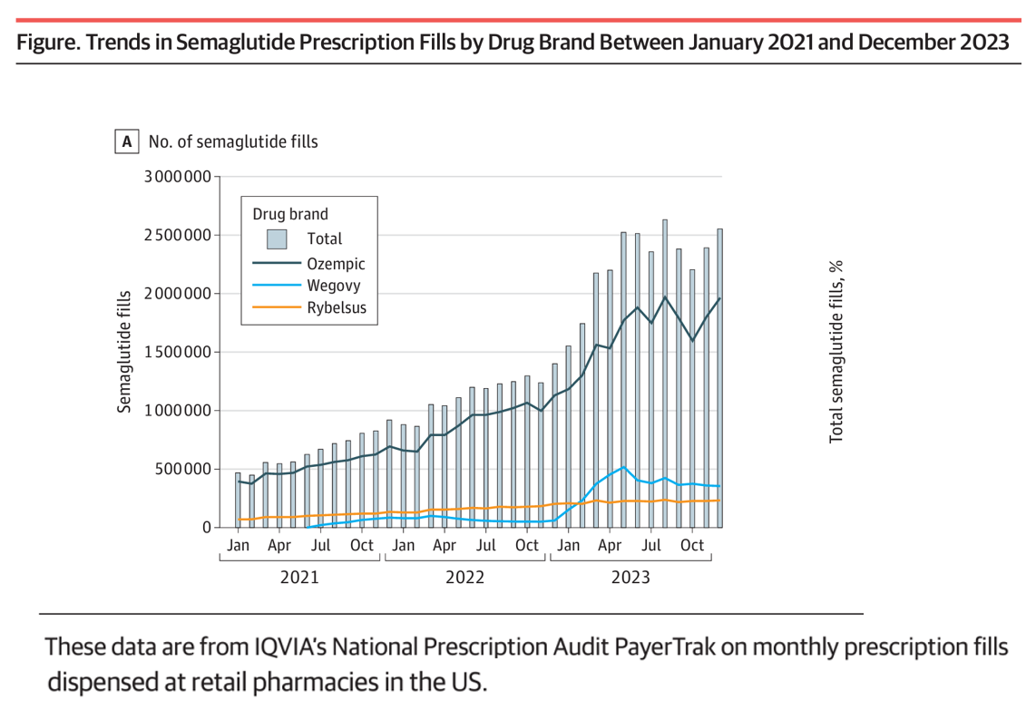
With 70 different clinical trials for GLP-1 drugs in process with the FDA, payers — and other stakeholders in the health care ecosystem — have the semaglutide-SENSE top of mind, based on my ongoing updating of this fast-moving market space. For overall market context on pace-of-growth in adoption, check out this chart from a JAMA Health Forum research letter on Prescription Fills for Semaglutide Products by Payment Method, published August 2nd. The study was based on the IQVIA National Prescription Audit PayerTrak data which captures 92% of Rx’s filled at retail pharmacies in
Will the Apple Watch, Samsung Galaxy or Oura Rings Become “Intelligent Guardians” For Health?
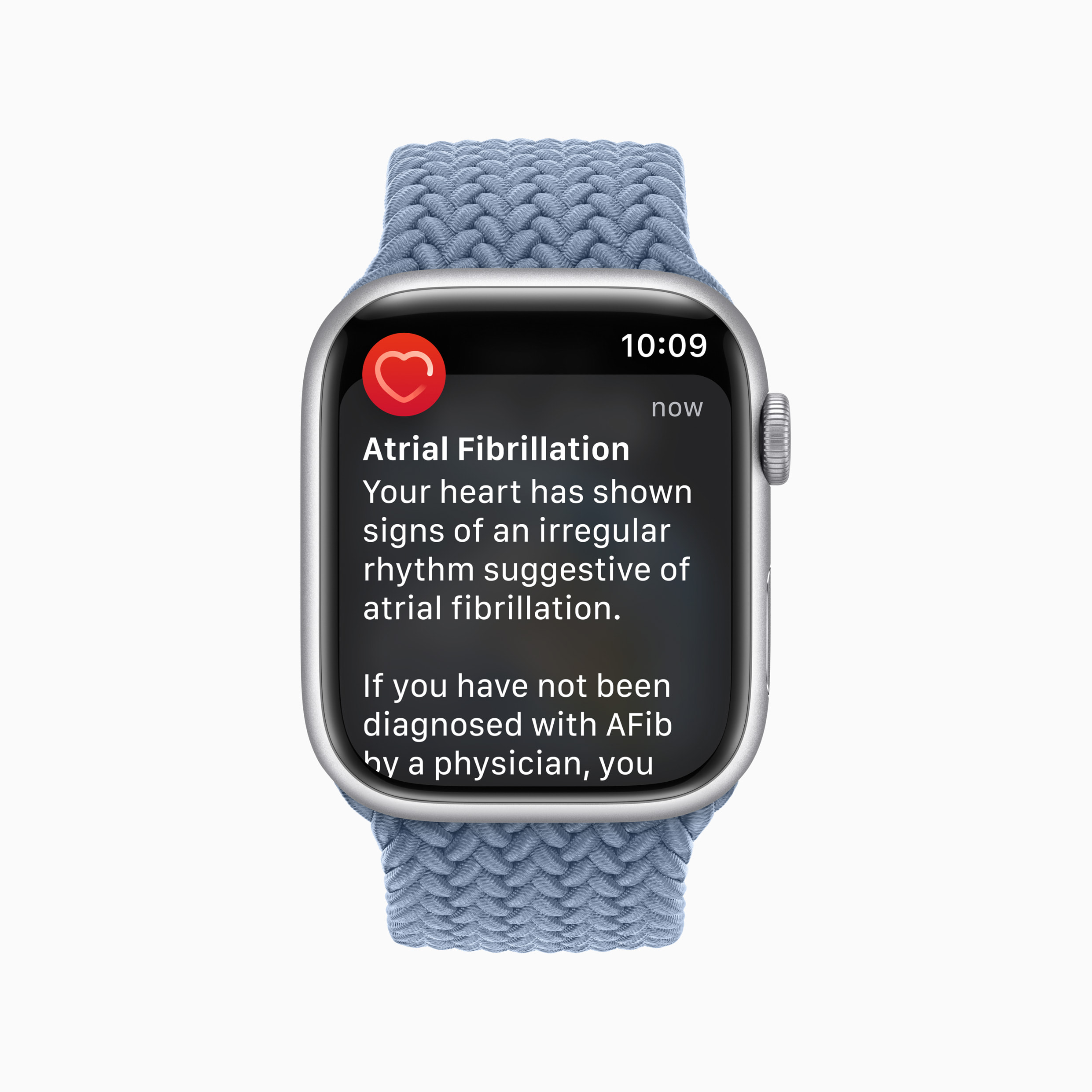
One of the few bright spots in consumer technology spending in the past couple of years of the U.S. economic “vibecession” has been the category of smartwatches. The Wall Street Journal recently talked, specifically, about the growing role of the Apple Watch for health care, gaining traction as a part of cardiologists’ and other physicians’ testing for and adoption of the wearable tech device for patients who are managing medical conditions. Data from CTA, the Consumer Technology Association, has been tracking such spending which I’ve often discussed here in Health Populi
Most Americans Follow an Eating Pattern in Search of Energy, Protein, and Well-Being – With Growing Financial Stress: A Food as Medicine Update
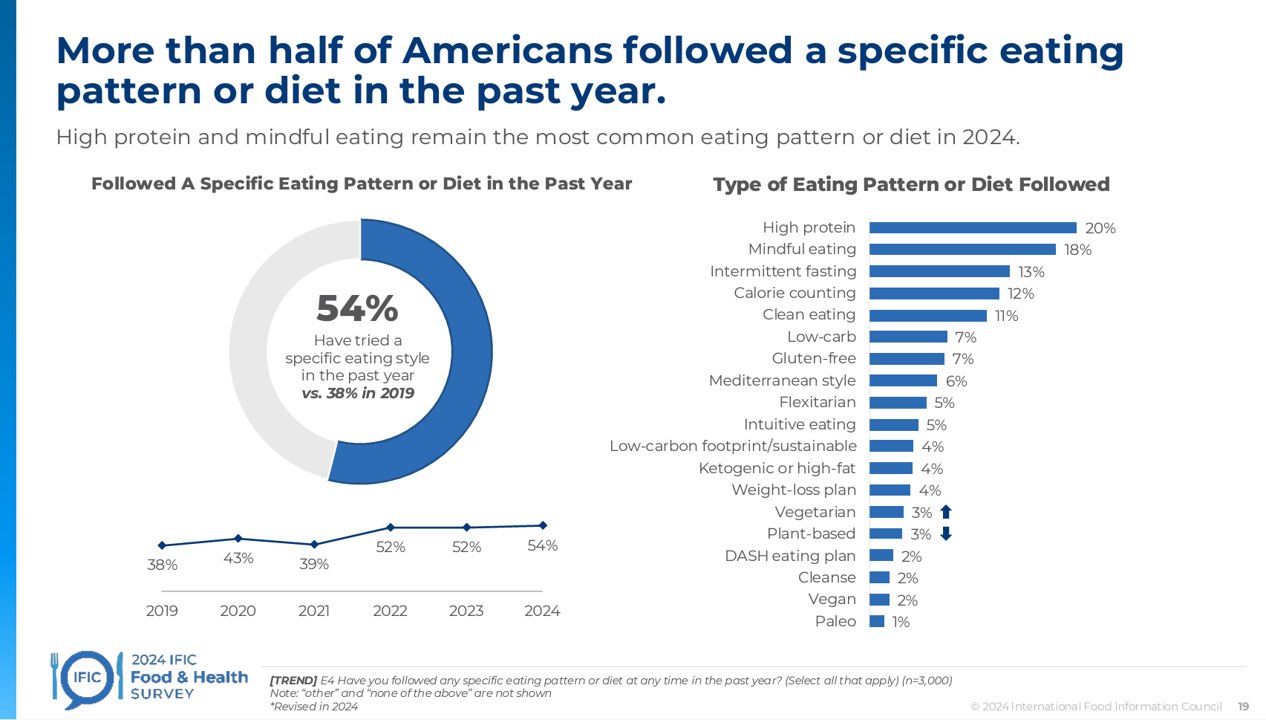
Most Americans follow some kind of eating regime, seeking energy, more protein, and healthy aging, according to the annual 2024 Food & Health Survey published this week by the International Food Information Council (IFIC). But a person’s household finances play a direct role in their ability to balance healthful food purchases and healthy eating, IFIC learned. In this 19th annual fielding of this research, IFIC explored 3,000 U.S. consumers’ perspectives on diet and nutrition, trusted sources for food information, and new insights into peoples’ views on the GLP-1 weight-loss drugs and the growing sense
The Most Trusted Brands of 2024 Tell Us A Lot About Health Consumers
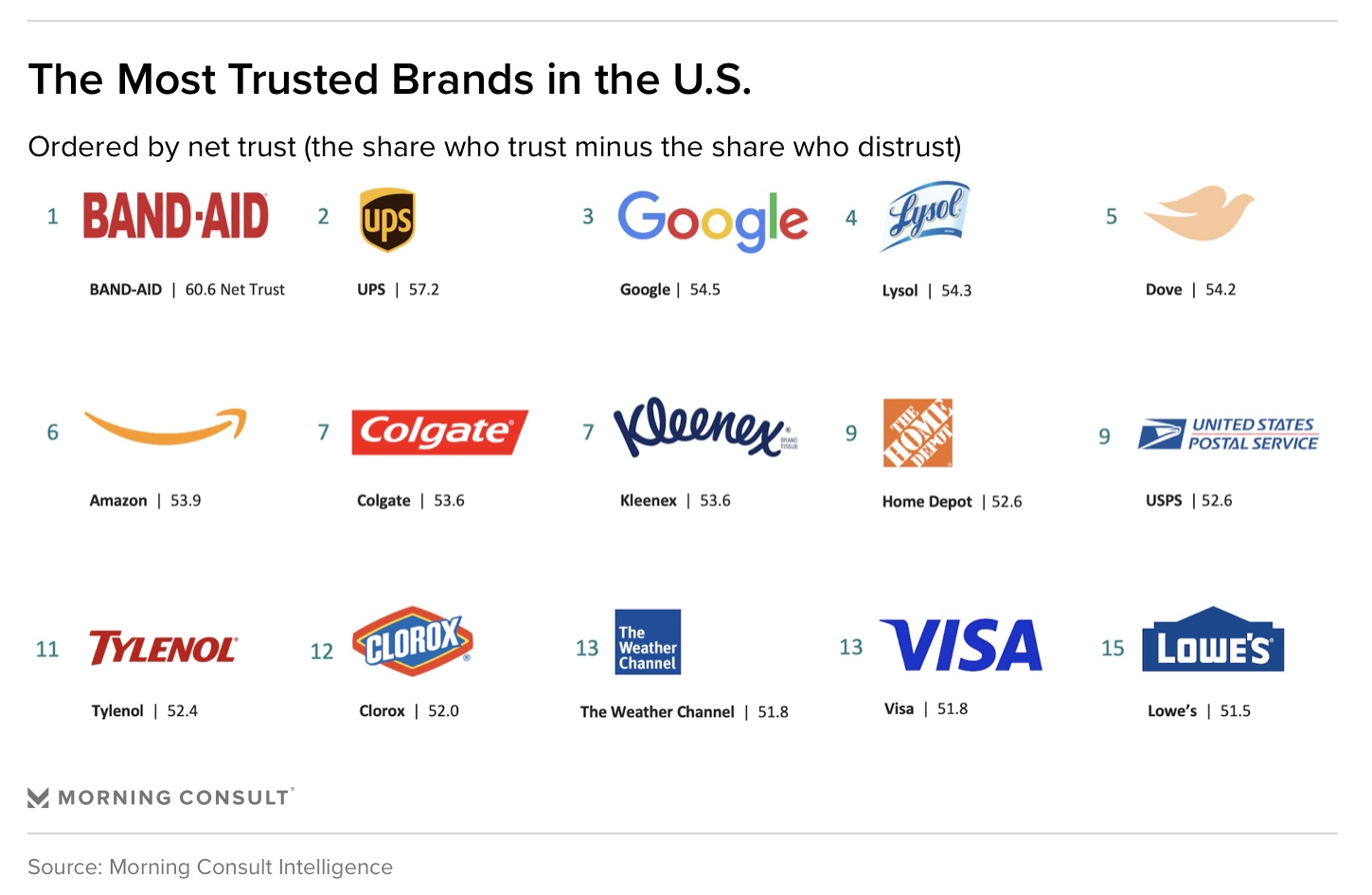
From bandages to home hygiene, OTC pain meds and DIY home projects, Morning Consult’s look into the most-trusted brands of 2024 give us insights into health consumers. I’ve been tracking this study since before the public health crisis of the coronavirus, and it always offers us a practical snapshot of the U.S. consumer’s current ethos on trusted companies helping people risk-manage daily living — and of course, find joy and satisfaction as well. In the top 15, we find self-care for health and well-being in many brands and products: we can call out Band-Aid, Dove, Colgate, Kleenex, and Tylenol. For
Grocers, Food Retailers and Retail Pharmacies Prioritizing Wellness and Health in 2024
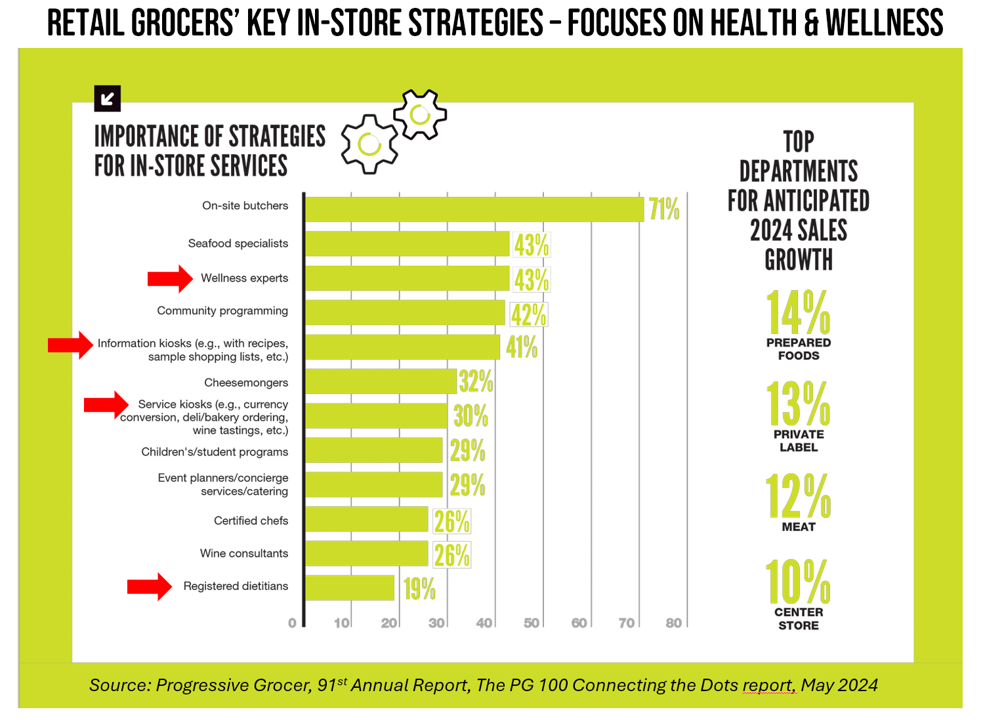
Thanks to Progressive Grocer’s 91st annual report and research therein, we have fresh insights into where wellness and nutrition fit into food retailers’ — and pharmacies’ and Big Box stores’ — strategies. That priority ranks high in grocers’ plans for in-store services in 2024 and beyond. Far above all other strategies for food retailers’ in-store services, we see that on-site butchers rank high — among 3 in 4 retailers. Why this might be the case: cost- and value-focused consumers often have questions about how to cook different (lower-priced) costs of meat, or desire
A Tax on Moms’ Financial and Physical Health – The 2024 Women’s Wellness Index
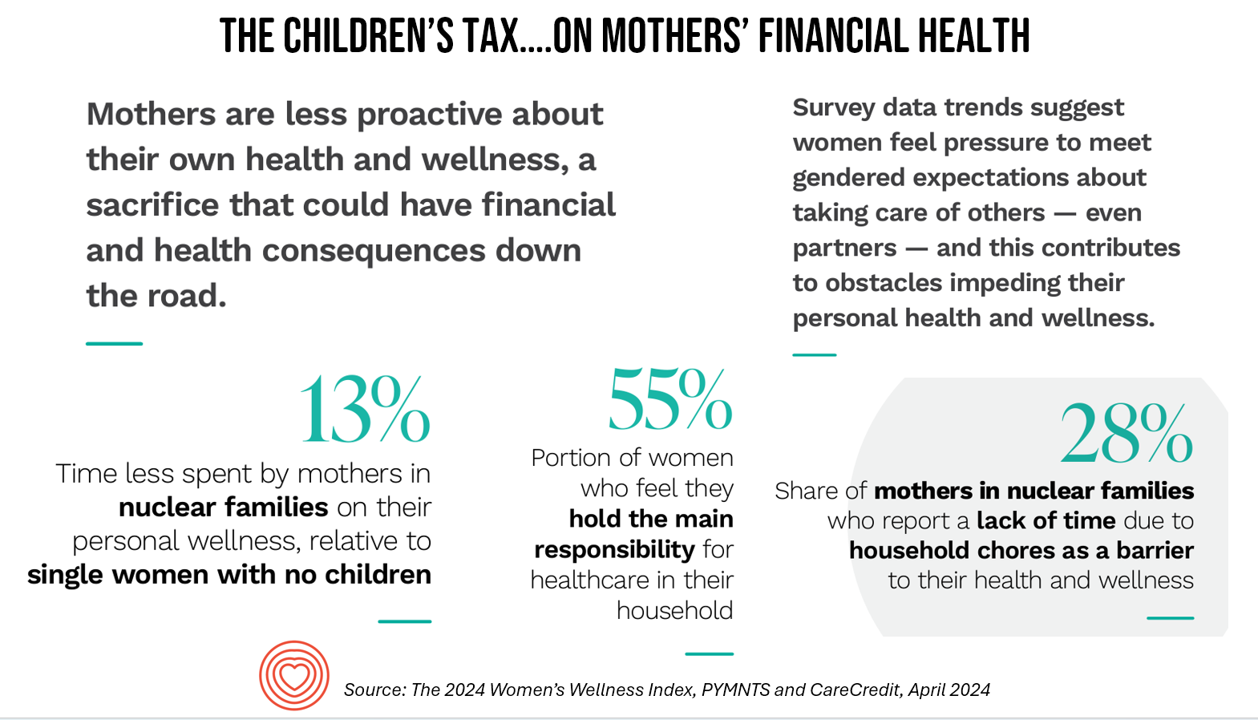
“Motherhood is the exquisite inconvenience of being another person’s everything” is a quote I turn to when I think about my own Mom and the remarkable women in my life raising children. With Mother’s Day soon approaching, the 2024 Women’s Wellness Index reminds us that the act of “being another person’s everything” has its cost. The Index, sponsored by PYMNTS in collaboration with CareCredit, was built on survey responses from 10,045 U.S. consumers fielded in November-December 2023. The study gauged women’s perspectives on finances, family, social life impacts on health and well-being. My key takeaway from
Healthcare 2030: Are We Consumers, CEOs, Health Citizens, or Castaways? 4 Scenarios On the Future of Health Care and Who We Are – Part 1
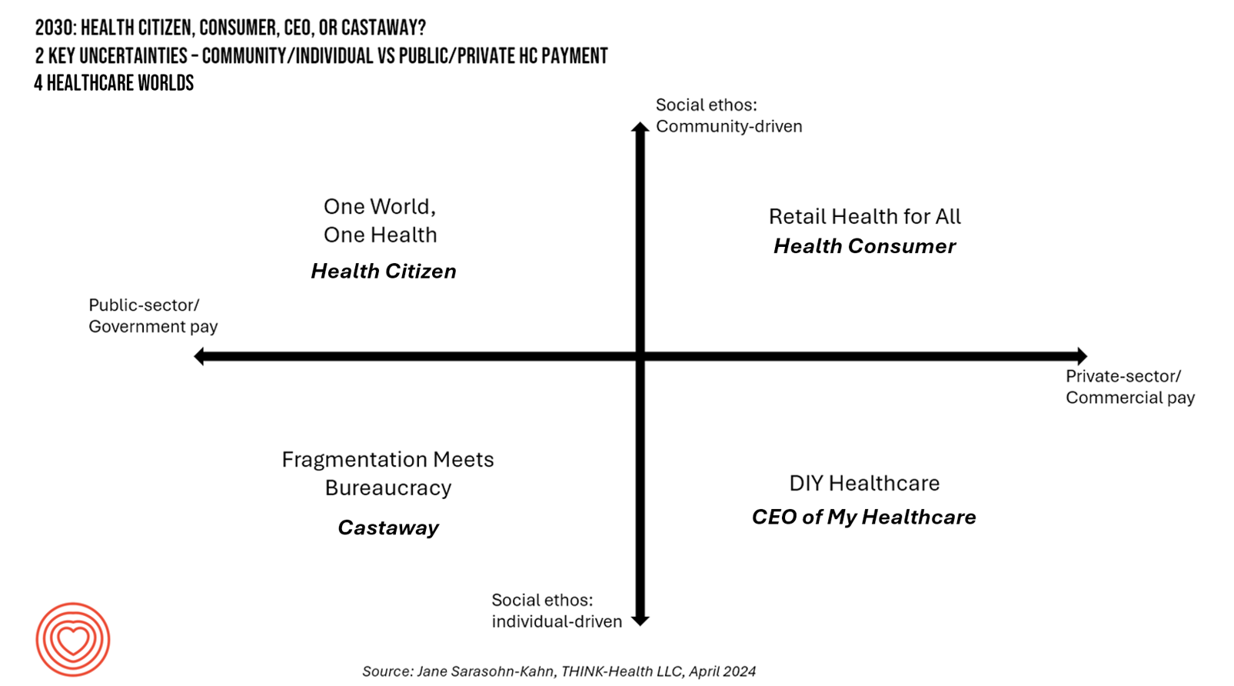
In the past few years, what event or innovation has had the metaphorical impact of hitting you upside the head and disrupted your best-laid plans in health care? A few such forces for me have been the COVID-19 pandemic, the emergence of Chat-GPT, and Russia’s invasion of Ukraine. That’s just three, and to be sure, there are several others that have compelled me to shift my mind-set about what I thought I knew-I-knew for my work with organizations spanning the health care ecosystem. I’m a long-time practitioner of scenario planning, thanks to the early education at the side of Ian
The Women’s Health Gap Is Especially Wide During Her Working Years – Learning from McKinsey, the World Economic Forum, and AARP in Women’s History Month
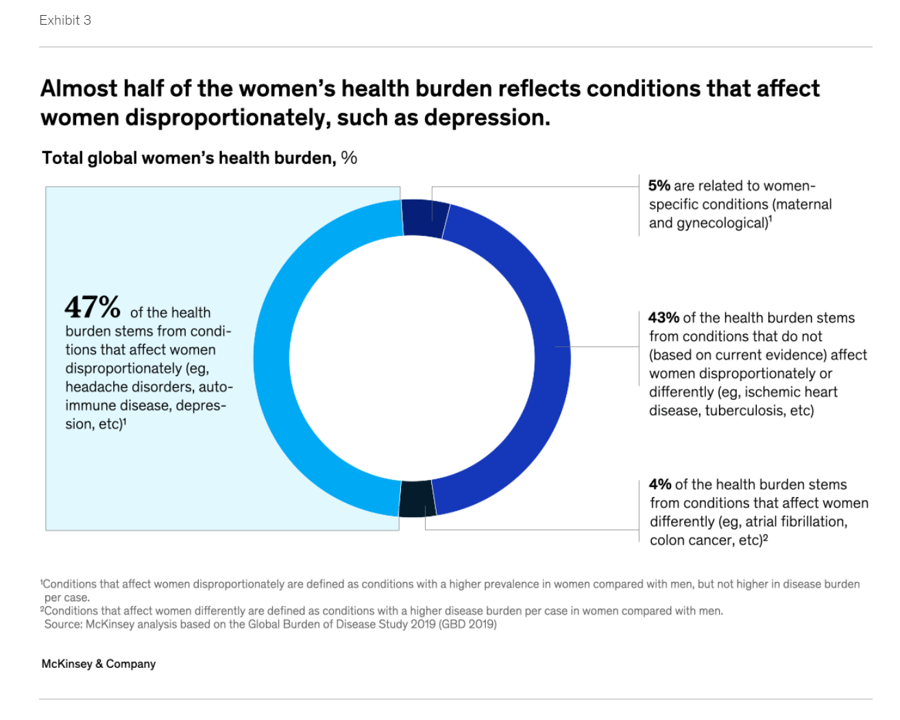
There’s a gender-health gap that hits women particularly hard when she is of working age — negatively impacting her own physical and financial health, along with that of the community and nation in which she lives. March being Women’s History Month, we’ve got a treasure-trove of reports to review — including several focusing on health. I’ll dive into two for this post, to focus in on the women’s health gap that’s especially wide during her working years. The reports cover research from the McKinsey Health Institute collaborating with the World Economic Forum on
The Wellness Market Shaped by Health at Home, Wearable Tech, and Clinical Evidence – Thinking McKinsey and Target
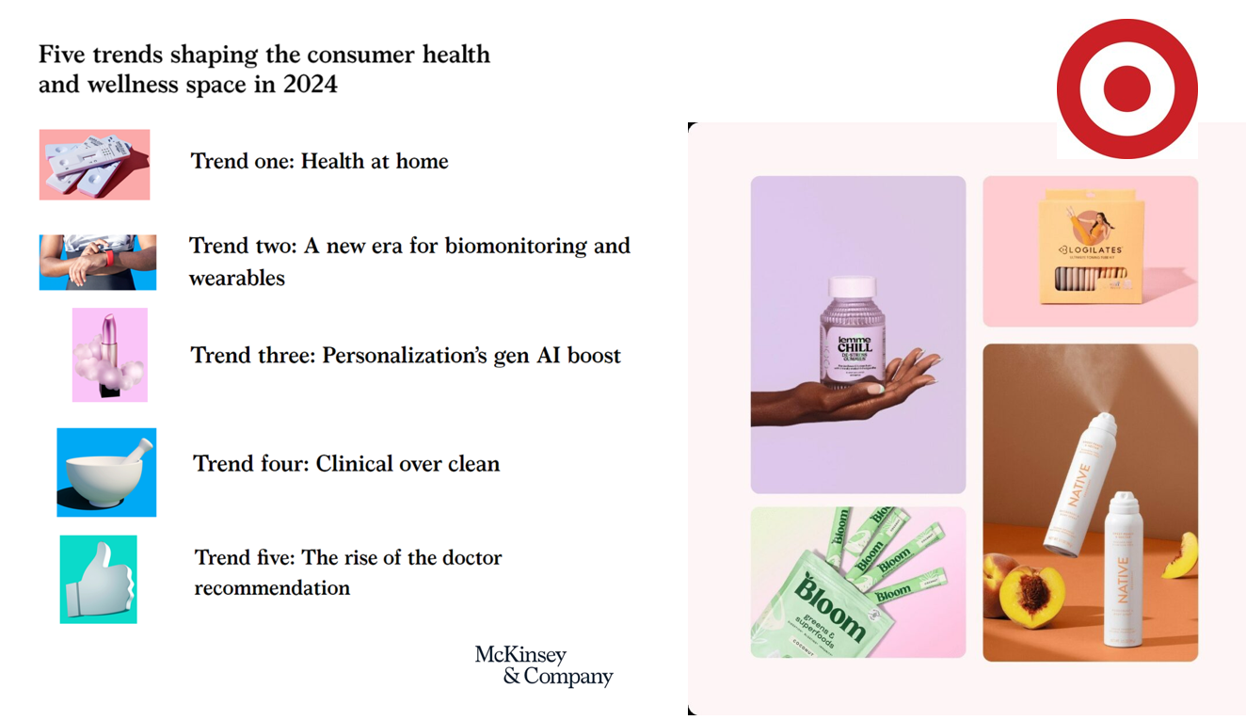
Target announced that the retail chain would grow its aisles of wellness-oriented products by at least 1,000 SKUs. The products will span the store’s large footprint, going beyond health and beauty reaching into fashion, food, home hygiene and fitness. The title of the company’s press release about the program also included the fact that many of the products would be priced as low as $1.99. So financial wellness is also baked into the Target strategy. Globally, the wellness market is valued at a whopping $1.8 trillion according to a report published last week by McKinsey. McKinsey points to five trends
Accenture’s Great Expectations for a Decade of Deconstruction – the 2024 Life Trends Forecast
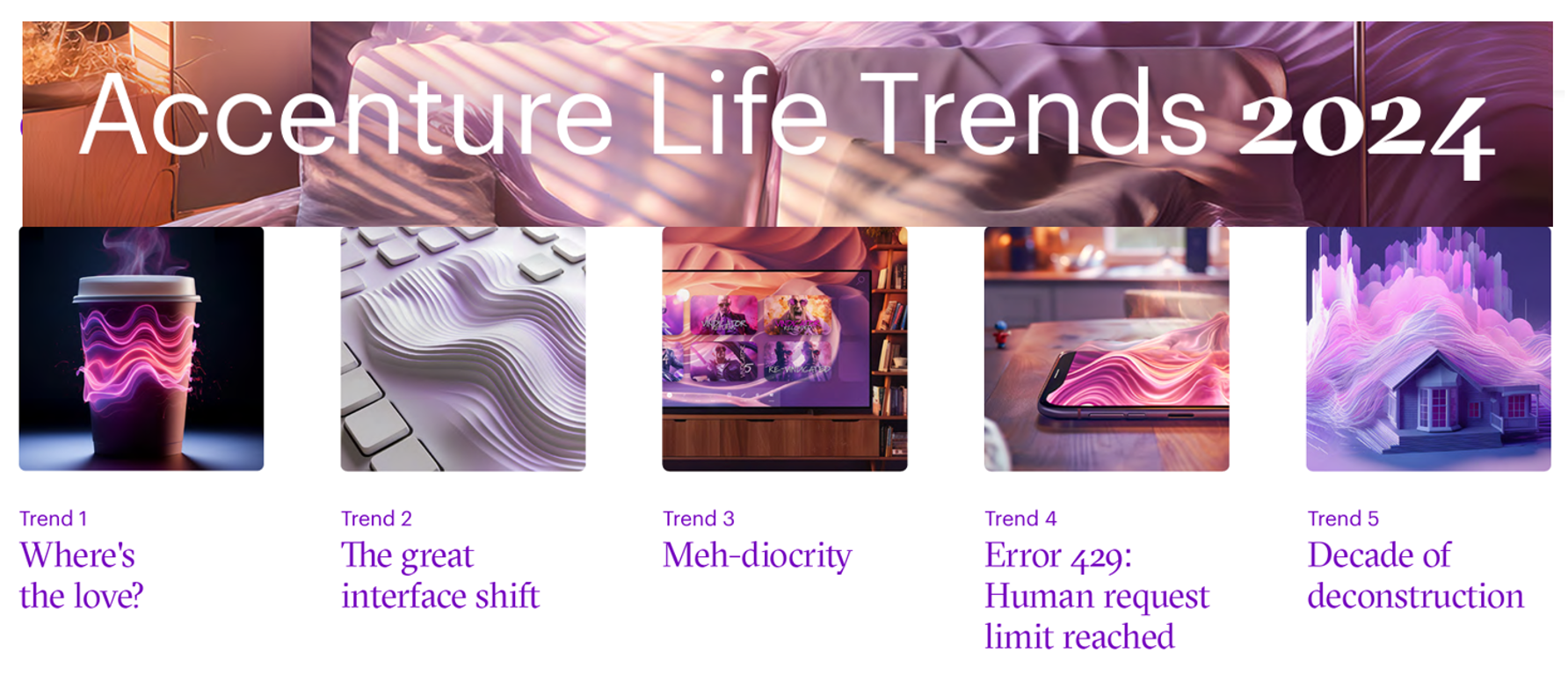
In the company’s 17th annual look into consumers’ “life trends,” Accenture finds that, top-line, “The harmony between people, tech and business is showing tensions, and society is in flux.” And these consumer-facing trends will also shape peoples’ attitudes about their health care, how they access and pay for it, and what kinds of services and support health consumers will expect in this era of “deconstruction.” Taken together, the trends noted in Accenture’s 2024 report on Life Trends finds that one-half of consumers, globally, are changing their life goals, making their jobs and retirement stability more important than
#BeBurnsAware – What To Know on National Burn Awareness Day
Today 11th October is National Burn Awareness Day 2023, and I’m supporting the effort for all of us to #BeBurnsAware. I have become more bullish on Burn Awareness as I’ve come to learn more about the impact burns have on public, family, and children’s health globally. My teacher for better understanding burns and public health has been Krissie Stiles, a long-time burns nurse specialist and Ambassador to the Children’s Burns Trust in the UK. Meet Krissie. Burns are a global public health challenge, which I detailed here in Health Populi earlier this year. Today
Food-As-Medicine Grows Its Cred Across the Health/Care and Retail Ecosystem
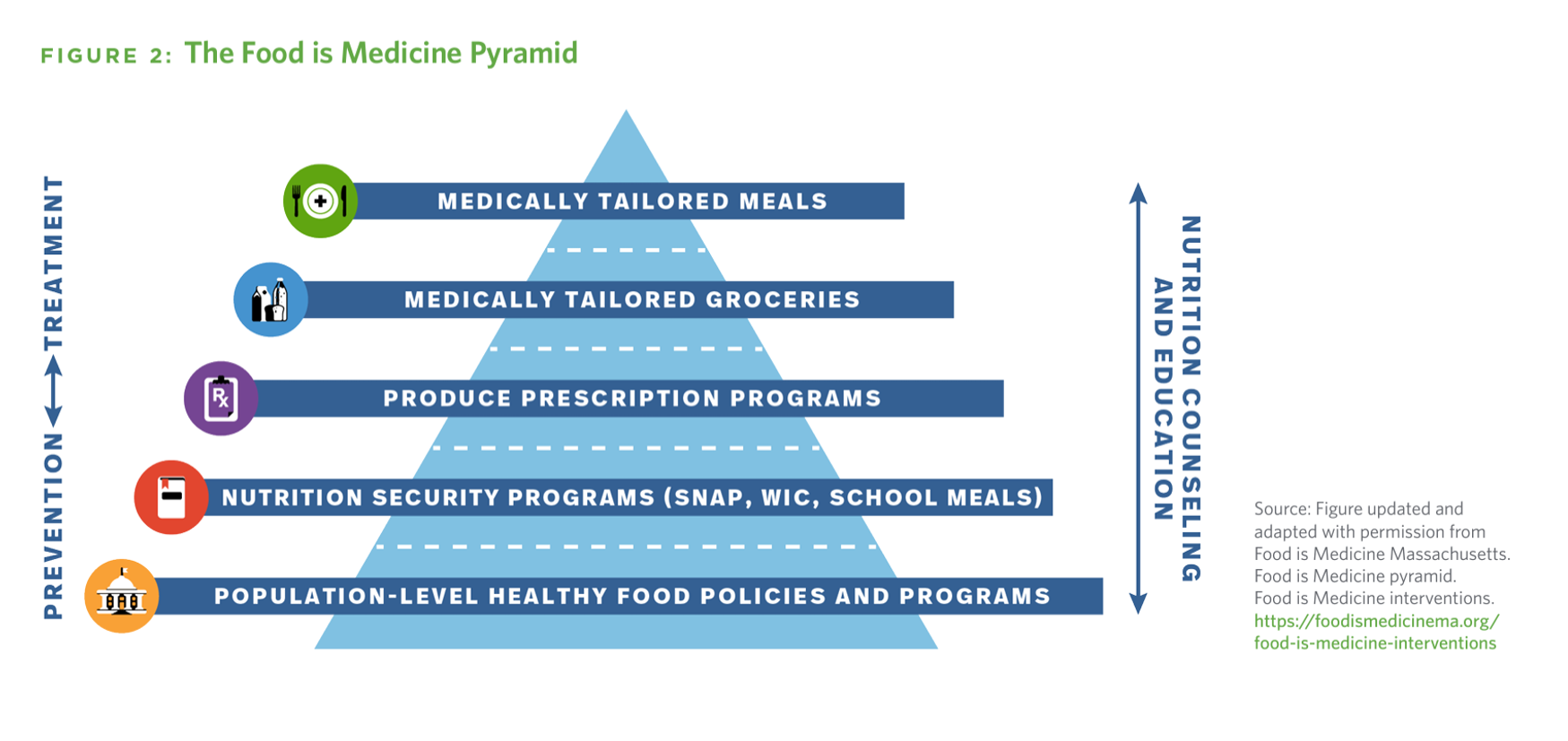
In the nation’s search for spending smarter on health care, the U.S. could save at least $13 billion a year through deploying medically-tailored meals for people enrolled in Medicare, Medicaid, and private insurance programs, according to the True Cost of Food, research published by the Tufts School of Nutrition Science and Policy collaborating with The Rockefeller Foundation. It’s been one year since the White House convened the Conference on Hunger, Nutrition, and Health, kicking off the Biden Administration’s national strategy to improve health citizens’ access to healthy food as a matter of public health and economic security.
The Clinician of the Future: A Partner for Health, Access, Collaboration, and Tech-Savviness
One-half of clinicians working in the U.S., doctors and nurses alike, are considering leaving their current role in the next two to three years. That 1 in 2 clinicians is significantly greater than the global 37% of physicians and nurses thinking about leaving their roles in the next 3 years, according to the report Clinician of the Future 2023 from Elsevier. Elsevier first conducted research among doctors and nurses for the Clinician of the Future report in 2022, following up this year’s survey research online among 2,607 clinicians working around the world: Elsevier polled
A Tale of Barbie, Beyonce and Taylor, the Economy and the Gynecologist
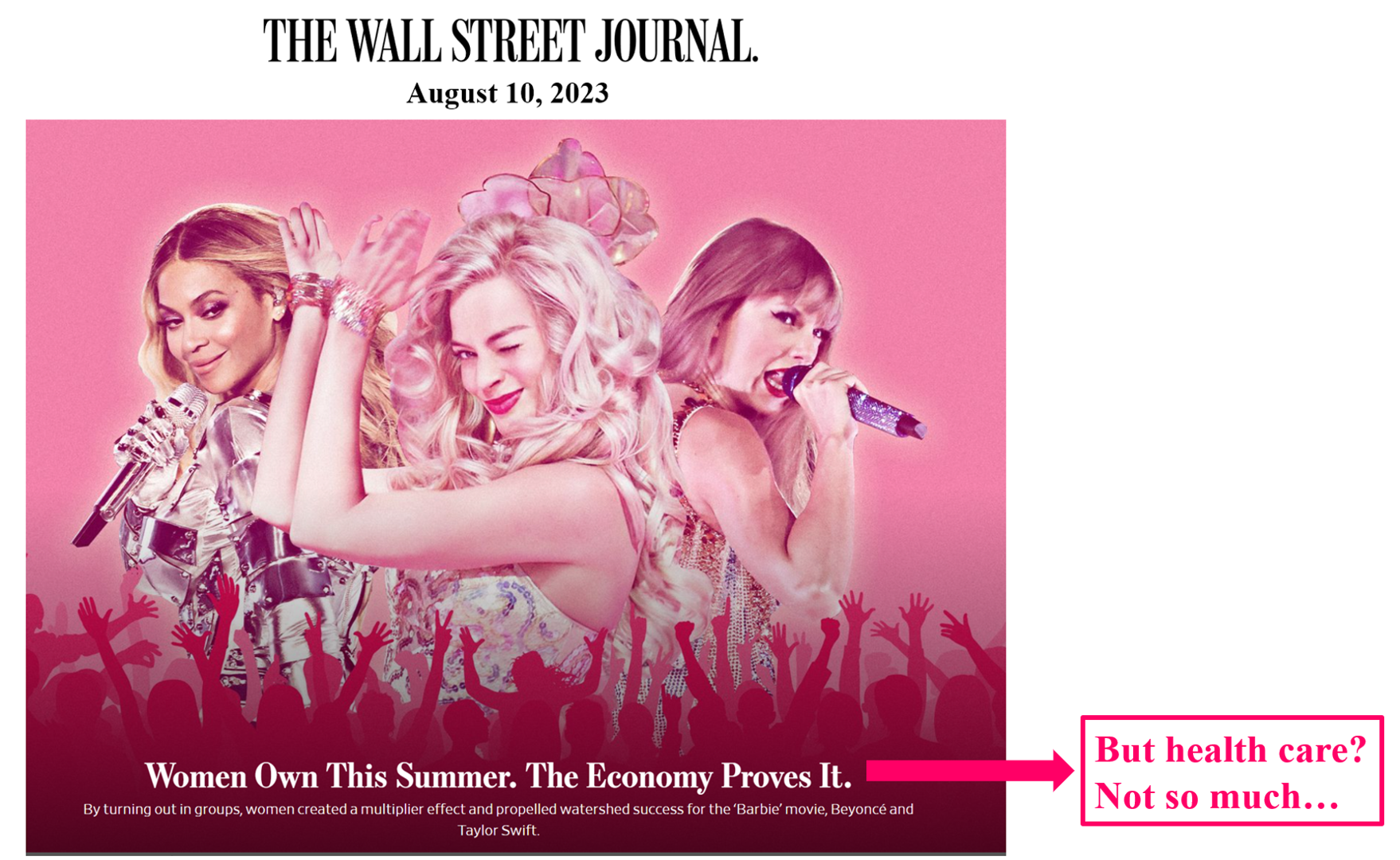
This weekend’s Wall Street Journal Saturday/Sunday edition featured a big story on the economic force of women in the summer of 2023, termed “the women’s multiplier effect” — that women’s spending is a powerful force in the U.S. economy (and as it turns out, in Sweden’s economy as well). The article was titled, “Women Own This Summer. The Economy Proves It,” and featured a Photoshopped image in various shades of pink with Margot Robbie as Barbie in the center, flanked by Beyonce to the left and Taylor Swift to the right. I’m
Hims and Hers and Hearts – Cardiology Blurs Into DTC Retail Health
Statin therapy has been used for decades to lower cholesterol with the goal of reducing mortality and preventing cardiovascular problems such as heart attacks and strokes. Hims & Hers announced a new service offering for health consumers and clinicians concerned about heart health called Heart Health by Hims. This is Hims & Hers’ first foray into cardiovascular health, working in collaboration with the American College of Cardiology (ACC). ACC clinical guidelines will inform the Hims’ provider platform for the program. “Prevention is the ideal mechanism to decrease cardiovascular events and ensure optimal heart
The Doctor Will See You Now…At Home? The AMA Launches a Health at Home Framework
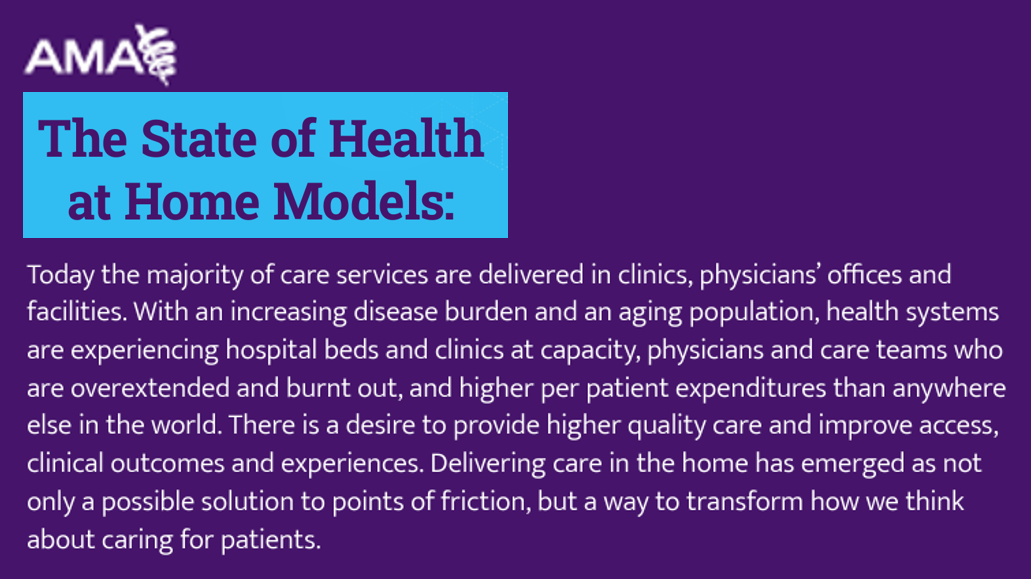
An aging U.S. population with a preference for growing older at home — and a fiscally challenging health care financing outlook — are setting the demographic and financial table for the shift of medical care to peoples’ homes discussed in The State of Health at Home Models: Key Considerations and Opportunities, published by the American Medical Association (AMA). Note that this framework has been developed by the AMA, the largest professional organization of doctors. While moving health care to the home will involve quite different workflows and disruptions to current general medical practice, it
Pharmacy Plays a Growing Role in Consumers’ Health@Retail – J.D. Power’s 2023 Rankings
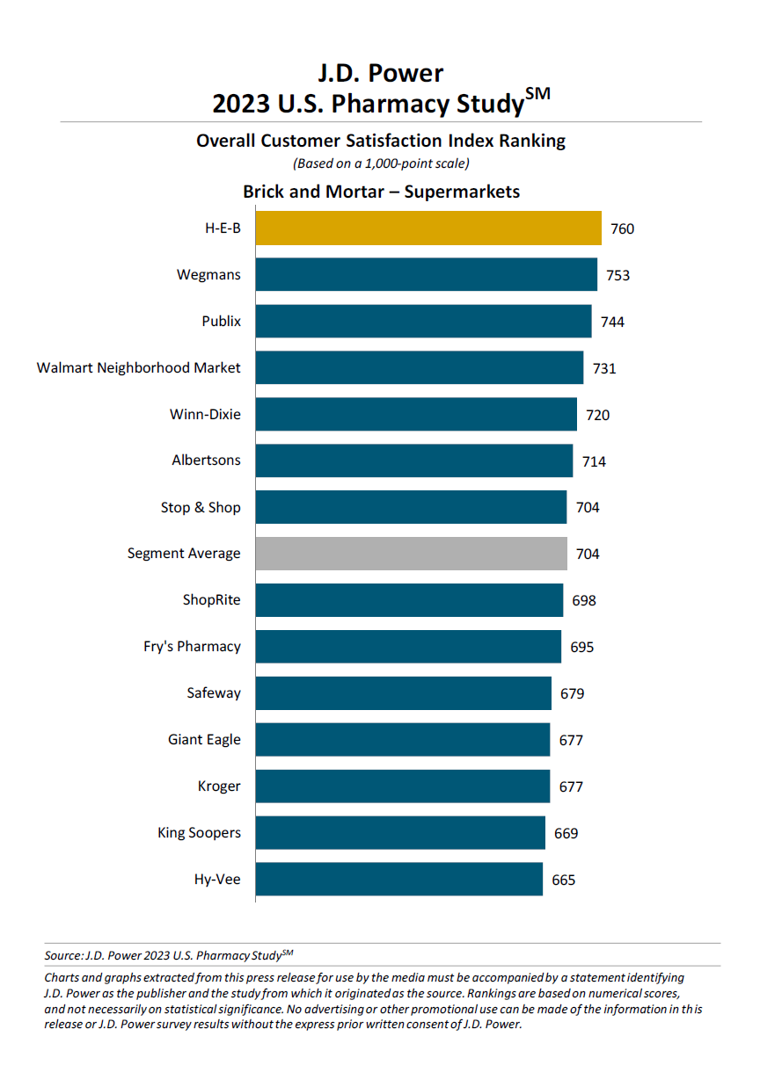
“Brick-and-mortar pharmacies forge meaningful connections with customers” through conversations between pharmacists and patients, “on a first-name basis.” This quote comes from Christopher Lis, managing director of global healthcare intelligence at J.D. Power who released the company’s annual 2023 U.S. Pharmacy Study today, the 15th year the research has been conducted. Each year, J.D. Power gauges U.S. consumers’ views on retail pharmacies in four channels: brick and mortar chain drug stores, brick and mortar mass merchandisers, brick and mortar supermarkets, and mail order. Across all four channels, the
Band-Aid® Rules: Health is Baked Into The Most Trusted Brands in 2023 In Retail, Beauty, and Non-Profits
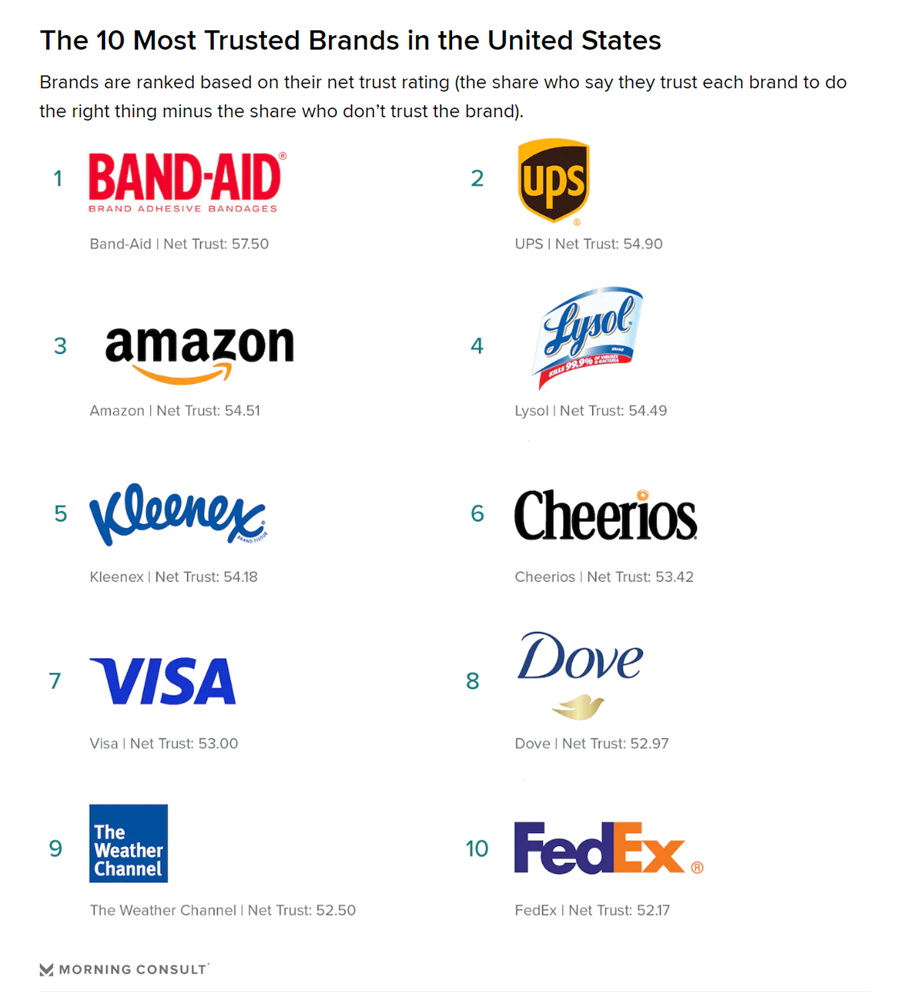
The ten most trusted brands in the U.S. have to do with health, well-being, and hygiene in everyday life — from convenient package delivery to financial health, mindful self-care, and taking care of our kids’ boo-boos. Welcome to this year’s portfolio of the Most Trusted Brands 2023, a special report from Morning Consult that, annually, paints a picture of what everyday life for everyday people is about. For the second year in a row, Band-Aid® brand bandages ranked top of all brands assessed among U.S. consumers from data gathered in March-April 2023. Net trust in this study
The Growing Pet Economy – What It Means for Human Health, Well-Being, and Healthcare Costs
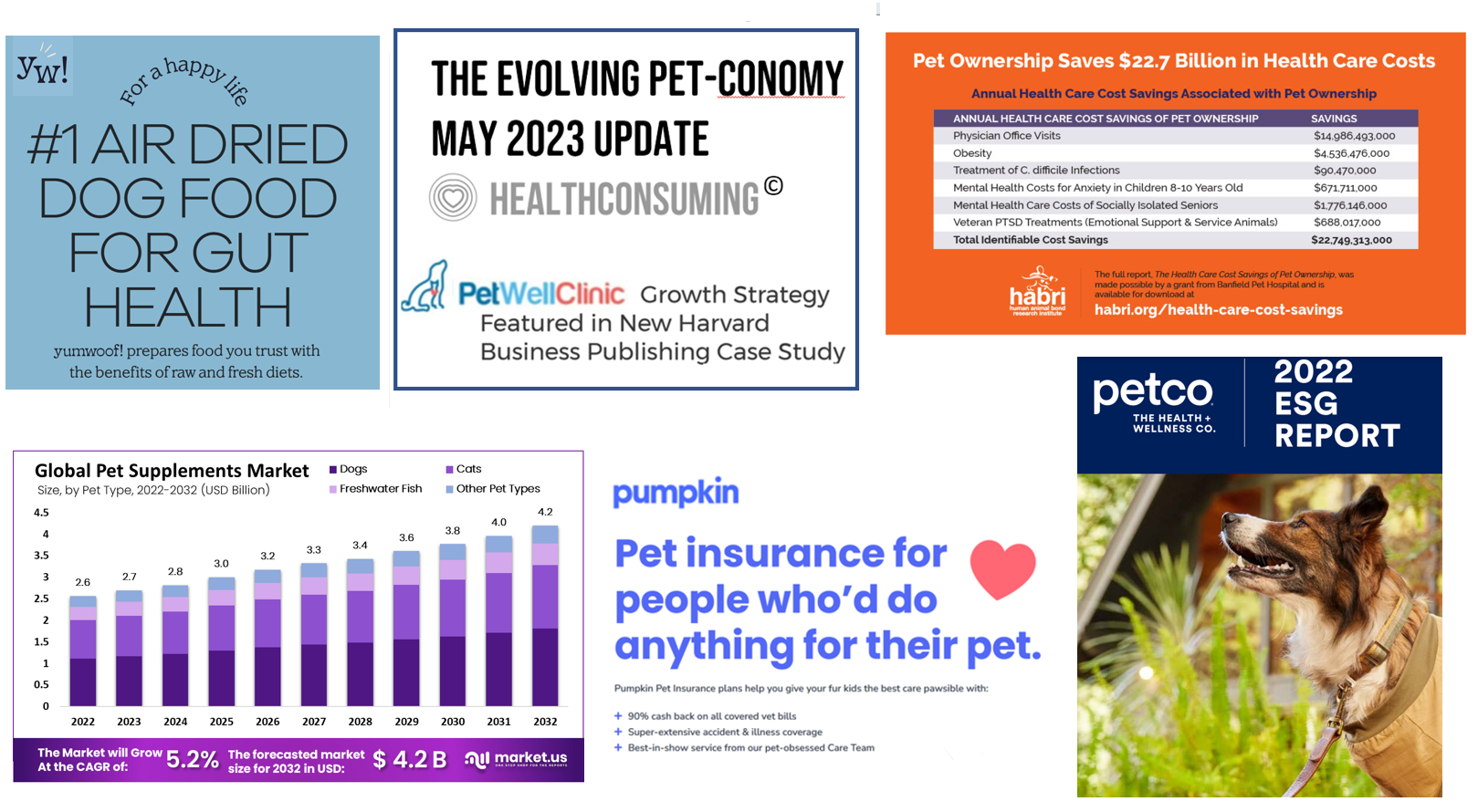
Our pets can be personal and family drivers of health and health care cost savings, according to a new study from according to a new report from researchers at George Mason University published in their paper, Health Care Cost Savings of Pet Ownership. Reviewing this new paper inspired me to explore the current state of the pet/health market and implications for their human families, my weaving of various stories explored in this Health Populi blog post. Some of the key signposts we’ll cover are: The report on pet ownership driving owners’ health care cost savings A new market analysis of
Our Mental and Emotional Health Are Interwoven With What We Eat and Drink – Chewing On the IFIC 2023 Food and Health Survey
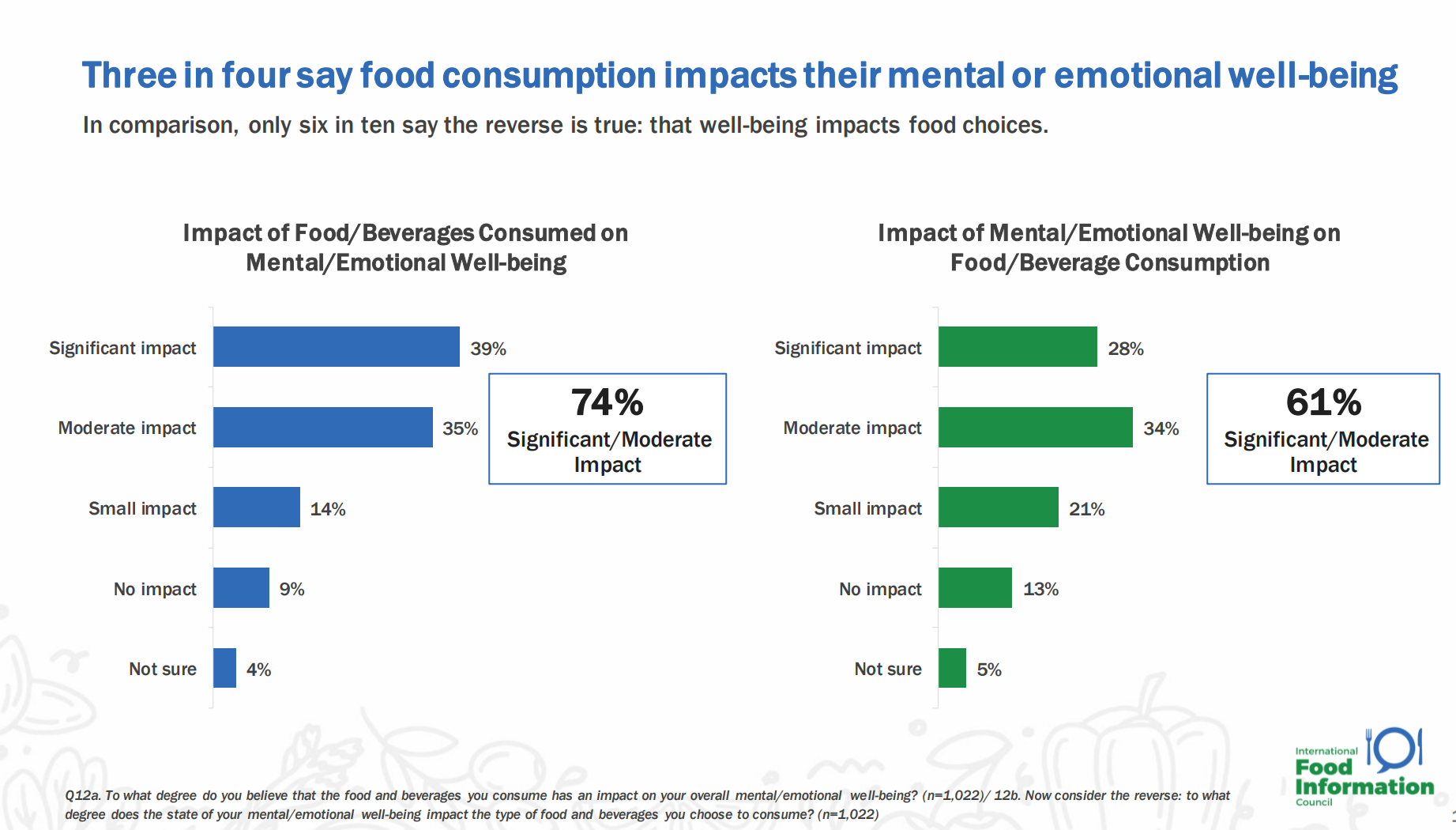
As most Americans confess to feeling stressed over the past six months, peoples’ food and beverage choices have been intimately connected with their mental and emotional well-being, we learn from the 2023 Food & Health Survey from the International Food Information Council (IFIC). For this year’s study, IFIC commissioned Greenwald Research to conduct 1,022 interviews with adults between 18 and 80 years of age in April 2023. The research explored consumers’ perspectives on healthy food, the cost of food, approaches to self-care through food consumption, the growing role of social media in the food system, and the influence of sustainability
Three More Signposts on the Road to Retail Health – Weight Loss Drugs, OTC Birth Control and Fashion-Meets-the-Flu
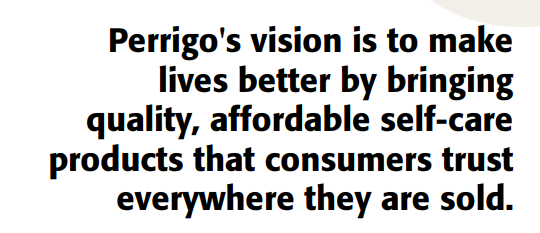
We continue to track to evolving, expanding landscape of retail health — which we see as the expanding ecosystem of health/care accessible to people-as-health consumers. This week, three intriguing examples are resonating with us: The ever-evolving weight-loss industry FDA favors OTC use for Perrigo’s Opill daily oral contraceptive birth control pill The convergence of fashion and health — specifically, how an over-the-counter medicine converges with clothing that helps us feel better. Let’s start with weight-loss, as several aspects of health/care come together in the consumer’s retail health sandbox. Dr. Eric Topol
Consumers’ Use of Digital Health is Just Part of Mainstream Life Now
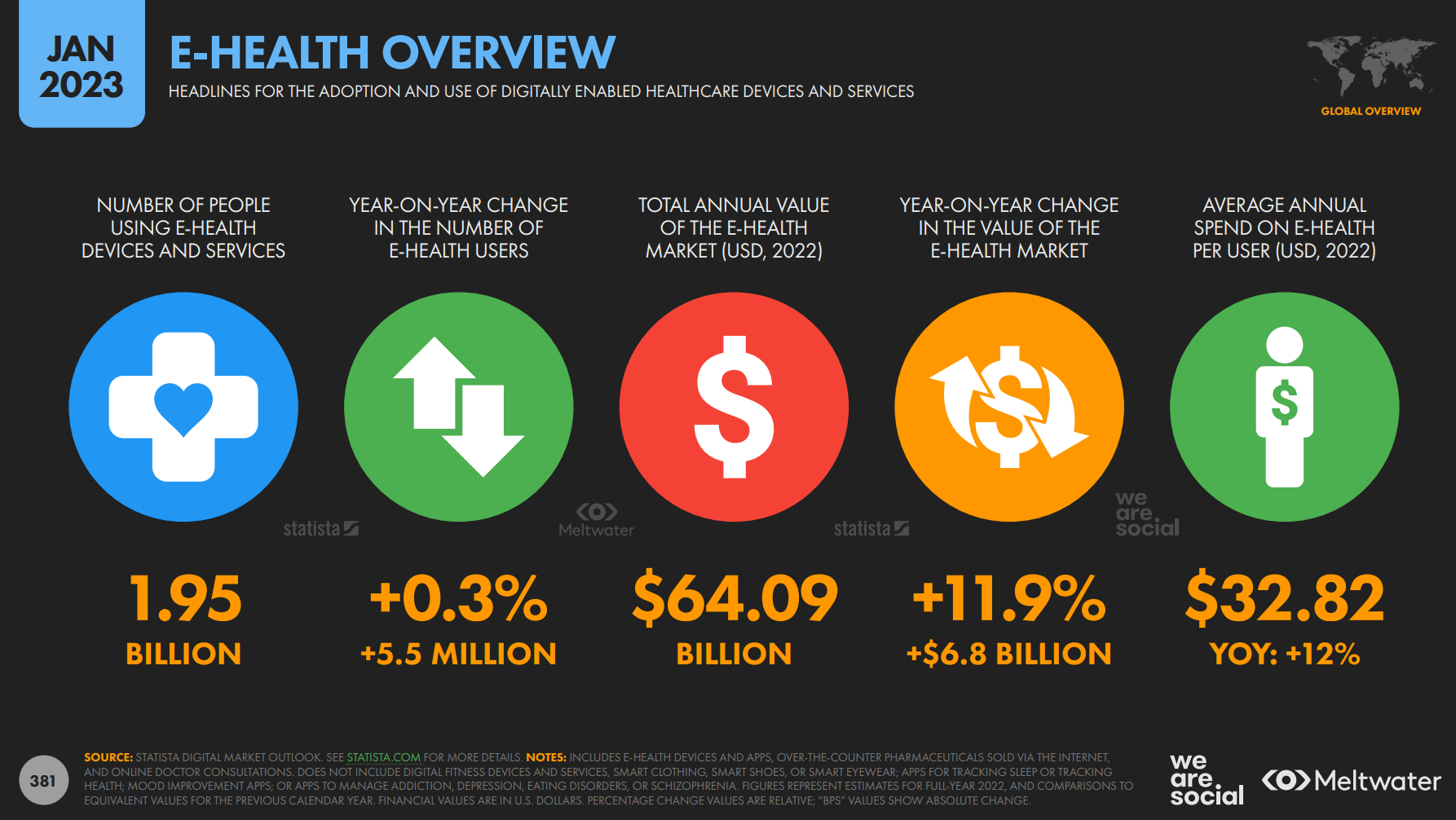
Using the Internet and mobile health apps are as mainstream as swiping left for a date and researching features in a new car, based on the Digital 2023 Global Overview Report from Meltwater. The broad coverage of this kind of research can’t be accomplished by just one entity, and Meltwater acknowledges the partners who brought them to this research-party: these included data.ai, GSMA Intelligence, GWI, Locowise, Ookla, PPRO, SemRush, Similarweb, Skai, and Statista. In this 400+ page report, you can find most datapoints you’re interested in covering the global consumers’ use of the internet, mobile apps, and social media. I
Consumers Expect Every Company to Play a Meaningful Role in “My Health” – New Insights from the 2023 Edelman Trust Barometer
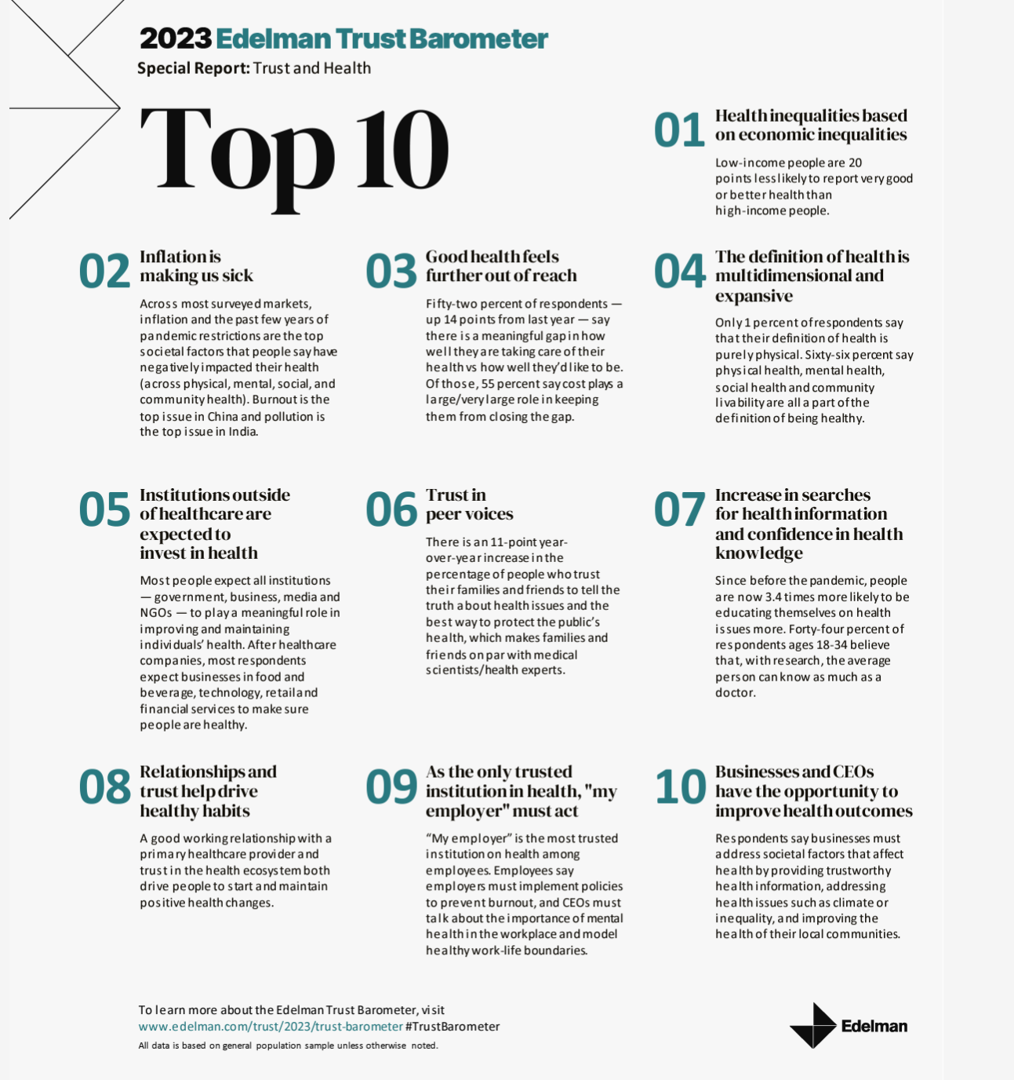
People have expanded their definitions of health in 2023, with mental health supplanting physical health for the top-ranked factor in feeling healthy. Welcome to the Edelman Trust Barometer Special Report: Trust and Health, released this week, with striking findings about how the economic, post-pandemic life, pollution and climate change all feed mis-trust among citizens living in 13 countries — and their eroding trust for health care systems. While these factors vary by country in terms of relative contribution to citizen trust, note that in the U.S., social polarization plays an outsized role in factors that “make us
The Patient Is Still the Payor – And May Skip Paying for Prevention (Eyes on the ACA & Texas)
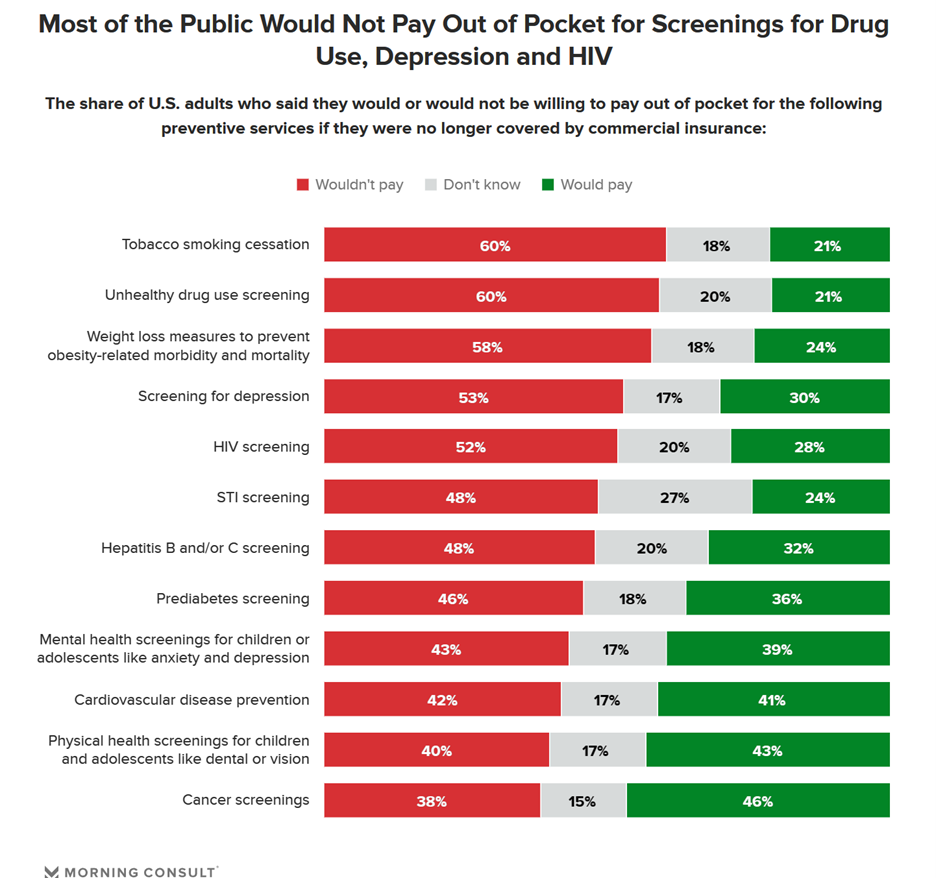
Many health citizens in the U.S. would likely skip receiving preventive health care services if the Affordable Care Act’s (ACA) coverage for them goes away, a Morning Consult survey found. The first chart illustrates the top-line of this research: that most U.S. adults would not pay out of pocket for several preventive services including tobacco cessation, drug use screening, weight loss measures to prevent obesity-related illnesses, as well as screening for depression or HIV. One of the key benefits embedded in the ACA was “free” without co-pay shares for preventive care. These
Wellness in 2023 Is About Connections, Mental Health and Science – Global Wellness Summit’s 2023 Trends
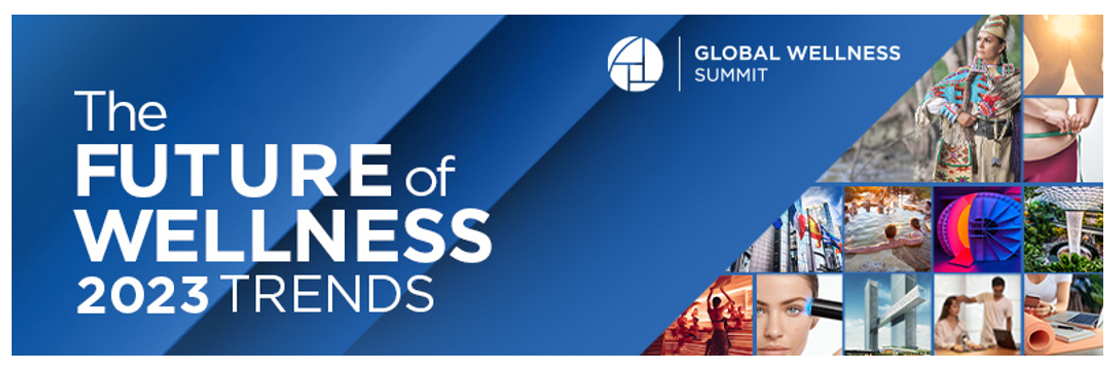
Consumers’ wellness life-flows and demands in 2023 will go well beyond exercise resolutions, eating more greens, and intermittent fasting as a foodstyle. It’s time for us to get the annual update on health consumers from the multi-faceted team who curated the Global Wellness Summit’s annual report on The Future of Wellness 2023 Trends. In this year’s look into wellness for the next few years, we see that health-oriented consumers are seeking solutions for dealing with loneliness and mental health, weight and hydration, travel-as-medicine as health destinations, and — not surprisingly —
What Are Patients Looking for in a Doctor? It Depends on Who You Ask…and Their Race
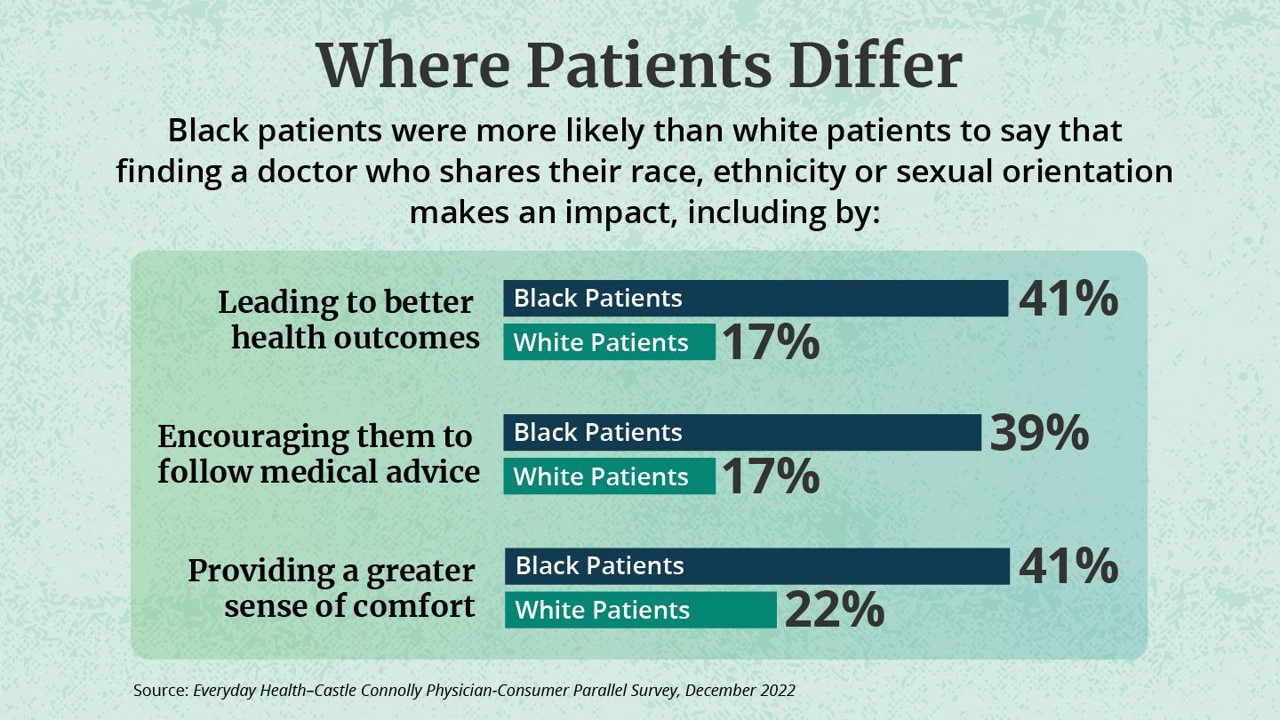
While the same proportion of Black and White patients say they are looking for a doctor with empathy and compassion, there are relatively large differences between patients based on their race, found in the Everyday Health-Castle Connolly Physician-Consumer study. The survey was conducted in December 2022 among a group of 1,001 U.S. consumers and 277 Castle Connolly health care professionals. As the first bar chart illustrates “where patients differ, “Black people were nearly twice as likely as white people (41 percent versus 22 percent) to completely agree that they would be more comfortable and
When Household Economics Blur with Health, Technology and Trust – Health Populi’s 2023 TrendCast
People are sick of being sick, the New York Times tells us. “Which virus is it?” the title of the article updating the winter 2022-23 sick-season asked. Entering 2023, U.S. health citizens face physical, financial, and mental health challenges of a syndemic, inflation, and stress – all of which will shape peoples’ demand side for health care and digital technology, and a supply side of providers challenged by tech-enabled organizations with design and data chops. Start with pandemic ennui The universal state of well-being among us mere humans is pandemic ennui: call it languishing (as opposed to flourishing), burnout, or
Dr. Santa Intends to Deliver Consumer Health-Tech for the 2022 Holidays
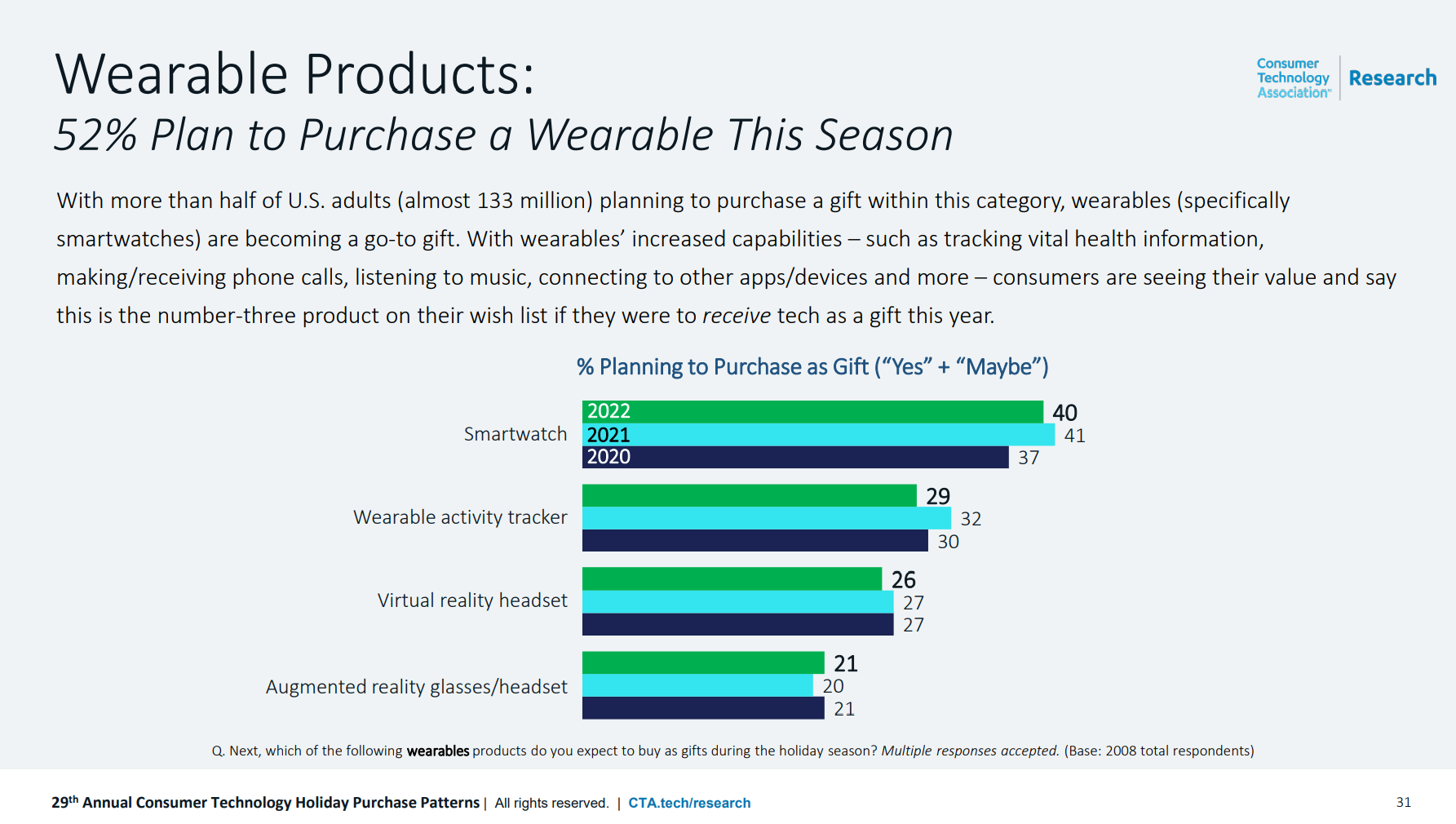
Even as consumers’ confess a tighter spending economy for 2022 holiday shopping, peoples’ intent to buy wearable tech for health and fitness and other wellness devices appear on gifting lists in the U.S., according to the 29th Annual Consumer Technology Holiday Purchase Patterns report from the Consumer Technology Association (CTA). In general, technology will be a top-selling category for 2022 holiday gift-giving, somewhat tempered by inflation and the increased cost of living that challenge household budgets in the fourth quarter of 2022. Tech spending will be down about 6% in 2022 according to CTA’s
Health Is Social, With More People Using Apps for Physical and Emotional Wellbeing
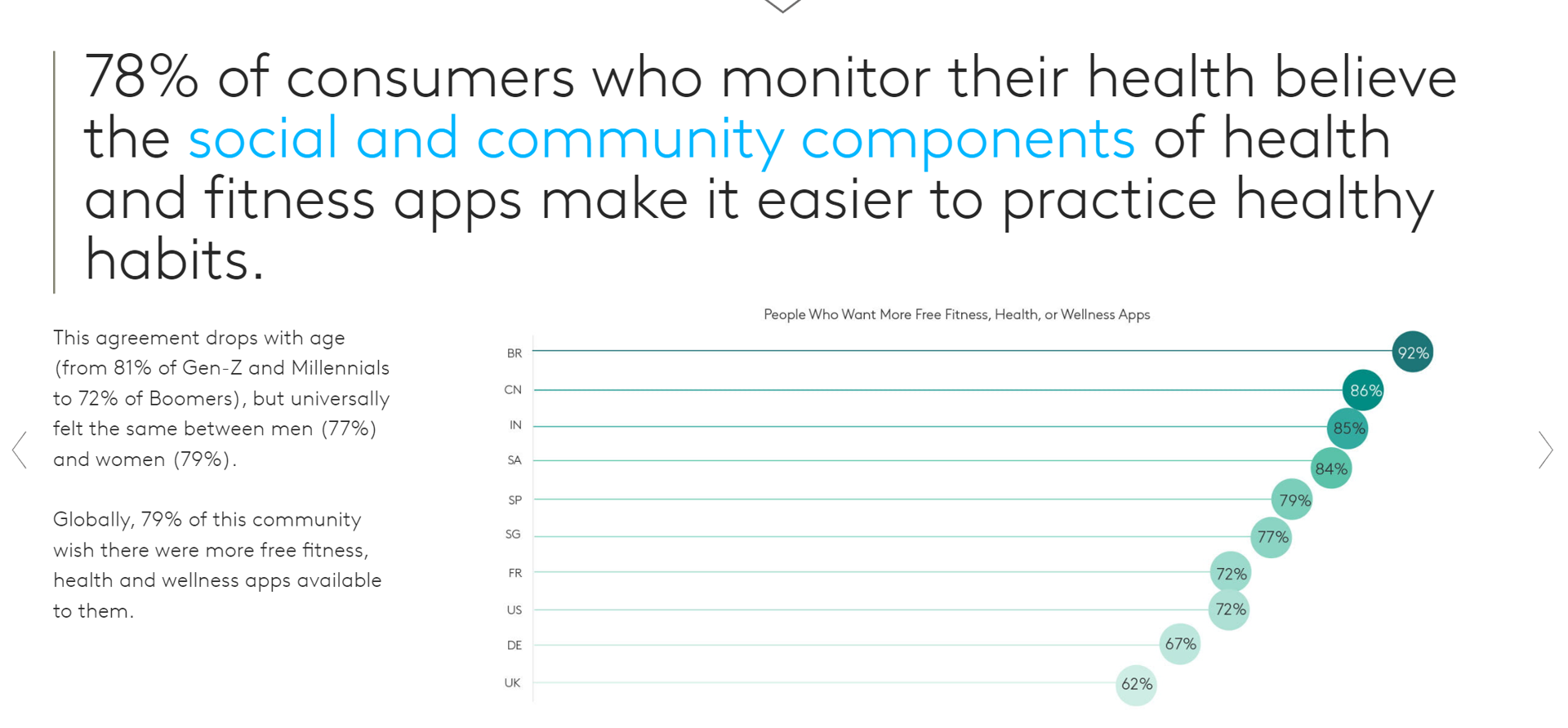
People who need people aren’t just the luckiest people in the world: they derive greater benefits through monitoring their health via apps that make it easier to make healthy choices. Channeling Barbra Streisand here to call out a key finding in new consumer research from Kantar on Connecting with the Health & Wellness Community. Kantar polled 10,000 online consumers in ten countries to gain perspectives on health citizens’ physical and emotional health and the role of technology to bolster (or diminish) well-being. The nations surveyed included Brazil, China, France, Germany, India, Singapore, South Africa, Spain,
Connected Wellness Growing As Consumers Face Tighter Home Economics
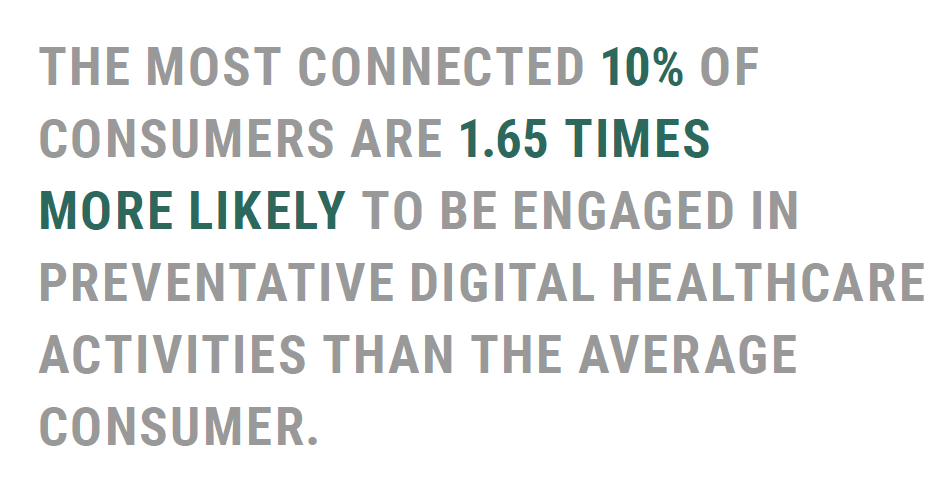
“Consumers are using the Internet to take their health into their own hands,” at least for 1 in 2 U.S. consumers engaging in some sort of preventive health care activity online in mid-2022. The new report on Connected Wellness from PYMNTS and Care Credit profiles American health consumers’ use of digital tools for health care promotion and disease prevention. The bottom-line here is that the most connected 10% of consumers were 1.65 times more likely to be engaged in preventive digital health activities than the average person. Peoples’ engagement with digital health
Consumers’ and the White House’s Growing Focus on Food and Nutrition
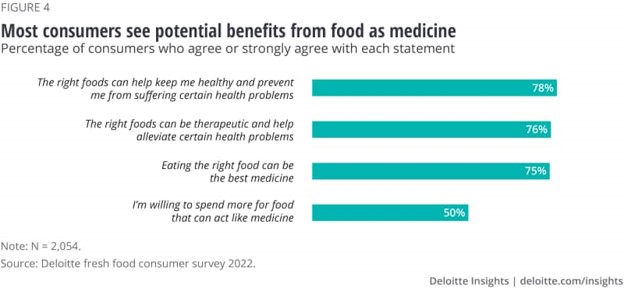
Today, the White House is convening a Conference on Hunger, Nutrition and Health. So it’s a propitious time to weave together some of the latest research and insights into food-as-medicine and a key determinant of health and well-being. This is the first White House conference focused on nutrition and food in over 50 years. The National Strategy was released today, and covers a range of programs that bake health and nutrition into Federal policies going beyond “food” itself: we see various determinants of health embedded into the Strategy, such as supporting physical activity,
Partnering Up in the Health Care Ecosystem to Drive Transformation – for Organizations and Health Consumers Alike
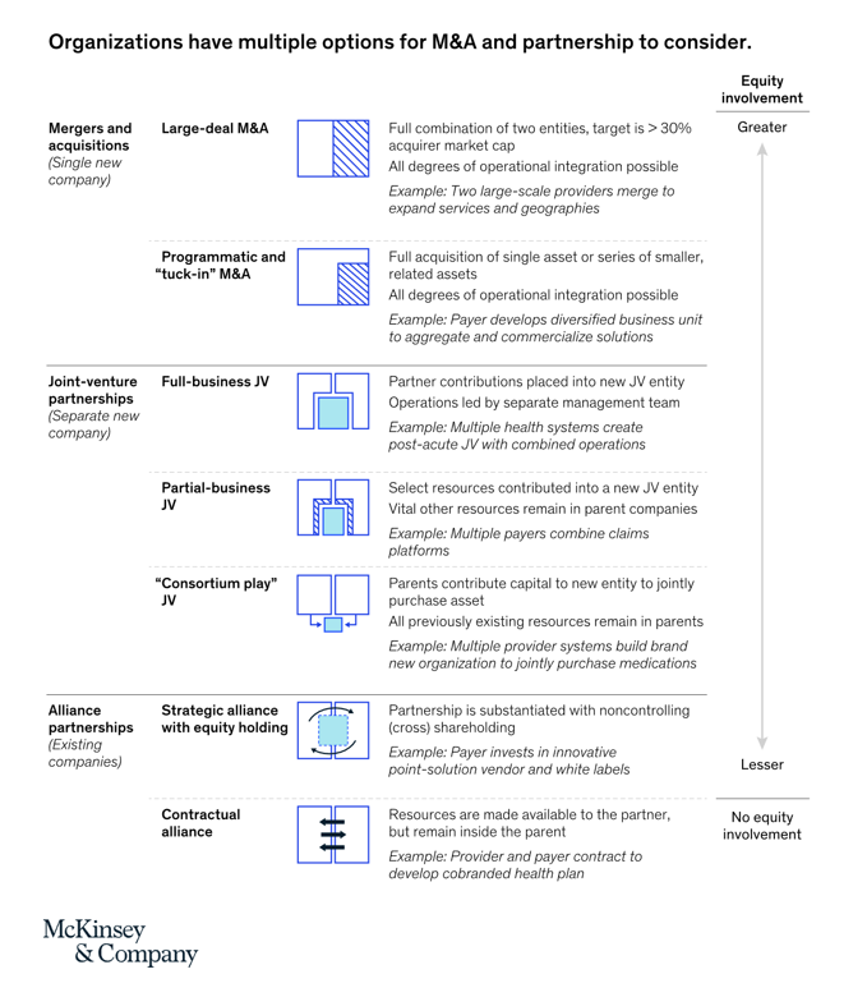
“Partnerships, including JVs and alliances with other healthcare organizations and with new entrants, are just one way to access new capabilities, unlock speed to market, and achieve capital, scale, and operational efficiencies” in health care transformations. “In an environment with continued competition for attractive assets and significant capital in play from institutional investors, these partnerships may also be the most accessible way for organizations to capture value in expanding healthcare services and technology value pools,” we learn in Overcoming the cost of healthcare transformation through partnerships from a team of health care folks with McKinsey & Company.
“Beyond the Bubble Bath,” Self-Care Must Be Rooted in Science To Build Trust Among Consumers
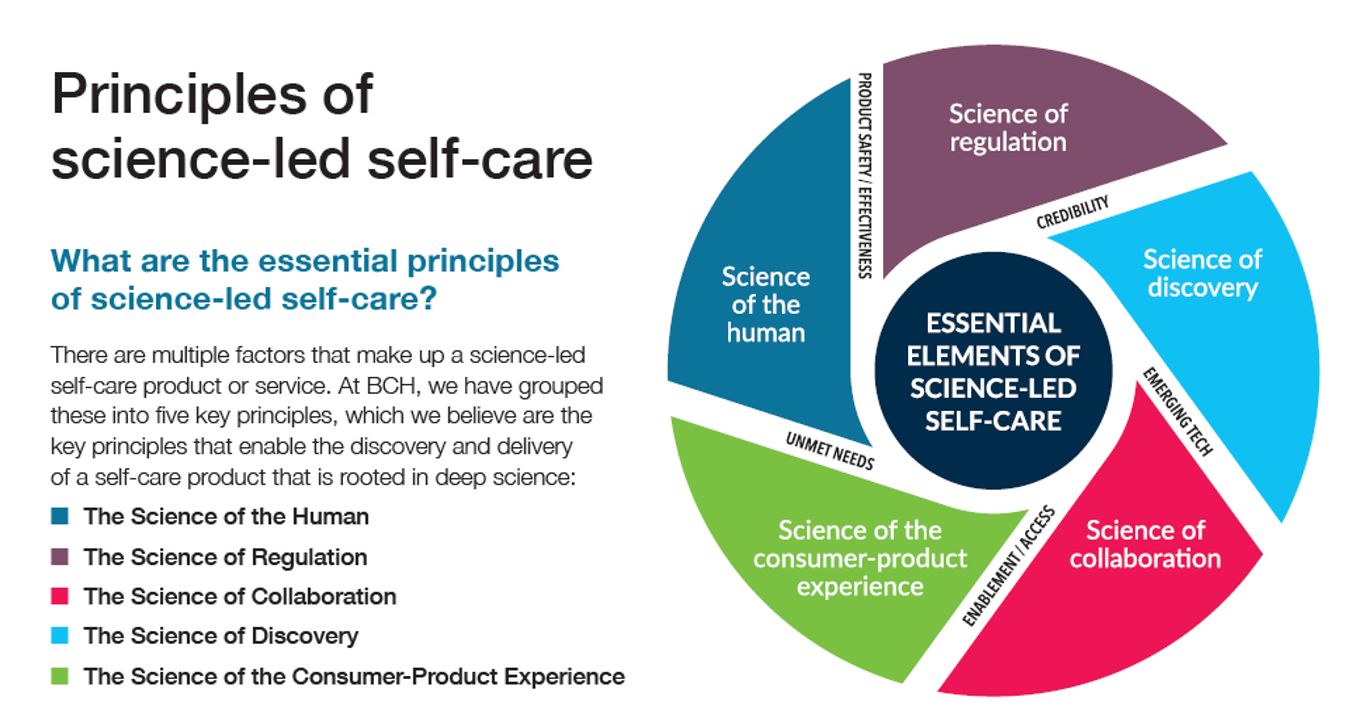
The goal of self-care for health-making is to improve lives by scaling health-and-wellness accessible to all, Bayer believes, giving people more control over their personal health. Self-care work-flows must be based in science to ensure products and services are trusted and deliver on their clinical promise, Bayer explains in Science-Led Self-Care: Principles for Best Practice, a paper published this week which the company intends to be a blueprint for the industry. Bayer recognizes that self-care is growing among health consumers around the world — albeit underpinned by peoples’ cultures, demographics, and “readiness”
The Retail Health Battle Royale in the U.S. – A Week-Long Brainstorm, Day 3 of 5 – Apple as “Intelligent Health Guardian”
Apple wants to be your “intelligent guardian for health,” based on a 60-page paper shepherded by Jeff Williams, the company’s Chief Operating Officer. Published last week, the paper is one of the big signals trumpeted this U.S. summer marked by the BA.5 omicron subvariant of SARS-CoV-2, inflation pressures on our household budgets, social/political tensions, and hot-hot weather. I’m folding the report into my coverage this week on the Retail Health Battle Royale today, Day 3 of my week-long series updating us on the health/care ecosystem. For the previous two days’ posts, see… Day 1
In A Declining Consumer Tech Spending Forecast, Consumer Health Tech Will Grow in 2022: Reading the CTA Tea Leaves
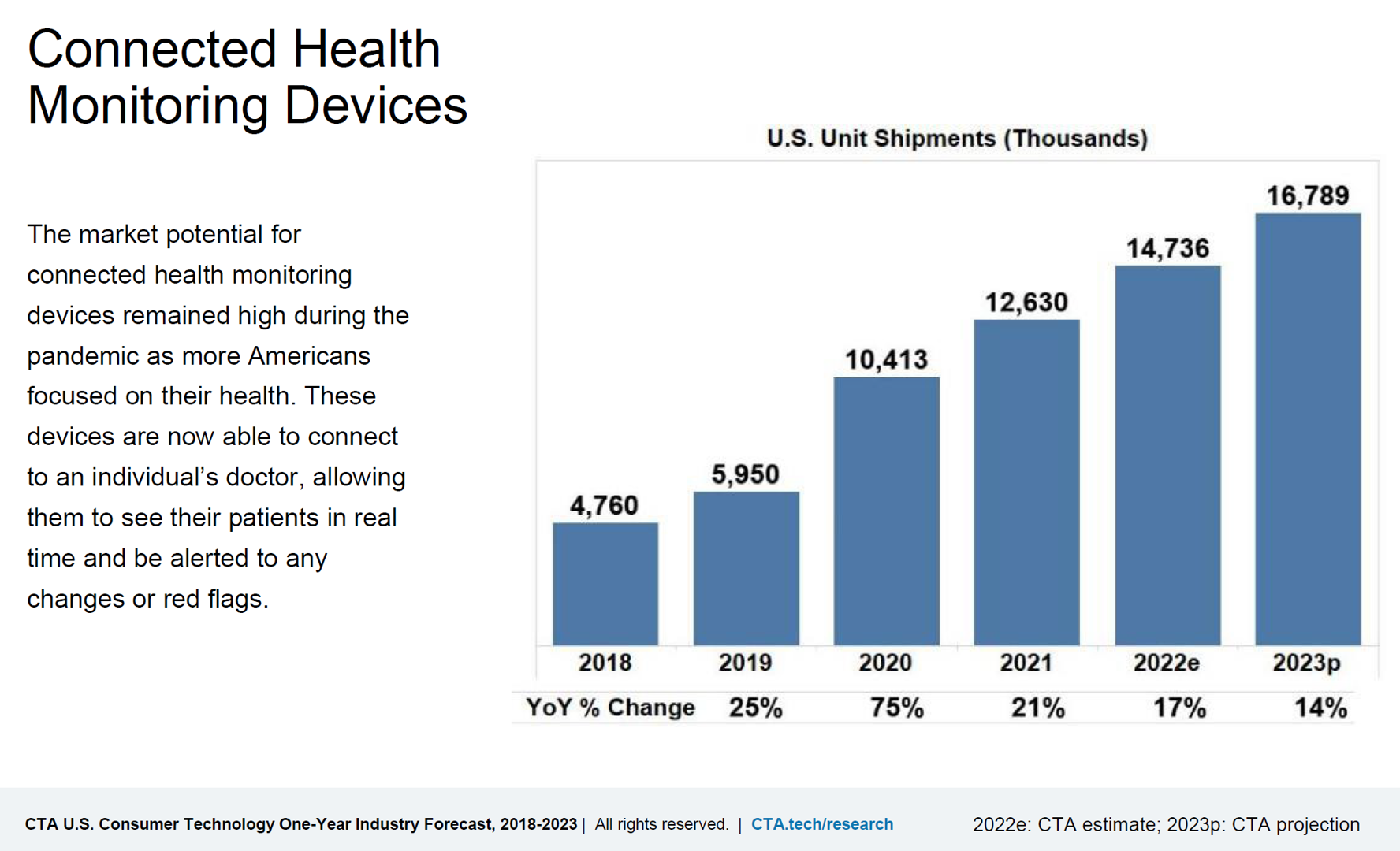
Supply chain challenges, inflation, and plummeting consumer economic sentiment are setting the stage for a decline in consumer electronics revenues for 2022. However, there will be some bright spots of growth for consumer tech spending, for 5G smartphones, smart home applications, gaming, and health technologies, noted in the Consumer Technology Association’s CTA U.S. Consumer Technology One-Year Industry Forecast, 2018-2023. Underneath the overall industry spend of $503 billion, a 0.2% drop from 2021, CTA expects software, gaming, video and audio streaming spending will grow by 3.5% and hardware to fall by 1.4% this year. With
Your State as a Determinant of Health: Sharecare’s 2021 Community Well-Being Index
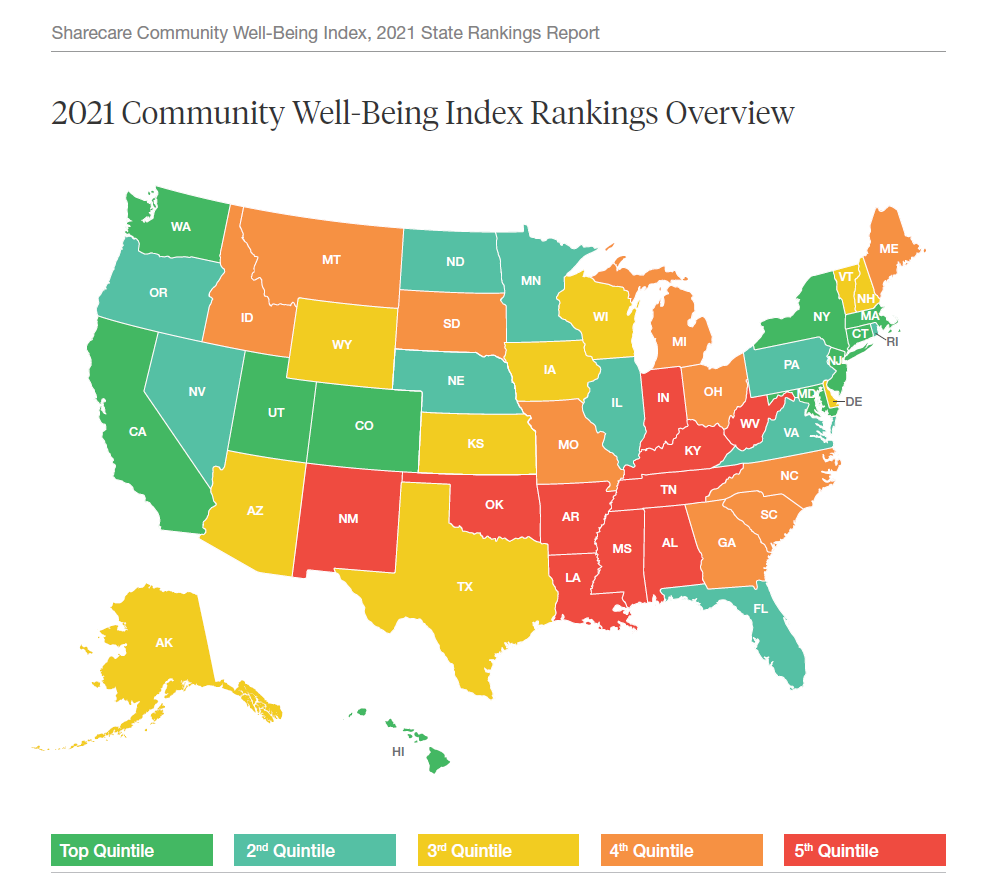
People whose sense of well-being shifted positively in the past two years are finding greater personal purpose and financial health, we see in Sharecare’s Community Well-Being Index – 2021 State Rankings Report. Sharecare has been annually tracking well-being across the 50 U.S. states since 2008. When the study launched, Well-Being Index evaluated five domains: physical, social, community, purpose, and financial. In 2020, Sharecare began a collaboration with the Boston University School of Public Health to expand the Index, including drivers of health such as, Healthcare access (like physician supply per 1,000
Consumers’ Dilemma: Health and Wealth, Smartwatches and Transparency
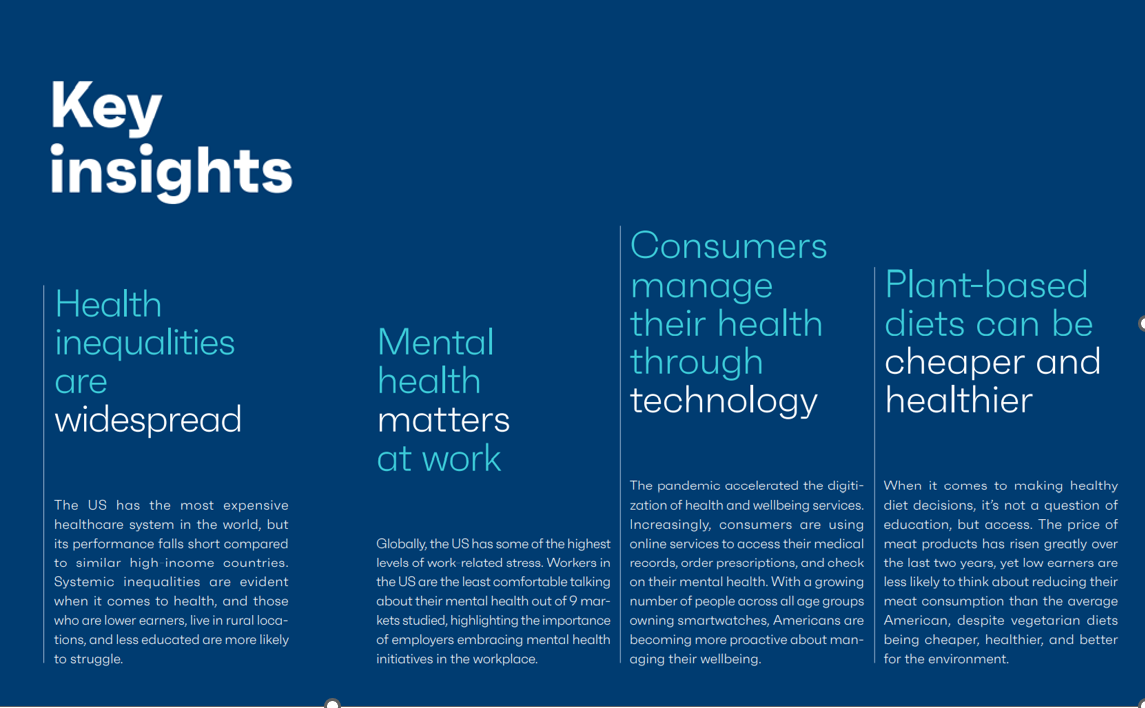
Even as spending on healthcare per person in the United States is twice as much as other wealthy countries in the world, Americans’ health status ranks rock bottom versus those other rich nations. The U.S. health system continues to be marred by health inequalities and access challenges for man health citizens. Furthermore, American workers’ rank top in the world for feeling burnout from and overworked on the job. Welcome to The Consumer Dilemma: Health and Wellness,, a report from GWI based on the firm’s ongoing consumer research on peoples’ perspectives in the wake of
The Legacy of COVID-19 Is Shaping Consumers’ Purchases for Health-At-Home
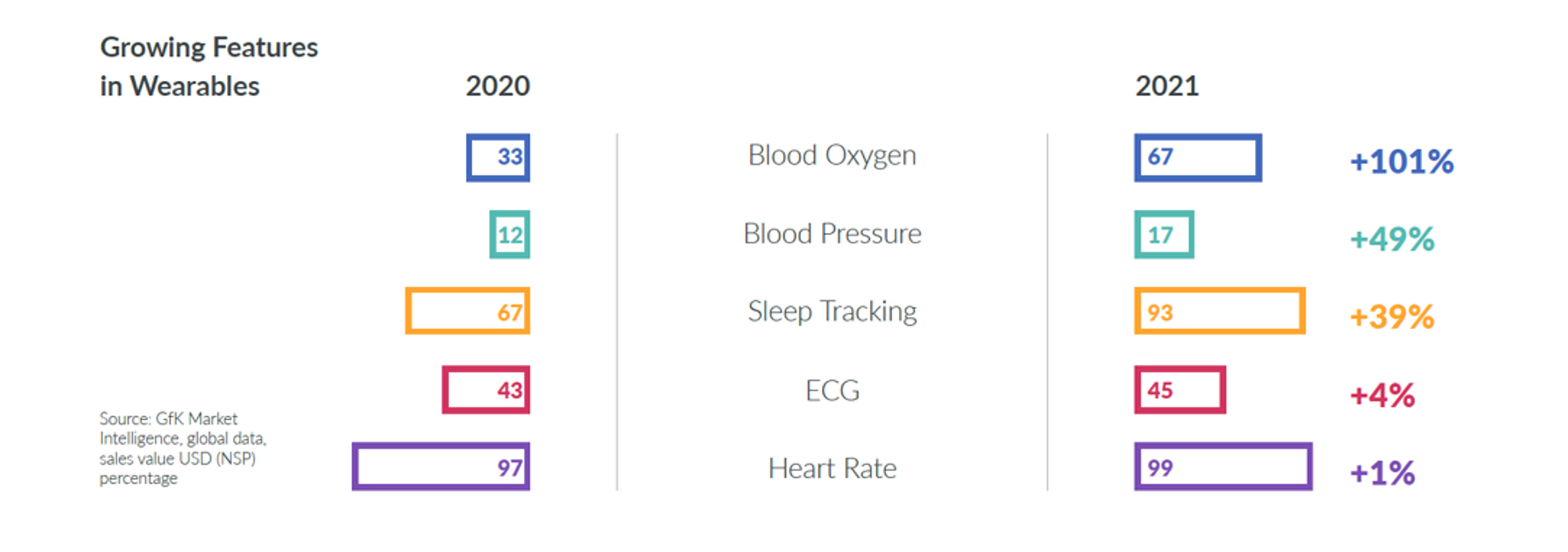
While inflation and financial stress is depressing consumer demand for many purchases the “legacy of COVID-19” is having lost-lasting impacts on how people see their homes — especially as sites for health and wellness. GfK highlights the growing interest in wellbeing and device demand in The State of Consumer Technology and Durables 2002 insights from GfK. In 2021, peoples’ spending on technology and durable goods (like home appliances) grew by 15%, with several categories seeing spectacularly high growth rates — most notably entertainment and health, a category in which core wearables purchases
Use of Preventive Health Services Declined Among Commercially Insured People – With Big Differences in Telehealth for Non-White People, Castlight Finds
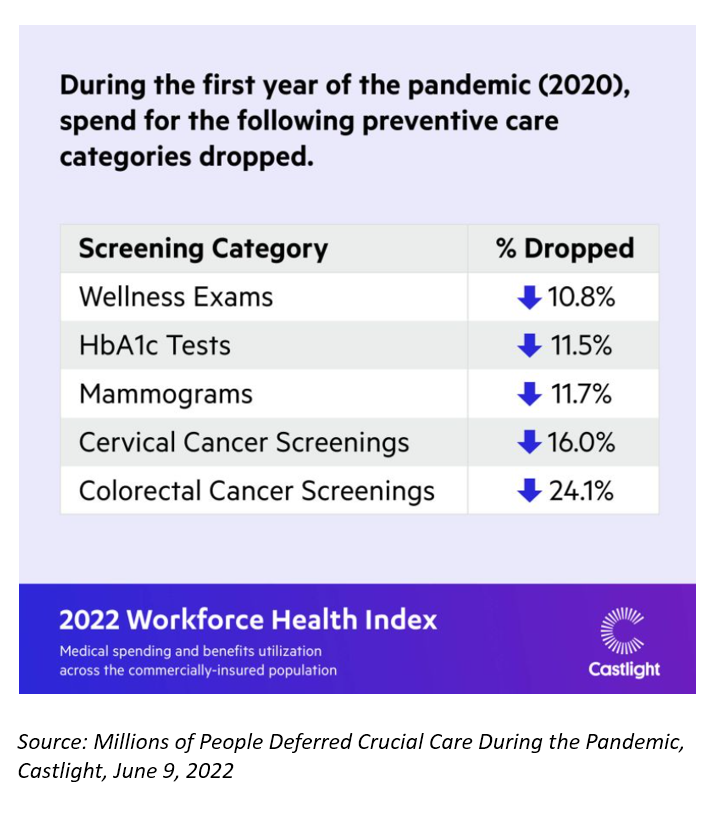
Declines in preventive care services like cancer screenings and blood glucose testing concern employers, whose continued to cover health insurance for employees during the pandemic. “As we enter the third year of the COVID-19 pandemic, employers continue to battle escalating clinical issues, including delayed care for chronic conditions, postponed preventive screenings, and the exponential increase in demand for behavioral health services,” the Chief Medical Officer for Castlight Health notes in an analysis of medical claims titled Millions of People Deferred Crucial Care During the Pandemic, published in June. The
Consumers Intend to Invest in Technology — With Budget and Value in Mind
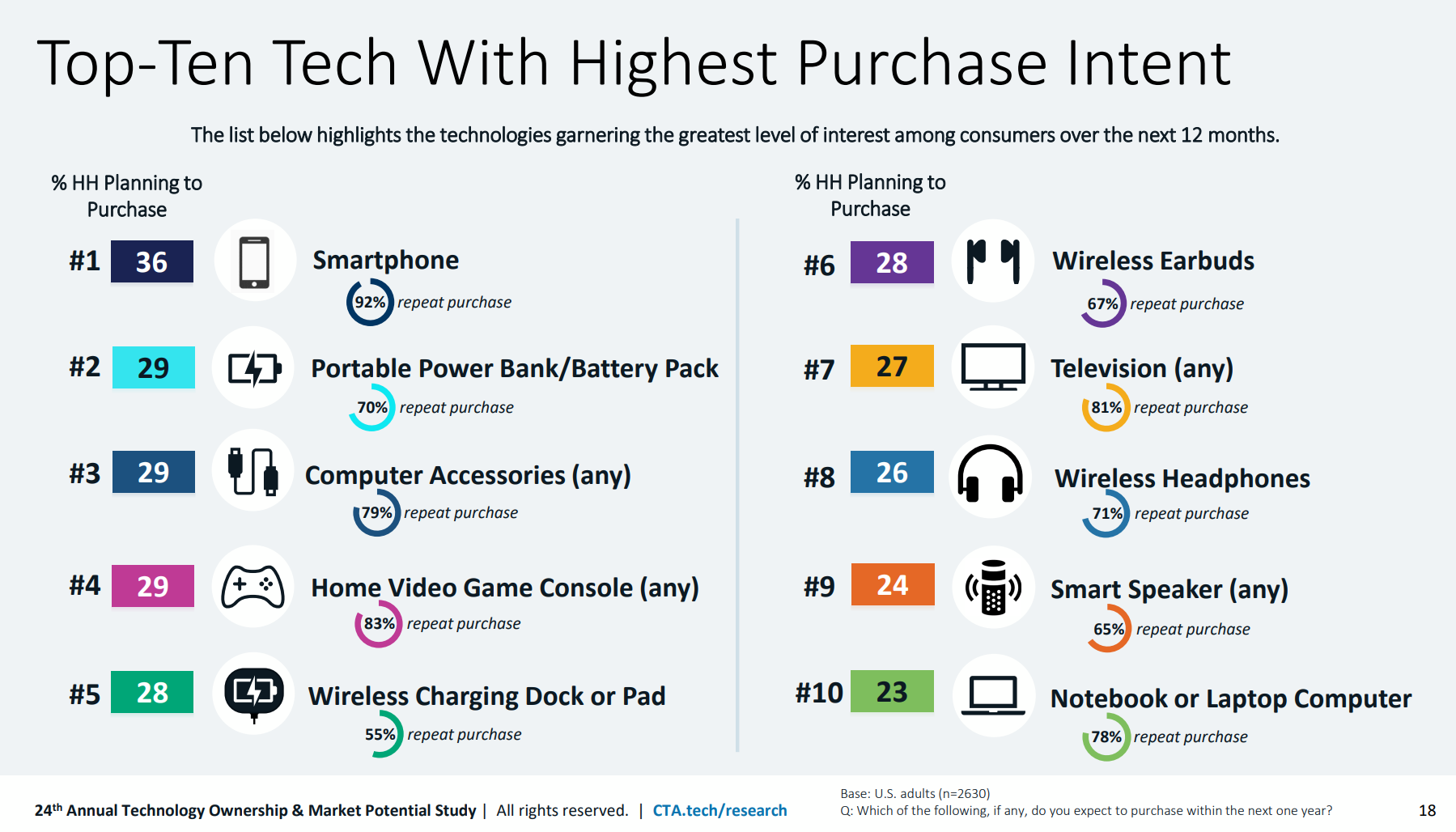
Consumers continued to invest in and use several technologies that supported self-care at home in 2021, with plans to purchase connected health devices, sports and fitness equipment in the next year. But these purchases will be made with greater attention to budget and value consumer mindsets firmly focused on (and stressed by) inflation. The 24th Annual Technology Ownership & Market Potential Study from the Consumer Technology Association (CTA) tells us that Americans in 2022 will have to manage challenging economic headwinds, shopping for technology is preparing people for their new normal —
Health is Our Most Important Relationship: Inconvenient Truths from MRM/McCann Truth Central

We’ve hit a great “healthcare trust” recession around the world, translating into lower multiple points of medical ‘facts’ and pseudoscience, lower adherence to therapeutic regimens, and clinician burnout that has compromised medicine as the team sport it ideally should be. And that’s just one of five inconvenient truths unearthed in The Truth About Our Relationships with Health, the first in a series of papers that MRM is developing to, in their words, “look at the truths pr7eventing us from achieving a better relationship with our own health and with those along our health journey.” This report from MRM analyzes research
The Demand for Self-Care At-Home Will Grow Post-Pandemic – Insights from IRI
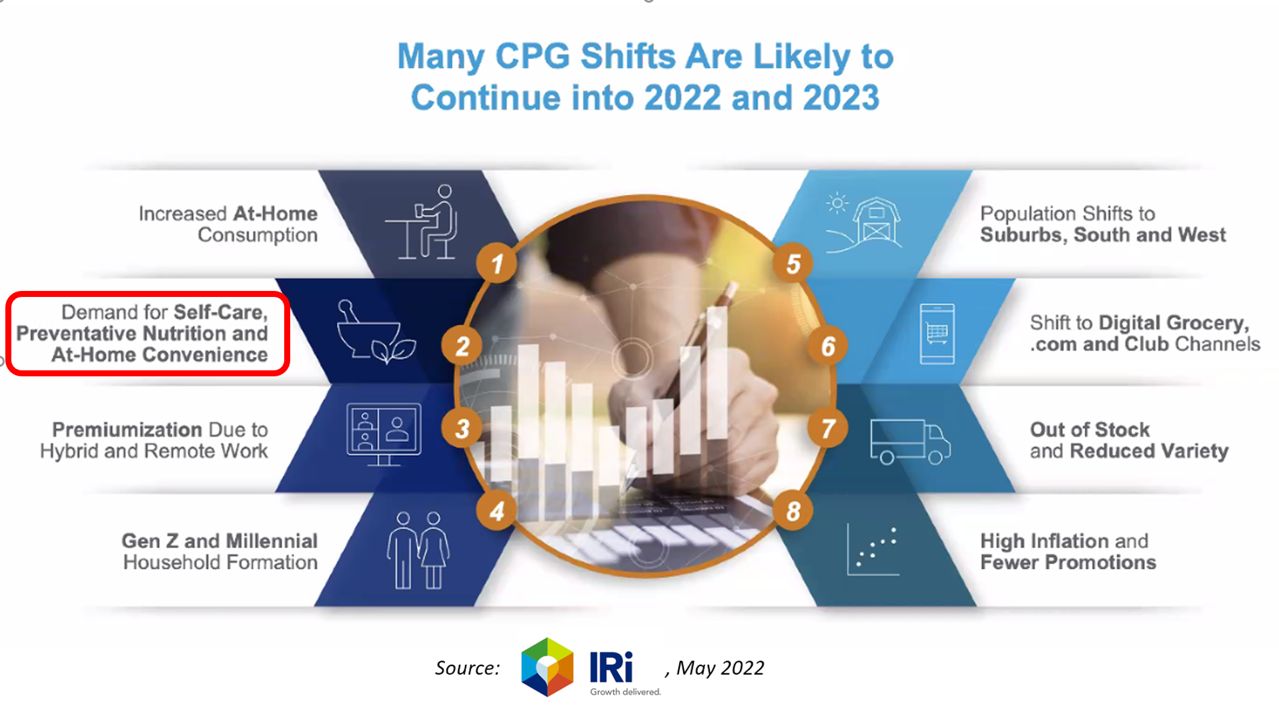
The coronavirus pandemic has re-shaped consumers across many life- and work-flows. When it comes to peoples’ relationship to consumer packaged goods (CPG), the public health crisis has indeed impacted consumers’ purchasing behaviors and definition of “value,” based on IRI’s latest analysis of CPG shifts in 2022 and 2023. IRI has been tracking COVID-19’s impact on CPG and retail since the emergence of the coronavirus. In this Health Populi post, I’ll discuss the research group’s assessment of CPG shifts of consumer packaged goods through my lens on health/care, everywhere — especially, in this case, the home.
How Health Gets Built – The Building H Index Thinking Health-By-Design
“It’s hard to be healthy in the U.S. today.” That is the underlying premise and reason for The Building H Index. Health happens outside of doctors’ offices and hospital operating rooms. Health is made in our homes, in our communities, in our daily lives as we go about working, playing, learning, and praying. Too often, in those daily life-flows, making a healthy decision is harder than defaulting to a less-healthy one. Sometimes, it’s pretty impossible given the state of, say, air quality that we breathe, lack of fresh produce and whole foods at the corner market, or seductively designed automobiles
Health Care and ESG on Earth Day 2022
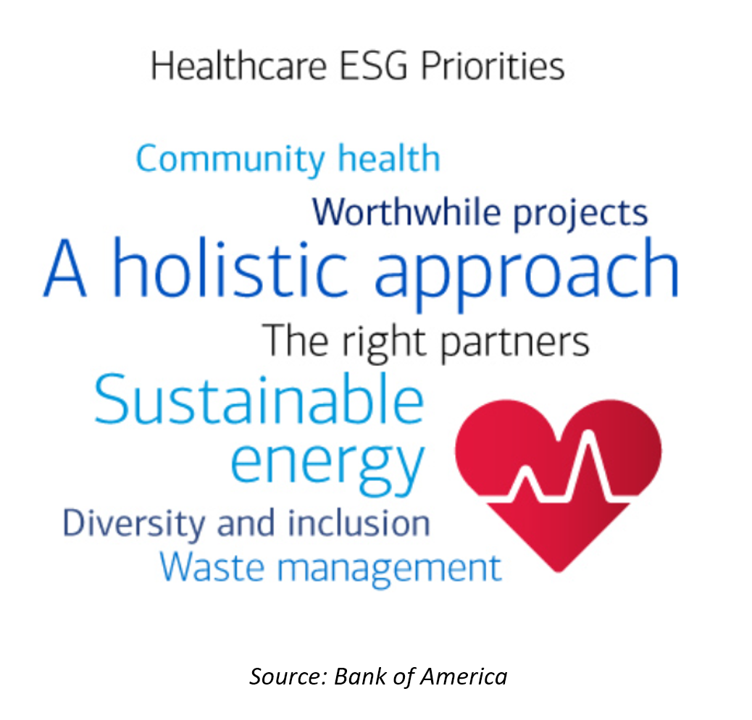
As health care industry stakeholders and policymakers have begun to recognize and address the underlying drivers of peoples’ health, there’s another acronym that is taking hold in health care beyond SDoH: that is ESG, standing for Environment Social, and Governance pillars of responsibility and activity. To mark this Earth Day 2022, I’ve written a brief primer on ESG for the health care community published today in the Medecision Liberate Health blog. Here in Health Populi, I’ll give you a few highlights with graphics you won’t see in that essay to illustrate some key
The Color of Care – Oprah and The Smithsonian Channel Partner on Health Equity
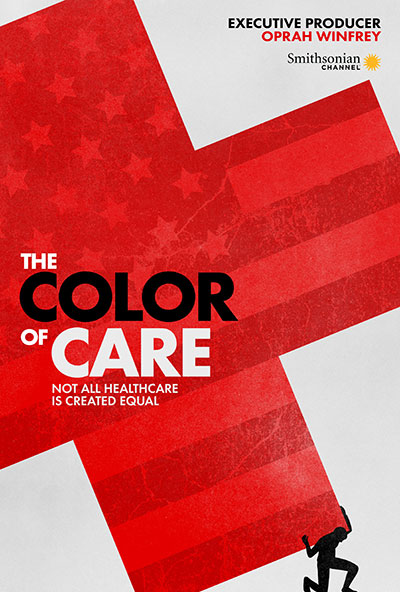
A new documentary and educational campaign on health equity will be launched on May 1st, 2022, from Oprah’s Harpo Productions studio partnering with The Smithsonian Channel. The Color of Care documents stories of people who have lost loved ones in the COVID-19 pandemic as well as expert interviews with frontline workers and public health experts and researchers sharing data on systemic racism in health care that has underpinned racial health disparities since slavery was instituted in America. Oprah’s website talked about the project, quoting her saying, “At the height of the pandemic, I read something that stopped me in
Making The Joy Choice for Our Health and Well-Being – a conversation with Michelle Segar
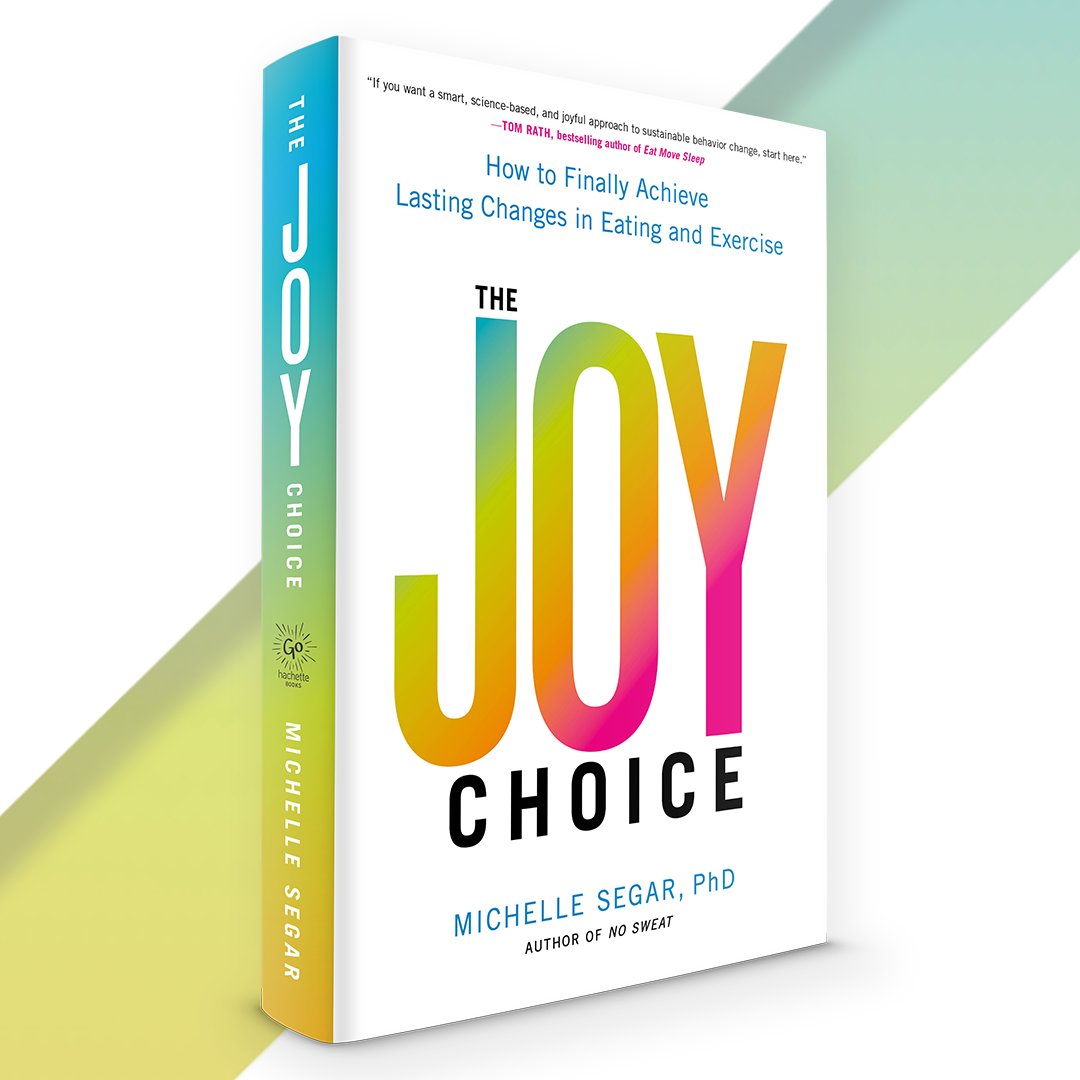
“Life has many ways of testing a person’s will, either by having nothing happen at all or by having everything happen all at once,” Paulo Coelho wrote in his novel, The Winner Stands Alone. Coelho is talking about the all-too-human condition of facing situations that are unplanned which test our patience, resilience, and grit. Our best-laid plans go awry – especially those for healthy behaviors, like exercising and eating well. Enter Michelle Segar, PhD, MPH, MS, NIH-funded researcher at the University of Michigan, sustainable-behavior-change expert, and health coach. Michelle is our go-to sage for helping us
McKinsey’s Six Shifts To Add Life to Years — and One More to Consider
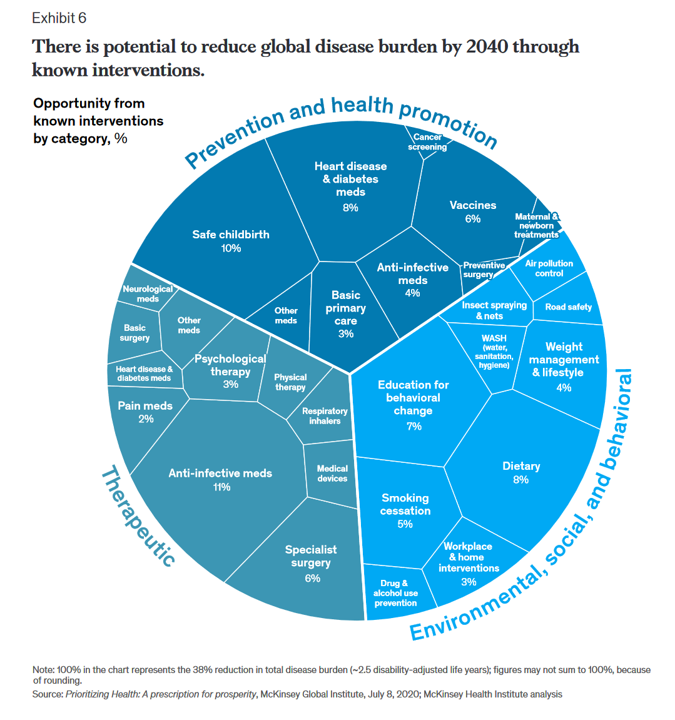
People spend one-half of their lives in “less-than-good health,” we learn early in the paper, Adding years to life and life to years from the McKinsey Health Institute. In this data-rich essay, the McKinsey team at MHI sets out an agenda that could help us add 45 billion extra years of higher-quality life equal to an average of six years per person (depending on your country and population demographics). The first graphic from the report illustrates four dimensions of health and the factors underneath each of them that can bolster or diminish our well-being: personal behaviors (such as sleep and diet),
Primary Care in the U.S. – Still a Weak Backbone for the Health of Health Citizens
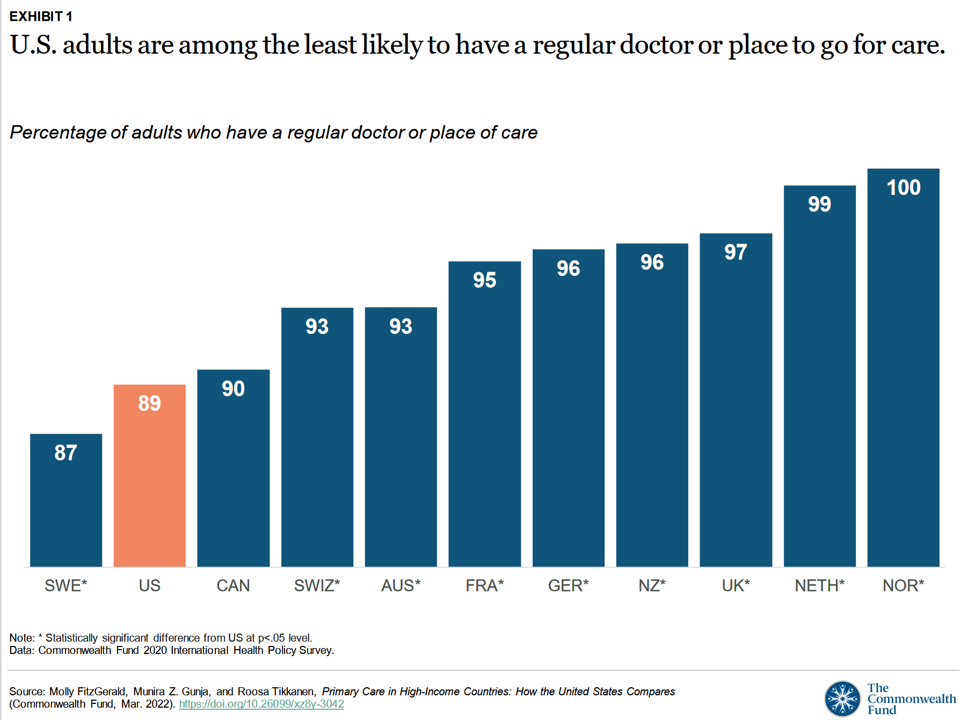
Compared with health citizens living in other wealthy countries, people living in the U.S. are still among the least likely to have a regular doctor or place to go for care. Thus, millions of Americans continue to lack access to primary care compared with peers in other nations, according to a report from The Commonwealth Fund. The Commonwealth Fund has tracked primary care access for many years, and over time has found the United States to lack the kind of primary care “backbone” that many wealthy nations have — whose health citizens also enjoy much better health outcomes that relate
 Jane will be working with EU- and UK-based clients in September and October 2026, collaborating with stakeholders in digital health, public/community health, retail health, and growing opportunities for health-at-home. Stay tuned to her updates here on Health Populi on-the-ground as she lives the digital nomadic work-life in Italy, Belgium, the Netherlands, and in London.
 I was grateful to be Jasmine's first conversation-guest on her new podcast, "Aperture - Widen the Frame," where this expert in narrative medicine is bringing together the broad range of voices to sit at the table and address what health care needs: those humans in the health-system-loop who address health equity and empathy along with delivering evidence-based medicine for all.
 Jane joined host Dr. Geeta "Dr. G" Nayyar and colleagues to brainstorm the value of vaccines for public and individual health in this challenging environment for health literacy, health politics, and health citizen grievance. Click onto the Pfizer Value of Vaccines site and you can watch four episodes covering the challenges with adult vaccination, the employer and health plan member's journey to vaccination, reimbursement, and collaborating for proactive prevention.