


Most Psychologists Say Their Patients Use AI for Mental Health Support – Recommendations on Chatbots and AI from the APA
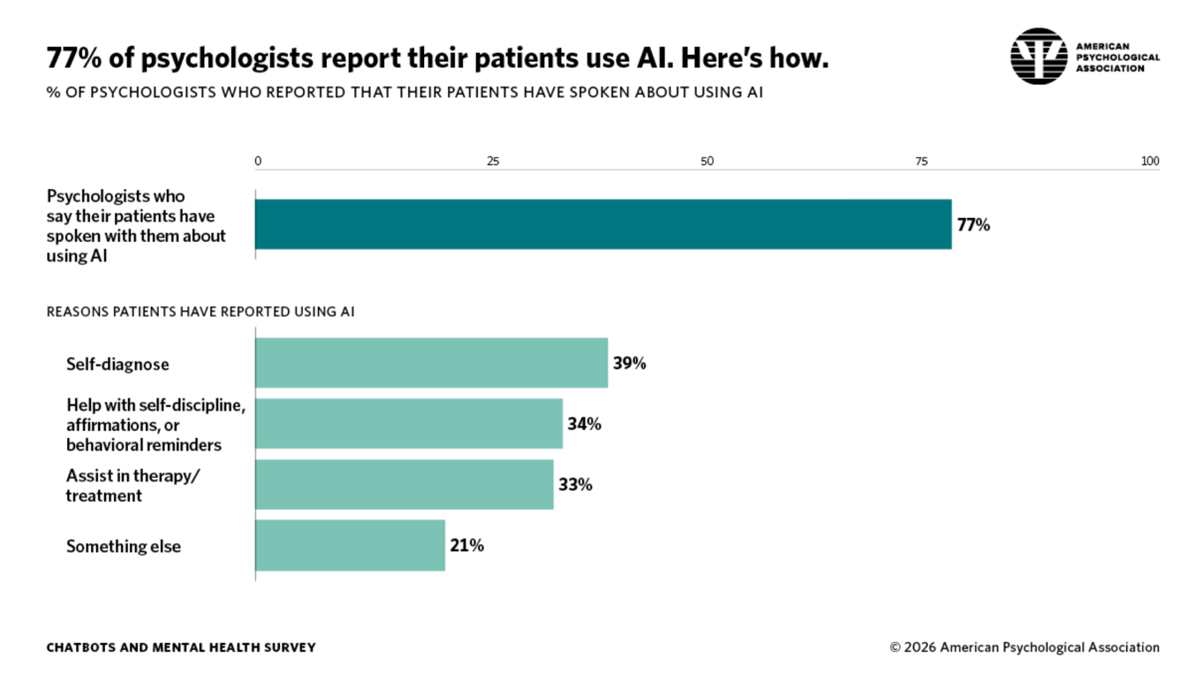
Three in four licensed psychologists in the U.S. report that their patients have spoken about using AI — with at least one-third reporting use for self-diagnosis, help with self-discipline or behavioral reminders, or as an assist in therapy. This is the top-line finding in the 2026 Chatbots and Mental Health Survey from the American Psychological Association (APA). This is among the first such study into patients’ use of AI for mental health support. APA conducted the survey among 1,242 licensed psychologists in the U.S. in April 2026, In this early phase of patients adopting
AI Is Expanding Healthcare Access, Enabling Clinician Wellbeing, and Preparing Proactive Patients – The Philips Future Health Index 2026
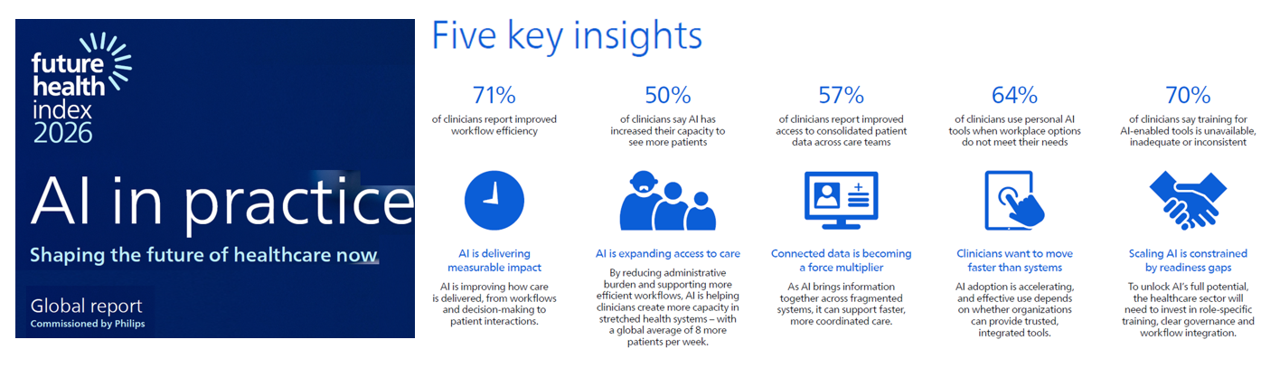
AI is already transforming healthcare delivery for clinicians, patients, and their clinical partnerships, we learn in The Philips Future Health Index 2026. For this year’s annual futures report, Philips conducted two surveys among 2,011 healthcare professionals and 20,085 patients, spanning ten countries and fielded between February and April 2026. AI adoption among healthcare providers and patients in this early phase is showing benefits translating into greater productivity, clinician well-being, improved data workflows, and expanded access and capacity for clinicians to see more patients. Health systems the
Americans Are Health Information Seekers — Far Above All, Valuing Info from Providers and Medically-Trained Sources (and lessons for AI in health)
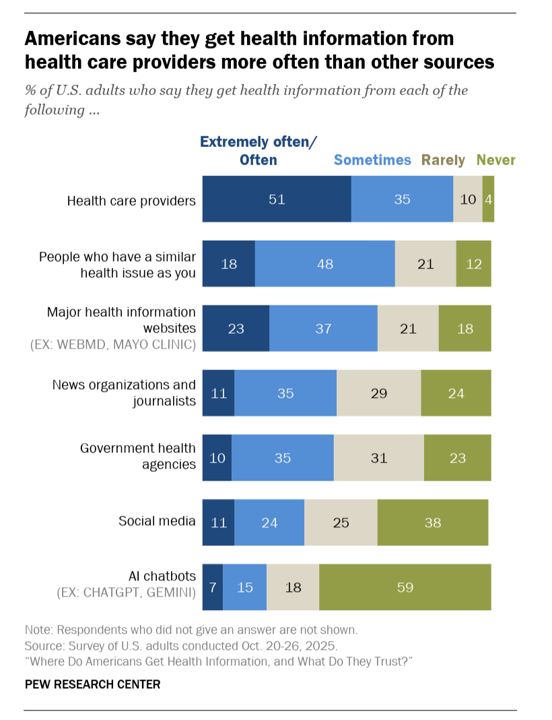
A commentary in Nature Medicine this week asserts that, “Quality health infomration for all is a fundamental determinant of health.” Lawrence Gostin, a learned health care legal expert at Georgetown, and colleagues, note that, “Society is at a turning point, faced with misleading guidance and ubiquitous, fast-spreading digital and social media…Amplified by generative AI, poor quality information corrodes trust in science and drives social and political polarization.” With the context in mind that health information is a social determinant of health, we turn to a report from the Pew Research Group which asks and answers the question, Where do Americans
Consumer Adoption of AI for Health and Self-Care – Doubling to 36% in a Year, Via Rock Health’s Latest Snapshot
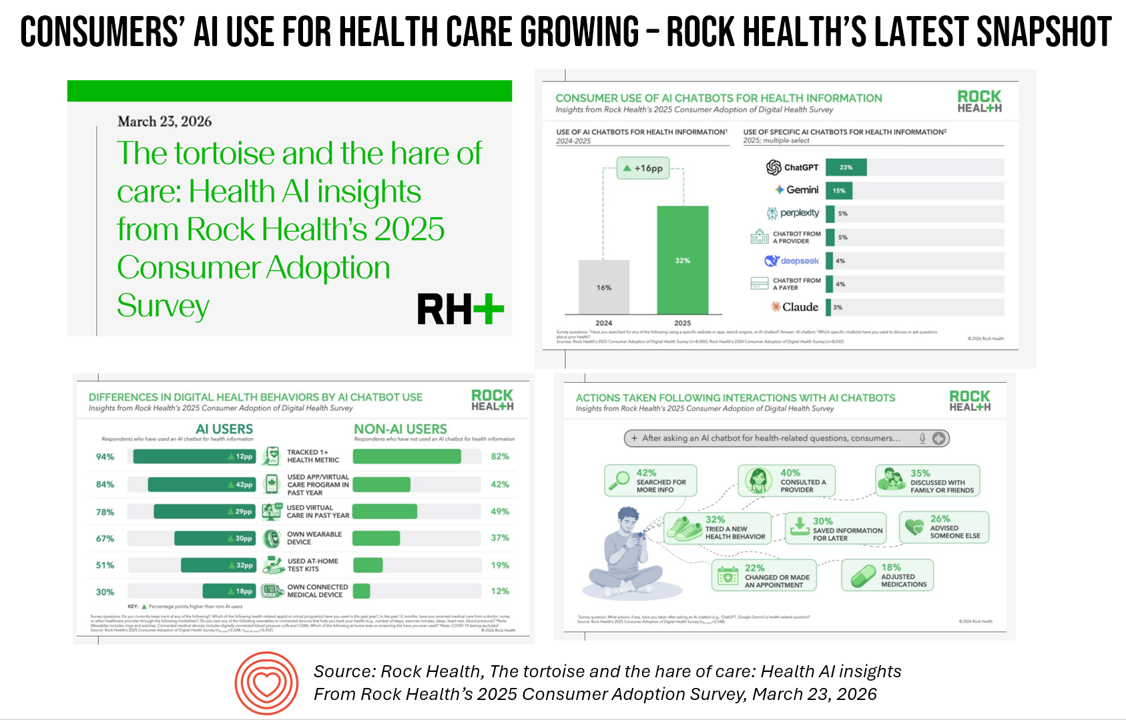
From pre- and self-diagnosis of symptoms to prescription drug treatments and ongoing care, millions of U.S. consumers have used AI chatbots for health and wellness according to the consumer health adoption survey from Rock Health. The report was published in late March 2026, with AI-focused data from the consumer survey fielded in December 2025. In just one year from 2024 to 2025, consumers’ use of AI chatbots for health information doubled from 16% of people to 32%. The most popular brand of AI for health information seeking was ChatGPT (owned by OpenAI, with whom
Healthcare AI Direct-to-Consumer: Everything, Everywhere, All At Once
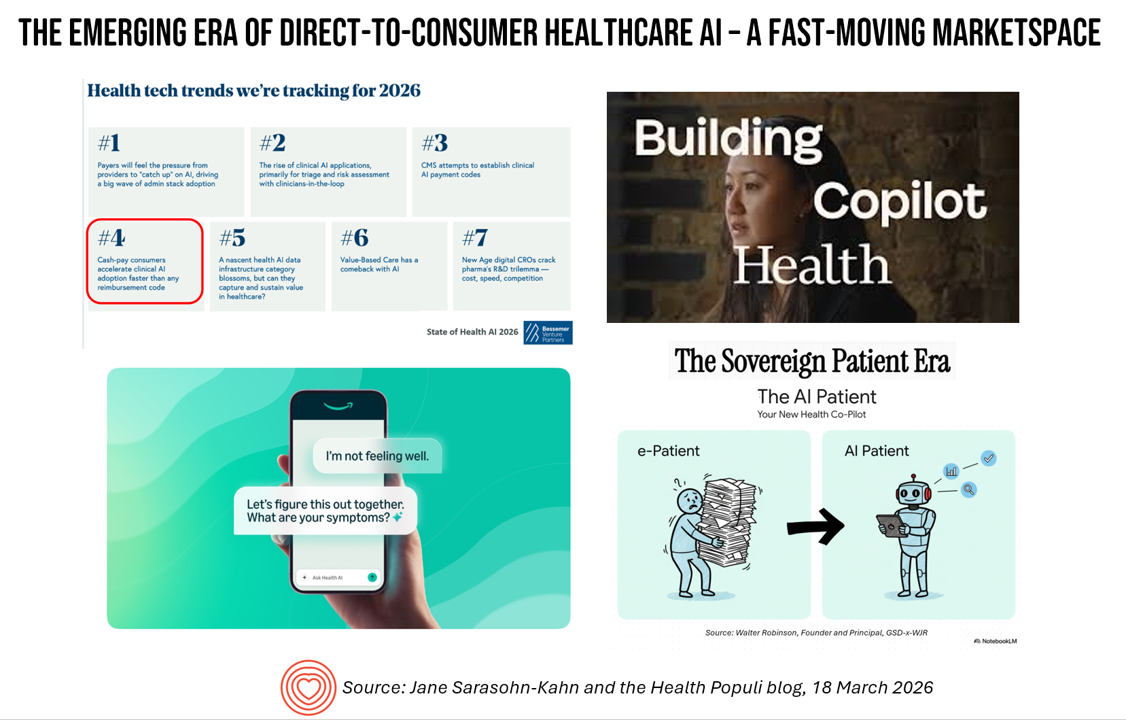
The announcements of consumer-focused AI for health are coming Fast and Furious. As we are coming off of the 2026 Oscars broadcast, it inspires me to quote another movie title, Everything, Everywhere, All at Once. In the moment, it feels like consumer health-focused AI is indeed in a fast-and-furious launch phase. It’s time for me to provide an update on this fast-moving-consumer service, discussing the latest vendor announcements and the ongoing concerned embrace of AI among early adopting citizen-users of AI for health/care. For context, let’s start with long-time AI-medical expert Dr. Eric Topol’s view on the current state. Registering
Dr. Wachter Bets on A Giant Leap for AI in Health Care
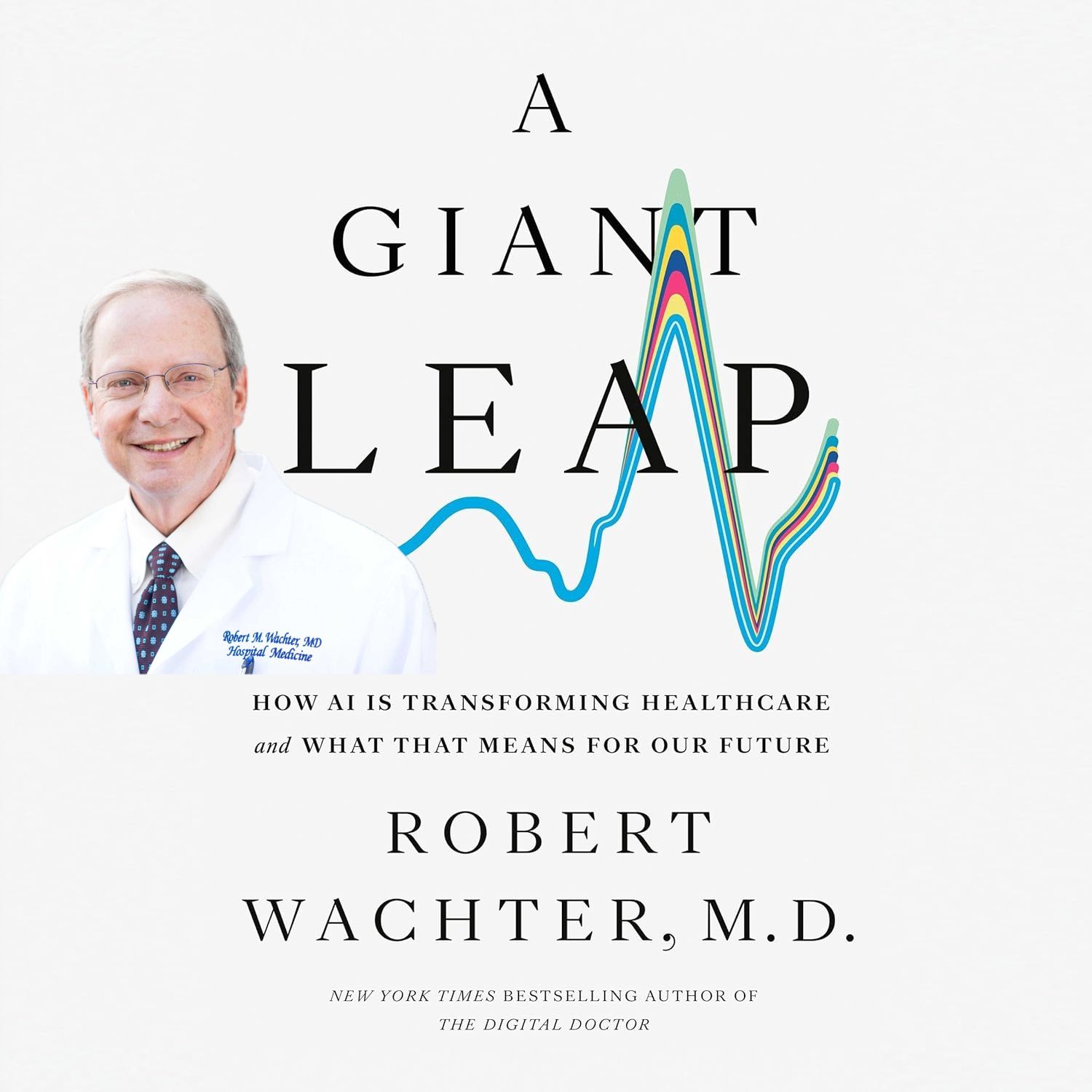
“Stop worrying and let AI help save your life,” a New York Times op-ed prescribed in January. So I wanted to ask Dr. Robert Wachter, author of that essay, “why not worry?” and read his latest book, A Giant Leap, before speaking with him. I spent time with Bob on a Zoom session last week to dig into some patient/consumer-facing issues regarding AI and health care. Before I launch into our engaging conversation, I’d like to share some context about Dr. Wachter and his evolution that I believe makes him
The New Health Consumer Mindset and Wallet: From GLP-1s to Trading Up for Health & Longevity
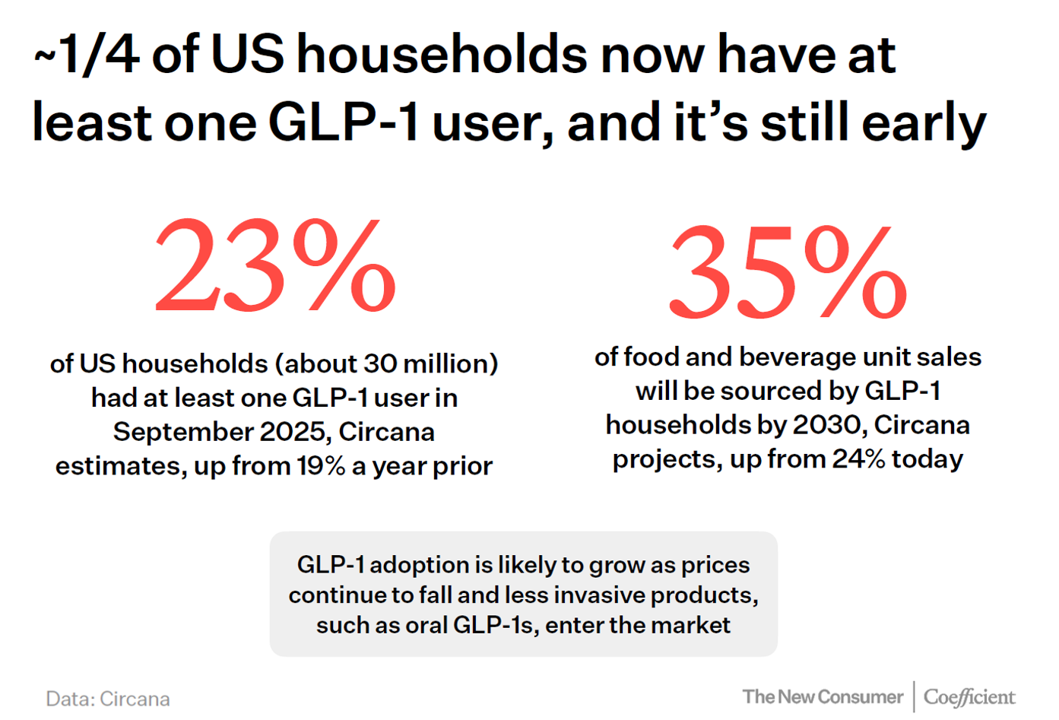
From GLP-1s to longevity and new views on self-care for healthcare, the people are taking their health in-hand, at-home, and via-tech to complement and sometimes replace the legacy health system touchpoints which are the traditional categories for care: hospitals, doctors, rehab centers, diagnostics and labs, and health care financing and plans — some opting out of plans and going full-risk (cash, out-of-pocket) truly self-insuring against future medical risks. As I prepare to publish my Year-End/New Year TrendCast for 2026, I felt like front-ending next week’s annual long post with details on the demand side of the forecast — a focus
Trust and AI in Healthcare: At a Crossroads, Edelman Finds
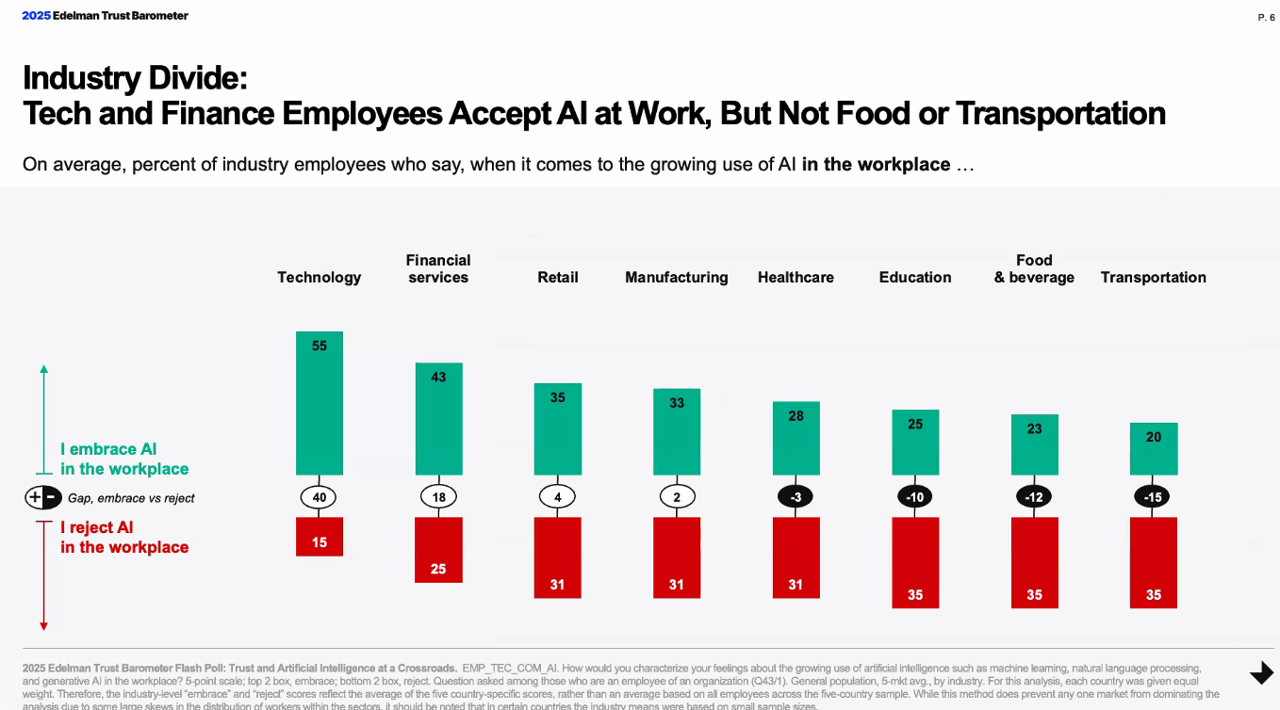
Enthusiasm for innovation is not a guaranteed thing; furthermore, trust in AI lags trust in the overall technology sector, we find in the 2025 Edelman Trust Barometer research through a Flash Poll: Trust and Artificial Intelligence at a Crossroads, discussed in a webcast on 3 December. People in the U.S. are more than twice as likely to reject the growing use of AI than embrace it, with the embrace of AI much lower than peoples’ enthusiasm for it. Edelman conducted the poll in five countries — Brazil, China, Germany, the UK and the US — with sample sizes at least 1,000+
A Month Until #CES2026 – The Journey to Our Personal Health Operating Systems

In a month, I’ll board a plane for Las Vegas to spend a week at CES 2026, the annual electronics conference that last year brought together over 140,000 global technology stakeholders to display, demonstrate, and sell the latest in consumer-facing tech. This will be my fourteenth CES (including the virtually convened meeting held in 2021). If you want to time travel, here’s a link to an early CES post featuring “The Battle of the (Wrist)bands.” Indeed, the digital health aisle at the time had many wrist-worn activity trackers, largely amped-up pedometers, with the likes
The Shorter-Term Future of Healthtech is AI for Administration – Silicon Valley Bank Reads the Tea Leaves
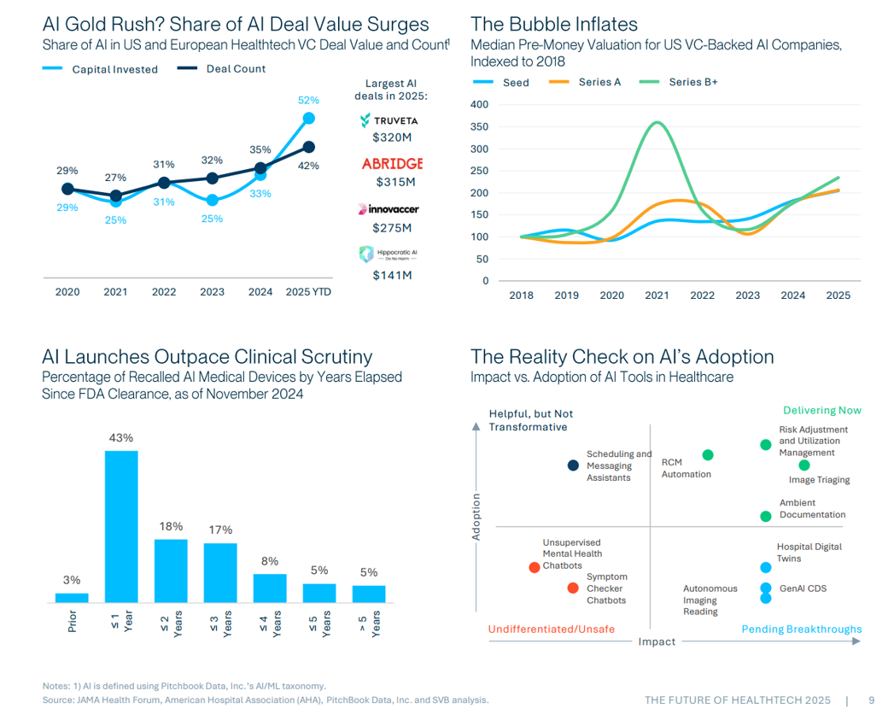
Too much money is going into too many untested AI applications in health care, we learn in The Future of Healthtech 2025 from Silicon Valley Bank (SVB). While “the new healthtech is here” in the form of AI-everything, SVB points out that it’s “Provider Ops” and the back office that’s driving the sector. “Healthtech is now definitively an administrative sector, not a clinical one,” SVB asserts in the first of three key themes plot-lining the report. What sets the stage for context are these four important
What Children Can Teach Us About Using GenAI – Insights from The Alan Turing Institute and LEGO

“While children are the group that may be most impacted by the widespread deployment of generative AI, they are simultaneously the group least represented in decision-making processes relating to the design, development, deployment or governance of AI,” we learn in Understanding the Impacts of Generative AI Use on Children, research conducted by The Alan Turing Institute in partnership with the LEGO Group. But it’s the children who shared their perspectives who can teach adults about some potential positive and negative aspects of GenAI, and help inform us in managing downside risks. FYI, The Institute is headquartered in the British Library
In Health Care, Consumers Are Seeking Kindness Coupled with Efficiency

Kindness + efficiency + listening + personalization: together, these are the most important experiences consumers seek from health care touchpoints, we learn in Humanizing Brand Experience: Healthcare Edition from Monigle. In this 8th volume of the company’s Humanizing series, Monigle tracks a different pattern of patient engagement — to be sure, built on trust, yet not just as a health consumer dealing with a diagnosed condition — but more holistically for getting me and keeping me healthy and well. The implication and recommendation here is to deliver even more personalized care
One Way to Improve U.S. Healthcare, Lower Costs and Drive Outcomes? “Unvendor,” Asserts Dr. Harm Scherpbier in His New Book
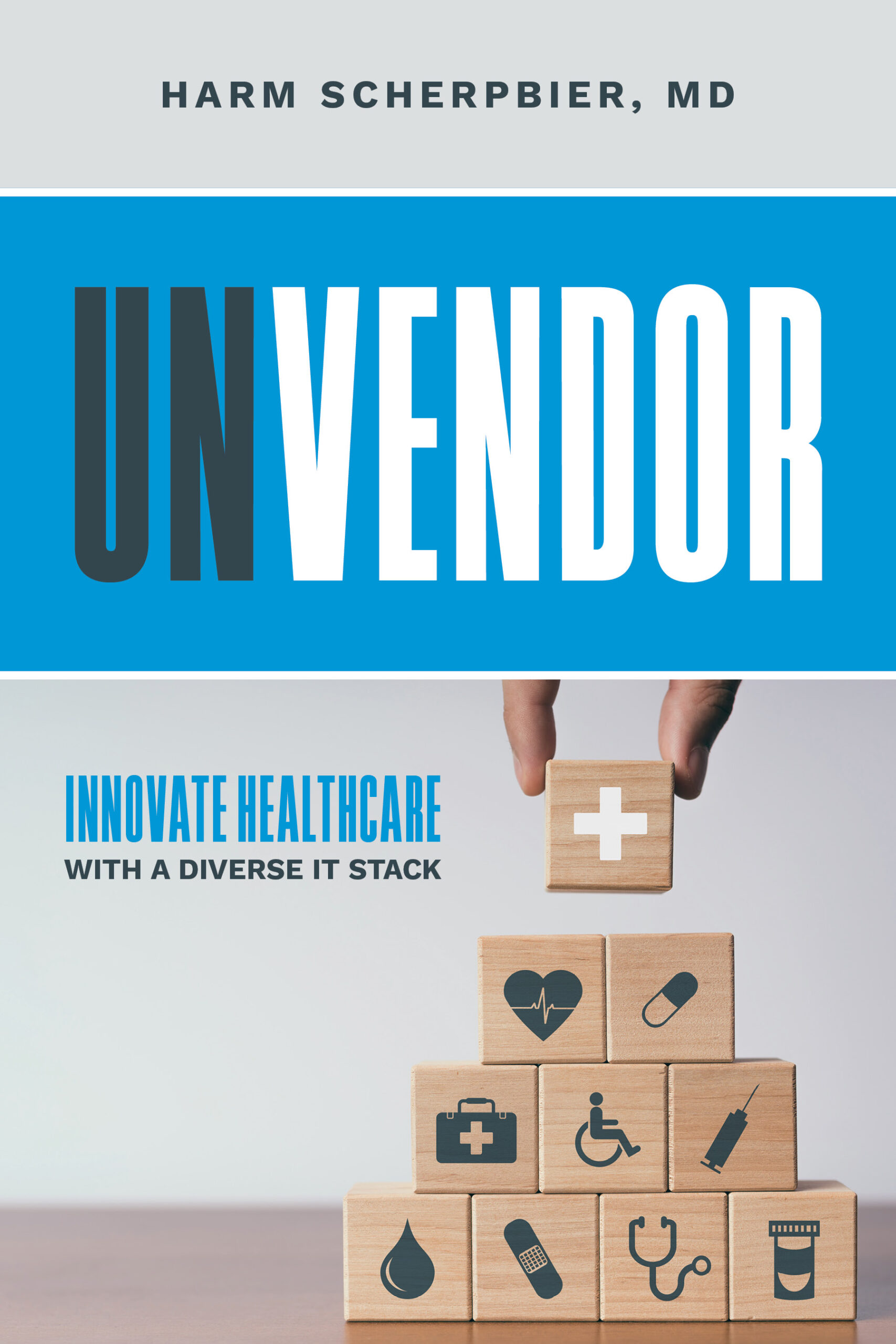
Health information technology professionals charged with selecting, implementing, updating, and paying for health IT in hospital and care delivery settings are essentially the first-line “consumers” of health IT – specifically, electronic health records. But these health IT leaders feel far from empowered and choiceful as consumers in todays EHR vendor “monoculture,” Harm Scherpbier, MD, explains in his book, Unvendor. I spent time with Harm to discuss the book, its backstory, and what he hopes to accomplish by raising the issue of single-vendor health IT and how clinicians, health IT staff, and
The New “Paging Dr. Google?” DTC-AI for Health Care
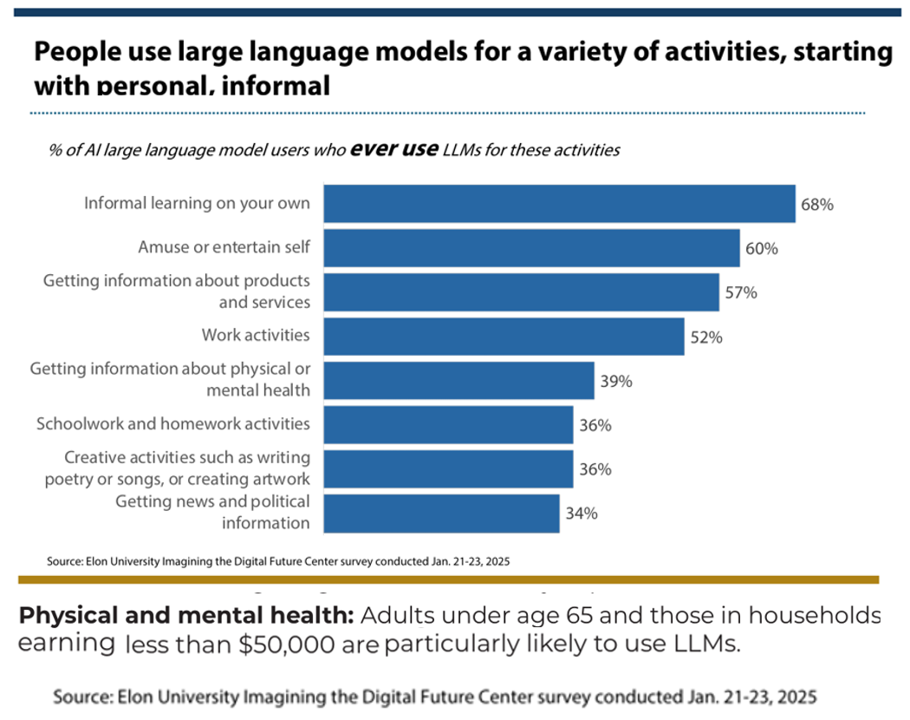
While most people in the U.S. who have used large language models (like ChatGPT) for informal learning, entertainment, and getting information about products and services, 39% of U.S. adults have also tapped into LLMs to source information about physical or mental health. This insight is brought to us in the brilliantly titled report, Close encounters of the AI kind, from the Imagining the Digital Future Center at Elon University. The principle author of the survey report is the Center’s Director, Lee Rainie, whose name many of you will know from his two+ decade career at the Pew Research Center (and
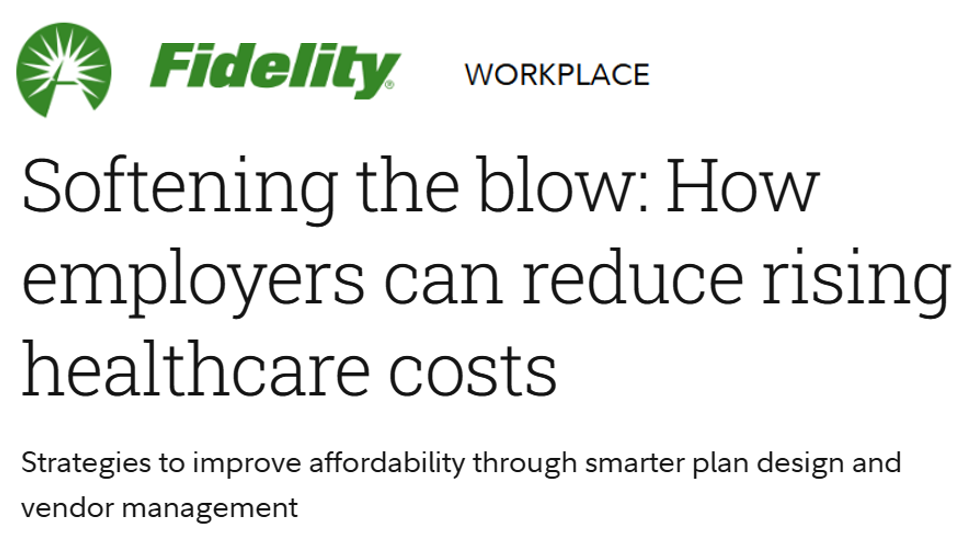 One of the best aspects of my work is collaborating across the health/care ecosystem to address how health citizens can deal with health care costs and and care for families. I'm grateful to have collaborated with Fidelity on their research into this issue, which you can access at the link here.
 Jane joined host Dr. Geeta "Dr. G" Nayyar and colleagues to brainstorm the value of vaccines for public and individual health in this challenging environment for health literacy, health politics, and health citizen grievance. Click onto the Pfizer Value of Vaccines site and you can watch four episodes covering the challenges with adult vaccination, the employer and health plan member's journey to vaccination, reimbursement, and collaborating for proactive prevention.
 I'm grateful to be part of the Duke Corporate Education faculty, sharing perspectives on the future of health care with health and life science companies. Once again, I'll be brainstorming the future of health care with a cohort of executives working in a global health care enterprise.