


The Healthcare Affordability Elections, 2026 and 2028 – Listening to the KFF Tracking Poll, January 2026
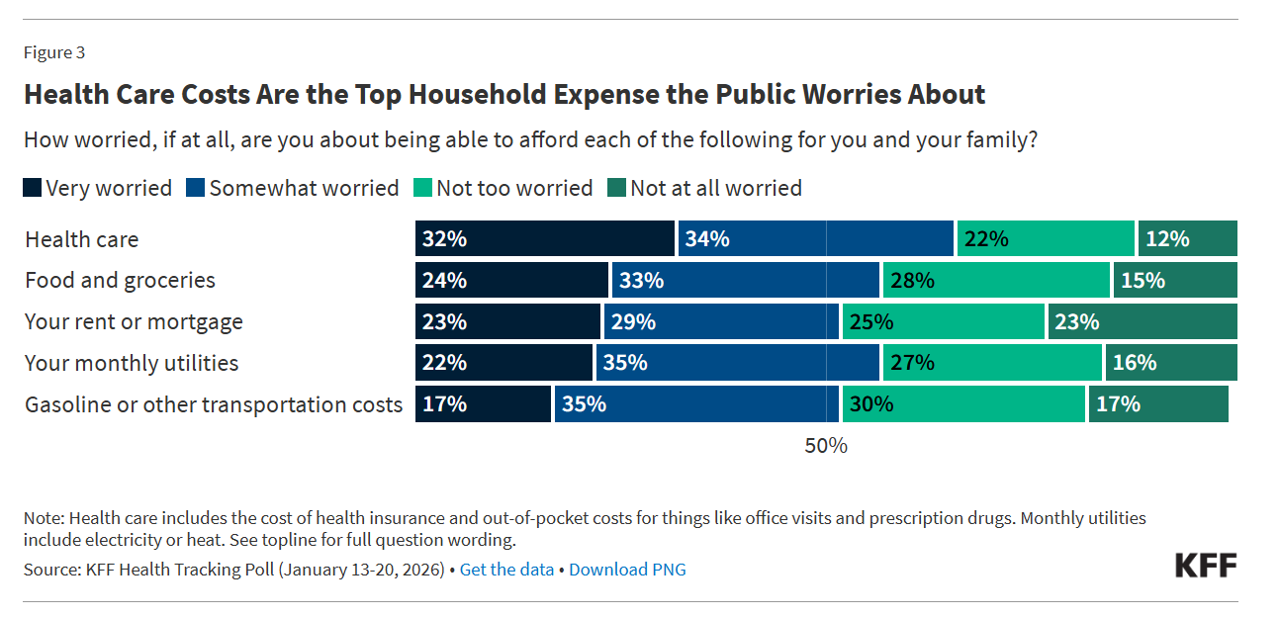
The title of KFF’s press release launching the Foundation’s January 2026 Health Tracking Poll clearly observes, “Health Care Costs Tops the Public’s Economic Worries as the Runup to the Midterms Begins.” I’ve pulled out the key details to share my lens on the 2026 midterm and 2028 Presidential election forecast, which I believe will turn out to be (in part) The Patients’ Elections. Here’s the top-line title finding — where most people in the U.S. — 2 in 3 people (66%) — are worried more about health care costs compared with other major household expenses.
As Adult Vaccination Levels Fall, We Must Assert the Value of Vaccines
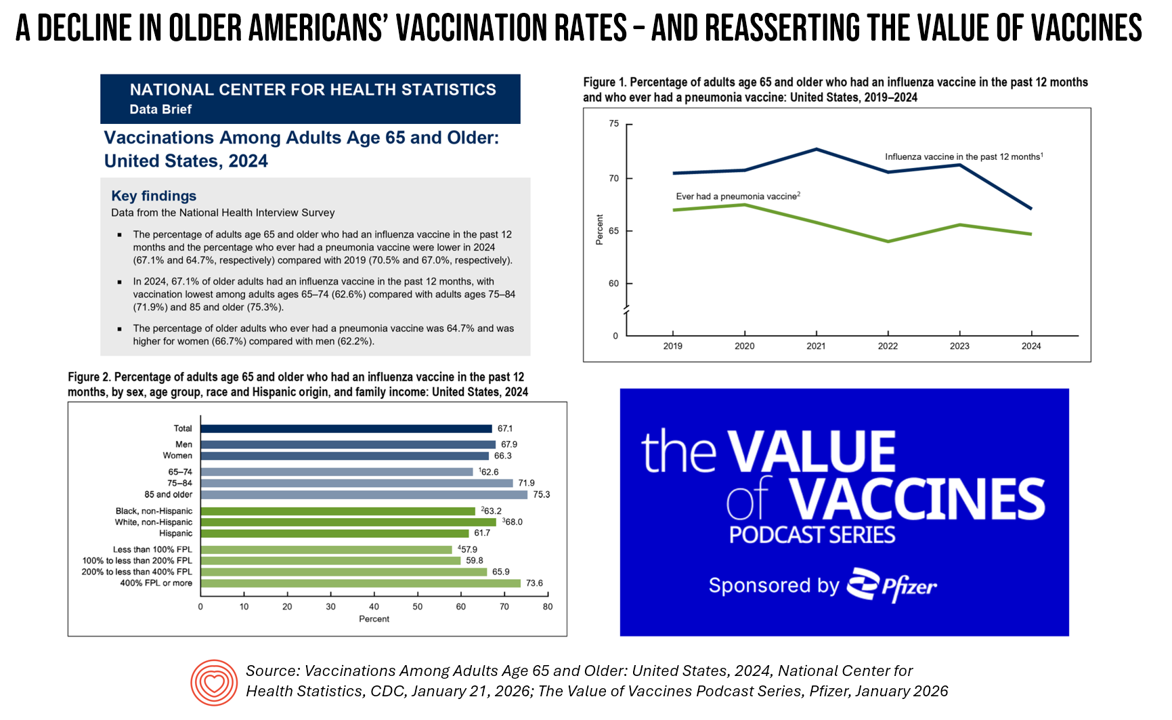
The rate of vaccinations among people 65 years of age and older has declined since 2019 — a personal health challenge for aging Americans and their caregivers and families, and a public health problem for the U.S. The Centers for Disease Control’s National Center for Health Statistics published Data Brief 547 on the situation on January 21, 2026. In the meantime, serendipity and timing are uncanny in the moment as The Value of Vaccines conversation series from Pfizer was launched this week. I am grateful to have participated in this project with several sisters-in-expertise: Elif Alyanak from Avalere, Venesa Day
Distrust is the default, insularity is our mindset: The Edelman Trust Barometer in 2026
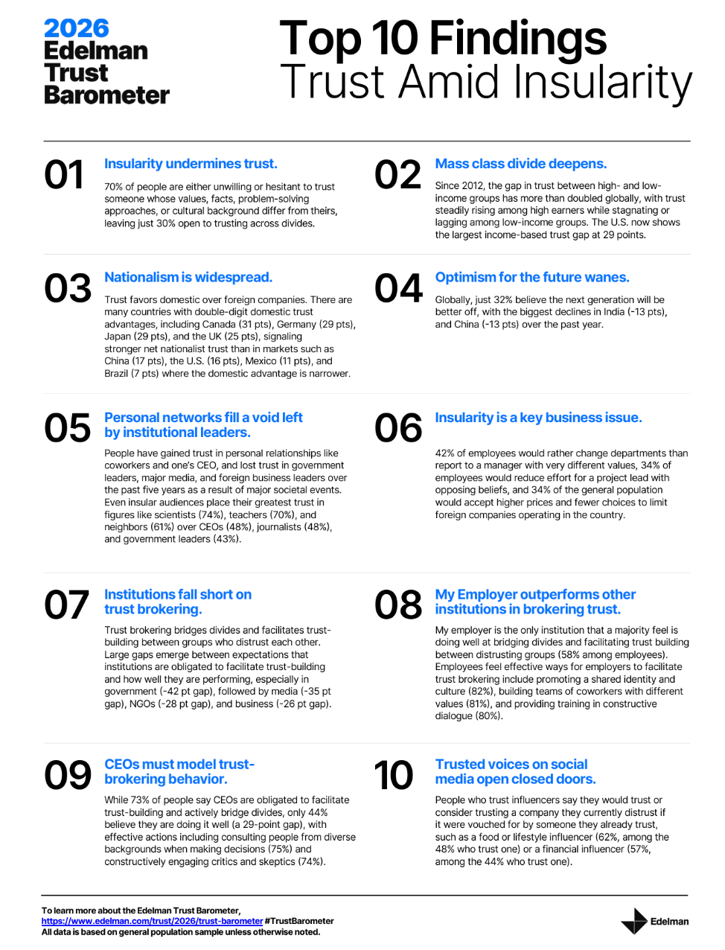
ss Last year’s “shared reality” was a culture of trust and a crisis of grievance: this year, it’s trust and insularity, we learn from the Edelman Trust Barometer for 2026, launched this week during the World Economic Forum in Davos, Switzerland. Here are the Top 10 findings from the annual study, which Edelman conducted among nearly 34,000 citizens in 28 countries in October and November 2025: Insularity undermines trust The mass class divide deepens Nationalism is widespread Optimism for the future wanes Personal networks fill a void left by
In the U.S., Belief and Trust in Science and Scientists is Tied to Political Party and Education
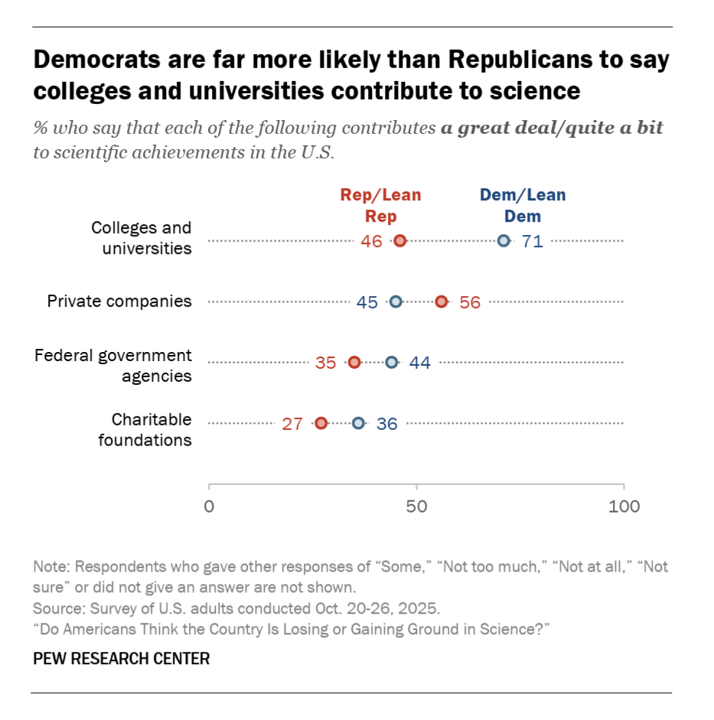
Most Americans believe it’s very important for the nation to lead in scientific achievements. But twice as many Democrats as Republications, 65% versus 32%, say the U.S. is losing ground in science innovations. The Pew Research Center asks and answers the Do Americans Think the Country Is Losing or Gaining Ground in Science? And the answer is, “millions of people do think so.” The Pew team polled 5,111 U.S. adults in late October 2025 for this research. There are a few political chasms related to science-trust in the U.S. that are important
Why Progresso Soup was at CES 2026: How Food is Playing Into the Evolving Health Consumer and Retail Health Landscape
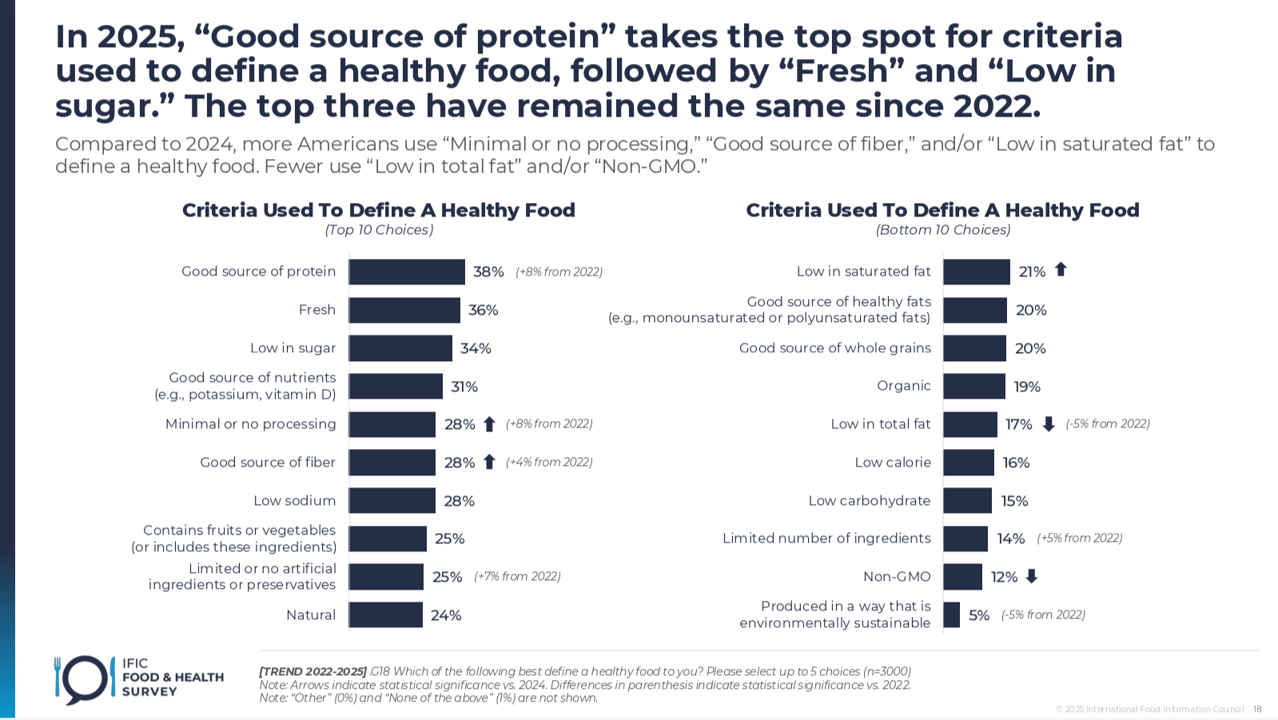
Why was Progresso Soup and its manufacturer General Mills at CES 2026? Specifically, in the AgeTech Collaborative curated by AARP? If you are part of the health/care ecosystem in any of its segments, chances are you’re attending conferences at the start of 2026 or soon to attend one. I spent last week at CES 2926 in Las Vegas getting updates on digital health, well-being, and self-care innovations. This week, hundreds of my colleagues are attending #JPM2026, the 44th annual J.P. Morgan Healthcare Conference held in San Francisco every year at this time. One conference that would not have been well-attended
While Nurses Continue to Rank Top in Honesty and Ethics, Americans’ Respect for All Professions is Tanking
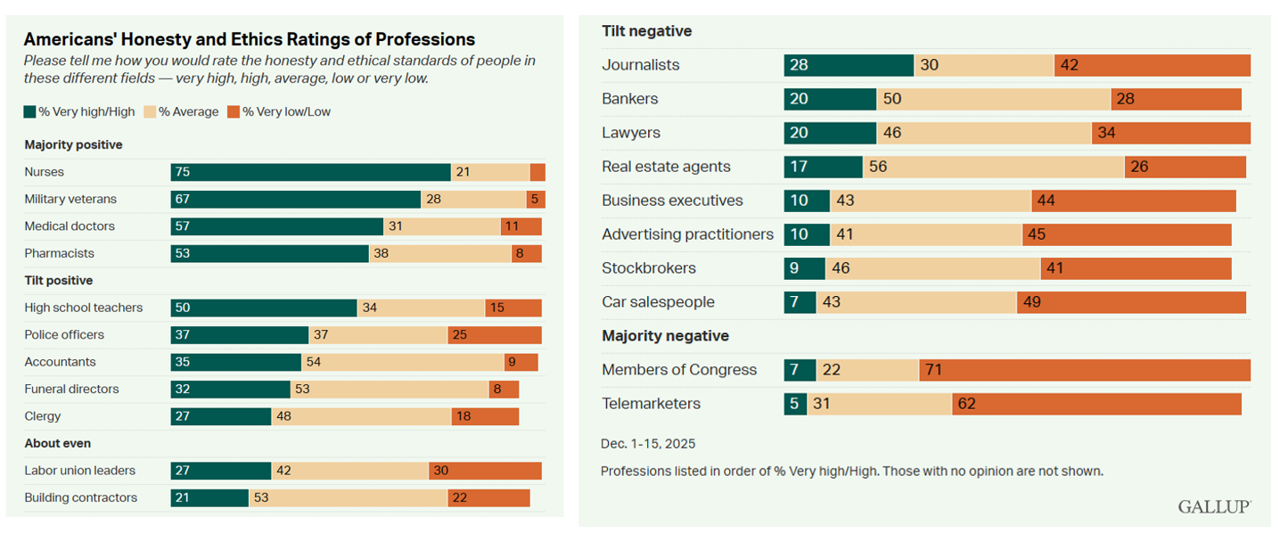
While nurses continue to rank high for honesty and ethics, Americans’ trust in the nations’ professions is tanking, found in this year’s Gallup Poll update titled, Nurses Continue to Lead in Honesty and Ethics Ratings. Nurses perennially top this chart, usually followed by doctors and pharmacists. But this year, it’s military veterans who garner the second spot in the Gallup Poll, with doctors and pharmacists in positions 3 and 4. Ranking at the bottom as least-respected for honesty and ethics are Members of Congress, again garnering the low-point in this study, with telemarketers trailing the
Tech Trends to Watch at CES 2026 – For Health, It’s About Longer Living, Smarter Living, and Better Living
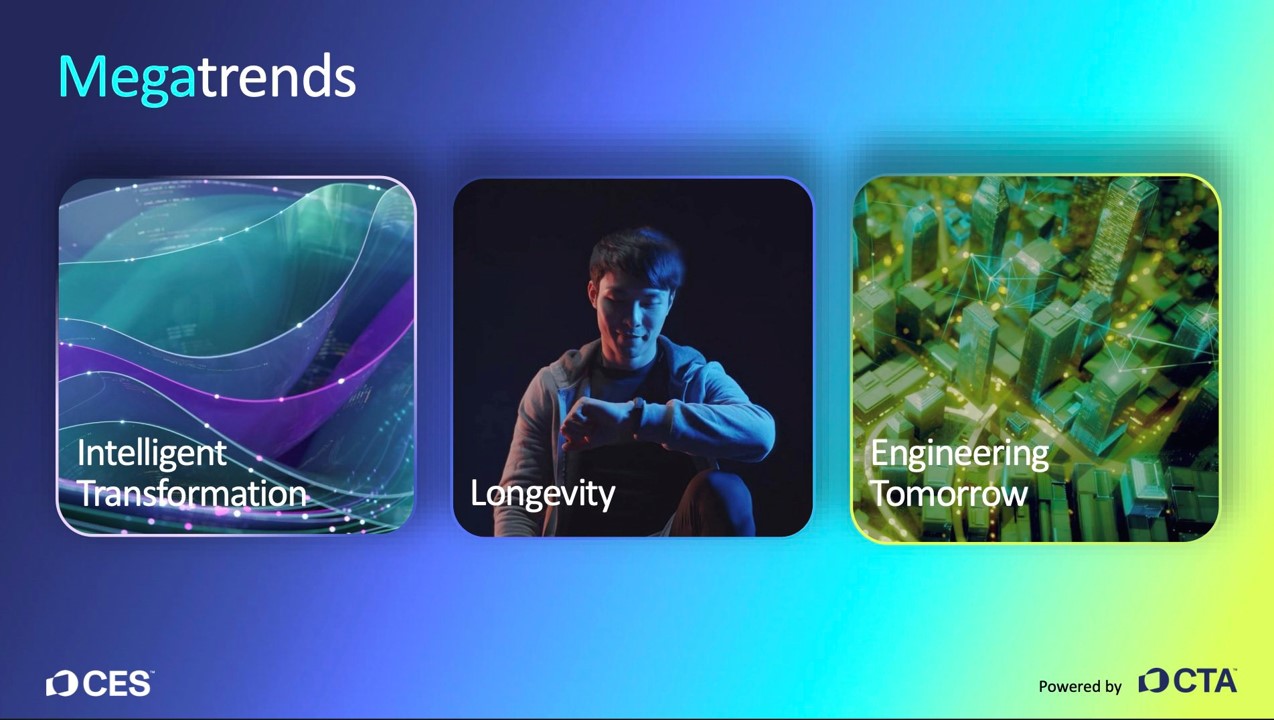
Live from CES 2026 in Las Vegas…the first day of CES Media Days preceding the big show always covers a context-setting report on Tech Trends to Watch. This is one of my annual go-to programs which helps orient media and industry analysts with a lens on CES’s key tech categories and some hard data on market size and growth expectations. While I’ll focus on the health/care specifics in the trend forecast, let me first update you on the overall technology market revenues for the U.S. which are estimated at $565 billion for 2026.
Navigating a Constellation of Uncertainties: Health/Care in 2026 (My Un-Forecast)
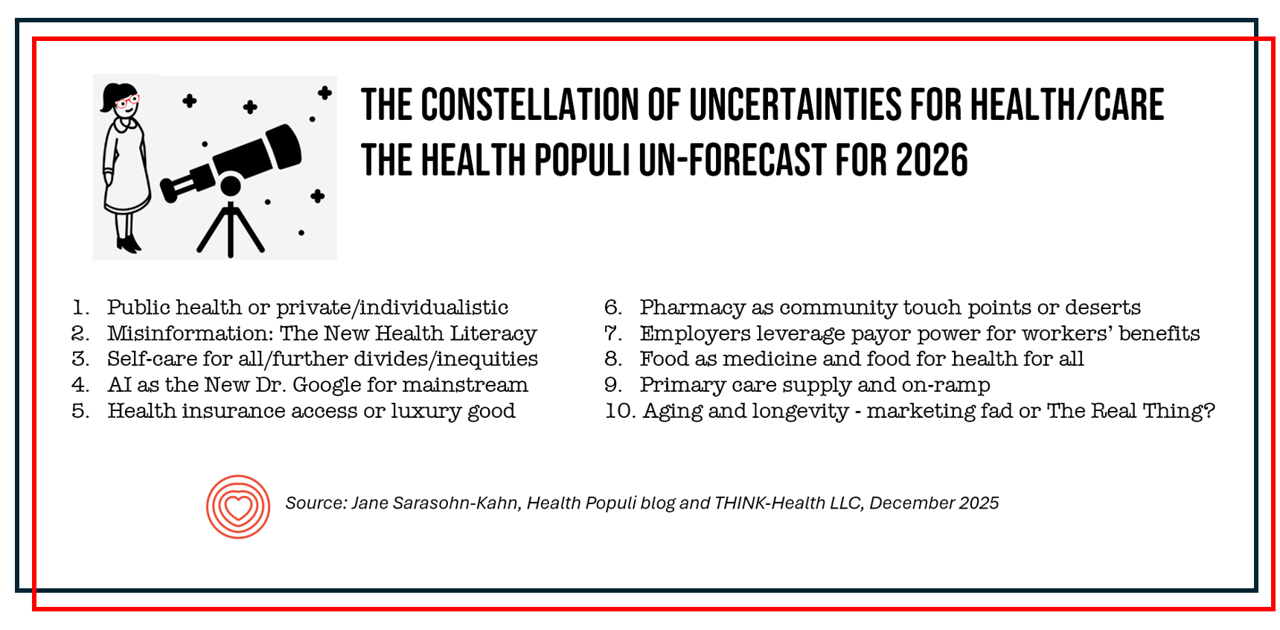
Almost from the first year of launching Health Populi in 2007, I’ve written a “TrendCast” for the coming year of health care. Over many years, there weren’t so many blogs devoted to health care which featured such prognostications, and so readers could divine signal from noise and move forward into new years with manageable lists of What To Expect Next Year in Healthcare. Here’s one from ten years ago that brings a sense of déjà vu: most of the findings are consistent with what we know for sure about 2026 and it’s useful to look back with today’s eyes to
The New Health Consumer Mindset and Wallet: From GLP-1s to Trading Up for Health & Longevity
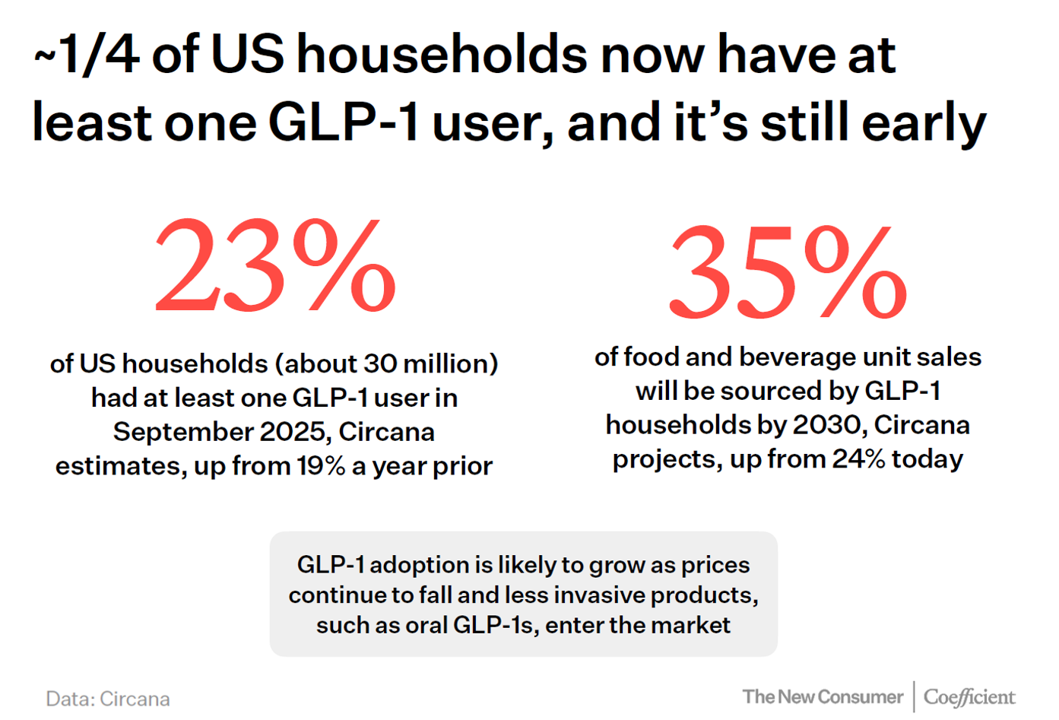
From GLP-1s to longevity and new views on self-care for healthcare, the people are taking their health in-hand, at-home, and via-tech to complement and sometimes replace the legacy health system touchpoints which are the traditional categories for care: hospitals, doctors, rehab centers, diagnostics and labs, and health care financing and plans — some opting out of plans and going full-risk (cash, out-of-pocket) truly self-insuring against future medical risks. As I prepare to publish my Year-End/New Year TrendCast for 2026, I felt like front-ending next week’s annual long post with details on the demand side of the forecast — a focus
Men’s Fertility Feelings – The Influence of Trust and Social Media (My Progyny Post #3)

Trust is a key enabler for people’s health engagement. As the American Medical Colleges’ Center for Health Justice defines it, trustworthiness is “rooted in honesty and honors lived experience….. key to a successful patient-provider partnership.” In his book, Notes On Being A Man, Scott Galloway calls out that men’s fertility issues are formed as part of a larger societal context and crisis point, exacerbated by economic pressures and lack of opportunities for male bonding and in-person social touchpoints. In the second post in this series of three, we discussed those economic pressures Galloway notes, and the financial stressors that shape
Giving Thanks for Pinksocks Today and Every Day….celebrating the book!
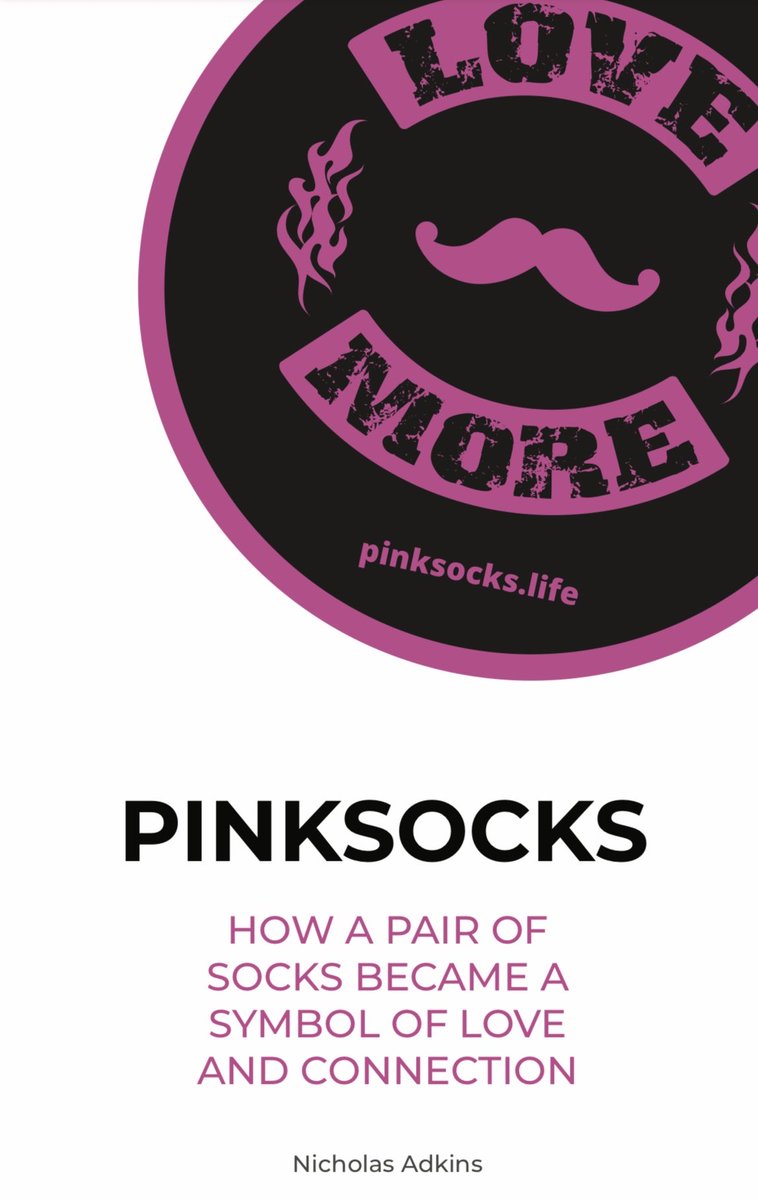
As today is Thanksgiving in America, my tradition here on Health Populi is to express gratitude for some aspect of life and living, Most often, I’ve referred to the Engage With Grace Project which reminds us to be mindful of our and our loved ones’ end-of-life wishes as we convene around the big table today with our families and friends over big food and drink. See here for more on Engage With Grace, a project for which I’m most grateful for launching by Alexandra Drane and Matthew Holt For today’s gratitude message,
Feeling Under-Served and Overlooked: Men’s Views on Their Fertility Journeys (My Progyny Post #1)
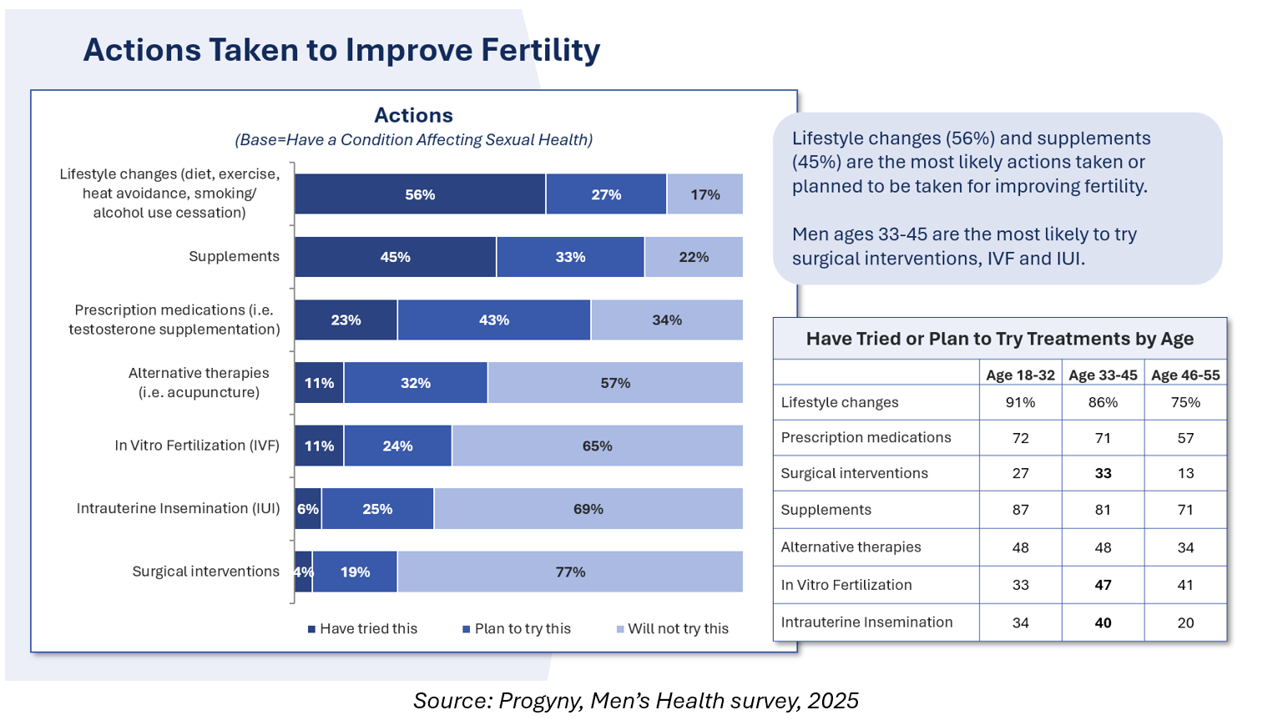
In his latest book, Notes on Being a Man, Scott Galloway discusses his personal fertility journey in the larger social context of what it means to be a man in modern America. Galloway’s infertility challenges shared with his wife inform his views on men’s health across all dimensions — physical, mental health, social health, financial well-being — and how, of course, men’s overall health is also a women’s and children’s issue. Men can feel “left out” of infertility discussions, based on results from the first and largest multi-national study into men’s feelings about their infertility revealed. “How men feel about
Most MAGA Supporters Support Extending the Expiring ACA Tax Credits – Will That Move Negotiations to Re-Open the Government?
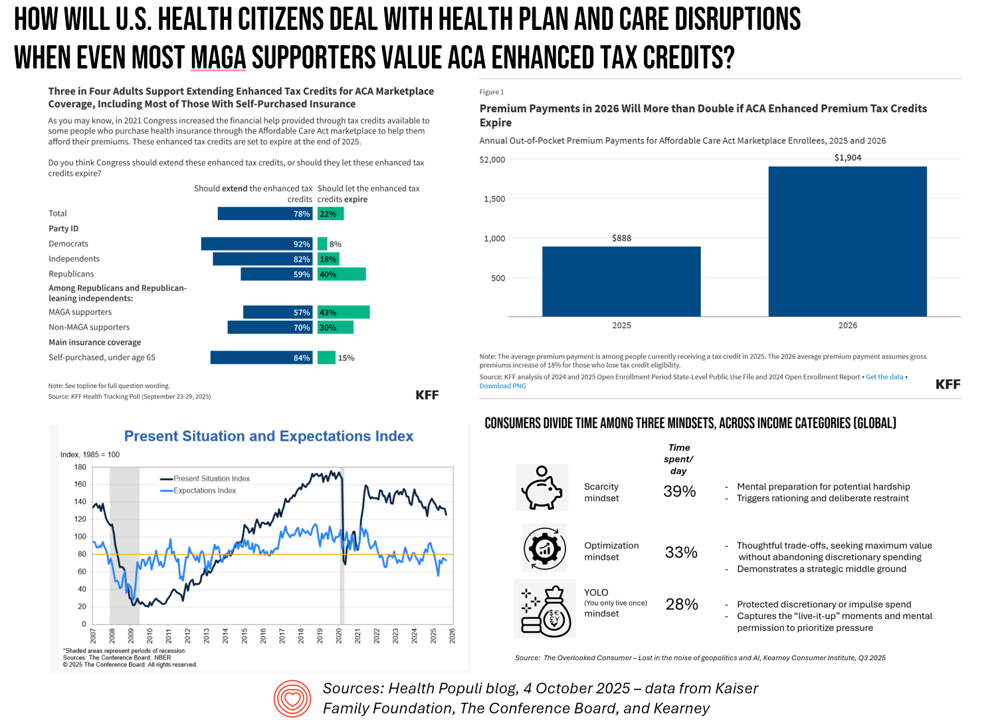
A couple of days into the U.S. Federal government shutdown, there’s one message the Congressional Democrats are tending to voice: that is that health care is on the line, and that’s the issue on which they’re betting will bring negotiators back to Capitol Hill — expecting a few Republicans to join in that dialogue. Most U.S. adults across political parties would want to see Congress extend the enhanced Affordable Care Act tax credits that are set to expire next year we see in a poll from the Kaiser Family Foundation published October 3. And that includes most Republicans and MAGA
Trust Is Eroding for Vaccines Among U.S. Parents — New Insights from KFF and the Washington Post
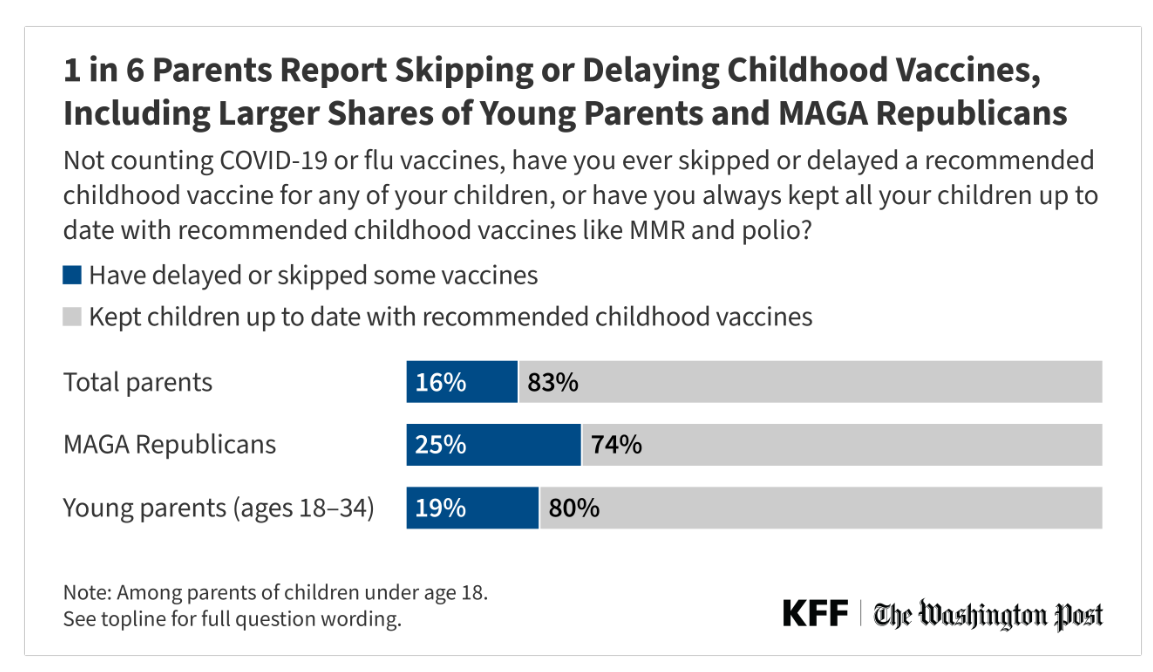
By the summer of 2025, 1 in 6 U.S. parents had skipped or delayed childhood vaccinations, discovered in the 37th annual edition of the KFF/The Washington Survey of Parents. The study was conducted among 2,716 parents or legal guardians of children, via interviews online in English and Spanish between July 18 and August 4, 2025. In detail by demographic, 83% of all U.S. parents had kept children up-to-date with recommended childhood vaccines (16% not doing so) 74% of self-described MAGA Republicans kept kids up to date with the recommended vaccines (25% not doing so),
Dr. Osterholm Explains “The Big One” – A Deja Vu Moment with a True North Public Health Expert
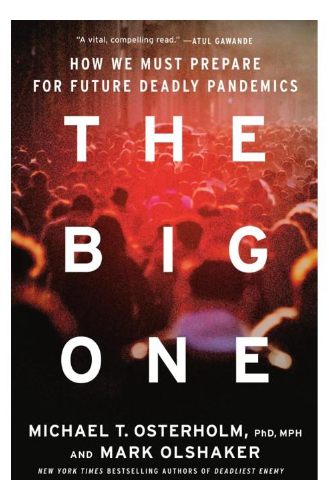
“The truism that no one is completely safe until everyone is safe is a truism because it happens to be true.” So caution Michael Osterholm, epidemiologist, professor at the University of Minnesota School of Public Health, and director of CIDRAP (the Center for Infectious Disease Research and Policy at the U-MN) and collaborating writer Mark Olshaker in their new book, The Big One. (In this post, for the sake of brevity, I’ll refer to the two authors as “O&O”). Simply put, the tagline tells us what we are about to read: a
Prescription Drug Pricing in America – a 3-Part Update, From the Over- the-Counter OPill and “Half-Price” Ozempic to Most-Favored-Nation Rx (Part 3)
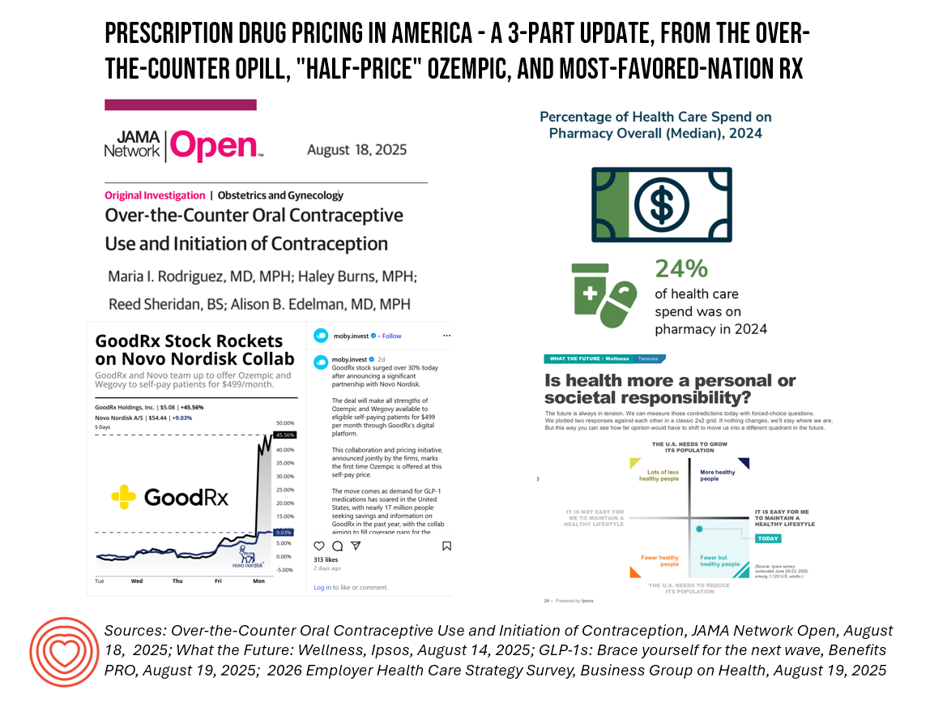
Welcome to Part 2 of 3 in my consideration of Prescription Drug Pricing in America. You can catch up with yesterday’s Part 1 post here, and Part 2 here. The macro-context for these 3 posts are the forecasts for health care spending for the coming year. Health care cost increases forecasted for 2026 will, in significant part, be driven by prescription drug trend. This graphic from this week’s release of the Business Group on Health’s employer survey on healthcare cost growth to 2026 illustrates a key finding that’s echoed in other similar studies recently released and covered here in Health Populi.
Prescription Drug Pricing in America – a 3-Part Update, From the Over- the-Counter OPill and “Half-Price” Ozempic to Most-Favored-Nation Rx (Part 1)
Health care costs will increase, overall, as much as 10% in 2026, the consensus of several health benefit analysts inform us. And, “workers to bear brunt of health cost increases in 2026,” reads today’s Axios headline on the topic, weaving together several studies from the Business Group on Health, Mercer, and the International Foundation of Employee Benefit Plans. A kay cost-contributor cited in all of these health cost forecasts is the prescription drug line item: specialty drug prices, and specifically the costs of GLP-1 medicines and cancer therapies. One strategy gaining fast-traction on both the
What U.S. Consumers Are Thinking About Tariffs’ Impacts on Health Care: Looking to Ipsos, QCentrix and Goldman Sachs
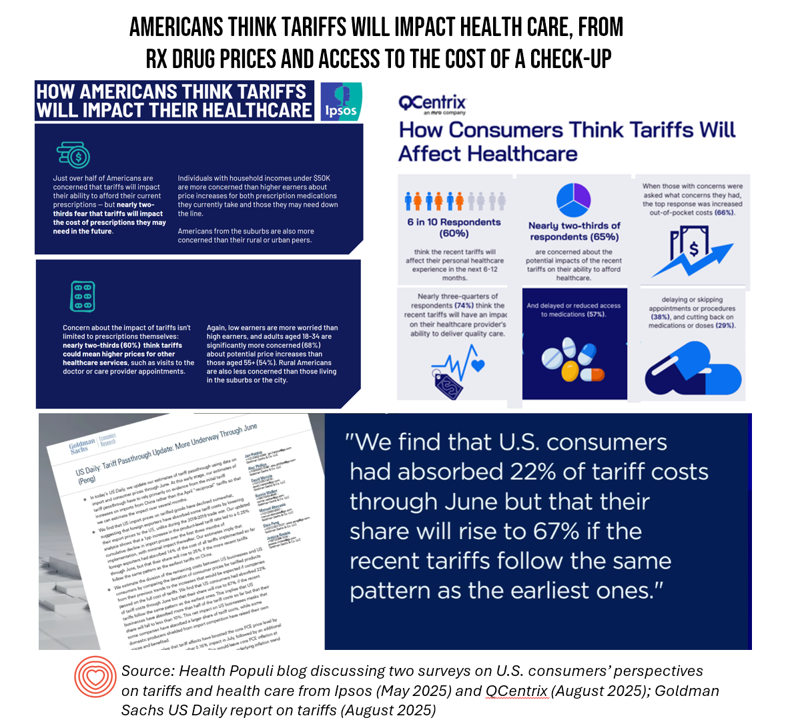
Most Americans, thinking as health consumers, believe that tariffs could impact peoples’ ability to pay for costly prescription drugs and be priced out of paying for check-ups and medical supplies, based on results from two studies on consumers’ views on tariffs and their health care from Ipsos and Q-Centrix. Ipsos’s consumer survey found that younger consumers, people earning lower incomes, and folks living in the suburbs feel even more stressed about tariffs’ impact on medical care — along with more people identifying as Democrats or Independent voters. With
To Garner Patient Loyalty, Focus on Convenience, Availability, and Affordability. Consumers Trust AI to Help the Journey.
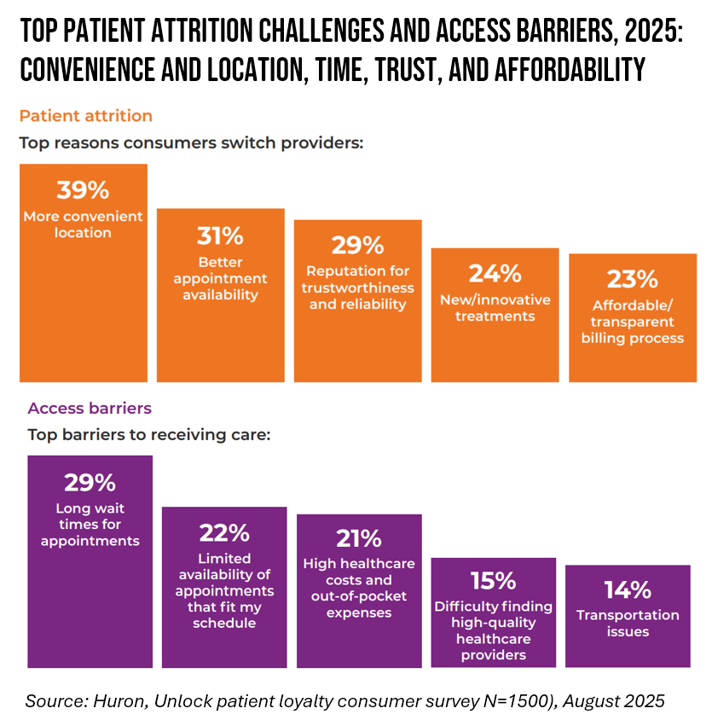
U.S. health consumers are roughly split 40/40 when it comes to AI analyzing personal health data to provide personalized advice, with 21% feeling neutral about that. But using AI for regular health updates and guiding us through a pre- or post-care medical journey would be welcome by one in two people, we learn in how to Unlock patient loyalty: New healthcare consumer insights, Huron Consulting Group’s consumer research report polling 1,500 U.S. healthcare consumers. Start with peoples’ top reasons for switching health care providers, along with main barriers preventing consumers from
Medicare at 60: Prior Authorizations Are a Problem for People in the U.S., Regardless of One’s Political Party, Income, or Insurance Type
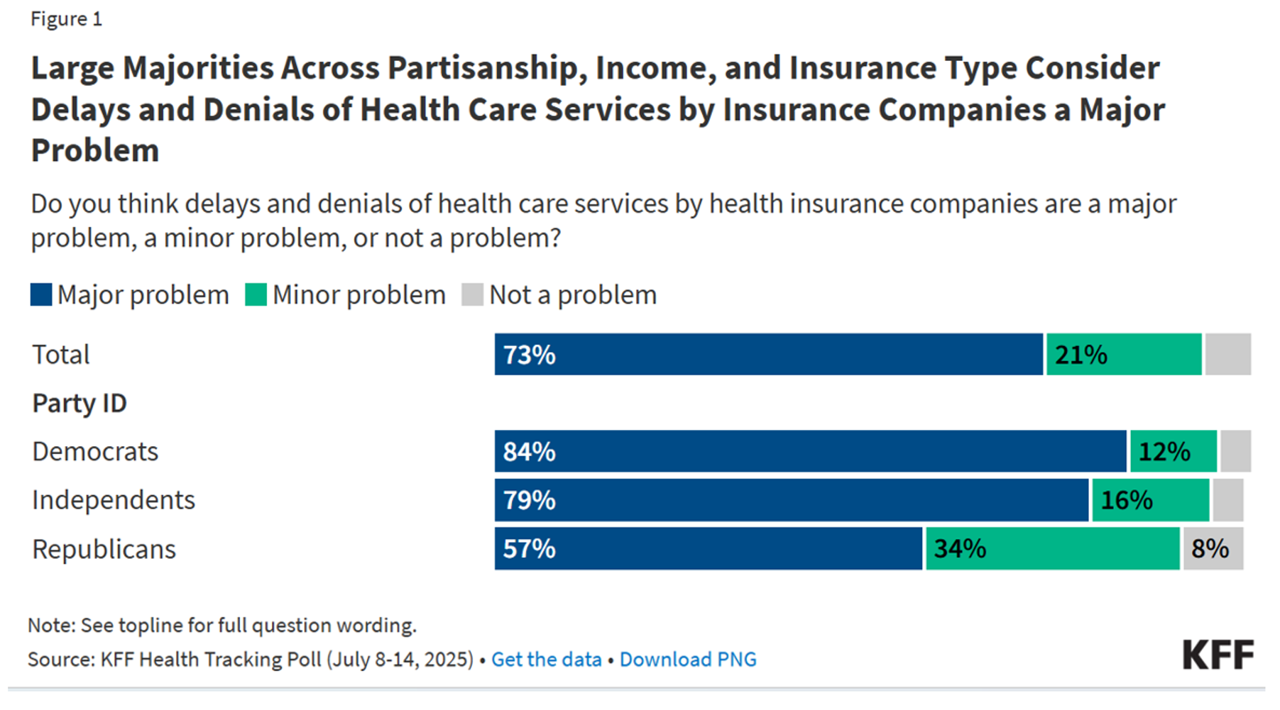
Happy 60th Anniversary Medicare, today marking six decades since the passage of this law which was a landmark milestone for The Great Society, U.S. style. Since its inception and implementation, Medicare quite often leads in adoption of new medicines, new processes, new technologies in health care. But as I track the phenomenon of health citizenship in the U.S., I observe growing consensus among American patients — cross health plan type — increasingly impatient for health care access. We can now add Americans’ growing dissatisfaction with the prior authorization process, an opinion that now spans majorities of consumers regardless of their
Most People Would Choose Food Over Meds to Get Healthy. But Barriers to Consumers Doing So Will Require Collaborative Approaches That Get Closer and Personal
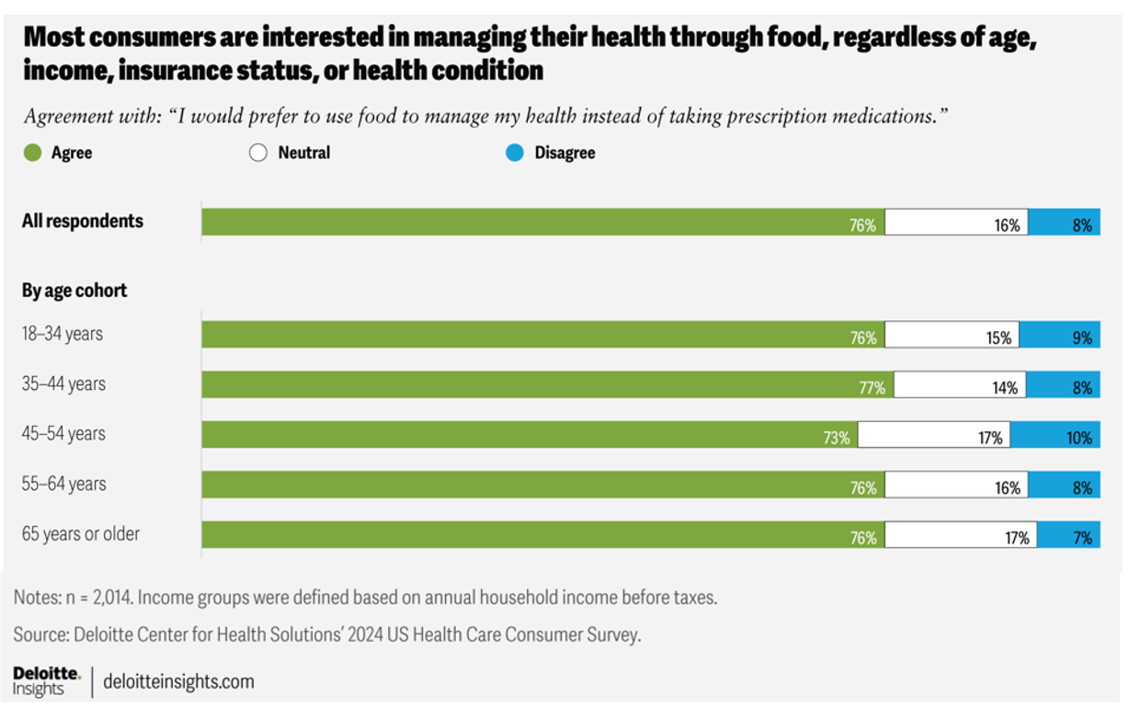
The pandemic era re-shaped consumers’ views on food as an input for health across all dimensions. We look back with affection for our local grocery stores and pharmacies which played leading roles as first responders f0r our health and, quite literally, the basic needs at the base of our personal hierarchies the way Maslow conceived them. As I tracked home-bound consumers’ behaviors from the start of COVID-19 in March 2020, I hunted-and-gathered data from Nielsen, Acosta, Circana, Gallup, Harris, and other sources of consumers @ retail. The DIY food-health concept, coined by Nielsen, was the build-up of our “pandemic pantries.”
Consumers’ Favorite Brands for 2025 Look a Lot Like Pandemic Times: All About Hygiene, Safety, Personal Care, and Packages

Shades of the year 2020; it’s déjà vu all over again when it comes to consumers’ most trusted brands in 2025 featured in Morning Consult’s Most Reputable Brands report. Here’s the list of the top 25 most trusted brands across all consumer touch-points and industries for all adults, ages 18 and older. A quick calculation reveals that consumers most trust brands covering, Home keeping and hygiene – Dawn, Clorox, Lysol, Mr. Clean, Home Depot Self- and personal care – Dove, Oral-B, Kleenex, Colgate Health – BAND-AID, Tylenol Packages
How Texting Is a Lifeline for Health Access and Equity – Time to Address the TCPA is “Now”

The Telephone Consumer Protection Act (TCPA) was put into law in 1991. The first smartphone was launched by IBM the following year in 1992 known as the IBM Simon. Then Steve Jobs unveiled the iPhone in 2007. Now in 2025, smartphones are ubiquitous, landlines more cut than connected, and texting is the way people communicate. But for many patients, caregivers, health plan members, and health citizens, whichever persona we are in our individual health care journeys at a point in time, the TCPA remains a barrier for people in the U.S. trying to connect with their health care.
The Spirit for Eating Healthier Is Willing, But the Cost of Doing So “Outweighs” the Will – Listening to Escoffier

It’s been a full week’s coverage on food-as-medicine and food as a driver of health in America this week on the Health Populi blog. Today we turn to the chefs at Escoffier who know food, teach food, and now offer programs in holistic nutrition and wellness through the lens of culinary arts. With that lens, Escoffier recently published a report on the future of healthy eating, which will round out this week’s Health Populi landscape on food and health. In the paper, the Escoffier team curated data points from many studies — via Gallup, Mintel, Innova,
Consumers Are Keen to Invest in Health and Well-Being – But Show Them the Evidence

Consumers around the world feel more invested than ever in what makes people feel both well and prosperous, we learn in the NielsenIQ Global State of Health & Wellness 2025 survey report. But there’s a trust deficit that must be healed in order for a health consumer to invest in services and products that feed health and well-being. NIQ fielded the survey research online in January and February 2025 among nearly 19,000 adults living in 19 countries: Brazil, Canada, China, the Czech Republic, France, Germany, Hungary, India, Indonesia Italy, Mexico, Netherlands, Poland, South Africa, Spain, Turkiye, UAE, United Kingdom, and
Marketing Women’s Health: How Organon’s Nexplanon Took a Page Out of Romance Novels
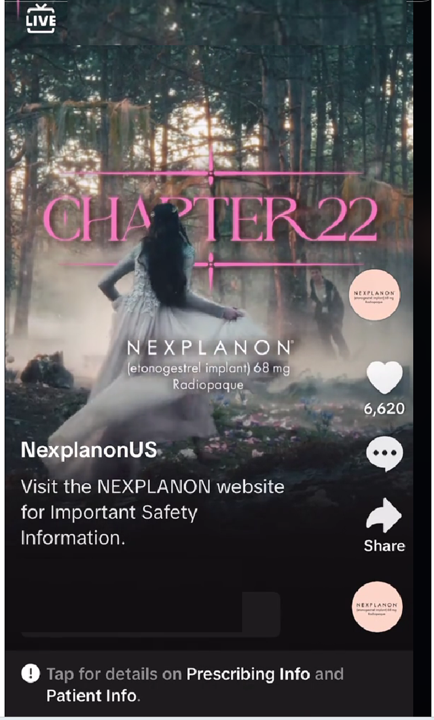
With women’s health and femtech investing in the spotlight in 2025, most of the focus has been on either women’s access to health care services (e.g., for abortion and prenatal/primary care) to start-ups focusing on fertility technology and benefits, along with growing awareness of the long-overlooked menopause market opportunity. Contraception? Not so visible. Of course, we welcomed the Opill to the over-the-counter medicines market last year with FDA approval of the switch to retail pharmacy and vending machine access. Now let me point you to a newfangled marketing campaign for
If Food Is Medicine, Some Might Feel It’s a Luxury Good Like a Specialty Drug
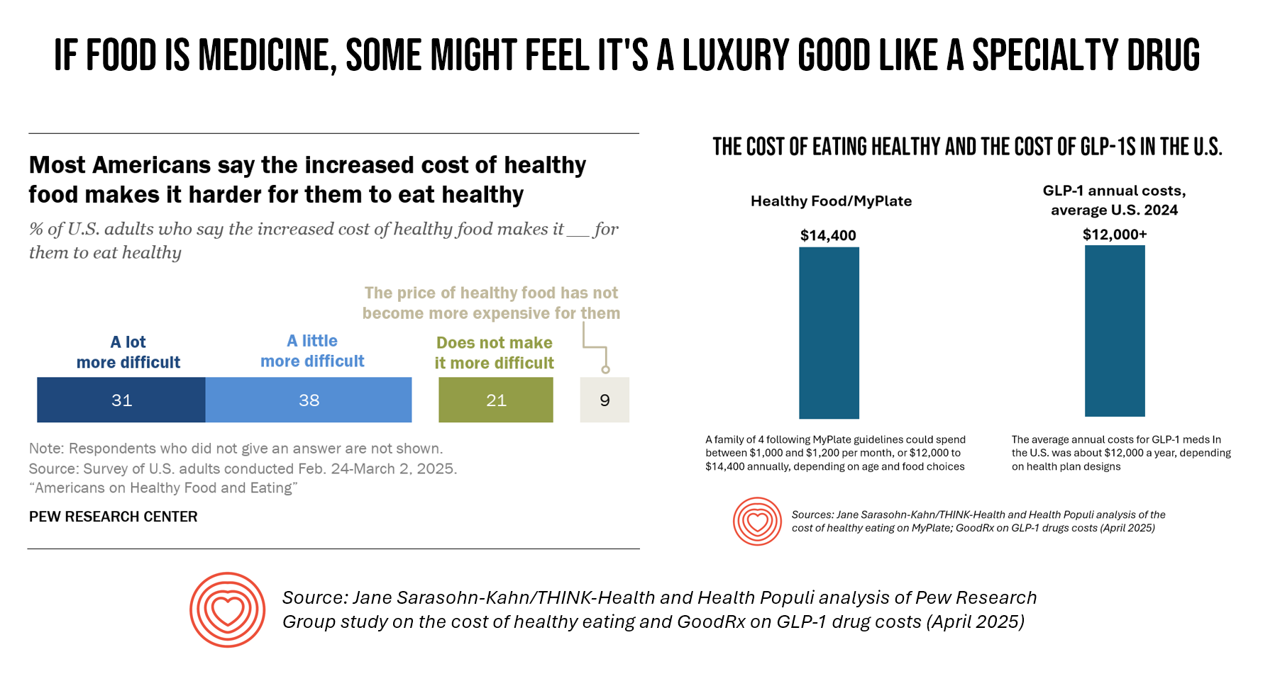
Most people in the U.S. say it’s harder to eat healthy given the cost of “healthy food,” we learn in the report on Americans on Healthy Food and Eating from the Pew Research Center, published 7 May 2025. With a view that healthy food is “too expensive,” it may feel like aspiring for it feels like luxury-good shopping, or being a patient prescribed a specialty (high-cost) drug. The Pew team polled 5,123 U.S. adults’ perspectives on eating, fielded between 24 February and 2 March 2025. This report is timely as Secretary of Health and
Americans’ Trust in Public Health Agencies Has Become Politicized, Though There is Bipartisan Support for Many Public Health Priorities

While health citizens’ trust in the “messengers” of health information has become polarized by partisans’ political views, there is real concordance of support for many public health priorities. We weave together two current studies to come to this realization: the latest (April 2025) KFF Tracking Poll on Health Information and Trust, KFF’s ongoing health survey (published 6 May); and, the de Beaumont – Harvard Chan School of Public Health poll into Americans’ views on public health in “the first 100 days” of President Trump’s presidency. First, consider the KFF study, conducted among
How Consumers’ Economic Sentiments Are Shaping Peoples’ Financial and Emotional Well-Being (Spoiler: Not So Good): Learning from CivicScience
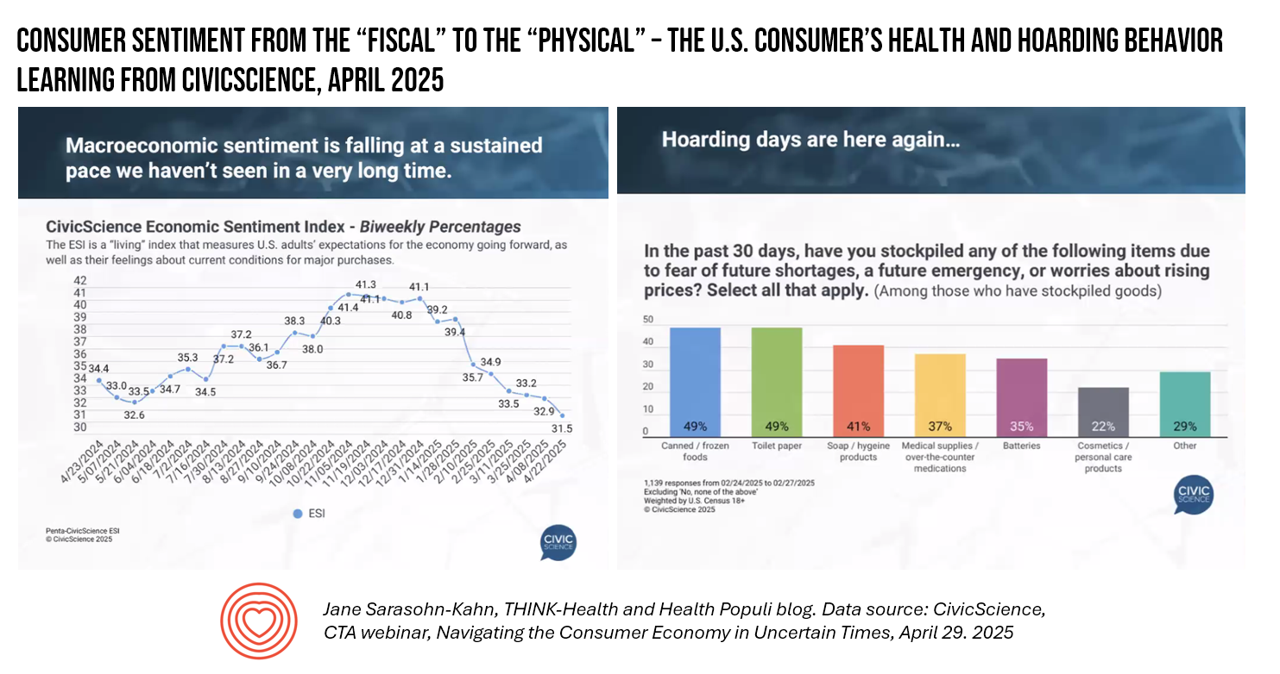
When it comes to health, the words “fiscal” and “physical” are morphing as peoples’ economic feelings (the “fiscal”) are shaping physical and emotional health, we find in U.S. consumer data presented by John Dick, Founder and CEO of CivicScience. The Consumer Technology Association convened a special session with John, who painted a portrait of the U.S. consumer at a point in time — late April 2025 — reminding us more than once during the hourlong session that, “Everything is constantly changing.” One certainty that we can be sure of, in the dismal-scientist way
Loneliness As Risk Factor for Health and Medication Adherence

The role of loneliness and social isolation plays into every aspect of human health, beyond mental and behavioral impacts: loneliness is a risk factor for overall health status and well-being, as well as a barrier to medication adherence, we learn in Loneliness and Health Behaviors: A Missing Link in Chronic Care from Pleio. Pleio launched the report at the Assembia AXS25 Conference in Las Vegas yesterday, Pleio surveyed 2,008 U.S. adults in March 2025 living with at least one chronic condition to gauge patients’ perspectives on loneliness, health outcomes, and peoples’ adherence to prescribed medicines.
The Era of Healthcare Grievance: The Edelman Trust Barometer’s Take on Health and Trust in 2025

Health citizens globally are feeling and behaving more empowered with respect to their personal health from physical and mental health to social and environmental. Most people believe they can identify good sources of health information, with nearly one in two consumers 18-34 believing an average person can know as much as a doctor. But too many people feel unwell compared to how they felt during the pandemic, and most think major institutions are preventing them from accessing quality care and services which is resulting in an ethos of health care grievance. These
“The Church As Field Hospital” – Learning from Pope Francis About the Power of Loneliness and Connection

“I see the church as a field hospital after battle.” The death of Pope Francis gives me reason today to turn to one of the key themes he spoke about during his years leading the Catholic Church. That is, the Church as Field Hospital. Healthwise, the Pope had a history of respiratory conditions which began in his early 20s when he had surgery to remove a piece of his lung affected by an infection. Still, he lived to a ripe 88 years of age, participating in Easter Sunday’s morning mass at The
Still Life in Need: Art, Food Justice, and Health

As Thomas Jefferson reminded us, travel makes us wiser…but less happy. And so it is when you confront a piece of art that makes you stop in your tracks, swim in it, and know what it’s saying in terms of what you know you know. Such was the case yesterday during a walking meeting through the Frist Art Museum in Nashville when I passed by this quilt, a multimedia work titled “Still Life in Need” by Lee Colvin, a local artist. This work was part of a
From Bowling Alone to Eating Alone – What the Shift to Take-Out Food Means for Our Social Well-Being and Mental Health
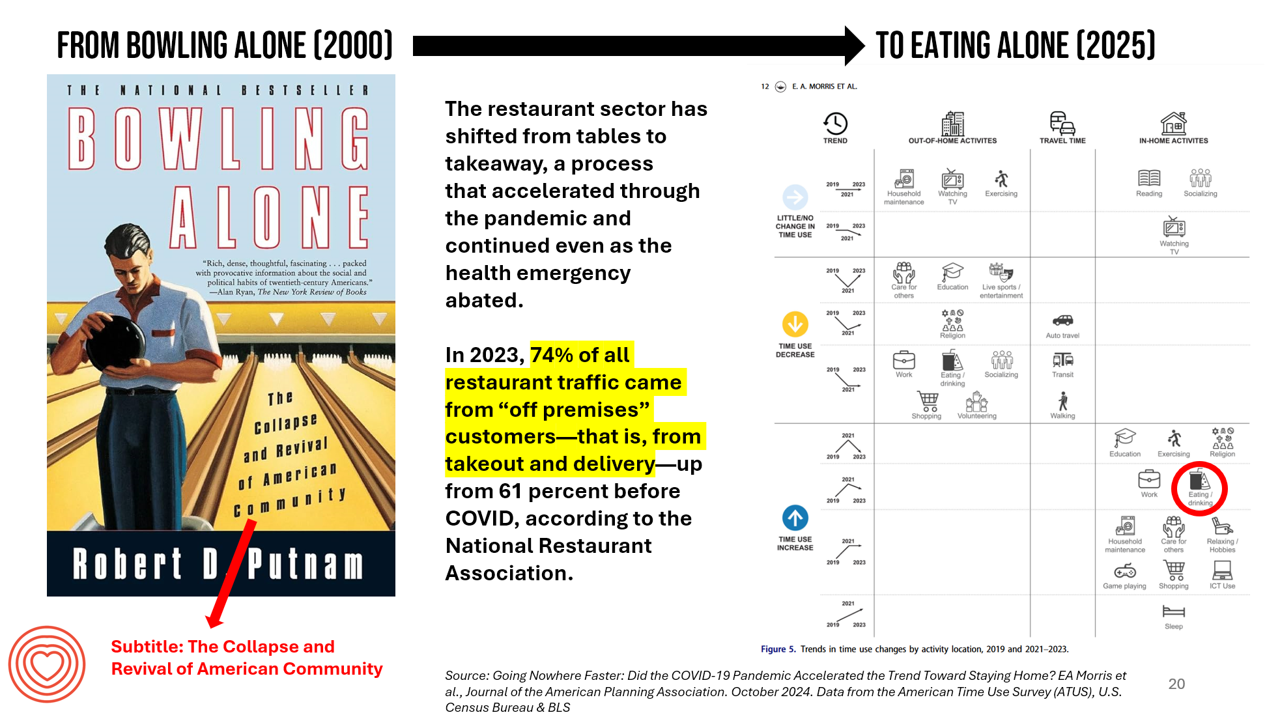
New data from the American Time Use Survey, research conducted by the U.S. Census Bureau and the Bureau of Labor Statistics, shows that Americans now favor eating in-home compared with eating out at restaurants. Corroborating this shift is other data from the National Restaurant Association sharing that 74% of all restaurant traffic in 2023 came from “off premises” customers — that is, from takeout and delivery — up from 61% in the pre-COVID era. What does this mean for our health, well-being, and sense of community and connectivity? I’m preparing a new talk to
Art Collides with Health Policy: When “When Calls the Heart” Met MAHA This Week
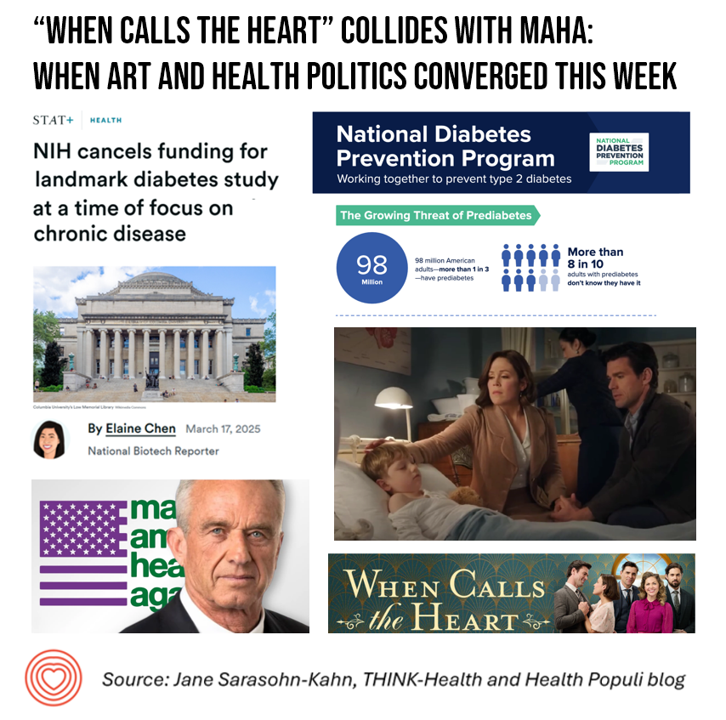
Art reflects life — or in this case, bumps into life and health care — once again when the pop culture facet of my own media consumption converges with a news announcement where the timing of these events is just too uncanny. It never occurred to me I’d ever write about the Hallmark Channel in the Health Populi blog. But reading the news that President Trump’s administration plans to cut funding for the ongoing 30-year study into diabetes and pre-diabetes — the landmark National Diabetes Prevention Program (NDPP) — dovetailed (or perhaps more honestly stated, collided) with the plotline of
A Mis-Trust Hangover for Health Care 5 Years After COVID Began – an Edelman Trust Barometer Update
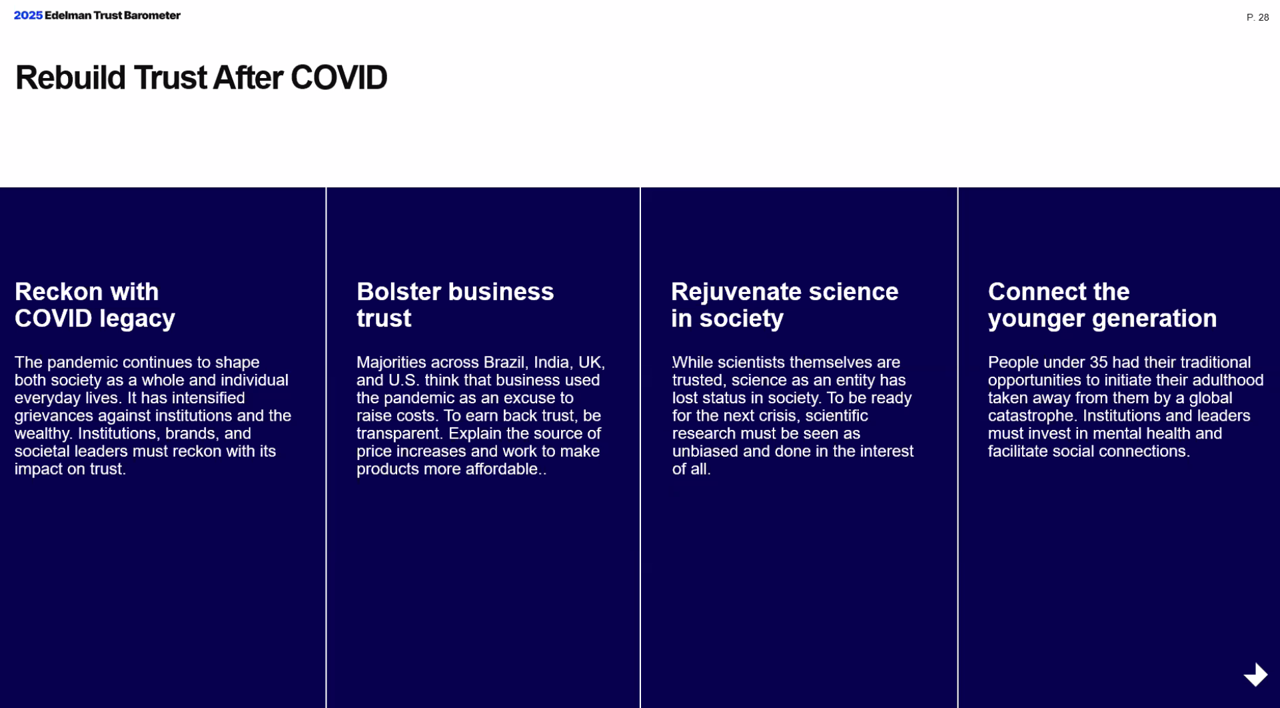
On March 11, 2020, The World Health Organization announced that the coronavirus was deemed a pandemic. WHO Director-General Dr. Tedros Adhanom Ghebreyesus asserted, “We have called every day for countries to take urgent and aggressive action. We have rung the alarm bell loud and clear.” Five years later, Edelman has fielded a survey to determine what some 4,000 health citizens living in 4 countries (Brazil, India, the UK, and the U.S.) are thinking and feeling about life after COVID-19 — and especially where their trust lies in institutions, fellow citizens, and future public health emergencies. I listened in on a discussion
The Top Patient Safety Risks in 2025 Are Mostly About the “Human OS” – Reading ECRI’s Annual Report
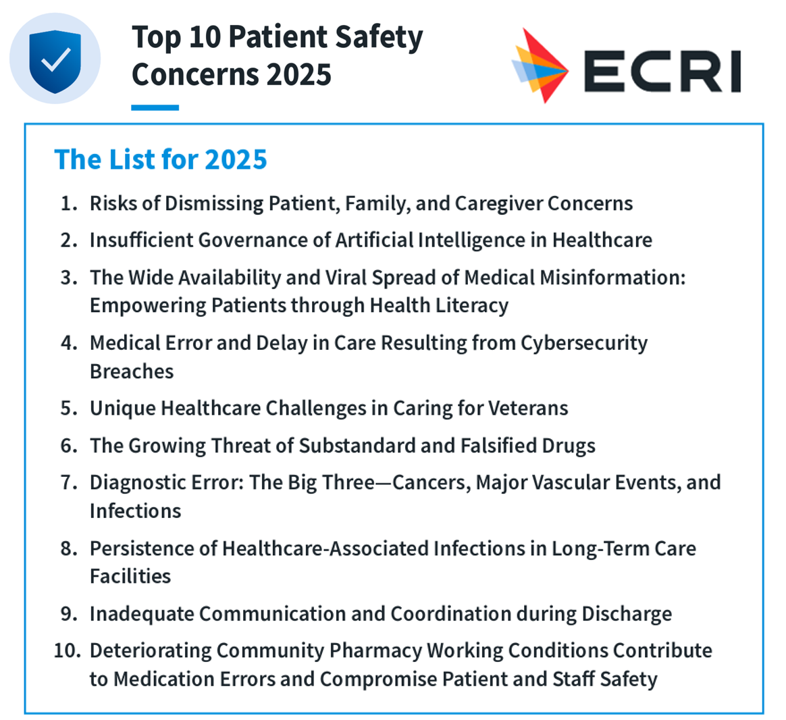
Each year, ECRI (the ECRI Institute) publishes an annual report on the Top 10 Patient Safety Concerns for the year. The 2025 list was published today. My read of it is that most of these risks have to do with what I’ve been referring to as the Human OS, the Human Operating System, in my talks and teachings. In this post, I’ll focus on 2 of the 10 most top-of-mind in my current workflow with clients and speaking: #1 and #3. Here’s the list of 10, calling out: Risks of dismissing
COVID-19 Further Splits American Society as Trust Continues to Erode – a 5-Year Perspective from Pew
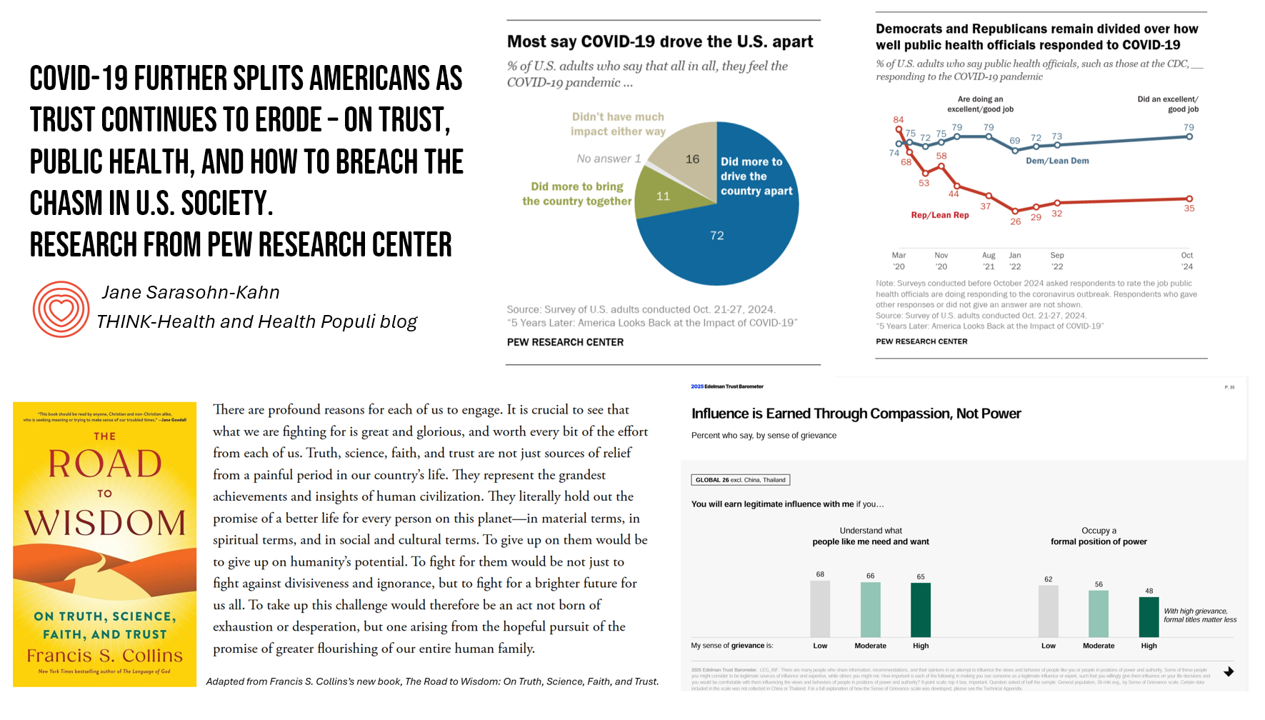
The partisan divide in the U.S., exacerbated by the COVID-19 pandemic, could set the stage for another public health emergency given eroding trust in institutions — especially in media, government, and public health officials. I base this sobering forecast on the latest study from the Pew Research Center which polled people in the U.S. about their pandemic-perspectives, detailed in the report 5 Years Later: America Looks Back at the Impact of COVID-19. Couple these findings with the recent dismissal of public health “disease detectors” working with the Centers for Disease Control (CDC), and what is currently termed a “quademic” (that
Health/Care at Super Bowl LIX, GLP-1s, Kaiser and Tufts on Food-As-Medicine, and the RFK, Jr. Factor: A Health Consumer Check-In
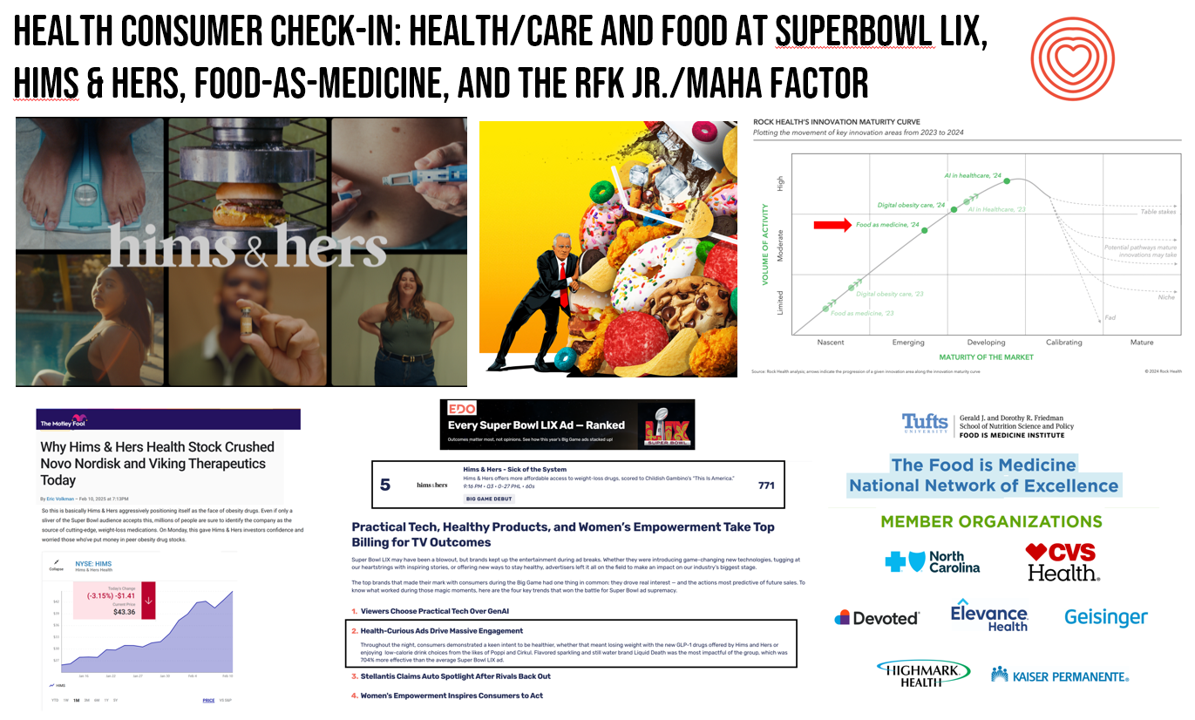
In the wake of the always-creative ads for Super Bowl and last Sunday’s LIX bout, game-watchers got to see a plethora of commercials dedicated to the annual event’s major features: food and game-day eating. Oh, and what’s turned out to be the most controversial commercial, the one on GLP-1s from Hims & Hers. In that vein, and converging with many news and policy events, I’m trend-weaving the latest insights into that most consumer-facing of the social determinants of health: food, and in particular, health consumers viewing and adopting food as part of their health and well-being moves. First, to the
Health Consumer Check-In: From Digital Detox to Analog Wellness, Social Re-Wilding, and a Return to the Bookstore
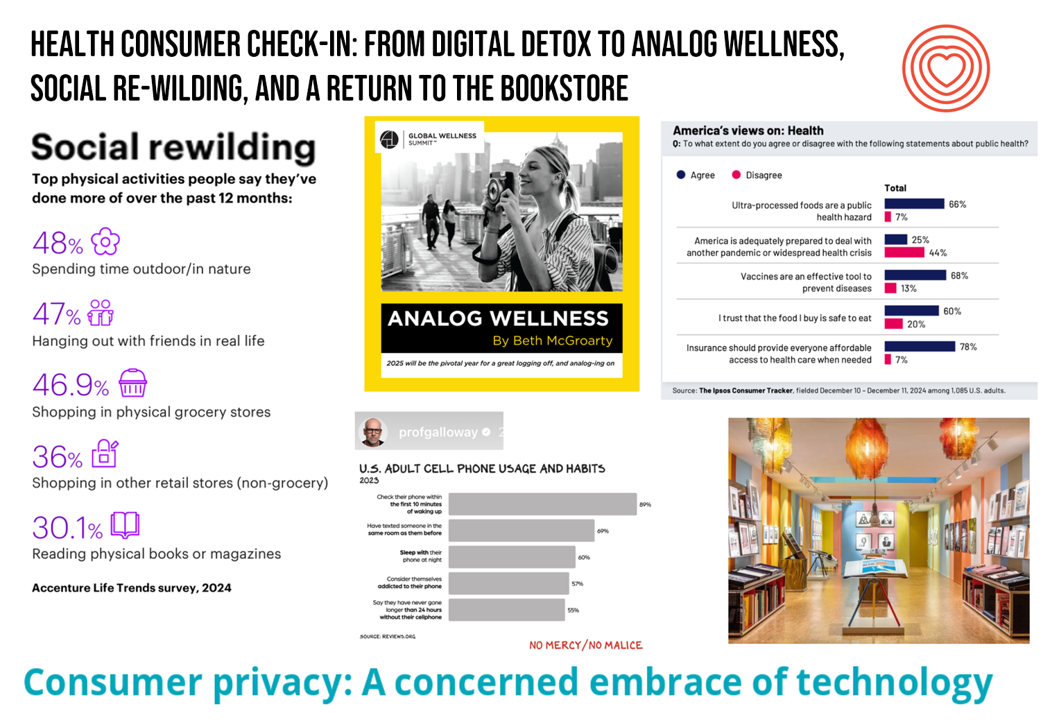
As humans have undergone personal digital transformations, living omni-channel and appreciating the conveniences that being switched-on can bring, there’s a growing demand for “analog wellness.” That’s one of ten trends covered in the Global Wellness Institute’s (GWI) report on 2025 Wellness Trends, and one I want to dig into early this year as consumers are facing growing challenges to our privacy, social bullying, and workforce stressors compelling many employees to spend too many hours in digital isolation and loneliness. To paint the larger landscape of and drivers underpinning analog wellness, I will weave several important reports and studies together, all
Measuring Progress for Life Sciences: Trust, Patient Access, and Prevention at a Fork in the Road of Public Health
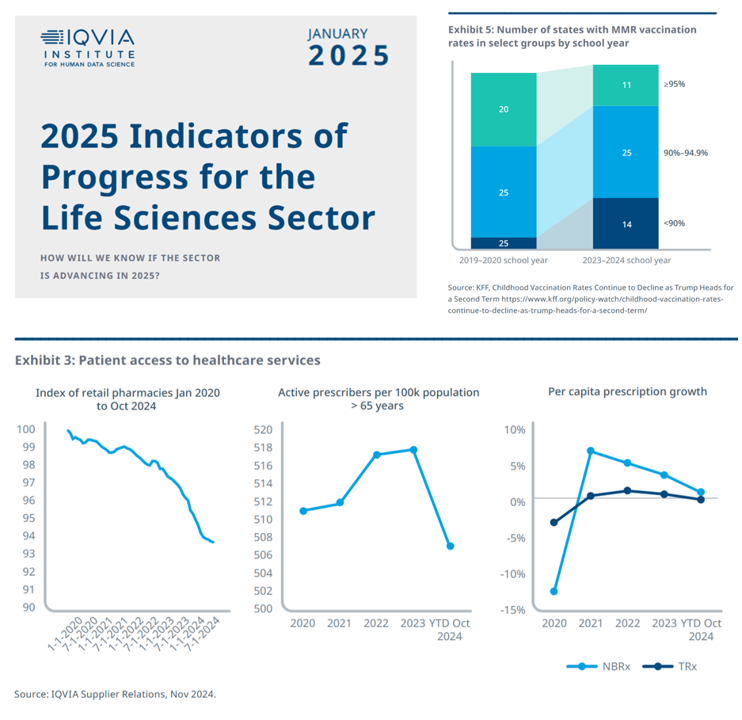
How will we know if the life sciences sector is advancing in 2025? This is the question asked at the start of the report, a Research Brief: 2025 Indicators of Progress for the Life Sciences Sector, from the IQVIA Institute for Human Data Science (IQVIA). To answer that question, IQVIA identified ten indicators for this 2025 profile on the life sciences sector. I selected four key data points for this discussion which provide particularly informative insights for my advisory work right now at the intersection of health, people/consumers, and technology: Trust for/with/in life science
Trust and Grievance in 2025: The Edelman Trust Barometer on MLK Jr. Day Converging with the World Economic Forum Kick-Off and the Inauguration of the 47th U.S. President
At the start of each new year comes the World Economic Forum meet-up in Davos, Switzerland and with that conference start today, 20 January 2025, the publication of the Edelman Trust Barometer. Now in the study’s 25th annual edition, the Edelman Trust Barometer this year finds us, globally, in a Crisis of Grievance which is eroding trust. Edelman surveyed 1,150 residents (plus or minus) in each of 28 countries around the world, yielding over 33,000 citizens’ voices sharing perspectives on trust and institutions. Interviews were fielded from late October to mid-November 2024.
Connecting for Health at Home: A Unified Field Theory from #CES2025 (On Samsung, Withings, and Panasonic)
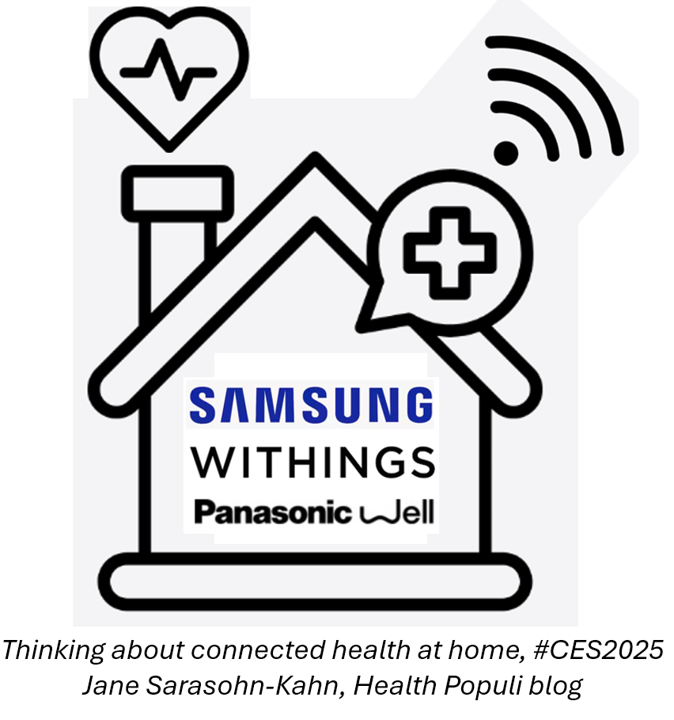
There were over 4,500 exhibitors on the show floor of the 2025 CES in Las Vegas last week, addressing every imaginable aspect of consumers’ daily lives as we increasingly coexist with technology to support life, liberty, and our personal pursuits of happiness….. ….and health. My focus is always on health, and in the past decade and a half, health/care, everywhere. So my lens on #CES2025 looked out for specific point solutions for health, medical care, fitness and well-being, along with adjacencies for mobility/auto, environmental health (think: clean air, clean water), kitchen appliances and food-tech, and home care (not the medical
How World AIDS Day 2024 Can Inform Healthcare in 2025
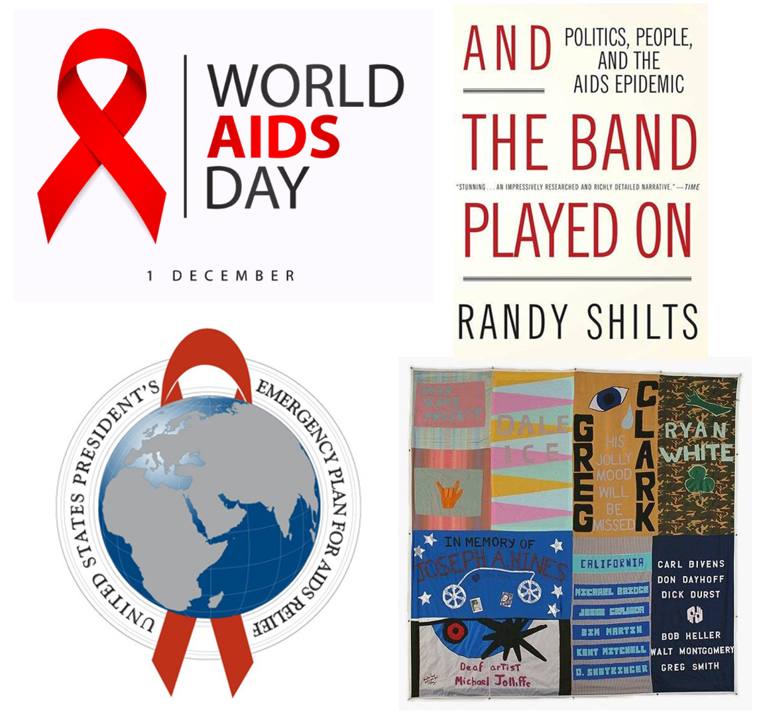
December 1 2024 was World AIDS Day, which was observed by the Biden White House with the display of the entire AIDS Memorial Quilt on the South Lawn — all 54 tons of it. The Biden-Harris Administration announced efforts, in advance of World AIDS Day, to continue to fight HIV/AIDS “at home and abroad.” The press release for the effort noted that, ”We remember those who have died from AIDS-related illnesses—honoring their courage and contributions as essential to the progress made thus far. We also stand in solidarity with the more than 39 million people with HIV around the world.
The Evidence for Gratitude and Health, 2024 Giving Thanks
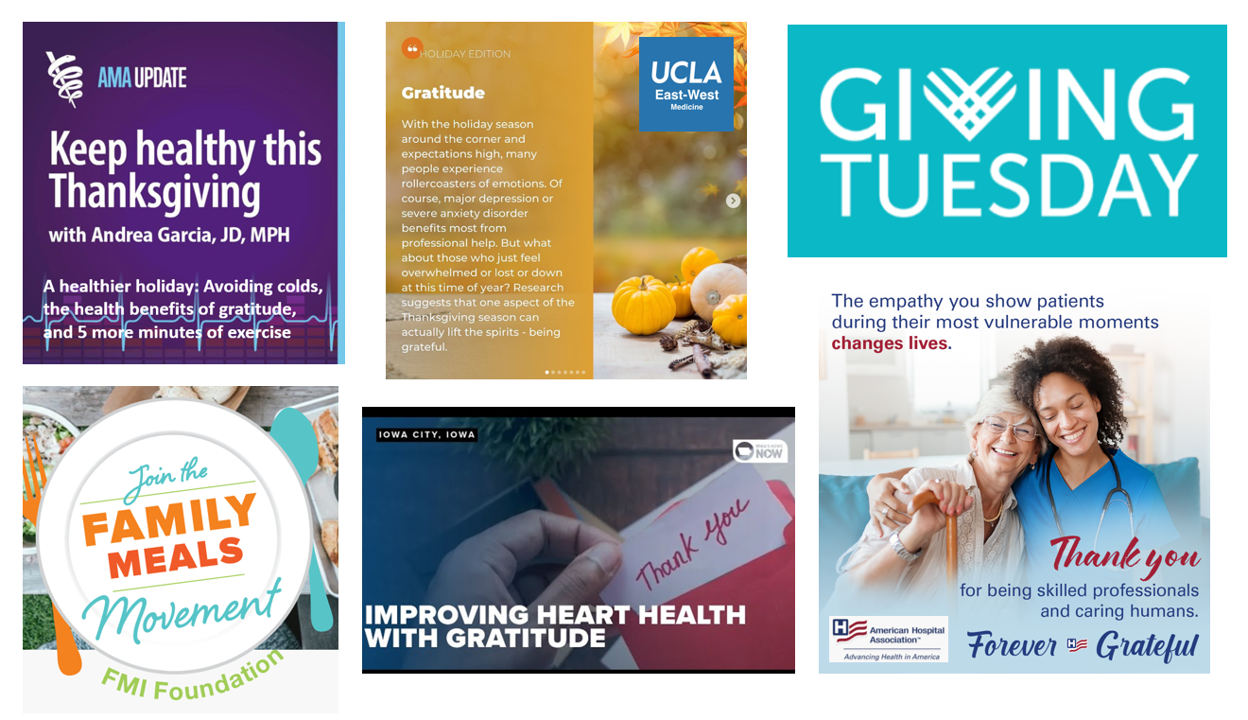
In our home, we’re feeling very grateful for our healthy lives and work-flows right now, being very mindful about seeing blessings around me and within me…. So I’m sharing the love (or “scaling the love” as I recently coined at OSF’s Digital Health Symposium!) to honor American Thanksgiving 2024 here in Health Populi pointing out several sources highlighting the evidence on gratitude and health….underpinned with love, the ultimate driver of health and well-being. Leslie Sarasin, President and CEO of FMI, the Food Industry Association, reminds us that, “Our immigrant ancestors, the pilgrim settlers, worked hard
How Voting Plays Into Health, Health Equity, and Community Well-Being
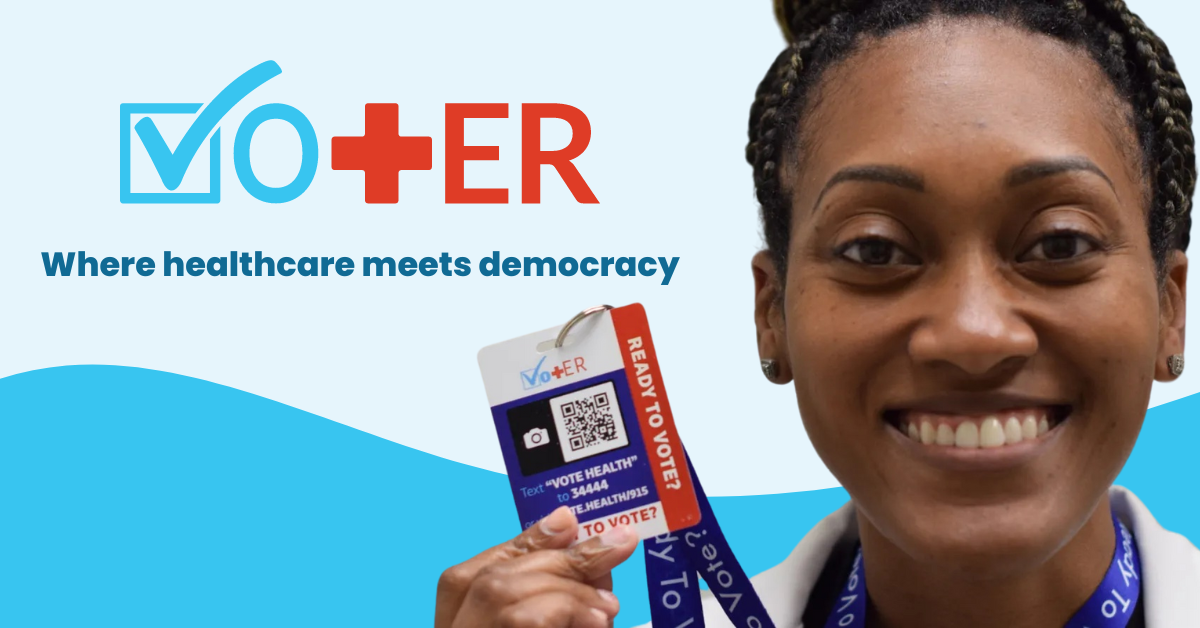
“Voter registration in hospitals is the new frontier in health care.” That’s the headline in a WBUR story last week detailing the efforts of health care professionals in “amplifying” their patients’ voices inside and outside of the hospital walls by advocating for their health citizenship — through voter registration and public health policy advocacy. I’m a long-time evangelist for health citizenship and the role that a person’s engagement in the civic commons plays in one’s own health, the health of their communities and of the nation as a whole. I’m not alone
Globally Patients Seek Clear Communications to Build Trust with Healthcare, Especially in the AI Era
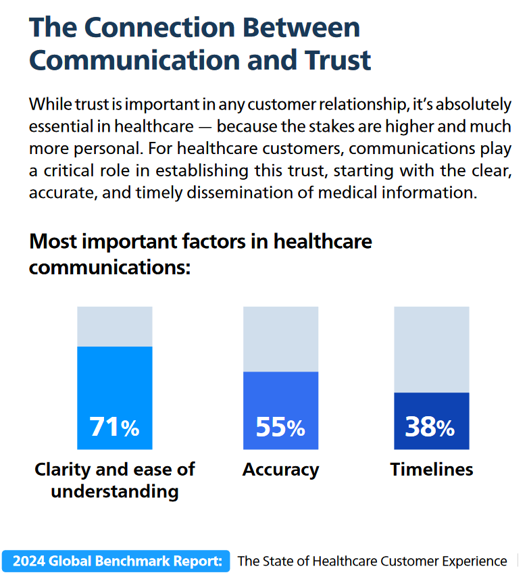
Globally, patients are growing consumer muscles leaning into trust that’s building on communications that connect with them, based on insightful research from Smart Communications. This consumer research was fielded by Toluna and Harris Interactive in February and March 2024. In The State of Customer Conversations, the report assesses input from global consumers from the APAC region (Australia, New Zealand, China, Hong Kong, Taiwan, Japan, and Singapore), German-speaking markets (Austria, Germany, Switzerland), the United Kingdom, and the U.S. The research revealed five key findings, shown in the first exhibit: Communications are increasingly important
Most Americans Follow an Eating Pattern in Search of Energy, Protein, and Well-Being – With Growing Financial Stress: A Food as Medicine Update
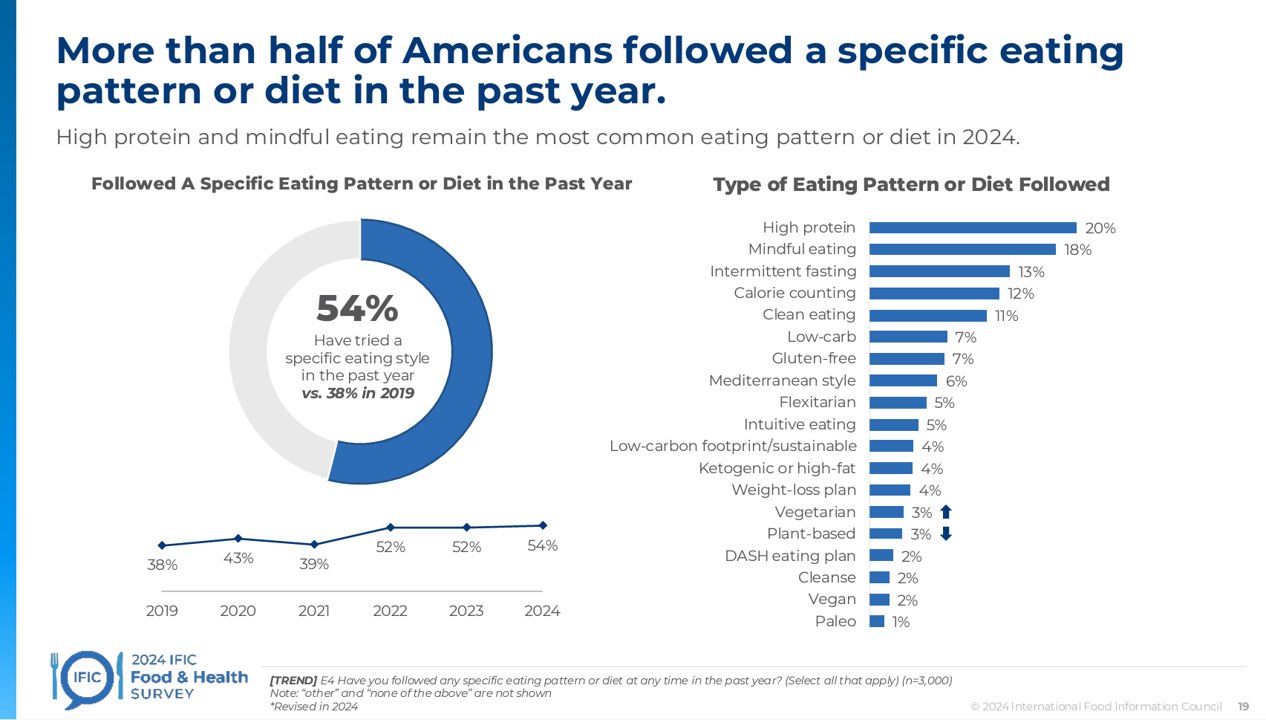
Most Americans follow some kind of eating regime, seeking energy, more protein, and healthy aging, according to the annual 2024 Food & Health Survey published this week by the International Food Information Council (IFIC). But a person’s household finances play a direct role in their ability to balance healthful food purchases and healthy eating, IFIC learned. In this 19th annual fielding of this research, IFIC explored 3,000 U.S. consumers’ perspectives on diet and nutrition, trusted sources for food information, and new insights into peoples’ views on the GLP-1 weight-loss drugs and the growing sense
Leveraging Trust, Showing Humility: How Health Care Organizations Can Serve Consumers – A New Read from McKinsey
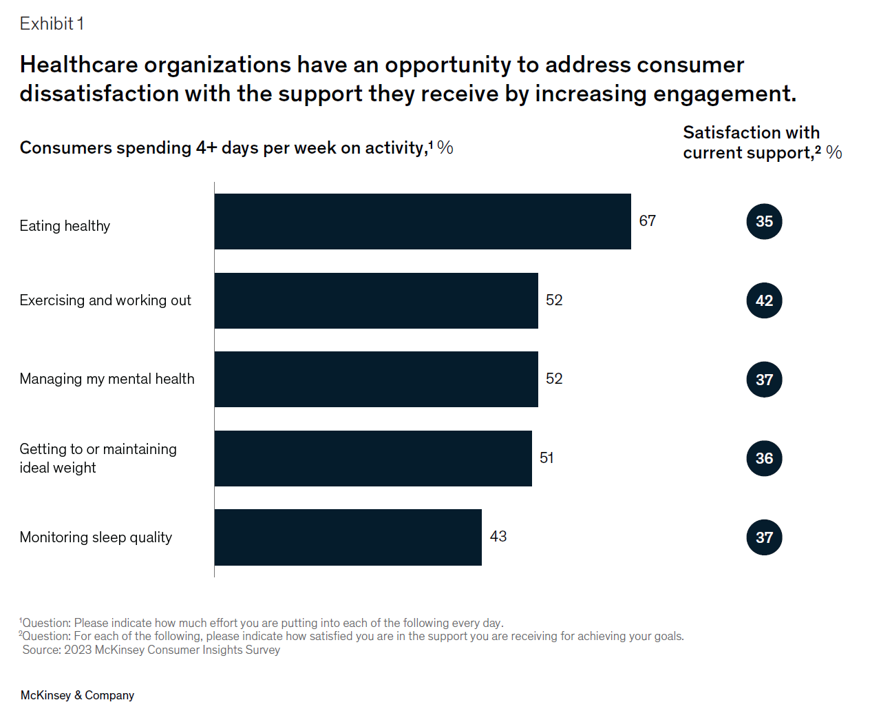
Three trends underpin health consumers’ evolving demands for service: spending more but getting less satisfaction and innovation; trusting health care with data but underwhelmed by the use of that personal information; and, growing “shopping” behavior seeking quality, availability, proximity, cost, and options across channels for health care. That’s the current read from McKinsey & Company’s team noting that Consumers rule: Driving healthcare growth with a consumer-led strategy. In this health consumer update, McKinsey spoke with three consumer marketing experts from other industries to learn best practices on how best to “be there”
Trust is a Superpower for Public Health – The 2024 Edelman Trust Barometer Through the Health Lens
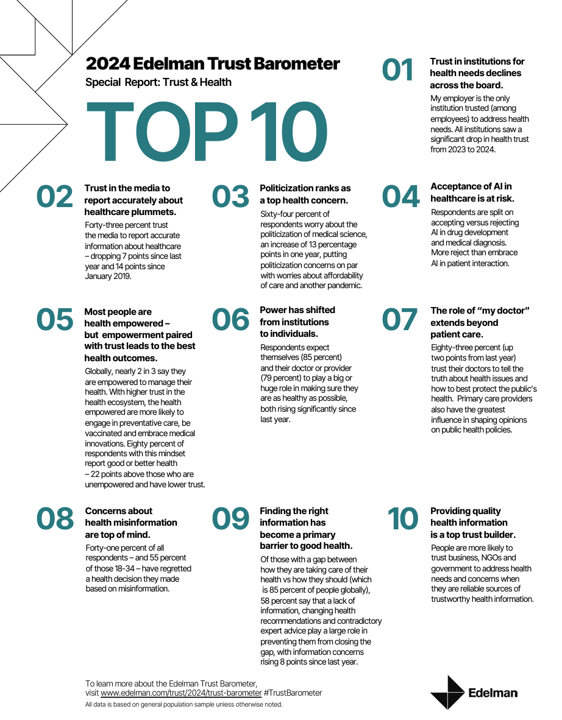
Less than 50% of people living in 16 countries do not trust government, media, or NGOs to do what is right to address their health needs and concerns, based on the responses from over 15,000 people living in 16 countries whose opinions are captured in the 2024 Edelman Trust Barometer’s Special Report on Trust and Health. Edelman launched the 2024 Trust Barometer earlier this year during the Davos World Economic Forum, and today released this round of research focused on health. Globally (among health citizens in the 16 countries polled in the study), trust for
A Springtime Re-Set for Self-Care, From Fitness to Cozy Cardio: Peloton’s Latest Consumer Research
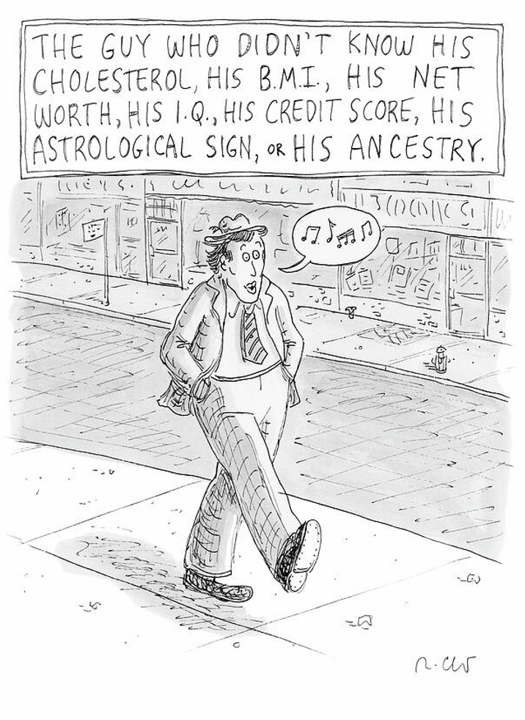
How many people do you know that don’t know their cholesterol or their BMI, their net worth or IQ, their credit score, astrological sign, or ancestry pie-chart? Chances are fewer and fewer as most people have gained access to medical records and lab test results on patient portals, calorie burns on smartwatches, credit scores via monthly credit card payments online, and completing spit tests from that popularly gifted Ancestry DNA test kits received during the holiday season. Meet “The Guy Who Didn’t Know His Cholesterol” conceived by Roz Chast,
Rebel Health: The Personal and Professional Passion of Susannah Fox
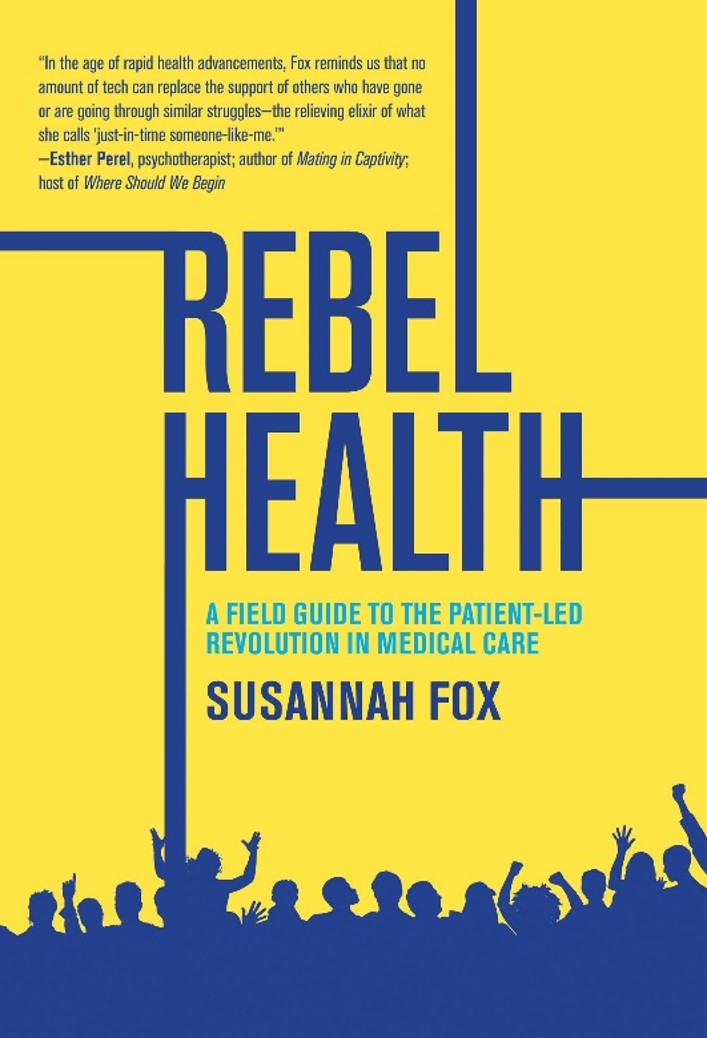
A “rebel” is both a noun and a verb. As a noun, Merriam-Webster tells us that a rebel is a person who opposes or takes up arms against a government or a ruler. As a verb, “to rebel” is to oppose or disobey one in authority or control, or otherwise renounce and resist by force the authority of one’s government.” An additional definition of the verb is, “to feel or exhibit anger or revulsion.” If you’ve been a patient facing a diagnosis of an illness, whether rare or common, you may well have felt these various feelings stirring inside your self.
The Wellness Market Shaped by Health at Home, Wearable Tech, and Clinical Evidence – Thinking McKinsey and Target
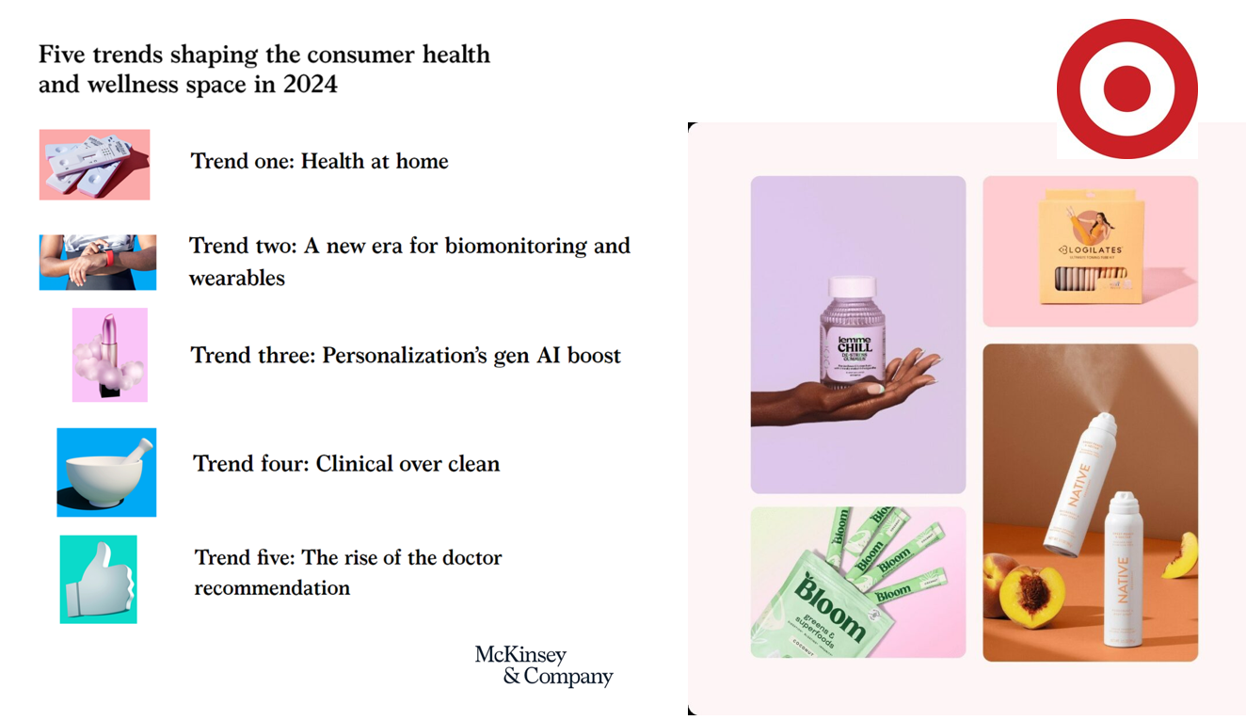
Target announced that the retail chain would grow its aisles of wellness-oriented products by at least 1,000 SKUs. The products will span the store’s large footprint, going beyond health and beauty reaching into fashion, food, home hygiene and fitness. The title of the company’s press release about the program also included the fact that many of the products would be priced as low as $1.99. So financial wellness is also baked into the Target strategy. Globally, the wellness market is valued at a whopping $1.8 trillion according to a report published last week by McKinsey. McKinsey points to five trends
The Trust-Innovation Gap – Welcome to the 2024 Edelman Trust Barometer
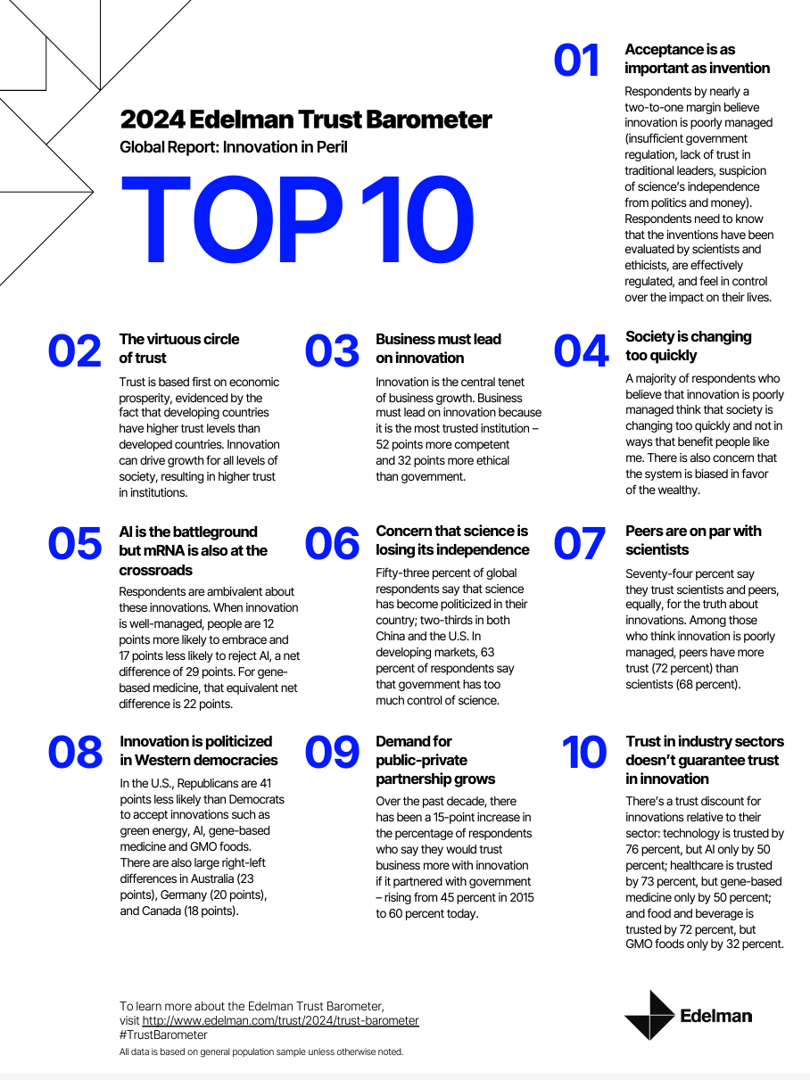
If it’s January, it’s Davos-time — that is the annual meeting of the World Economic Forum convening global experts and passionistas focused on big ideas and challenges facing us mere humans living on Planet Earth. Parallel with the WEF is the annual publication of the 2024 Edelman Trust Barometer, now in its 24th year, focusing on global citizens’ concerns that unite people around the world. For the 2024 study, Edelman’s team fielded the survey in November 2023, collecting input from over 32,000 people living in 28 countries. About 1,150 interviews (plus or minus) were done in each nation which included
HeartMates, Bringing Community and Heart Health Love from Damar Hamlin – Abbott at #CES2024

The heart is a major health-category at CES 2024, from wristband wearable tech to remote health monitoring devices enabling cardiovascular hospital-to-home care. Abbott, one of the first life science companies to exhibit at CES back in 2022, announced the HeartMates program here at #CES2024 today as part of a panel titled Ahead of the Game: Revolutionizing Athlete Safety with Emerging Health Tech. I have both professional and personal interests in athlete safety, having two nephews who have been involved in acute sports injury and brain health. The panel discussion featured the latest research findings on injury prevention and recovery, with
An Extraordinary Life and Voice: A Call-to-Action from Casey Quinlan, featured in the Journal of Participatory Medicine
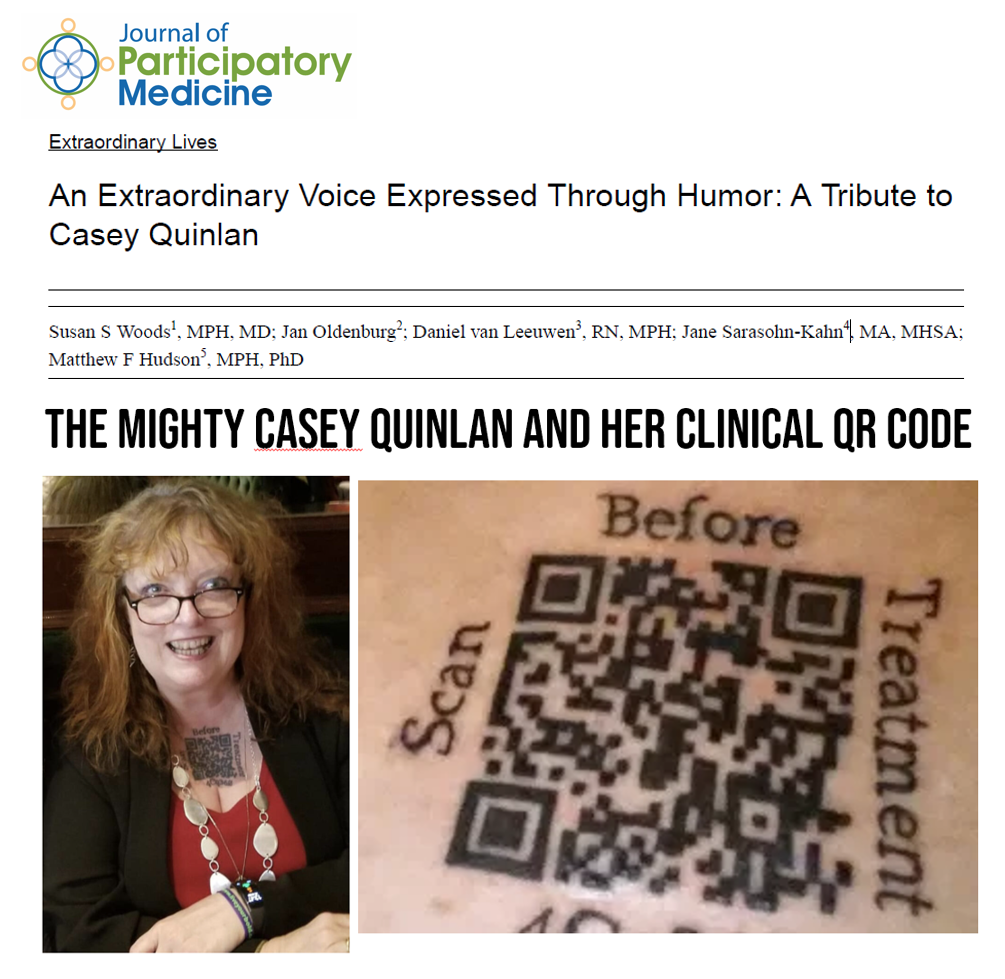
It is about time that a healthcare journal features examples of patient-leaders who have pioneered activism, innovation, and The first exemplar in this vein is Casey Quinlan, whom we lost all-too-soon earlier this year on 24th August. A team of her appreciative colleagues and friends wrote up the first in a new series called “Extraordinary Lives” published in the Journal of Participatory Medicine (JPM) titled “An Extraordinary Voice Expressed Through Humor: A Tribute to Casey Quinlan.” I played a minor role in getting this essay to the finish line, and am grateful to have had the opportunity to do so
Accenture’s Great Expectations for a Decade of Deconstruction – the 2024 Life Trends Forecast
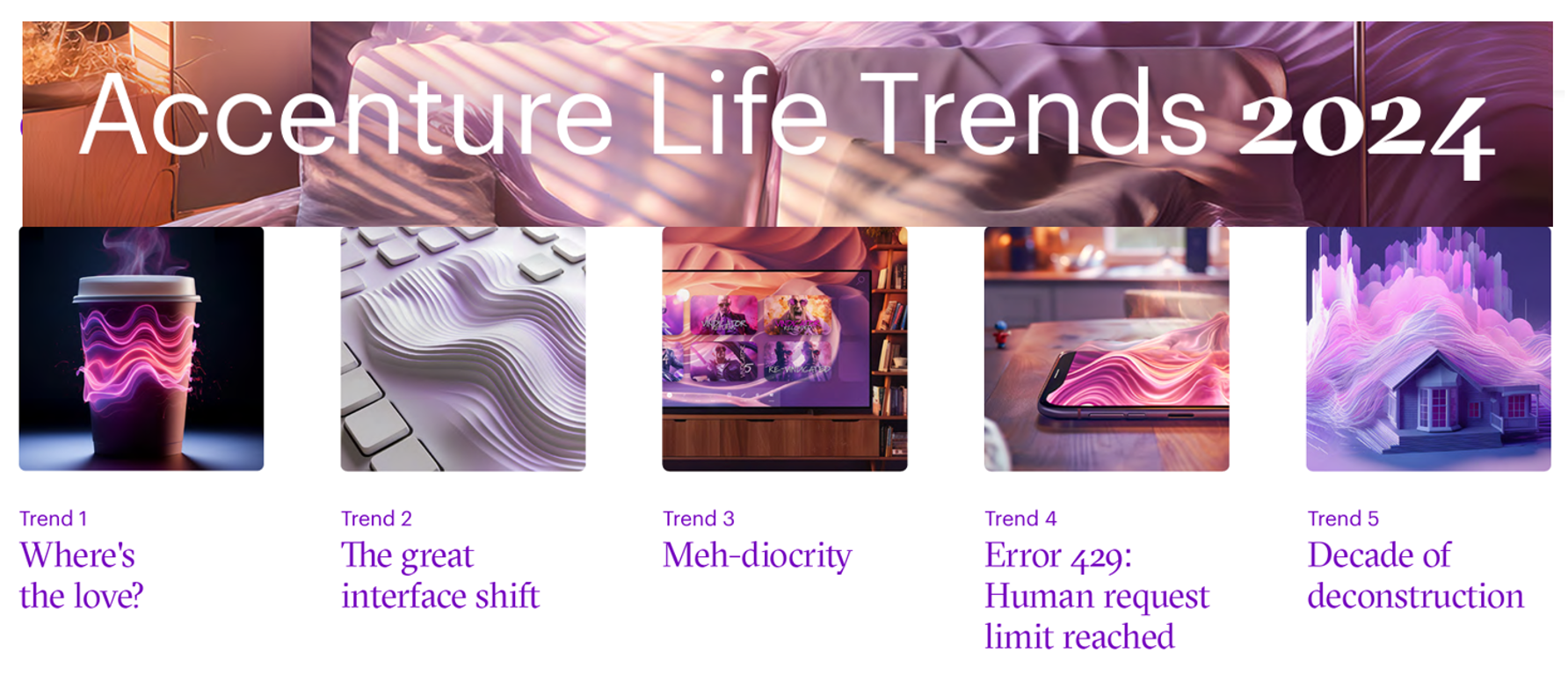
In the company’s 17th annual look into consumers’ “life trends,” Accenture finds that, top-line, “The harmony between people, tech and business is showing tensions, and society is in flux.” And these consumer-facing trends will also shape peoples’ attitudes about their health care, how they access and pay for it, and what kinds of services and support health consumers will expect in this era of “deconstruction.” Taken together, the trends noted in Accenture’s 2024 report on Life Trends finds that one-half of consumers, globally, are changing their life goals, making their jobs and retirement stability more important than
AI is the New Health Literacy Challenge for Patients and the Health/Care Industry
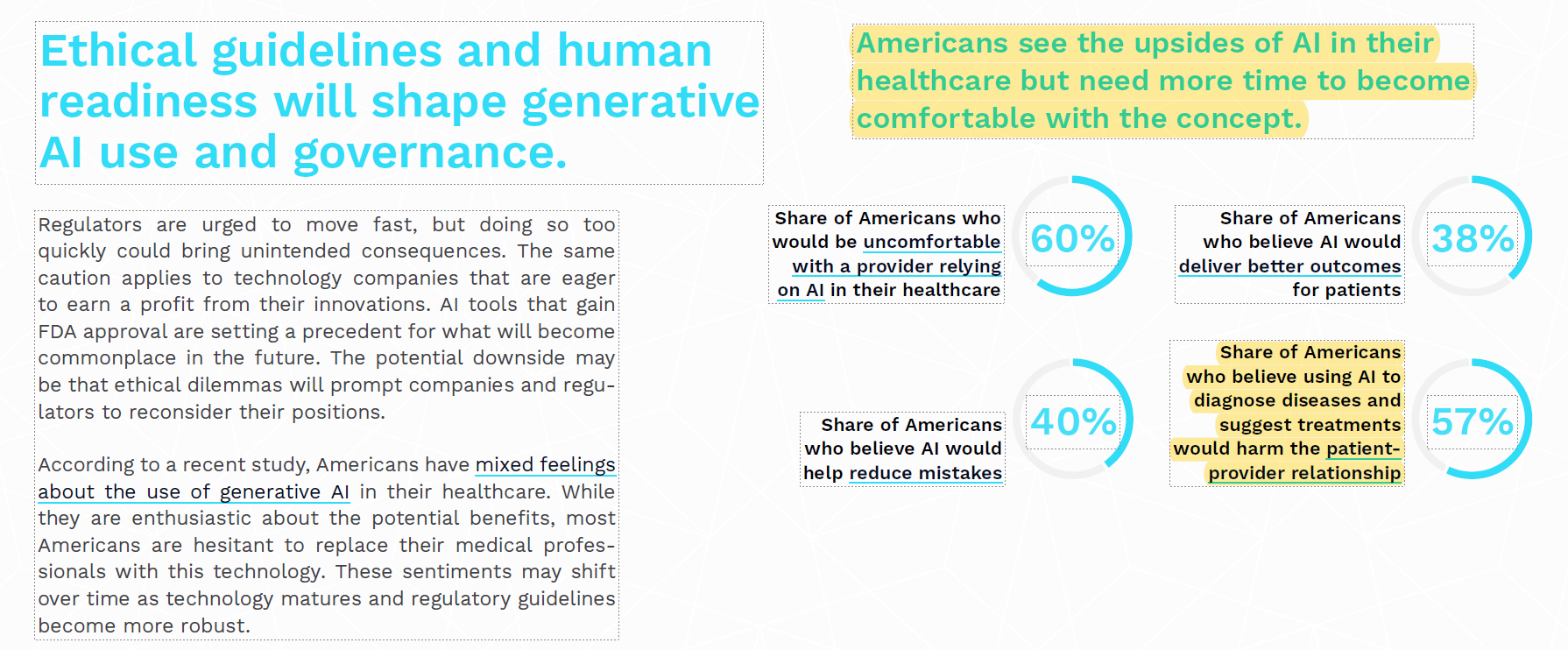
Patients’ comfort in artificial intelligence is linked to familiarity with the technology, a consumer survey from GlobalData learned. Among patients unfamiliar with AI, 42% are uncomfortable, and another 50% feel neither comfortable nor uncomfortable with the technology. However, among patients familiar with AI, 60% feel comfortable with visiting a medical practice that uses AI. Welcome to the new health literacy challenge the health care sector will have to deal with, and soon: lack of patients’ awareness of AI, its promises and pitfalls. “It is imperative to prioritize patient education regarding this technology,” Urte Jakimaviciute
#BeBurnsAware – What To Know on National Burn Awareness Day
Today 11th October is National Burn Awareness Day 2023, and I’m supporting the effort for all of us to #BeBurnsAware. I have become more bullish on Burn Awareness as I’ve come to learn more about the impact burns have on public, family, and children’s health globally. My teacher for better understanding burns and public health has been Krissie Stiles, a long-time burns nurse specialist and Ambassador to the Children’s Burns Trust in the UK. Meet Krissie. Burns are a global public health challenge, which I detailed here in Health Populi earlier this year. Today
How Misinformation in Health Care Can Lead to Being “Dead Wrong” — KFF and Dr. G Connect the Dots
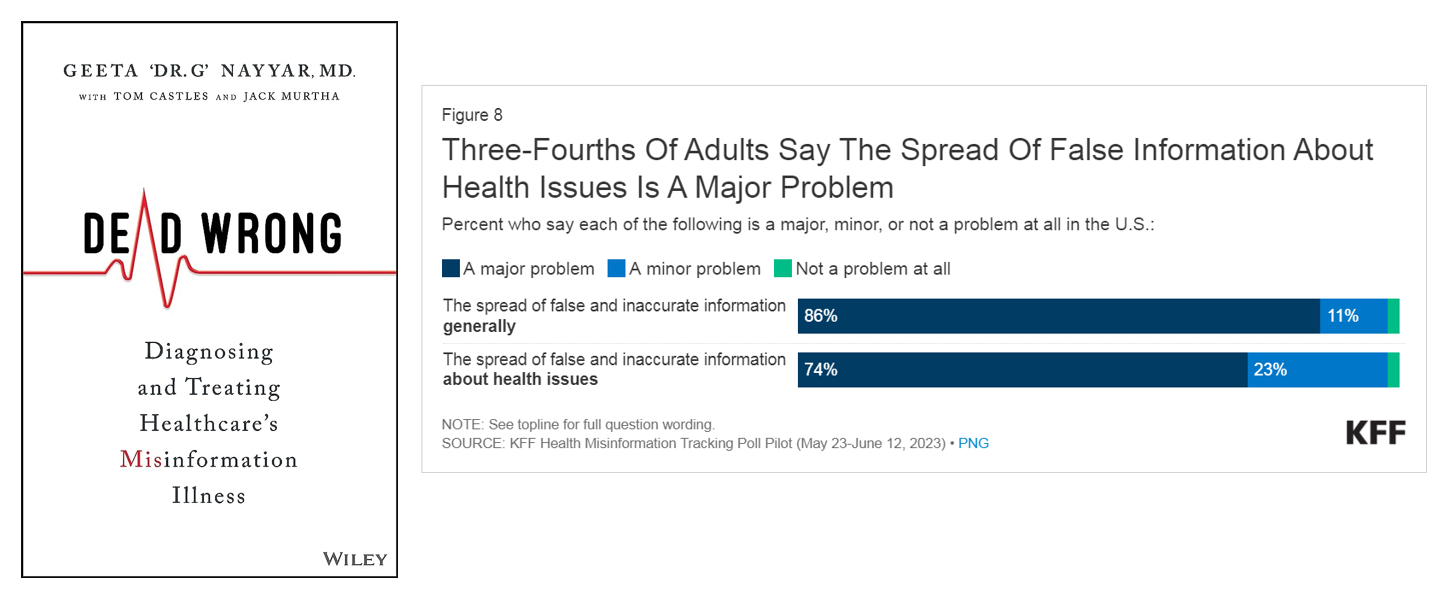
Three in four U.S. health citizens say the spread of false information about health issues is a major problem, found in Kaiser Family Foundation’s Health Misinformation Tracking Poll Pilot published earlier this month. KFF’s press release on the study summarized the top-line with, “Most Americans Encounter Health Misinformation, and Most Aren’t Sure Whether It’s True or False.” Explaining the implications of the broad reach of health misinformation in the U.S., Dr. Geeta Nayyar has written the book Dead Wrong: Diagnosing and Treating Healthcare’s Misinformation Illness, due out on October 17th and available now for pre-purchase
Barbie in Health Care – Joining the Barbie Zeitgeist
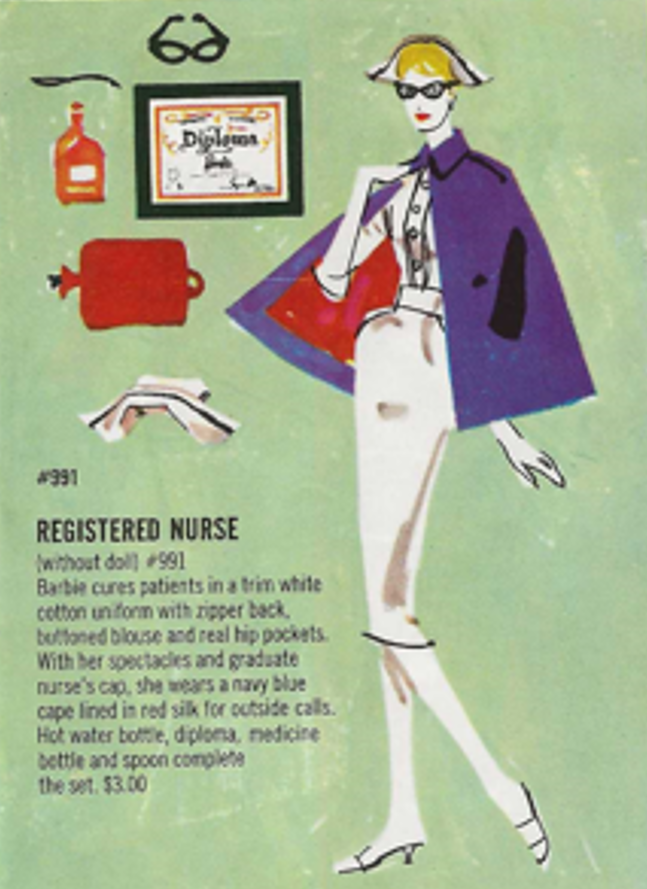
Barbie is having a moment, marketers agree. This weekend, many of us will buy movie tickets (yes, to see “real” movies in “real” brick-and-mortar cinemas) to see both the new film Oppenheimer along with the Barbie movie. So many movie-goers will be making it a double-feature experience that started as a meme, the portmanteau “Barbenheimer,” to mark the cultural-phenomenon moment. And the marketing frenzy accompanying the release of Greta Gerwig’s film has been an astonishing plethora of collaborations with consumer-goods companies and retailers. To join the pink-inspired fray, I’m featuring Barbie’s health care lives in
Women’s Health on Her Own Terms – “She Knows” What She Needs
Despite some improvement in the representation of women by cinema, TV shows, and brands, distortions in media remain that are risks to women receiving appropriate health care. Breaking through taboos of weight, reproductive services, and mental health are the top 3 factors preventing women from getting proper care, according to Health On Her Terms, a research study from WPP and Ogilvy partnering with SeeHer, an organization of collaborations from media, technology, business, education, and other sectors (including over 7,000 brands) focused on the accurate portrayal of women and girls in society. Taglined as “The Marketer’s Hippocratic Oath to Women, the
Bayer at The Big Game LVII: the Heart Health Ecosystem is Ripe for Self-Care and DIY Health at Home
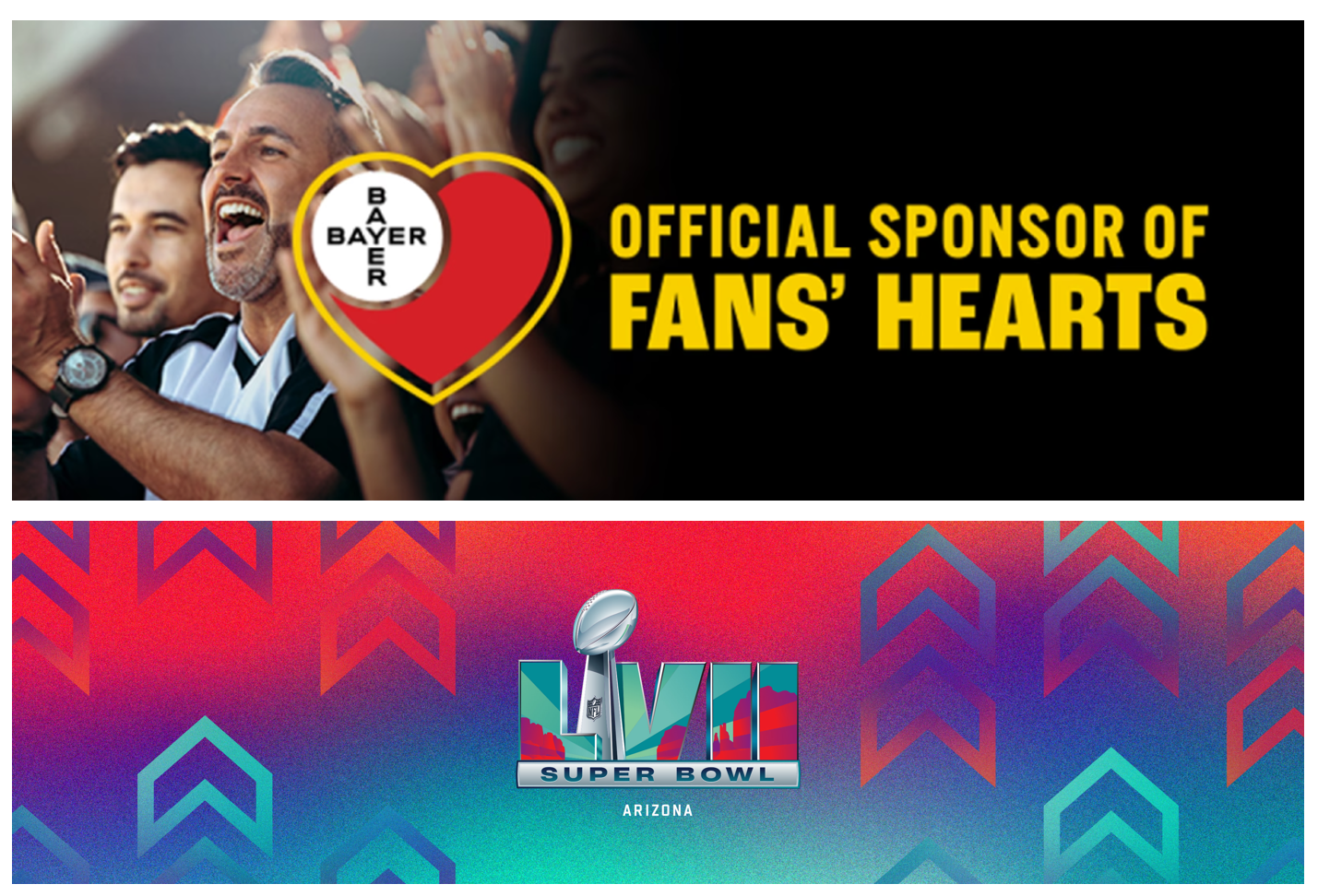
Joke if you must about Big Game cuisine being typically packed with calories and fat and carbs….and as such, not-so-great for health. For me, the ads are the attraction during The Big Game (along with the Philadelphia Eagles). In this year’s ad line-up, health will be featured in high-priced spots as it has for the past few years. Last year, I was intrigued by a female-focused 30-second spot from Hologic, educating viewers on cervical cancer, discussed here in Health Populi. This year, my eyes are on Bayer Aspirin’s campaign “encouraging sports fans to keep their heart
The Tik Tok’ing of Medical Mis-Information: Doctors’ and Patients’ Roles in Curating Healthy Advice
Doctors in the U.S. believe that the medical mis-information problem is worsening, learned in survey research from Merck Manuals. Doctors and patients, both, have roles to play in addressing medical misinformation online. Less than half of consumers, 44%, said that that there is more medical mis-information online than previously. That’s less than half of the percentage of doctors saying so — 98%, virtually all U.S. physicians, citing the problem. There were several disconnects noted in the Merck Manuals study showing starkly different perceptions of health information online between doctors and patients:
How Will Consumers’ Declining Trust in Technology Impact Health Tech?
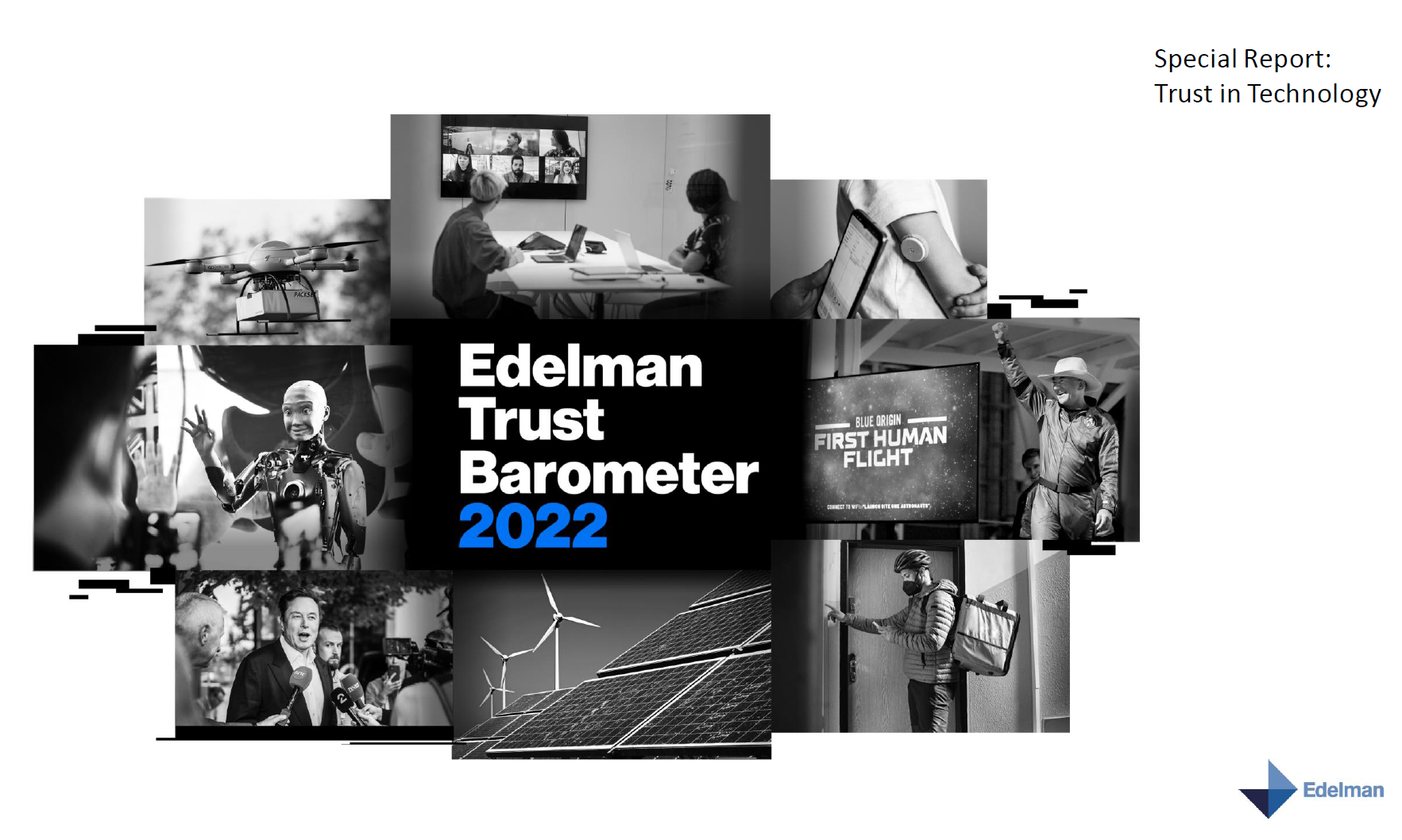
Americans’ trust in technology as “plummeted” in the past decade, according to the 2022 Edelman Trust Barometer’s focused look on trust and technology. How might this play into U.S. health citizens’ trust in digital health technology? To answer that, let’s start with the macro-view on trust in tech. Richard Edelman convened a virtual meeting launch for the Trust Barometer’s tech perspectives yesterday, looking broadly at the global study findings. For these trust-tech insights, Edelman surveyed 15,000 citizens between August 31 and September 12, 2022, residing in 12 countries: Australia, Brazil, Canada, China, France, Germany,
“Beyond the Bubble Bath,” Self-Care Must Be Rooted in Science To Build Trust Among Consumers
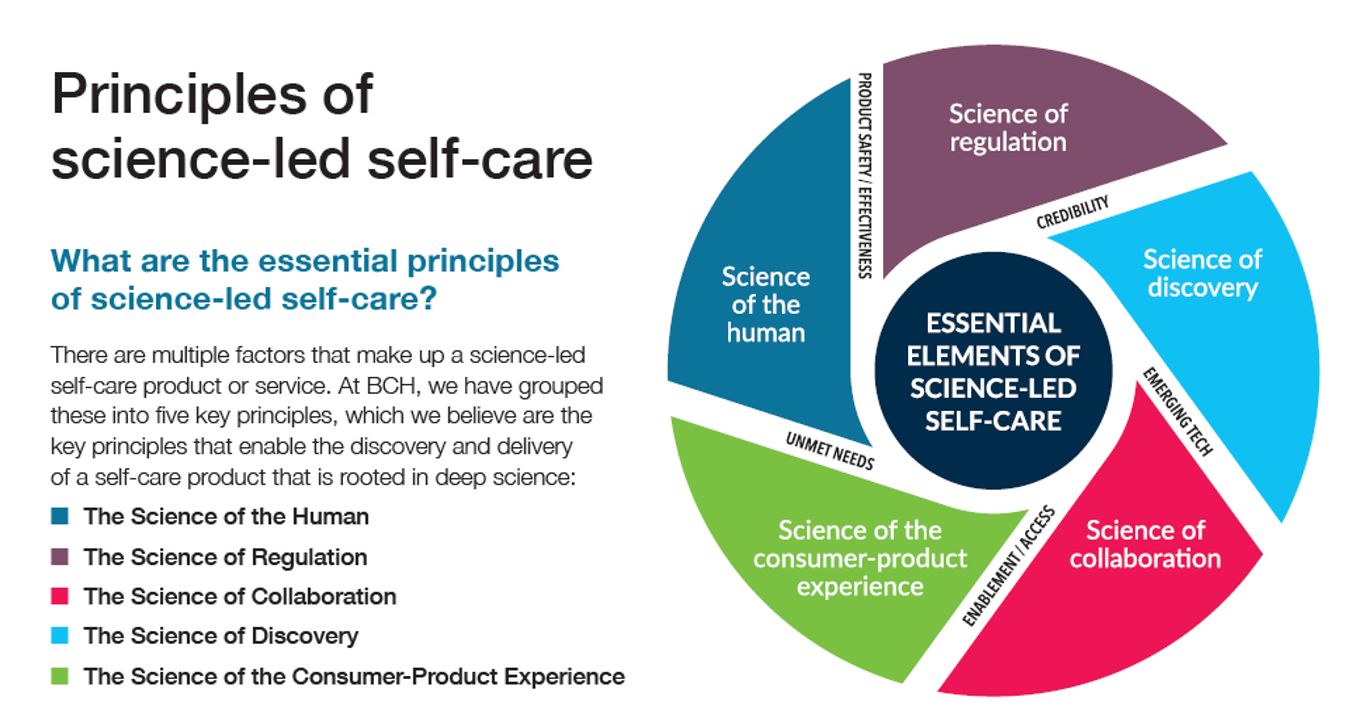
The goal of self-care for health-making is to improve lives by scaling health-and-wellness accessible to all, Bayer believes, giving people more control over their personal health. Self-care work-flows must be based in science to ensure products and services are trusted and deliver on their clinical promise, Bayer explains in Science-Led Self-Care: Principles for Best Practice, a paper published this week which the company intends to be a blueprint for the industry. Bayer recognizes that self-care is growing among health consumers around the world — albeit underpinned by peoples’ cultures, demographics, and “readiness”
The Old Gays Working with Walgreens on TikTok: Breaking Down Stereotypes and Having Fun with Health
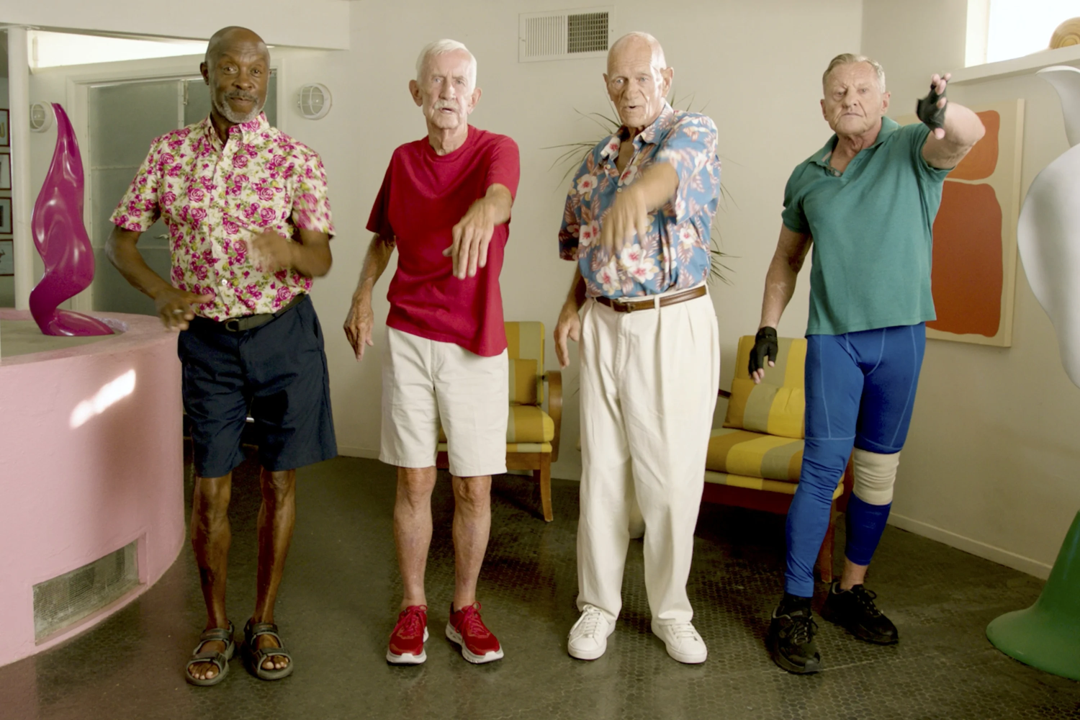
How much do I love this media campaign from Walgreens, collaborating with the foursome The Old Gays who have a growing multi-million person fan base on TikTok? How much? A whole lot! Kudos to Walgreens for creating engaging, informative, and fun! content to learn about how people can benefit from using the company’s app ….for, Ordering prescriptions (90-day supply) Receiving delivery same-day 24/7 pharmacy chat on pricing, prescription drug information, and medications. The plotline kicks off with 3 of the 4 quartet (Jessay Martin, Robert Reeves and Mick Peterson) looking for their friend Bill Lyons, who is missing from their
The Evolution of a Patient Ambassador – Learning from Stacy Hurt
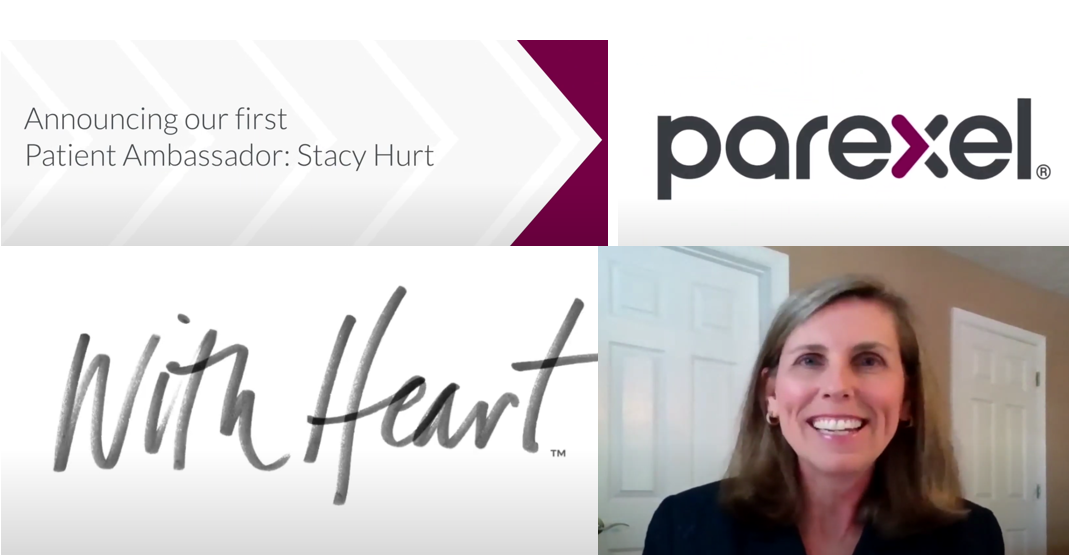
“I am a health care executive who happens to be a patient, caregiver, and advocate,” Stacy Hurt explained to me in a Zoom chat we shared on 31 May. I asked her to meet with me to discuss her professional news update: being appointed Parexel’s first Patient Ambassador. My Zoom invitation to Stacy was a very convenient excuse for me to catch up with a friend in the field: we have known each other since Stacy started to grow her health-social media presence on Twitter. And that involvement in
How Trust and Geopolitics Will Impact Health and Business – Edelman 2022 Trust Barometer at the World Economic Forum in Davos
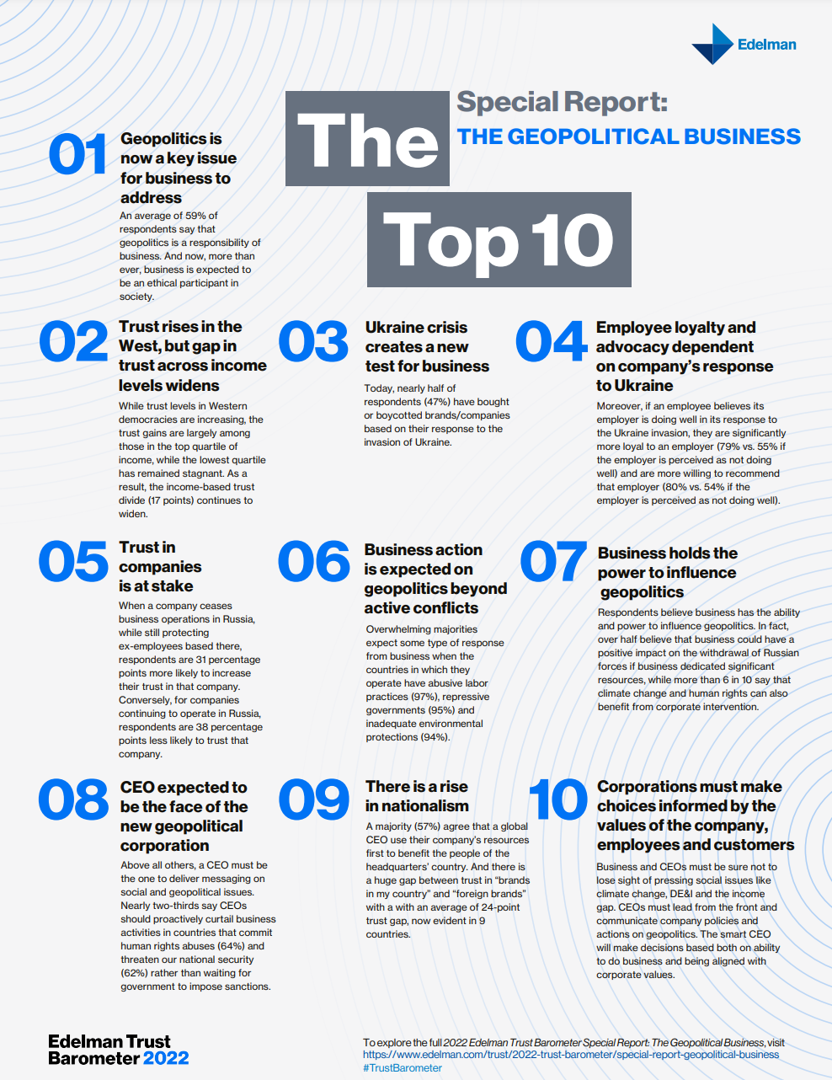
When we think about the state of Trust in in mid-2022, there is some good news: Trust is rising (at least in democratic countries, while falling in autocratic ones). The bad news: the gap in Trust has dramatically widened between higher-income people compared with those earning lower-incomes, globally. And that gap is “tinder” that can be quickly sparked into a socio-political fire in countries around the world, Richard Edelman cautioned today when introducing the latest look at the 2022 Edelman Trust Barometer, focusing on geopolitics and business. We have never seen numbers like this
How Social Media Can Get Public Health So Wrong
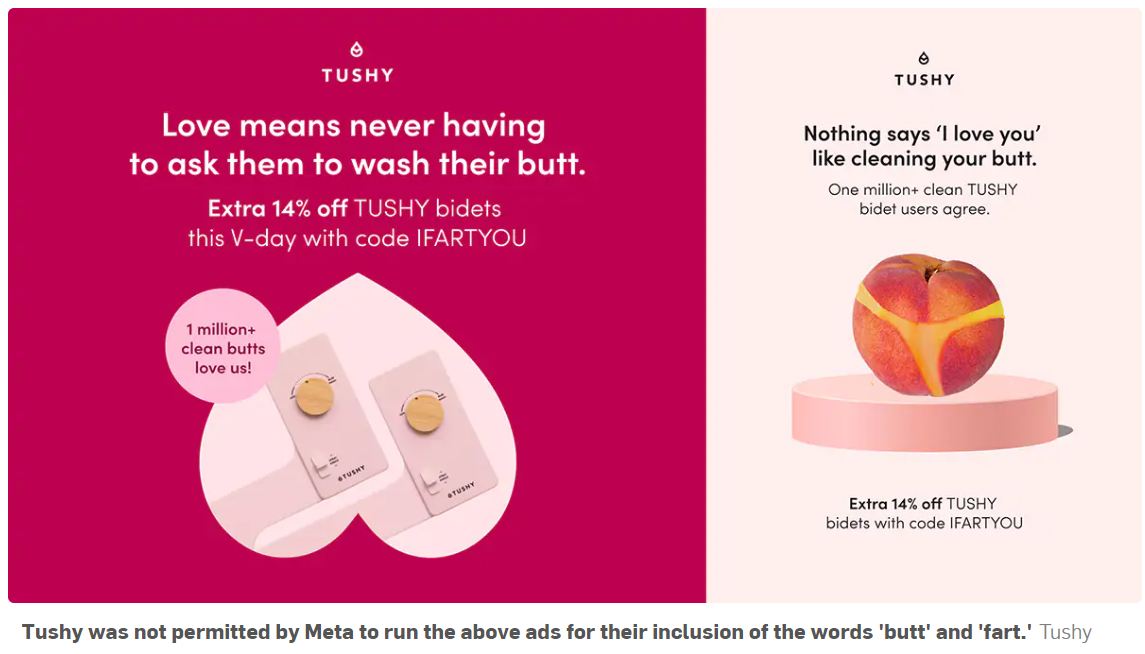
This week, public health truths have collided with social media, the infodemic, and health citizenship. First, I read in Becker’s Health IT on February 16 that the peer-reviewed policy journal Health Affairs was prevented by a social media outlet from promoting its February 2022 issue themed “Racism and Health.” The company said the topic was too controversial to feature in this moment. “Google and Twitter are blocking its paid media ads to promote the content, flagging racism as ‘sensitive content,'” Molly Gamble explained in Becker’s. I myself used the blogging platform you’re on now to promote the February ’22 issue of
How Twitter Revealed Consumer Health Care Trends in the Pandemic
During the pandemic, millions of people connected with Twitter to share thoughts and feelings about the pandemic…and their health. Three mega-trends bubbled up on the platform for health — telemedicine and virtual care, broadband access, and mental health, discussed in a Birdseye Report Industry Deep Dive into Health from Brandwatch, partnering with Twitter. For this report, Brandwatch utilized only English-language public Twitter data. Brandwatch collated and analyzed tweets between January 1st 2019 and November 20 2021, that mentioned any of the following phrases: telemedicine, telehealth, virtual care, digital medicine, digimedicine, mental health, doom scrolling, trauma dumping, and meeting fatigue. Tweets
Mental Health at CES 2022 – The Consumer’s Context for Wellbeing in the New Year
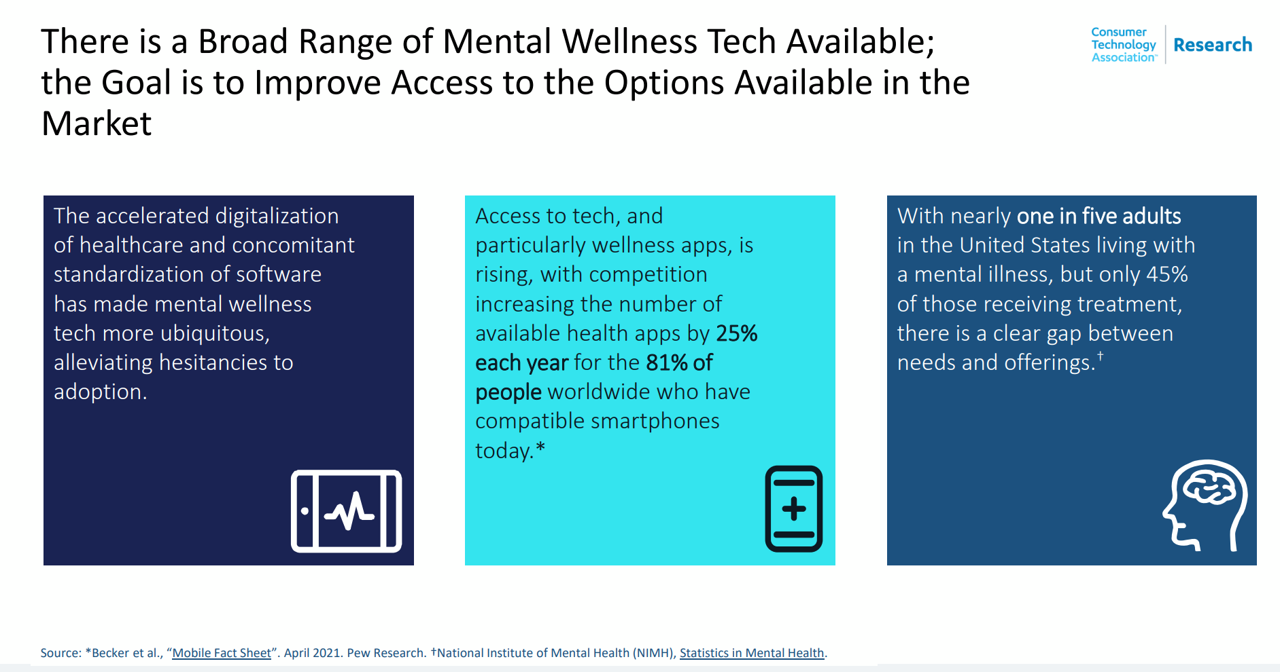
As we enter COVID-19’s “junior year,” one unifying experience shared by most humans are feelings of pandemic fatigue: anxiety, grief, burnout, which together diminish our mental health. There are many signposts pointing to the various flavors of mental and behavioral health challenges, from younger peoples’ greater risk of depression and suicide ideation to increased deaths of despair due to overdose among middle-aged people. And about one-in-three Americans has made a 2022 New Year’s resolution involving some aspect of mental health, the American Psychiatric Association noted approaching the 2021 winter holiday season. Underneath this overall statistic are important differences across various
Consider Mental Health Equity on World Mental Health Day
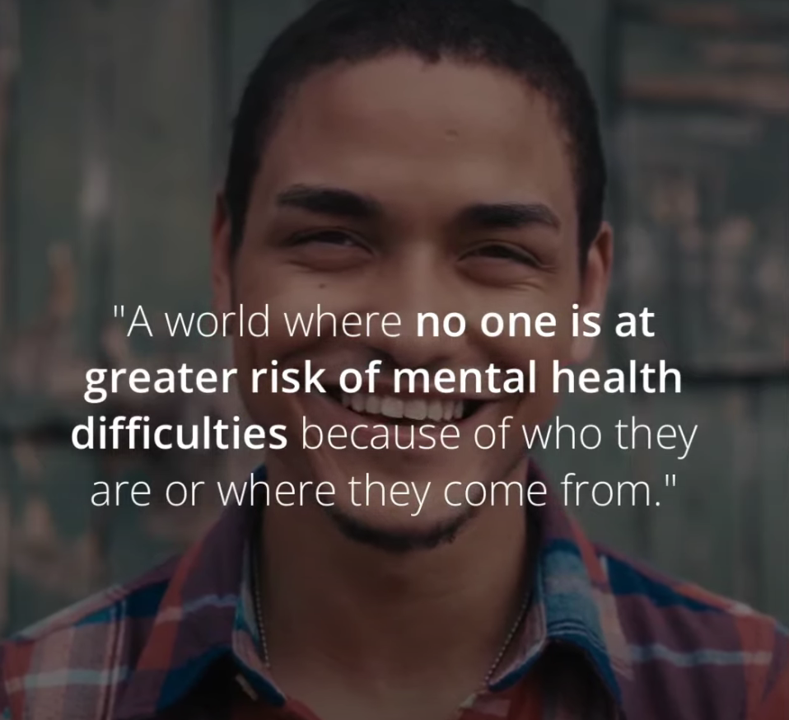
COVID-19 exacted a toll on health citizens’ mental health, worsening a public health challenge that was already acute before the pandemic. It’s World Mental Health Day, an event marked by global and local stakeholders across the mental health ecosystem. On the global front, the World Health Organization (WHO) describes the universal phenomenon and burden of mental health on the Earth’s people… Nearly 1 billion people have a mental disorder Depression is a leading cause of disability worldwide, impacting about 5% of the world’s population People with severe mental disorders like schizophrenia tend to die as much as 20 years earlier
Health Privacy and Our Ambivalent Tech-Embrace – Lessons for Digital Health Innovators
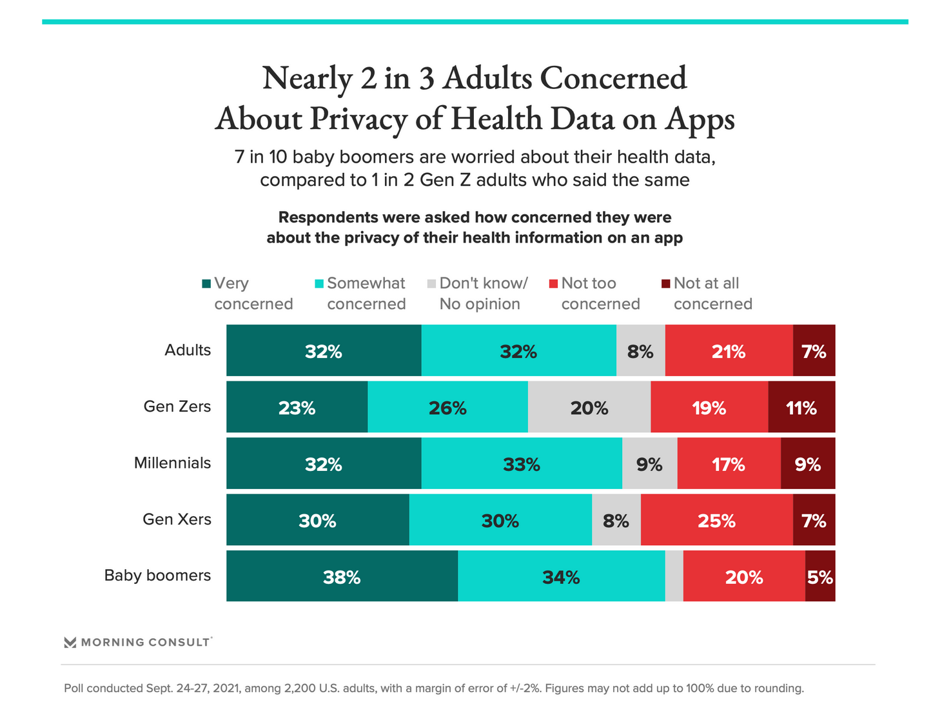
A new look into Americans’ views on health privacy from Morning Consult provides a current snapshot on citizens’ concerned embrace of technology — worried pragmatism, let’s call it. This ambivalence will flavor how health citizens will adopt and adapt to the growing digitization of health care, and challenge the healthcare ecosystem’s assumption that patients and caregivers will universally, uniformly engage with medical tools and apps and technologies. More Boomers are concerned with health data app privacy than Gen Z consumers, as the chart illustrates. 46% of U.S. adults said that health monitoring apps were not an invasion of privacy; 32%
#LoveThyNeighbor – A Faith-Based Call for Vaccination
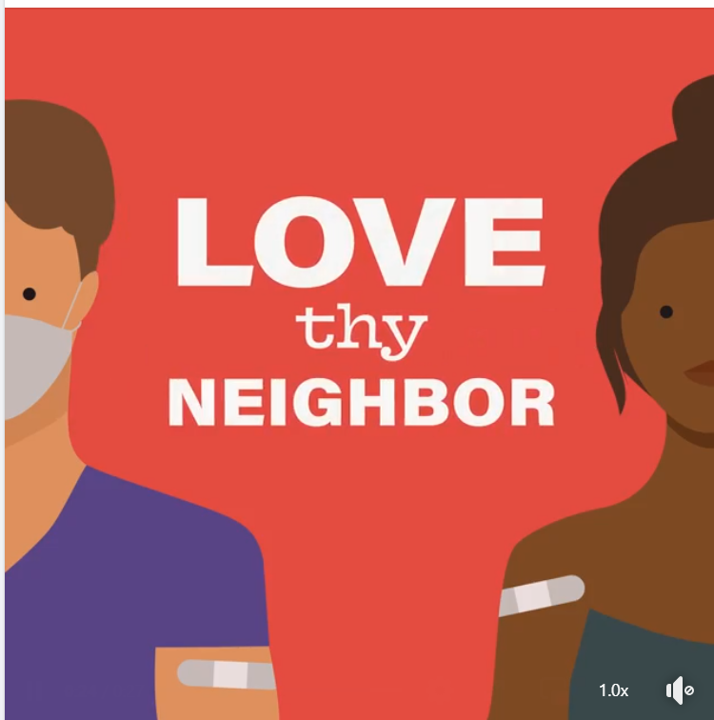
The Catholic Health Association (CHA) is urging Americans to “love thy neighbor” by getting the COVID-19 vaccine, Sister Mary Haddad wrote in an editorial published in Modern Healthcare, published on September 3, 2021. Sister Mary is CEO and President of CHA. “Some may suggest that there are moral and religious concerns to receiving the COVID-19 vaccine,” Sister Mary observed. “We strongly affirm the position of the leaders of the Catholic Church: the vaccines are morally acceptable and getting vaccinated is “an act of love.” she asserted. CHA launched a portal on the act of love, featuring lots of science-based articles
Color Me Healthy – Pantone’s Forecast on Post-Pandemic Well-Being and Design
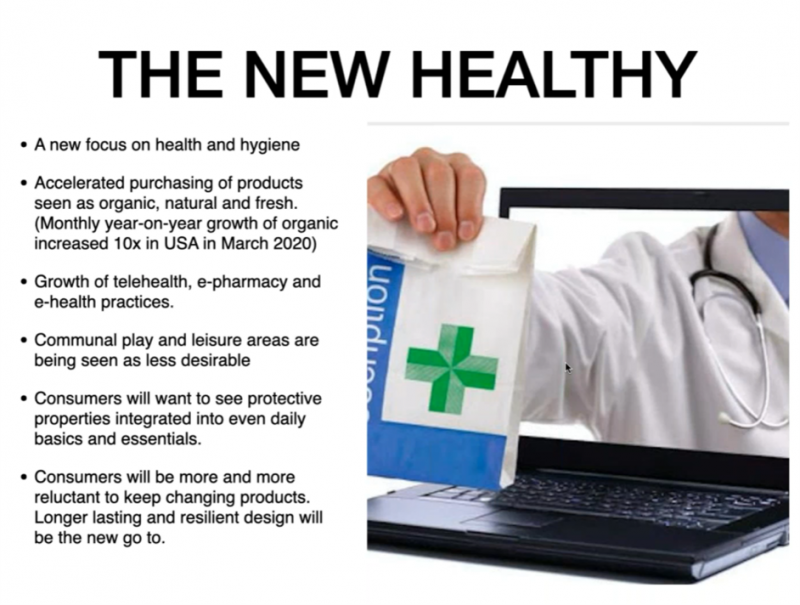
Post-pandemic, the consumer’s priority purchases are grocery, nesting, and health, according to David Shah, a leading thinker about social and design trends. David presented the latest Pantone forecast on color and society in NewTopia – A Balance of Color Opposites – Color for a Post-COVID World this week. I had the opportunity to attend the session, and want to share the health and wellness-related insights David shared in his fast-paced view on the role of color in bolstering wellbeing and community looking out to 2022/23. For context, Pantone plays a role in your life you might not realize. In health
Healthcare, Heal Thyself! How the Industry Can and Should Play the Trust Card
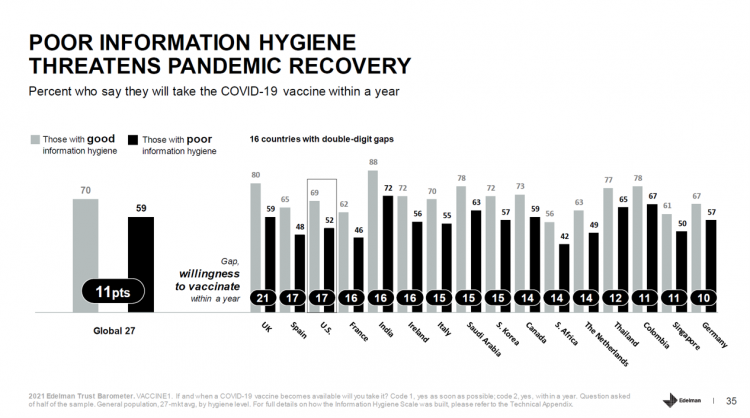
The emergence of the COVID-19 vaccine “infodemic” has slowed the ability for nations around the world to emerge out of the public health crisis. Growing cynicism among some health citizens facing the politicization of public health tactics like vaccines and facial masks is what we’re talking about. At the root is peoples’ lack of trust across a range of information providers, including government, media, business, and even peers. The 2021 Edelman Trust Barometer spotlighted the infodemic and eroding trust in the U.S. in the voices of public health, the public sector, and media. This is a global challenge as well,
Trust in Healthcare is Under Stress in the US and Globally, Edelman Finds
You’re stressed, I’m stressed; most of us have felt stress in the COVID-19 era which began in the U.S. in the first quarter of 2020. Nearly eighteen months later, a 2021 Edelman Trust Barometer update finds that consumers’ trust in the health care industry is under stress, too — in the U.S. and around the world. The first chart from the Edelman health care update demonstrates that in most countries polled, health citizens’ trust in health care was buoyed in the first five months of 2020 (January through May): up 18 points in the U.S., 14 points in Canada and
Health, the Great Unifier (For Most)
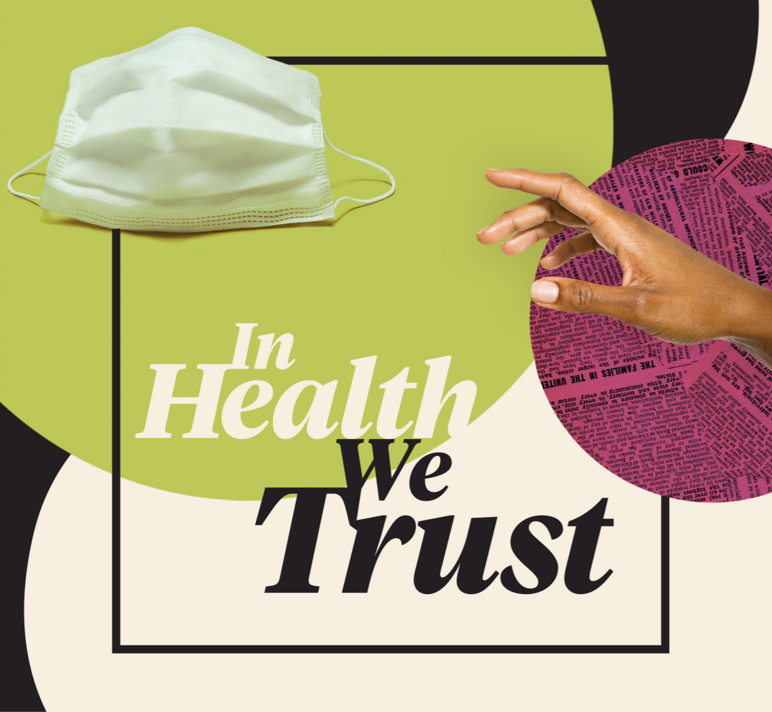
As the COVID-19 expanded peoples’ consciousness about infectious disease and opportunities to keep a tricky virus at bay, consumers grew new muscles about public and individual wellness…now, “more invested in achieving it,” according to In Health We Trust, a survey report from Healthline Media. To gauge Americans changing perspectives on personal health, HealthLine conducted surveys among 1,533 U.S. consumers age 18 and over in February 2020 (just about the time the coronavirus pandemic was emerging in the U.S.) and 1,577 consumers in December 2020. One of the subtle shifts in health care consumerism concerns cost, which before the pandemic has
The Continued Erosion of Trust in the Age of COVID
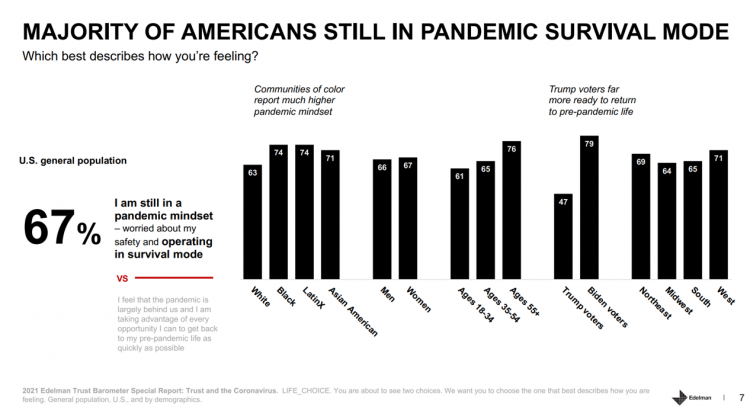
A year into the COVID-19 pandemic, most Americans are still in “survival mode,” according to an update of the 2021 Edelman Trust Barometer, Trust and the Coronavirus in the U.S. Updating the company’s annual Trust Barometer, Edelman conducted a new round of interviews in the U.S. among 2,500 people in early March. [For context, you can read my take on the 2021 Edelman Trust Barometer published during the World Economic Forum in January 2021 here in Health Populi]. The first chart shows that two in three people in the U.S. are still in a pandemic mindset, worried about safety and
How Young People Are Using Digital Tools to Help Deal with Mental Health
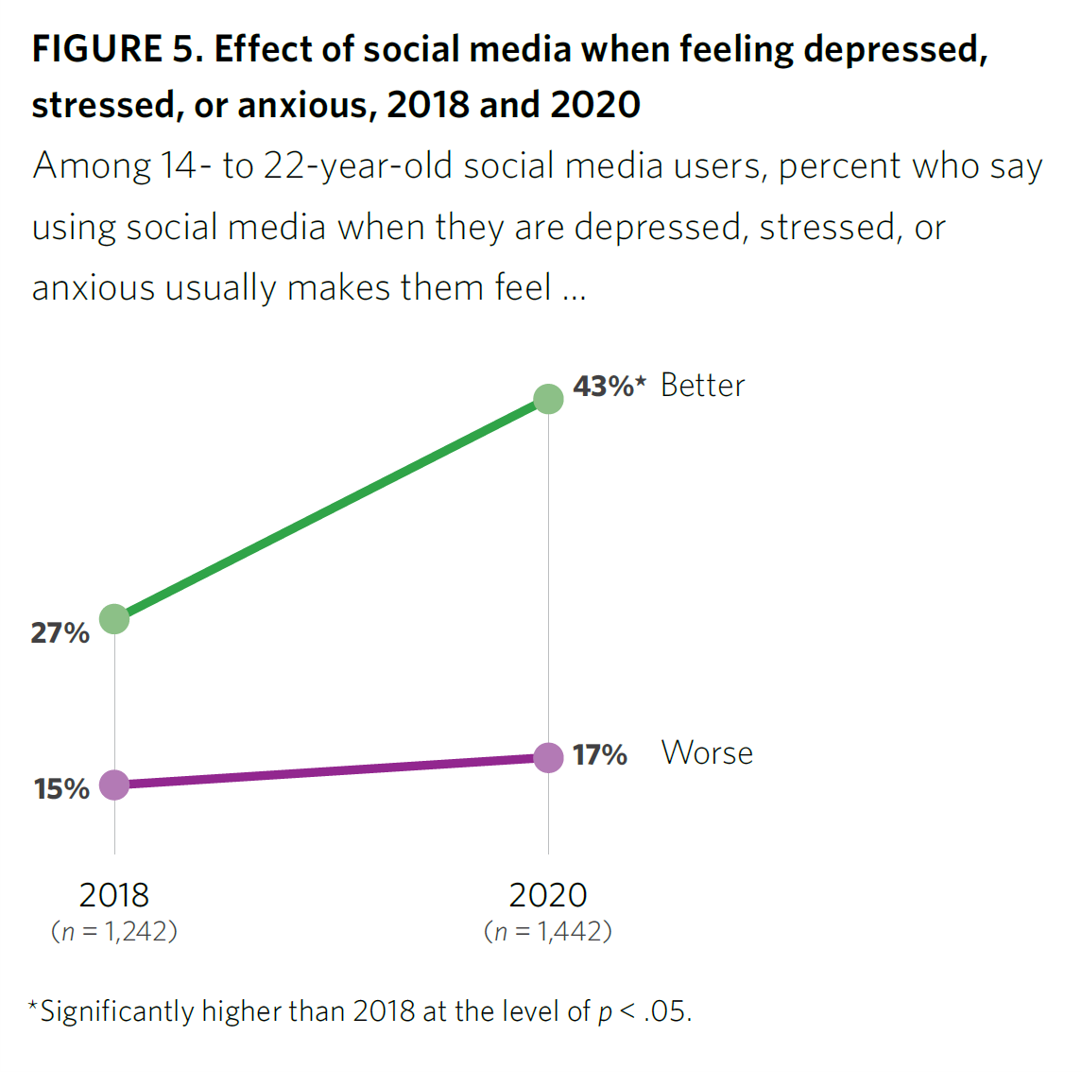
After a year of living with and “in” the coronavirus pandemic, younger people in the U.S. have had to deal with over twelve months of quarantine and lockdown, going to school remotely from home, and distancing from friends. For most young people, the public health crisis has been more about that social distancing from friends, a collective sense of isolation, and mental and behavioral health impacts. These dynamics and these young health citizens’ coping mechanisms are captured in the report, Coping with COVID-19: How Young People Use Digital Media to Manage Their Mental Health. Three organizations collaborated to conduct and
Trust Plummets Around the World: The 2021 Edelman Trust Barometer in #CES2021 and Microsoft Context
Citizens around the world unite around the concept that Trust is Dead. This is no truer than in the U.S., where trust in every type of organization and expert has plummeted in the wake of the COVID-19 pandemic, political and social strife, and an economic downturn. Welcome to the sobering 2021 Edelman Trust Barometer, released this week as the world’s technology innovators and analysts are convening at CES 2021, and the annual JP Morgan Healthcare meetup virtually convened. As the World Economic Forum succinctly put the situation, “2020 was the year of two equally destructive viruses: the pandemic and the
Consumers Demand Digital Transformation Across Their Health Care Experiences
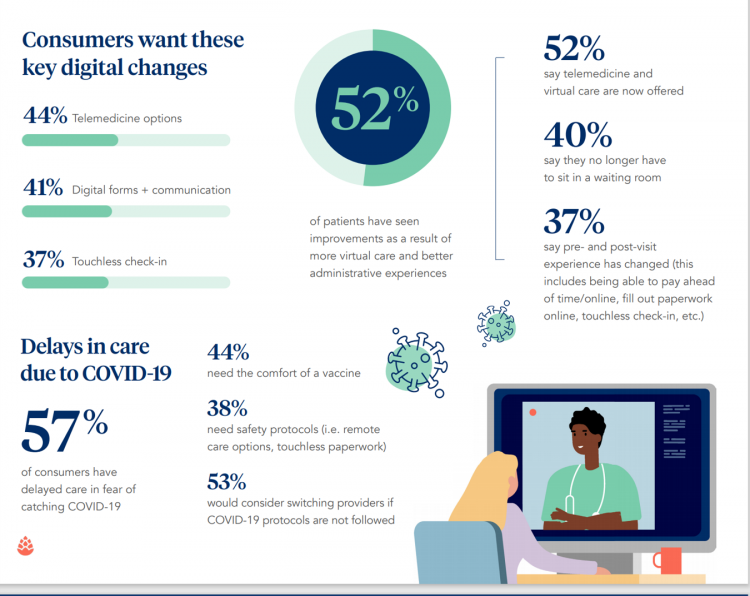
From appointment scheduling to checking in, payment and clinical encounter follow-up, patients now expect digital experiences across the health care continuum….and really great ones, like they get from Amazon and other platforms that earn high net promoter scores. That is the big message from the 2020 Healthcare Consumer Experience Study published by Cedar, based on the input of 1,502 U.S. adults who paid a medical bill between October 2019 and October 2020. The timing of this study coincided with the start of the COVID-19 pandemic in the U.S. through at least seven months of American patients’ experiences in 2020. Two-thirds
The Coronavirus Pandemic Has Made Patients Less Patient – Insights from Accenture
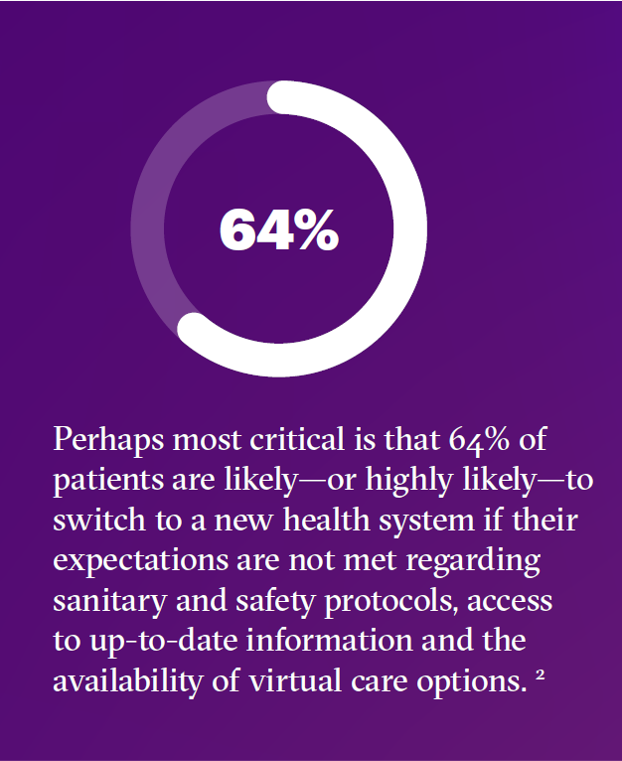
When it comes to patients, health care providers have been hit hard in two ways in the wake of the COVID-19 pandemic. Hit #1 has been the direct negative impact of the coronavirus on health care volumes and patients not utilizing hospitals and doctors’ services, avoiding physical encounters in health care sites Hit #2 has been the negative impact of patient experience for those health consumers who sought health care services during the pandemic — and had a negative response to the encounter. Accenture explored this phenomenon in their latest report, Elevating the Patient Experience to Fuel Growth. In the
Will We See A Field of Dreams for the COVID-19 Vaccine in the U.S.?
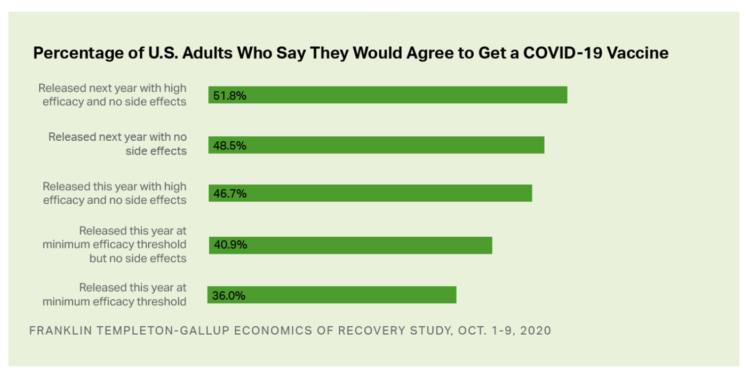
“If you build it, he will come,” the voice of James Earl Jones echoes in our minds when we recall the plotline of the film, Field of Dreams. A quick summary if you don’t know the movie: the “it” was a baseball field to be built in a rural cornfield. The “he” was a baseball player, ultimately joined by a dream-team of ball players who would convene on that dreamy field to play an amazing game. Today, the day after Pfizer announced a 90% benefit for its coronavirus vaccine, bolstering Wall Street returns on 9th November 2020, two new consumer
Older People Are Digital Immigrants, and Best Buy Health Is Paving the Road for the Journey
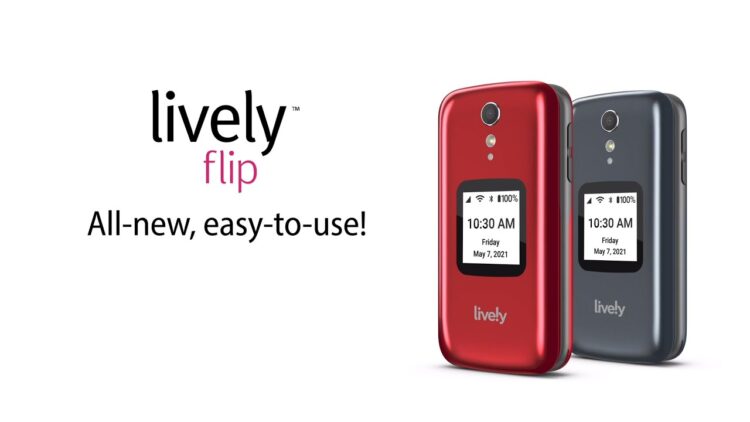
The coronavirus pandemic has revealed the importance of connectivity, WiFi, broadband, as a social determinant of health and living. Connecting from our homes — now our health hubs, workplaces, schools, entertainment centers, and gyms — is necessary like air and water for survival across daily life flows. Digital connectivity can ameliorate social isolation and anxiety, bolster mental health, and access needed medical care via telehealth channels. As a result of the pandemic, staying connected is more important than ever for older people, Best Buy Health learned in a survey of U.S. adults. Insights from this study have informed the launch
How the Coronavirus and Technology Are Reshaping Home-Work, -Life and -Health
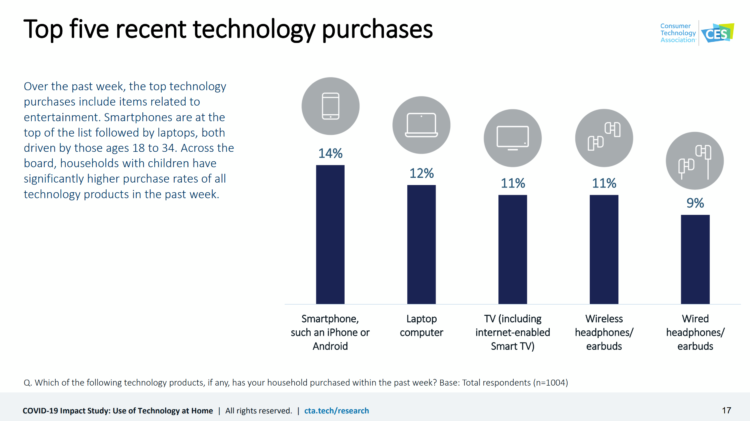
As people conform to the #StayHome lifestyle to #FlattenTheCurve of the coronavirus pandemic, technology is transforming peoples’ home lives for working, playing, and socializing. The Consumer Technology Association has conducted the COVID-19 Impact Study assessing the use of technology at home, exploring U.S. households’ changing behaviors for consuming content, stocking the pantry, engaging with social media, and using online health and fitness tools. This research surveyed 1,004 U.S. adults 18 and over in March 2020 — early in the U.S. pandemic’s national “curve.” U.S. consumers’ top five technology purchases in mid-March 2020 were for smartphones, laptop computers, TVs, and headphones/earbuds.
Shaky Trust in the Age of the Coronavirus – Who Do Americans Trust for COVID-19 Facts?
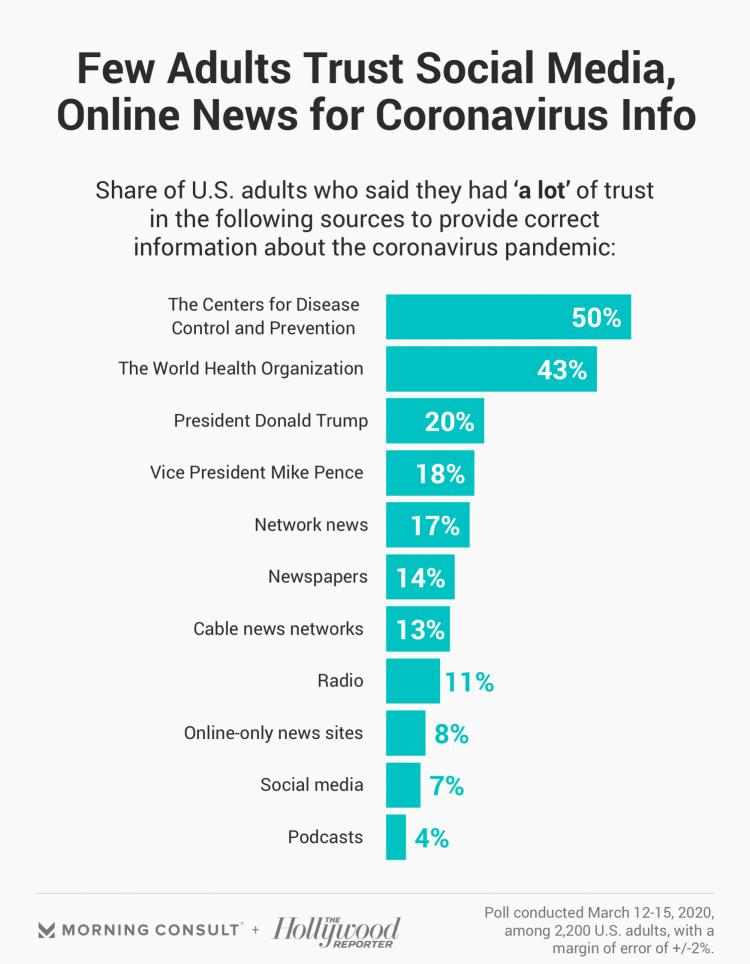
One in two Americans trust the Centers for Disease Control for the facts on the coronavirus pandemic, and 43% trust the World Health Organization. But there’s a huge trust deficit when it comes to trusting President Donald Trump on the facts about COVID-19, a poll from Morning Consult and The Hollywood Reporter found. 2,200 U.S. adults were surveyed between 12 and 15 March 2020 on the coronavirus pandemic and their perspectives on the media and political leaders’ information credibility. For news on the pandemic, only one in five Americans believed the President and 18%, the Vice President, Mike Pence, followed
Most Americans Concerned About Coronavirus Impact on Economy & Families, and Not a “Hoax”

Seven in 10 Americans are concerned about the coronavirus outbreak’s impact on the economy, and 6 in 10 people worried about someone they love getting sick from COVID-19. But most Americans also get the politicized nature of the coronavirus and say they’re less likely to vote for President Trump in November based on his handling of the public health threat, according to a just-released survey from Protect Our Care fielded by Public Policy Polling. Some of the data points which demonstrate that Americans are taking the emerging coronavirus pandemic quite seriously are that: 53% disagree that President Trump and his
The Pace of Tech-Adoption Grows Among Older Americans, AARP Finds – But Privacy Concerns May Limit Adoption
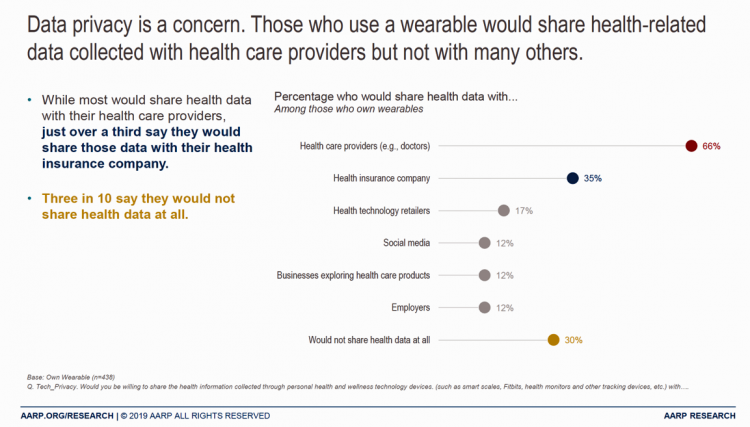
One in two people over 50 bought a piece of digital technology in the past year. Three in four people over fifty in America now have a smartphone. One-half of 50+ Americans use a tablet, and 17% own wearable tech. The same percentage of people over 50 own a voice assistant, a market penetration rate which more than doubled between 2017 and 2019, AARP noted in the 2020 Tech and the 50+ Survey published in December 2019. For this research, AARP worked with Ipsos to survey (online) 2,607 people ages 50 and over in June and July 2019. Across all
Nurses Continue to Reign #1 in Honesty and Ethics; Healthcare Pro’s 4 of Top 5 in Annual Gallup Poll
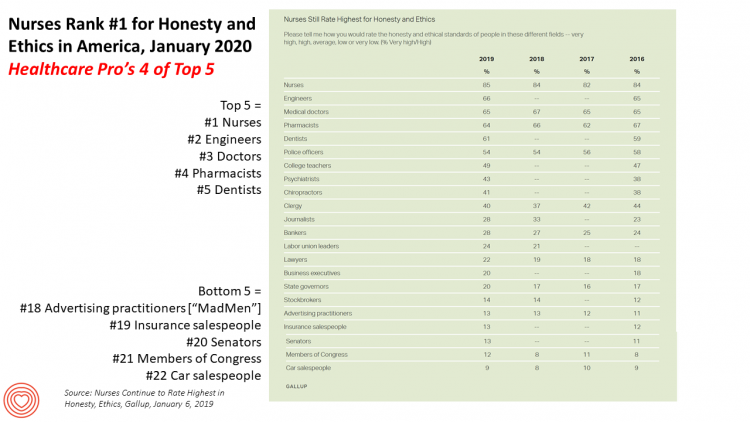
The topline of this year’s annual Gallup Poll into honesty and ethics of professions finds nurses sustaining their reign as the top trusted profession in America. But it’s also important to point out that four of the top five most ethical professions are people working on the front lines of health care: doctors (#3), pharmacists (#4) and dentists (#5). Engineers rank second this year after nurses, edging ahead of doctors and pharmacists who typically have ranked 2nd and 3rd each year in the past decade. One of these years, pharmacists’ reputation fell as the profession was associated with being a
A Matter of Trust, Perception, Risk, and Uncertainty – The Big Issues Raised by the Acquisition of PatientsLikeMe and Other Patient Data Transactions

By Susannah Fox, Jane Sarasohn-Kahn and Lisa Suennen I’ve lived long enough to have learned The closer you get to the fire the more you get burned But that won’t happen to us Cause it’s always been a matter of trust A Matter of Trust, by Billy Joel If you’re in health care and don’t live under a rock, you have probably heard that United Health Group (UHG) has acquired PatientsLikeMe (PLM). After the announcement, there was a lot of sound and fury, some of which signified nothing, as the saying goes, and some which signified a lot.
IKEA Garners the Top Health & Wellness Award at Cannes Lions 2019 – the Expanding Health/Care Ecosystem
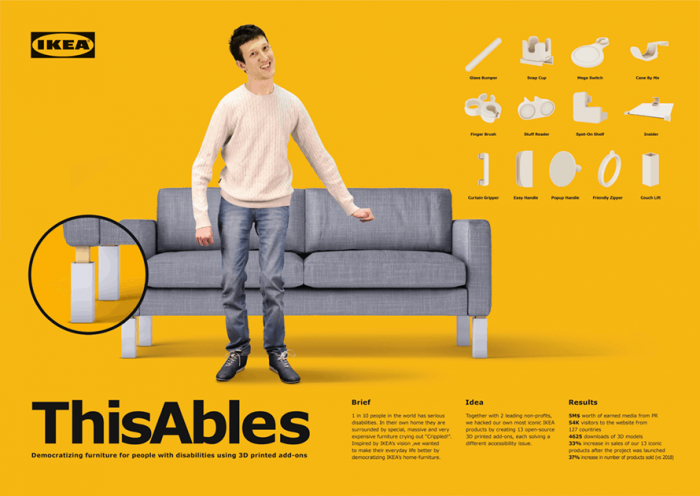
“Health is now everyone’s business,” Shaheed Peera, Executive Creative Director of Publicis LifeBrands, said this week at the 2019 Cannes Lions awards. Shaheed also led the Health & Wellness jury at Cannes Lions 2019, the mission of which is to, in the words of the award’s portal, “celebrate creativity for personal wellbeing.” The Grand Prix Lions award for Health & Wellness went to IKEA for the company’s ThisAbles campaign. ThisAbles is a project pioneered by IKEA’s team in Israel, looking to improve everyday living for people with special needs through well-designed IKEA products. IKEA collaborated with non-profit organizations to develop
The Grocery Store As Health Destination: Publix Produce for Kids and the Social Determinants of Health
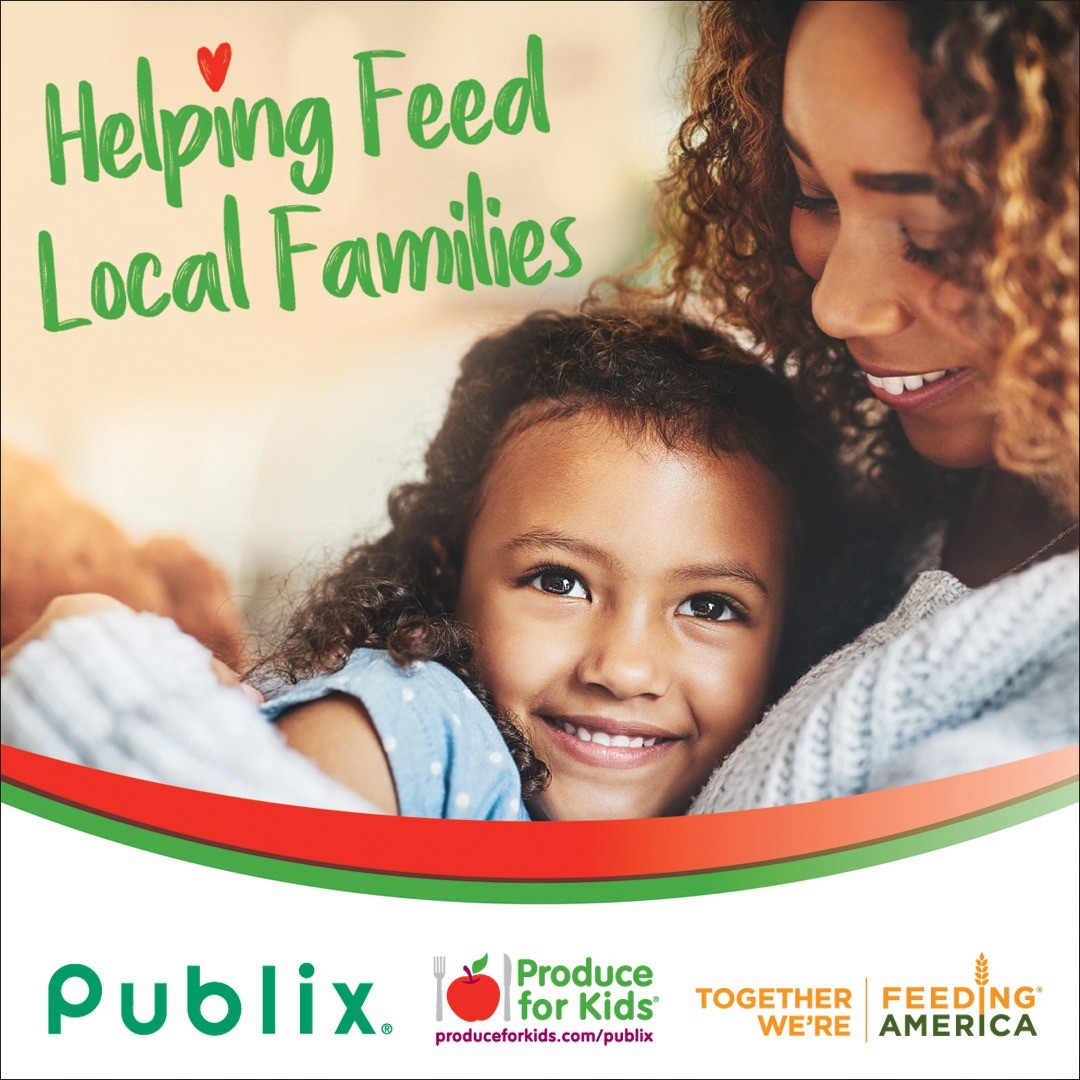
Food insecurity ranks high on Americans’ greatest social health risks. In local communities, grocery stores are playing key roles in bolstering neighborhood wellness. Publix and other food chains, collaborating with the Produce for Kids program, are walking the talk on nutrition for local health citizens. Produce for Kids is associated with Feeding America, which works with local food banks and non-profits to help channel healthy food to children and families. Feeding America is a national network of over 200 food banks fighting hunger in America, serving over 46 million people and 60,000 food pantries, and advocating for legislation that addresses
Intent, Insiders/Outsiders and Insights — Disney Institute’s Women’s Leadership Summit
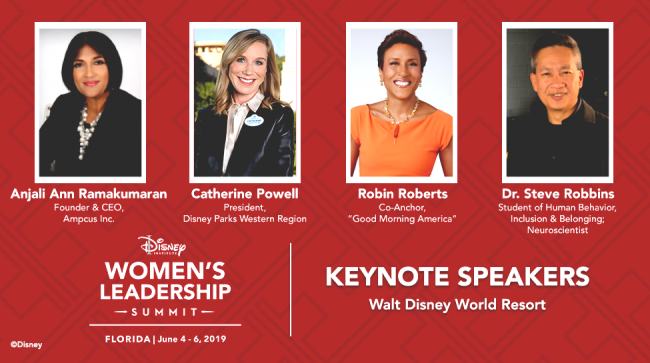
There are many forms of magic inspired by Disney, the company. There’s the obvious attraction, the Magic Kingdom, that was Walt’s original destination vision, “imagineered” in 1932. Then there are other kinds of magic. The one I’m deep into in the moment is inspiration, ideation, and “reimagineering” my own thinking about work, legacy, and social justice. I’m grateful to have had the opportunity to spend much of this week at the inaugural Disney Institute Women’s Leadership Summit. The Institute convened about 300 women (and a handful of brave “He-for-She” men keen on diversity) in Orlando to learn about and brainstorm
How Consumers’ Belt-Tightening Could Impact Health/Care – Insights from Deloitte’s Retail Team

Over the ten years between 2007 and 2017, U.S. consumer spending for education, food and health care substantially grew, crowding out spending for other categories like transportation and housing. Furthermore, income disparity between wealthy Americans and people earning lower-incomes dramatically widened: between 2007-2017, income for high-income earners grew 1,305 percent more than lower-incomes. These two statistics set the kitchen table for spending in and beyond 2019, particularly for younger people living in America, considered in Deloitte’s report, The consumer is changing, but perhaps not how you think. The authors are part of Deloitte Consulting’s Retail team. The retail spending data
Our Mobile Health Data: Shared, Identifiable, and Privacy-Deprived
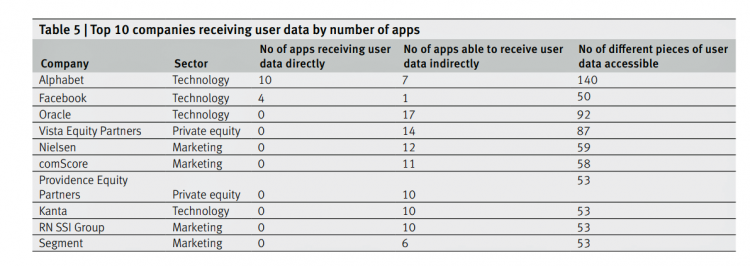
As more mobile app users — consumers, patients, and caregivers — use these handy digital health tools, much of the data we share can be re-identified and monetized by third parties well beyond those we believe we’re sharing with. This compromised health data privacy scenario comes out of research published this month in the BMJ, Data sharing practices of medicines related apps and the mobile ecosystem: traffic, content, and network analysis. The researchers, faculty from the University of Toronto (Canada) and the University of Sydney (Australia), come from nursing, pharmacy, and computer science expertise — a sound combination of disciplines
Open Table for Health: Patients Are Online For Health Search and Physician Reviews
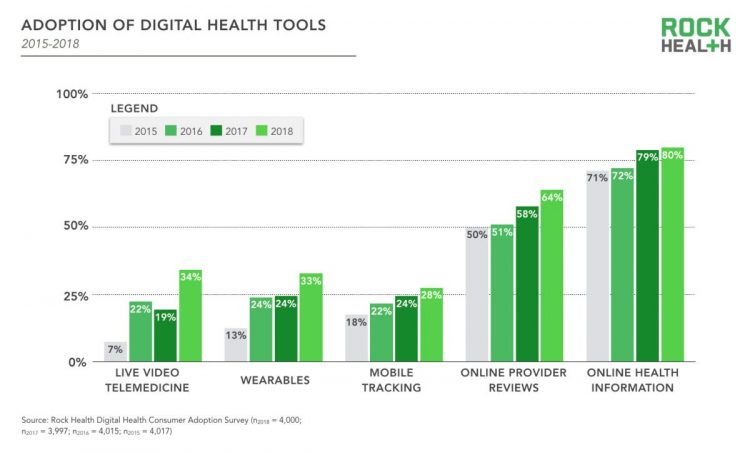
Seeking health information online along with researching other patients’ perspectives on doctors are now as common as booking dinner reservations and reading restaurant reviews, based on Rock Health’s latest health consumer survey, Beyond Wellness for the Healthy: Digital Health Consumer Adoption 2018. Rock Health has gauged consumes’ digital health adoption fo a few years, showing year-on-year growth for “Googling” health information, seeking peer patients’ physician and hospital reviews, tracking activity, donning wearable tech, and engaging in live telehealth consultations with providers, as the first chart shows. The growth of tracking and wearable tech is moving toward more medical applications beyond fitness
What #CES2019 5 Tech Trends to Watch Mean for Health/Care
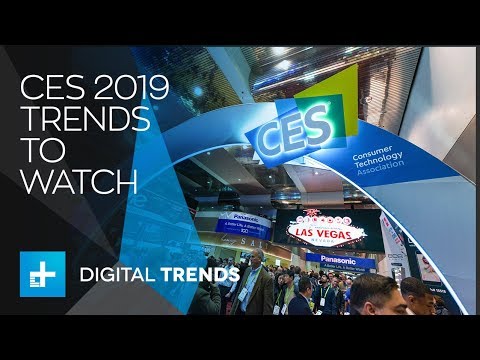
As #CES2019 kicks off in Las Vegas with today’s first Media Day, the Consumer Technology Association presented its forecast on the 5 Technology Trends to Watch in 2019 — and they all play into health, wellness, and medical care. The five trends are: Artificial Intelligence on the Rise Envisioning the Smart Home of the Future Digital Health Tech Empowers Patients Esports and Sports Technology, and Smart Cities Promote Resilience. Here are how these five mega-trends can bolster our health and healthcare products and services over the next decade. AI is indeed on-the-rise in healthcare: as I have begun planning my agenda for
“Seeing Is Not Believing:” Consumers Concerned About the Accuracy of Online Health Information

“Seeing is not believing” when it comes to people seeing health information on social networks. Four in five people seeking healthcare information online in social media are concerned about the accuracy of that information served up. Therefore, most consumers a very satisfied with the healthcare information they receive from nurses, eye doctors, pharmacists, dentists, nurse practitioners, doctors, and dietitians. But social media influencers. patient organizations, online patient forums, and pharmaceutical companies? Not so much. Only one-half of U.S. consumers believe that health-related information on the internet is as reliable as information from medical professionals. Welcome to The Great American Search for
 Thanks to Jennifer Castenson for her article in Green Builder Media tracking the growing trend of home-building baked with wellness inside and out. She interviewed me for the piece and I'm grateful to have my perspectives covered in this important issue. Here's one snippet: “Now, we are starting to see areas of the home purposed for health and we have started to think about how to repurpose the home for health."
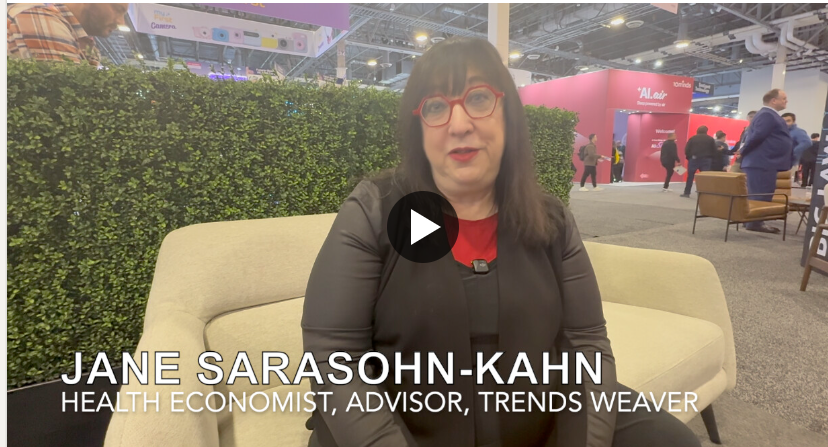 yeva, digital storyteller, for engaging in a wide-ranging conversation with me about hos digital health and health/care have grown at CES (once called the Consumer Electronics Show) over the 16 years I have attended the meeting. We covered a lot of ground, from the early Fitbit/Nike/UnderArmour era where health covered a couple of aisles in the Venetian/Sands exhibition hall to 2026, where health/care is everywhere, from #digitalhealth and remote care monitoring to connected cars, smart homes, and mirrors for tracking well-being.
 Jane joined host Dr. Geeta "Dr. G" Nayyar and colleagues to brainstorm the value of vaccines for public and individual health in this challenging environment for health literacy, health politics, and health citizen grievance. Click onto the Pfizer Value of Vaccines site and you can watch four episodes covering the challenges with adult vaccination, the employer and health plan member's journey to vaccination, reimbursement, and collaborating for proactive prevention.