


How Kroger and Instacart Are Delivering Food as Medicine, and Medicine with Food
A new study in Circulation, published 10 August 2026 found that home delivery of healthy groceries significantly improved blood sugar levels for people dealing with Type 2 diabetes. Now an alliance between the major grocery chain Kroger working with Instacart can scale such an effort for consumers embracing their own approaches to food-as-medicine, combining the delivery of groceries with prescriptions by enrolling in Kroger’s My Prescriptions and Online Pay apps. Kroger operates some 2,800 grocery stores serving 11 million people a day. The banners of Kroger include at least one name you
Food & Wine Magazine Features Food-As-Medicine: Good for People, Good for the (Local) Economy
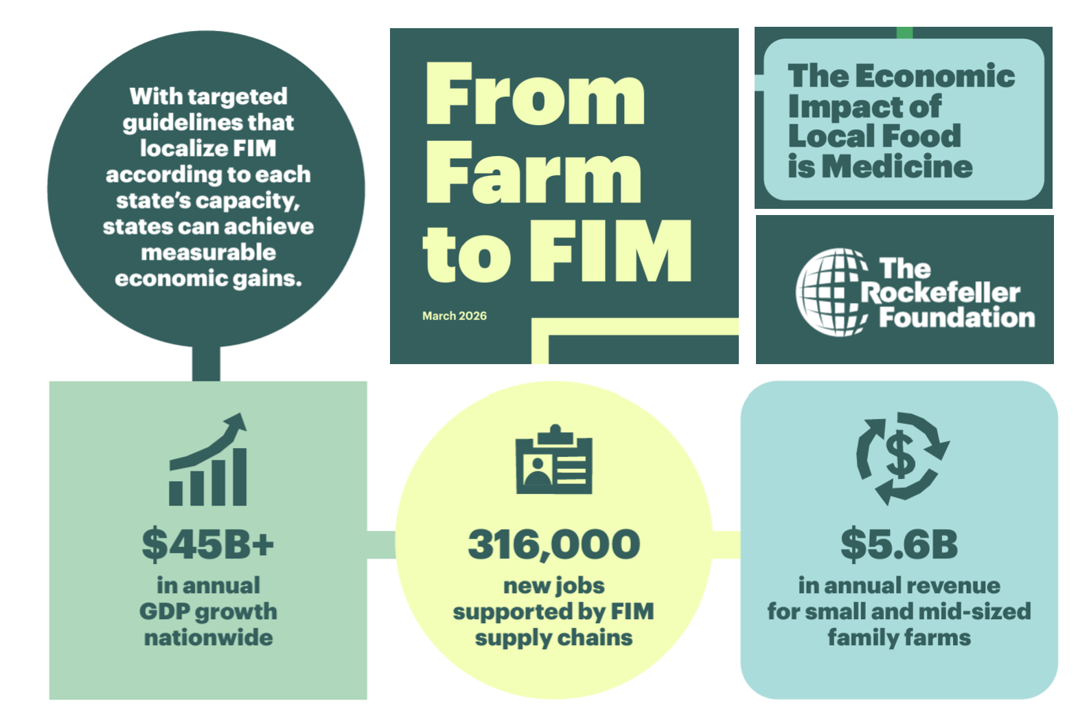
When the mainstream media food magazine Food & Wine devotes a long article to the concept of food-as-medicine, it calls to me….loudly. Here’s another proof-point for tying together public and individual health while boosting local economies. F&W featured Stacey Leasca’s essay, What Happens When Doctors Start Prescribing Food Instead of Pills?, online this month, and Stacey did her homework. One of Stacey’s go-to evidence-based resources for her column was the recently-released Rockefeller Foundation report, From Farm to FIM: The Economic Impact of Local Food is Medicine. The Foundation studied several local
“Will Work For Health Care:” Americans Trading Off Wages For Healthcare (Again)
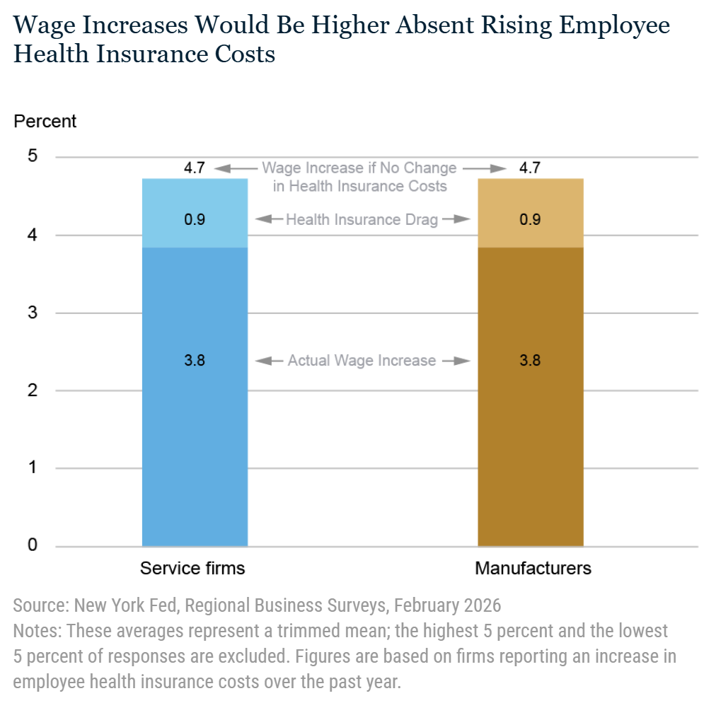
Many people living in America who receive health benefits at the workplace traded off wage growth for health insurance coverage, a report from the Federal Reserve Bank of New York published this week. For those of us working in the health economics and policy space since the 1990s, the Fed team gave me a strong sense of déjà vu. The bar graph cited in the report explains the math behind the wage/health plan trade-off. “Among those businesses experiencing an increase in employee health insurance costs, the average wage increase over
Distrust is the default, insularity is our mindset: The Edelman Trust Barometer in 2026
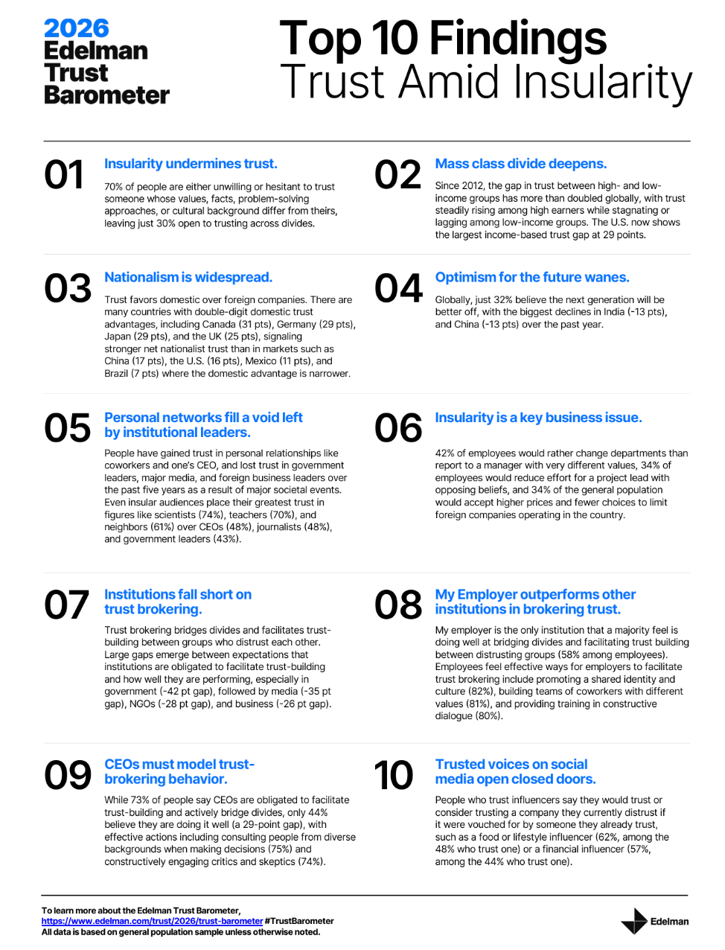
ss Last year’s “shared reality” was a culture of trust and a crisis of grievance: this year, it’s trust and insularity, we learn from the Edelman Trust Barometer for 2026, launched this week during the World Economic Forum in Davos, Switzerland. Here are the Top 10 findings from the annual study, which Edelman conducted among nearly 34,000 citizens in 28 countries in October and November 2025: Insularity undermines trust The mass class divide deepens Nationalism is widespread Optimism for the future wanes Personal networks fill a void left by
Tech Trends to Watch at CES 2026 – For Health, It’s About Longer Living, Smarter Living, and Better Living
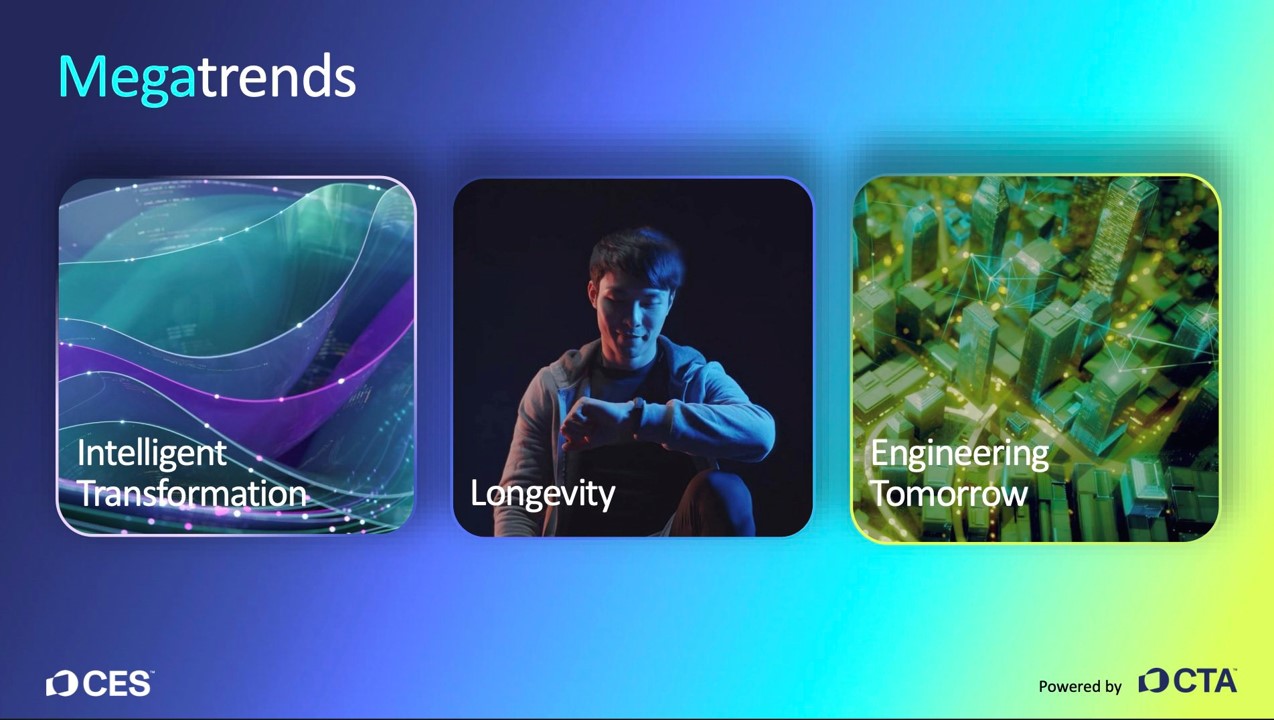
Live from CES 2026 in Las Vegas…the first day of CES Media Days preceding the big show always covers a context-setting report on Tech Trends to Watch. This is one of my annual go-to programs which helps orient media and industry analysts with a lens on CES’s key tech categories and some hard data on market size and growth expectations. While I’ll focus on the health/care specifics in the trend forecast, let me first update you on the overall technology market revenues for the U.S. which are estimated at $565 billion for 2026.
Navigating a Constellation of Uncertainties: Health/Care in 2026 (My Un-Forecast)
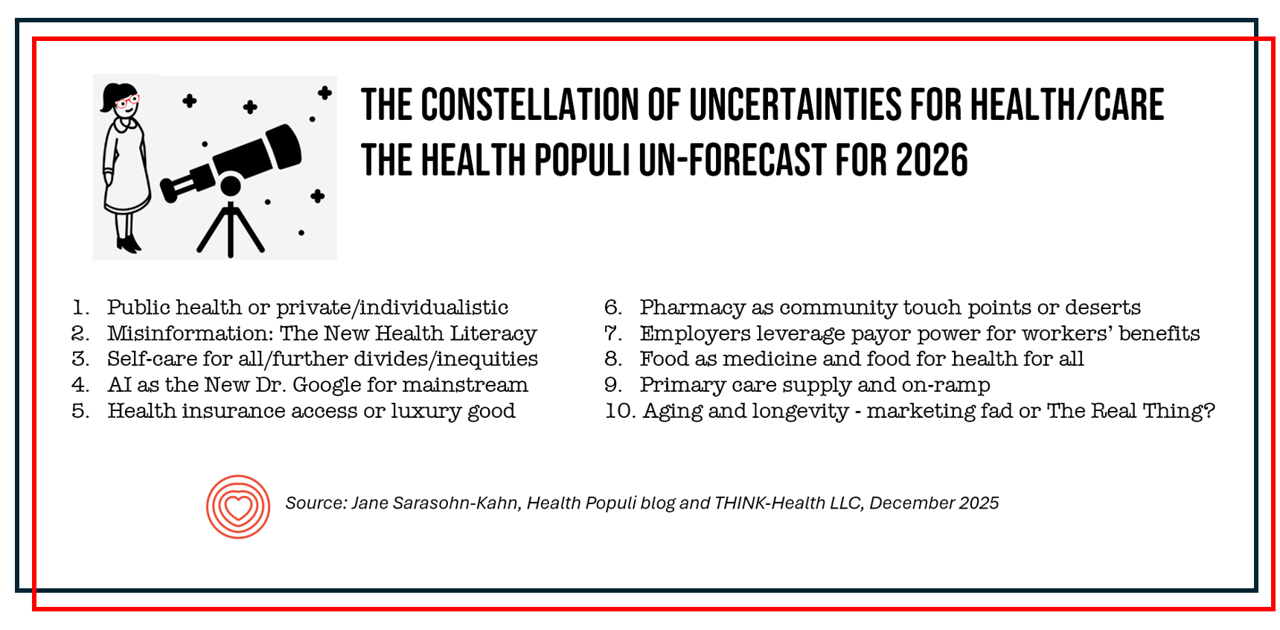
Almost from the first year of launching Health Populi in 2007, I’ve written a “TrendCast” for the coming year of health care. Over many years, there weren’t so many blogs devoted to health care which featured such prognostications, and so readers could divine signal from noise and move forward into new years with manageable lists of What To Expect Next Year in Healthcare. Here’s one from ten years ago that brings a sense of déjà vu: most of the findings are consistent with what we know for sure about 2026 and it’s useful to look back with today’s eyes to
On Labor Day 2025: From Health Care “Revenue Bounty Hunters,” Medical Bills Back into FICO Scores, the Rise of “Cute Debt,” and Tariffs — U.S. Consumers’ Face Eroding Financial Health
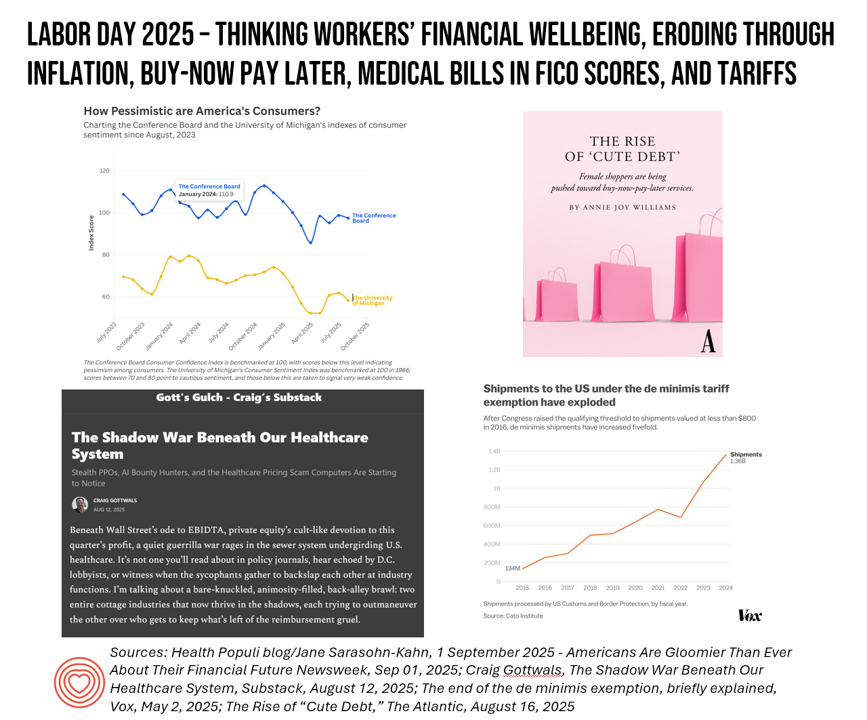
On this U.S. Labor Day 2025, the physical and the fiscal, with the mental, converge as I ponder what working Americans are facing….packing kids up for school, sorting out college payments and loans, dealing with rising costs of daily living, and feeling a growing pinch of what President Trump’s tariffs have had in store now that they’re hitting SKUs around the household. This post will cover most days this week as my own workflows will be heavy as clients return to face returns-to-work and updating scenario plans. We start this post with a headline: “Why Hospitals Are Hiring ‘Revenue Bounty
Prescription Drug Pricing in America – a 3-Part Update, From the Over- the-Counter OPill and “Half-Price” Ozempic to Most-Favored-Nation Rx (Part 3)
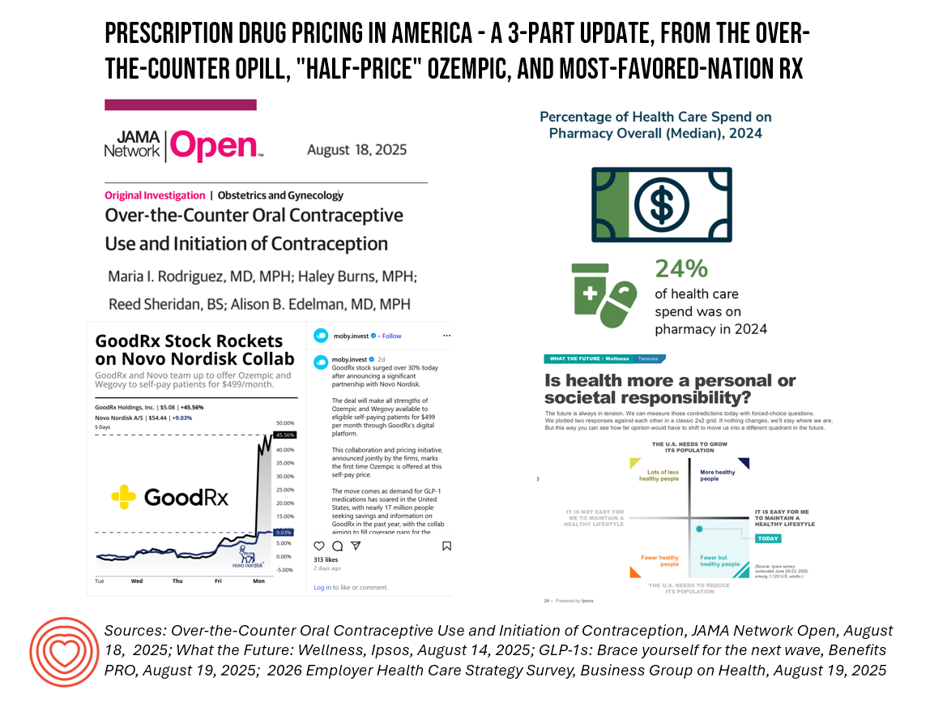
Welcome to Part 2 of 3 in my consideration of Prescription Drug Pricing in America. You can catch up with yesterday’s Part 1 post here, and Part 2 here. The macro-context for these 3 posts are the forecasts for health care spending for the coming year. Health care cost increases forecasted for 2026 will, in significant part, be driven by prescription drug trend. This graphic from this week’s release of the Business Group on Health’s employer survey on healthcare cost growth to 2026 illustrates a key finding that’s echoed in other similar studies recently released and covered here in Health Populi.
Prescription Drug Pricing in America – a 3-Part Update, From the Over- the-Counter OPill and “Half-Price” Ozempic to Most-Favored-Nation Rx (Part 1)
Health care costs will increase, overall, as much as 10% in 2026, the consensus of several health benefit analysts inform us. And, “workers to bear brunt of health cost increases in 2026,” reads today’s Axios headline on the topic, weaving together several studies from the Business Group on Health, Mercer, and the International Foundation of Employee Benefit Plans. A kay cost-contributor cited in all of these health cost forecasts is the prescription drug line item: specialty drug prices, and specifically the costs of GLP-1 medicines and cancer therapies. One strategy gaining fast-traction on both the
What U.S. Consumers Are Thinking About Tariffs’ Impacts on Health Care: Looking to Ipsos, QCentrix and Goldman Sachs
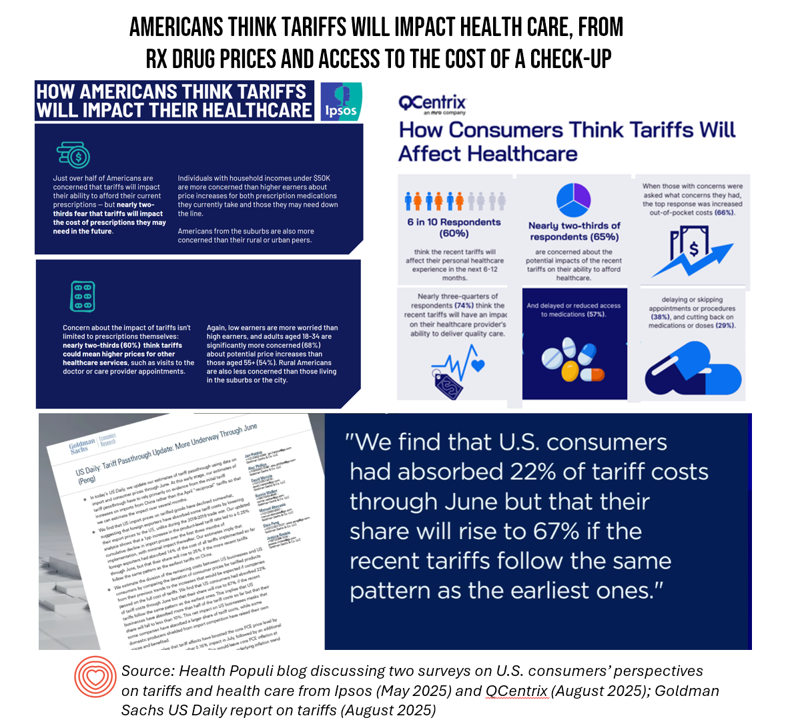
Most Americans, thinking as health consumers, believe that tariffs could impact peoples’ ability to pay for costly prescription drugs and be priced out of paying for check-ups and medical supplies, based on results from two studies on consumers’ views on tariffs and their health care from Ipsos and Q-Centrix. Ipsos’s consumer survey found that younger consumers, people earning lower incomes, and folks living in the suburbs feel even more stressed about tariffs’ impact on medical care — along with more people identifying as Democrats or Independent voters. With
The Patient as Consumer – Updates from Fidelity on Retiree Health Care Costs ($172,500), Delaying Care, Tariff Impacts on Spending, and Roche Going DTPatient for Rx’s?

As of August 2025, U.S. patients of all demographics and geographies face many uncertainties with respect to their care. Issues such as health plan coverage, prescription drug costs, and access to services, among other challenges, continue to re-shape patients-as-health-consumers seeking transparency, clinical choices, and trust-worthy relationships with touchpoints in their personal health ecosystems. Four just-breaking stories across the health/care ecosystem illustrate several of these uncertainties and forces in U.S. health care — some adding friction and angst in a patient’s life, others perhaps providing some relief for certain health consumers. These news items address health care costs in retirement, the
We Go Further Together: Calling for Collaborations, An Actionable Context for AHIP 2025

There are many ways to measure the dysfunction of health care in the U.S.: we can point to relatively poor incomes relative to the rest of the developed world, given how much money is allocated to health care in America. The maternal mortality rate in the U.S. is unconscionably high, akin to some middle- and lower-income nations in the world. And medical debt is a uniquely American form of financial toxicity compared with other OECD nations where the concept is, well, foreign. Even with these many failures, though, it’s important to put U.S. health care in a larger context: the
A Toyota RAV4 Hybrid, a Playground Set, or Healthcare for a Family of 4: What $35,119 Can Buy in 2025 According to Milliman
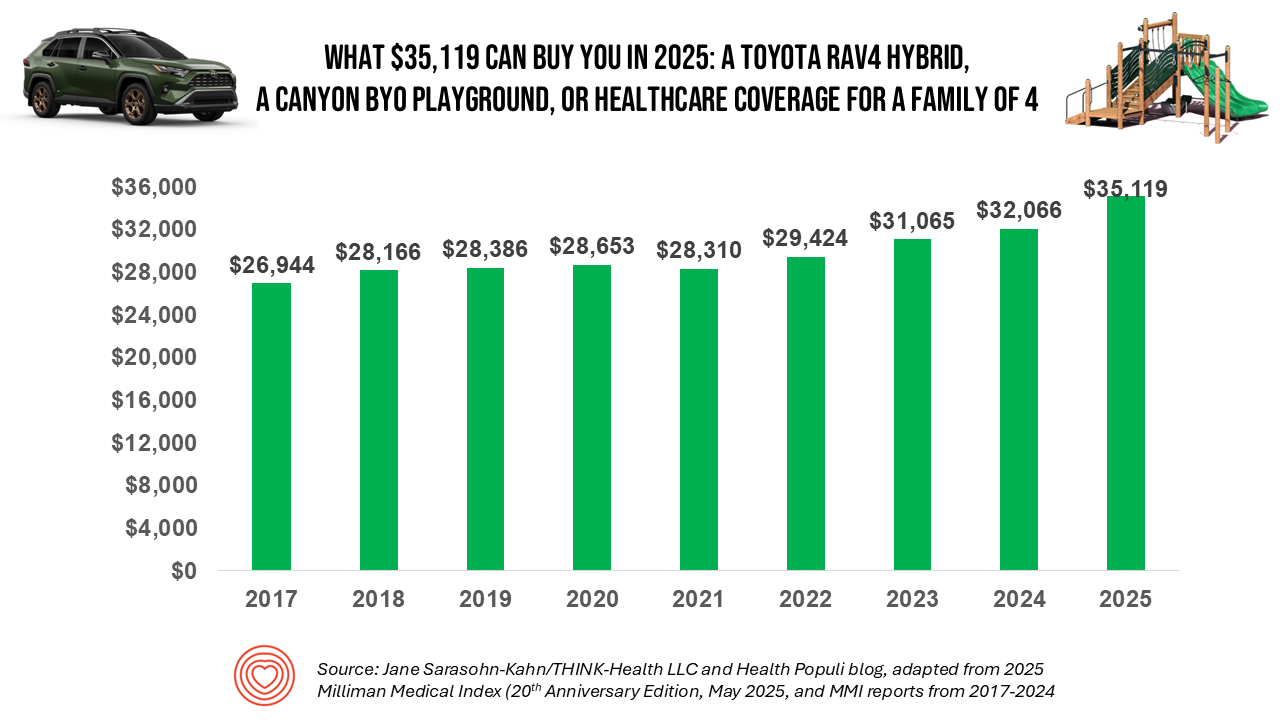
If you went shopping for something that cost $35,119 in 2025, which would you most value? A new 2025 Toyota RAV4 Hybrid with some extras on board? A Canyon BYO playground set for your yard, school, or social-athletic club? Or, Healthcare coverage for a family of 4 in the form of a PPO? Welcome to this year’s 20th anniversary edition of the Milliman Medical Index (MMI), which I’ve looked forward to reviewing for most of its two-decade history. [You can read my annual takes on the MMI here in Health Populi by searching “MMI” and the year of publication in
Health, Wealth, and How Business Can Support Consumers in an Era of “Uncertainty on Steroids”

Facing uncertainties across everyday life flows, U.S. consumers look to economic and health security — and welcome businesses to support these, we learn in an analysis from The Conference Board. The Conference Board (TCB) polled 3,000 U.S. consumers gauging their perspectives on uncertainties emerging out of the new Trump administration’s policy changes introduced in the first quarter of 2025. The chart details people’s financial/fiscal responses in blue, and the health (mental, social, and physical aspects) in yellow: Consumers’ fiscal strategies for coping with uncertainty are to seek out more affordable brands and retailers, adjusting
If Food Is Medicine, Some Might Feel It’s a Luxury Good Like a Specialty Drug
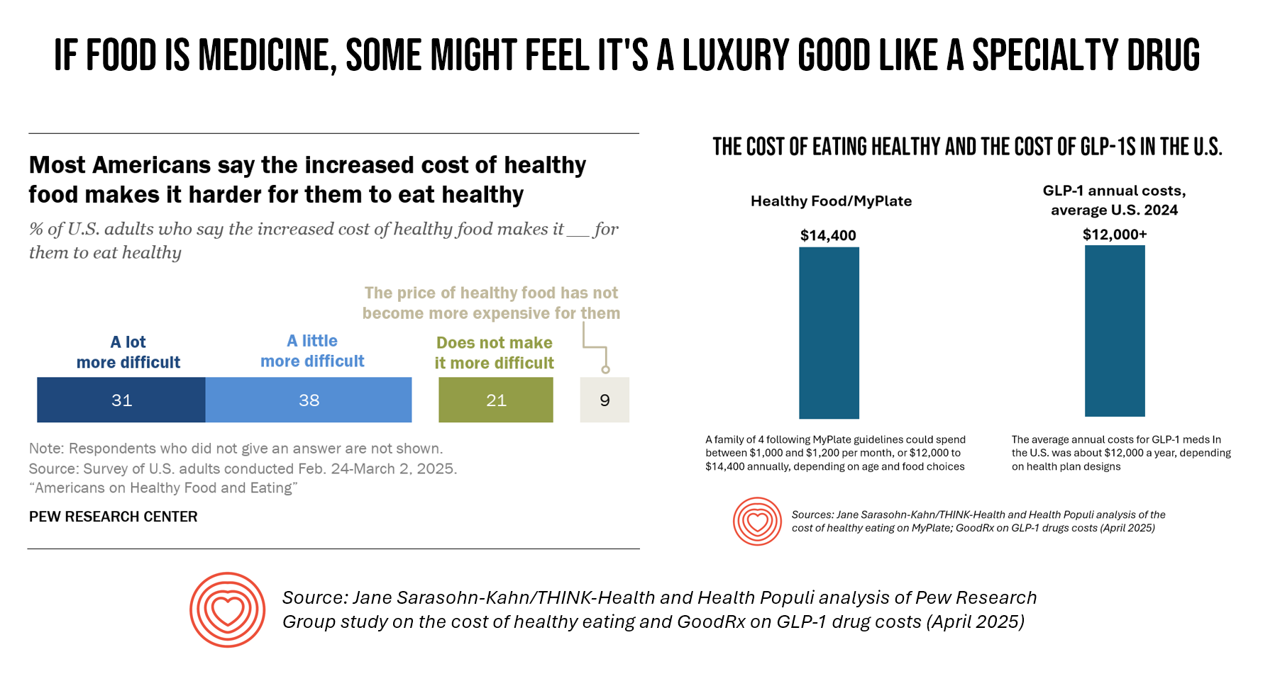
Most people in the U.S. say it’s harder to eat healthy given the cost of “healthy food,” we learn in the report on Americans on Healthy Food and Eating from the Pew Research Center, published 7 May 2025. With a view that healthy food is “too expensive,” it may feel like aspiring for it feels like luxury-good shopping, or being a patient prescribed a specialty (high-cost) drug. The Pew team polled 5,123 U.S. adults’ perspectives on eating, fielded between 24 February and 2 March 2025. This report is timely as Secretary of Health and
How Consumers’ Economic Sentiments Are Shaping Peoples’ Financial and Emotional Well-Being (Spoiler: Not So Good): Learning from CivicScience
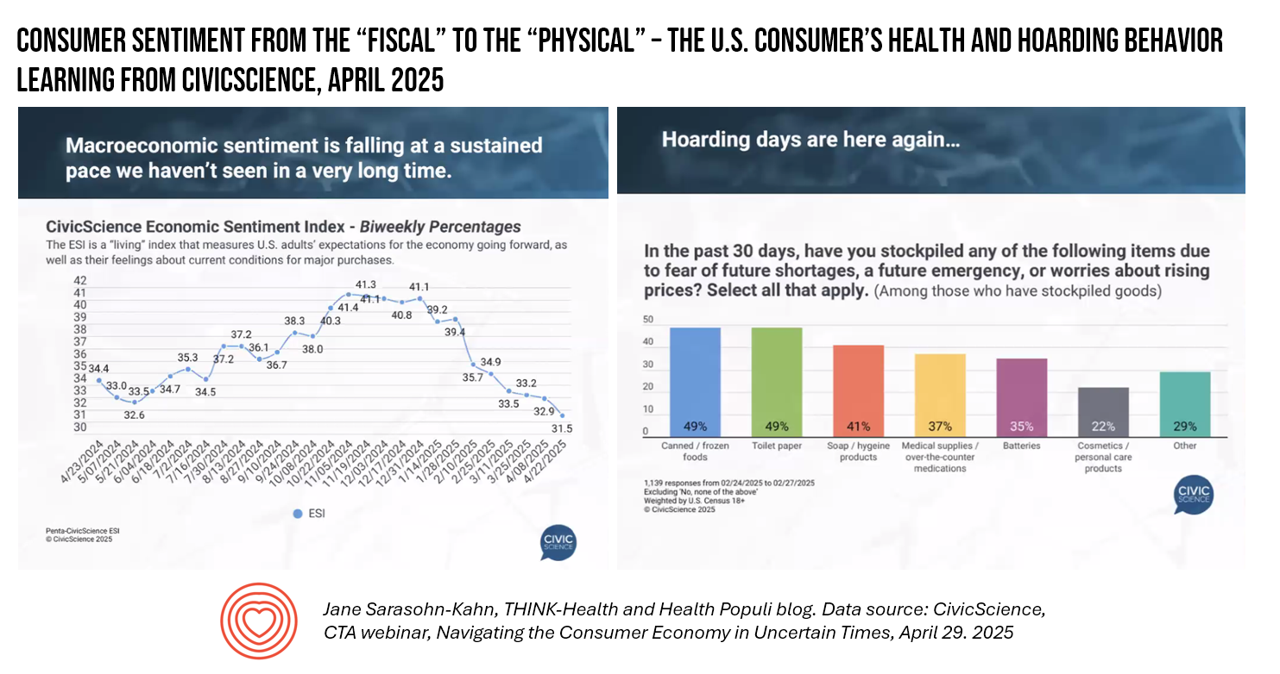
When it comes to health, the words “fiscal” and “physical” are morphing as peoples’ economic feelings (the “fiscal”) are shaping physical and emotional health, we find in U.S. consumer data presented by John Dick, Founder and CEO of CivicScience. The Consumer Technology Association convened a special session with John, who painted a portrait of the U.S. consumer at a point in time — late April 2025 — reminding us more than once during the hourlong session that, “Everything is constantly changing.” One certainty that we can be sure of, in the dismal-scientist way
Are We Liberated Yet? Tariffs Can Impact Financial Health (Riffing on MoneyLion’s Health Is Wealth Report)
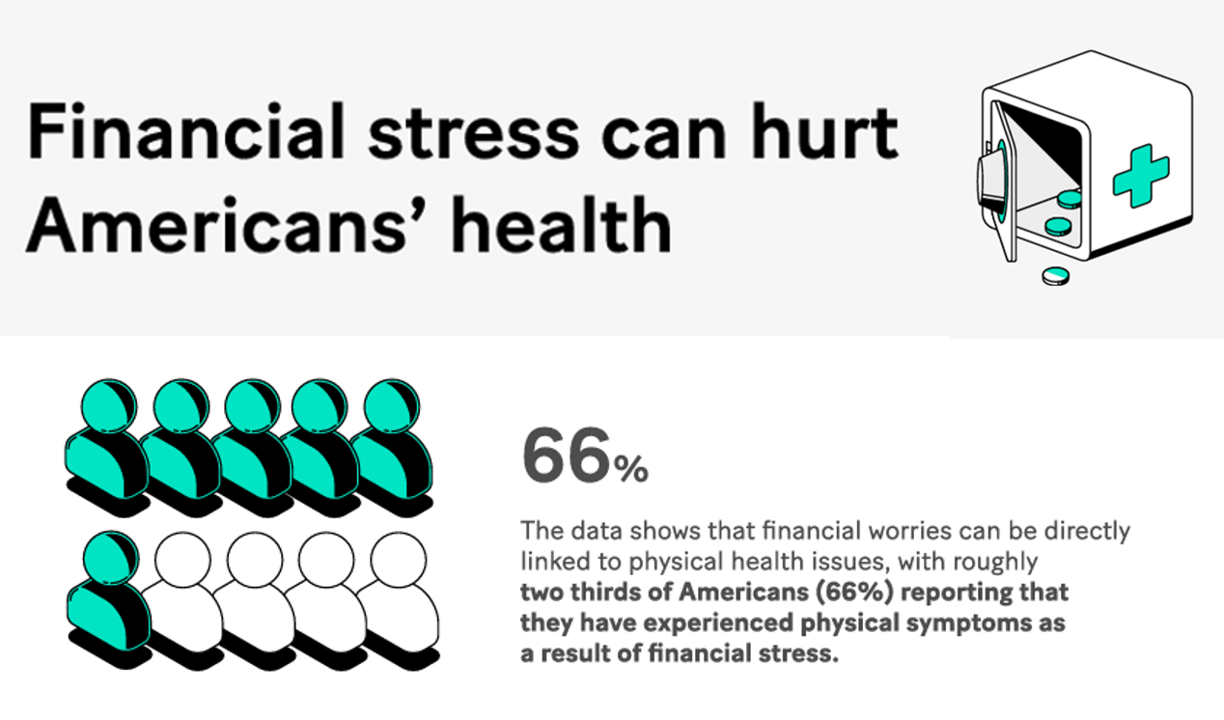
Americans’ financial health was already stressing consumers out leading up to Liberation Day, April 2nd, when President Trump announced tariffs on dozens of countries with whom the U.S. buys and sells goods. A new report from MoneyLion and Mastercard called Health is Wealth is well-timed for today’s Health Populi blog. The study was fielded by The Harris Poll online among 2,092 U.S. adults 18 and older between February 28 and March 4, 2025, so it was completed a month before the tariffs came to hit peoples’ 401(k) savings and employers’ company stock market caps.
 Jane will be working with EU- and UK-based clients in September and October 2026, collaborating with stakeholders in digital health, public/community health, retail health, and growing opportunities for health-at-home. Stay tuned to her updates here on Health Populi on-the-ground as she lives the digital nomadic work-life in Italy, Belgium, the Netherlands, and in London.
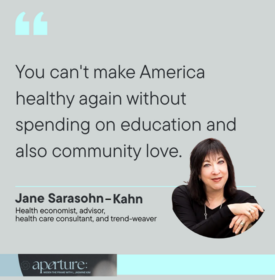 I was grateful to be Jasmine's first conversation-guest on her new podcast, "Aperture - Widen the Frame," where this expert in narrative medicine is bringing together the broad range of voices to sit at the table and address what health care needs: those humans in the health-system-loop who address health equity and empathy along with delivering evidence-based medicine for all.
 Jane joined host Dr. Geeta "Dr. G" Nayyar and colleagues to brainstorm the value of vaccines for public and individual health in this challenging environment for health literacy, health politics, and health citizen grievance. Click onto the Pfizer Value of Vaccines site and you can watch four episodes covering the challenges with adult vaccination, the employer and health plan member's journey to vaccination, reimbursement, and collaborating for proactive prevention.