


Even with Health Insurance, Half of Working-Age People in the U.S. Can’t Afford Healthcare (and a PS on Retiree Health Costs)
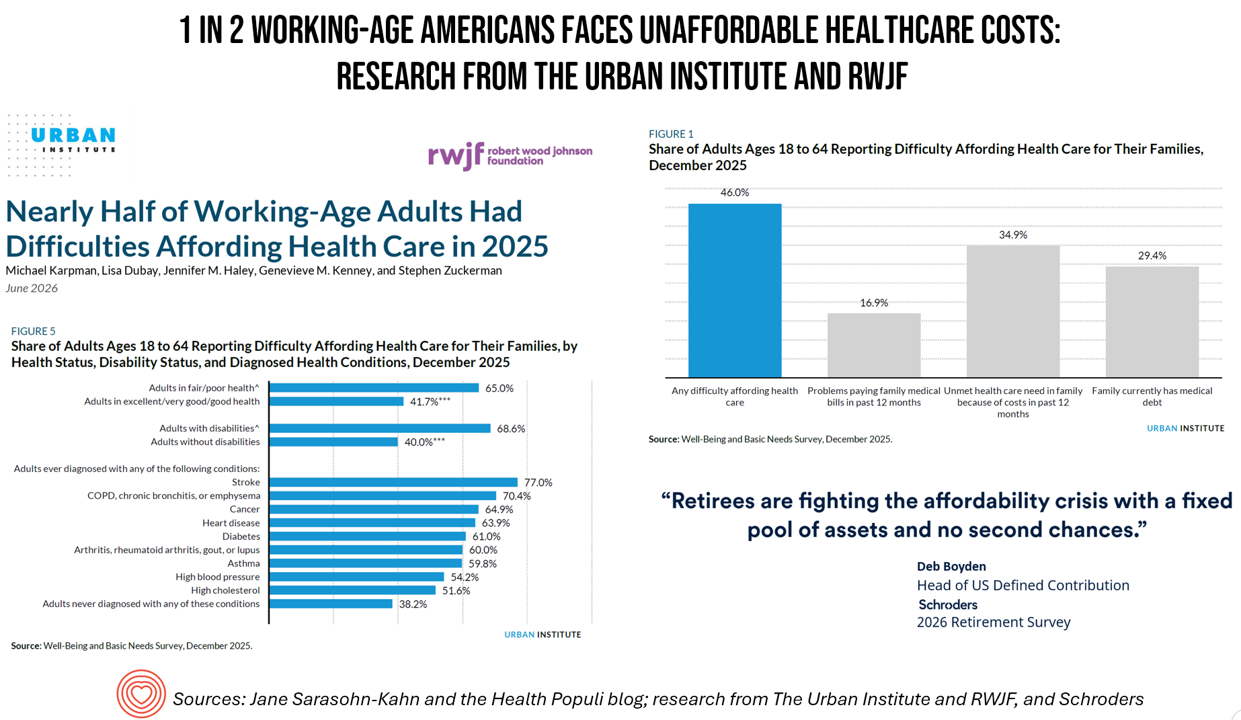
Nearly Half of Working-Age Adults Had Difficulties Affording Health care in 2025 is the title of new research jointly authored by the Urban Institute and the Robert Wood Johnson Foundation. The researchers conducted the Well-Being and Basic Needs Survey in December 2025, capturing U.S. adults’ experiences with health care affordability among people ages 18 to 64. The first bar graph shows that 46% of working-aged people in the U.S. had any difficulty affording healthcare, including 35% who had unmet health care needs in the family due to costs in the past 12 months; 29% whose
The Side Effects of Debt and Financial Stress Add Up to a Public Health Crisis in America
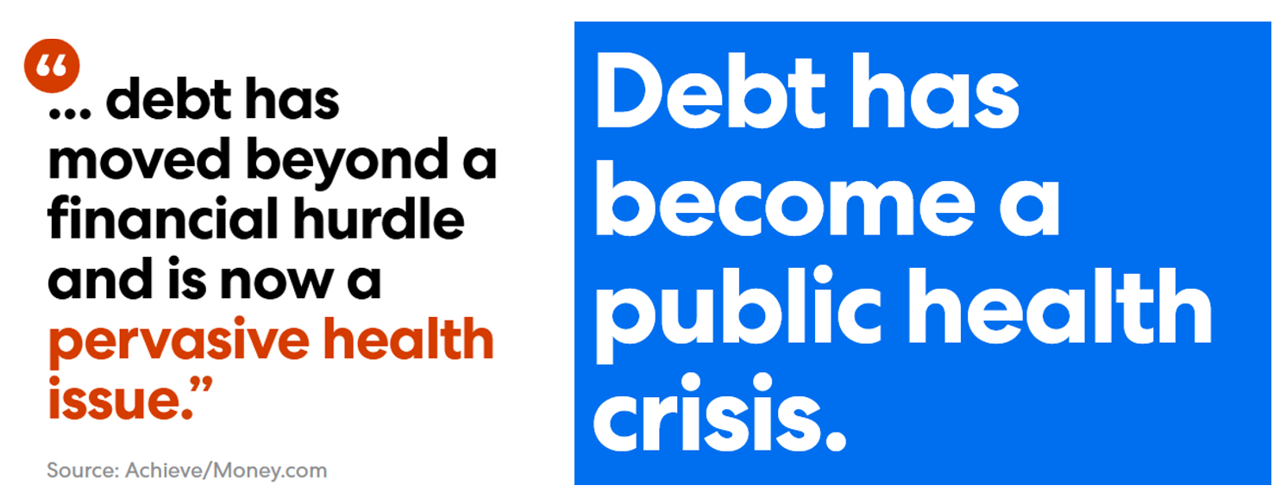
Financial stress and debt take are now an American public health problem, we realize in the report, Rising debt is taking a toll on Americans’ financial and mental health from the Achieve Center for Consumer Insights. A joint survey conducted by Achieve and Money.com assessed the fiscal health perspectives of 2,000 U.S. consumers ages 18 and over, fielded in February 2026. This first chart from the study report arrays various “side effects” of Americans dealing with financial stress and debt, most commonly feelings of fatigue and low energy, stress-eating, delayed decision
“Trust is the #1 Public Health Issue” and Health Citizens Live in an “Information Abundant” World That, Counterintuitively, Underpins Divisiveness – the 2026 Edelman Trust Barometer
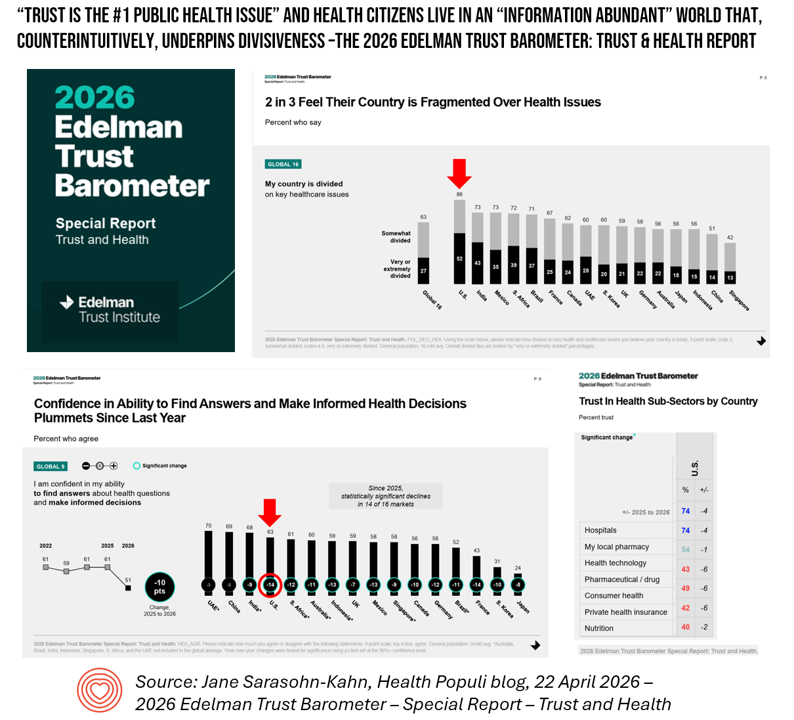
It would sound like good news that more health citizens, globally, are engaged with more information about health – a health information “abundance,” by the look at the data. But it’s not such great news when we learn that said information abundance also underpins health citizens’ confidence in finding answers and making informed health decisions, we learn in the 2026 Edelman Trust Barometer’s Trust and Health edition. In the U.S., the percent of people who felt confidence in their ability to find answers and make informed health decisions “plummeted,” in the words of the
“The #1 longevity hack is ‘don’t be poor’” — Kara Swisher is a health economist
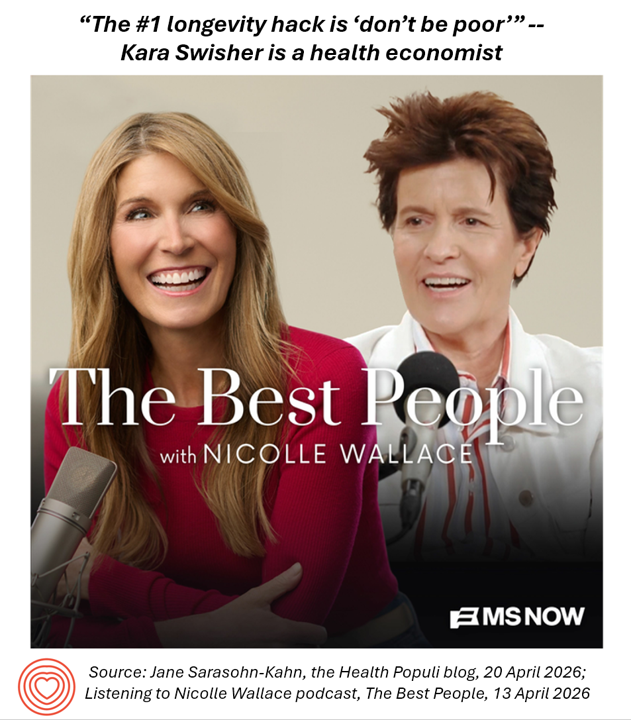
In full transparency, I’ve been a fangirl of Kara Swisher since I first read her work with Walt Mossberg and Recode, coinciding with my own work on the early adoption of the Internet in health care. Today, Swisher is everywhere all-at-once, covering technology, politics, and now, seeking truths about the so-called longevity economy. Swisher appeared with Nicolle Wallace on her podcast, The Best People, on 13th April, so I was keen to tune in. The conversation covered a lot of ground, and it was Swisher’s take on science and health that I was most
Doctors and Consumers in America Agree: Health Care Access and Affordability Rank Top of Mind in March 2026 (surveys from Athenahealth and Gallup)
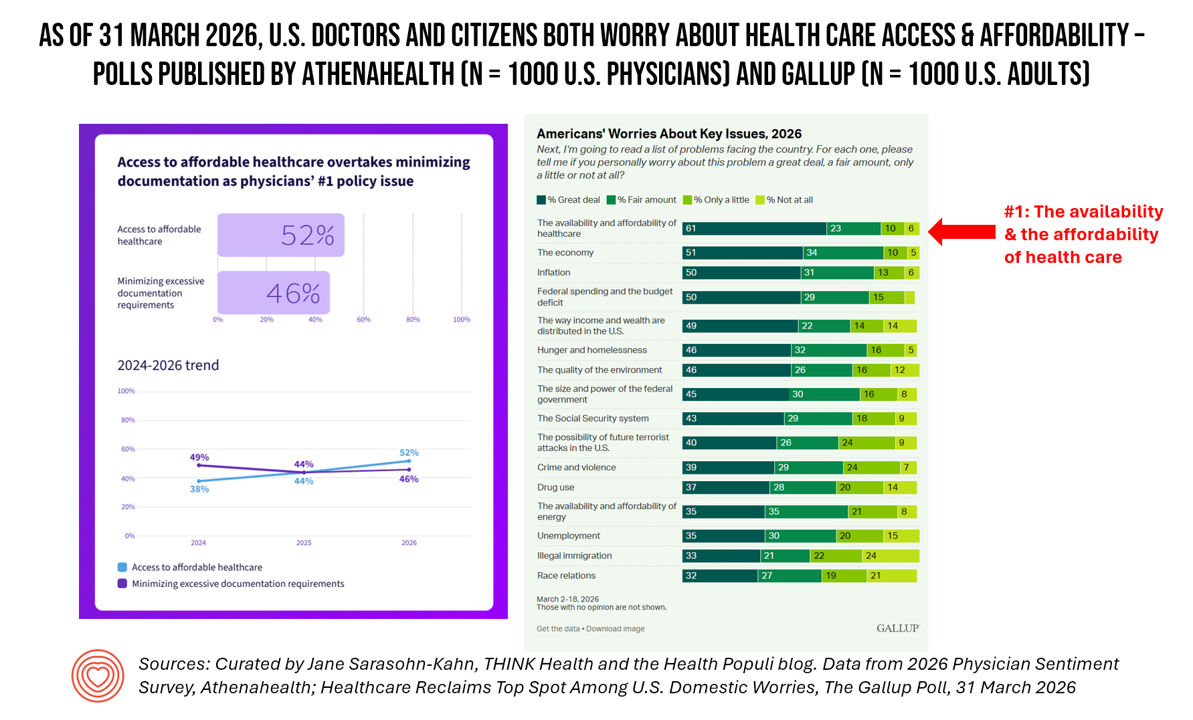
In uncannily-timed releases of two surveys in March 2026, we see that U.S. physicians and consumers both rank health care access and affordability as the top issue they face — for medical practices among doctors, and for everyday life worries among U.S. health citizens. On the physician front, The 2026 Physician Sentiment Survey was published by Athenahealth, gauging U.S. doctors’ views on the state of medical practice and healthcare in America. “Over the past three years,” Athenahealth observes, “access to affordable healthcare has risen sharply to become
Food & Wine Magazine Features Food-As-Medicine: Good for People, Good for the (Local) Economy
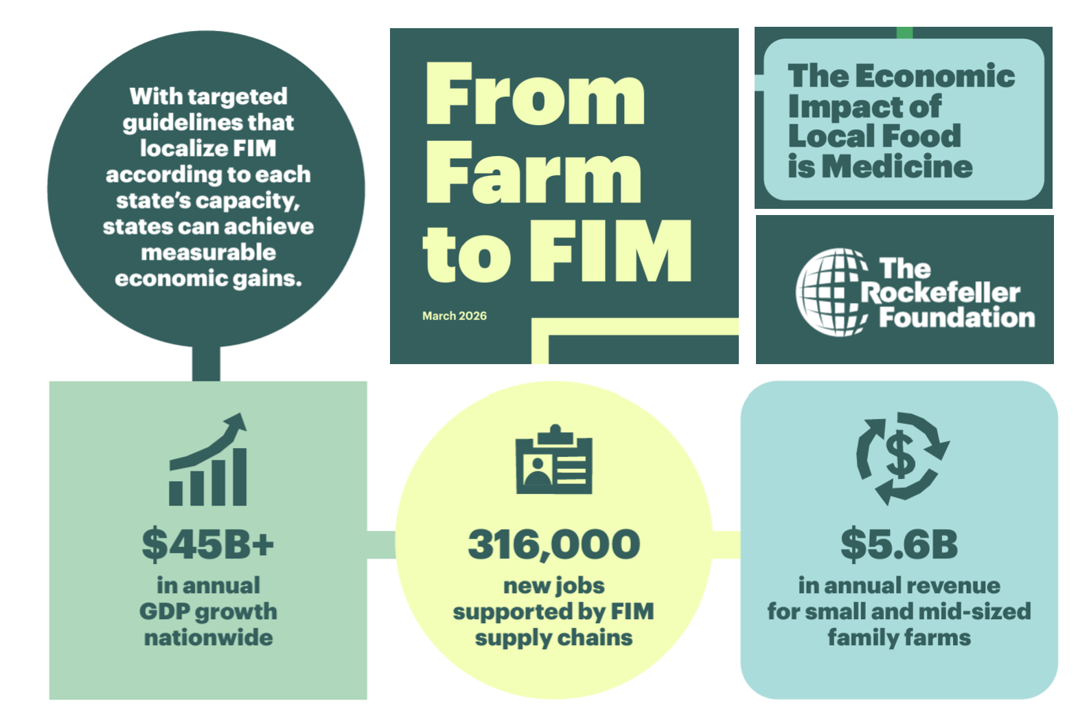
When the mainstream media food magazine Food & Wine devotes a long article to the concept of food-as-medicine, it calls to me….loudly. Here’s another proof-point for tying together public and individual health while boosting local economies. F&W featured Stacey Leasca’s essay, What Happens When Doctors Start Prescribing Food Instead of Pills?, online this month, and Stacey did her homework. One of Stacey’s go-to evidence-based resources for her column was the recently-released Rockefeller Foundation report, From Farm to FIM: The Economic Impact of Local Food is Medicine. The Foundation studied several local
“Will Work For Health Care:” Americans Trading Off Wages For Healthcare (Again)
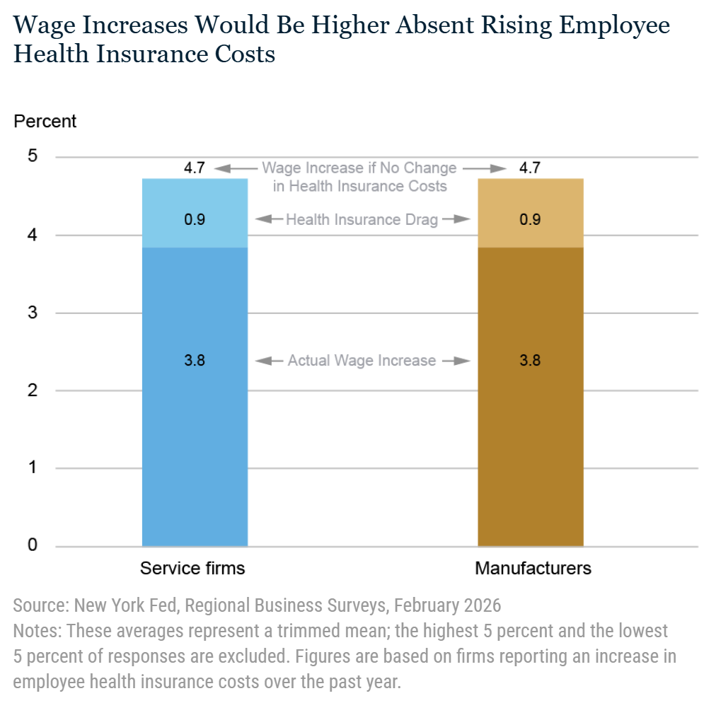
Many people living in America who receive health benefits at the workplace traded off wage growth for health insurance coverage, a report from the Federal Reserve Bank of New York published this week. For those of us working in the health economics and policy space since the 1990s, the Fed team gave me a strong sense of déjà vu. The bar graph cited in the report explains the math behind the wage/health plan trade-off. “Among those businesses experiencing an increase in employee health insurance costs, the average wage increase over
Dr. Wachter Bets on A Giant Leap for AI in Health Care
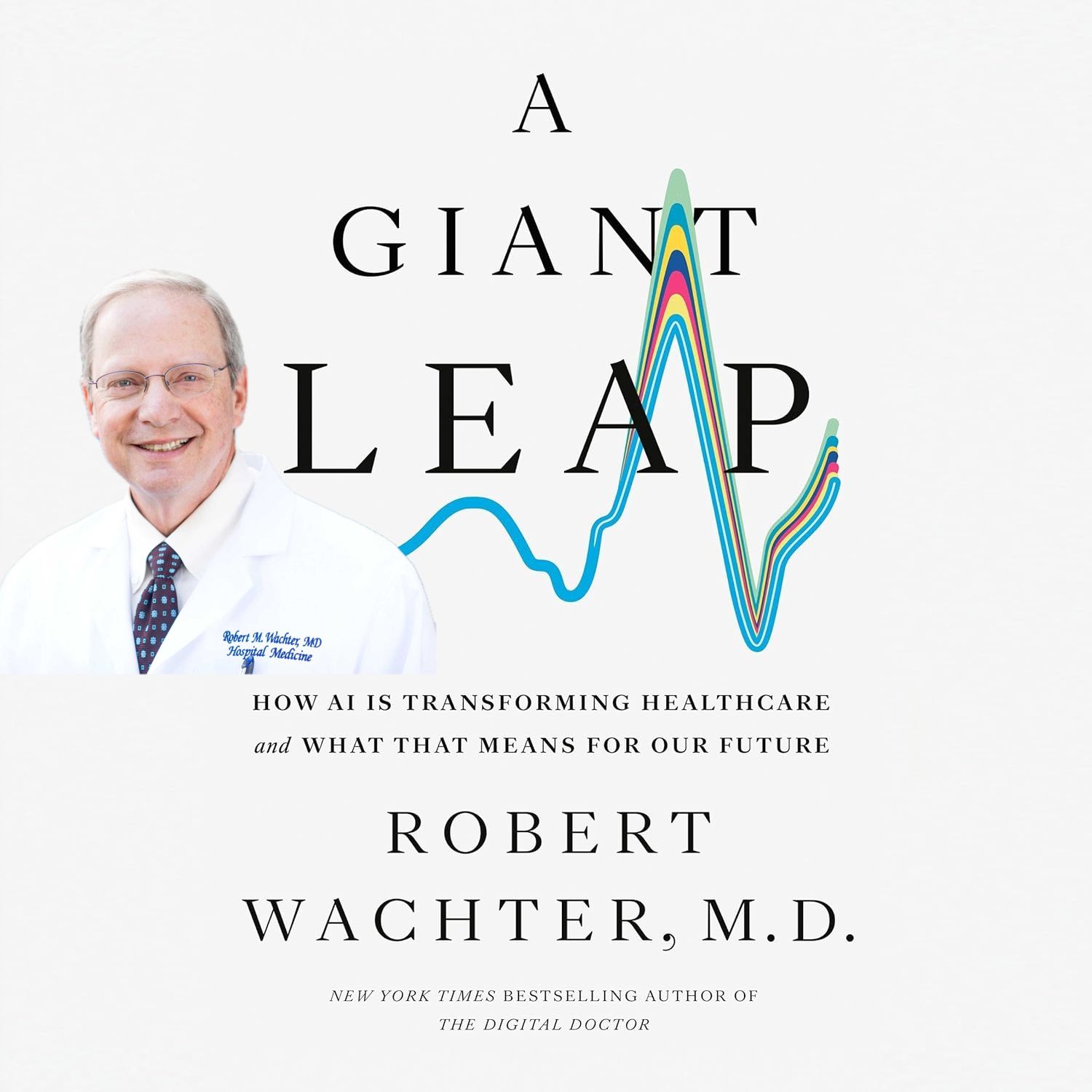
“Stop worrying and let AI help save your life,” a New York Times op-ed prescribed in January. So I wanted to ask Dr. Robert Wachter, author of that essay, “why not worry?” and read his latest book, A Giant Leap, before speaking with him. I spent time with Bob on a Zoom session last week to dig into some patient/consumer-facing issues regarding AI and health care. Before I launch into our engaging conversation, I’d like to share some context about Dr. Wachter and his evolution that I believe makes him
Financial Stress and Trust in Health Care Takes Many Forms – Listening to Jarrard’s 2026 State of Play Survey
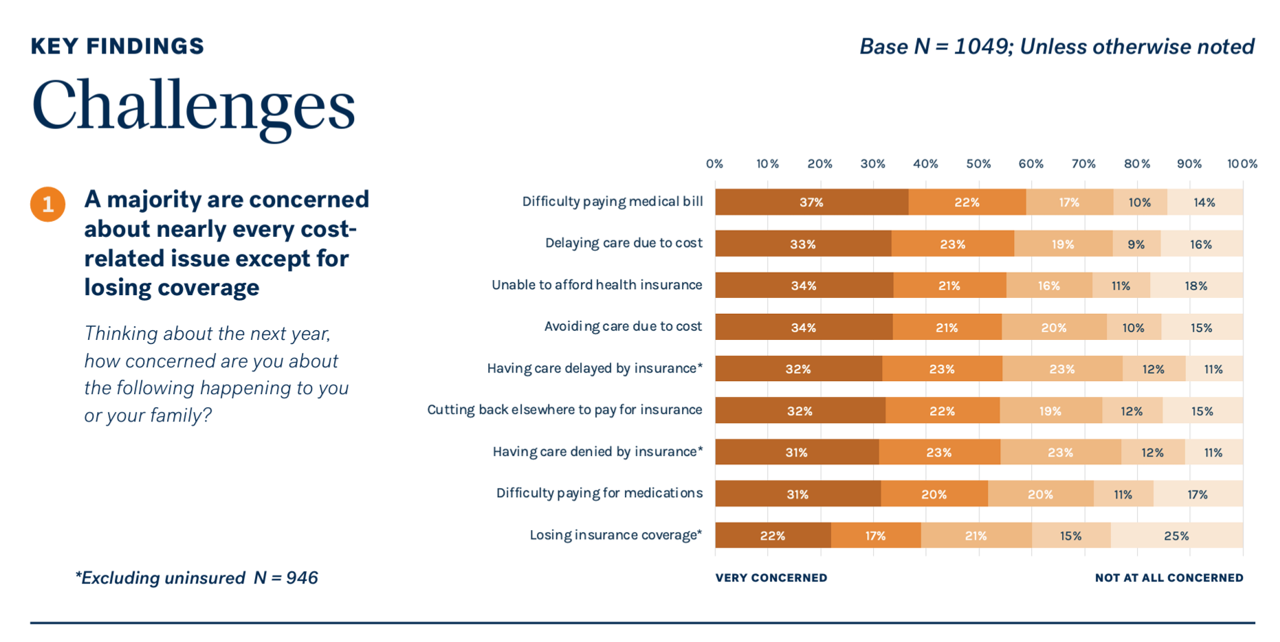
Most people in the U.S. are concerned about many cost-related aspects of health care, we learn from Jarrard’s 2026 survey report on Americans’ health care financial angst titled Navigating the Riptide: Public views on healthcare, health policy, and healthcare organizations. Jarrard fielded the consumer study among 1,049 U.S. adults 18 years of age and older in early January 2026. Here are the details, listing nine cost-related issues U.S. consumers face in their health care journeys – including, Difficulty paying medical bills (net 59% very or somewhat concerned) Delaying medical care due to cost (55%) Inability
The Healthcare Affordability Elections, 2026 and 2028 – Listening to the KFF Tracking Poll, January 2026
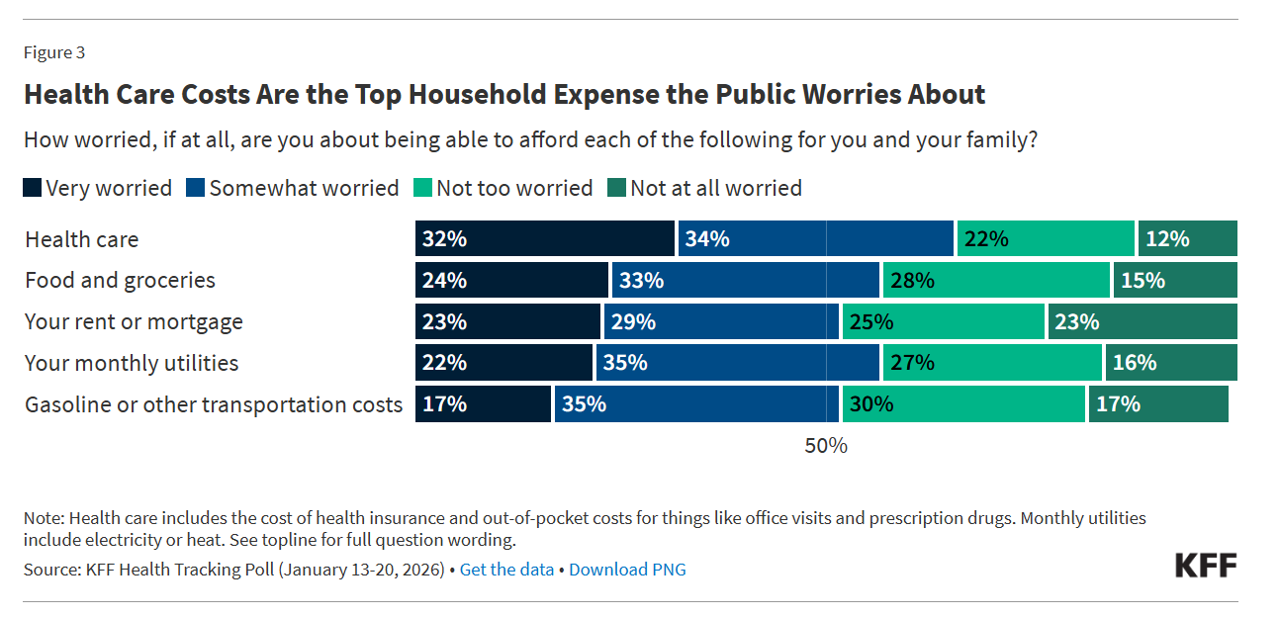
The title of KFF’s press release launching the Foundation’s January 2026 Health Tracking Poll clearly observes, “Health Care Costs Tops the Public’s Economic Worries as the Runup to the Midterms Begins.” I’ve pulled out the key details to share my lens on the 2026 midterm and 2028 Presidential election forecast, which I believe will turn out to be (in part) The Patients’ Elections. Here’s the top-line title finding — where most people in the U.S. — 2 in 3 people (66%) — are worried more about health care costs compared with other major household expenses.
As Adult Vaccination Levels Fall, We Must Assert the Value of Vaccines
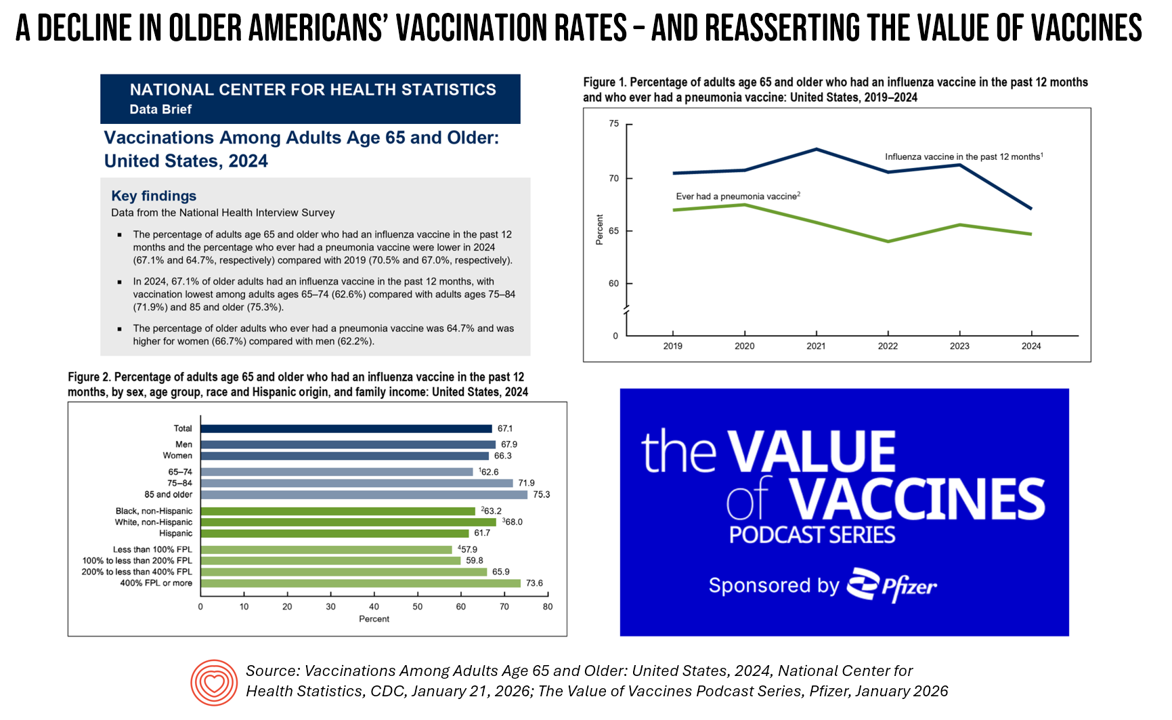
The rate of vaccinations among people 65 years of age and older has declined since 2019 — a personal health challenge for aging Americans and their caregivers and families, and a public health problem for the U.S. The Centers for Disease Control’s National Center for Health Statistics published Data Brief 547 on the situation on January 21, 2026. In the meantime, serendipity and timing are uncanny in the moment as The Value of Vaccines conversation series from Pfizer was launched this week. I am grateful to have participated in this project with several sisters-in-expertise: Elif Alyanak from Avalere, Venesa Day
Distrust is the default, insularity is our mindset: The Edelman Trust Barometer in 2026
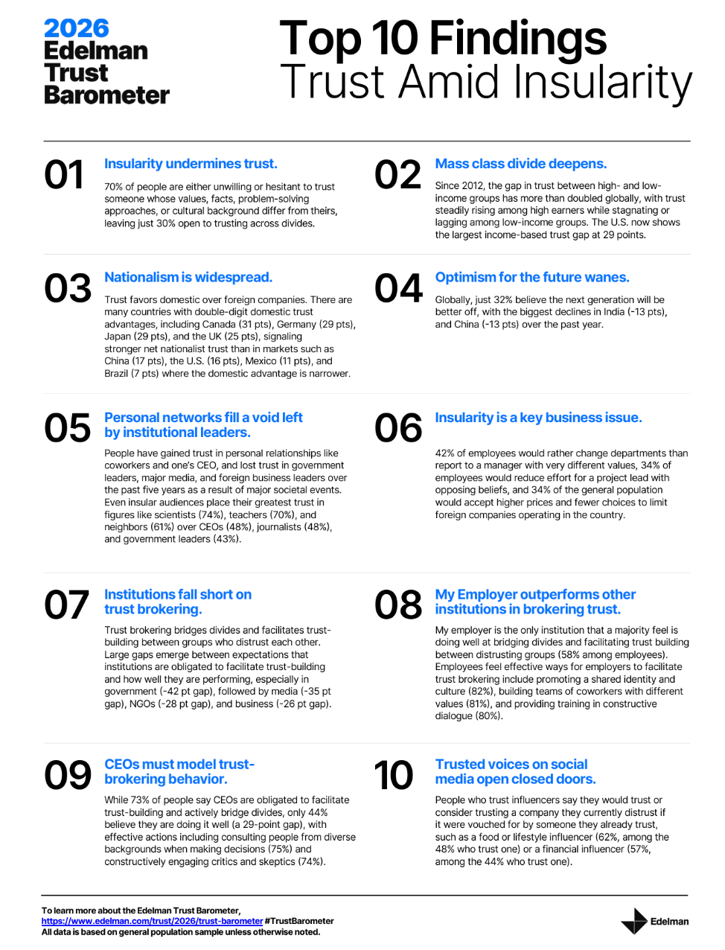
ss Last year’s “shared reality” was a culture of trust and a crisis of grievance: this year, it’s trust and insularity, we learn from the Edelman Trust Barometer for 2026, launched this week during the World Economic Forum in Davos, Switzerland. Here are the Top 10 findings from the annual study, which Edelman conducted among nearly 34,000 citizens in 28 countries in October and November 2025: Insularity undermines trust The mass class divide deepens Nationalism is widespread Optimism for the future wanes Personal networks fill a void left by
In the U.S., Belief and Trust in Science and Scientists is Tied to Political Party and Education
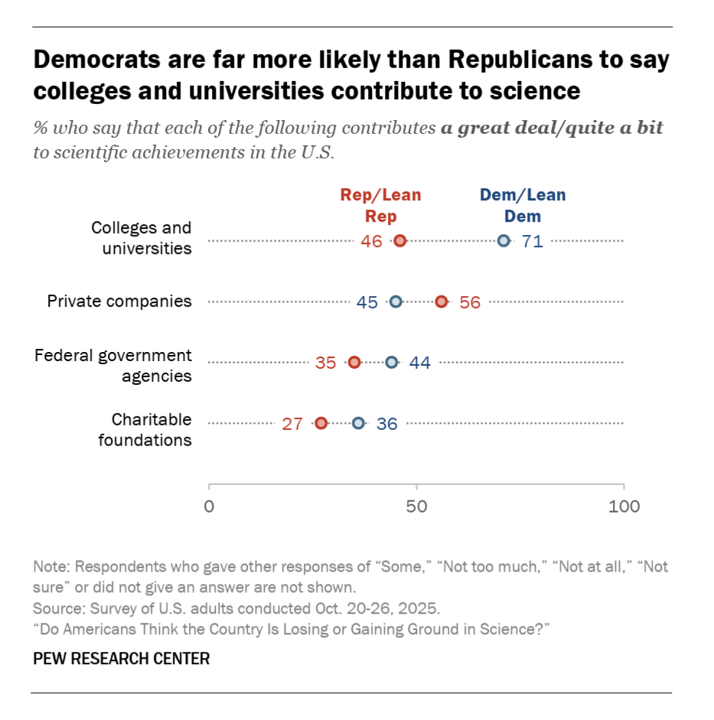
Most Americans believe it’s very important for the nation to lead in scientific achievements. But twice as many Democrats as Republications, 65% versus 32%, say the U.S. is losing ground in science innovations. The Pew Research Center asks and answers the Do Americans Think the Country Is Losing or Gaining Ground in Science? And the answer is, “millions of people do think so.” The Pew team polled 5,111 U.S. adults in late October 2025 for this research. There are a few political chasms related to science-trust in the U.S. that are important
While Nurses Continue to Rank Top in Honesty and Ethics, Americans’ Respect for All Professions is Tanking
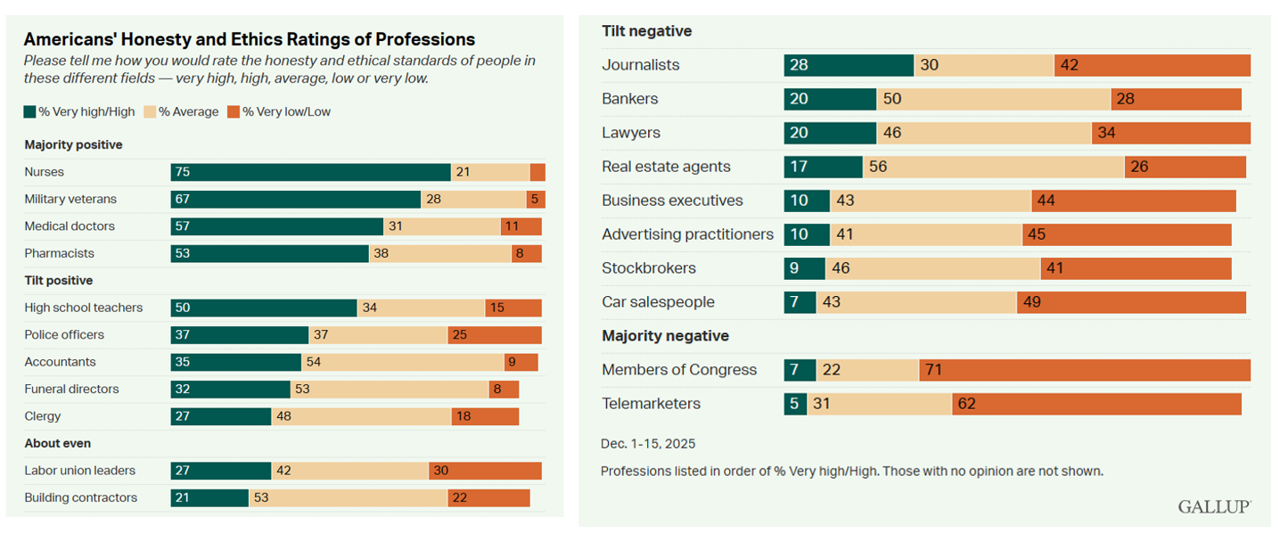
While nurses continue to rank high for honesty and ethics, Americans’ trust in the nations’ professions is tanking, found in this year’s Gallup Poll update titled, Nurses Continue to Lead in Honesty and Ethics Ratings. Nurses perennially top this chart, usually followed by doctors and pharmacists. But this year, it’s military veterans who garner the second spot in the Gallup Poll, with doctors and pharmacists in positions 3 and 4. Ranking at the bottom as least-respected for honesty and ethics are Members of Congress, again garnering the low-point in this study, with telemarketers trailing the
Exercise is Health Care, and Consumers Are Willing to Pay – Context for #CES2026
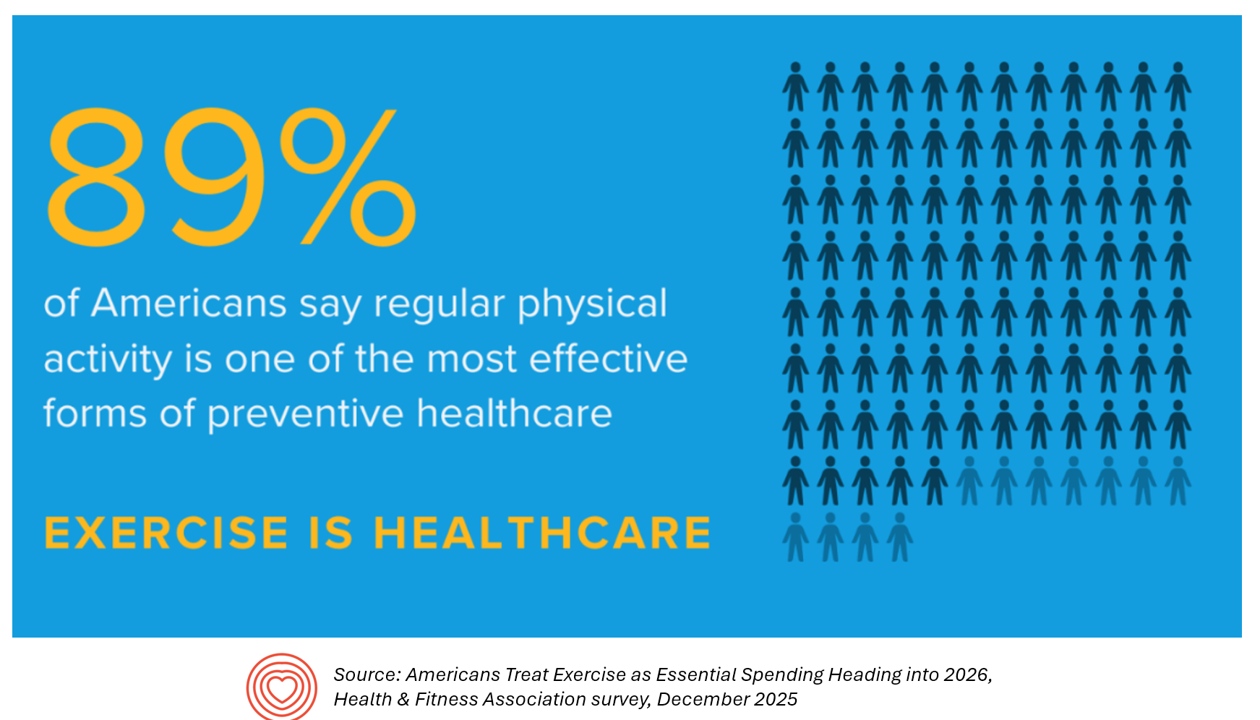
“Americans are not just setting fitness goals; they are budgeting for them,” Liz Clark, President and CEO of the Health & Fitness Association observed. “People increasingly see exercise as an essential investment in their long-term health. Even in a challenging economic environment, Americans are prioritizing physical activity as a proactive form of preventive healthcare.” Americans see exercise as healthcare — and health — according to a survey from the Health & Fitness Association (HFA). HFA commissioned Kantar to conduct the online survey among 2,000 U.S. adults 18 and over in December 2025 — well-timed for the
Navigating a Constellation of Uncertainties: Health/Care in 2026 (My Un-Forecast)
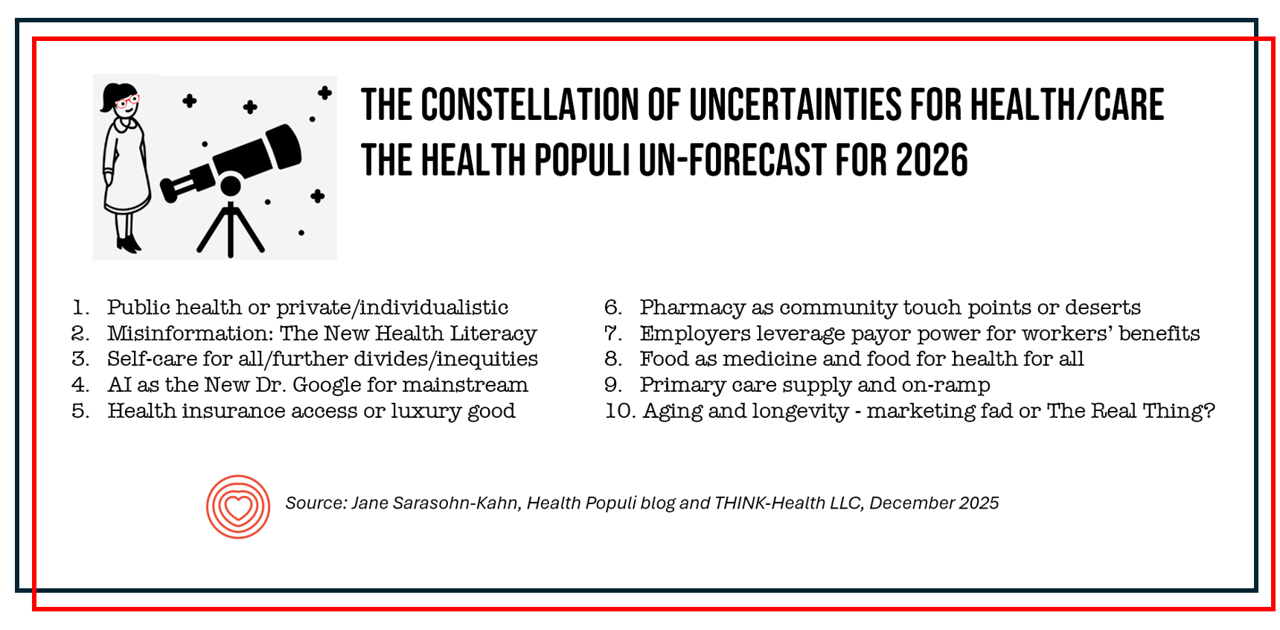
Almost from the first year of launching Health Populi in 2007, I’ve written a “TrendCast” for the coming year of health care. Over many years, there weren’t so many blogs devoted to health care which featured such prognostications, and so readers could divine signal from noise and move forward into new years with manageable lists of What To Expect Next Year in Healthcare. Here’s one from ten years ago that brings a sense of déjà vu: most of the findings are consistent with what we know for sure about 2026 and it’s useful to look back with today’s eyes to
A Month Until #CES2026 – The Journey to Our Personal Health Operating Systems

In a month, I’ll board a plane for Las Vegas to spend a week at CES 2026, the annual electronics conference that last year brought together over 140,000 global technology stakeholders to display, demonstrate, and sell the latest in consumer-facing tech. This will be my fourteenth CES (including the virtually convened meeting held in 2021). If you want to time travel, here’s a link to an early CES post featuring “The Battle of the (Wrist)bands.” Indeed, the digital health aisle at the time had many wrist-worn activity trackers, largely amped-up pedometers, with the likes
As SNAP Benefits Were Threatened to be Cut in the U.S., Eli Lilly’s Obesity Drugs Rose to the World’s Best-Selling Drug
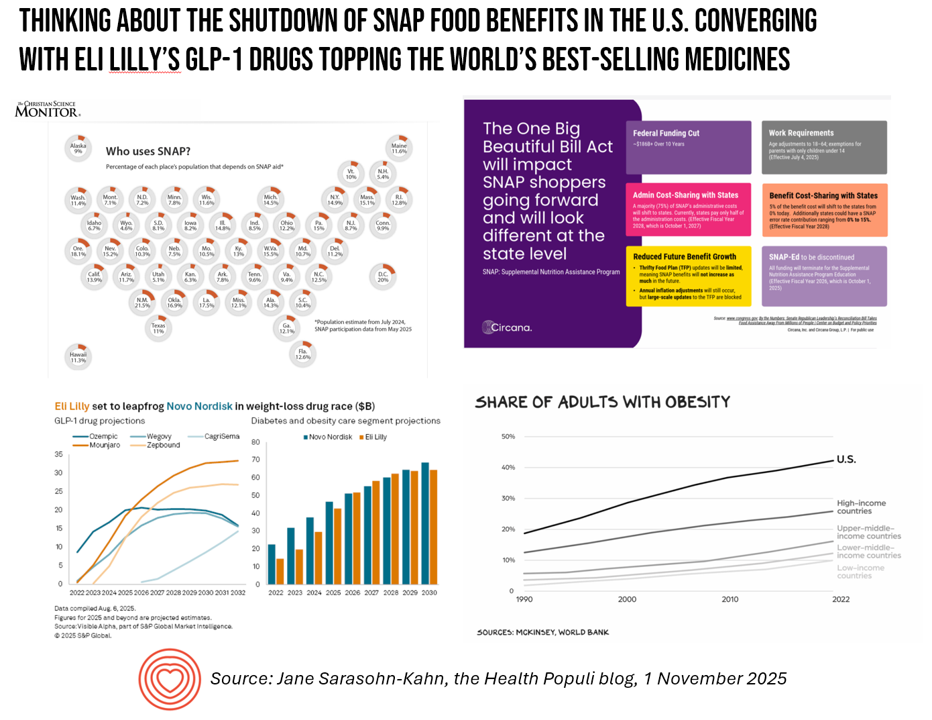
Today, 1 November, the Supplemental Nutrition Assistance Program (SNAP) was to be shuttered and unfunded in at least 25 states until the U.S. Congress agreed to re-open the Federal government and fund this safety net for food security that covers 42 million people in America. Those 42 million people included 16 million children, about 39% of SNAP program beneficiaries. Then last night, a Federal judge intervened to order President Trump’s administration to reinstate funding for food assistance just-in-time. At this moment, I cannot tell you what the exact timing nor the amounts beneficiaries will receive will be.
A Chasm Between U.S. Health Citizens: Is Vaccination a Personal Choice, or for the Benefit of All?

One of the only uniting factors in U.S. health care across political parties is that most of the nation’s health citizens, cross-party ID, trust doctors and their professional associations for reliable information on vaccines. Pediatricians in particular are mostly-trusted for vaccine facts, according to the KFF Tracking Poll on Health Information and Trust: Tylenol-Autism Link and Vaccine Policies, the latest in the Kaiser Family Foundation’s series on Health Information and Trust Tracking Polls. The biggest trust-chasm when it comes to sources for vaccine information is Americans’ split views on Robert F. Kennedy Jr., the Secretary
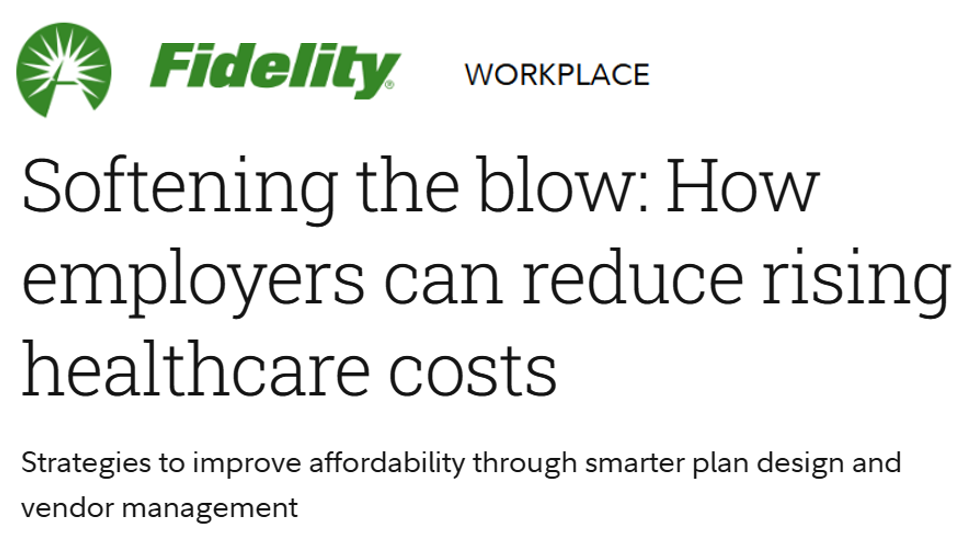 One of the best aspects of my work is collaborating across the health/care ecosystem to address how health citizens can deal with health care costs and and care for families. I'm grateful to have collaborated with Fidelity on their research into this issue, which you can access at the link here.
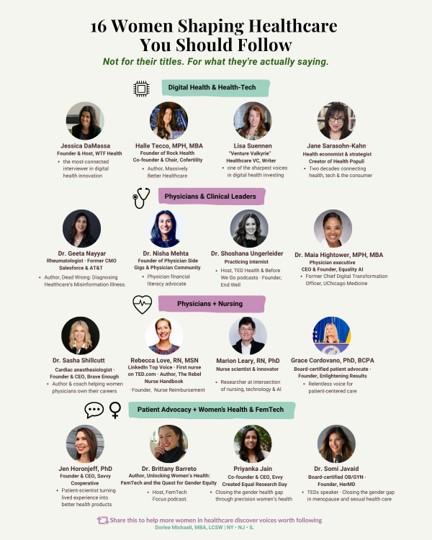 I'm gratified to be named on this updated list of 16 women's voices who are shaping health care. The curator of the list, Dorlee Michaeli, asked the question: "If someone wanted a smarter healthcare LinkedIn feed tomorrow, who should they follow today?" Glad to be one of these voices.
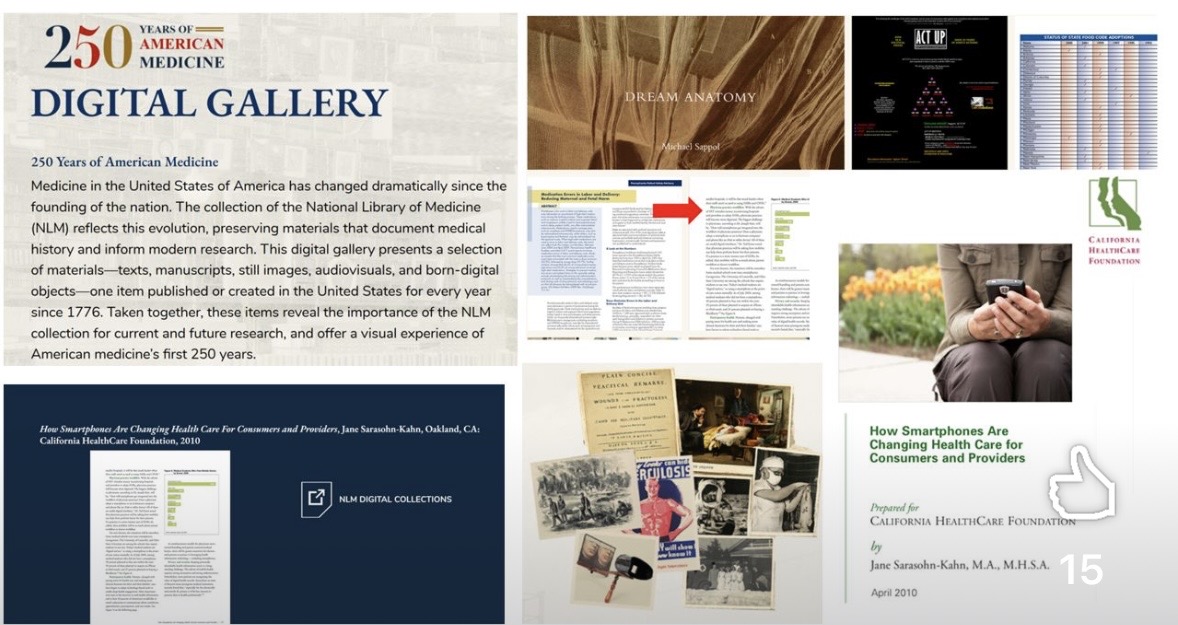 I’m celebrating America’s 250th birthday both patriotically and professionally, honored that the NLM included my 2010 paper, “How Smartphones Are Changing Healthcare for Consumers and Patients” as one of 250 items curated for the digital archive of 250 Years of American Medicine.