


Why Clorox Talks about Hygiene at Home: Health, Wellbeing, and the Home as Health Hub
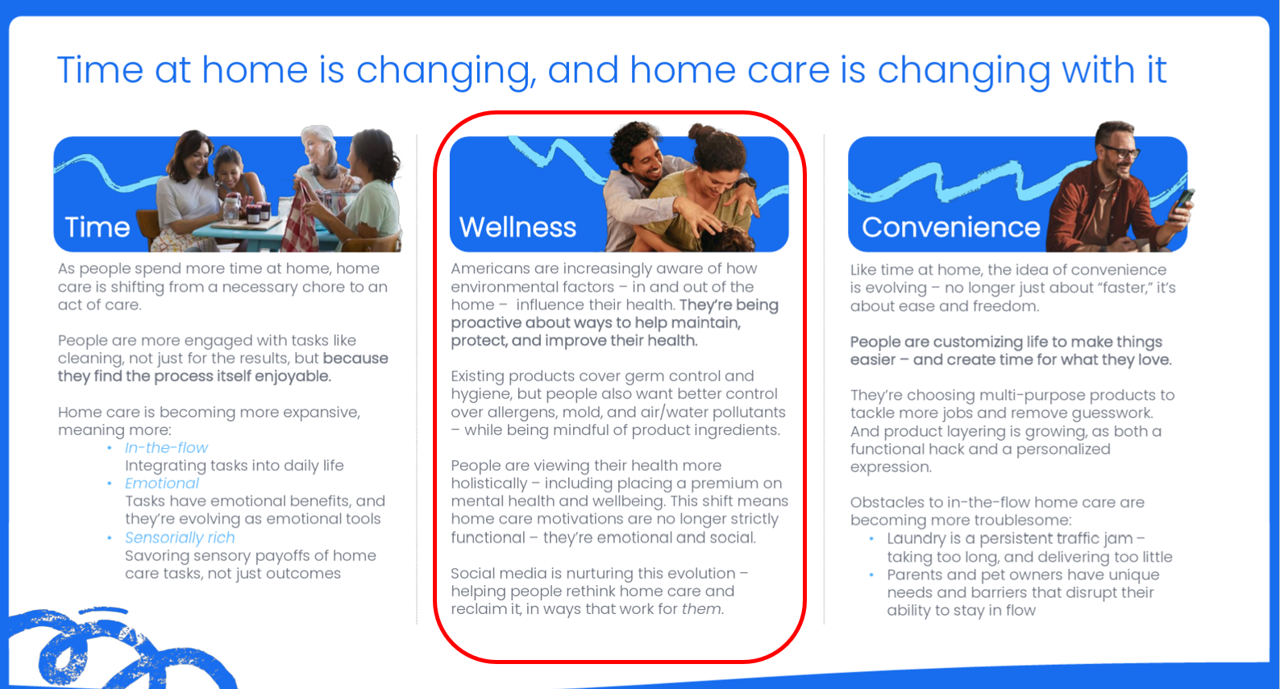
The COVID-19 pandemic was a watershed era for people re-assessing and re-imagining their homes as hubs for health, healthcare, and well-being (as well as learning, exercising, and baking sourdough bread). This graphic comes from my book, Health Citizenship: How a Virus Opened Hearts and Minds, written in the midst of the pandemic based on consumers’ newly adopted behaviors during the #workfromhome and #stayhome epoch. We experienced the digital transformation of people through life and home-based work and education, a growing sense of DIY for things we could do
When a Hotel Becomes Your Health Partner – Learning from Novotel and Accor
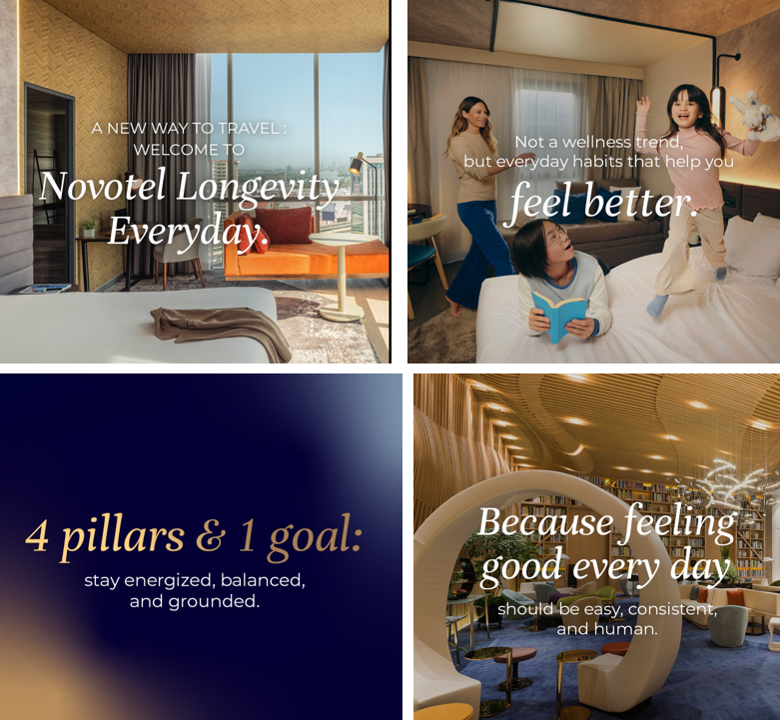
“Novotel Launches ‘Longevity Everyday.'” That’s the title of the global, France-based hotel chain’s press release, announcing the Novotel brand’s initiative to serve up healthy hospitality. Check out this video… Behind this strategic positioning decision, the hotel notes, “Accor data reveals that one in three travelers is taking daily steps to improve their mental and physical wellbeing, yet most longevity programs remain out of reach for many people. This gap between demand and accessibility has created a strategic opportunity that Novotel, Accor’s founding brand, is uniquely positioned to address.” This approach will extend to over 600 hotels operating in 67 countries
The New (Old) Long-Term Care: Intergenerational, Together at Home
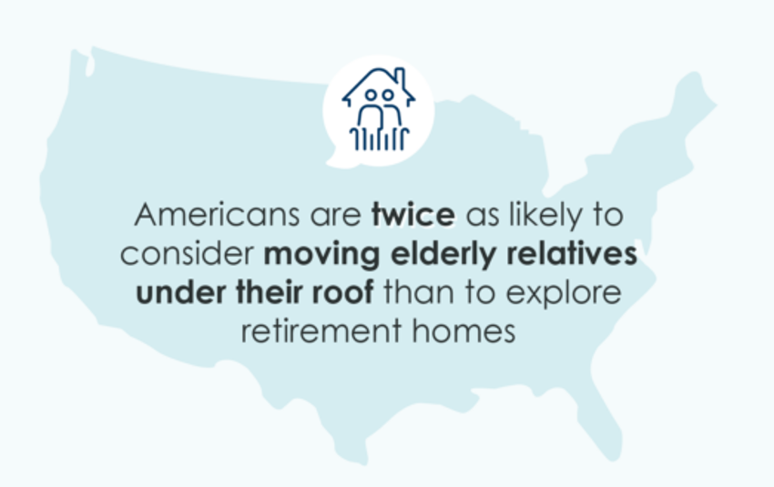
One in three adult children in the U.S. say that moving their parent(s) into their family’s home is the most likely living arrangement for their folks as they age, we hear from a study on the “Care Conversation” from LevLane, conducted by Talker Research. That’s twice as many consumers as those looking to assisted living (19%) or senior living or memory care facilities (16%). Talker Research conducted a survey of 2,000 U.S. adults, Gen X or younger with a living parent, to assess the current state of and future prospects for the senior living market.
Aging is Not a Decline, but an Awakening at CES 2026 – Learning from AARP About Consumers, Lifespan, and Technology
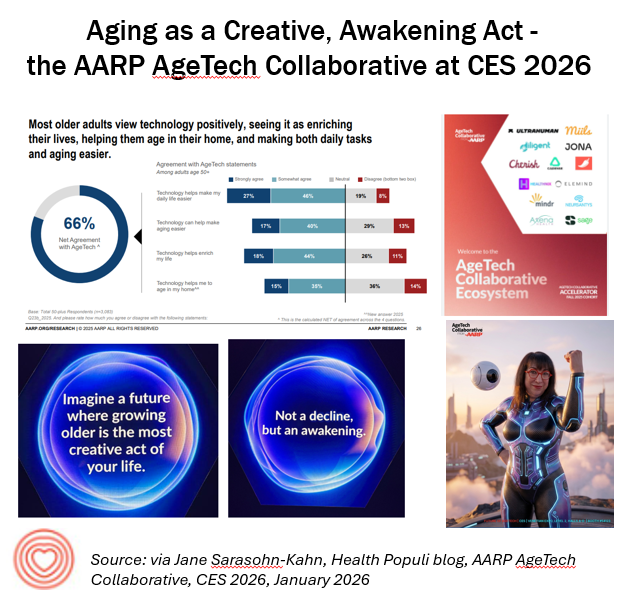
Aging and longevity are key themes driving technology innovations and markets, and walking the miles of aisles of CES 2026 demonstrates the expanding landscape of the role of tech in healthy living across the lifespan. I spent time at the AARP AgeTech Collaborative space this week as I did last year (here was my write-up of AARP and CES 2025 for historical context). In experiencing this year’s portfolio of AgeTech collab partners, from start-ups to Fortune 100 companies in the mix, was informative, inspiring, and even energizing as someone who has been a member of AARP since turning 50 some
Tech Trends to Watch at CES 2026 – For Health, It’s About Longer Living, Smarter Living, and Better Living
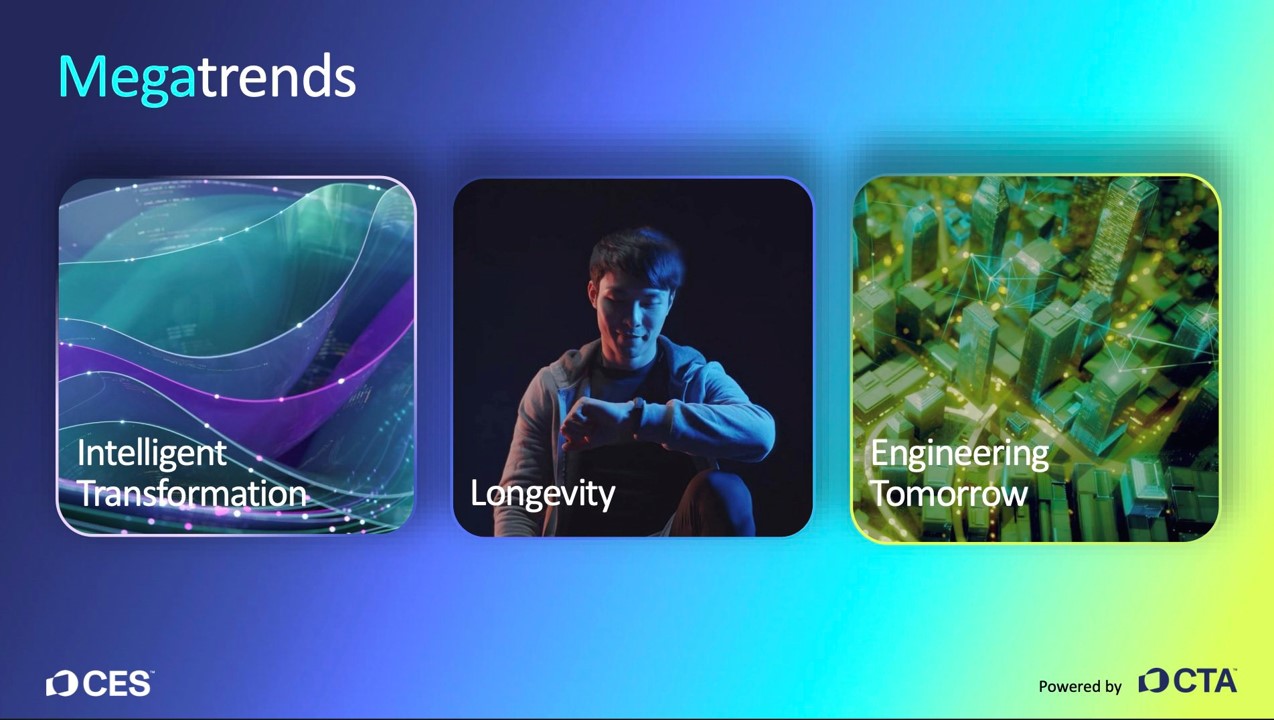
Live from CES 2026 in Las Vegas…the first day of CES Media Days preceding the big show always covers a context-setting report on Tech Trends to Watch. This is one of my annual go-to programs which helps orient media and industry analysts with a lens on CES’s key tech categories and some hard data on market size and growth expectations. While I’ll focus on the health/care specifics in the trend forecast, let me first update you on the overall technology market revenues for the U.S. which are estimated at $565 billion for 2026.
Exercise is Health Care, and Consumers Are Willing to Pay – Context for #CES2026
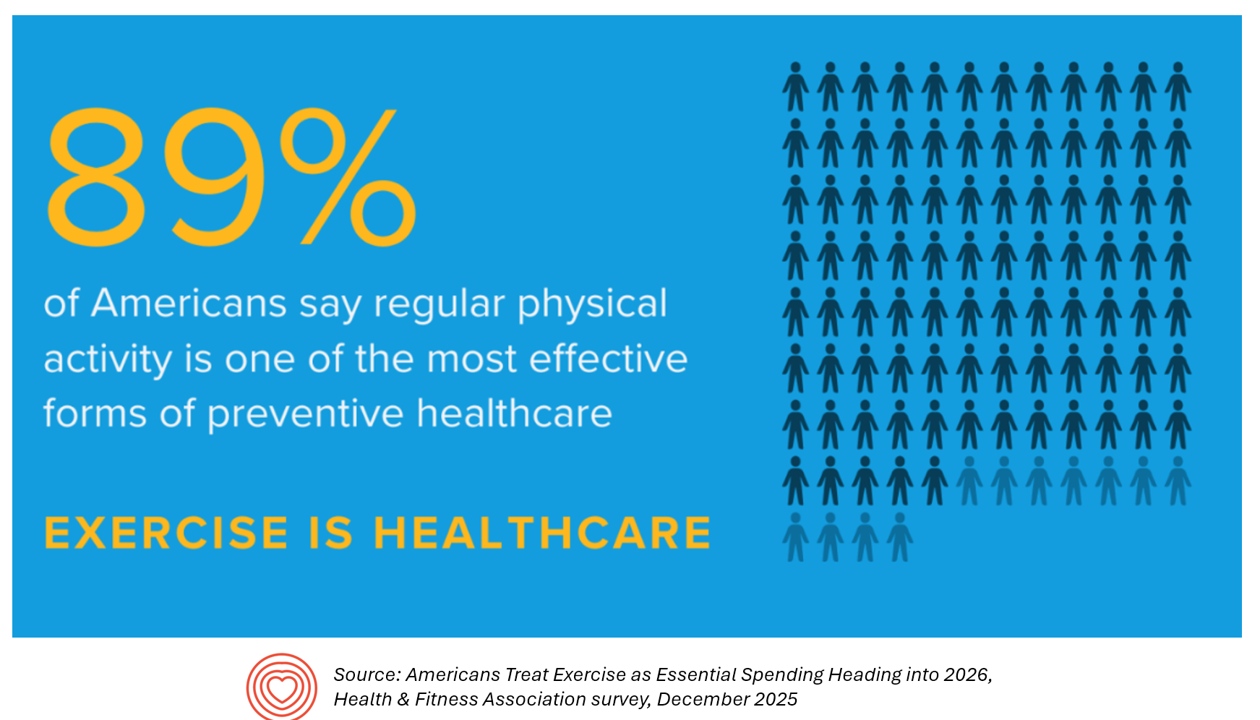
“Americans are not just setting fitness goals; they are budgeting for them,” Liz Clark, President and CEO of the Health & Fitness Association observed. “People increasingly see exercise as an essential investment in their long-term health. Even in a challenging economic environment, Americans are prioritizing physical activity as a proactive form of preventive healthcare.” Americans see exercise as healthcare — and health — according to a survey from the Health & Fitness Association (HFA). HFA commissioned Kantar to conduct the online survey among 2,000 U.S. adults 18 and over in December 2025 — well-timed for the
A Primer on Health Consumers for CES 2026 – How Macro Consumer Trends Will Shape Healthcare Consumers in 2026
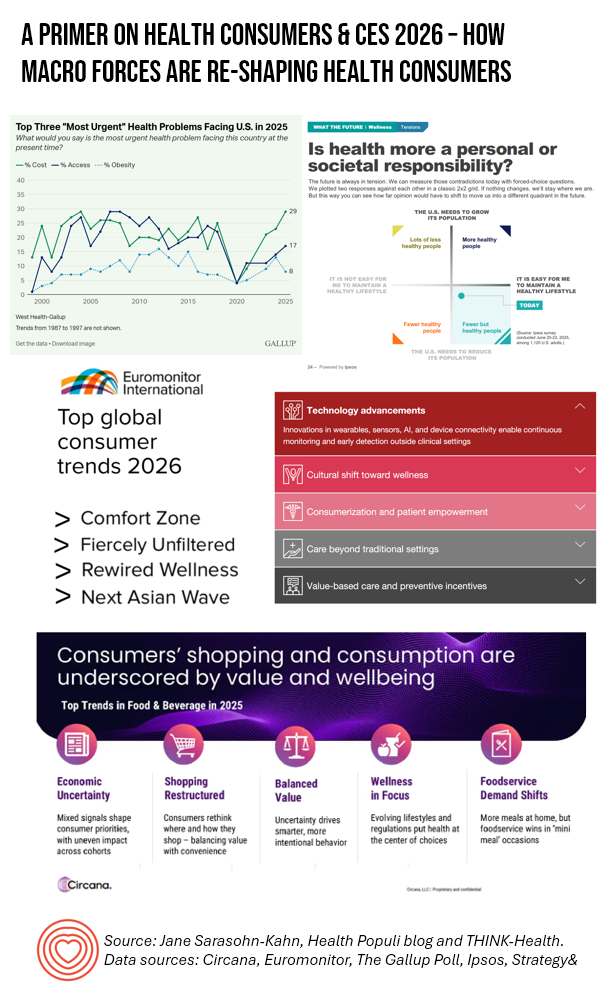
Increasingly, people are engaging more in health care decision making due to many factors impacting their personal medical choices — from the cost and access to health insurance to co-payments for prescription drugs and the supply of primary care doctors, more patients developed and exercised their health consumer muscles in 2025, For 2026, the health consumer muscle-building will grow as people will be re-shaped by macro market factors we are currently gleaning from forecasts looking into the new year: for personal finances, social issues, technology adoption, views on AI and privacy, and other issues. Here are some data points to
A Month Until #CES2026 – The Journey to Our Personal Health Operating Systems

In a month, I’ll board a plane for Las Vegas to spend a week at CES 2026, the annual electronics conference that last year brought together over 140,000 global technology stakeholders to display, demonstrate, and sell the latest in consumer-facing tech. This will be my fourteenth CES (including the virtually convened meeting held in 2021). If you want to time travel, here’s a link to an early CES post featuring “The Battle of the (Wrist)bands.” Indeed, the digital health aisle at the time had many wrist-worn activity trackers, largely amped-up pedometers, with the likes
How Consumers’ Access to Telehealth Impacts Medical Real Estate and Design Decisions
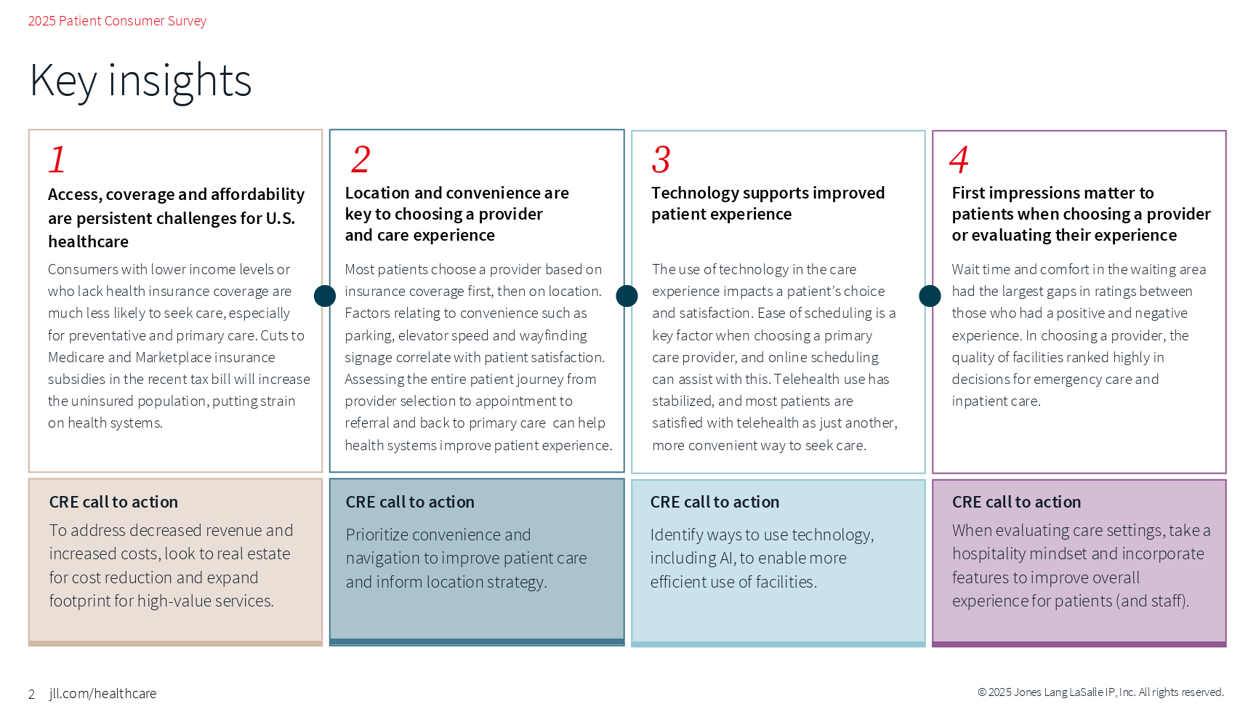
The idea of “hospitality” in health care is not new, but the nature of how patients-as-consumers are dealing with health care choices based on what looks and feels good is changing the nature of what hospitality means in technology-enabled health care delivery, we learn from the 2025 Patient Consumer Survey conducted by JLL. Jones Lang LaSalle Inc. (JLL) is one of the largest global commercial real estate firms with a strong portfolio of medical buildings. So it is worthwhile to track what the company is learning about health care delivery distributed both inside and outside of brick-and-mortar medical buildings.
The Next Version of Medical Tourism: Medical Immigration?

One in three Americans could imagine leaving America for good as expatriates — with access to affordable and reliable health insurance the top consideration, according to research conducted by the Harris Poll on behalf of GeoBlue and International Citizens Insurance (ICI). “Thirty-one percent of potential expats cite concerns about healthcare coverage abroad being the reason they haven’t yet taken the leap to move abroad. This trumped concerns about their work and social life abroad,” the survey found. Earlier this year, The Harris Poll’s American Expats Survey, published in February 2025, found that health care accessibility
The Biggest Opportunity for Sporting Goods is Consumers’ Physical Inactivity: Learning from McKinsey (with a personal nod to pickleball)
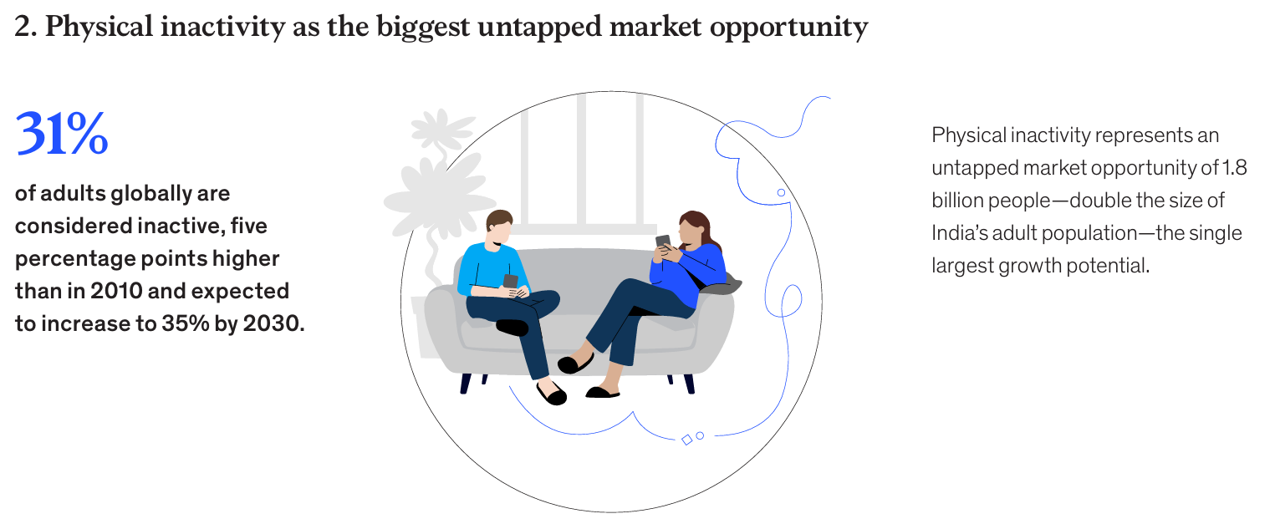
McKinsey just published a detailed report into Sporting Goods 2025, which the firm calls a “new balancing act” that must turn uncertainty into opportunity. The report is based on five key observations: Only a few sporting goods companies have expanded growth and margins since 2018 — and must “rethink the value chain” in the face of challenging geopolitical headwinds One-half of so-called “active consumers” say that fitness is a core element of their identity, with emotional connections to brands they purchase for the lifestyle Incumbent sporting goods companies are losing market share to
Health/Care at Super Bowl LIX, GLP-1s, Kaiser and Tufts on Food-As-Medicine, and the RFK, Jr. Factor: A Health Consumer Check-In
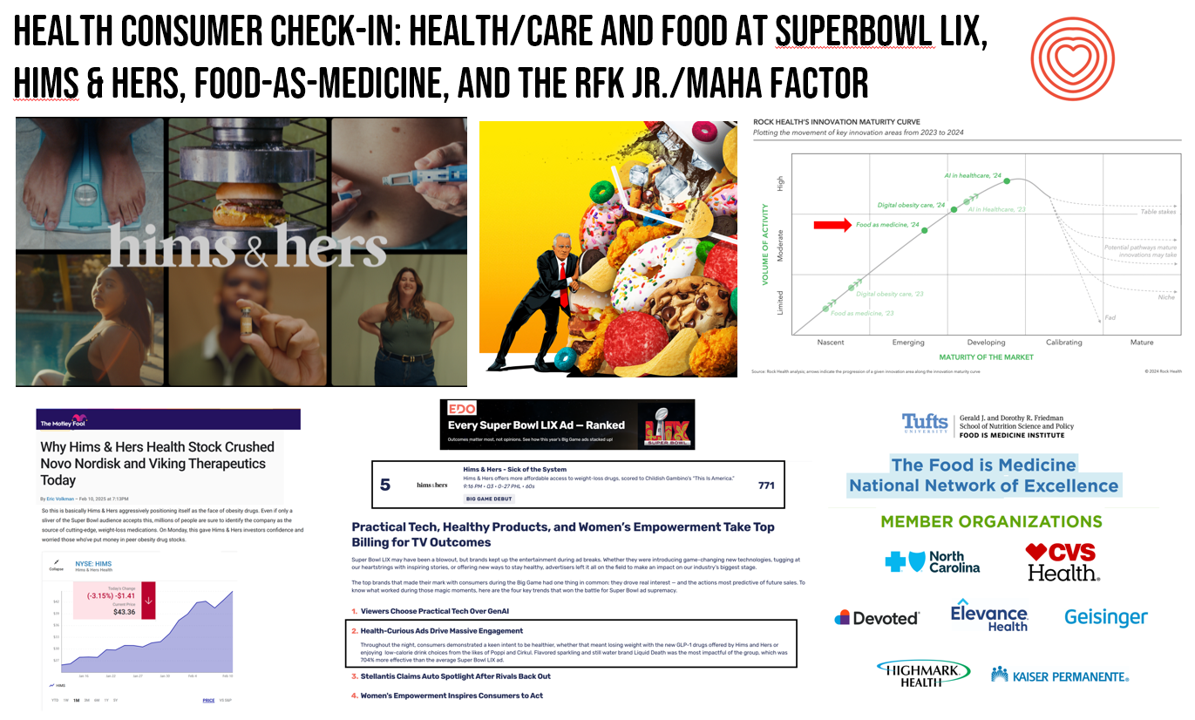
In the wake of the always-creative ads for Super Bowl and last Sunday’s LIX bout, game-watchers got to see a plethora of commercials dedicated to the annual event’s major features: food and game-day eating. Oh, and what’s turned out to be the most controversial commercial, the one on GLP-1s from Hims & Hers. In that vein, and converging with many news and policy events, I’m trend-weaving the latest insights into that most consumer-facing of the social determinants of health: food, and in particular, health consumers viewing and adopting food as part of their health and well-being moves. First, to the
How Trauma-Informed Design Principles Can Be Health-Ful for All of Us – Learning from IKEA
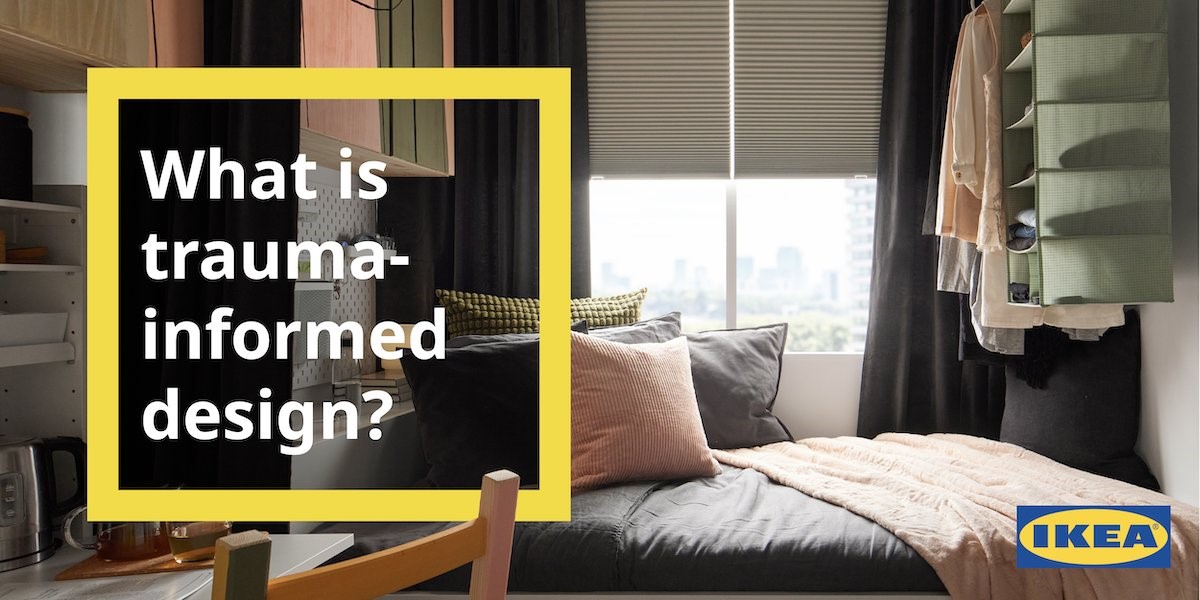
As a long-time fan and customer of IKEA, I receive daily Google Alerts about the company, from business finances to design trends. When I read this piece on IKEA’s work on a home designed for people who were homeless, I paid special attention to learn about the concept of trauma-informed design. Thanks to the publication Retail TouchPoints and the author of the story, Adan Blair, for covering this project. The story has lit a lot of lightbulb inspirations for me in thinking through the role housing plays in human health and well-being, and also to
“People will seek wellness, peace and healing” – Reading the GWI Future of Wellness Report, 2024 Trends
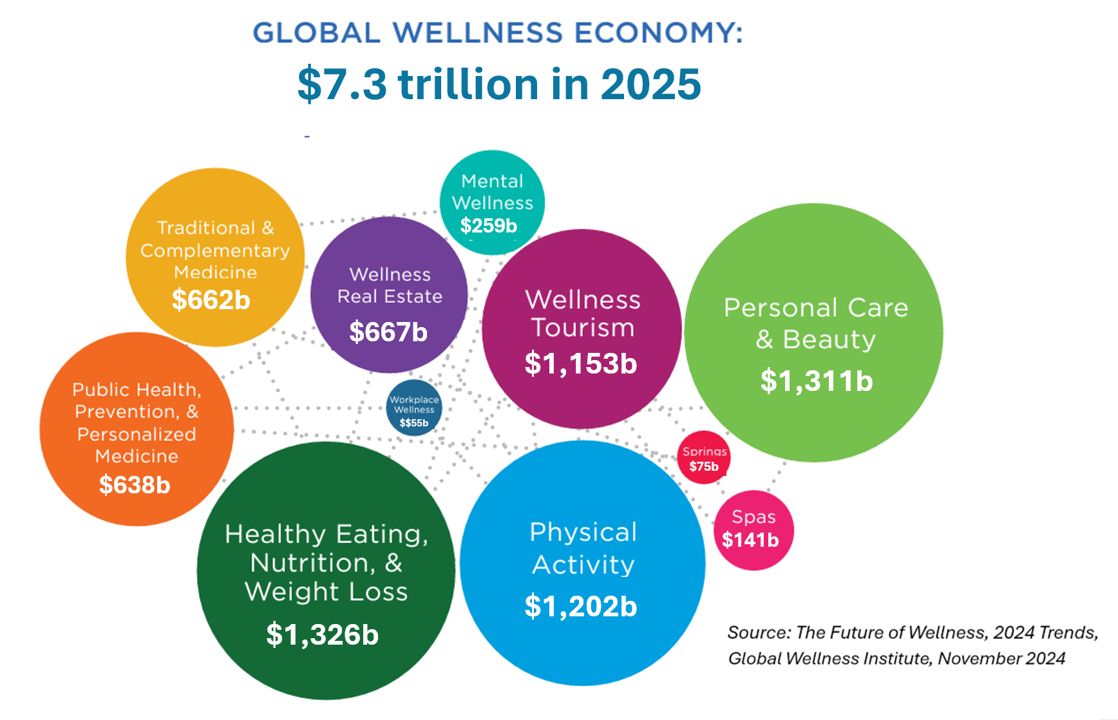
Healthy eating and weight loss, personal care and beauty, exercise and physical activity, and wellness tourism are the four biggest components of the world’s wellness economy, quantified in The Future of Wellness, 2024 Trends, the perennial report from the Global Wellness Institute (GWI). Here’s the bubble chart, which I’ve updated with the 2025 data so we get a sense of what the coming year will bring for the eleven total segments that make up the global wellness market. The fine print of the projections for these areas identifies the annual growth rates for
The Smart Home for Health, Brought to You by Samsung and Ashley
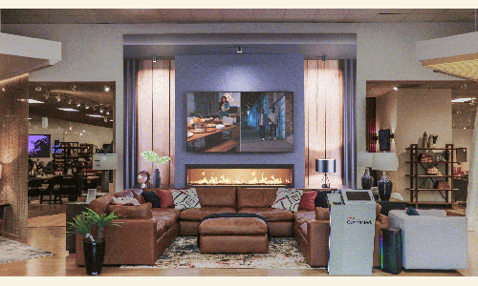
Today I am keynoting the OSF Digital Health Symposium in Peoria, IL, discussing The State(s) of Digital Health. A double-entendre intended, one of the states I’ll be discussing is the migration of acute care back to peoples’ homes, embedded with sensors, householders donning smart rings, and rooms fitted with Internet-of-Things for health and well-being. In this context, news that Samsung has begun to partner with Ashley, the national furniture dealer, struck me as interesting and important. I visited the Samsung Health House at CES 2024 last January: here is my write-up about what I
Location, Location, Location – Understanding Health Consumers’ Evolving Definition of Convenience
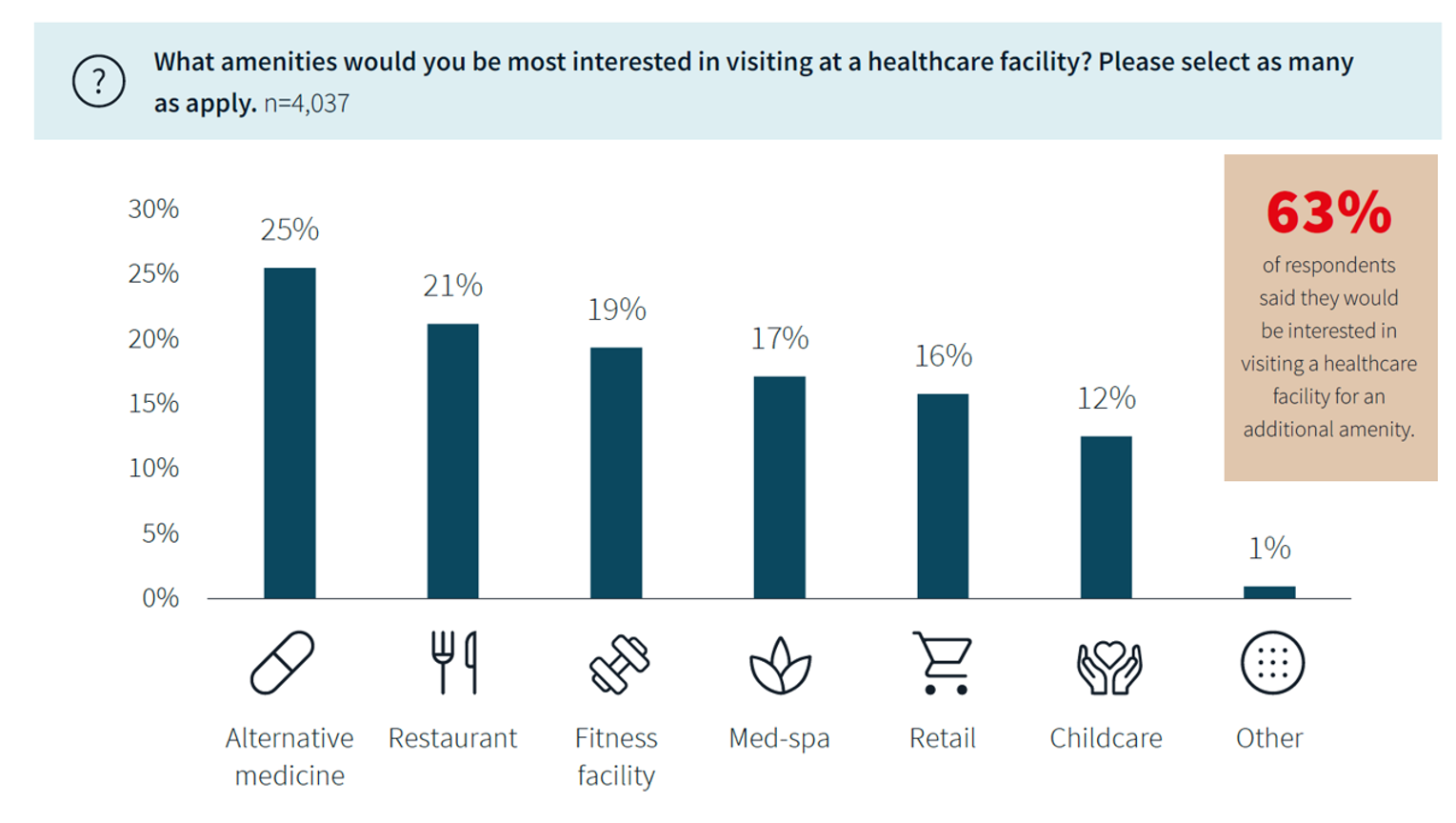
The definition of “convenience” in the eyes of patients, consumers, and caregivers is multi-faceted, with the concept of “location” shifting both physically and digitally. We learn this in new research from JLL, the global real estate services company. “Why is a real estate services company doing research into consumers’ views on health care?” you might ask. See my Hot Points below, discussing my views on the morphing of health care real estate from Pill Hill and inpatient hospitals to the home and closer-to-home sites. In the 2023 Patient Consumer Survey report, the topline lesson
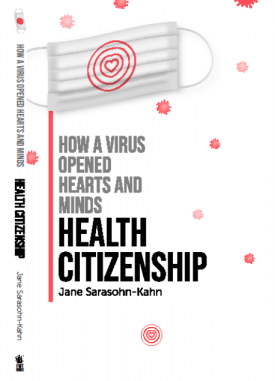
 Thank you Aaron Strout for hosting our conversation on the Reaching Higher Podcast, now live on Apple, Spotify, and YouTube. We covered a lot of ground addressing health care and health citizenship, the growing prospects for our homes as our health hubs, and how our humanity is a key ingredient in health-making for all.
 Jane joined host Dr. Geeta "Dr. G" Nayyar and colleagues to brainstorm the value of vaccines for public and individual health in this challenging environment for health literacy, health politics, and health citizen grievance. Click onto the Pfizer Value of Vaccines site and you can watch four episodes covering the challenges with adult vaccination, the employer and health plan member's journey to vaccination, reimbursement, and collaborating for proactive prevention.
 I'm grateful to be part of the Duke Corporate Education faculty, sharing perspectives on the future of health care with health and life science companies. Once again, I'll be brainstorming the future of health care with a cohort of executives working in a global pharmaceutical company.