


The Real Face of Men’s Health in America: Years of Life Lost, Yearning for Social Connection, and Eroding Trust in Health Care

In 2023, more than one-half of male deaths in the U.S. were premature: this is The Real Face of Men’s Health in America, a new report analyzing 2025 U.S. data from the Movember Foundation. The report was published as we approach November which the project chose for Men’s Health Month when launching in Australia over 20 years ago. Compared with the rest of the economically-developed world, Movember found that the “U.S. stands out for the sheer number of years of life lost (YLL), as well as the enormous toll of men’s early deaths
How’s Life? Around the World – In the U.S., It’s the Sadness That Stands Out
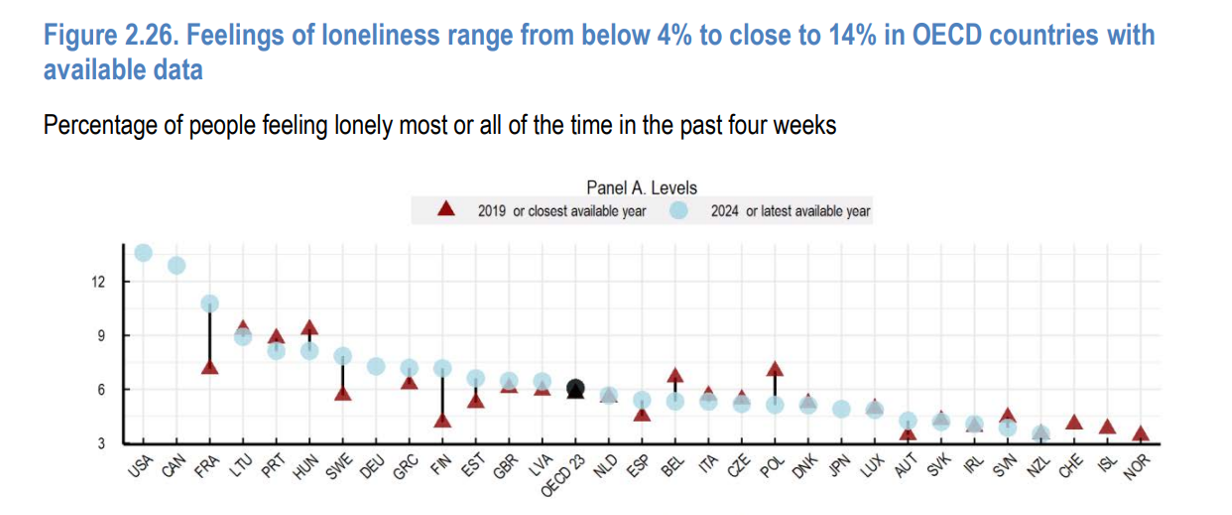
A new report from the OECD asks the question, “How’s Life?” with the tagline letting us know the plotline focuses on “well-being and resilience in times of crisis.” The Organization of Economic Cooperation and Development (OECD) has tracked the well-being of member nations for the past six years, taking a broad view on the definition of holistic health — including physical, mental, financial, and social aspects of people living in OECD countries. The first “How’s Life?” report was published at the height of the global financial crisis; the authors of this report introduce it saying that, “the
The New Deaths of Despair in America – Among U.S. Children
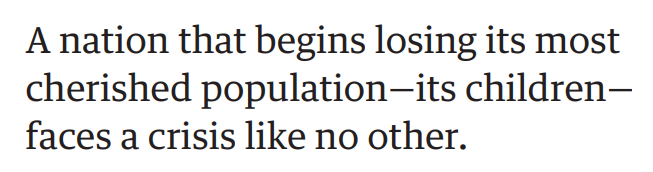
The phenomenon of Deaths of Despair is the short-hand name for rising mortality among certainly people living in the U.S. due to overdose, accidents, and suicide. Angus Deaton and Anne Case published their first of many research papers on Deaths of Despair in 2015. Their research uncovered the risks of dying a Death of Despair to be higher among men, especially those between the ages of 25 and 64. But mortality isn’t only going in the wrong direction for those people most closely associated with the Deaths of Despair demographic: there’s another life-span line graph moving in the wrong direction,
The Top 10 Patient Safety Concerns for 2023 Are About Social, Mental and Behavioral Health
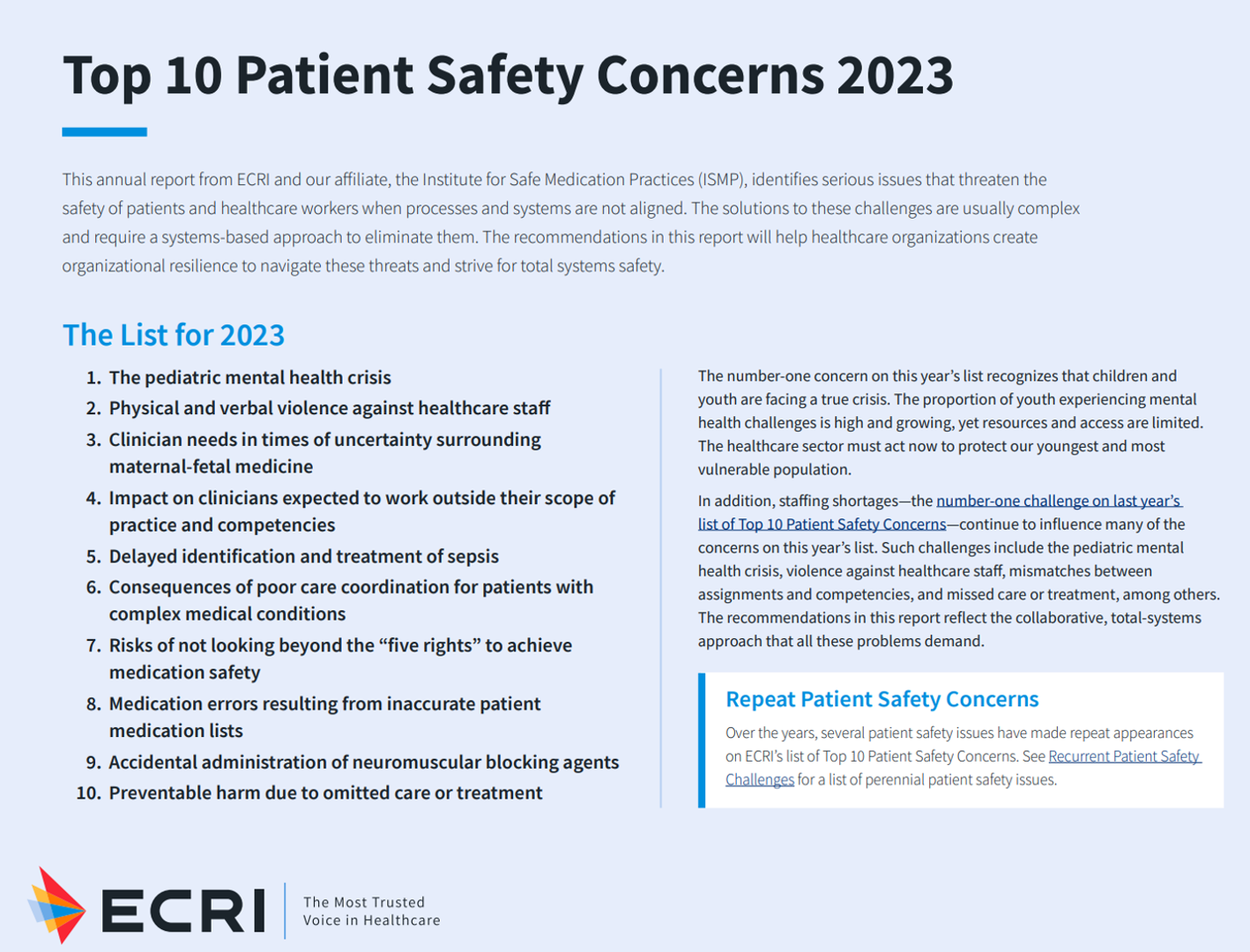
Ten years ago, ECRI named the top 10 health technology hazards for 2013: they were alarm hazards, medication administrative errors using infusion pumps, unnecessary exposure and radiation burns from diagnostic radiology procedures, patient/data mismatches in EHRs and other HIT systems, interoperability failures with medical devices and health IT systems, and five other tech-related hazards. In 2014, ECRI pivoted the title of this annual report to “patient safety concerns,” a nuance away from health technology. Fast forward to 2023 and ECRI’s latest take on the Top 10 Patient Safety Concerns 2023. While technology is embedded in this list, the headlines have more
The Number of Unintended Deaths From Car Accidents, Falls and Overdoses in America Grew 40% Between 1999 and 2017

The rate of deaths due to unintentional injuries in the U.S. grew by 40% between 1999 and 2017, according to the Centers for Disease Control (CDC). Three mortality line items make up this overall statistic: Deaths from motor vehicle traffic injuries Deaths from unintentional drug overdoses (that is, not including suicides which are defined as “intentional”), and Deaths due to unintentional falls. The line graph illustrates the macro trend on the top-line, with the three specific causes underneath. You see deaths due to falls, motor vehicle accidents, and drug overdoses increased over the eighteen years. Drug overdose death rates began
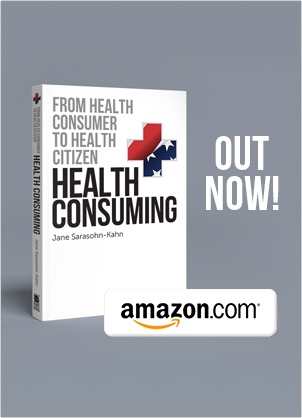
 One of the best aspects of my work is collaborating across the health/care ecosystem to address how health citizens can deal with health care costs and and care for families. I'm grateful to have collaborated with Fidelity on their research into this issue, which you can access at the link here.
 Jane joined host Dr. Geeta "Dr. G" Nayyar and colleagues to brainstorm the value of vaccines for public and individual health in this challenging environment for health literacy, health politics, and health citizen grievance. Click onto the Pfizer Value of Vaccines site and you can watch four episodes covering the challenges with adult vaccination, the employer and health plan member's journey to vaccination, reimbursement, and collaborating for proactive prevention.
 I'm grateful to be part of the Duke Corporate Education faculty, sharing perspectives on the future of health care with health and life science companies. Once again, I'll be brainstorming the future of health care with a cohort of executives working in a global health care enterprise.