


The “Five-Month” Cognitive Penalty of Financial Decline: A Significant Loss of Financial Well-Being Correlates with About Five Months of Cognitive Decline A Year
By Jane Sarasohn-Kahn on 23 March 2026 in Affordability, Aging, Anxiety, Baby Boomers and Health, Boomers, Brain health, Business and health, Consumer experience, Consumer-directed health, Demographics and health, Depression, Determinants of health, DTC health, Education and health, Employee benefits, Employers, Financial health, Financial toxicity, Financial wellness, Gender equity, Gender equity and health, Happiness, Health and wealth, Health benefits, Health care industry, Health care marketing, Health Consumers, Health costs, Health disparities, Health Economics, Health ecosystem, Health education, Health engagement, Health equity, Health finance, Health literacy, Health marketing, Health media, Health Plans, Health policy, Health social networks, Home economics, Jobs and health, Life expectancy, Loneliness, longevity, media and health, Medical banking, Medical bills, Medical debt, Medicare, Mental health, Money and health, Out of pocket costs, Personal health finance, Prevention and wellness, SDoH, Seniors and health, Social determinants of health, Social security, Wellbeing, Wellness, Women and health
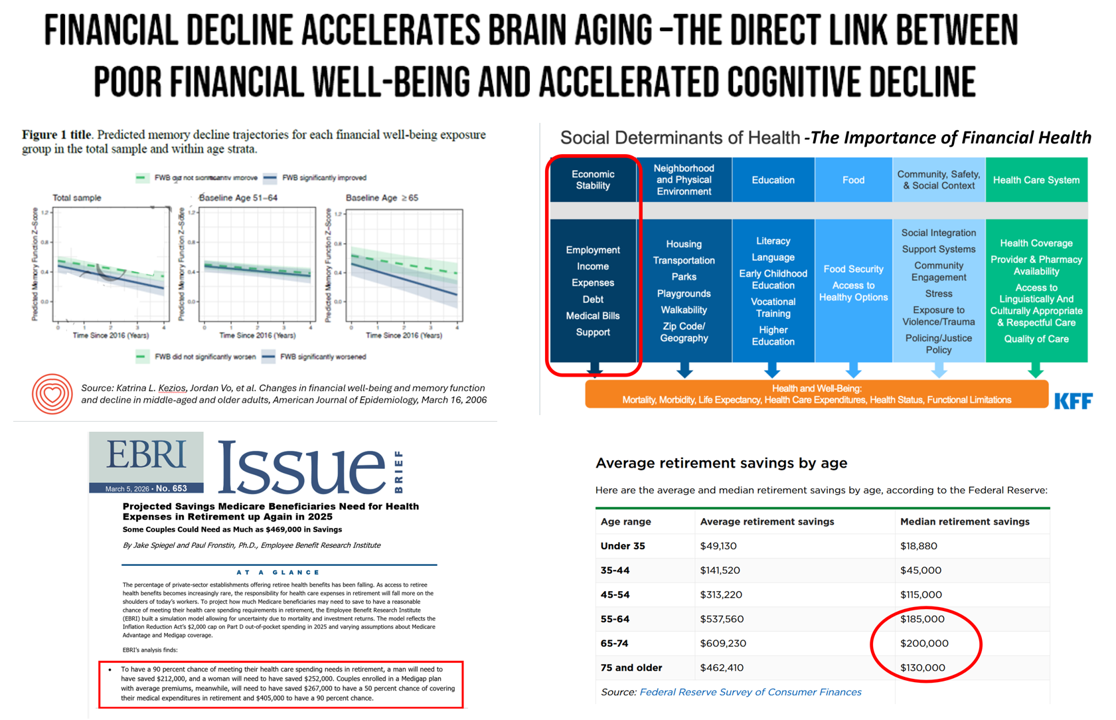
Lower financial well-being and worsening financial conditions have been linked to declining brain function, according to new research from a team at the Columbia Mailman School of Public Health. The research, Changes in financial well-being and memory function and decline in middle-aged and older adults, was published this month in the American Journal of Epidemiology. “Worse financial well-being in midlife and older age — and especially declines over time — are associated with lower memory scores and faster cognitive decline,” the study notes — among the first to scrutinize the relationship between brain
 Thank you Aaron Strout for hosting our conversation on the Reaching Higher Podcast, now live on Apple, Spotify, and YouTube. We covered a lot of ground addressing health care and health citizenship, the growing prospects for our homes as our health hubs, and how our humanity is a key ingredient in health-making for all.
 Jane joined host Dr. Geeta "Dr. G" Nayyar and colleagues to brainstorm the value of vaccines for public and individual health in this challenging environment for health literacy, health politics, and health citizen grievance. Click onto the Pfizer Value of Vaccines site and you can watch four episodes covering the challenges with adult vaccination, the employer and health plan member's journey to vaccination, reimbursement, and collaborating for proactive prevention.
 I'm grateful to be part of the Duke Corporate Education faculty, sharing perspectives on the future of health care with health and life science companies. Once again, I'll be brainstorming the future of health care with a cohort of executives working in a global pharmaceutical company.