


When the Cost of Food is a Health Risk: Dollar Stores, Tariffs, Family Meals, and the Rising Cost of Food
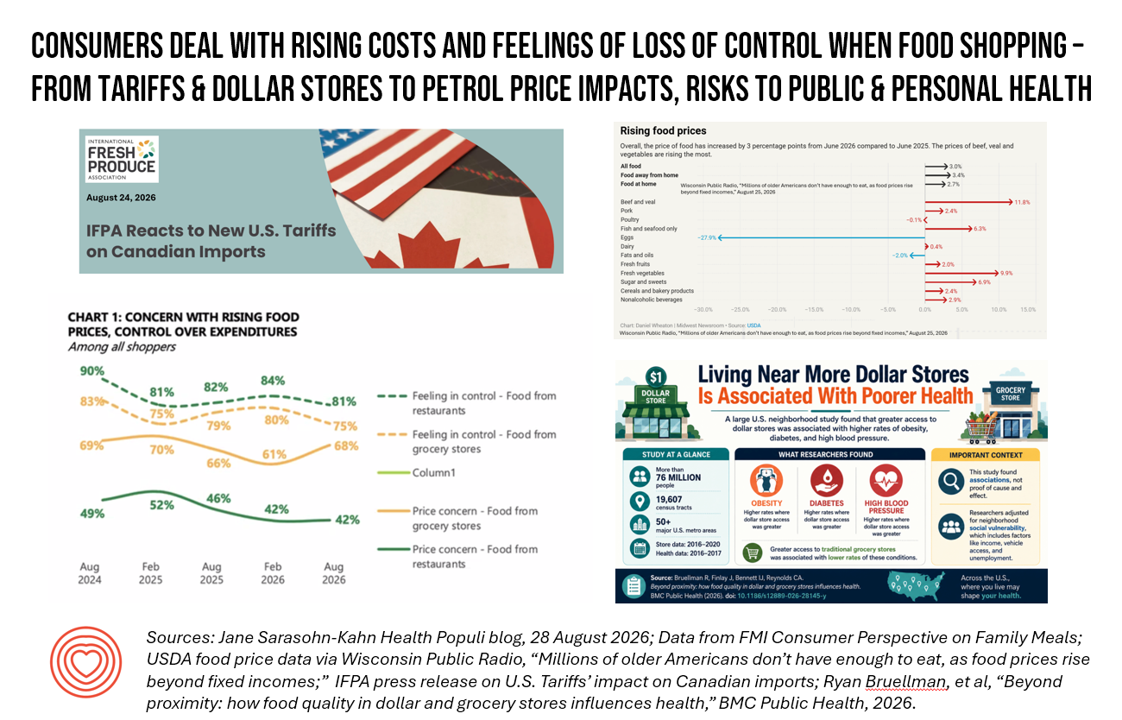
“Shoppers are feeling less control of their spending on food and more concerned about food prices than in February 2026.” Researchers with The Food Industry Association discussed their latest research into U.S. consumers’ worries about food prices’ impacts on family meals this week, and their findings comport with what I see happening in peoples’ self-care choices at-home directly impacting nutrition as well as adjacent areas of retail health and home health life-flows. This data point meshes with trends in geopolitics, home economics, and consumers’ growing demand for self-care outside of traditional “front doors” compelling me to call-out the health risks
Distrust is the default, insularity is our mindset: The Edelman Trust Barometer in 2026
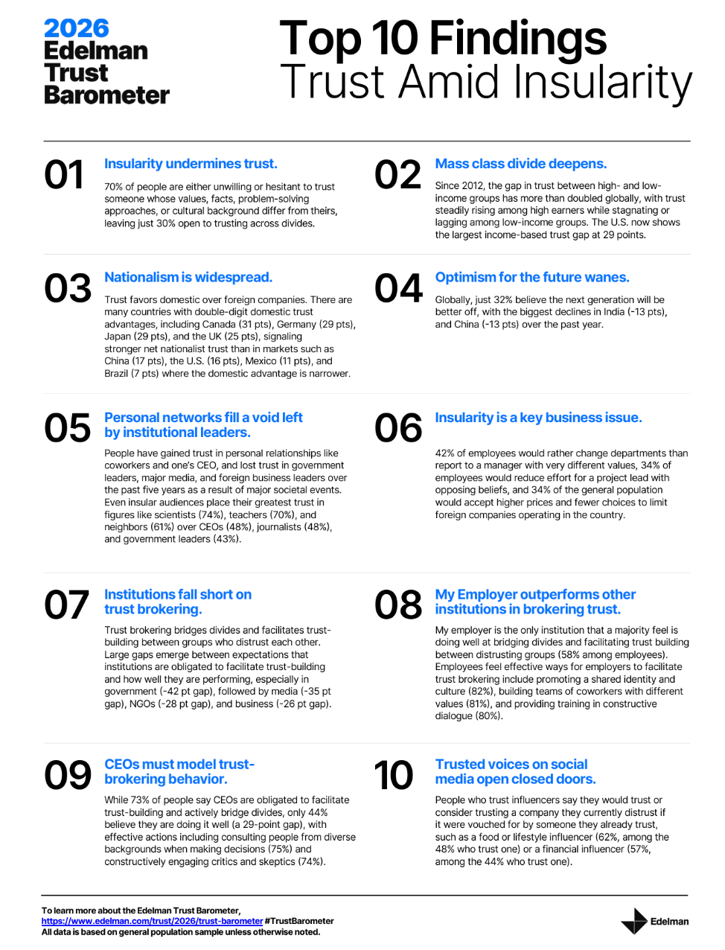
ss Last year’s “shared reality” was a culture of trust and a crisis of grievance: this year, it’s trust and insularity, we learn from the Edelman Trust Barometer for 2026, launched this week during the World Economic Forum in Davos, Switzerland. Here are the Top 10 findings from the annual study, which Edelman conducted among nearly 34,000 citizens in 28 countries in October and November 2025: Insularity undermines trust The mass class divide deepens Nationalism is widespread Optimism for the future wanes Personal networks fill a void left by
Americans Hear More Frequently About GLP-1 Drugs Than About Menopause, Sleep, or Bird Flu
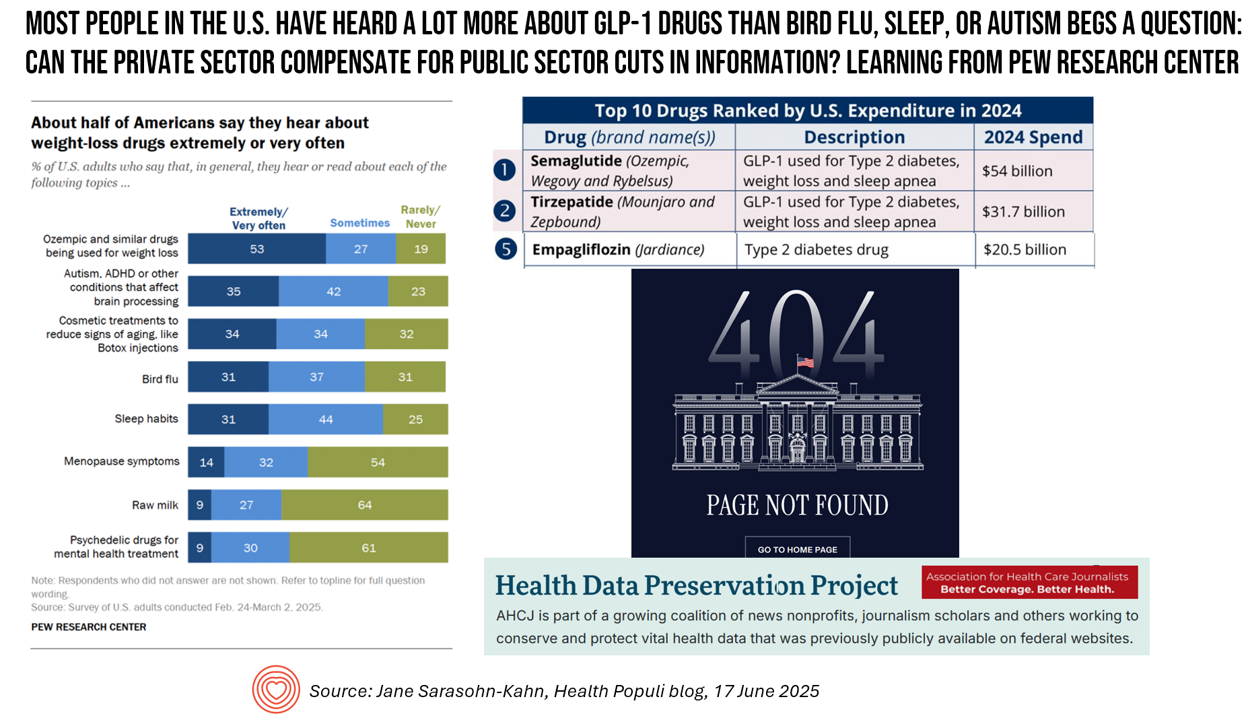
Yu In a sign of our health communications times, GLP-1s are a much more frequently health topic Americans hear about than autism and ADHD, cosmetic treatments like Botox, Bird flu, sleep issues, or menopause. The Pew Research Center polled 5,123 U.S. consumers in February and March 2025 to gauge peoples’ perspectives on health information and communications trends in America. In the study summary titled, From weight-loss drugs to raw milk, Americans hear more often about some health topics than others, the Pew Research team. The finding that
Americans’ Trust in Public Health Agencies Has Become Politicized, Though There is Bipartisan Support for Many Public Health Priorities

While health citizens’ trust in the “messengers” of health information has become polarized by partisans’ political views, there is real concordance of support for many public health priorities. We weave together two current studies to come to this realization: the latest (April 2025) KFF Tracking Poll on Health Information and Trust, KFF’s ongoing health survey (published 6 May); and, the de Beaumont – Harvard Chan School of Public Health poll into Americans’ views on public health in “the first 100 days” of President Trump’s presidency. First, consider the KFF study, conducted among
Can the Private Sector Serve Up Sufficient Health Media to Compensate for Public Sector Gaps?
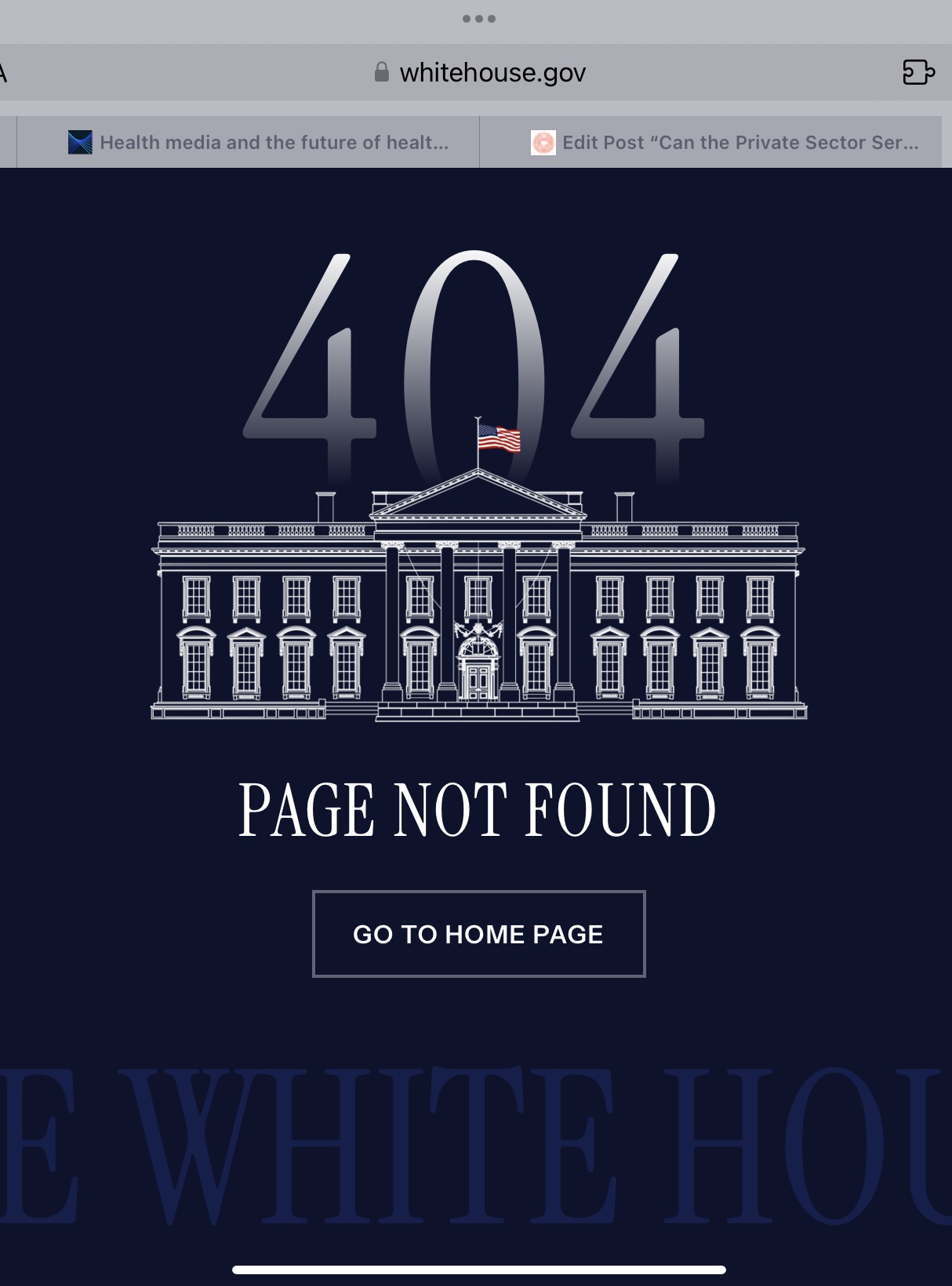
In researching several .gov websites from last Monday 20th January 2025, I had an ongoing frustrating user experience in being faced with “404 Error” messages like this one from WhiteHouse.gov. “President Trump’s First Week Hammered Public Health,” Dr. Arthur Kellerman, an ER doc, public health researcher, and patient advocate asserted in Forbes yesterday: “For now, the only health communications Americans receive will come from sources outside the government, such as professional societies, non-governmental organizations, advocacy groups, and businesses, vaccine skeptics, conspiracy theorists, foreign agents and bots posing as Americans to spread disinformation. It will be up to us to figure out what to
Workforce Shortages and Health Care Cost Pressures Inspire RSNA 2023 (and yes, AI’s in the mix, too)
Radiology and radiologists play starring roles in our health care, with he core work flow of diagnostic imaging supporting prevention, disease detection, diagnosis, delivering and monitoring therapy, linking specialists to other providers in telehealth, and as a medium for teaching clinicians, patients and caregivers. As health care delivery continues to change and adapt to technological innovations, demographic shifts, and economic-social-political forces, so, too, are the roles of radiology and radiologists in motion. Every year when American Thanksgiving weekend comes along, you’ll find folks involved in digital imaging flocking to chilly Chicago to convene at McCormick Place for
Can Artists Help to Remake Medicine? A New Book Asks and Answers (Yes!)
What if we asked an artist to re-imagine what health care could be? How might Van Gogh redesign a patient room akin to his room at Arles, or Michelangelo re-think general surgery? How might Thoreau take us on a nature walk for our mental health, or Basquiat channel his inner Da Vinci for a version of Jean-Michel’s Anatomy? In her new book, Artists Remaking Medicine. Emily Peters confronts health care’s paralyzing complexity (her words in the introduction) to invite a community of artists and artful thinkers to share their visions for remaking health care.
The Tik Tok’ing of Medical Mis-Information: Doctors’ and Patients’ Roles in Curating Healthy Advice
Doctors in the U.S. believe that the medical mis-information problem is worsening, learned in survey research from Merck Manuals. Doctors and patients, both, have roles to play in addressing medical misinformation online. Less than half of consumers, 44%, said that that there is more medical mis-information online than previously. That’s less than half of the percentage of doctors saying so — 98%, virtually all U.S. physicians, citing the problem. There were several disconnects noted in the Merck Manuals study showing starkly different perceptions of health information online between doctors and patients:
Honor Your Doctor – It’s National Doctors Day Today (and EveryDay)
Today, March 30, is National Doctors Day. We honor doctors annually on this day. But every day, we must honor physicians for bolstering the health and wellness of our fellow Americans, our beloved families and friends, and our selves. The Coronavirus Pandemic reminds us of the precious and scarce resource that is our national supply of physicians in America — numbering about 750,000 active clinicians in the U.S. according to the U.S. Bureau of Labor Statistics. Even before the COVID-19 crisis, physicians in America had been feeling increasingly burned out and depressed. The 2020 WebMD survey on the state of
 Jane will be working with EU- and UK-based clients in September and October 2026, collaborating with stakeholders in digital health, public/community health, retail health, and growing opportunities for health-at-home. Stay tuned to her updates here on Health Populi on-the-ground as she lives the digital nomadic work-life in Italy, Belgium, the Netherlands, and in London.
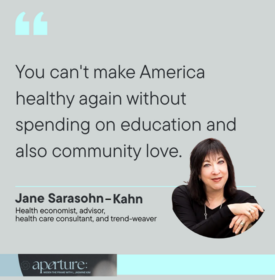 I was grateful to be Jasmine's first conversation-guest on her new podcast, "Aperture - Widen the Frame," where this expert in narrative medicine is bringing together the broad range of voices to sit at the table and address what health care needs: those humans in the health-system-loop who address health equity and empathy along with delivering evidence-based medicine for all.
 Jane joined host Dr. Geeta "Dr. G" Nayyar and colleagues to brainstorm the value of vaccines for public and individual health in this challenging environment for health literacy, health politics, and health citizen grievance. Click onto the Pfizer Value of Vaccines site and you can watch four episodes covering the challenges with adult vaccination, the employer and health plan member's journey to vaccination, reimbursement, and collaborating for proactive prevention.