

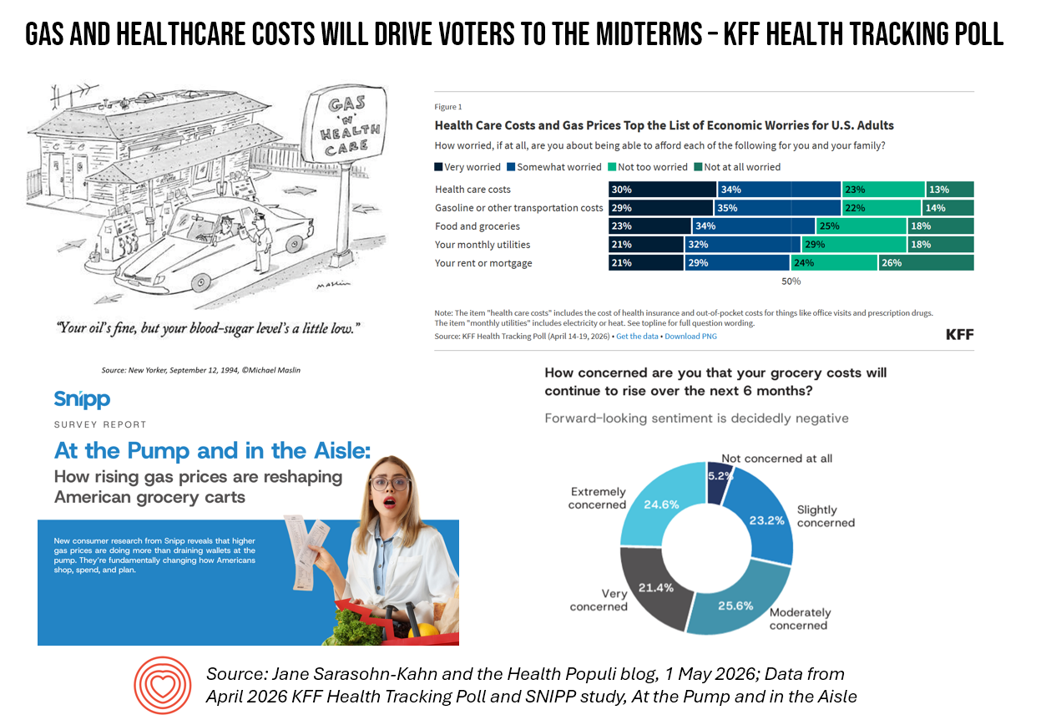
The cost of health care will have a major impact on U.S. voters’ midterm voting decisions in November 2026, most Americans expressed in the April 2026 KFF Health Tracking poll.
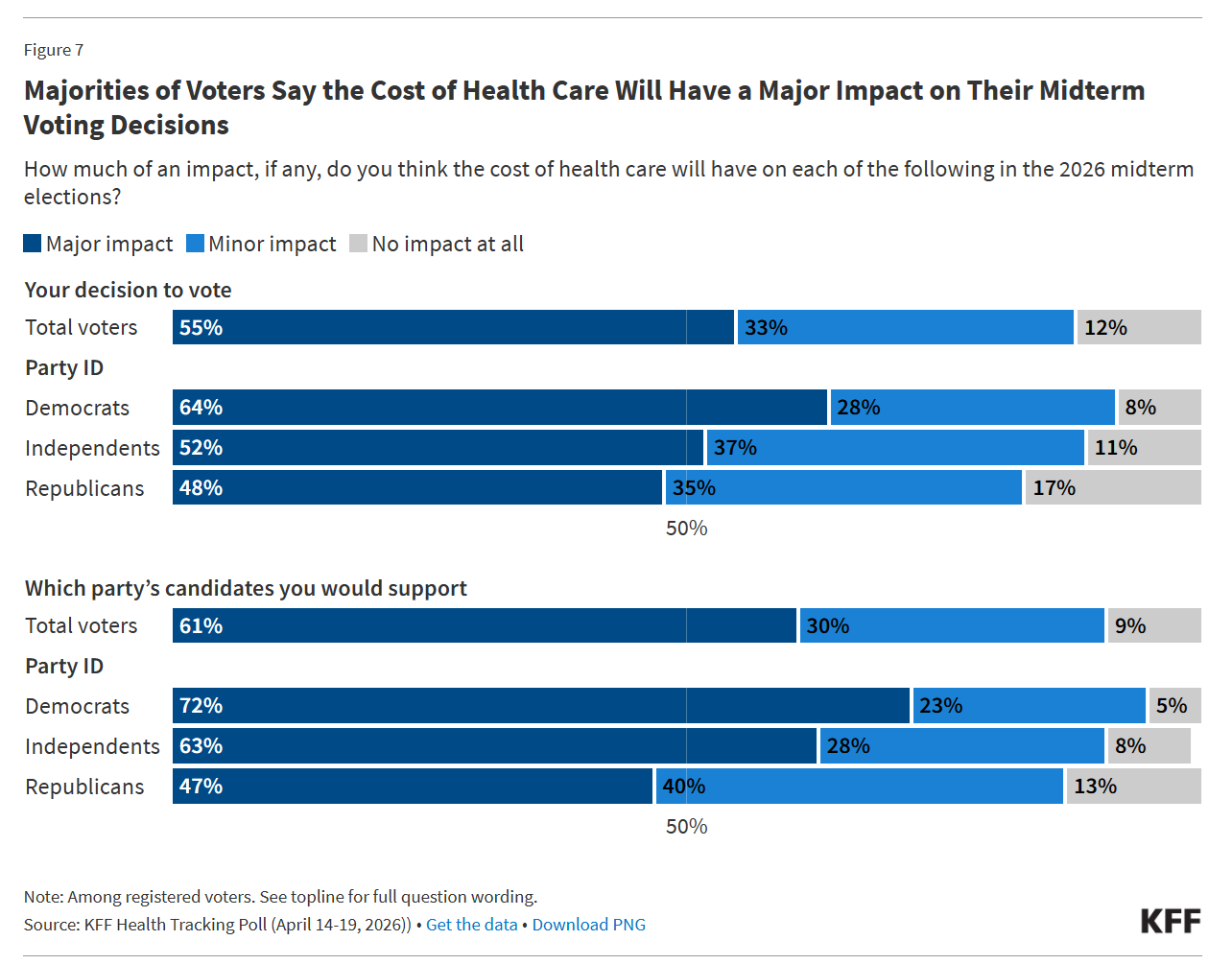
Kaiser Family Foundation surveyed 1,343 U.S. adults in April 2026 to assess peoples’ views on health care costs and their influence on voting behavior forward-looking to the midterm elections to be held on 3rd November 2026.
The first chart quantifies that overall 55% of U.S. voters say health care costs will have a “major impact,” and another 33% say health costs will have a minor impact. This includes 64% of Democrats and 52% of Independents falling into the “major impact” category. Note that nearly one-half of Republican voters said health care costs would have a “major impact” on their midterm election voting. 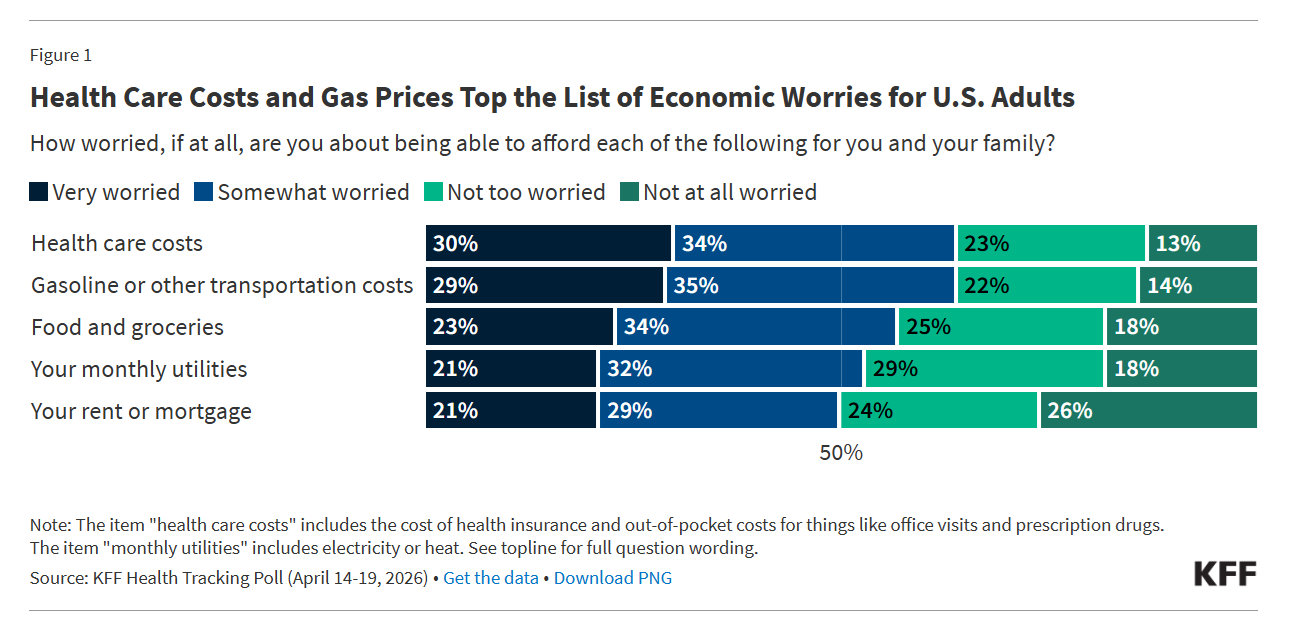
Americans rank health care costs and gas and transportation costs with similar levels of worry, with about 3 in 10 folks “very” worried about both forms of costs and another one in 3 “somewhat” worried.
Note that 64% (about 2 in 3 U.S. adults” put food and grocery costs in third position.
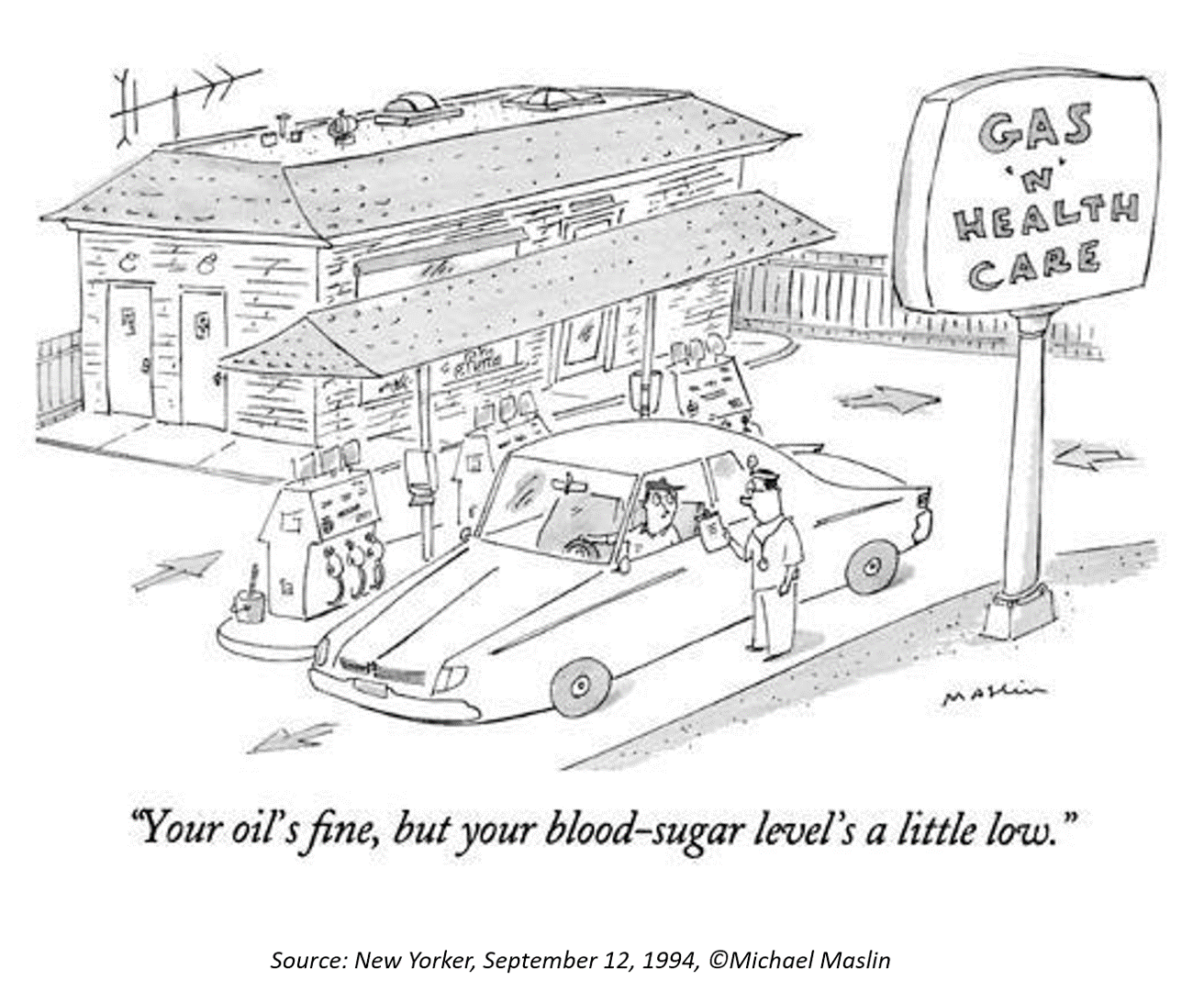
Health Populi’s Hot Points: I launched the Health Populi blog in September 2007 using this cartoon, when at the time the costs of gas ‘n health care were top-of-mind among Americans’ concerns. This blog has kept kitchen table issues at the center of our thinking (and working with clients) all these years, and so living in this moment in an inflationary economy, with tariffs inflating certain household costs and the war in Iran and petrol prices adding to consumers’ financial concerns.
This very convergence of gas ‘n healthcare compels me to turn to new data which complements the KFF Health Tracking Poll from Snipp who surveyed U.S. consumers; that research resulted in the report At the Pump and in the Aisle: How rising gas prices are reshaping American grocery carts, published on 31 March 2026.
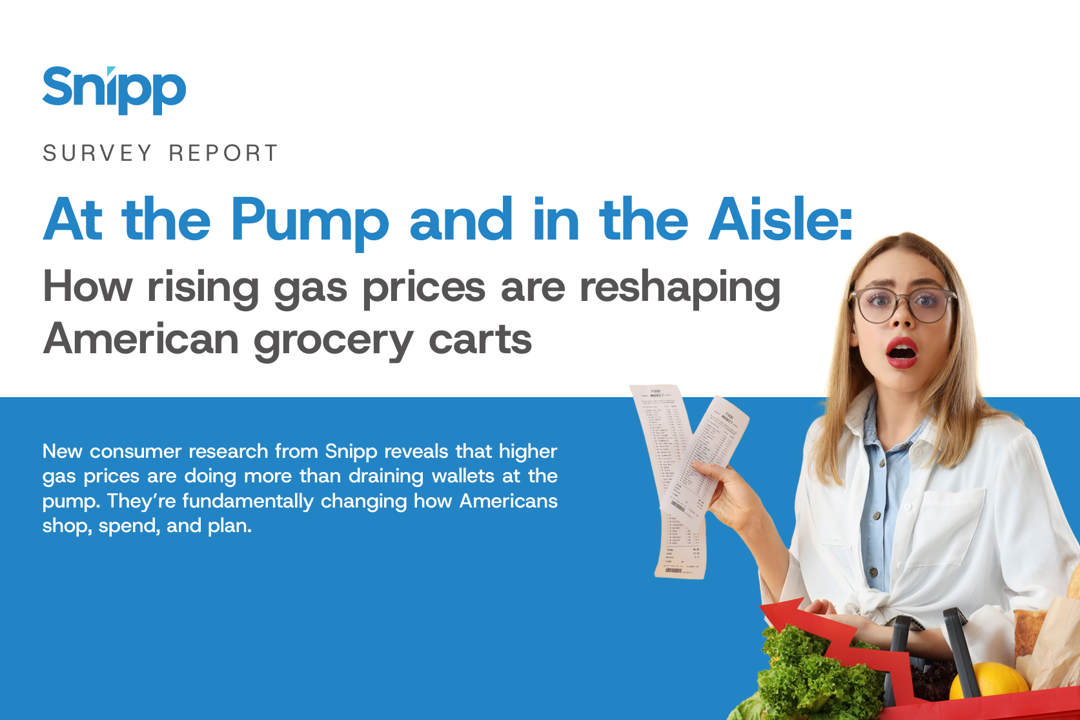
Snipp polled 1,000 U.S. adult grocery shoppers in March 2026 to gauge consumers’ perspectives on rising fuel costs’ impacts on their grocery shopping behaviors.
Overall, U.S. consumers’ forward-looking sentiment is decidedly network when it comes to grocery costs rising over the next six months: only 5% of people were not concerned at all, with,
- 25% extremely concerned
- 21% very concerned
- 26% moderately concerned, and,
- 23% slightly concerned.
Gas prices have impacted peoples’ household budgets, Snipp found, in an extreme sense for 12% of consumers. significantly for 19%, and 28% moderately.
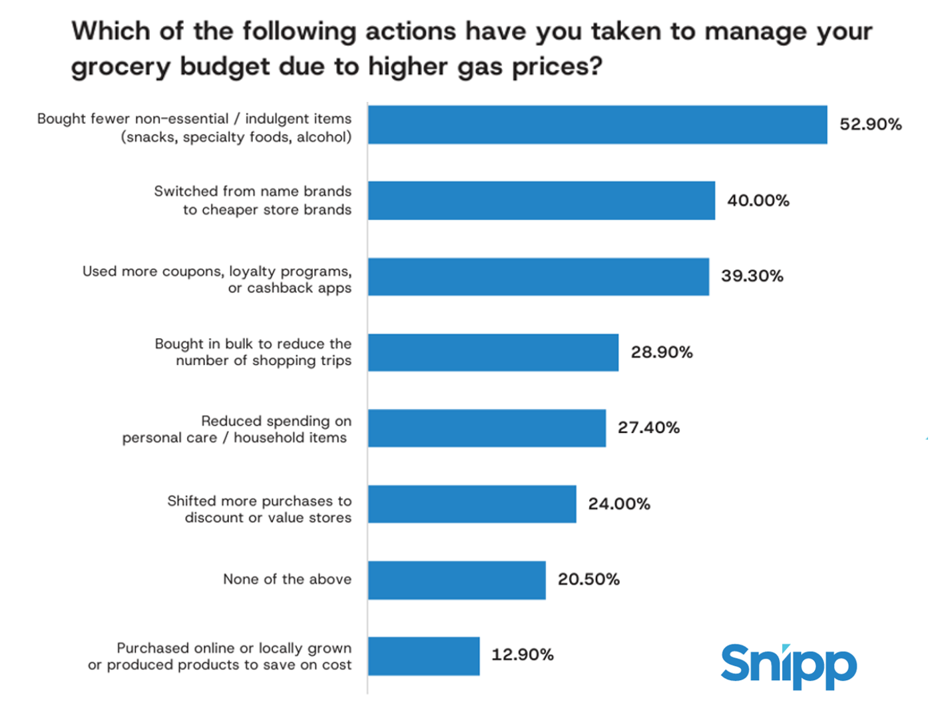
Specific to grocery budgets, consumers have undertaken several strategies to manage costs, most notably buying fewer non-essentials (e.g., snacks, specialty foods, alcohol) among 53% of U.S. shoppers; switching to cheaper store brands/private labels for 40% of consumers; using coupons and loyalty programs and cashback apps for 39%; buying in bulk to reduce the number of shopping trips among 29%’ and reducing spending on personal care and household items for 27% of people, among other tactics.
The kitchen table is now the consumer’s convening place to sort out spending priorities in financially stressful inflationary times. Is “healthcare” an essential item? We have evidence that more consumers are postponing various types of care, services, and product purchases (namely, prescription drugs) to help balance household budgets. This phenomenon has also driven peoples’ purchases of wellbeing and self-care services and products, so consumers as health consumers are taking on Direct-to-Patient behaviors from adopting GLP-1 medicines (often in self-pay mode, out-of-pocket), self-insuring by opting out of purchasing health insurance without ACA subsidy support, and substituting food-as-medicine with the advice of TikTok influencers and AI-onramps for medical information. Watch this space as we approach the U.S. mid-term elections.
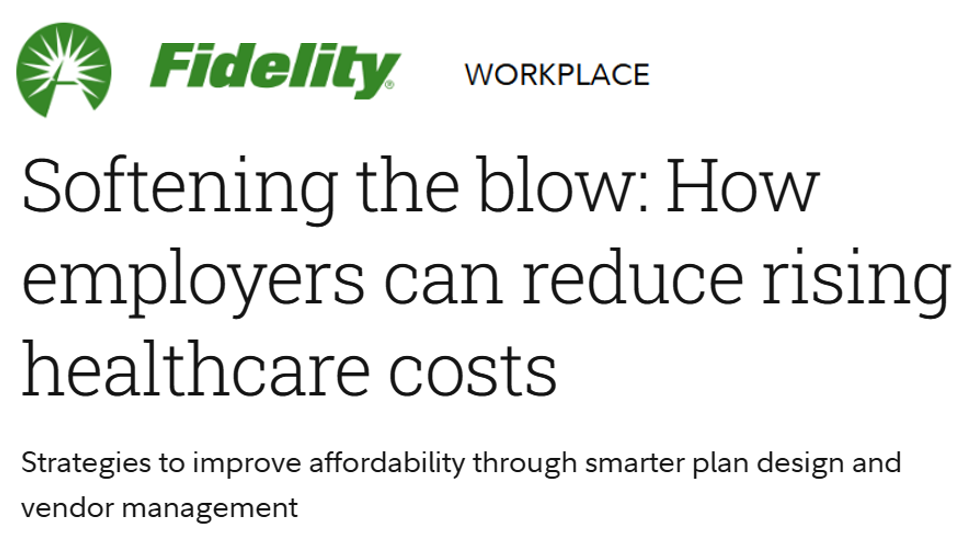 One of the best aspects of my work is collaborating across the health/care ecosystem to address how health citizens can deal with health care costs and and care for families. I'm grateful to have collaborated with Fidelity on their research into this issue,
 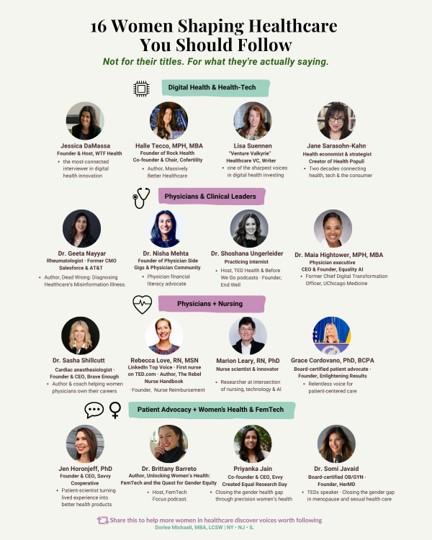 I'm gratified to be named on
 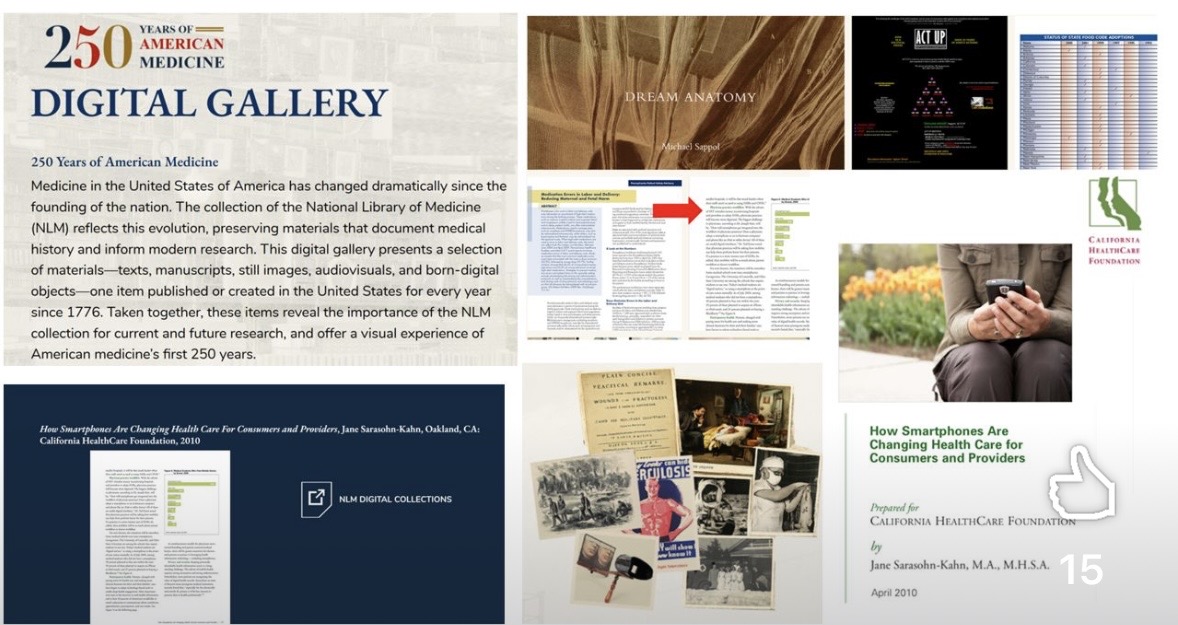 I’m celebrating America’s 250th birthday both patriotically and professionally, honored that the NLM included my 2010 paper, “How Smartphones Are Changing Healthcare for Consumers and Patients” as one of 250 items curated for the digital archive of 250 Years of American Medicine.