


How to Segment AI-Using Consumers: The Harris Poll AI Atlas, and What It Means for Healthcare
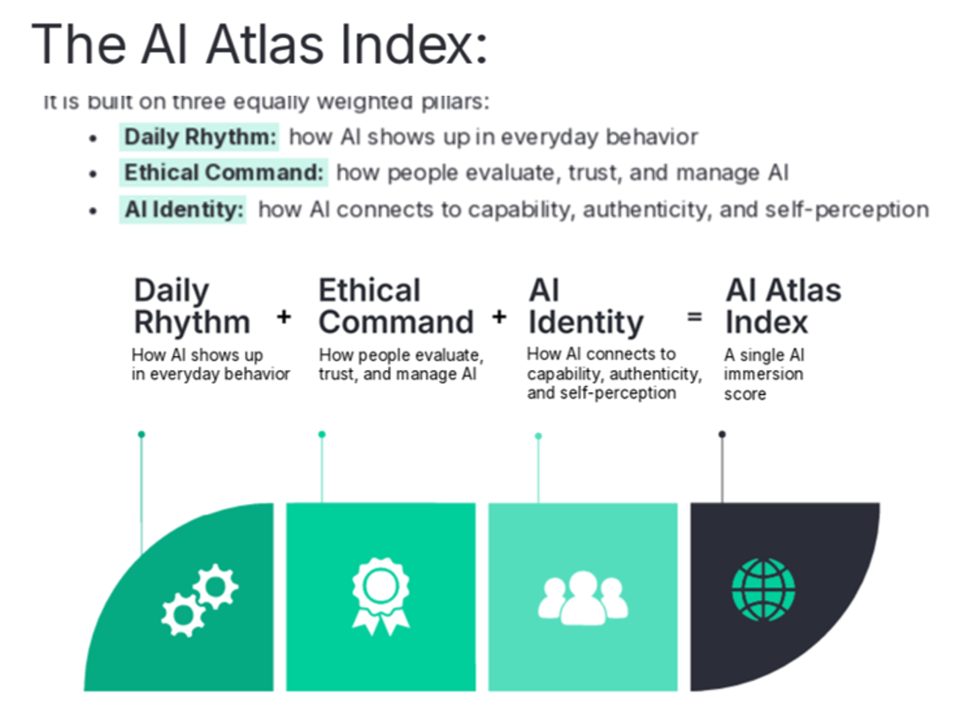
AI adoption is scaling faster than trust, where trust is tied to concerns about data privacy, transparency, and control in the U.S., Canada, and the UK. Welcome to the AI Atlas, what The Harris Poll calls “A living map of how people relate to AI and how those relationships evolve.” I consumed the Atlas with my lens on healthcare and self-care firmly in context, and in the Hot Points below, distill some thoughts on Harris’s fascinating market segmentation of AI/consumers. To construct the Atlas, The Harris Poll conducted a survey online in
Americans’ Spending on Healthcare, Food, and Housing: It’s All the Costs of Living – eHealth’s 2026 Mid-Year Survey
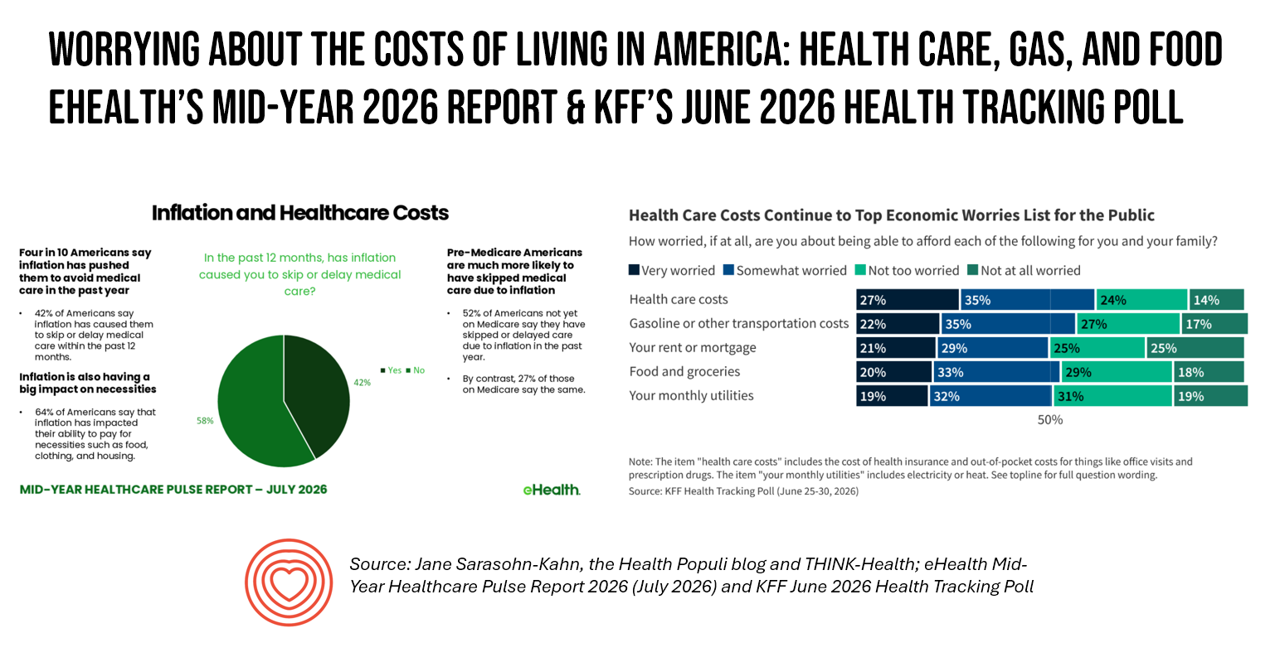
Two in three U.S. adults believe that recent high inflation has negatively impacted their ability to pay for food, clothing, or housing in the past twelve months — and, due to inflation in the U.S., 42% of people said that they have skipped or delayed medical care in the past year — including 52% of folks not yet enrolled in Medicare, and 27% of Medicare enrollees. Such are the economic lives of American households as quantified in the eHealth Mid-Year Healthcare Pulse Report 2026, published in July 2026. eHealth surveyed over 1,000 Americans to
The State of the 2026 Consumer – A Focus on Health, Experience, and DIY-Agency, McKinsey Observes
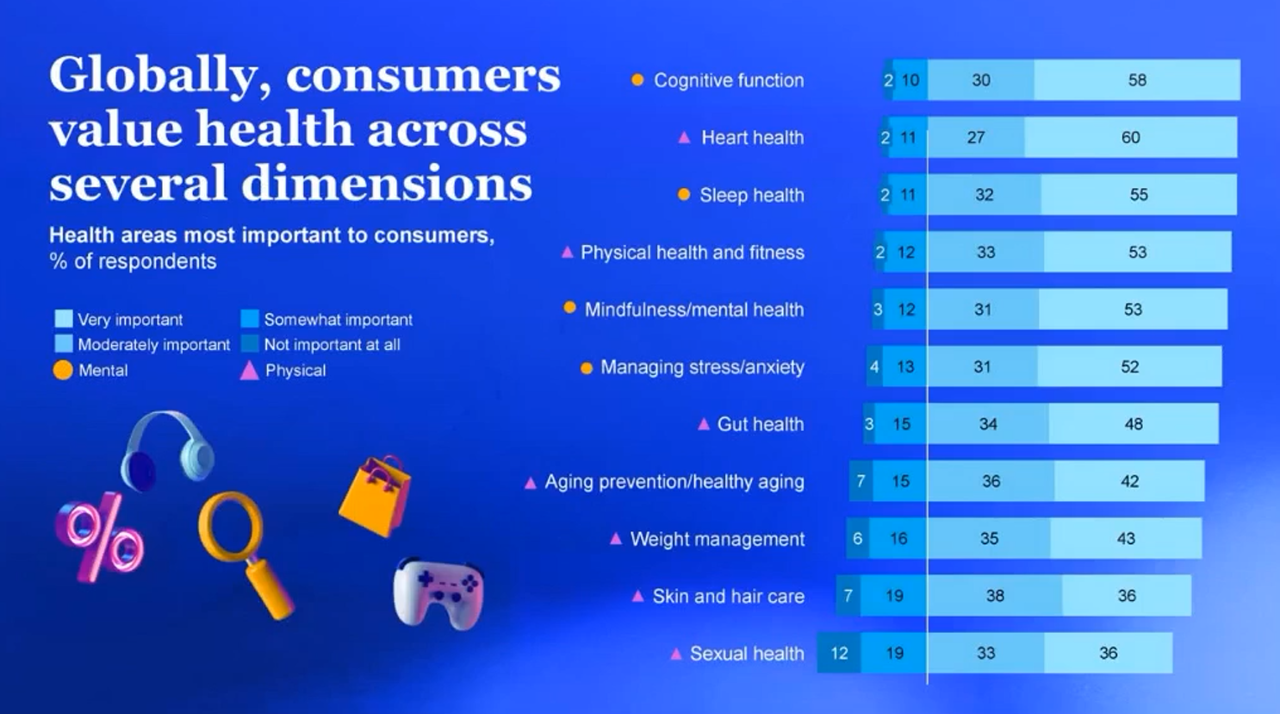
Cost pressures and technology acceleration (read: AI) are reshaping and reinforcing post-COVID consumer behaviors, we learn from McKinsey’s State of the Consumer 2026. The research report is built on four key trends, which were discussed in a webinar session featuring Danielle Bozarth (New York-based) and Clarisse Magnin (Paris-based), Senior Partners with McKinsey, led in an insightful conversation by Global Editorial Director Lucia Rahilly. This year, consumers’ behaviors are empowered and enabled through technology — AI, social media, and omnichannel communications that support peoples’ agency to research, find, purchase, and share experiences. And health is central
If You’re a Woman, Under 50, or Dealing with Mental Health or Respiratory Illness in America, You’re More Likely to Be Healthcare “Cost Insecure”
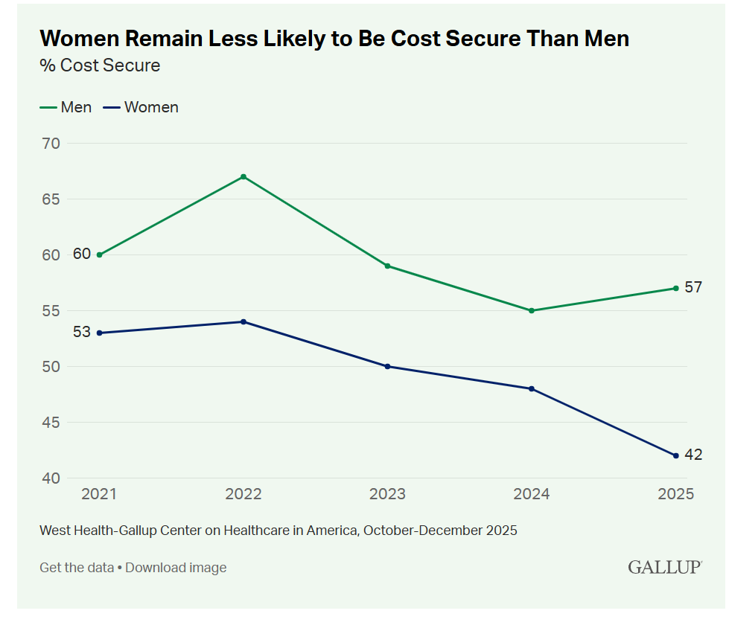
One-half of people living in the U.S. in the fourth quarter of 2025 said they could afford health care in America, according to research from Gallup and West-Health discussed in U.S. Adults’ Ability to Afford Healthcare at a Five-Year Low. Gallup and West Health polled 5,660 adults aged 18 and older between October and December 2025 as part of the organizations’ Affordability Index. This research defines Americans’ health care financial access in three tiers: Cost Secure, when people say they have access to quality, affordable care, able to pay for both needed
Consumers Globally Are Defining Longevity in Self-Care As People Confront a World Out of Control
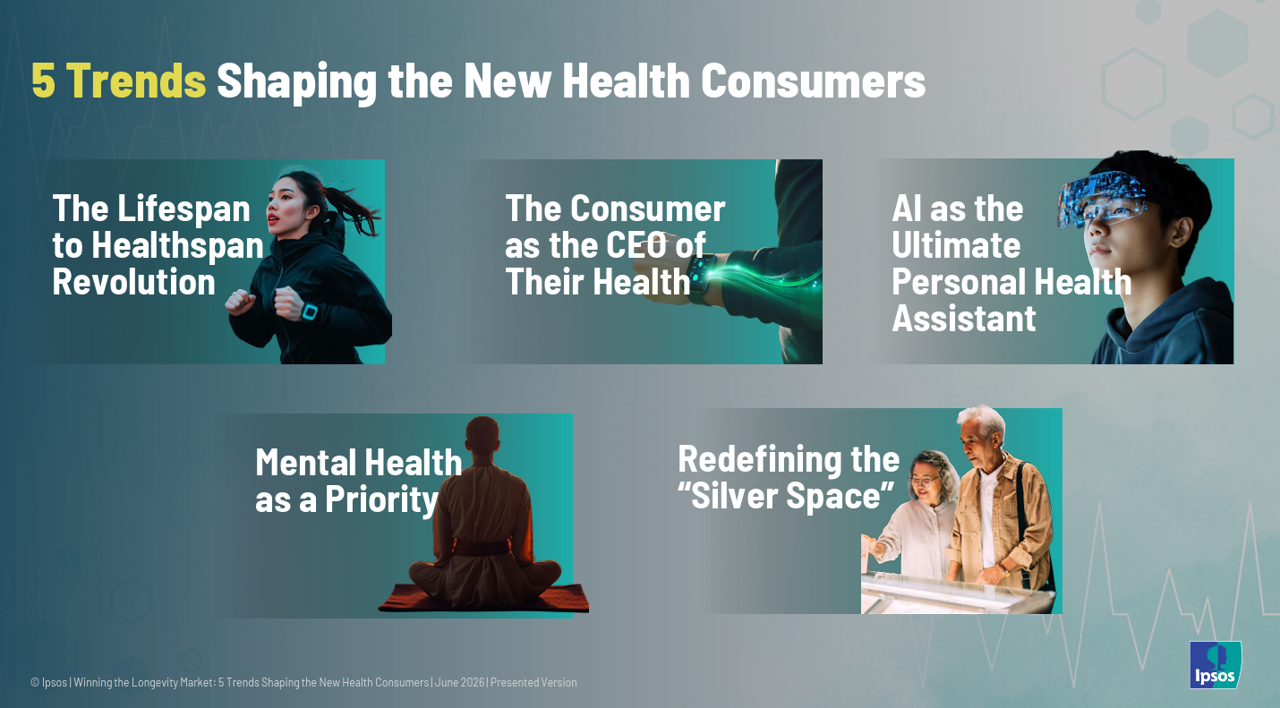
“The consumer response to a world out of control is to invest in self,” and that has inspired peoples’ search for longevity beyond lifespan itself. Ipsos’s latest research into this phenomenon is presented in the firm’s report, Winning the Longevity Market, published in late June 2026. Five factors are shaping these increasingly self-caring health consumers, including, A shifting perspective from lifespan to healthspan Consumers as CEOs of their health AI as ultimate personal health assistant Prioritizing mental health, and, Redefining the “Silver Space.” “The world
Technology is Reshaping Trust in Health Care – Consider Humanity, Transparency, Capability, and Reliability
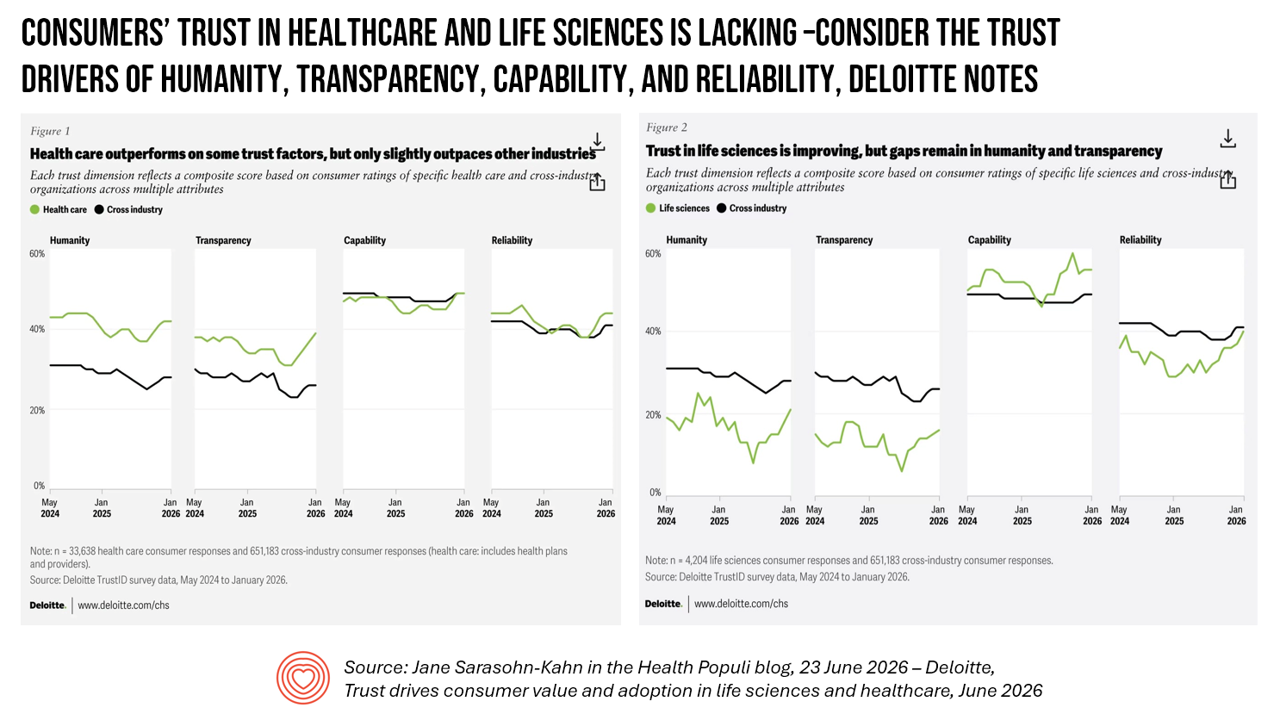
“Trust is like blood pressure. It’s silent, vital to good health, and if abused, it can be deadly.” So wrote Frank Sonnenberg, prolific author and commentator about morals and life. We can broaden Sonnenberg’s observation on trust beyond “health” itself to healthcare. Trust is indeed vital to healthcare, and to the health care industry, we learn from research from Deloitte discussed in the paper, Trust drives consumer value and adoption in life sciences and health care. Deloitte assessed consumers’ ratings of health care delivery systems (hospitals, providers) and life science companies (pharma, biotech, med-tech) across four drivers of trust: Humanity, assessing
What $37,824 Can Buy You in the U.S. in 2026: a VW SUV, a Year of College Tuition, or Healthcare for a Family of 4
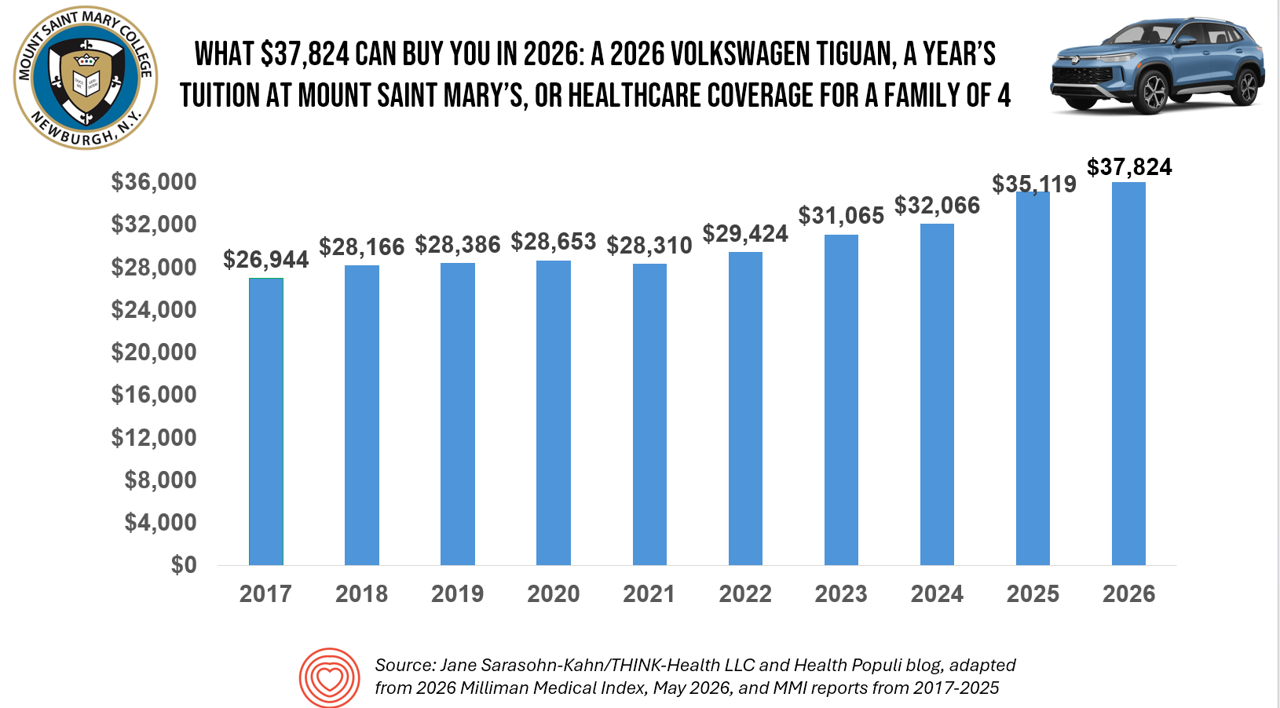
If you had an extra $38K to spend, what would be on your list? If you’re a parent of a college-aged son or daughter, paying for college would be a lovely idea. If you’re in need of a new car, then that money could get you a mid-sized SUV. If you valued being covered by a health plan through your employer, then you’d be sharing in that cost to the tune of over $14,000 for your family of 4, based on the annual forecast in the 2026 Milliman Medical Index. The actuaries and health
The Side Effects of Debt and Financial Stress Add Up to a Public Health Crisis in America
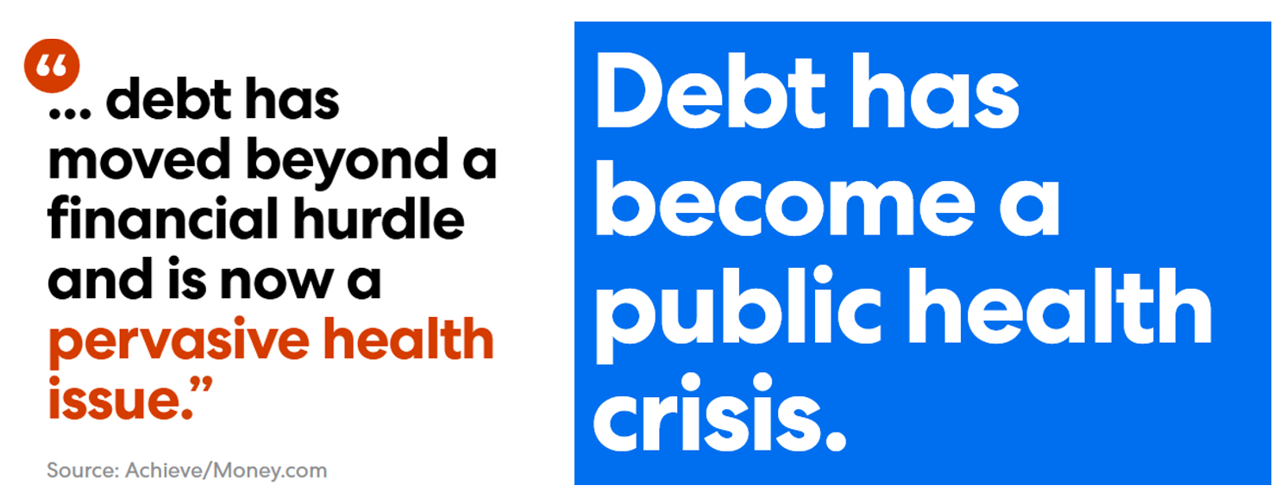
Financial stress and debt take are now an American public health problem, we realize in the report, Rising debt is taking a toll on Americans’ financial and mental health from the Achieve Center for Consumer Insights. A joint survey conducted by Achieve and Money.com assessed the fiscal health perspectives of 2,000 U.S. consumers ages 18 and over, fielded in February 2026. This first chart from the study report arrays various “side effects” of Americans dealing with financial stress and debt, most commonly feelings of fatigue and low energy, stress-eating, delayed decision
The Cost of Confusion with U.S. Healthcare – a deja vu of The Temptations’ “Ball of Confusion”
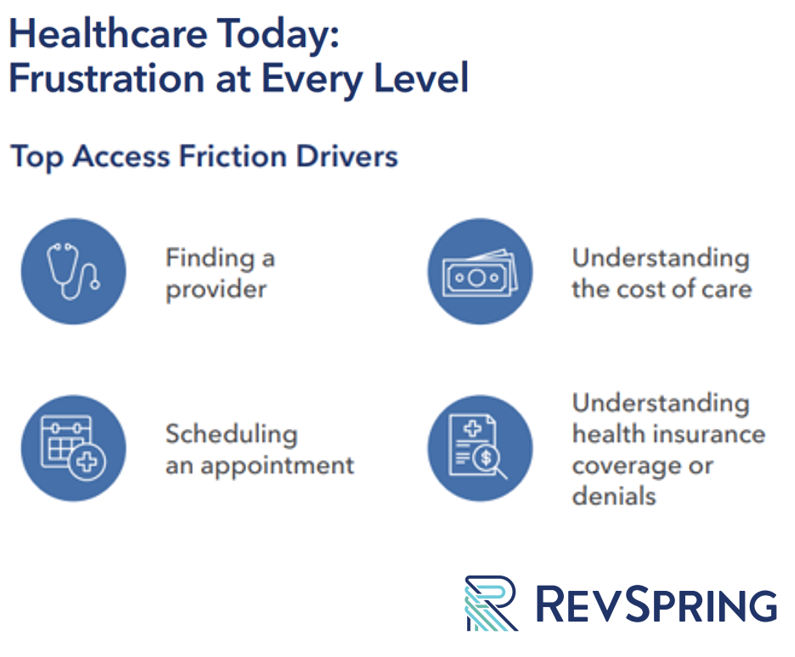
A new survey from RevSpring, a healthcare payments company, measures consumers’ feelings of friction with healthcare in America — where people feel frustration “at every level,” the topline reads. The title of the paper, The Cost of Confusion: How Friction Shapes the Healthcare Experience, reminded me of one of my favorite songs from Motown growing up, “Ball of Confusion.” This Temptations hit was written by the great Motown songwriters, Norman Whitfield and Barrett Strong (who interestingly and to the point of this post, recorded the first hit single for Motown, the fabulous song “Money [That’s What I Want],” in 1960).
Gas ‘n Healthcare ‘n Groceries: U.S. Voters’ Cost-of-Living Concerns Will Inspire Them to Vote in the Midterms in the Latest KFF Health Tracking Poll
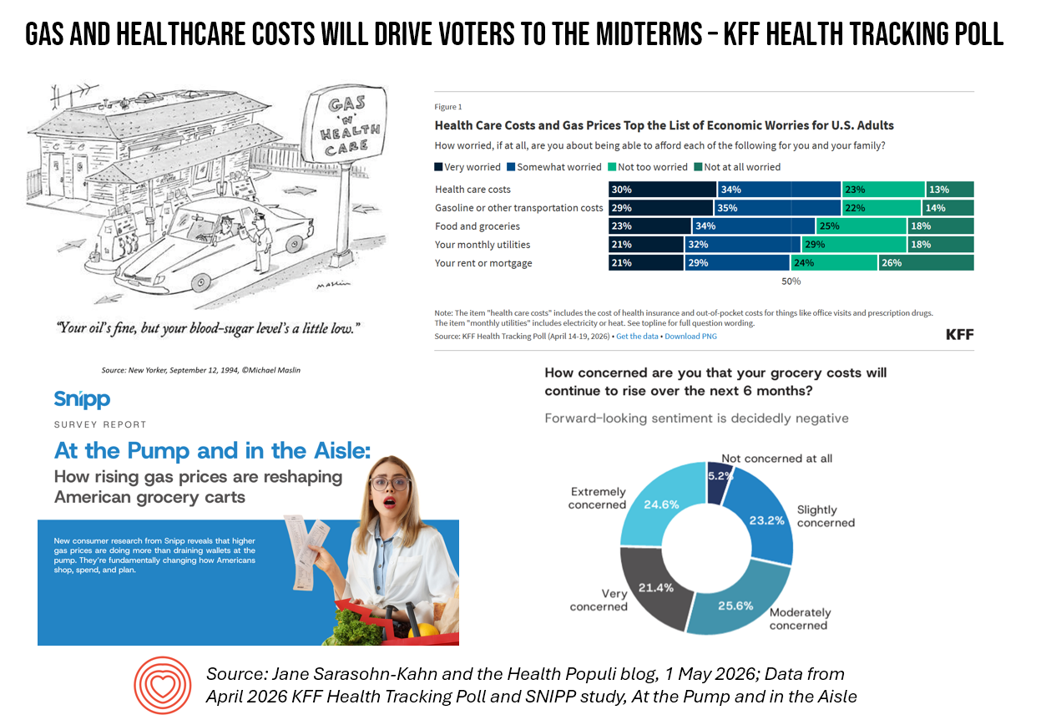
The cost of health care will have a major impact on U.S. voters’ midterm voting decisions in November 2026, most Americans expressed in the April 2026 KFF Health Tracking poll. Kaiser Family Foundation surveyed 1,343 U.S. adults in April 2026 to assess peoples’ views on health care costs and their influence on voting behavior forward-looking to the midterm elections to be held on 3rd November 2026. The first chart quantifies that overall 55% of U.S. voters say health care costs will have a “major impact,” and another 33% say health costs will
Most Brands Speak to Women As If They Are Men: Learning from Hidden Women, Health Marketing Insights from 8th Day
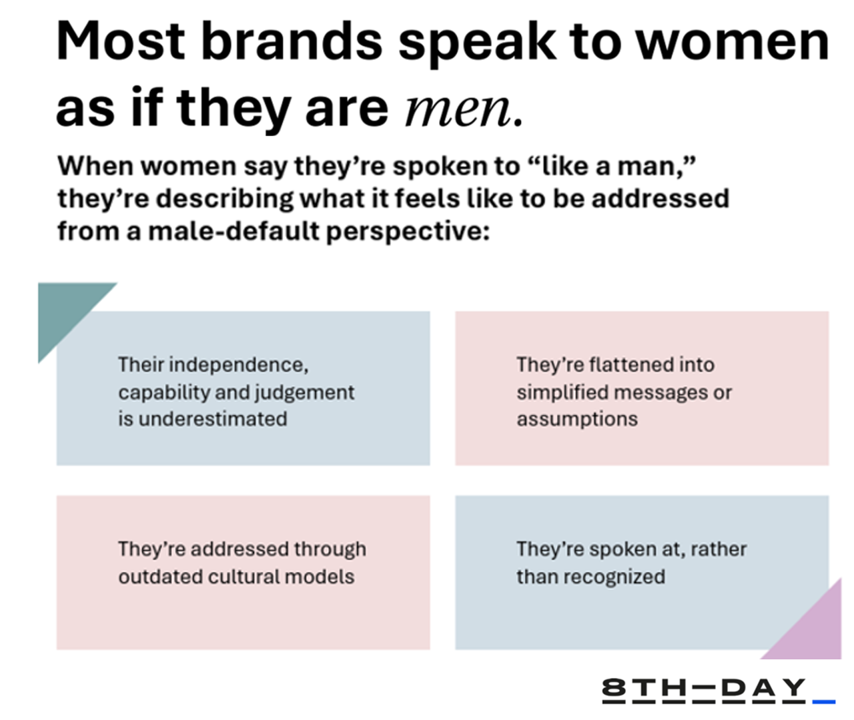
Are women “seen?” And how do they see themselves compared with how companies see them — marketers, leaders, and any enterprise that’s trying to message and persuade women to calls-to-action? If you are working to inspire, influence, or engage that portion of the world’s population who are women, then a new study from 8th-Day brand consultancy can inform your strategies. It’s titled Hidden Women: Unlocking brand growth by seeing the unseen, and it’s chock full of insights and lightbulb moments from which you can benefit. In full and delightful disclosure, the 8th-Day team are
Doctors and Consumers in America Agree: Health Care Access and Affordability Rank Top of Mind in March 2026 (surveys from Athenahealth and Gallup)
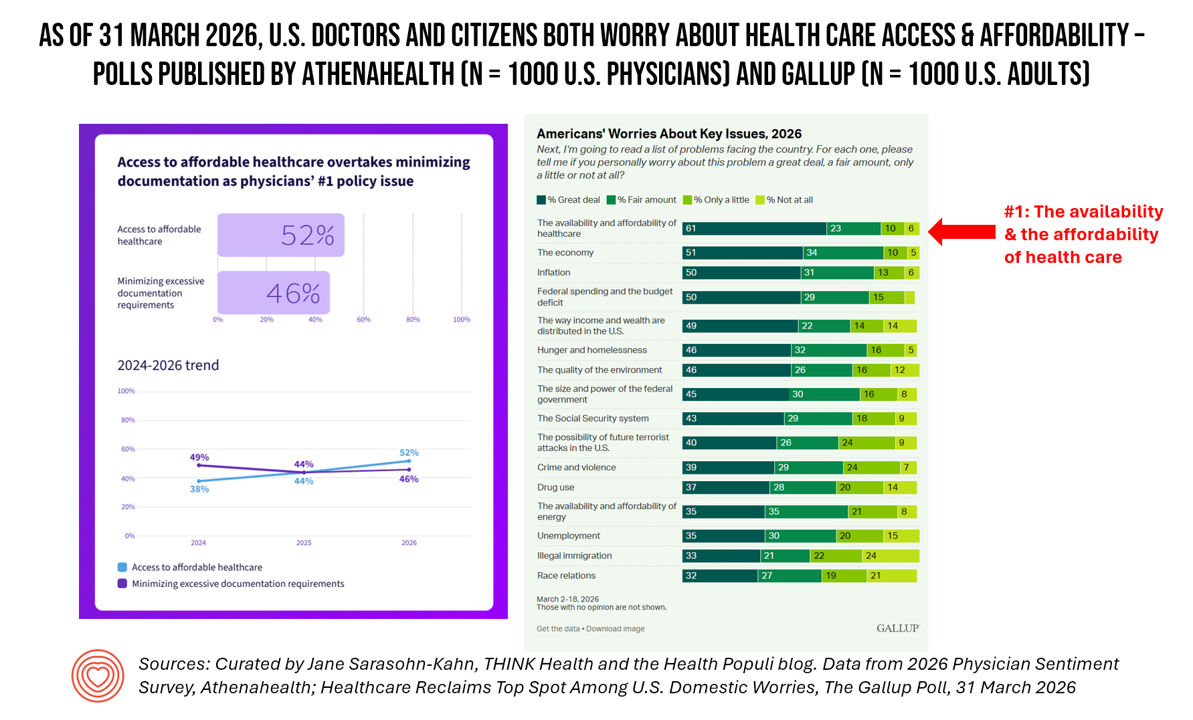
In uncannily-timed releases of two surveys in March 2026, we see that U.S. physicians and consumers both rank health care access and affordability as the top issue they face — for medical practices among doctors, and for everyday life worries among U.S. health citizens. On the physician front, The 2026 Physician Sentiment Survey was published by Athenahealth, gauging U.S. doctors’ views on the state of medical practice and healthcare in America. “Over the past three years,” Athenahealth observes, “access to affordable healthcare has risen sharply to become
The “Five-Month” Cognitive Penalty of Financial Decline: A Significant Loss of Financial Well-Being Correlates with About Five Months of Cognitive Decline A Year
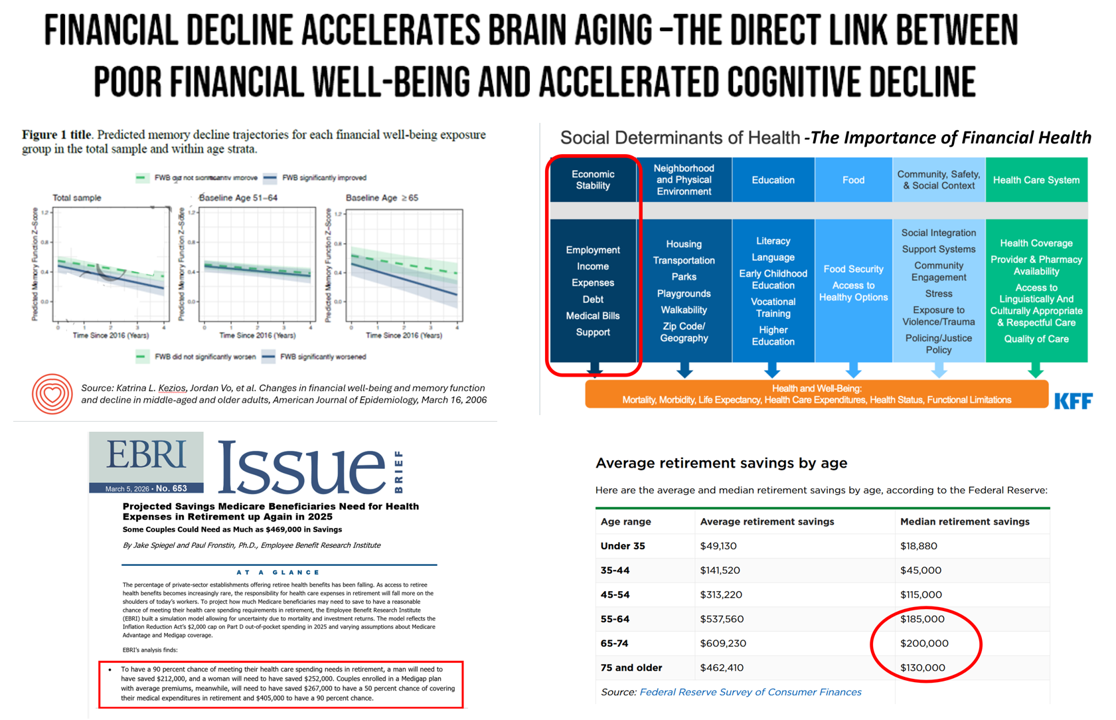
Lower financial well-being and worsening financial conditions have been linked to declining brain function, according to new research from a team at the Columbia Mailman School of Public Health. The research, Changes in financial well-being and memory function and decline in middle-aged and older adults, was published this month in the American Journal of Epidemiology. “Worse financial well-being in midlife and older age — and especially declines over time — are associated with lower memory scores and faster cognitive decline,” the study notes — among the first to scrutinize the relationship between brain
“Will Work For Health Care:” Americans Trading Off Wages For Healthcare (Again)
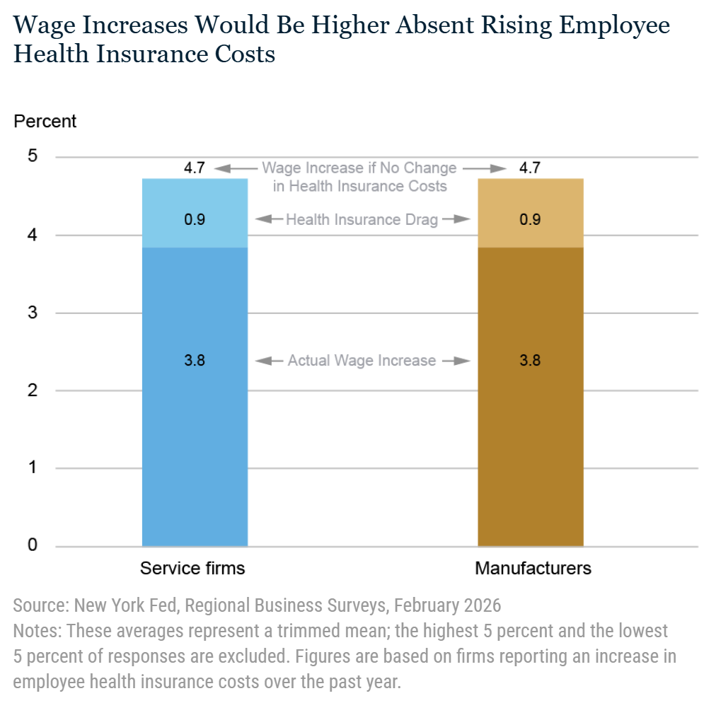
Many people living in America who receive health benefits at the workplace traded off wage growth for health insurance coverage, a report from the Federal Reserve Bank of New York published this week. For those of us working in the health economics and policy space since the 1990s, the Fed team gave me a strong sense of déjà vu. The bar graph cited in the report explains the math behind the wage/health plan trade-off. “Among those businesses experiencing an increase in employee health insurance costs, the average wage increase over
Dr. Wachter Bets on A Giant Leap for AI in Health Care

“Stop worrying and let AI help save your life,” a New York Times op-ed prescribed in January. So I wanted to ask Dr. Robert Wachter, author of that essay, “why not worry?” and read his latest book, A Giant Leap, before speaking with him. I spent time with Bob on a Zoom session last week to dig into some patient/consumer-facing issues regarding AI and health care. Before I launch into our engaging conversation, I’d like to share some context about Dr. Wachter and his evolution that I believe makes him
Financial Stress and Trust in Health Care Takes Many Forms – Listening to Jarrard’s 2026 State of Play Survey
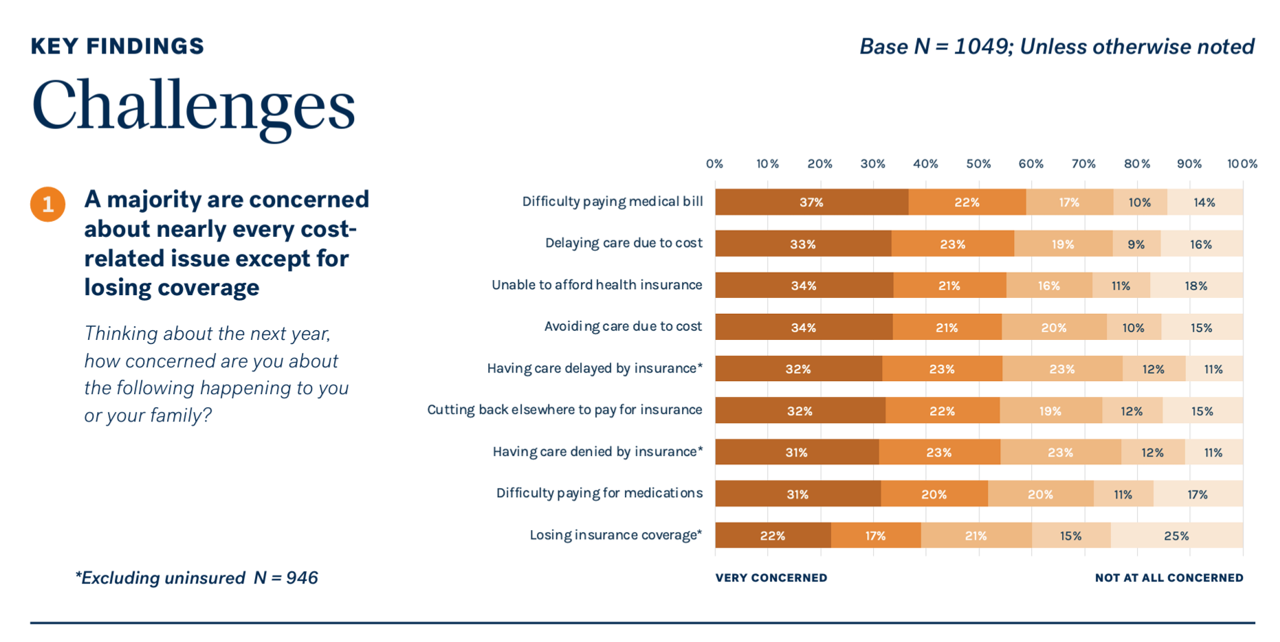
Most people in the U.S. are concerned about many cost-related aspects of health care, we learn from Jarrard’s 2026 survey report on Americans’ health care financial angst titled Navigating the Riptide: Public views on healthcare, health policy, and healthcare organizations. Jarrard fielded the consumer study among 1,049 U.S. adults 18 years of age and older in early January 2026. Here are the details, listing nine cost-related issues U.S. consumers face in their health care journeys – including, Difficulty paying medical bills (net 59% very or somewhat concerned) Delaying medical care due to cost (55%) Inability
Health Care Ads at the Big Game (Super Bowl LX) – Edgy, Entertaining, Educational
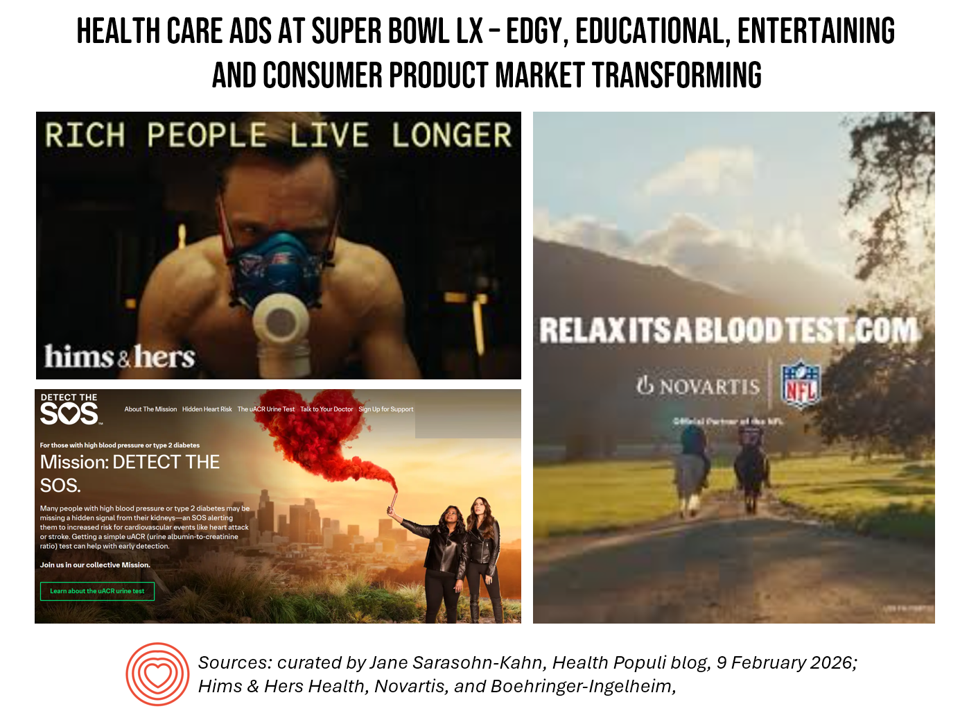
“When Weight Watchers dared to run an ad in 2015, it was likened to a record scratch,” AdAge noted in its preview of ads planned for broadcasting during Super Bowl LX. A decade+ later, healthcare and health-related promotions are part of the Big Game’s financial lifeblood, where a 30-second spot can cost $8 million according to AdMeter And on the aesthetics/design front, some of the ads this year are downright edgy — entertainment-intended, but also educational in their own way. Take “Rich People Live Longer,” this year’s ad from Hims & Hers Health. The company advertised at last year’s game
The Healthcare Affordability Elections, 2026 and 2028 – Listening to the KFF Tracking Poll, January 2026
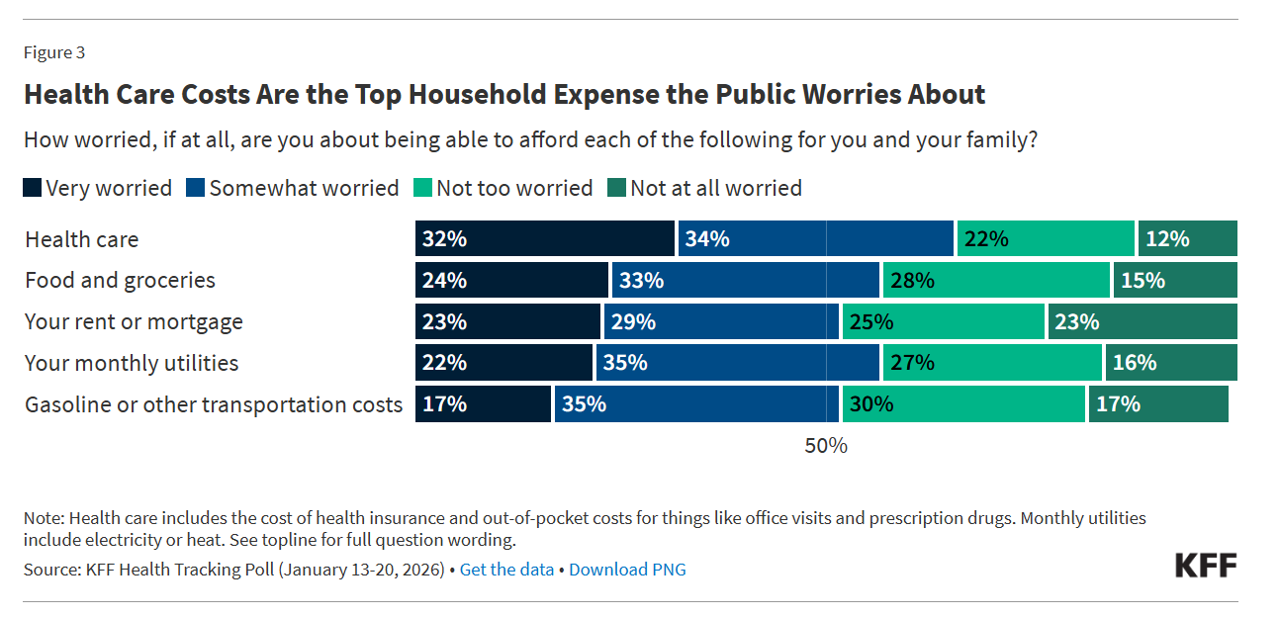
The title of KFF’s press release launching the Foundation’s January 2026 Health Tracking Poll clearly observes, “Health Care Costs Tops the Public’s Economic Worries as the Runup to the Midterms Begins.” I’ve pulled out the key details to share my lens on the 2026 midterm and 2028 Presidential election forecast, which I believe will turn out to be (in part) The Patients’ Elections. Here’s the top-line title finding — where most people in the U.S. — 2 in 3 people (66%) — are worried more about health care costs compared with other major household expenses.
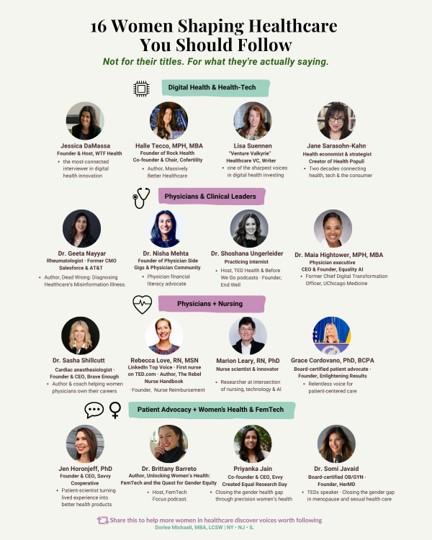 I'm gratified to be named on this updated list of 16 women's voices who are shaping health care. The curator of the list, Dorlee Michaeli, asked the question: "If someone wanted a smarter healthcare LinkedIn feed tomorrow, who should they follow today?" Glad to be one of these voices.
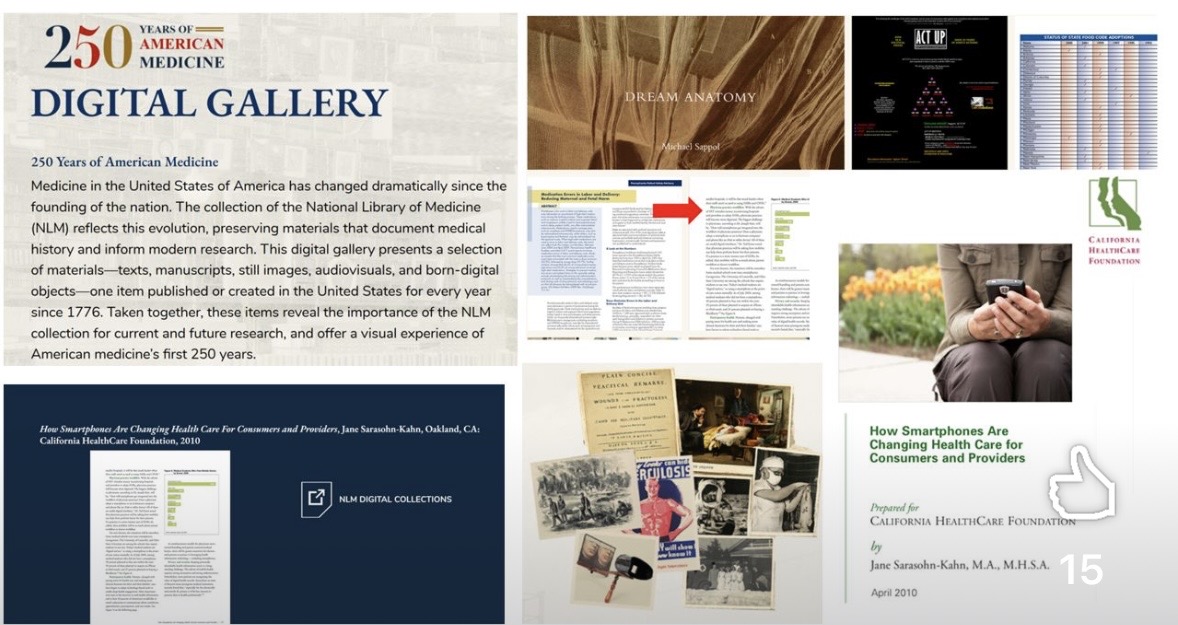 I’m celebrating America’s 250th birthday both patriotically and professionally, honored that the NLM included my 2010 paper, “How Smartphones Are Changing Healthcare for Consumers and Patients” as one of 250 items curated for the digital archive of 250 Years of American Medicine.
 I'm grateful to be part of the Duke Corporate Education faculty, sharing perspectives on the future of health care with health and life science companies. Once again, I'll be brainstorming the future of health care with a cohort of executives working in a global health care enterprise.