


Why Clorox Talks about Hygiene at Home: Health, Wellbeing, and the Home as Health Hub
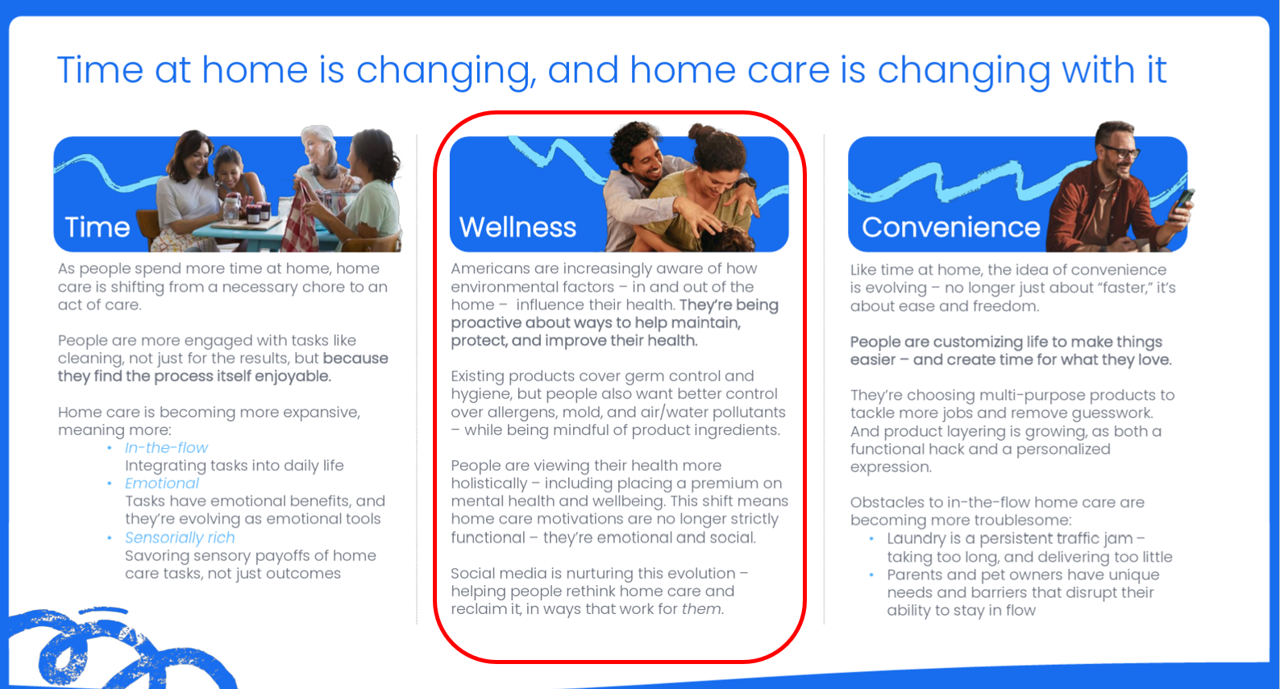
The COVID-19 pandemic was a watershed era for people re-assessing and re-imagining their homes as hubs for health, healthcare, and well-being (as well as learning, exercising, and baking sourdough bread). This graphic comes from my book, Health Citizenship: How a Virus Opened Hearts and Minds, written in the midst of the pandemic based on consumers’ newly adopted behaviors during the #workfromhome and #stayhome epoch. We experienced the digital transformation of people through life and home-based work and education, a growing sense of DIY for things we could do
Dr. Wachter Bets on A Giant Leap for AI in Health Care
“Stop worrying and let AI help save your life,” a New York Times op-ed prescribed in January. So I wanted to ask Dr. Robert Wachter, author of that essay, “why not worry?” and read his latest book, A Giant Leap, before speaking with him. I spent time with Bob on a Zoom session last week to dig into some patient/consumer-facing issues regarding AI and health care. Before I launch into our engaging conversation, I’d like to share some context about Dr. Wachter and his evolution that I believe makes him
Financial Stress and Trust in Health Care Takes Many Forms – Listening to Jarrard’s 2026 State of Play Survey
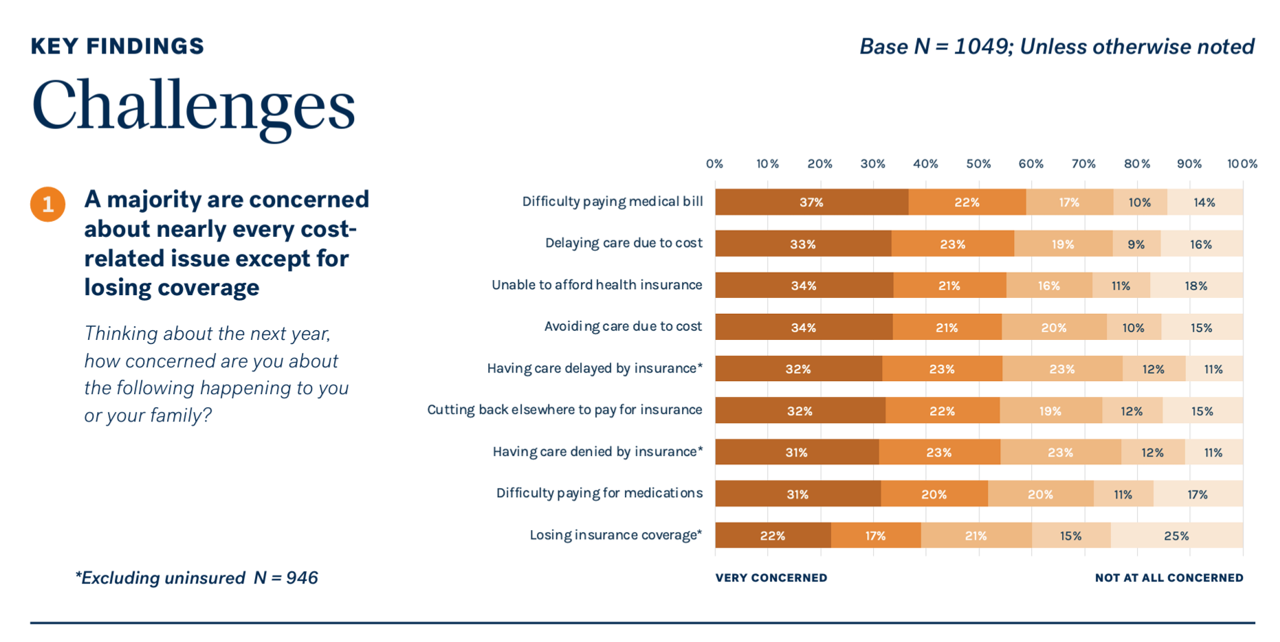
Most people in the U.S. are concerned about many cost-related aspects of health care, we learn from Jarrard’s 2026 survey report on Americans’ health care financial angst titled Navigating the Riptide: Public views on healthcare, health policy, and healthcare organizations. Jarrard fielded the consumer study among 1,049 U.S. adults 18 years of age and older in early January 2026. Here are the details, listing nine cost-related issues U.S. consumers face in their health care journeys – including, Difficulty paying medical bills (net 59% very or somewhat concerned) Delaying medical care due to cost (55%) Inability
Health Care Ads at the Big Game (Super Bowl LX) – Edgy, Entertaining, Educational
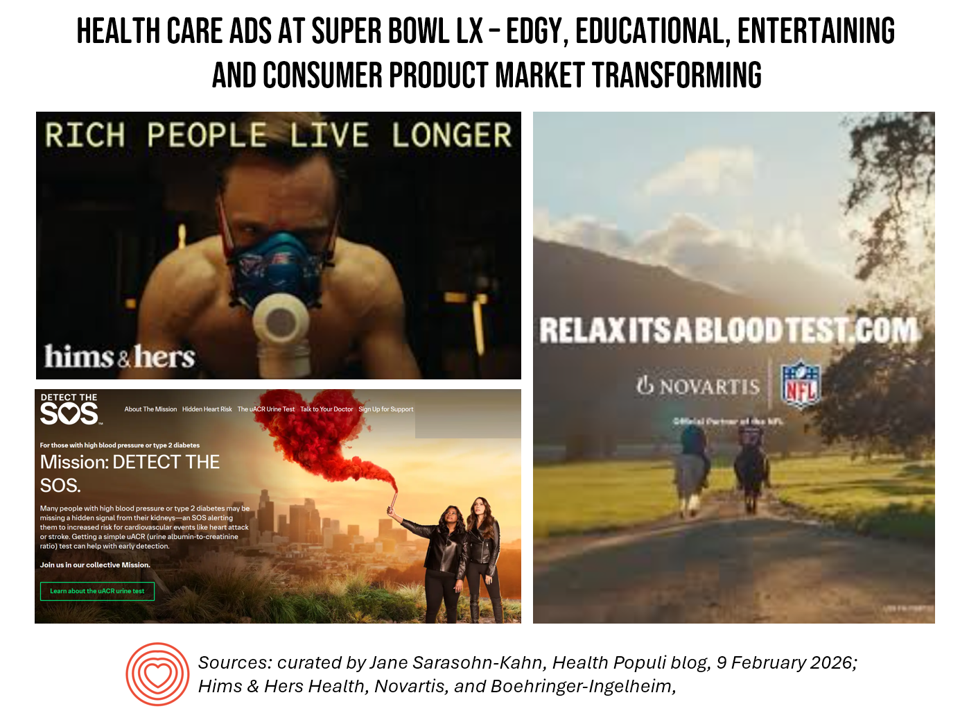
“When Weight Watchers dared to run an ad in 2015, it was likened to a record scratch,” AdAge noted in its preview of ads planned for broadcasting during Super Bowl LX. A decade+ later, healthcare and health-related promotions are part of the Big Game’s financial lifeblood, where a 30-second spot can cost $8 million according to AdMeter And on the aesthetics/design front, some of the ads this year are downright edgy — entertainment-intended, but also educational in their own way. Take “Rich People Live Longer,” this year’s ad from Hims & Hers Health. The company advertised at last year’s game
When a Hotel Becomes Your Health Partner – Learning from Novotel and Accor

“Novotel Launches ‘Longevity Everyday.'” That’s the title of the global, France-based hotel chain’s press release, announcing the Novotel brand’s initiative to serve up healthy hospitality. Check out this video… Behind this strategic positioning decision, the hotel notes, “Accor data reveals that one in three travelers is taking daily steps to improve their mental and physical wellbeing, yet most longevity programs remain out of reach for many people. This gap between demand and accessibility has created a strategic opportunity that Novotel, Accor’s founding brand, is uniquely positioned to address.” This approach will extend to over 600 hotels operating in 67 countries
The New (Old) Long-Term Care: Intergenerational, Together at Home
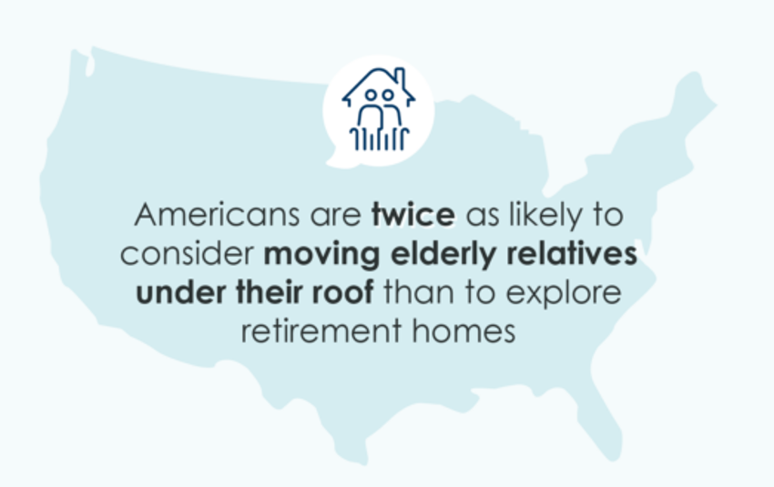
One in three adult children in the U.S. say that moving their parent(s) into their family’s home is the most likely living arrangement for their folks as they age, we hear from a study on the “Care Conversation” from LevLane, conducted by Talker Research. That’s twice as many consumers as those looking to assisted living (19%) or senior living or memory care facilities (16%). Talker Research conducted a survey of 2,000 U.S. adults, Gen X or younger with a living parent, to assess the current state of and future prospects for the senior living market.

 Jane will be working with EU- and UK-based clients in September and October 2026, collaborating with stakeholders in digital health, public/community health, retail health, and growing opportunities for health-at-home. Stay tuned to her updates here on Health Populi on-the-ground as she lives the digital nomadic work-life in Italy, Belgium, the Netherlands, and in London.
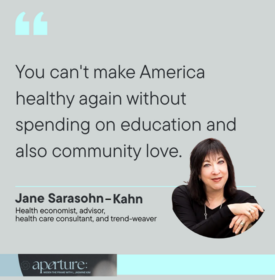 I was grateful to be Jasmine's first conversation-guest on her new podcast, "Aperture - Widen the Frame," where this expert in narrative medicine is bringing together the broad range of voices to sit at the table and address what health care needs: those humans in the health-system-loop who address health equity and empathy along with delivering evidence-based medicine for all.
 Jane joined host Dr. Geeta "Dr. G" Nayyar and colleagues to brainstorm the value of vaccines for public and individual health in this challenging environment for health literacy, health politics, and health citizen grievance. Click onto the Pfizer Value of Vaccines site and you can watch four episodes covering the challenges with adult vaccination, the employer and health plan member's journey to vaccination, reimbursement, and collaborating for proactive prevention.