


What $37,824 Can Buy You in the U.S. in 2026: a VW SUV, a Year of College Tuition, or Healthcare for a Family of 4
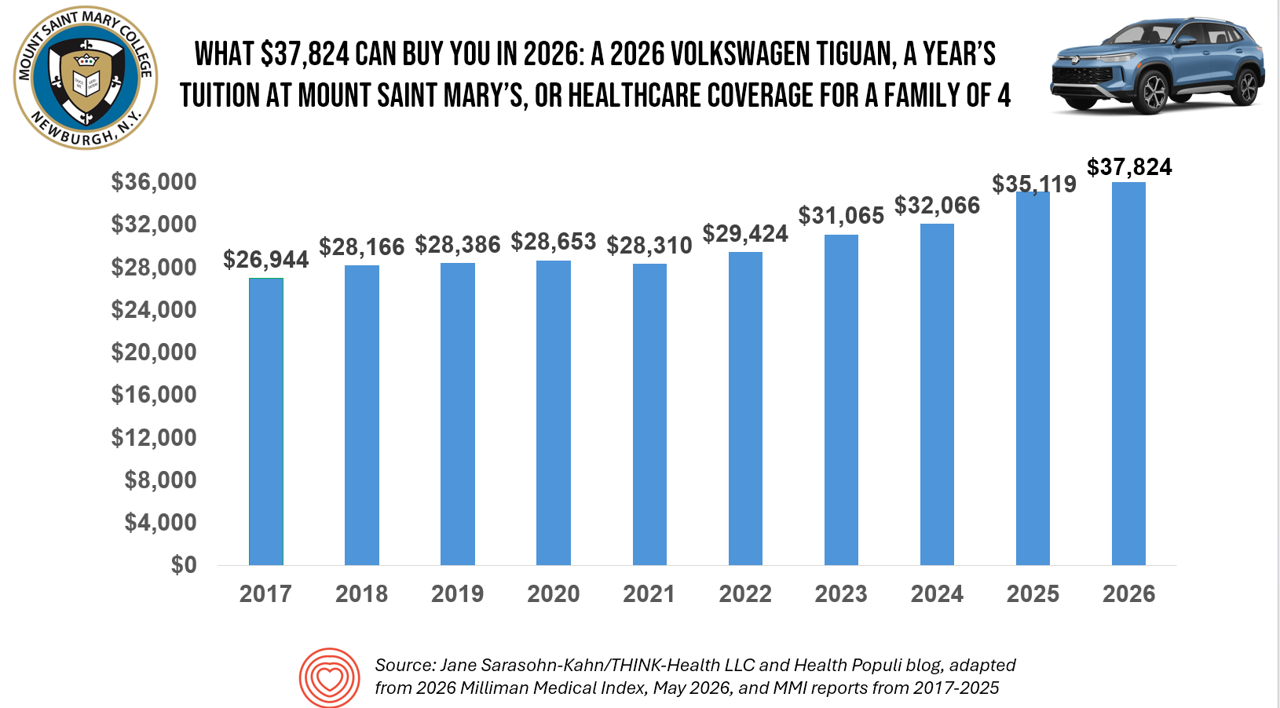
If you had an extra $38K to spend, what would be on your list? If you’re a parent of a college-aged son or daughter, paying for college would be a lovely idea. If you’re in need of a new car, then that money could get you a mid-sized SUV. If you valued being covered by a health plan through your employer, then you’d be sharing in that cost to the tune of over $14,000 for your family of 4, based on the annual forecast in the 2026 Milliman Medical Index. The actuaries and health
The Side Effects of Debt and Financial Stress Add Up to a Public Health Crisis in America
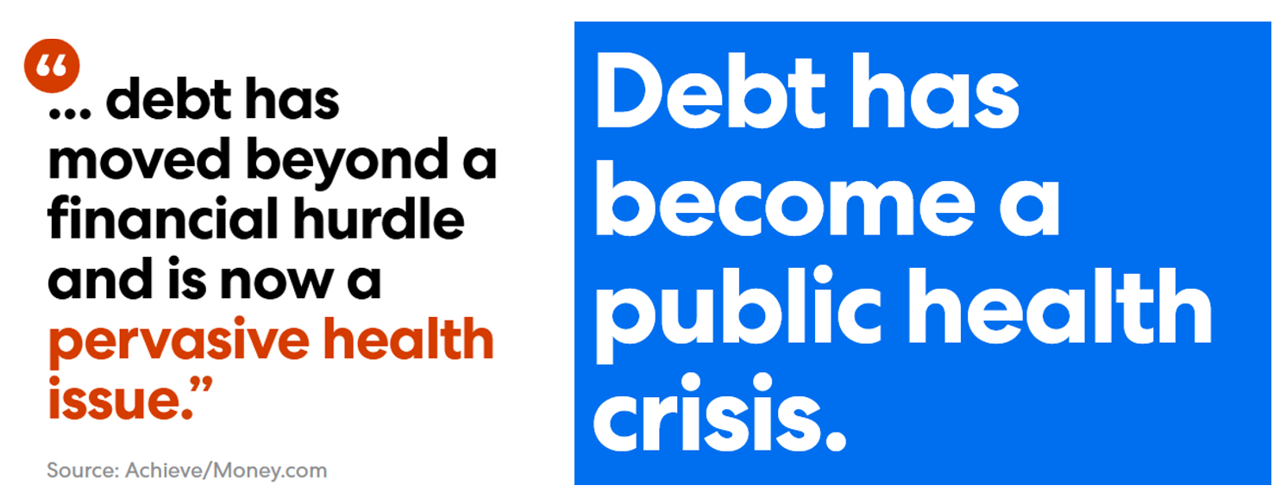
Financial stress and debt take are now an American public health problem, we realize in the report, Rising debt is taking a toll on Americans’ financial and mental health from the Achieve Center for Consumer Insights. A joint survey conducted by Achieve and Money.com assessed the fiscal health perspectives of 2,000 U.S. consumers ages 18 and over, fielded in February 2026. This first chart from the study report arrays various “side effects” of Americans dealing with financial stress and debt, most commonly feelings of fatigue and low energy, stress-eating, delayed decision
Will AI Make Our Minds Feel Like Boiling Frogs, Be Borrowed, or Inspire Agency and Joy? Learning from John Nosta

Like gas and healthcare prices crowding out other spending, the topic of “AI” can crowd out other issues in our email inboxes, LinkedIn and other social media channels, and local and national concerns. Getting my head into John Nosta’s new book, The Borrowed Mind: Reclaiming Human Thought in the Age of AI, could not have come at a better time given AI’s growing presence in my own brain, work conversations, and local political discussions in our community and state. After one read-through, I let John know I would need to do a
Will GLP-1s Shift the Actuarial Curves for Life Expectancy? Swiss Re Models the Scenarios
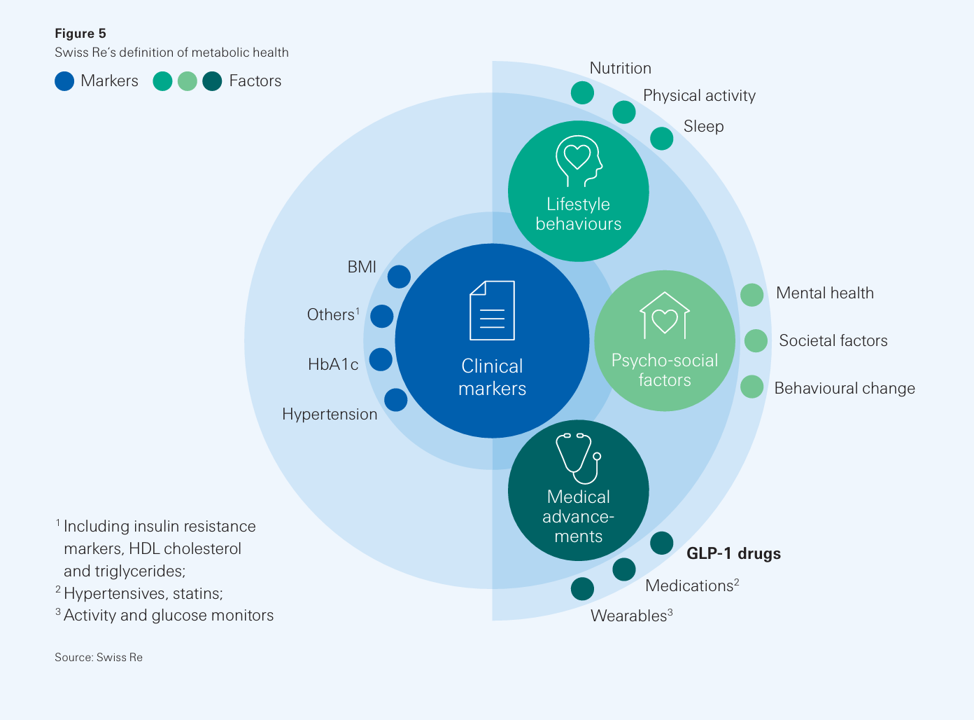
The growing adoption of GLP-1 medications has already begun to transform society and industry sectors, along with helping many patients effectively deal with managing diabetes and obesity, and other conditions. There is growing evidence that this group of medicines is also bending the actuarial curves for life expectancy, we learn in the report, The future of metabolic health and weight loss drugs from Swiss Re. In the report, Swiss Re shares the company’s vision of metabolic health, a graphic for which is shown here. The company (smartly) takes a broad ecosystem view
The Blurring of Consumer Brands and Healthcare – HealthConsuming Goes Mainstream, Ipsos Reports
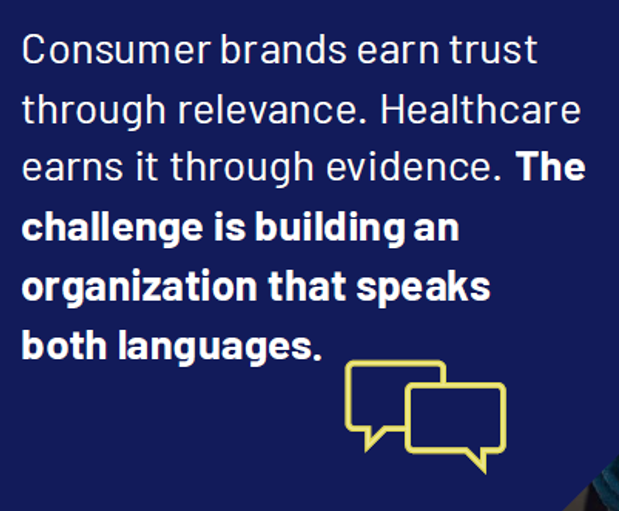
As people have taken on self-agency for their health and health care decisions, two sides of a coin are responding to market forces to meet health-inspired consumers where they are, and where they want to “be:” consumer brands on one side of that coin, and healthcare companies on the other, we learn in the report Consumer Brands Are Becoming Healthcare’s Next Leader from Lauren Berry at Ipsos. Lauren points to four converging forces shaping the blur of consumer goods firms and healthcare stakeholders like providers and life science companies:
The Cost of Confusion with U.S. Healthcare – a deja vu of The Temptations’ “Ball of Confusion”
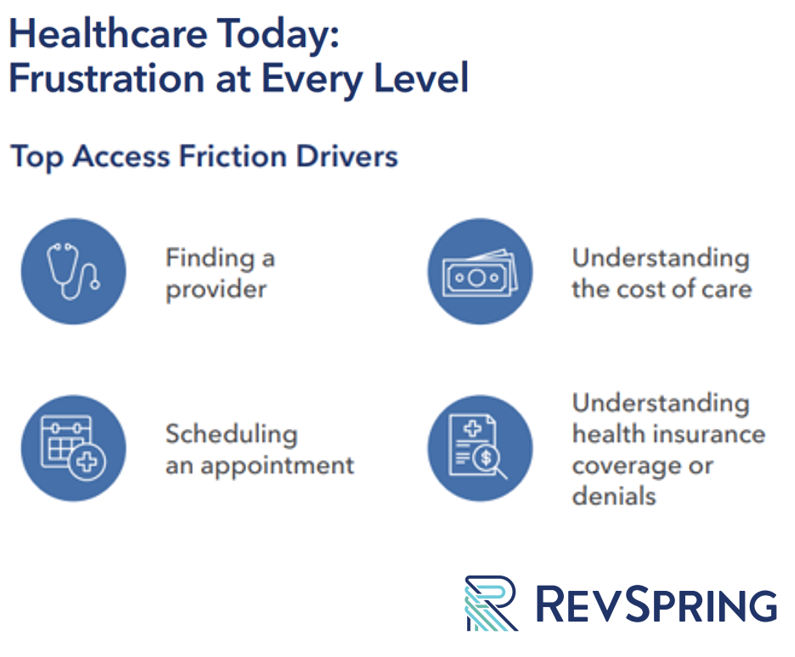
A new survey from RevSpring, a healthcare payments company, measures consumers’ feelings of friction with healthcare in America — where people feel frustration “at every level,” the topline reads. The title of the paper, The Cost of Confusion: How Friction Shapes the Healthcare Experience, reminded me of one of my favorite songs from Motown growing up, “Ball of Confusion.” This Temptations hit was written by the great Motown songwriters, Norman Whitfield and Barrett Strong (who interestingly and to the point of this post, recorded the first hit single for Motown, the fabulous song “Money [That’s What I Want],” in 1960).
Gas ‘n Healthcare ‘n Groceries: U.S. Voters’ Cost-of-Living Concerns Will Inspire Them to Vote in the Midterms in the Latest KFF Health Tracking Poll
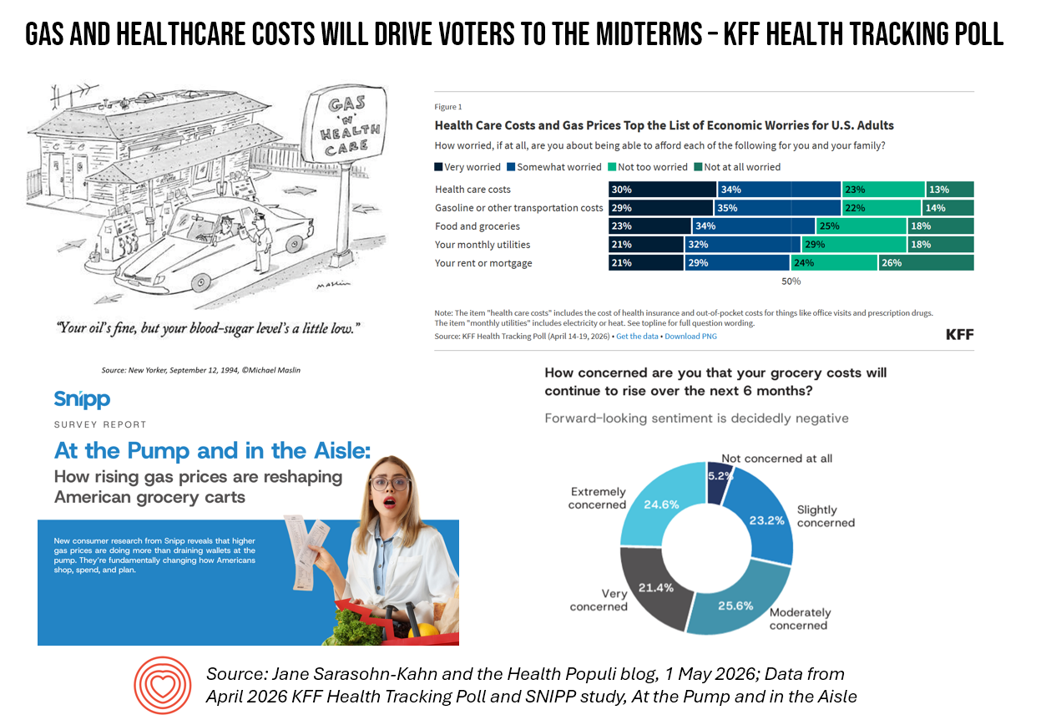
The cost of health care will have a major impact on U.S. voters’ midterm voting decisions in November 2026, most Americans expressed in the April 2026 KFF Health Tracking poll. Kaiser Family Foundation surveyed 1,343 U.S. adults in April 2026 to assess peoples’ views on health care costs and their influence on voting behavior forward-looking to the midterm elections to be held on 3rd November 2026. The first chart quantifies that overall 55% of U.S. voters say health care costs will have a “major impact,” and another 33% say health costs will

 I'm grateful to be part of the Duke Corporate Education faculty, sharing perspectives on the future of health care with health and life science companies. Once again, I'll be brainstorming the future of health care with a cohort of executives working in a global health care enterprise.
 Jane joined host Dr. Geeta "Dr. G" Nayyar and colleagues to brainstorm the value of vaccines for public and individual health in this challenging environment for health literacy, health politics, and health citizen grievance. Click onto the Pfizer Value of Vaccines site and you can watch four episodes covering the challenges with adult vaccination, the employer and health plan member's journey to vaccination, reimbursement, and collaborating for proactive prevention.
 Jane will be working with EU- and UK-based clients in September and October 2026, collaborating with stakeholders in digital health, public/community health, retail health, and growing opportunities for health-at-home. Stay tuned to her updates here on Health Populi on-the-ground as she lives the digital nomadic work-life in Italy, Belgium, the Netherlands, and in London.