


How to Segment AI-Using Consumers: The Harris Poll AI Atlas, and What It Means for Healthcare
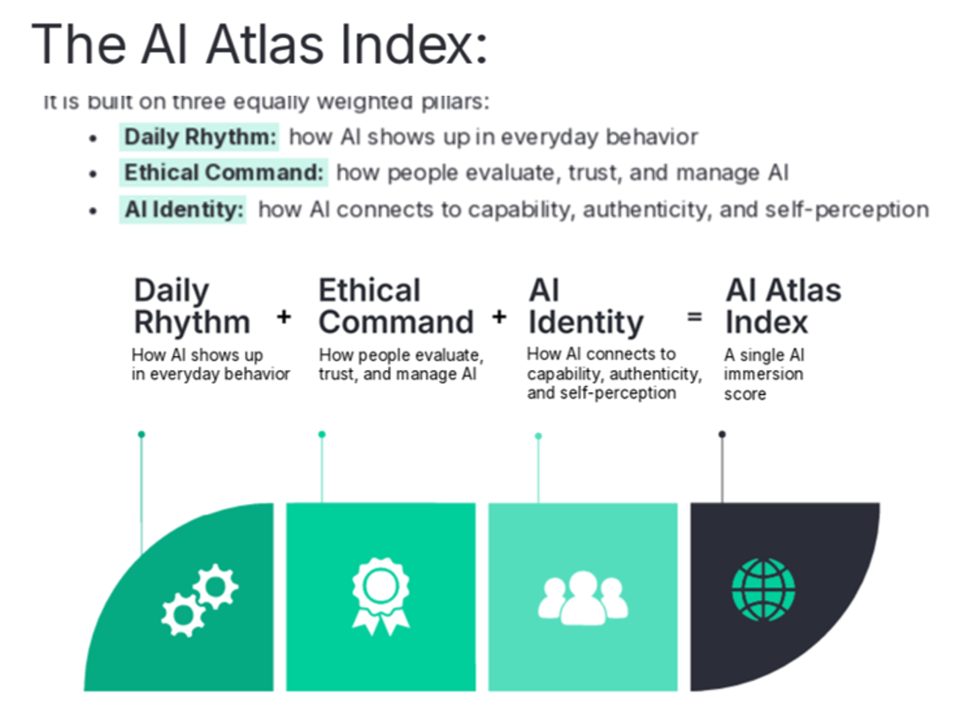
AI adoption is scaling faster than trust, where trust is tied to concerns about data privacy, transparency, and control in the U.S., Canada, and the UK. Welcome to the AI Atlas, what The Harris Poll calls “A living map of how people relate to AI and how those relationships evolve.” I consumed the Atlas with my lens on healthcare and self-care firmly in context, and in the Hot Points below, distill some thoughts on Harris’s fascinating market segmentation of AI/consumers. To construct the Atlas, The Harris Poll conducted a survey online in
Listening to the Head of Listening at Listen Ventures, on the Future of Consumerized Healthcare
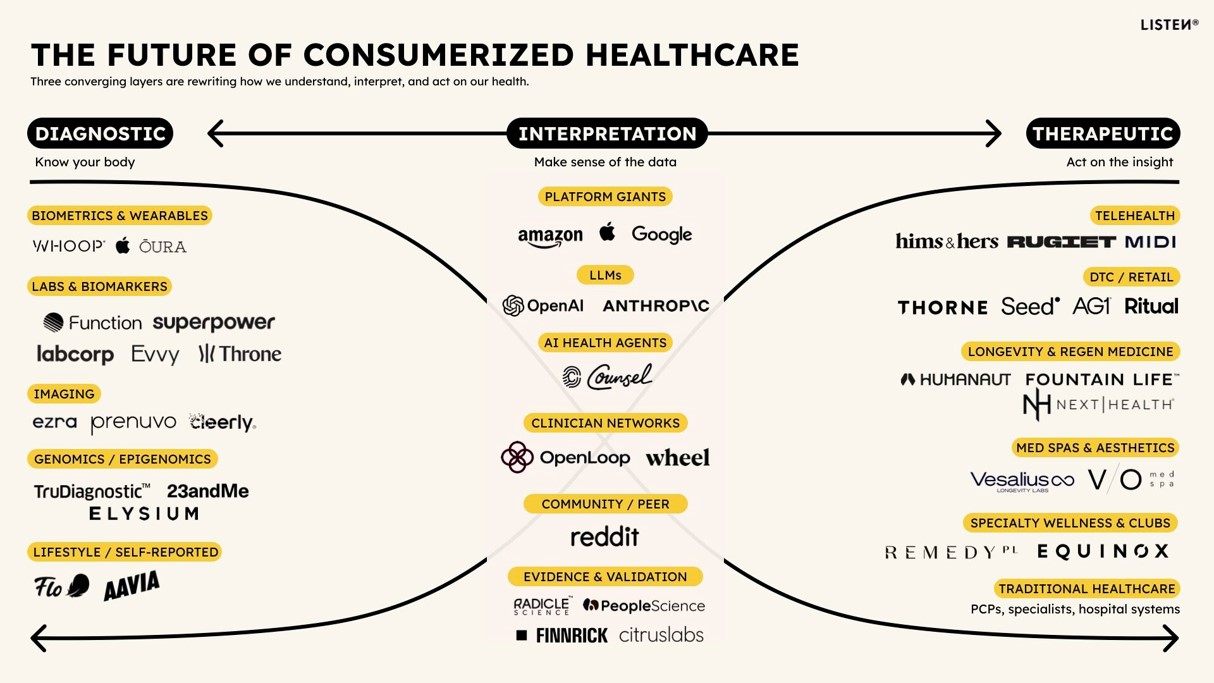
To follow up my post painting the latest picture of health consumers (with new data from PwC and Circana), I want to point you all to my new smart-thinking colleague, Ellen Wilcox, an investor whose title as “Head of Listening” at Listen Ventures had me at “hello.” Oh, and with this diagram she posted on her LinkedIn channel. Ellen developed this graphic based on her “listening” to the evolving ecosystem of consumer-driven health, as she is involved in assessing early-stage developments in fostering new brands of consumer health and wellness products and services. The
The State of the 2026 Consumer – A Focus on Health, Experience, and DIY-Agency, McKinsey Observes
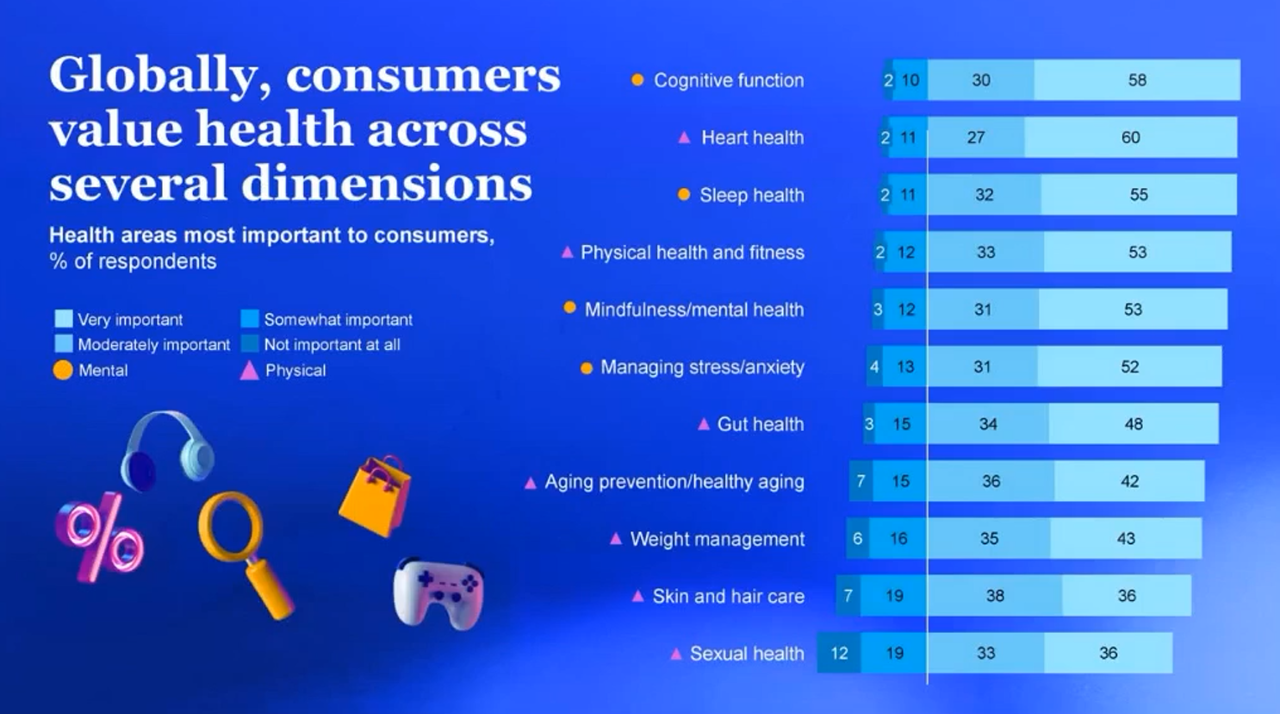
Cost pressures and technology acceleration (read: AI) are reshaping and reinforcing post-COVID consumer behaviors, we learn from McKinsey’s State of the Consumer 2026. The research report is built on four key trends, which were discussed in a webinar session featuring Danielle Bozarth (New York-based) and Clarisse Magnin (Paris-based), Senior Partners with McKinsey, led in an insightful conversation by Global Editorial Director Lucia Rahilly. This year, consumers’ behaviors are empowered and enabled through technology — AI, social media, and omnichannel communications that support peoples’ agency to research, find, purchase, and share experiences. And health is central
Consumers Globally Are Defining Longevity in Self-Care As People Confront a World Out of Control
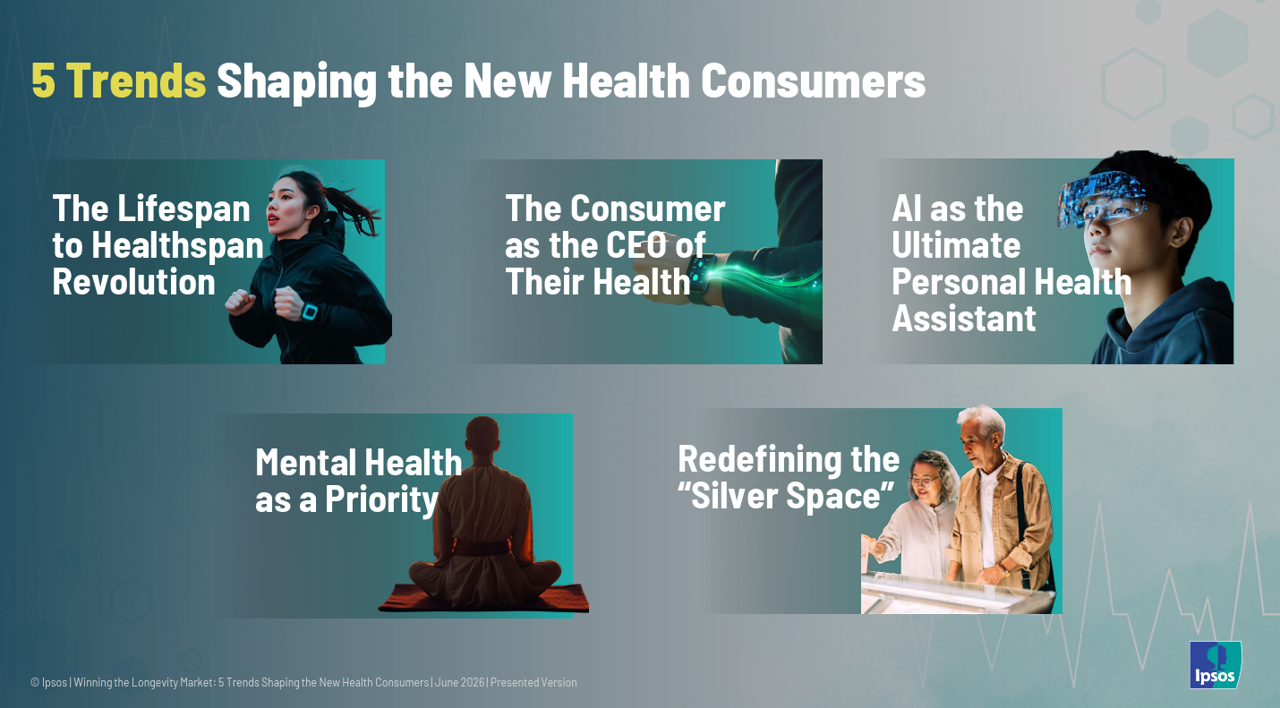
“The consumer response to a world out of control is to invest in self,” and that has inspired peoples’ search for longevity beyond lifespan itself. Ipsos’s latest research into this phenomenon is presented in the firm’s report, Winning the Longevity Market, published in late June 2026. Five factors are shaping these increasingly self-caring health consumers, including, A shifting perspective from lifespan to healthspan Consumers as CEOs of their health AI as ultimate personal health assistant Prioritizing mental health, and, Redefining the “Silver Space.” “The world
The Rise of the Wellness Economy, From Wearable Tech to Hugging a Pet, According to the Bank of America Institute
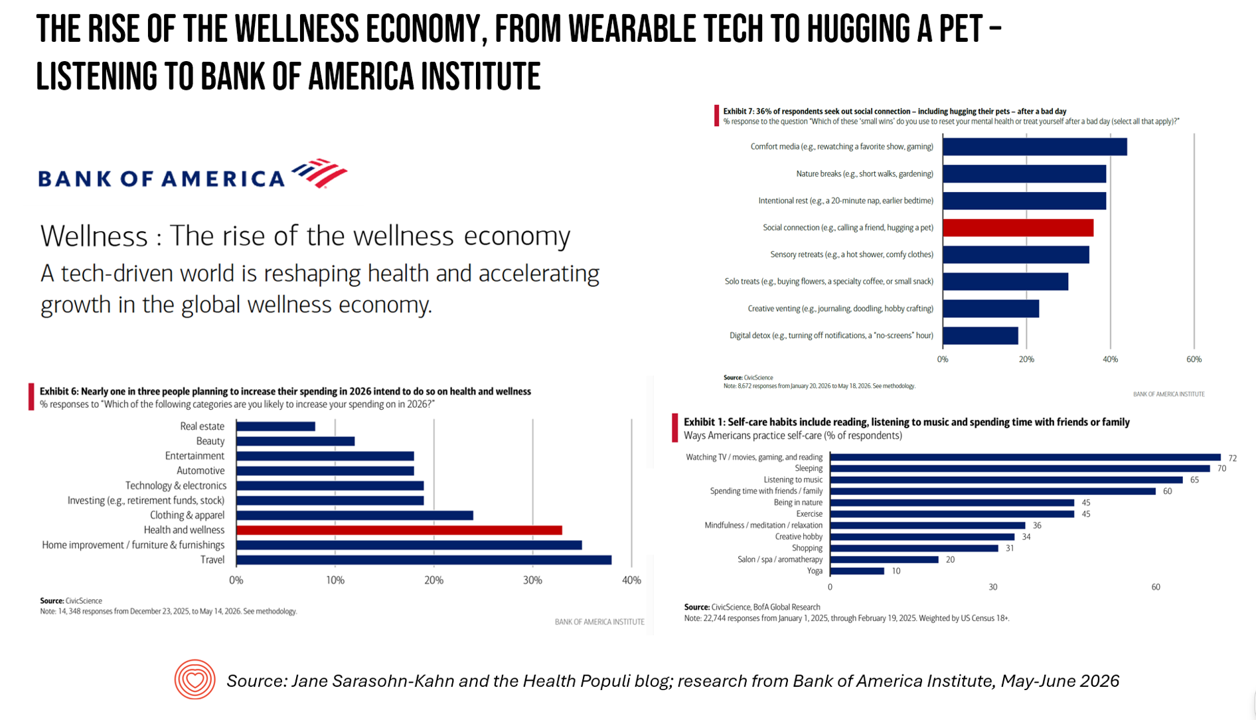
The Bank of America Institute has been covering aspects of the economy undergoing Transformation, this month winding up a four-part series on the wellness economy — addressing its “rise,” fostering social connections, tech for mental health, and self-care’s expanding footprint. In this post, I’ll weave together data that BofA shares in the four reports which speak to my current workflows across the retail health and self-care ecosystem. As people take on more agency for their own health and the well-being of family and community, consumers are spending more dollars, engaging more with data, and investing more
Most Psychologists Say Their Patients Use AI for Mental Health Support – Recommendations on Chatbots and AI from the APA
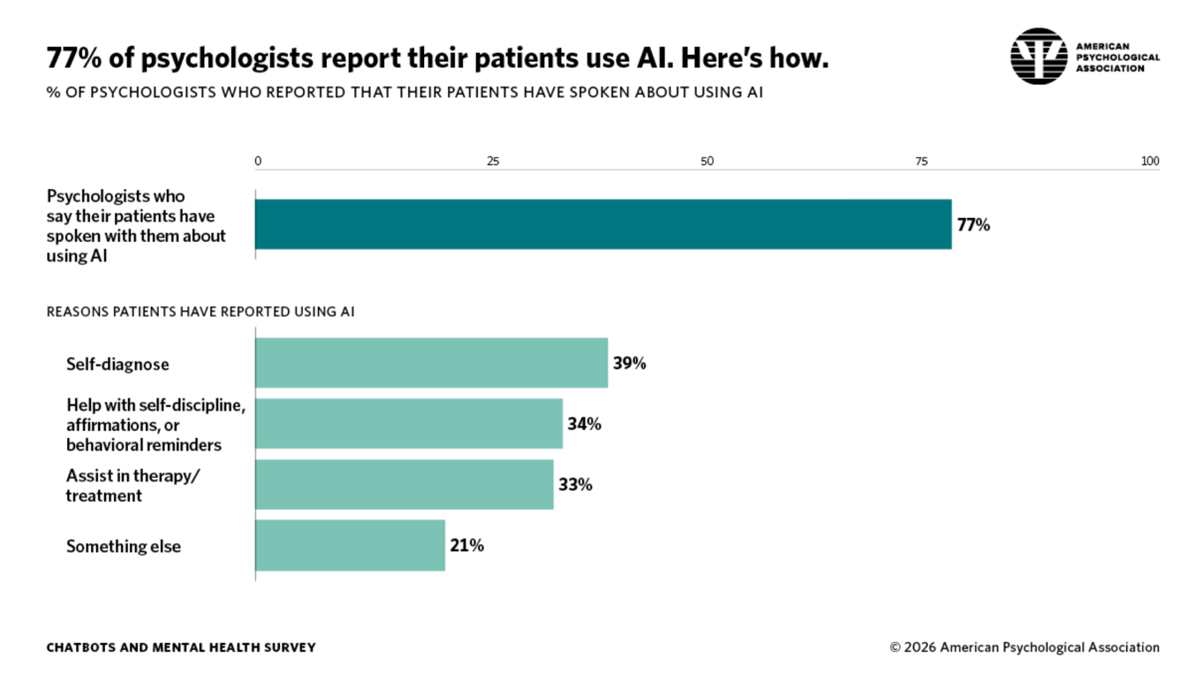
Three in four licensed psychologists in the U.S. report that their patients have spoken about using AI — with at least one-third reporting use for self-diagnosis, help with self-discipline or behavioral reminders, or as an assist in therapy. This is the top-line finding in the 2026 Chatbots and Mental Health Survey from the American Psychological Association (APA). This is among the first such study into patients’ use of AI for mental health support. APA conducted the survey among 1,242 licensed psychologists in the U.S. in April 2026, In this early phase of patients adopting
AI Is Expanding Healthcare Access, Enabling Clinician Wellbeing, and Preparing Proactive Patients – The Philips Future Health Index 2026
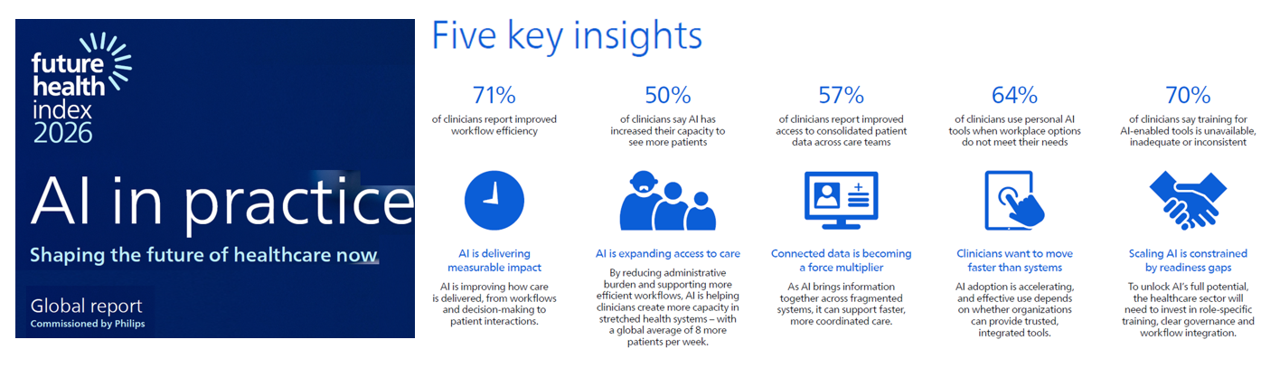
AI is already transforming healthcare delivery for clinicians, patients, and their clinical partnerships, we learn in The Philips Future Health Index 2026. For this year’s annual futures report, Philips conducted two surveys among 2,011 healthcare professionals and 20,085 patients, spanning ten countries and fielded between February and April 2026. AI adoption among healthcare providers and patients in this early phase is showing benefits translating into greater productivity, clinician well-being, improved data workflows, and expanded access and capacity for clinicians to see more patients. Health systems the
“Trust is the #1 Public Health Issue” and Health Citizens Live in an “Information Abundant” World That, Counterintuitively, Underpins Divisiveness – the 2026 Edelman Trust Barometer
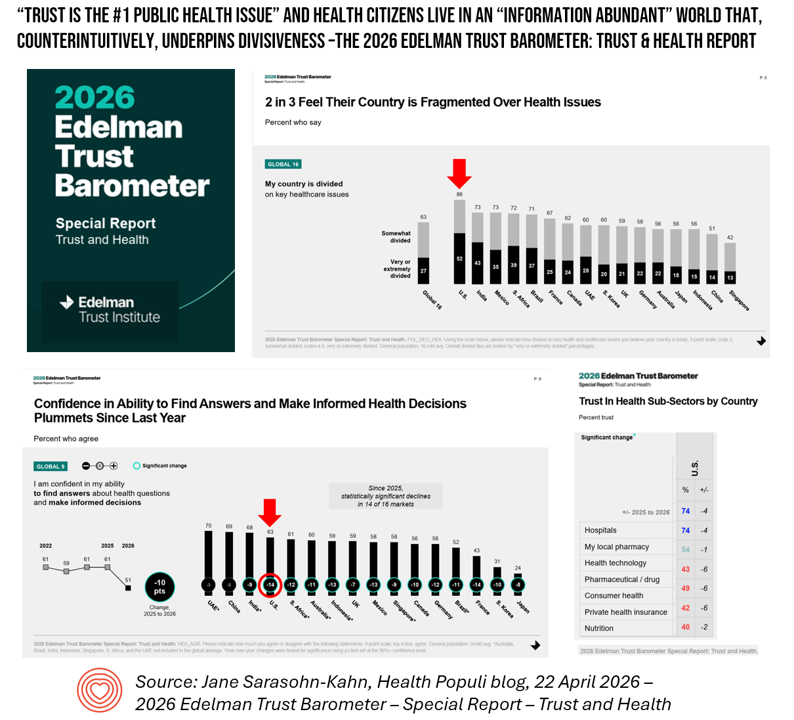
It would sound like good news that more health citizens, globally, are engaged with more information about health – a health information “abundance,” by the look at the data. But it’s not such great news when we learn that said information abundance also underpins health citizens’ confidence in finding answers and making informed health decisions, we learn in the 2026 Edelman Trust Barometer’s Trust and Health edition. In the U.S., the percent of people who felt confidence in their ability to find answers and make informed health decisions “plummeted,” in the words of the
Americans Are Health Information Seekers — Far Above All, Valuing Info from Providers and Medically-Trained Sources (and lessons for AI in health)
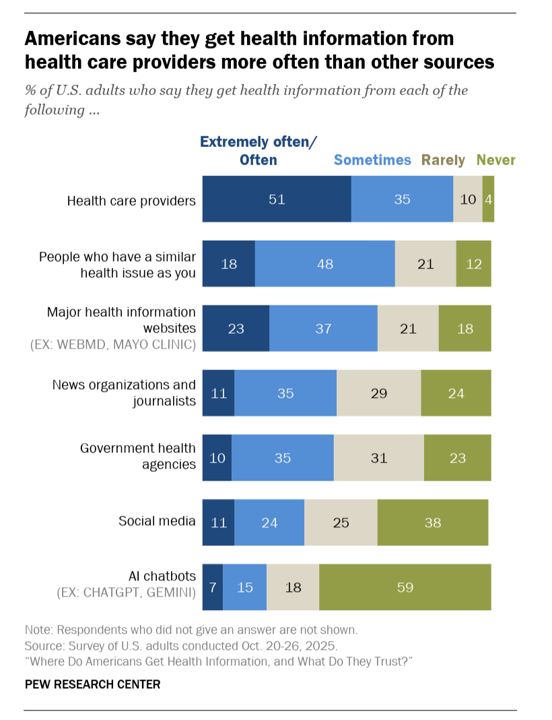
A commentary in Nature Medicine this week asserts that, “Quality health infomration for all is a fundamental determinant of health.” Lawrence Gostin, a learned health care legal expert at Georgetown, and colleagues, note that, “Society is at a turning point, faced with misleading guidance and ubiquitous, fast-spreading digital and social media…Amplified by generative AI, poor quality information corrodes trust in science and drives social and political polarization.” With the context in mind that health information is a social determinant of health, we turn to a report from the Pew Research Group which asks and answers the question, Where do Americans
 I'm grateful to be part of the Duke Corporate Education faculty, sharing perspectives on the future of health care with health and life science companies. Once again, I'll be brainstorming the future of health care with a cohort of executives working in a global health care enterprise.
 Jane joined host Dr. Geeta "Dr. G" Nayyar and colleagues to brainstorm the value of vaccines for public and individual health in this challenging environment for health literacy, health politics, and health citizen grievance. Click onto the Pfizer Value of Vaccines site and you can watch four episodes covering the challenges with adult vaccination, the employer and health plan member's journey to vaccination, reimbursement, and collaborating for proactive prevention.
 Jane will be working with EU- and UK-based clients in September and October 2026, collaborating with stakeholders in digital health, public/community health, retail health, and growing opportunities for health-at-home. Stay tuned to her updates here on Health Populi on-the-ground as she lives the digital nomadic work-life in Italy, Belgium, the Netherlands, and in London.