


Health for Everyone, Everyone for Health – Meeting Dr. Max Pharmacy in Italy

“La salute per tutti, tutto per la salute.” That’s “Health for everyone, everyone for health.” It took me to get to Italy to find my longtime mantra for work and life expressed by a European pharmacy chain, the Dr. Max Group. I’m in Florence, Italy this week, celebrating my husband’s and my 40th wedding anniversary – feeling blessed and well in all forms, mind, body, and spirit. So it’s a propitious moment to meet the Dr. Max pharmacy company, which is fast-growing in Italy beyond its roots in eastern Europe. Currently, the organization’s pharmacies span
One in Two Americans Who Have Used AI Believe They Can Address Health Concerns At Least As Well As Health Care Providers – The 2026 Edelman Trust Barometer Look at AI, Health Care, and Trust
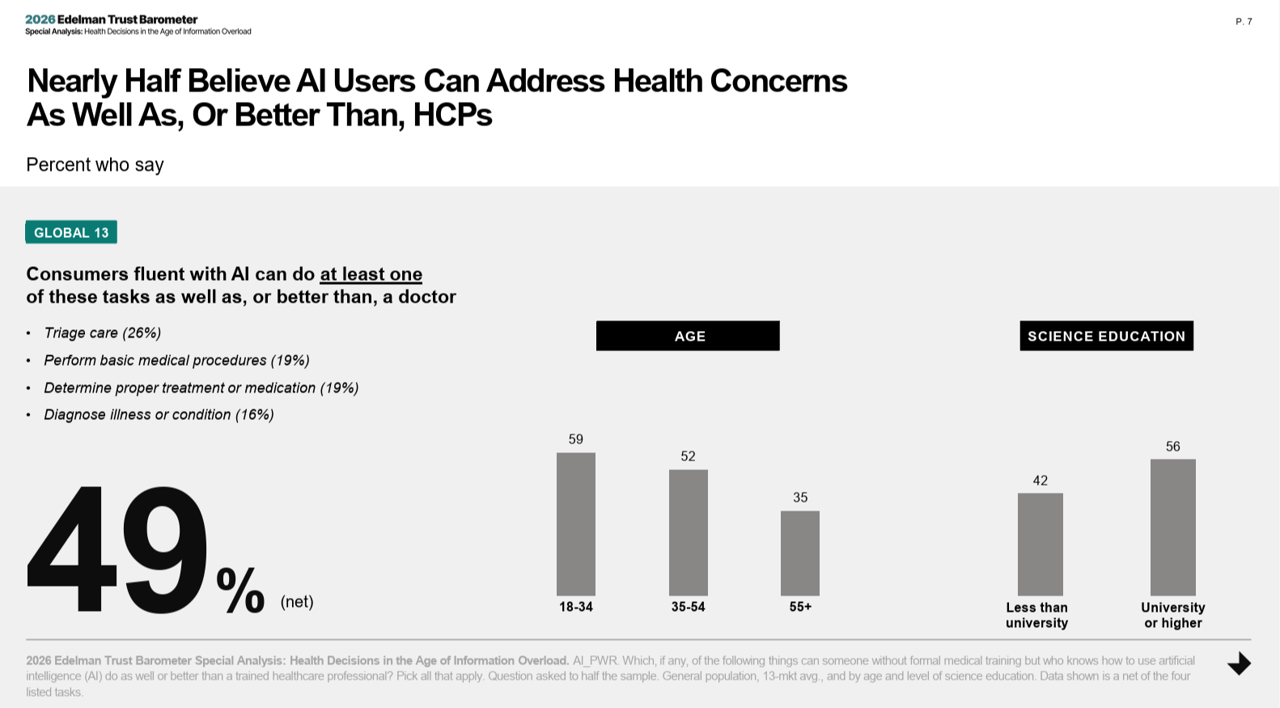
Consumers have placed their personal physicians above all health care touchpoints in their lives when it comes to trust stewards of and for health care information and data protection. More consumers have adopted the use of AI in every day life across many life flows, including their health care. The latest riff from the annual Edelman Trust Barometer 2026 highlights a look into health and trust in concert with the Yale School of Public Health. And they found that among AI users, one-half think AI can address their health concerns at least as well as doctors can.
In 2027, Employers Will Face the Highest Health Benefit Cost Increases Since 2003 – Is This the Beginning of Workplace Health Erosion?
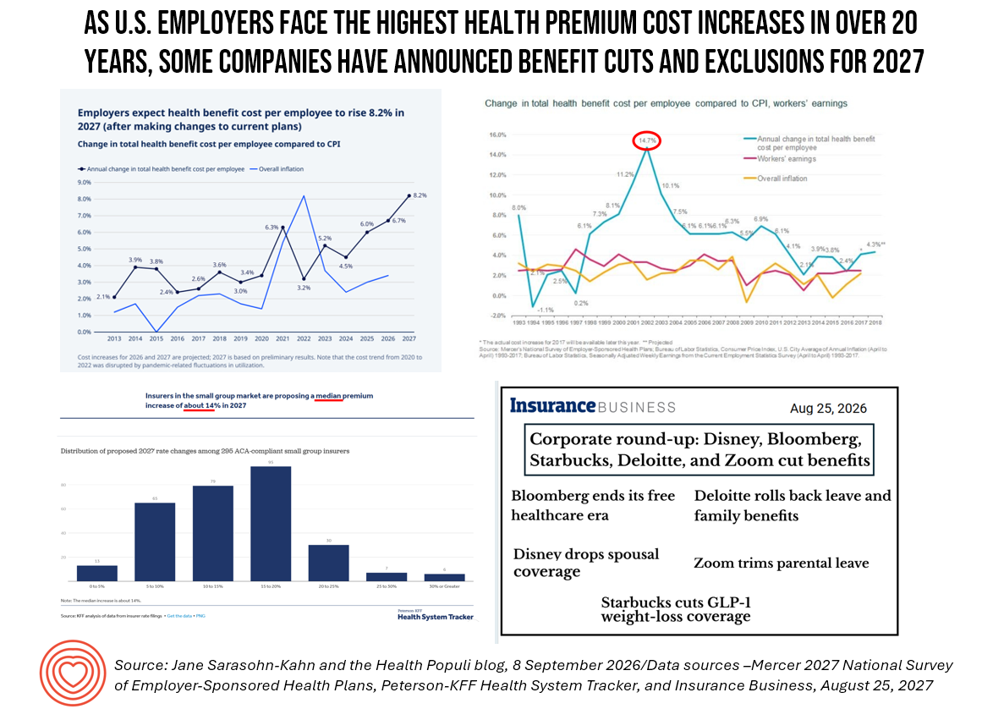
Bloomberg, Deloitte, Disney, Starbucks, and Zoom all announced plans to cut health care benefits looking toward 2027 business plans. Whether this is a blip in the 80+ year old story of the unique employer-sponsored health care market in America or the beginning of a long end-game for U.S. health insurance at the workplace remains to be seen. But the forecasts of near-double-digit health premium increases employers will confront in 2027 are potent, forcing companies to, at least, re-visit and alter health benefit designs to surgically target specific cost-increasing categories — such as GLP-1

 Jane will be working with EU- and UK-based clients in September and October 2026, collaborating with stakeholders in digital health, public/community health, retail health, and growing opportunities for health-at-home. Stay tuned to her updates here on Health Populi on-the-ground as she lives the digital nomadic work-life in Italy, Belgium, the Netherlands, and in London.
 I was grateful to be Jasmine's first conversation-guest on her new podcast, "Aperture - Widen the Frame," where this expert in narrative medicine is bringing together the broad range of voices to sit at the table and address what health care needs: those humans in the health-system-loop who address health equity and empathy along with delivering evidence-based medicine for all.
 Jane joined host Dr. Geeta "Dr. G" Nayyar and colleagues to brainstorm the value of vaccines for public and individual health in this challenging environment for health literacy, health politics, and health citizen grievance. Click onto the Pfizer Value of Vaccines site and you can watch four episodes covering the challenges with adult vaccination, the employer and health plan member's journey to vaccination, reimbursement, and collaborating for proactive prevention.