


Americans’ Spending on Healthcare, Food, and Housing: It’s All the Costs of Living – eHealth’s 2026 Mid-Year Survey
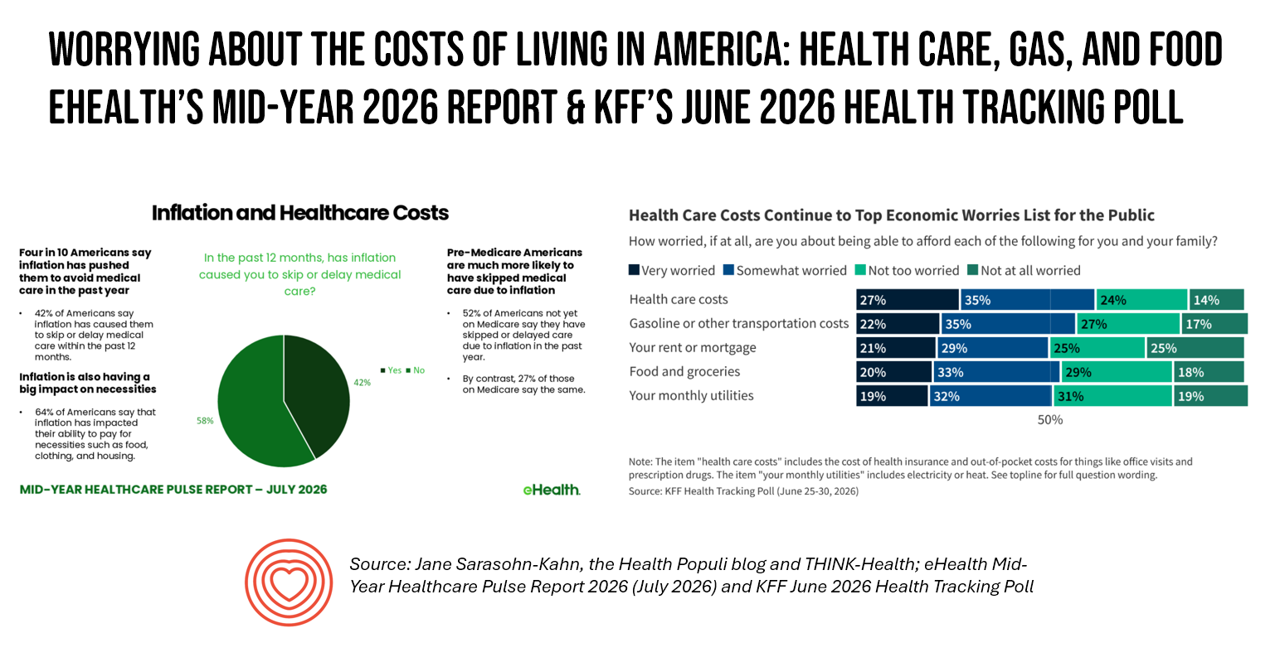
Two in three U.S. adults believe that recent high inflation has negatively impacted their ability to pay for food, clothing, or housing in the past twelve months — and, due to inflation in the U.S., 42% of people said that they have skipped or delayed medical care in the past year — including 52% of folks not yet enrolled in Medicare, and 27% of Medicare enrollees. Such are the economic lives of American households as quantified in the eHealth Mid-Year Healthcare Pulse Report 2026, published in July 2026. eHealth surveyed over 1,000 Americans to
Health in Media at FIFA World Cup 2026 – Viva España, Wellbeing, and Love

Thinking beyond hydration breaks, health and wellness featured big-time in this season of FIFA World Cup 2026. From wearable technology and digital health to prescription drugs and fitness gear, billions of global citizens were treated as health citizens by the likes of Adidas, Bristol Myers Squibb, Nike, and Unilever, the official personal care sponsor of the games. Check out Oura’s video, which supports the company’s role as the official wearables partner with U.S. Soccer with the Oura Ring being integrated into workflows for athletes, coaches and staff among 27 National Teams. Prior to opening day of this year’s World Cup,
Listening to the Head of Listening at Listen Ventures, on the Future of Consumerized Healthcare
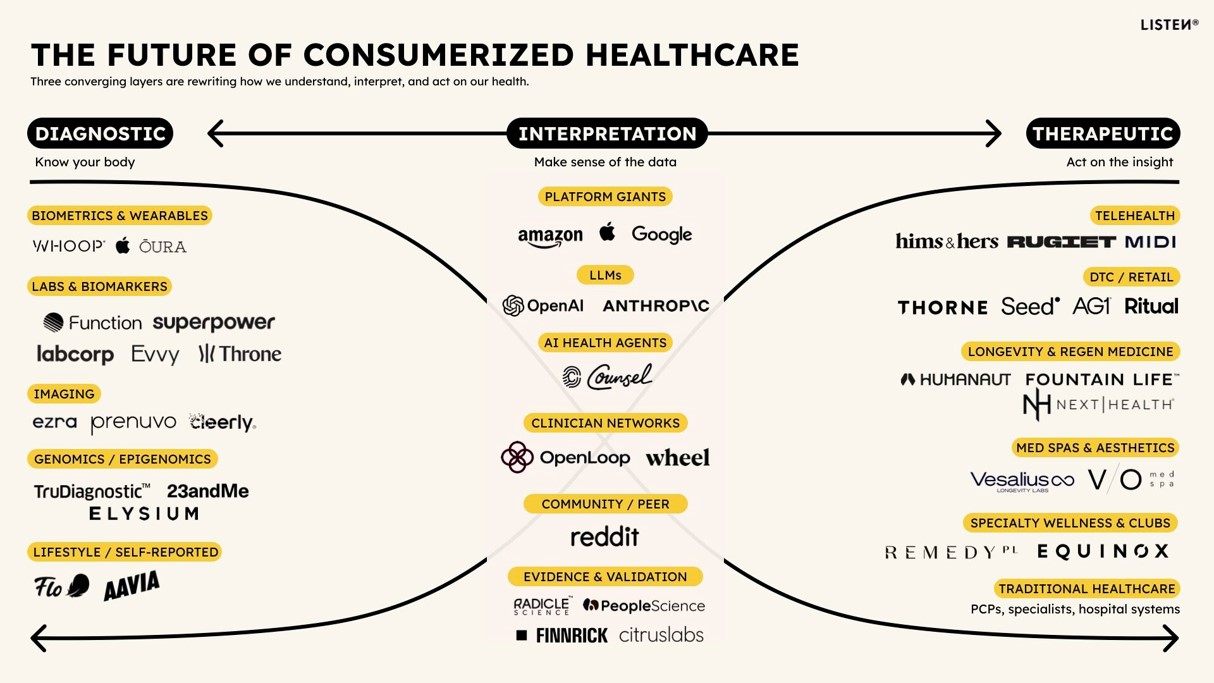
To follow up my post painting the latest picture of health consumers (with new data from PwC and Circana), I want to point you all to my new smart-thinking colleague, Ellen Wilcox, an investor whose title as “Head of Listening” at Listen Ventures had me at “hello.” Oh, and with this diagram she posted on her LinkedIn channel. Ellen developed this graphic based on her “listening” to the evolving ecosystem of consumer-driven health, as she is involved in assessing early-stage developments in fostering new brands of consumer health and wellness products and services. The
Health and Healthcare Everywhere, Every Day – PwC and Circana Paint the Latest Picture of Health Consumers
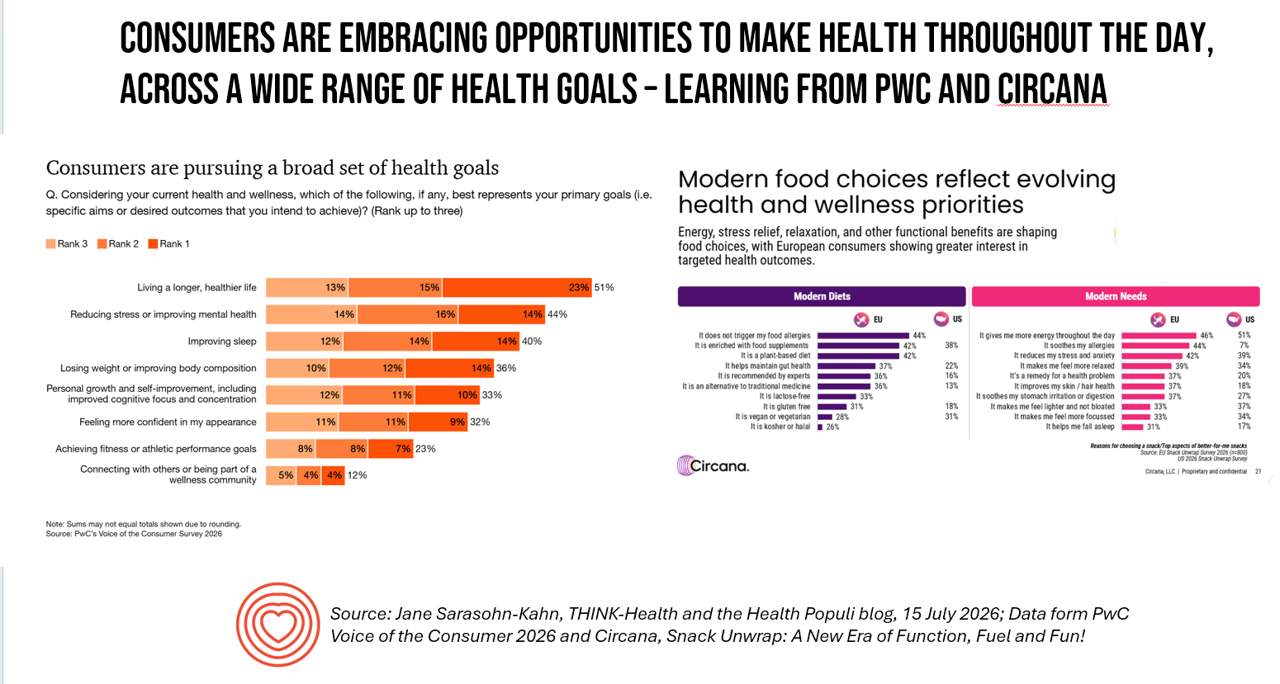
“Follow a consumer through the day, and health starts to show up everywhere.” That’s the observation of the PwC team assessing the annual Voice of the Consumer 2026 survey and shedding light on “the rise of everyday health.” I coined the phrase “HealthConsuming” (TM) in 2019 when I published a book with that title, discussing the convergence of: Patients-as-medical bill payers, bearing more financial risk for their health care Patients as self-carers, using Google to check new prescription medicines, symptoms, and provider profiles, culminating in, Patients “consumed” in two ways by health
The State of the 2026 Consumer – A Focus on Health, Experience, and DIY-Agency, McKinsey Observes
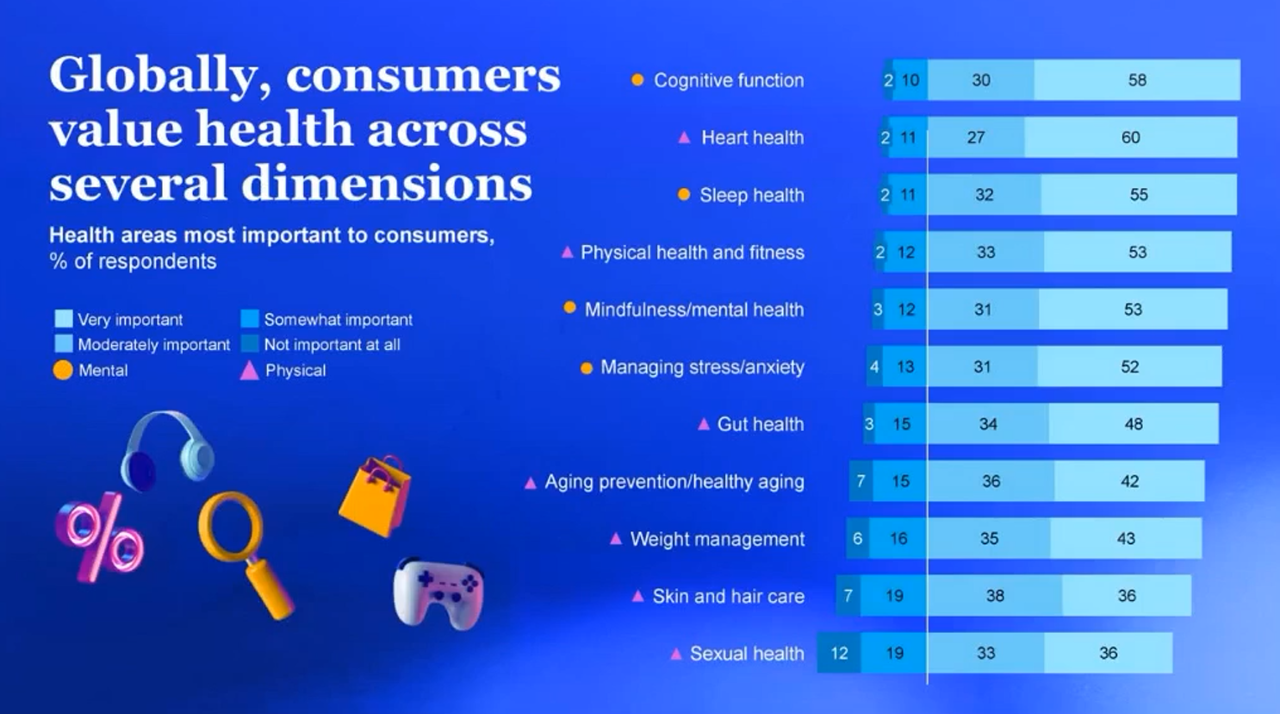
Cost pressures and technology acceleration (read: AI) are reshaping and reinforcing post-COVID consumer behaviors, we learn from McKinsey’s State of the Consumer 2026. The research report is built on four key trends, which were discussed in a webinar session featuring Danielle Bozarth (New York-based) and Clarisse Magnin (Paris-based), Senior Partners with McKinsey, led in an insightful conversation by Global Editorial Director Lucia Rahilly. This year, consumers’ behaviors are empowered and enabled through technology — AI, social media, and omnichannel communications that support peoples’ agency to research, find, purchase, and share experiences. And health is central
If You’re a Woman, Under 50, or Dealing with Mental Health or Respiratory Illness in America, You’re More Likely to Be Healthcare “Cost Insecure”
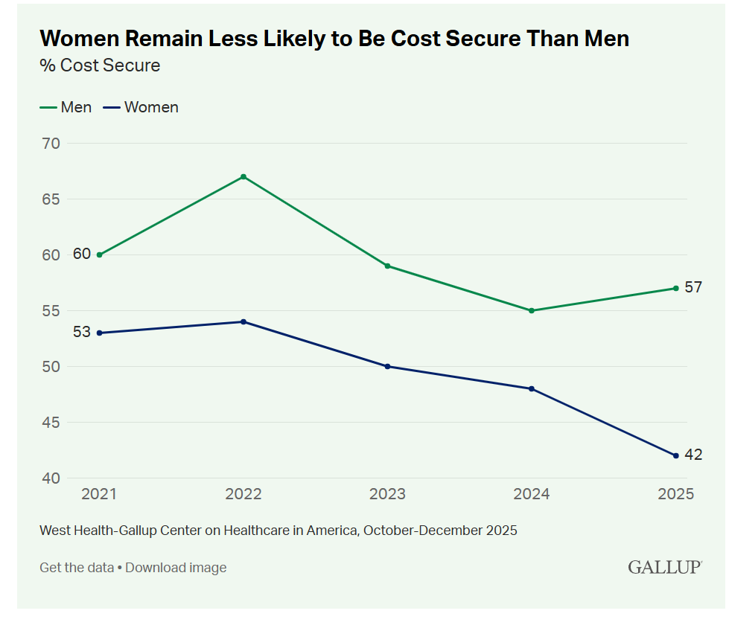
One-half of people living in the U.S. in the fourth quarter of 2025 said they could afford health care in America, according to research from Gallup and West-Health discussed in U.S. Adults’ Ability to Afford Healthcare at a Five-Year Low. Gallup and West Health polled 5,660 adults aged 18 and older between October and December 2025 as part of the organizations’ Affordability Index. This research defines Americans’ health care financial access in three tiers: Cost Secure, when people say they have access to quality, affordable care, able to pay for both needed

 Jane will be working with EU- and UK-based clients in September and October 2026, collaborating with stakeholders in digital health, public/community health, retail health, and growing opportunities for health-at-home. Stay tuned to her updates here on Health Populi on-the-ground as she lives the digital nomadic work-life in Italy, Belgium, the Netherlands, and in London.
 I was grateful to be Jasmine's first conversation-guest on her new podcast, "Aperture - Widen the Frame," where this expert in narrative medicine is bringing together the broad range of voices to sit at the table and address what health care needs: those humans in the health-system-loop who address health equity and empathy along with delivering evidence-based medicine for all.
 Jane joined host Dr. Geeta "Dr. G" Nayyar and colleagues to brainstorm the value of vaccines for public and individual health in this challenging environment for health literacy, health politics, and health citizen grievance. Click onto the Pfizer Value of Vaccines site and you can watch four episodes covering the challenges with adult vaccination, the employer and health plan member's journey to vaccination, reimbursement, and collaborating for proactive prevention.