


Listening to the Head of Listening at Listen Ventures, on the Future of Consumerized Healthcare
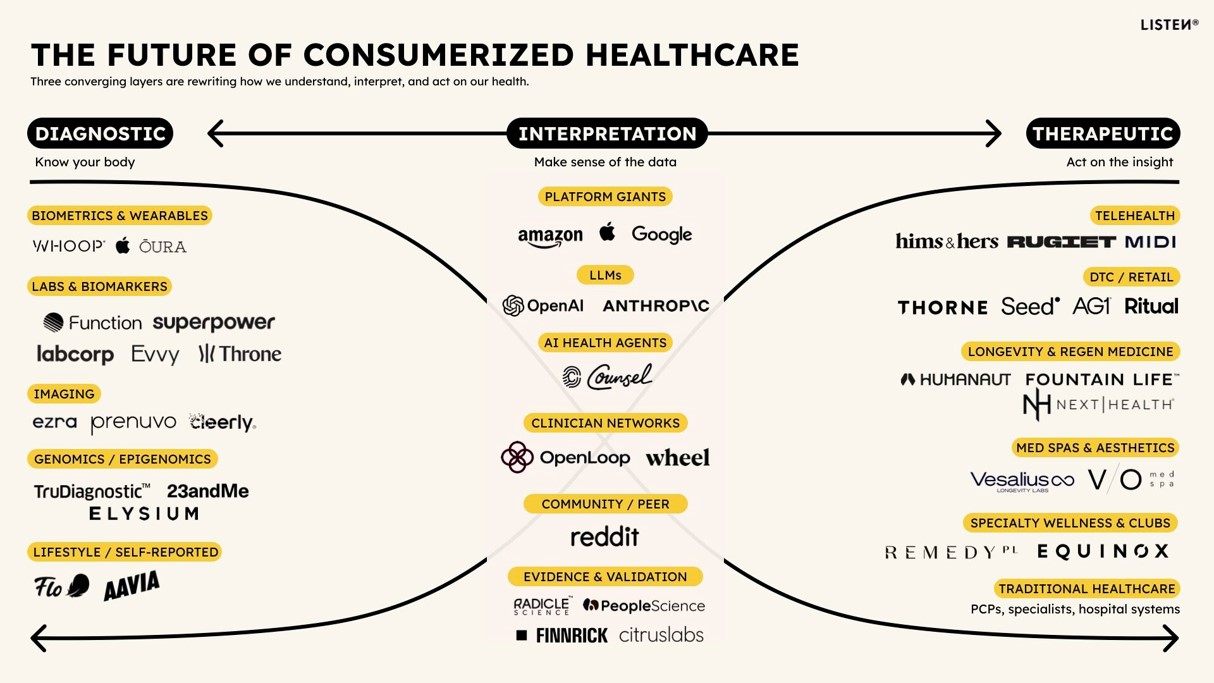
To follow up my post painting the latest picture of health consumers (with new data from PwC and Circana), I want to point you all to my new smart-thinking colleague, Ellen Wilcox, an investor whose title as “Head of Listening” at Listen Ventures had me at “hello.” Oh, and with this diagram she posted on her LinkedIn channel. Ellen developed this graphic based on her “listening” to the evolving ecosystem of consumer-driven health, as she is involved in assessing early-stage developments in fostering new brands of consumer health and wellness products and services. The
Health and Healthcare Everywhere, Every Day – PwC and Circana Paint the Latest Picture of Health Consumers
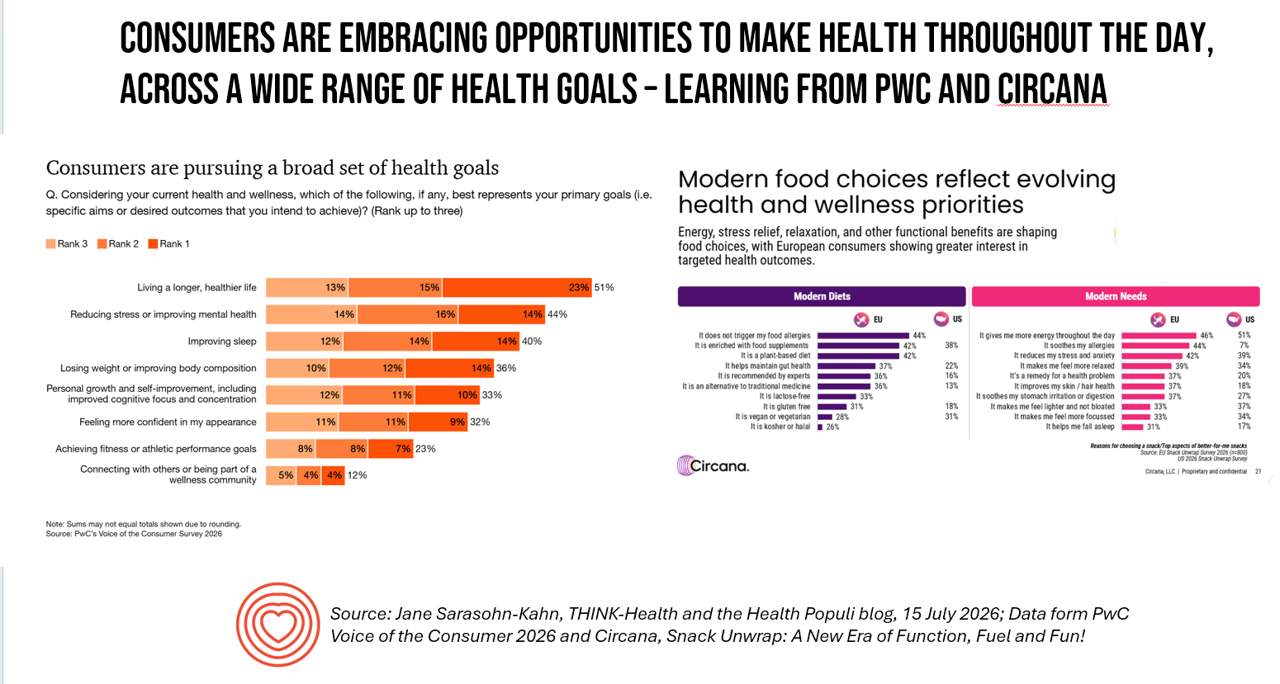
“Follow a consumer through the day, and health starts to show up everywhere.” That’s the observation of the PwC team assessing the annual Voice of the Consumer 2026 survey and shedding light on “the rise of everyday health.” I coined the phrase “HealthConsuming” (TM) in 2019 when I published a book with that title, discussing the convergence of: Patients-as-medical bill payers, bearing more financial risk for their health care Patients as self-carers, using Google to check new prescription medicines, symptoms, and provider profiles, culminating in, Patients “consumed” in two ways by health
The State of the 2026 Consumer – A Focus on Health, Experience, and DIY-Agency, McKinsey Observes
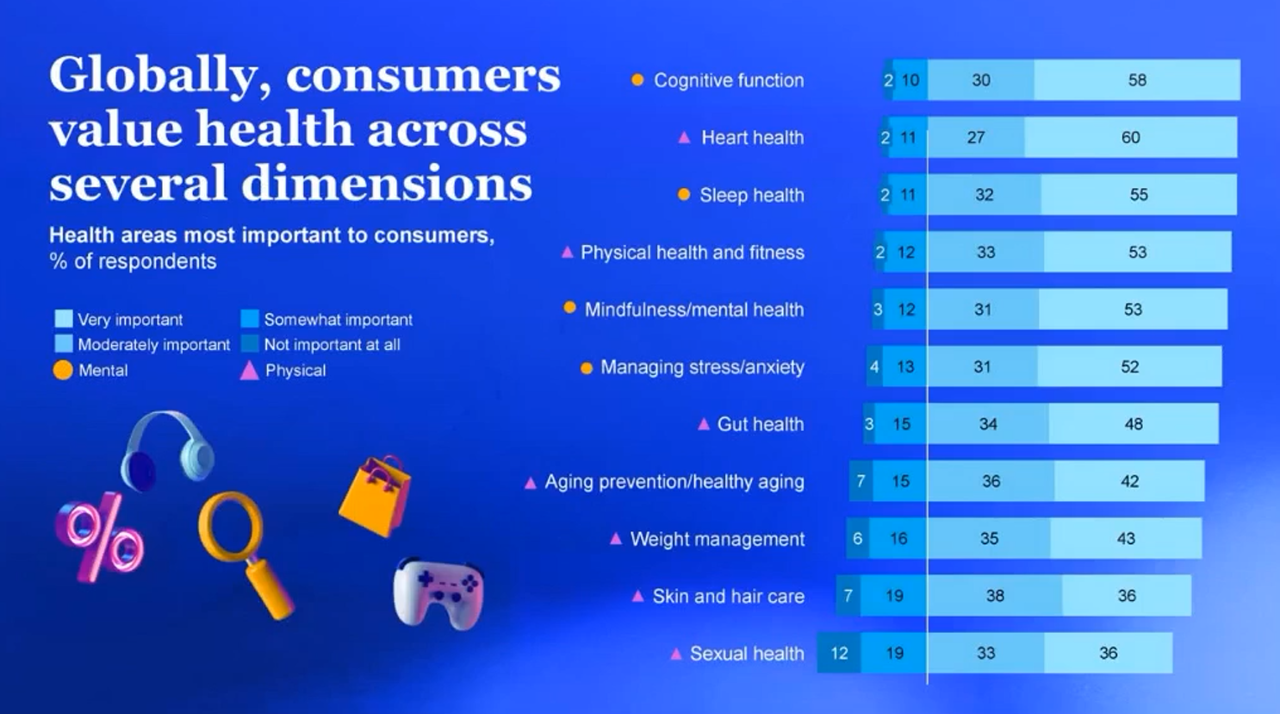
Cost pressures and technology acceleration (read: AI) are reshaping and reinforcing post-COVID consumer behaviors, we learn from McKinsey’s State of the Consumer 2026. The research report is built on four key trends, which were discussed in a webinar session featuring Danielle Bozarth (New York-based) and Clarisse Magnin (Paris-based), Senior Partners with McKinsey, led in an insightful conversation by Global Editorial Director Lucia Rahilly. This year, consumers’ behaviors are empowered and enabled through technology — AI, social media, and omnichannel communications that support peoples’ agency to research, find, purchase, and share experiences. And health is central
Consumers Globally Are Defining Longevity in Self-Care As People Confront a World Out of Control
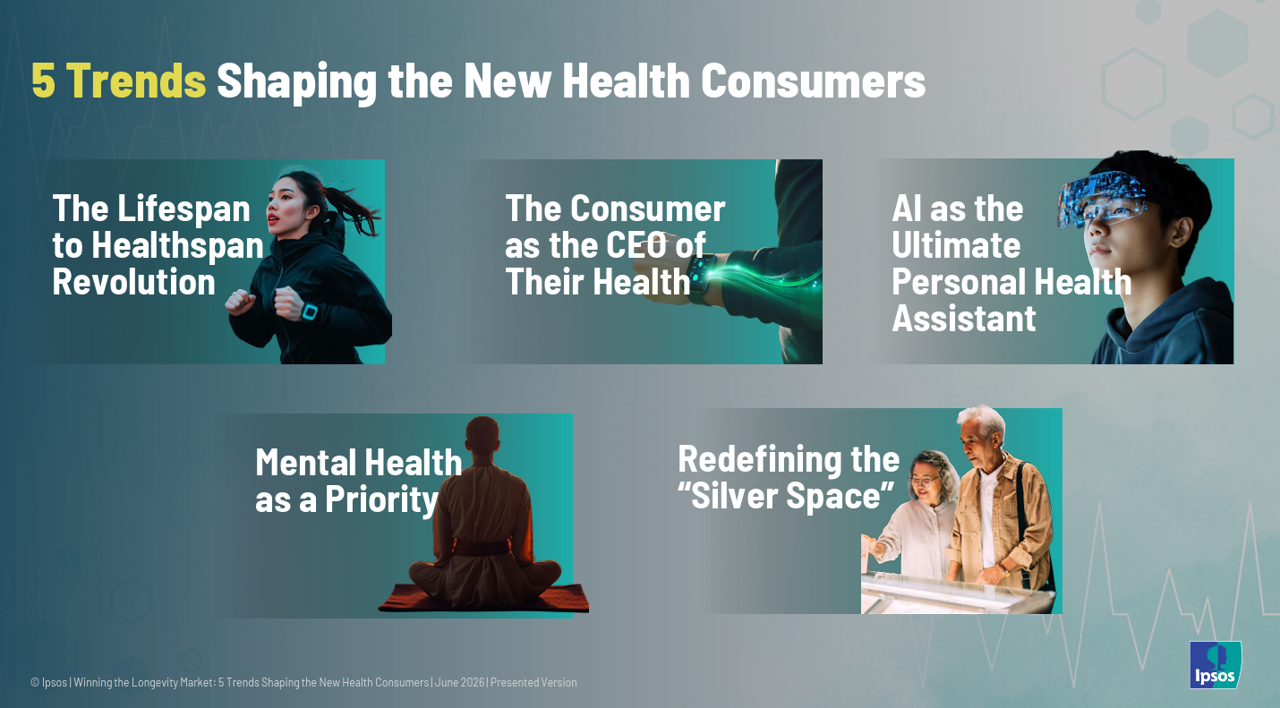
“The consumer response to a world out of control is to invest in self,” and that has inspired peoples’ search for longevity beyond lifespan itself. Ipsos’s latest research into this phenomenon is presented in the firm’s report, Winning the Longevity Market, published in late June 2026. Five factors are shaping these increasingly self-caring health consumers, including, A shifting perspective from lifespan to healthspan Consumers as CEOs of their health AI as ultimate personal health assistant Prioritizing mental health, and, Redefining the “Silver Space.” “The world
The Rise of the Wellness Economy, From Wearable Tech to Hugging a Pet, According to the Bank of America Institute
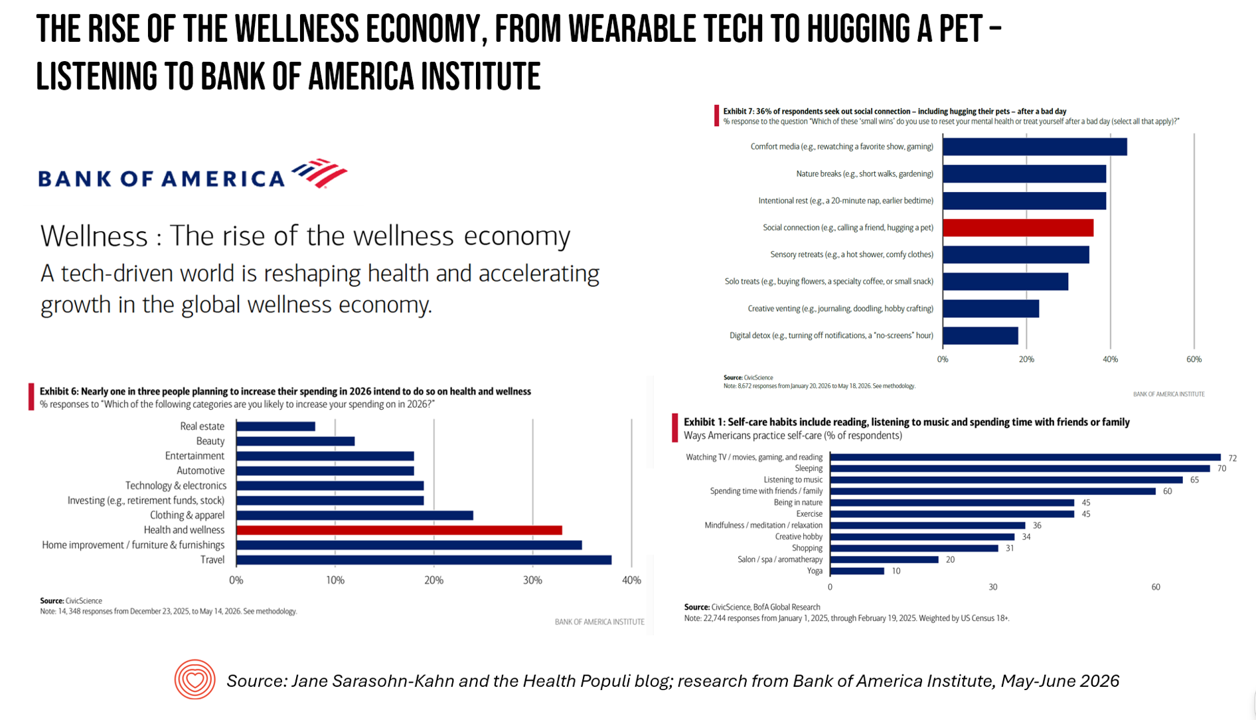
The Bank of America Institute has been covering aspects of the economy undergoing Transformation, this month winding up a four-part series on the wellness economy — addressing its “rise,” fostering social connections, tech for mental health, and self-care’s expanding footprint. In this post, I’ll weave together data that BofA shares in the four reports which speak to my current workflows across the retail health and self-care ecosystem. As people take on more agency for their own health and the well-being of family and community, consumers are spending more dollars, engaging more with data, and investing more
Will GLP-1s Shift the Actuarial Curves for Life Expectancy? Swiss Re Models the Scenarios
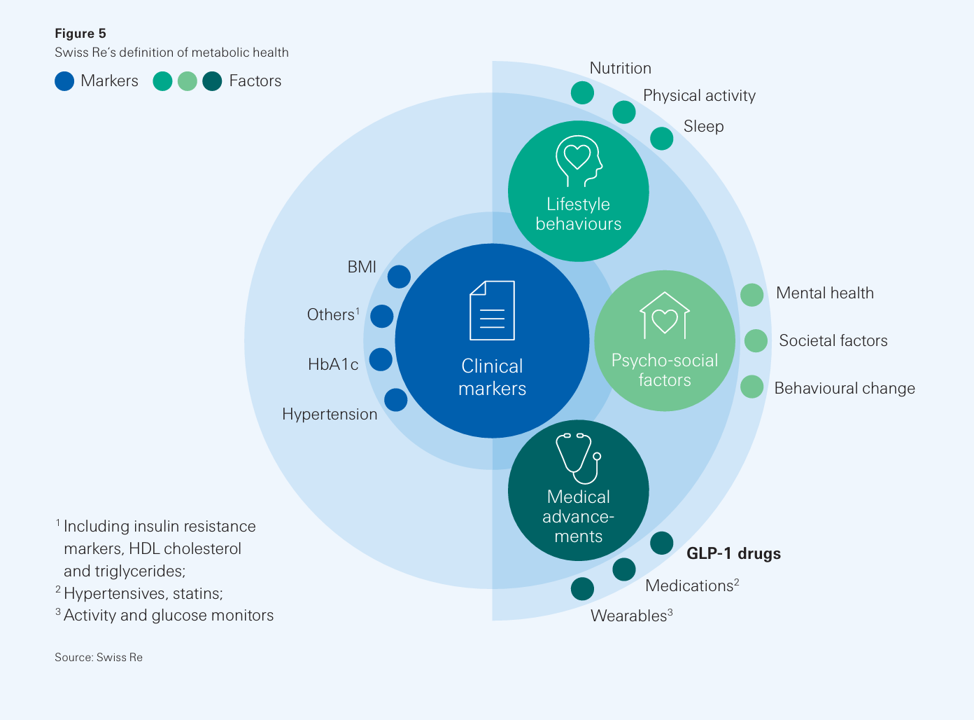
The growing adoption of GLP-1 medications has already begun to transform society and industry sectors, along with helping many patients effectively deal with managing diabetes and obesity, and other conditions. There is growing evidence that this group of medicines is also bending the actuarial curves for life expectancy, we learn in the report, The future of metabolic health and weight loss drugs from Swiss Re. In the report, Swiss Re shares the company’s vision of metabolic health, a graphic for which is shown here. The company (smartly) takes a broad ecosystem view
“The #1 longevity hack is ‘don’t be poor’” — Kara Swisher is a health economist
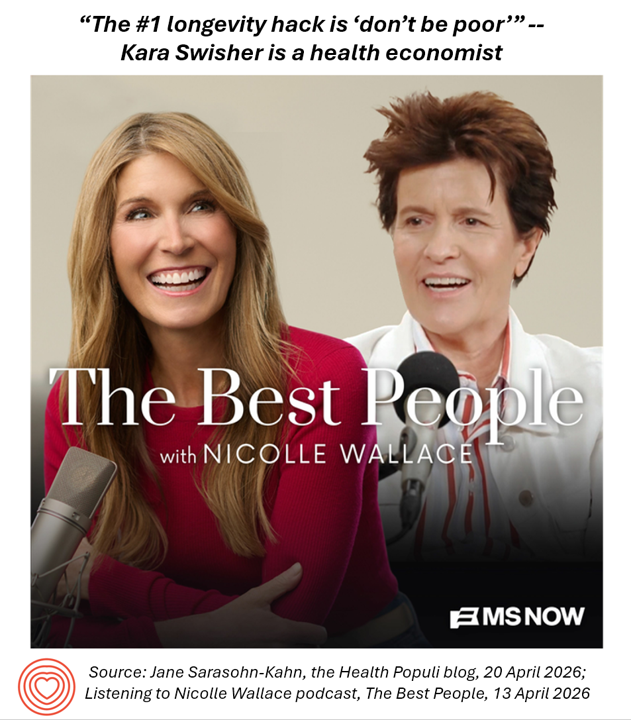
In full transparency, I’ve been a fangirl of Kara Swisher since I first read her work with Walt Mossberg and Recode, coinciding with my own work on the early adoption of the Internet in health care. Today, Swisher is everywhere all-at-once, covering technology, politics, and now, seeking truths about the so-called longevity economy. Swisher appeared with Nicolle Wallace on her podcast, The Best People, on 13th April, so I was keen to tune in. The conversation covered a lot of ground, and it was Swisher’s take on science and health that I was most
The New Era of DIY Healthcare – The State of Consumer Healthcare is Buoyant, Empowering, and Holistic, from Head to Gut to Wallet
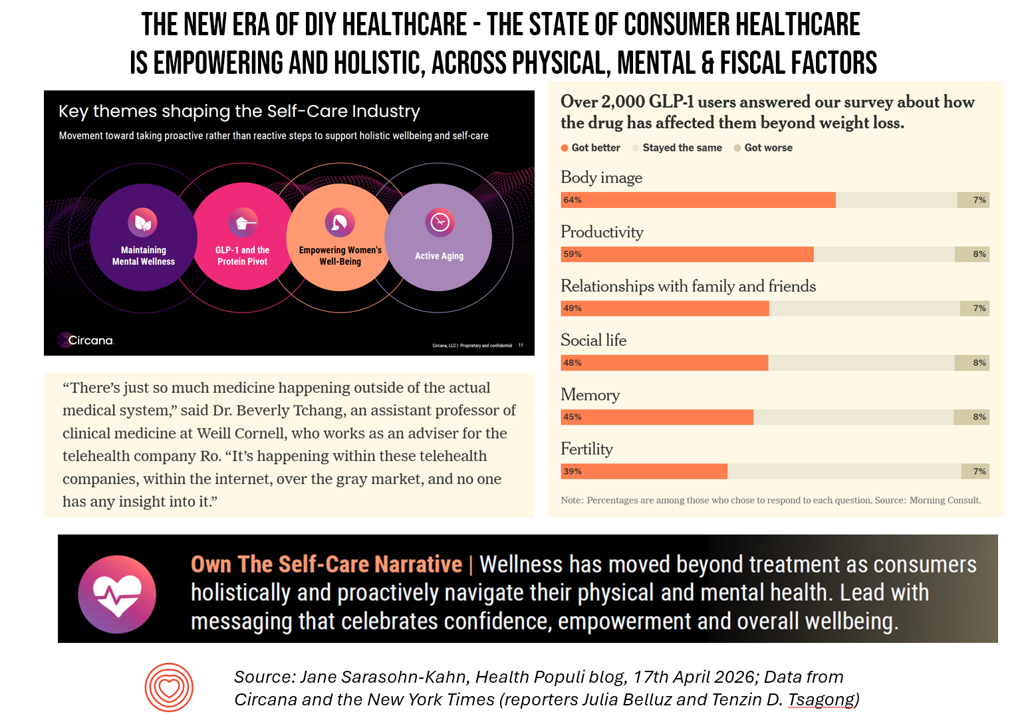
Consumers’ spending on healthcare, beyond a health insurance premium and hospital bills, is among the fastest-growing industries in the U.S. — with spending increasing faster than overall retail, Circana’s tracking data has quantified. In 2019, I published one of the early books on health care consumerism, HealthConsuming, my spidey-senses perceiving an expanding retail health landscape where patients-as-consumers, caregivers, Quantified Self’ers, and wellness aficionados were engaging with a variety of touchpoints based on their personal values and sense of value to co-create personal and family health: in grocery stores, Big
The “Five-Month” Cognitive Penalty of Financial Decline: A Significant Loss of Financial Well-Being Correlates with About Five Months of Cognitive Decline A Year
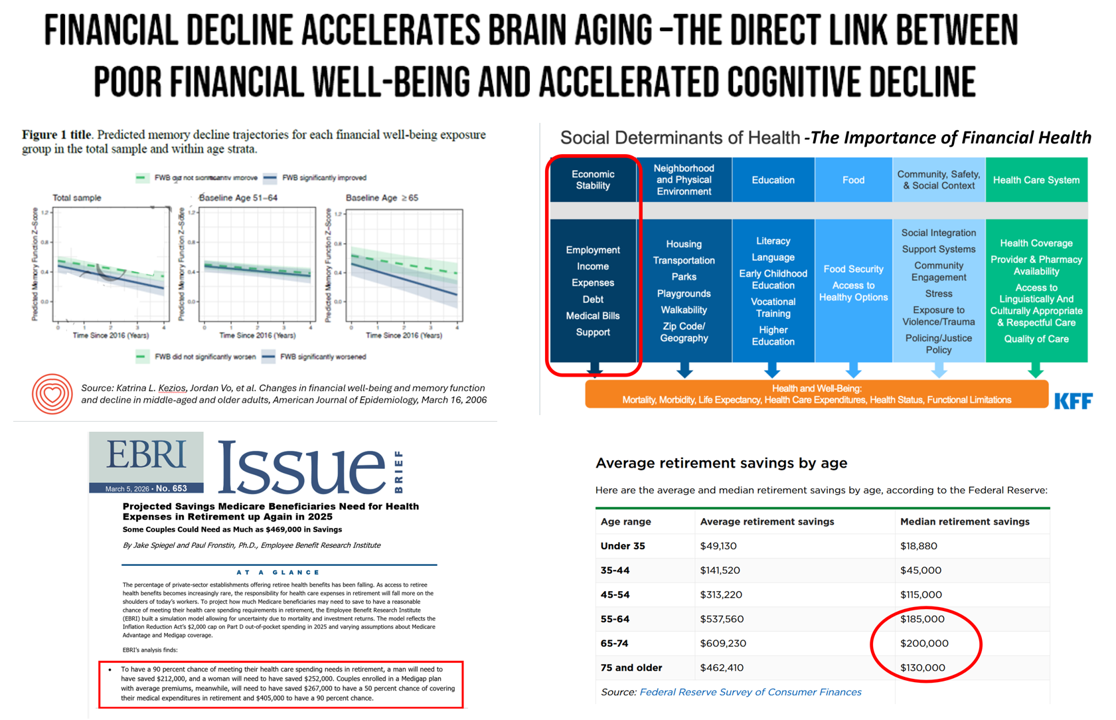
Lower financial well-being and worsening financial conditions have been linked to declining brain function, according to new research from a team at the Columbia Mailman School of Public Health. The research, Changes in financial well-being and memory function and decline in middle-aged and older adults, was published this month in the American Journal of Epidemiology. “Worse financial well-being in midlife and older age — and especially declines over time — are associated with lower memory scores and faster cognitive decline,” the study notes — among the first to scrutinize the relationship between brain
Health Care Ads at the Big Game (Super Bowl LX) – Edgy, Entertaining, Educational
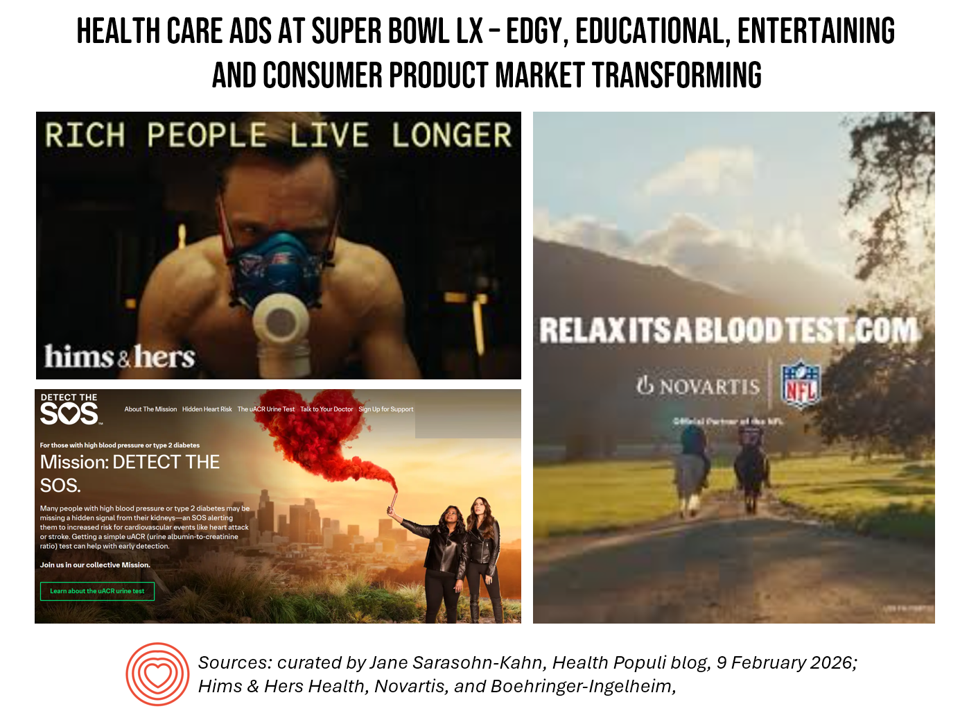
“When Weight Watchers dared to run an ad in 2015, it was likened to a record scratch,” AdAge noted in its preview of ads planned for broadcasting during Super Bowl LX. A decade+ later, healthcare and health-related promotions are part of the Big Game’s financial lifeblood, where a 30-second spot can cost $8 million according to AdMeter And on the aesthetics/design front, some of the ads this year are downright edgy — entertainment-intended, but also educational in their own way. Take “Rich People Live Longer,” this year’s ad from Hims & Hers Health. The company advertised at last year’s game
When a Hotel Becomes Your Health Partner – Learning from Novotel and Accor
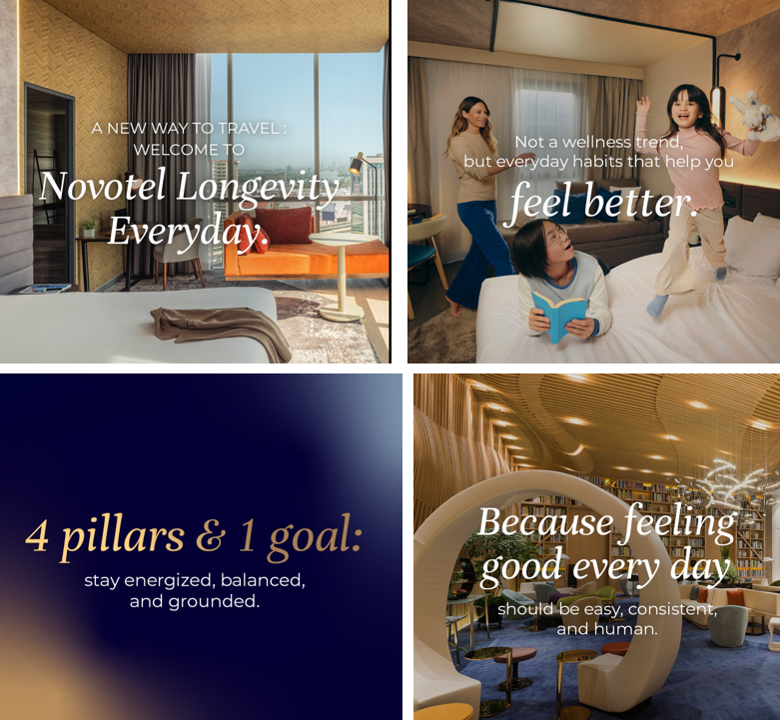
“Novotel Launches ‘Longevity Everyday.'” That’s the title of the global, France-based hotel chain’s press release, announcing the Novotel brand’s initiative to serve up healthy hospitality. Check out this video… Behind this strategic positioning decision, the hotel notes, “Accor data reveals that one in three travelers is taking daily steps to improve their mental and physical wellbeing, yet most longevity programs remain out of reach for many people. This gap between demand and accessibility has created a strategic opportunity that Novotel, Accor’s founding brand, is uniquely positioned to address.” This approach will extend to over 600 hotels operating in 67 countries
The New (Old) Long-Term Care: Intergenerational, Together at Home
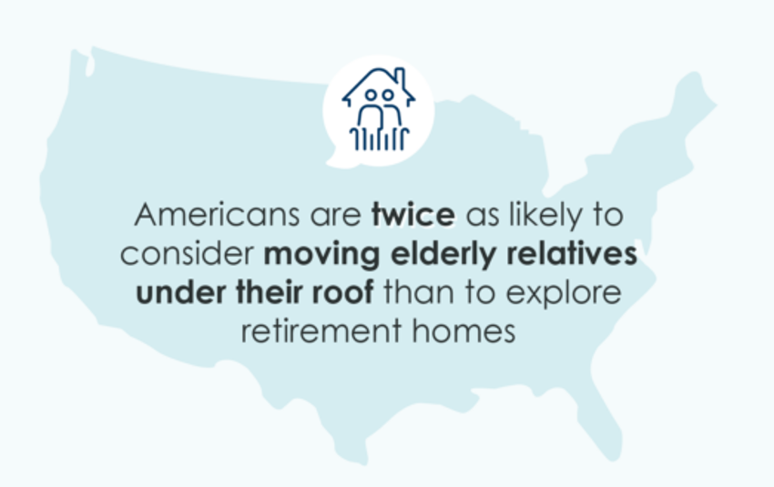
One in three adult children in the U.S. say that moving their parent(s) into their family’s home is the most likely living arrangement for their folks as they age, we hear from a study on the “Care Conversation” from LevLane, conducted by Talker Research. That’s twice as many consumers as those looking to assisted living (19%) or senior living or memory care facilities (16%). Talker Research conducted a survey of 2,000 U.S. adults, Gen X or younger with a living parent, to assess the current state of and future prospects for the senior living market.
Optimistic and Skeptical: How Older Americans Are Using and Seeing AI – the View from AARP
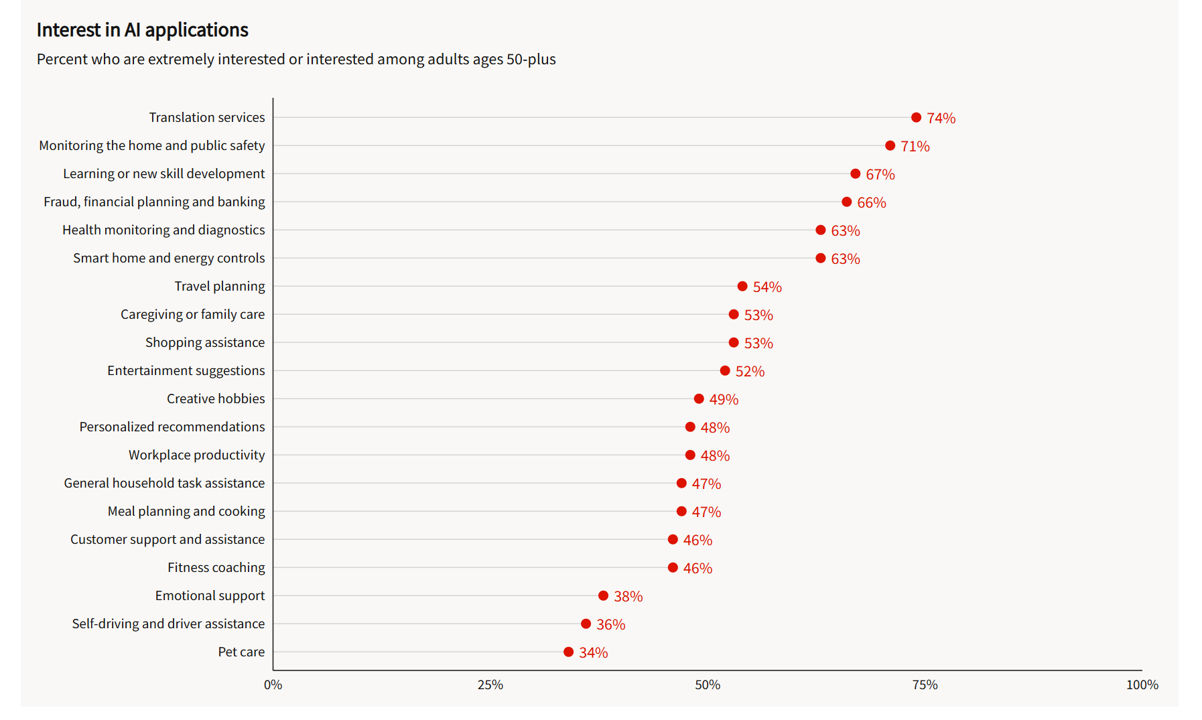
People over 50 in America typically hold two thoughts in mind at once when it comes to AI: they’re optimistic and skeptical, depending on the “job” that AI could do, according to research from AARP explained in the report, Navigating the World of AI: Awareness, Attitudes, and How People Expect to Use It. Topline, most people 50 and over have used AI in some way, with roughly 3 in 5 older Americans saying “I am a beginner” in using AI across age groups from 50 to 70+. Most older Americans are familiar with many terms in the
As Adult Vaccination Levels Fall, We Must Assert the Value of Vaccines
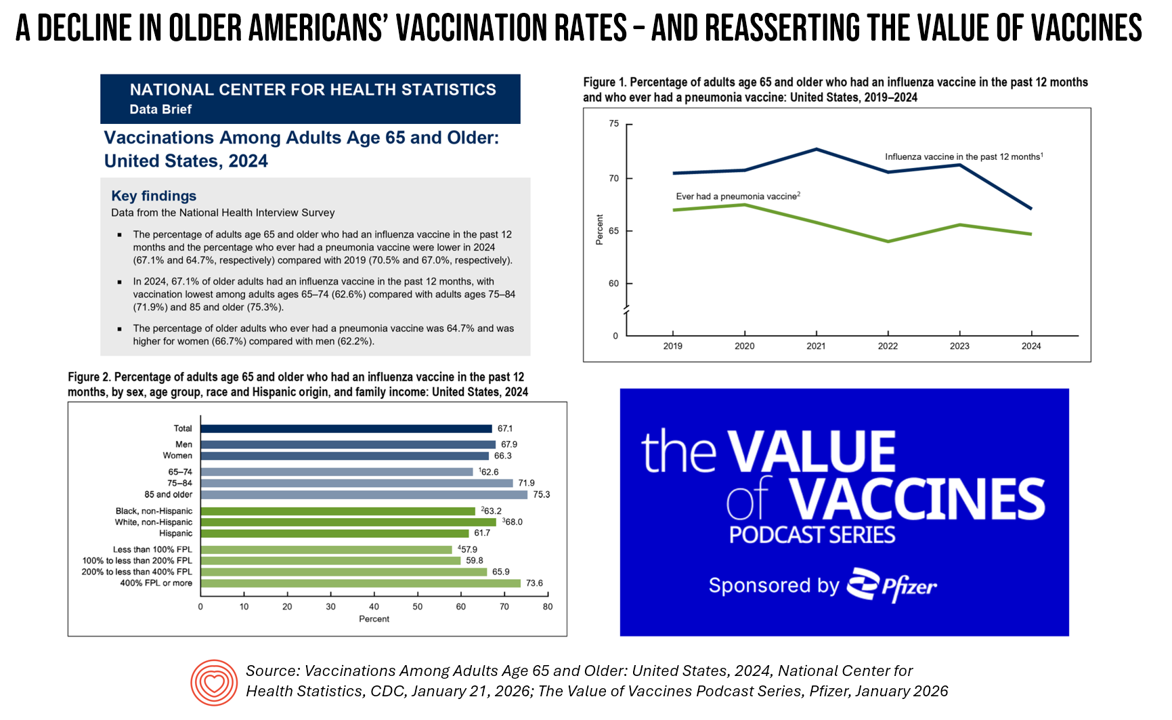
The rate of vaccinations among people 65 years of age and older has declined since 2019 — a personal health challenge for aging Americans and their caregivers and families, and a public health problem for the U.S. The Centers for Disease Control’s National Center for Health Statistics published Data Brief 547 on the situation on January 21, 2026. In the meantime, serendipity and timing are uncanny in the moment as The Value of Vaccines conversation series from Pfizer was launched this week. I am grateful to have participated in this project with several sisters-in-expertise: Elif Alyanak from Avalere, Venesa Day
Why Progresso Soup was at CES 2026: How Food is Playing Into the Evolving Health Consumer and Retail Health Landscape
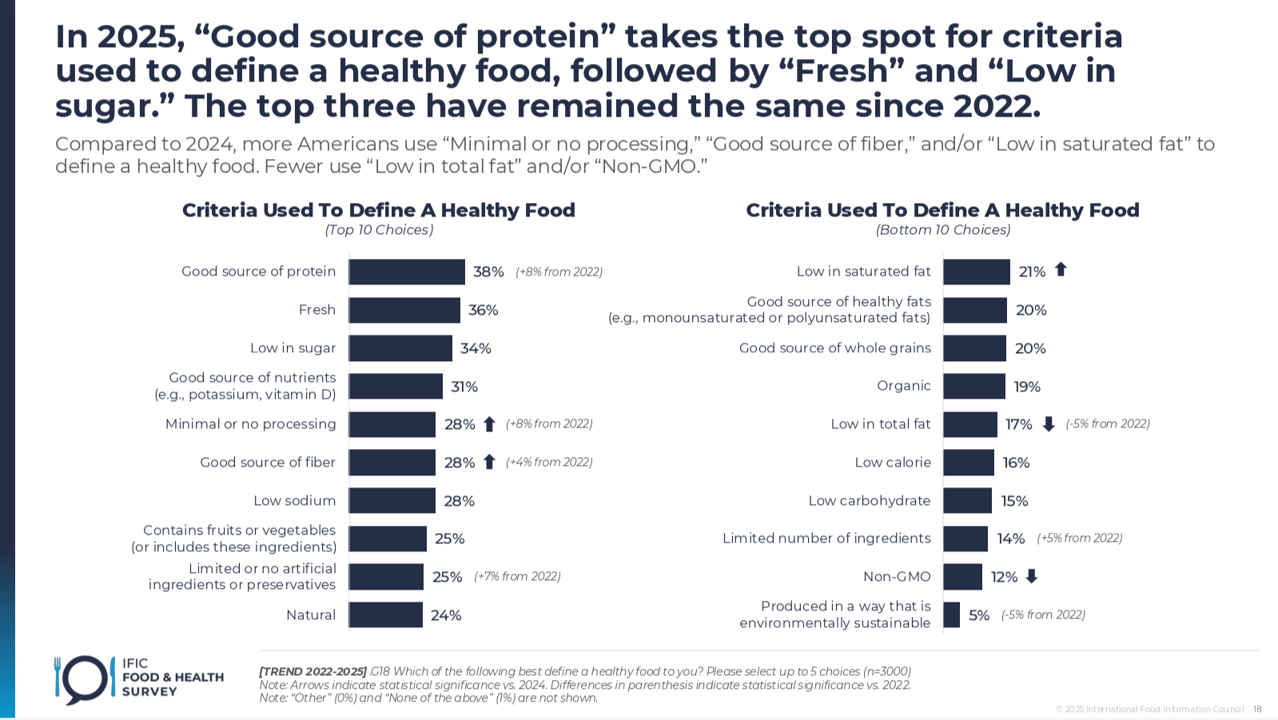
Why was Progresso Soup and its manufacturer General Mills at CES 2026? Specifically, in the AgeTech Collaborative curated by AARP? If you are part of the health/care ecosystem in any of its segments, chances are you’re attending conferences at the start of 2026 or soon to attend one. I spent last week at CES 2926 in Las Vegas getting updates on digital health, well-being, and self-care innovations. This week, hundreds of my colleagues are attending #JPM2026, the 44th annual J.P. Morgan Healthcare Conference held in San Francisco every year at this time. One conference that would not have been well-attended
Aging is Not a Decline, but an Awakening at CES 2026 – Learning from AARP About Consumers, Lifespan, and Technology
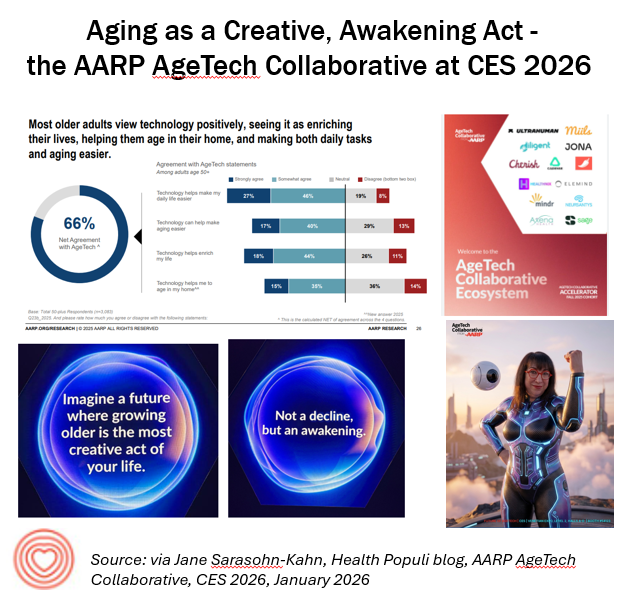
Aging and longevity are key themes driving technology innovations and markets, and walking the miles of aisles of CES 2026 demonstrates the expanding landscape of the role of tech in healthy living across the lifespan. I spent time at the AARP AgeTech Collaborative space this week as I did last year (here was my write-up of AARP and CES 2025 for historical context). In experiencing this year’s portfolio of AgeTech collab partners, from start-ups to Fortune 100 companies in the mix, was informative, inspiring, and even energizing as someone who has been a member of AARP since turning 50 some
Sleep as a Pillar of Health at CES 2026 — What Can Happen When A Lamborghini Legacy Mashes Up With Sleep Tech
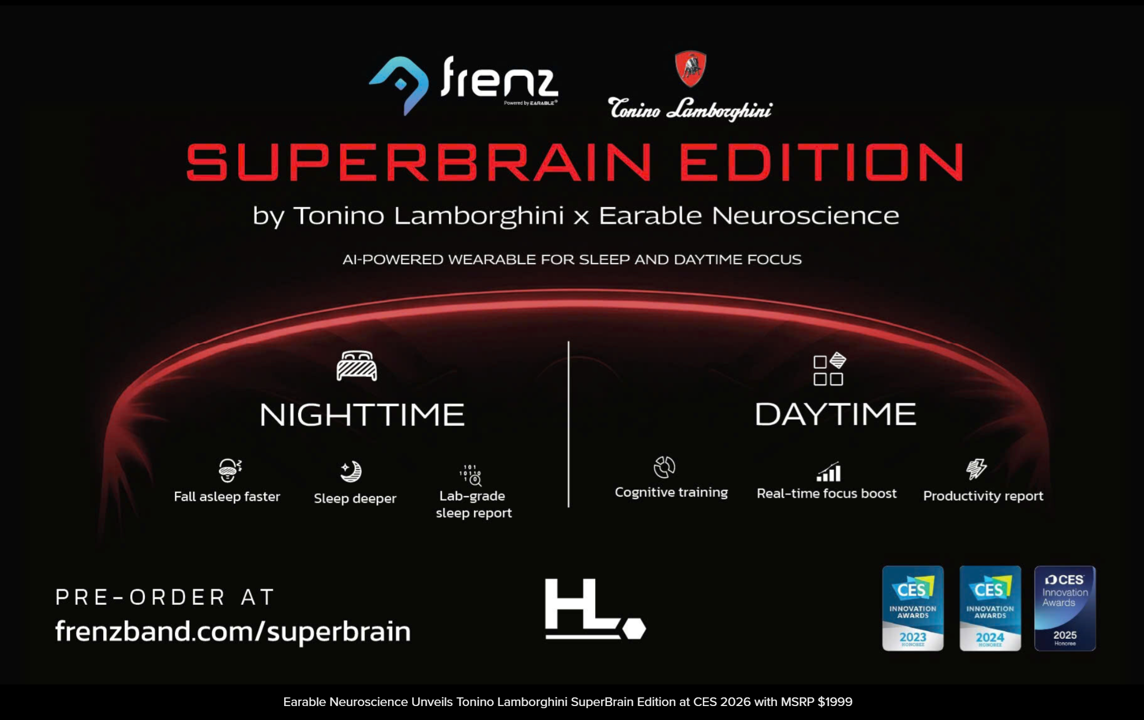
Well-being is a new form of luxury….and sleep is an inherent aspect of well-being and health, a message reinforced during a press conference hosted by the National Sleep Foundation at CES 2026. Sleep has been an ongoing theme at CES for many years: here’s a post I wrote on sleep at CES 2025 a year ago for some historical context. In today’s growing home-as-our-health-hub ethos, sleep-tech takes on a variety of forms, from new-fangled beds and sensors, smart rings, other wearable tech (like earbuds), and circadian rhythm lighting innovations. In yesterday’s Health Populi, I focused
The Bathroom’s Role in the Home as Health Hub: Catching Up with Kohler Health’s CEO at CES 2026

A key Tech Trend to Watch at CES 2026 is consumers’ re-imagining and fitting out their homes as sites for bolstering health and well-being. I’ve been tracking this concept as far back as 2011 when I wrote this post from the 2011 Consumer Electronics Show. A decade-and-a-half later, in déjà vu spirit, the concept is no longer theoretical or futures-thinking. Fast forward from 2011 to the COVID-19 pandemic, when everyone’s home spaces became re-purposed for health, for medical care, for well-being, for fitness and exercise, for cooking up nutritious food, for
Tech Trends to Watch at CES 2026 – For Health, It’s About Longer Living, Smarter Living, and Better Living
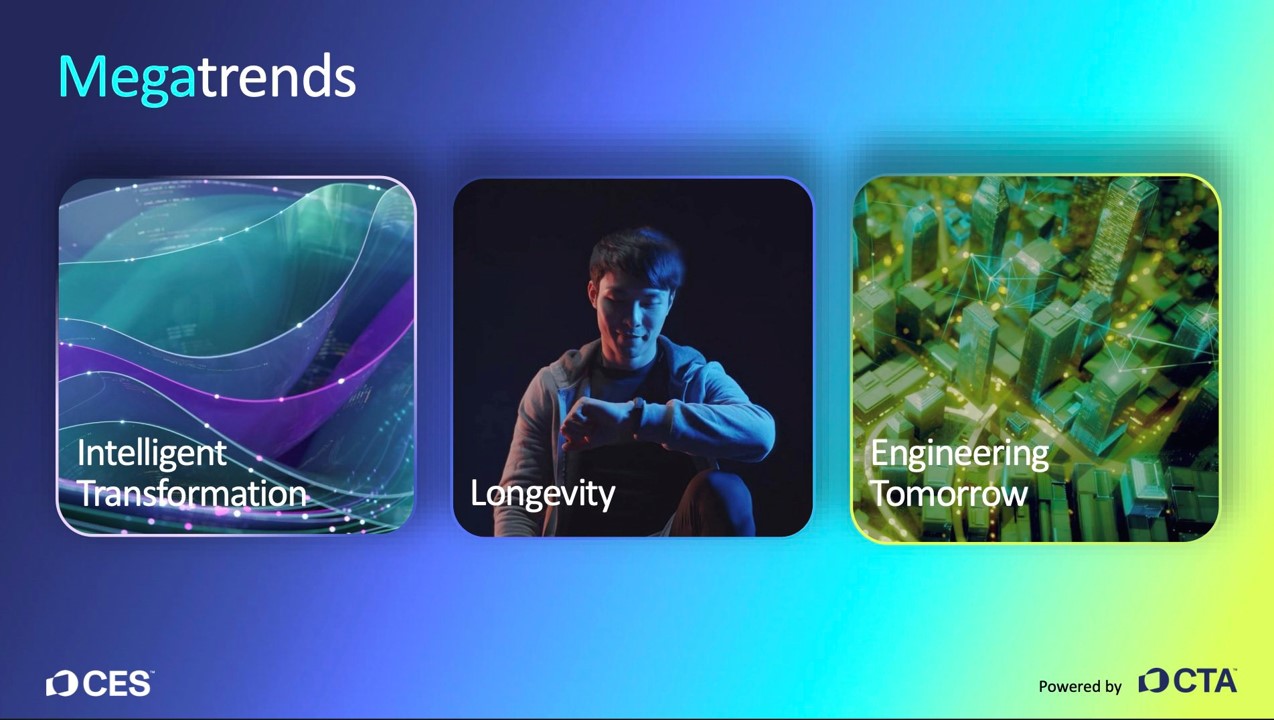
Live from CES 2026 in Las Vegas…the first day of CES Media Days preceding the big show always covers a context-setting report on Tech Trends to Watch. This is one of my annual go-to programs which helps orient media and industry analysts with a lens on CES’s key tech categories and some hard data on market size and growth expectations. While I’ll focus on the health/care specifics in the trend forecast, let me first update you on the overall technology market revenues for the U.S. which are estimated at $565 billion for 2026.
Exercise is Health Care, and Consumers Are Willing to Pay – Context for #CES2026
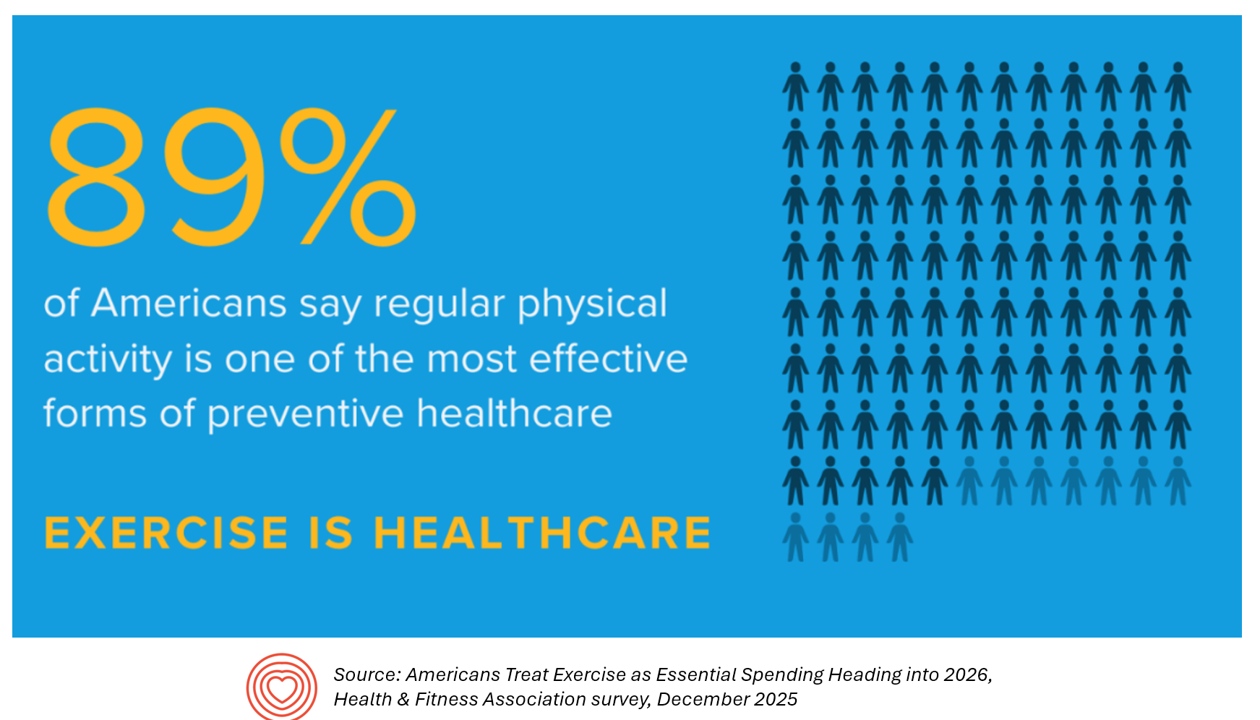
“Americans are not just setting fitness goals; they are budgeting for them,” Liz Clark, President and CEO of the Health & Fitness Association observed. “People increasingly see exercise as an essential investment in their long-term health. Even in a challenging economic environment, Americans are prioritizing physical activity as a proactive form of preventive healthcare.” Americans see exercise as healthcare — and health — according to a survey from the Health & Fitness Association (HFA). HFA commissioned Kantar to conduct the online survey among 2,000 U.S. adults 18 and over in December 2025 — well-timed for the
A Primer on Health Consumers for CES 2026 – How Macro Consumer Trends Will Shape Healthcare Consumers in 2026
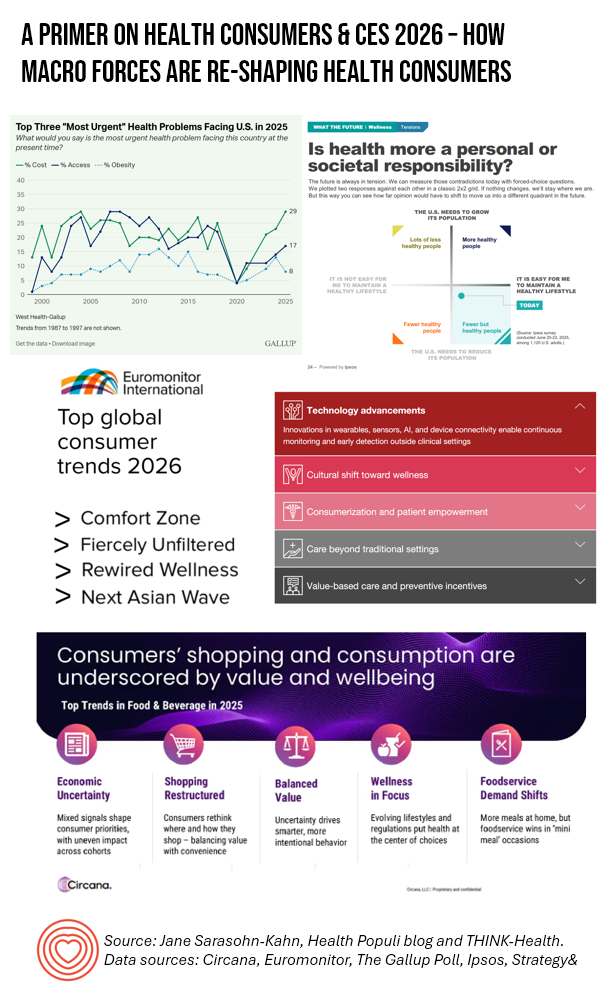
Increasingly, people are engaging more in health care decision making due to many factors impacting their personal medical choices — from the cost and access to health insurance to co-payments for prescription drugs and the supply of primary care doctors, more patients developed and exercised their health consumer muscles in 2025, For 2026, the health consumer muscle-building will grow as people will be re-shaped by macro market factors we are currently gleaning from forecasts looking into the new year: for personal finances, social issues, technology adoption, views on AI and privacy, and other issues. Here are some data points to
Navigating a Constellation of Uncertainties: Health/Care in 2026 (My Un-Forecast)
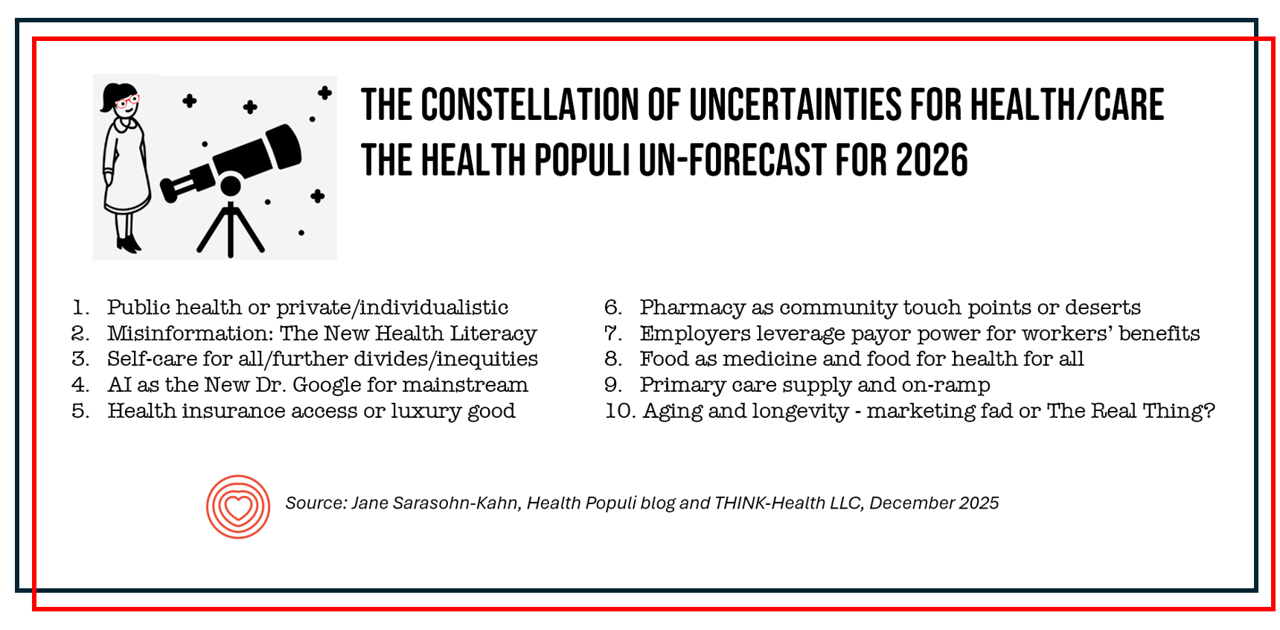
Almost from the first year of launching Health Populi in 2007, I’ve written a “TrendCast” for the coming year of health care. Over many years, there weren’t so many blogs devoted to health care which featured such prognostications, and so readers could divine signal from noise and move forward into new years with manageable lists of What To Expect Next Year in Healthcare. Here’s one from ten years ago that brings a sense of déjà vu: most of the findings are consistent with what we know for sure about 2026 and it’s useful to look back with today’s eyes to
The New Health Consumer Mindset and Wallet: From GLP-1s to Trading Up for Health & Longevity
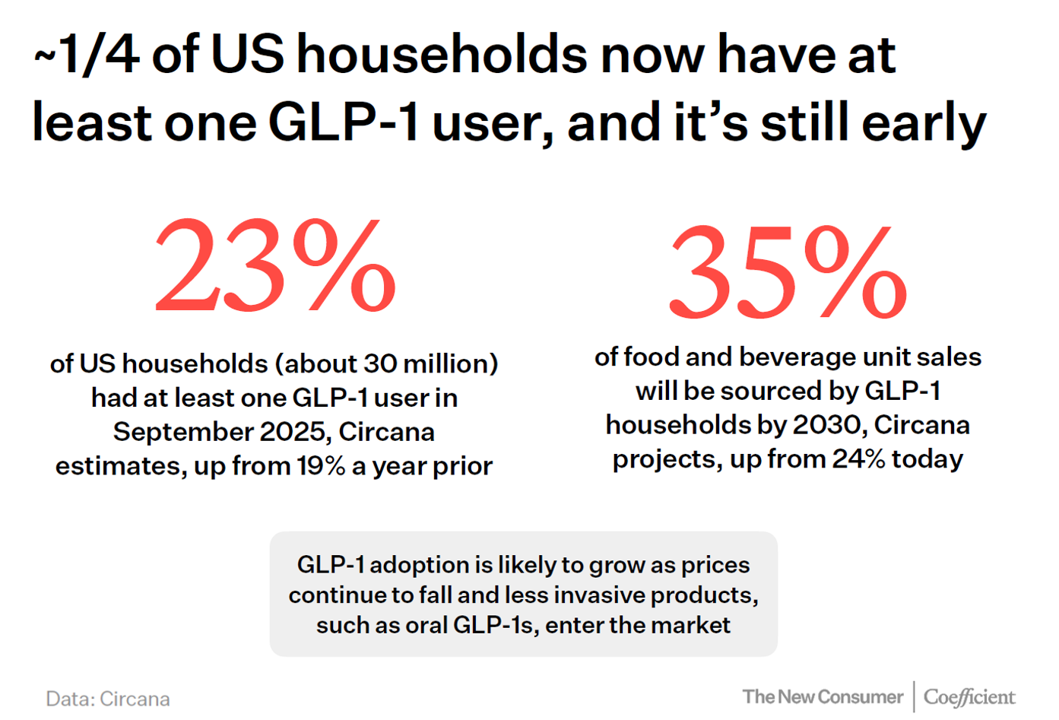
From GLP-1s to longevity and new views on self-care for healthcare, the people are taking their health in-hand, at-home, and via-tech to complement and sometimes replace the legacy health system touchpoints which are the traditional categories for care: hospitals, doctors, rehab centers, diagnostics and labs, and health care financing and plans — some opting out of plans and going full-risk (cash, out-of-pocket) truly self-insuring against future medical risks. As I prepare to publish my Year-End/New Year TrendCast for 2026, I felt like front-ending next week’s annual long post with details on the demand side of the forecast — a focus
A Month Until #CES2026 – The Journey to Our Personal Health Operating Systems

In a month, I’ll board a plane for Las Vegas to spend a week at CES 2026, the annual electronics conference that last year brought together over 140,000 global technology stakeholders to display, demonstrate, and sell the latest in consumer-facing tech. This will be my fourteenth CES (including the virtually convened meeting held in 2021). If you want to time travel, here’s a link to an early CES post featuring “The Battle of the (Wrist)bands.” Indeed, the digital health aisle at the time had many wrist-worn activity trackers, largely amped-up pedometers, with the likes
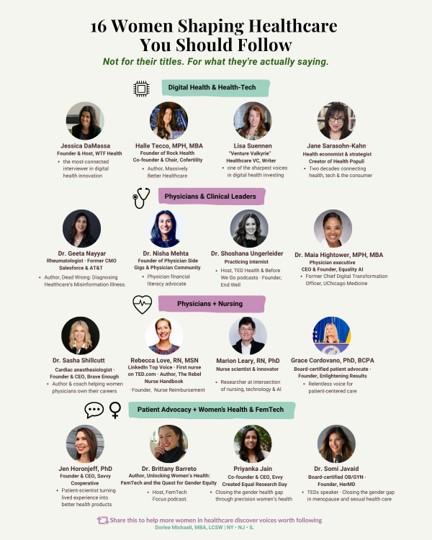 I'm gratified to be named on this updated list of 16 women's voices who are shaping health care. The curator of the list, Dorlee Michaeli, asked the question: "If someone wanted a smarter healthcare LinkedIn feed tomorrow, who should they follow today?" Glad to be one of these voices.
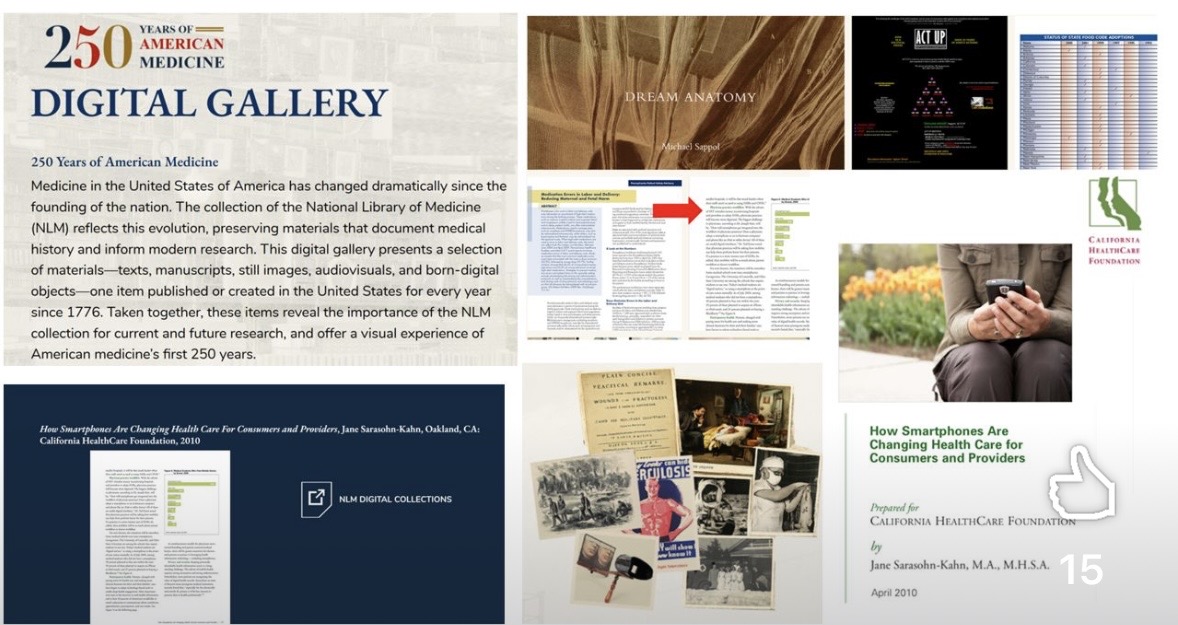 I’m celebrating America’s 250th birthday both patriotically and professionally, honored that the NLM included my 2010 paper, “How Smartphones Are Changing Healthcare for Consumers and Patients” as one of 250 items curated for the digital archive of 250 Years of American Medicine.
 I'm grateful to be part of the Duke Corporate Education faculty, sharing perspectives on the future of health care with health and life science companies. Once again, I'll be brainstorming the future of health care with a cohort of executives working in a global health care enterprise.