

Cost pressures and technology acceleration (read: AI) are reshaping and reinforcing post-COVID consumer behaviors, we learn from McKinsey’s State of the Consumer 2026. The research report is built on four key trends, which were discussed in a webinar session featuring Danielle Bozarth (New York-based) and Clarisse Magnin (Paris-based), Senior Partners with McKinsey, led in an insightful conversation by Global Editorial Director Lucia Rahilly.
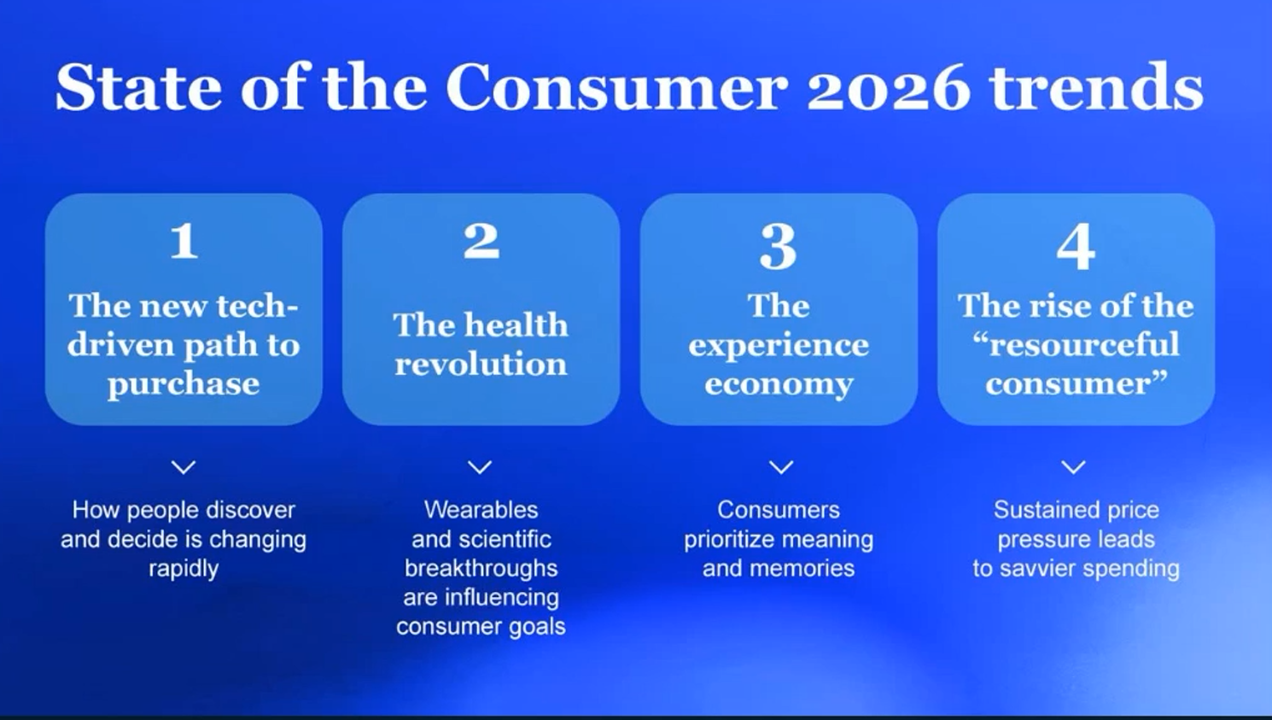
This year, consumers’ behaviors are empowered and enabled through technology — AI, social media, and omnichannel communications that support peoples’ agency to research, find, purchase, and share experiences.
And health is central to consumers’ personal operating systems, McKinsey’s research finds.
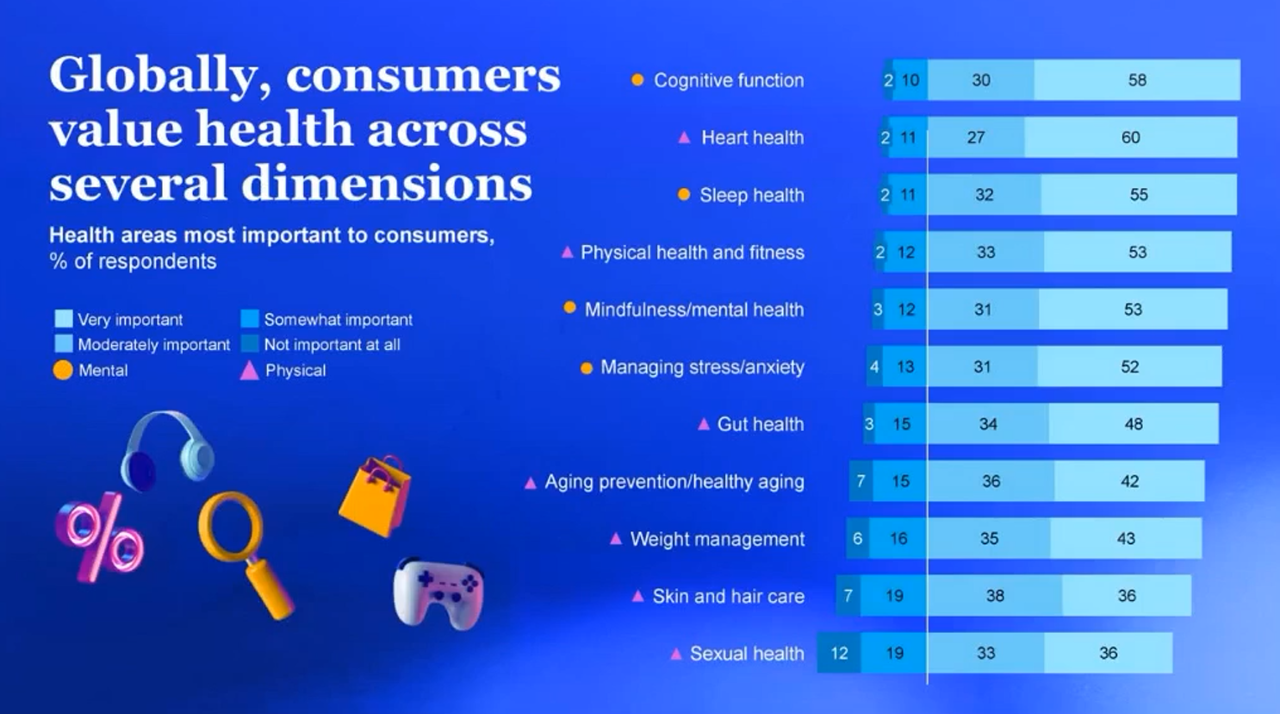
People define health across many dimensions beyond their physical functioning.
Among the top-box “very important” factors are heart health, cognitive function, sleep health, physical health and fitness, mindfulness and mental health, and managing stress and anxiety, each cited by over 50% of global health citizens.

Global health consumers take on a variety of behaviors to address these health and well-being factors; this chart features differences between Gen Z consumers and Boomers by health behavior, showing larger differences in how each generation views consuming artificial flavors, artificial sweeteners, highly processed foods, sugar, salt, and fat.
But when it comes to differences in alcohol consumption, caffeine, and gluten, the differences are small.
There are also differences across country or origin in how health-oriented consumers view their success in achieving their wellness goals — with more health citizens in the U.S. and Brazil (47%) believing they’ve achieved their wellness goals, compared with lower proportions of health citizens in Germany (28%) and France (34%) saying they have achieved their wellness goals.

Health Populi’s Hot Points: Cost pressures are driving global consumers to buy less, use products longer, and embrace DIY, McKinsey asserts — finding that consumers take a variety of actions to spend wisely based on their sense of value and values. The top three actions people are taking to realize greater value in their purchases include keeping items longer, repairing items, and deferring big buys, among a majority of both Gen Z and Boomer consumers globally.
Another area of DIY for health-focused consumers is viewing and acting on food-as-medicine and health-bolstering, I’ve discussed here in Health Populi for many years (most recently, in this post).
McKinsey’s 2026 research finds that about one in 3 global consumers say they struggle to afford the foods they want, with slight generational differences as illustrated in the last chart from the report. In the current inflationary grocery/food environment, this struggle will continue well into 2027 and will jeopardize many health-conscious consumers’ and their families’ efforts to afford health-ful and fresh foods.
What can business and other organizations serving peoples’ health-and-wellness touchpoints do to accommodate the increasingly tech-enabled, cost-conscious, resourceful consumer? McKinsey recommends you show up “where decisions are shaped,” in AI responses and social platforms; to make wellness propositions specific and credible, focusing on outcomes that consumers can track; that experiences be shaped to spark consumers’ visceral memories and sense of meaning; and, that value is designed into products and services from the jump, not just as an after-thought or add-on that’s not integrated into the use and experience of the product.
I talk a lot in health care experience and consumer trust about privacy-by-design and equity-by-design. In addition to these, health industry stakeholders should now bake in value-by-design.
 Jane will be working with EU- and UK-based clients in September and October 2026, collaborating with stakeholders in digital health, public/community health, retail health, and growing opportunities for health-at-home. Stay tuned to her updates here on Health Populi on-the-ground as she lives the digital nomadic work-life in Italy, Belgium, the Netherlands, and in London.
 I was grateful to be Jasmine's first conversation-guest on her new podcast,
  Jane joined host Dr. Geeta "Dr. G" Nayyar and colleagues to brainstorm the value of vaccines for public and individual health in this challenging environment for health literacy, health politics, and health citizen grievance.