


Consumers Globally Are Defining Longevity in Self-Care As People Confront a World Out of Control
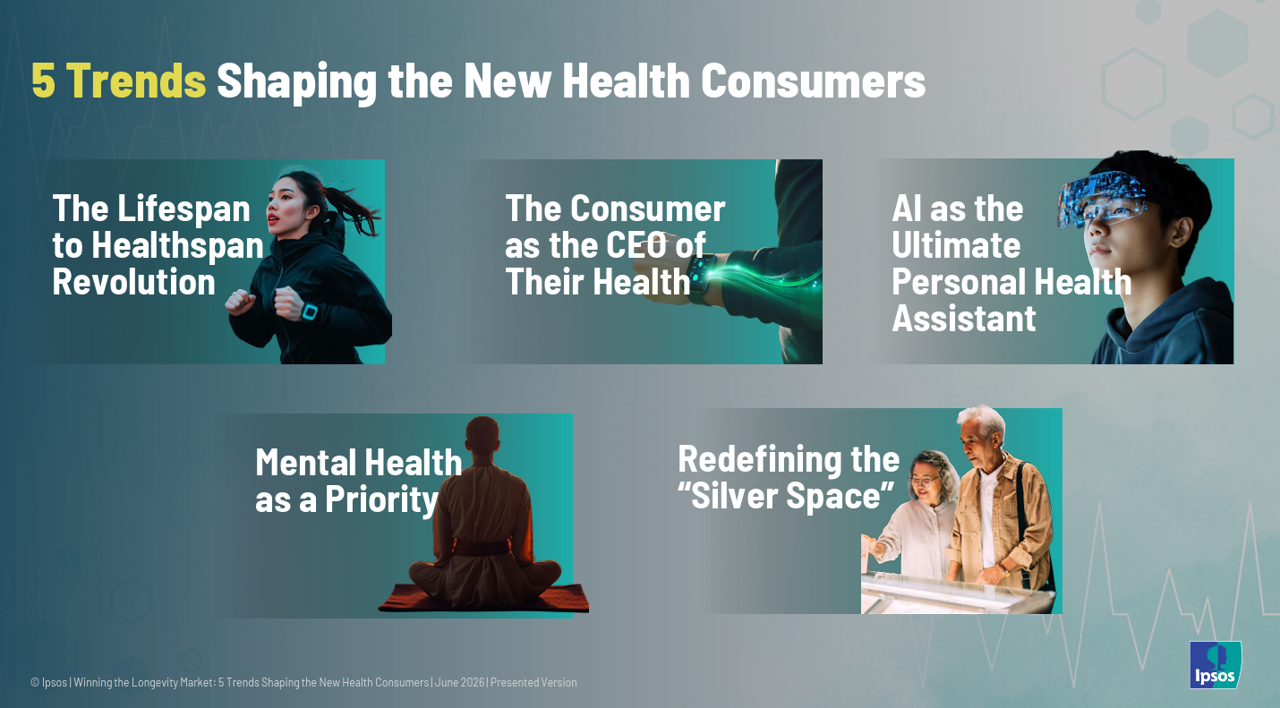
“The consumer response to a world out of control is to invest in self,” and that has inspired peoples’ search for longevity beyond lifespan itself. Ipsos’s latest research into this phenomenon is presented in the firm’s report, Winning the Longevity Market, published in late June 2026. Five factors are shaping these increasingly self-caring health consumers, including, A shifting perspective from lifespan to healthspan Consumers as CEOs of their health AI as ultimate personal health assistant Prioritizing mental health, and, Redefining the “Silver Space.” “The world
Technology is Reshaping Trust in Health Care – Consider Humanity, Transparency, Capability, and Reliability
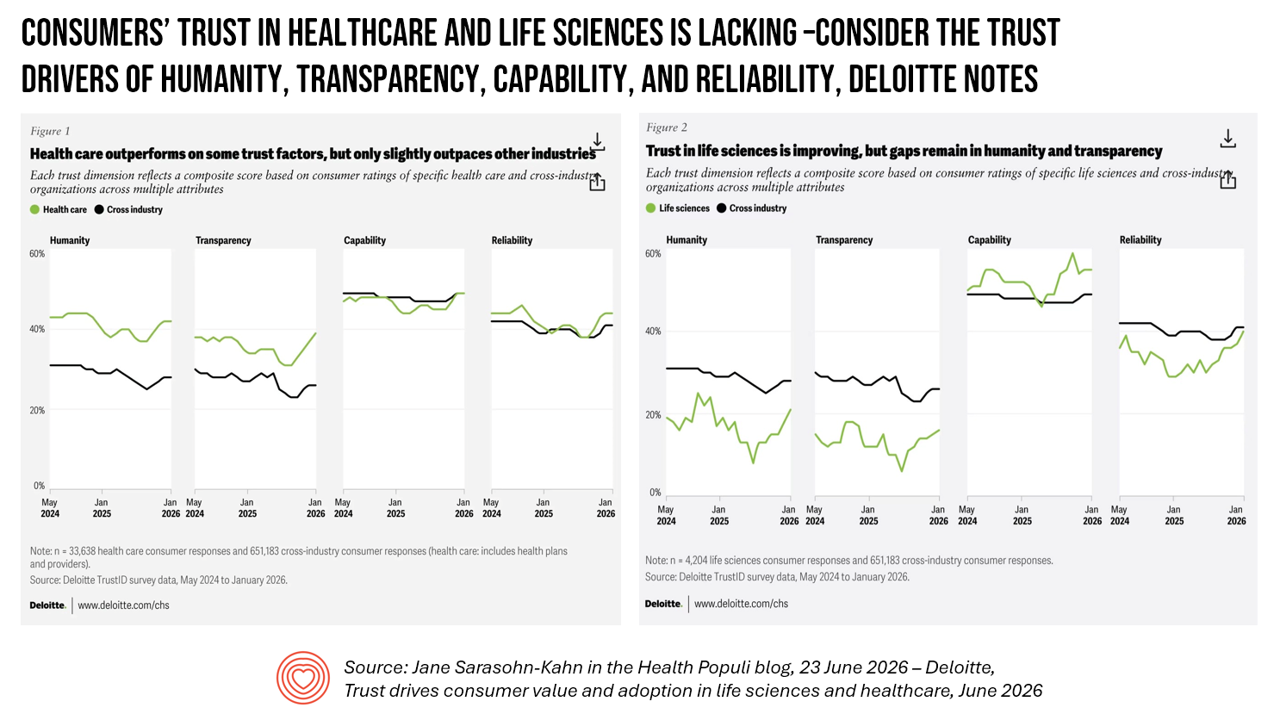
“Trust is like blood pressure. It’s silent, vital to good health, and if abused, it can be deadly.” So wrote Frank Sonnenberg, prolific author and commentator about morals and life. We can broaden Sonnenberg’s observation on trust beyond “health” itself to healthcare. Trust is indeed vital to healthcare, and to the health care industry, we learn from research from Deloitte discussed in the paper, Trust drives consumer value and adoption in life sciences and health care. Deloitte assessed consumers’ ratings of health care delivery systems (hospitals, providers) and life science companies (pharma, biotech, med-tech) across four drivers of trust: Humanity, assessing
The Rise of the Wellness Economy, From Wearable Tech to Hugging a Pet, According to the Bank of America Institute
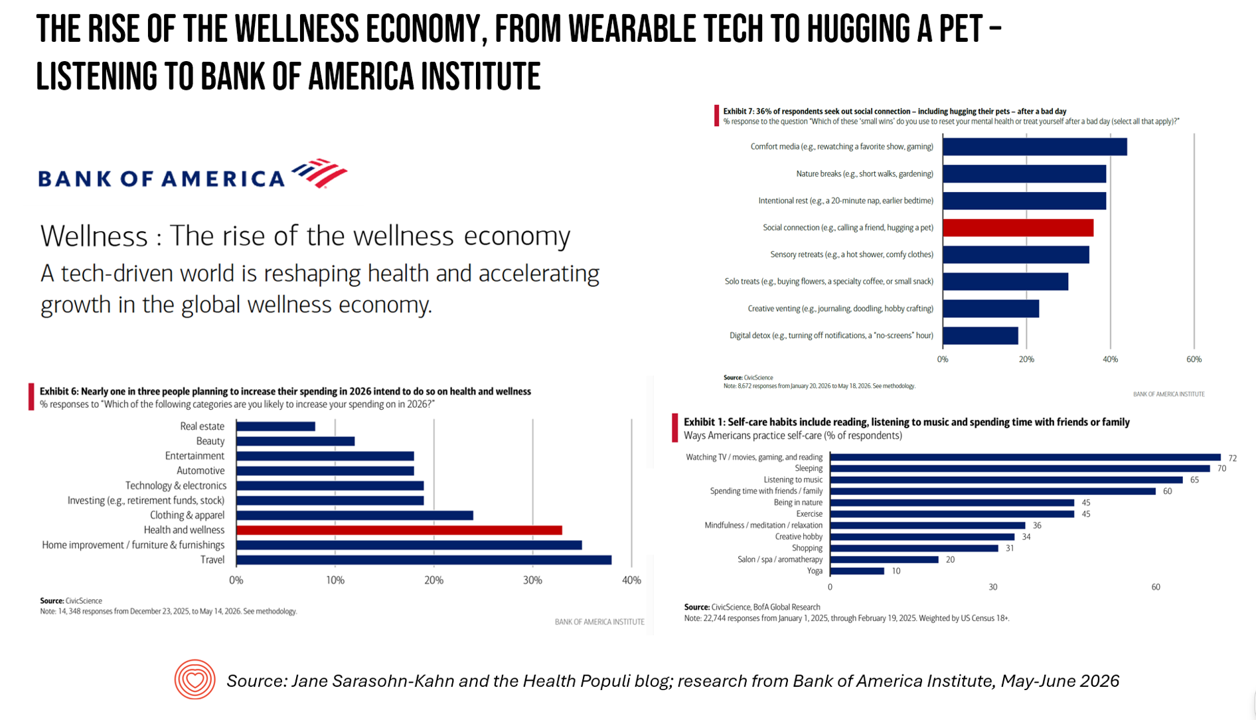
The Bank of America Institute has been covering aspects of the economy undergoing Transformation, this month winding up a four-part series on the wellness economy — addressing its “rise,” fostering social connections, tech for mental health, and self-care’s expanding footprint. In this post, I’ll weave together data that BofA shares in the four reports which speak to my current workflows across the retail health and self-care ecosystem. As people take on more agency for their own health and the well-being of family and community, consumers are spending more dollars, engaging more with data, and investing more
Most Psychologists Say Their Patients Use AI for Mental Health Support – Recommendations on Chatbots and AI from the APA
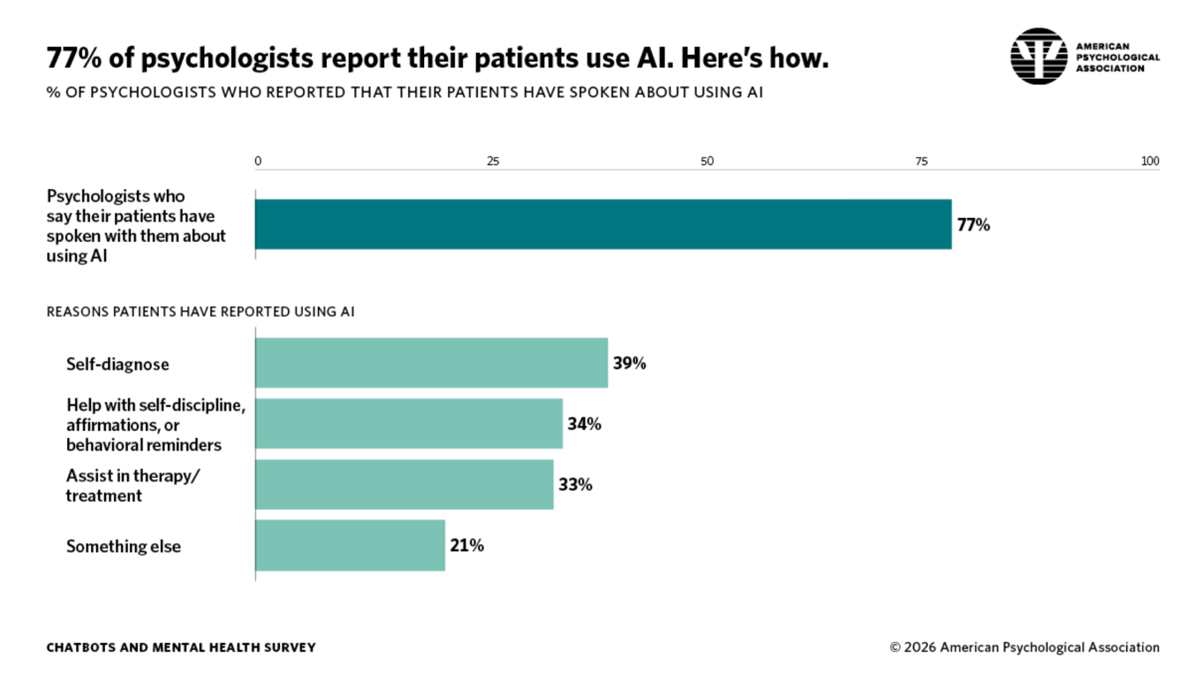
Three in four licensed psychologists in the U.S. report that their patients have spoken about using AI — with at least one-third reporting use for self-diagnosis, help with self-discipline or behavioral reminders, or as an assist in therapy. This is the top-line finding in the 2026 Chatbots and Mental Health Survey from the American Psychological Association (APA). This is among the first such study into patients’ use of AI for mental health support. APA conducted the survey among 1,242 licensed psychologists in the U.S. in April 2026, In this early phase of patients adopting
Even with Health Insurance, Half of Working-Age People in the U.S. Can’t Afford Healthcare (and a PS on Retiree Health Costs)
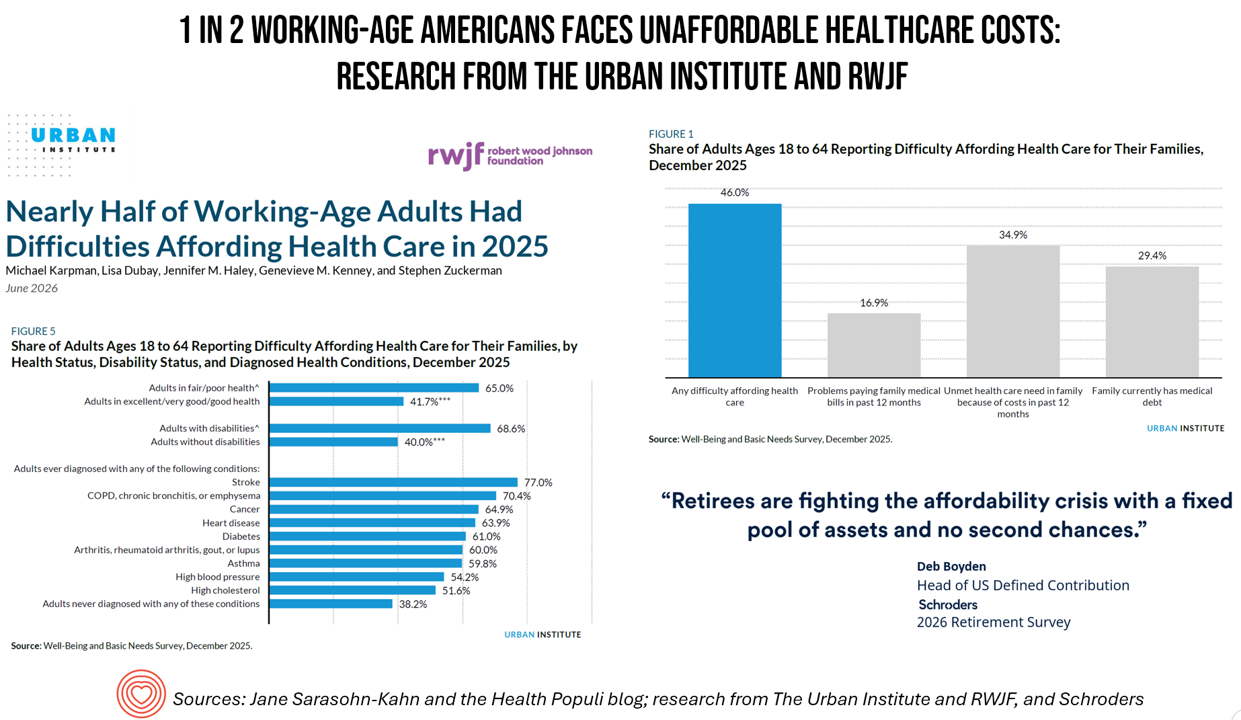
Nearly Half of Working-Age Adults Had Difficulties Affording Health care in 2025 is the title of new research jointly authored by the Urban Institute and the Robert Wood Johnson Foundation. The researchers conducted the Well-Being and Basic Needs Survey in December 2025, capturing U.S. adults’ experiences with health care affordability among people ages 18 to 64. The first bar graph shows that 46% of working-aged people in the U.S. had any difficulty affording healthcare, including 35% who had unmet health care needs in the family due to costs in the past 12 months; 29% whose
AI Is Expanding Healthcare Access, Enabling Clinician Wellbeing, and Preparing Proactive Patients – The Philips Future Health Index 2026
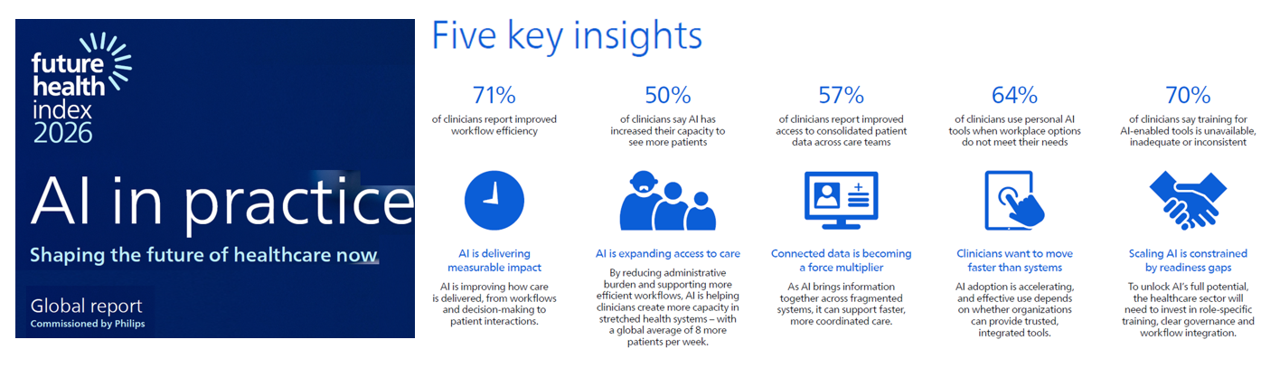
AI is already transforming healthcare delivery for clinicians, patients, and their clinical partnerships, we learn in The Philips Future Health Index 2026. For this year’s annual futures report, Philips conducted two surveys among 2,011 healthcare professionals and 20,085 patients, spanning ten countries and fielded between February and April 2026. AI adoption among healthcare providers and patients in this early phase is showing benefits translating into greater productivity, clinician well-being, improved data workflows, and expanded access and capacity for clinicians to see more patients. Health systems the
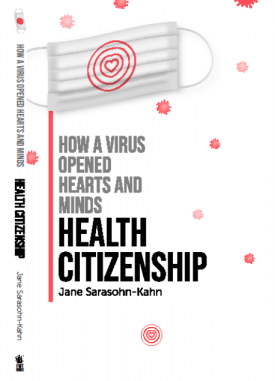
 I'm grateful to be part of the Duke Corporate Education faculty, sharing perspectives on the future of health care with health and life science companies. Once again, I'll be brainstorming the future of health care with a cohort of executives working in a global health care enterprise.
 Jane joined host Dr. Geeta "Dr. G" Nayyar and colleagues to brainstorm the value of vaccines for public and individual health in this challenging environment for health literacy, health politics, and health citizen grievance. Click onto the Pfizer Value of Vaccines site and you can watch four episodes covering the challenges with adult vaccination, the employer and health plan member's journey to vaccination, reimbursement, and collaborating for proactive prevention.
 Jane will be working with EU- and UK-based clients in September and October 2026, collaborating with stakeholders in digital health, public/community health, retail health, and growing opportunities for health-at-home. Stay tuned to her updates here on Health Populi on-the-ground as she lives the digital nomadic work-life in Italy, Belgium, the Netherlands, and in London.