

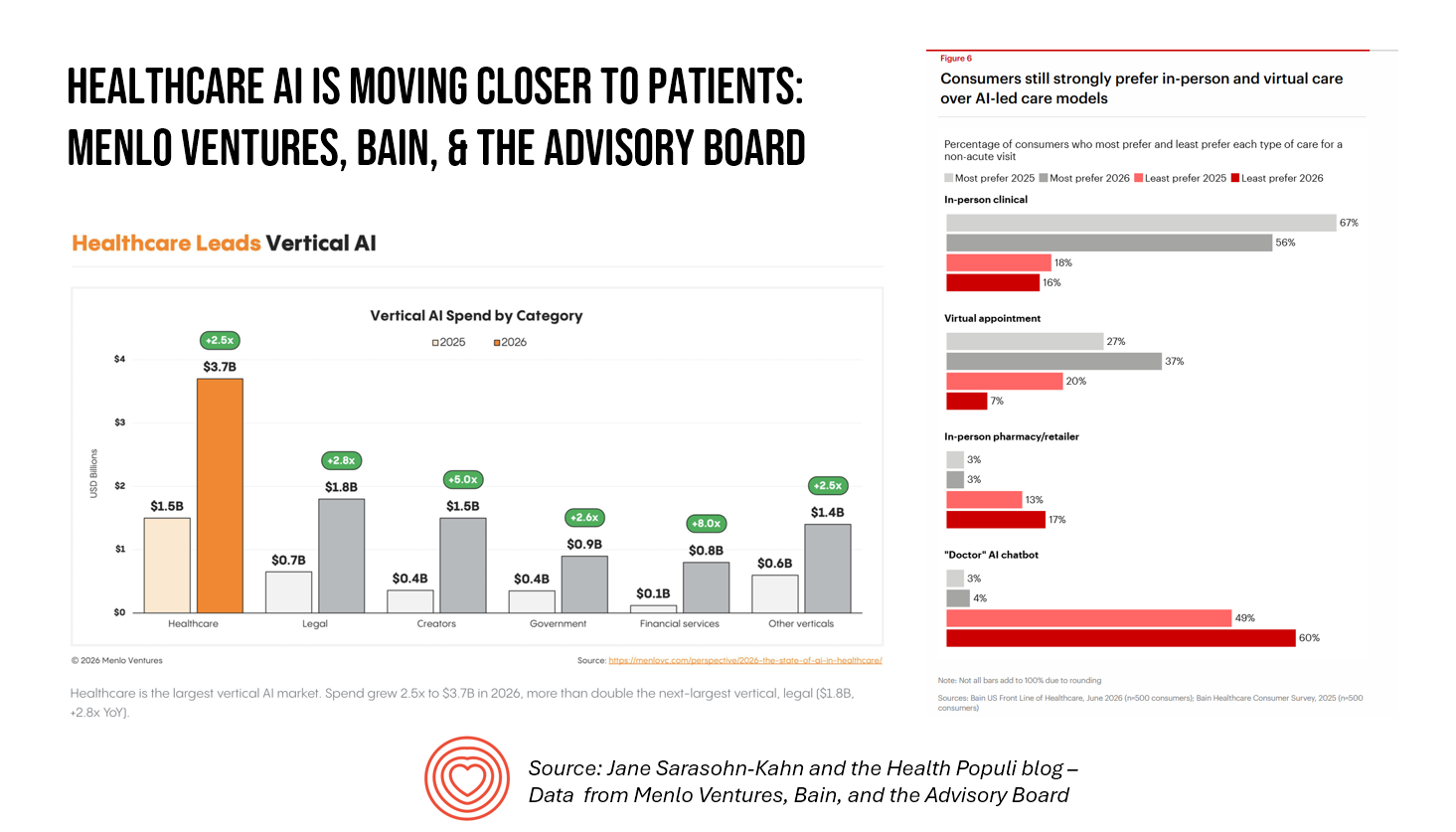
Healthcare is AI’s biggest vertical market, Menlo Ventures sets out in its latest report 2026: The State of AI in Healthcare. That market grew two-and-a-half times reaching $3.7 billion as of late 2026. 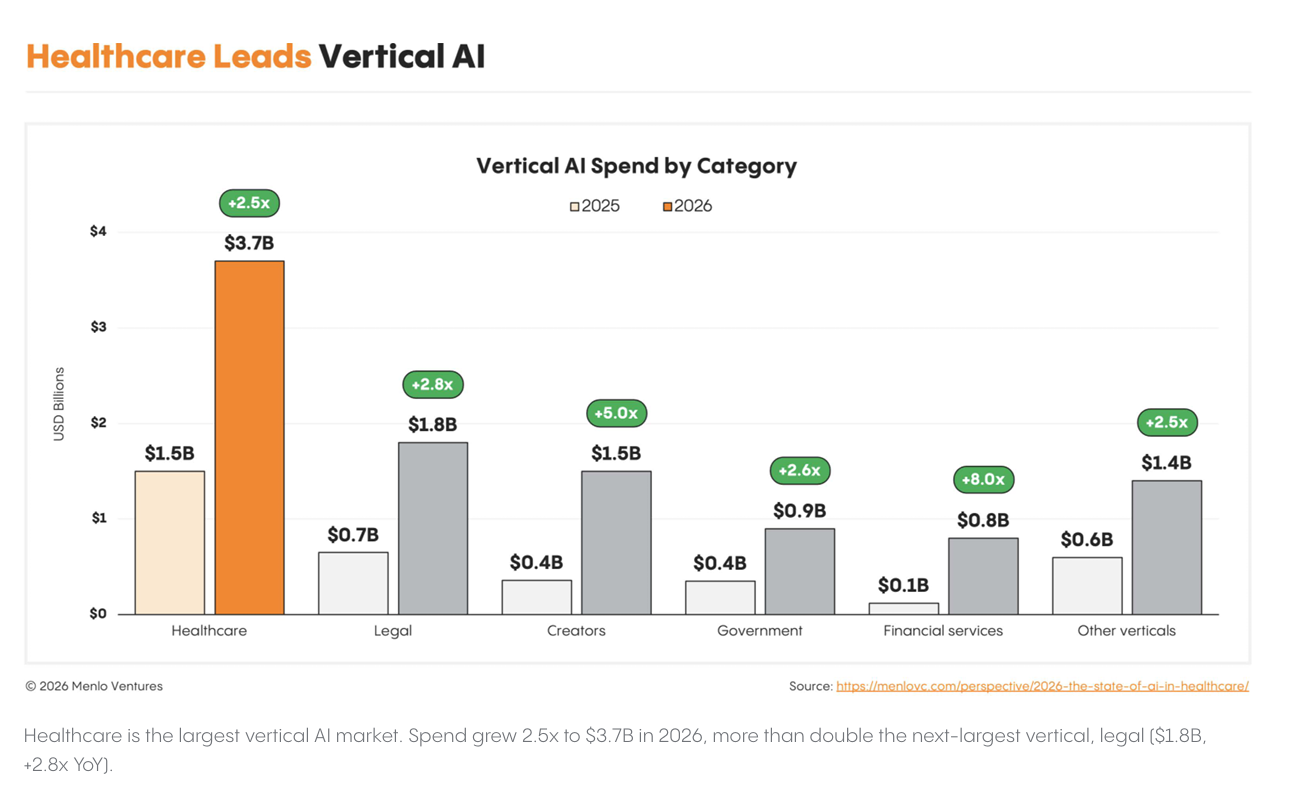
And that AI spending is moving closer to the consumer in the forms of patient engagement and clinical copilots, among other applications.
Far behind health care AI spending are the Legal and Creative sectors, each spending less than one-half of healthcare’s AI spend.
Menlo Ventures collaborated with Morning Consult on this survey of AI adoption in the U.S. healthcare system in September 2026, polling 550 executives director level and above (CXO, SVP/VP, and Director) who have experience in procuring AI for their organization. The sample of informants was split between management at health care providers, health plans and benefits administrators, and pharma and biotech companies.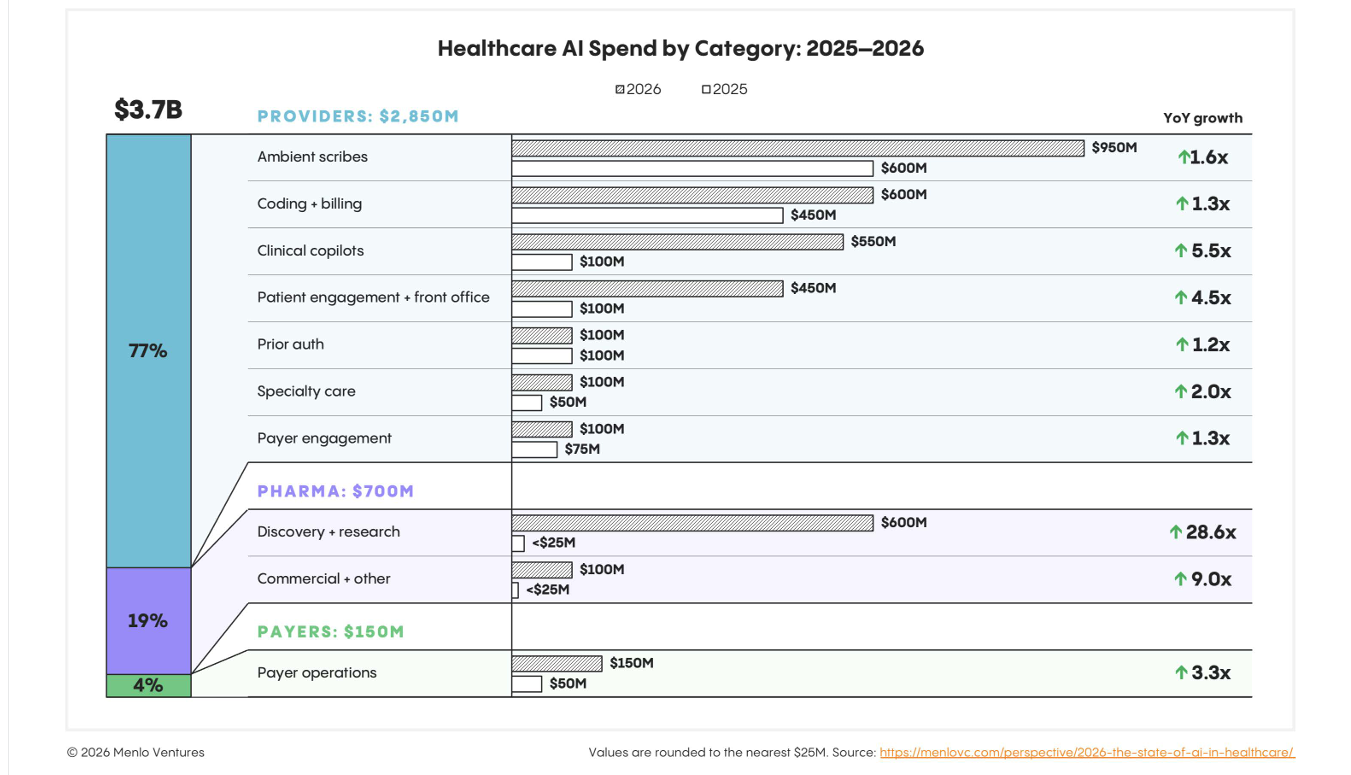
The biggest categories for healthcare AI spending were ambient scribes among provider organizations, and R&D for pharma. AI adoption among payers substantially lagged behind the other two segments.
It’s important to call out the “scribes” line item which dwarfed most other spending line items: the Menlo Ventures team calculated that two-thirds of the new scribing dollars went to Epic and Microsoft — two big-iron incumbent players in the health IT market.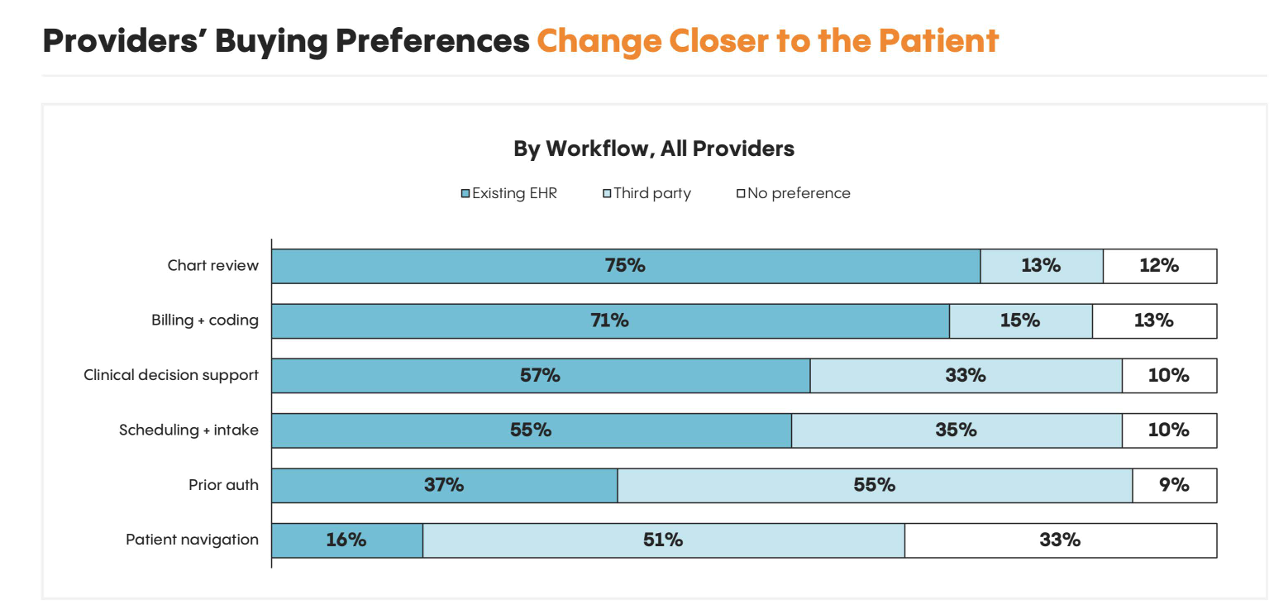
This third chart from the Menlo Ventures report shows more granular workflow AI applications for healthcare providers — illustrating that the uses are moving closer to patients, such as chart reviews and scheduling. The EHR was capturing more of the chart, billing, and clinical decision support; note that prior authorization and patient navigation were more likely to be preferred from other third party developers. 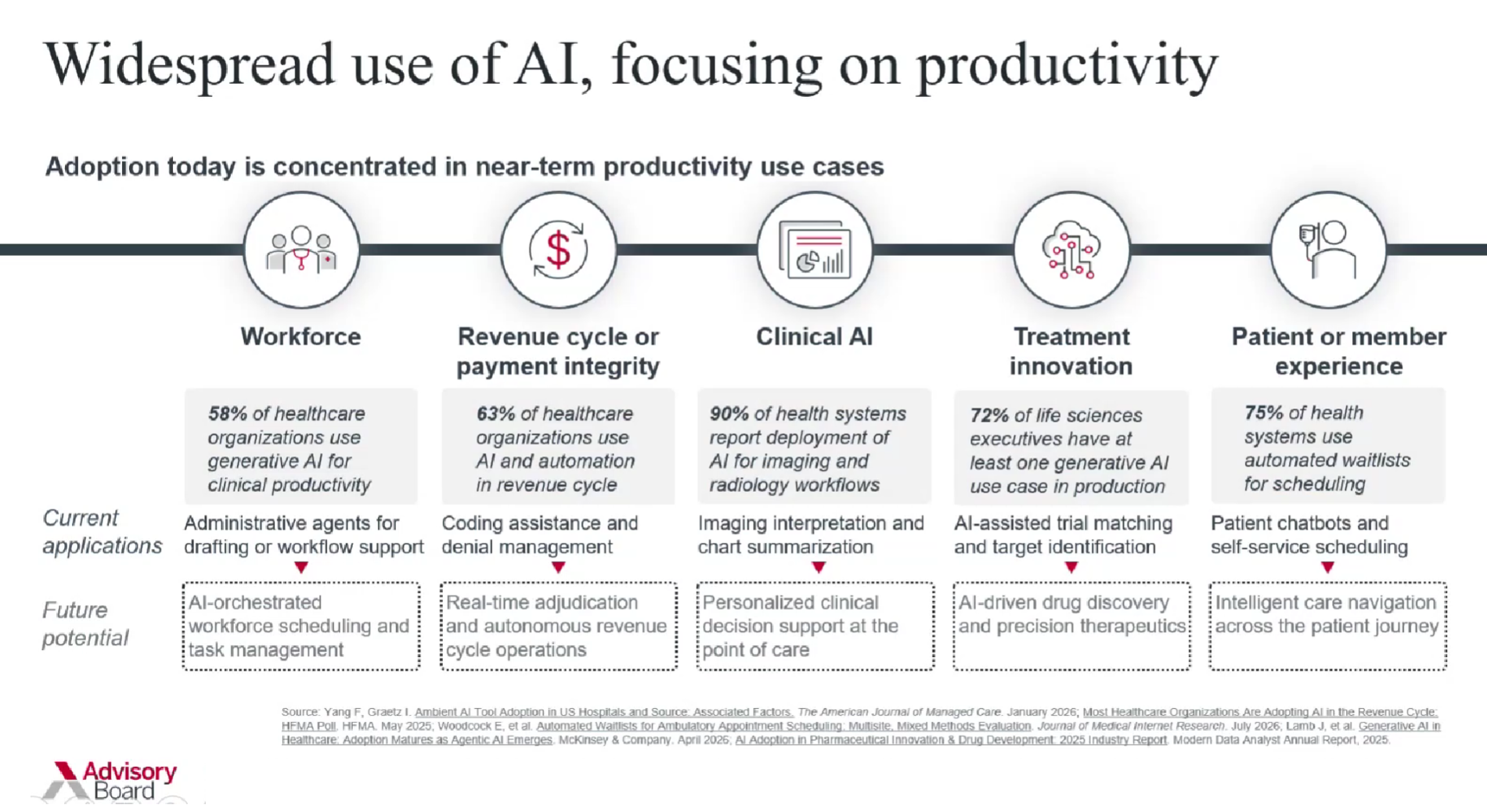
Health Populi’s Hot Points: Complementing the Menlo Ventures insights, I want to mix in findings from two other sources that were published in the past week from the Advisory Board (looking at The State of the Healthcare Industry Heading into 2027, and Bain addressing the US Front Line of Healthcare 2026.
In its sweeping forecast for health care in America in the coming year, the Advisory Board identified the “widespready use of AI” with a focus on near-term productivity for the workforce, revenue cycle and payment, clinical AI, treatment advances, and patient/member experience — reasserting Menlo Ventures’ opinion on growing patient applications for AI.
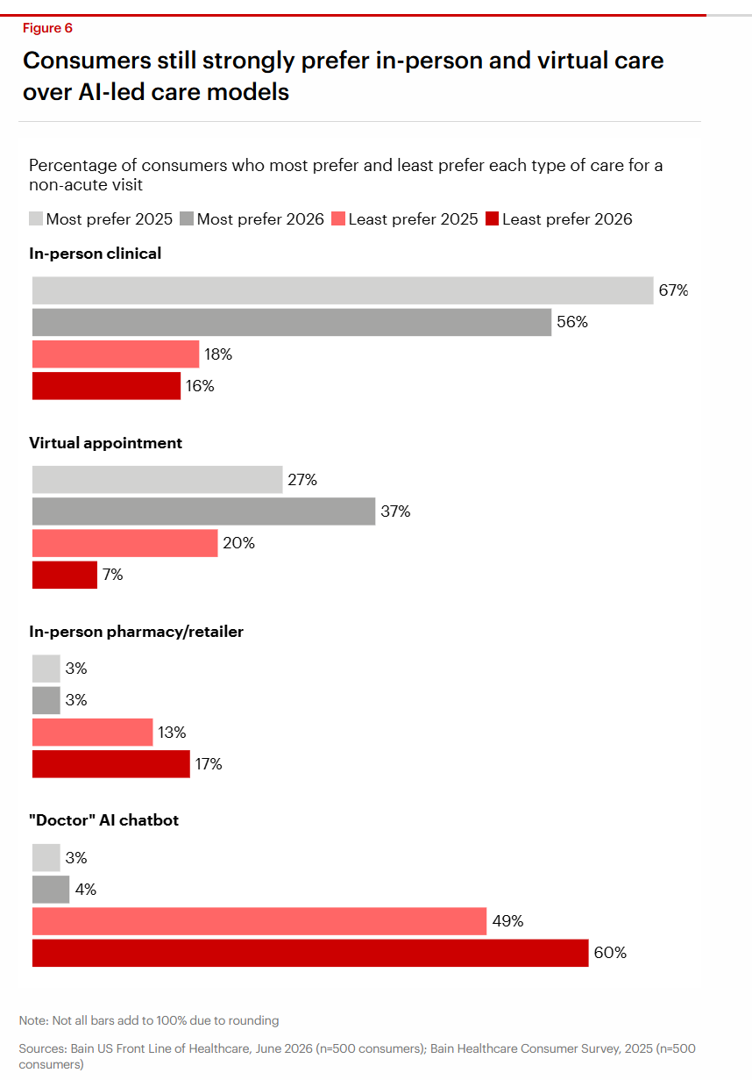
The Bain report, again covering many topics, focuses in this bar chart from the research on consumers’ preferences for in-person and virtual care over AI-led care models. Cast your eyes to the last data point on the chart assessing preferences for “Doctor” AI chatbot — finding that in 2026, this option is least preferred by 60%.
Consumers are very keen to access more convenient care (via location, expanded hours, or telehealth) as well as appreciating lower wait times for an appointment.
And indeed, one-third of consumers in the Bain study already use AI tools for health-related questions — but only one in three of these AI-users said the search only “minimally improved” their ability to management their care,
“Comfort collapses when AI moves from supporting doctors to replacing them,” the Bain report observes. “Only 19% of consumers are comfortable with AI making a diagnosis instead of a physician, and just 13% are comfortable with AI providing medical advice and treatment plans or prescriptions,”
Importantly — looking at every AI use case — patient comfort peaked in 2025 and slipped in 2026, as the bar chart illustrates.
There’s so much underneath this finding about trust, as consumers have faced a lot of tech-anxiety in the past week due to the Microsoft outage which many people faced in the workplace or at-home, the FAA airline stoppage, lack of access to banking platforms, and media coverage of the Nvidia situation where a CEO may have put himself and possibly U.S. national security at-risk. This concerned embrace of AI and tech (for health and other life-flows) will continue to flow in many directions. I’ll be developing scenarios on this in the coming weeks….

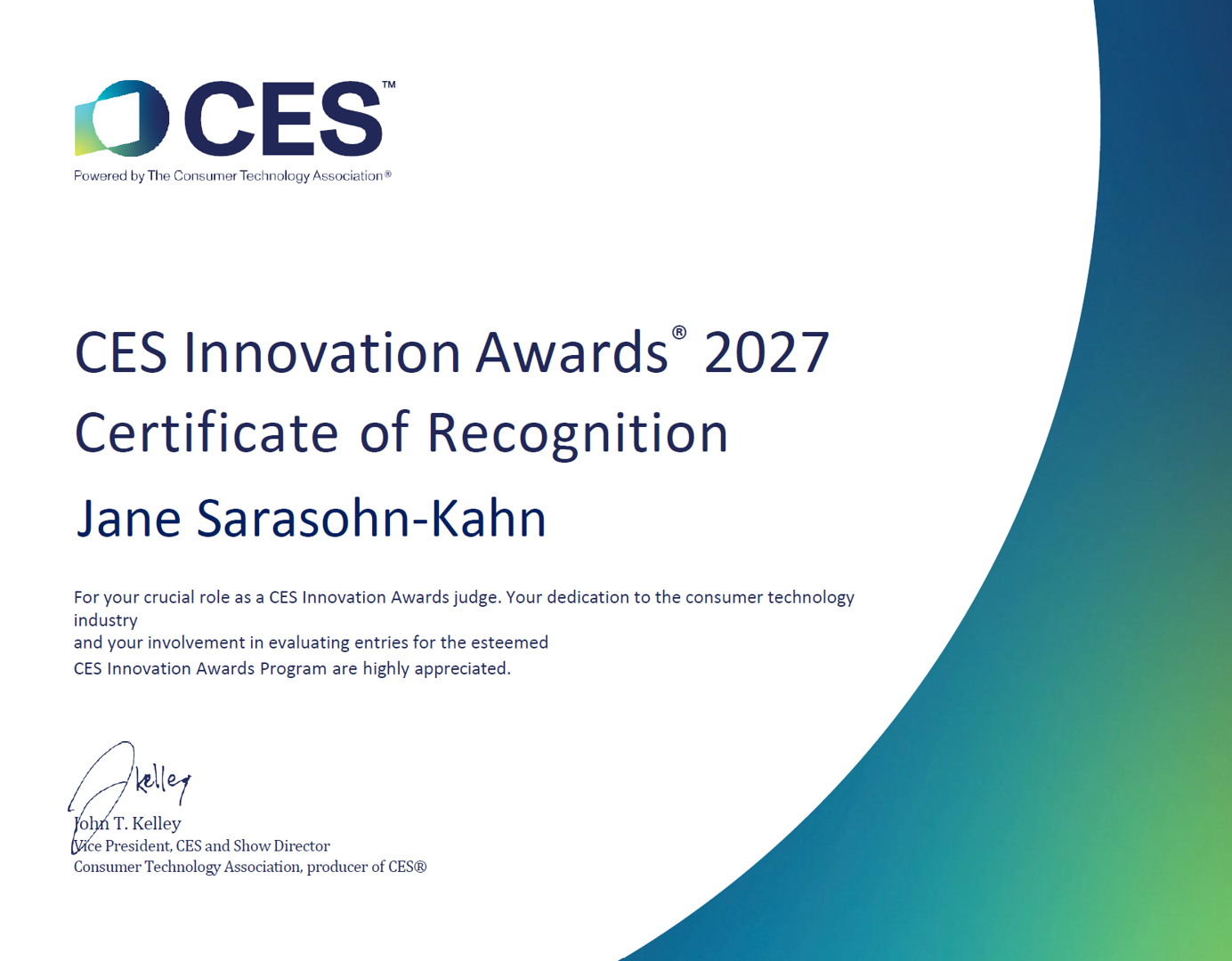 It was an honor to be
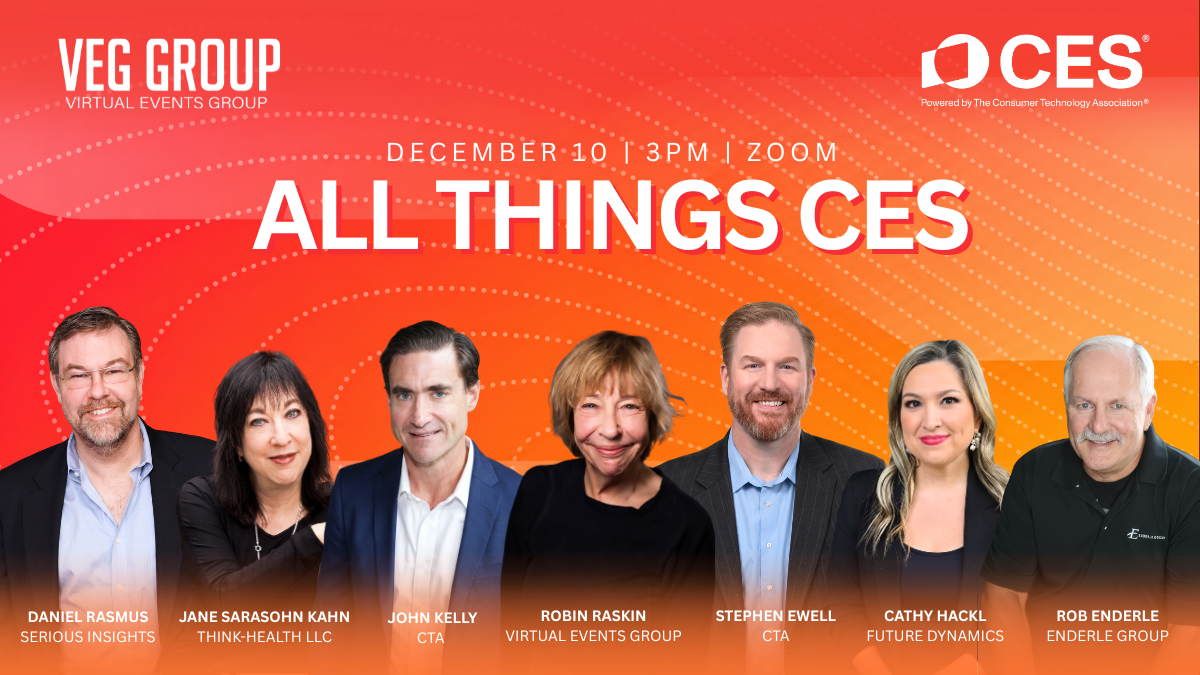 January 2027 is in our sights, and that means we're making plans for #CES2027. I've attended the largest consumer electronics show for nearly 20 years, tracking the evolution of digital health which enables people for greater self-care and health agency and literacy. I'm looking forward to collaborating on this webcast with fellow CES experts in their fields to brainstorm what we expect in this
 Jane joined host Dr. Geeta "Dr. G" Nayyar and colleagues to brainstorm the value of vaccines for public and individual health in this challenging environment for health literacy, health politics, and health citizen grievance.