

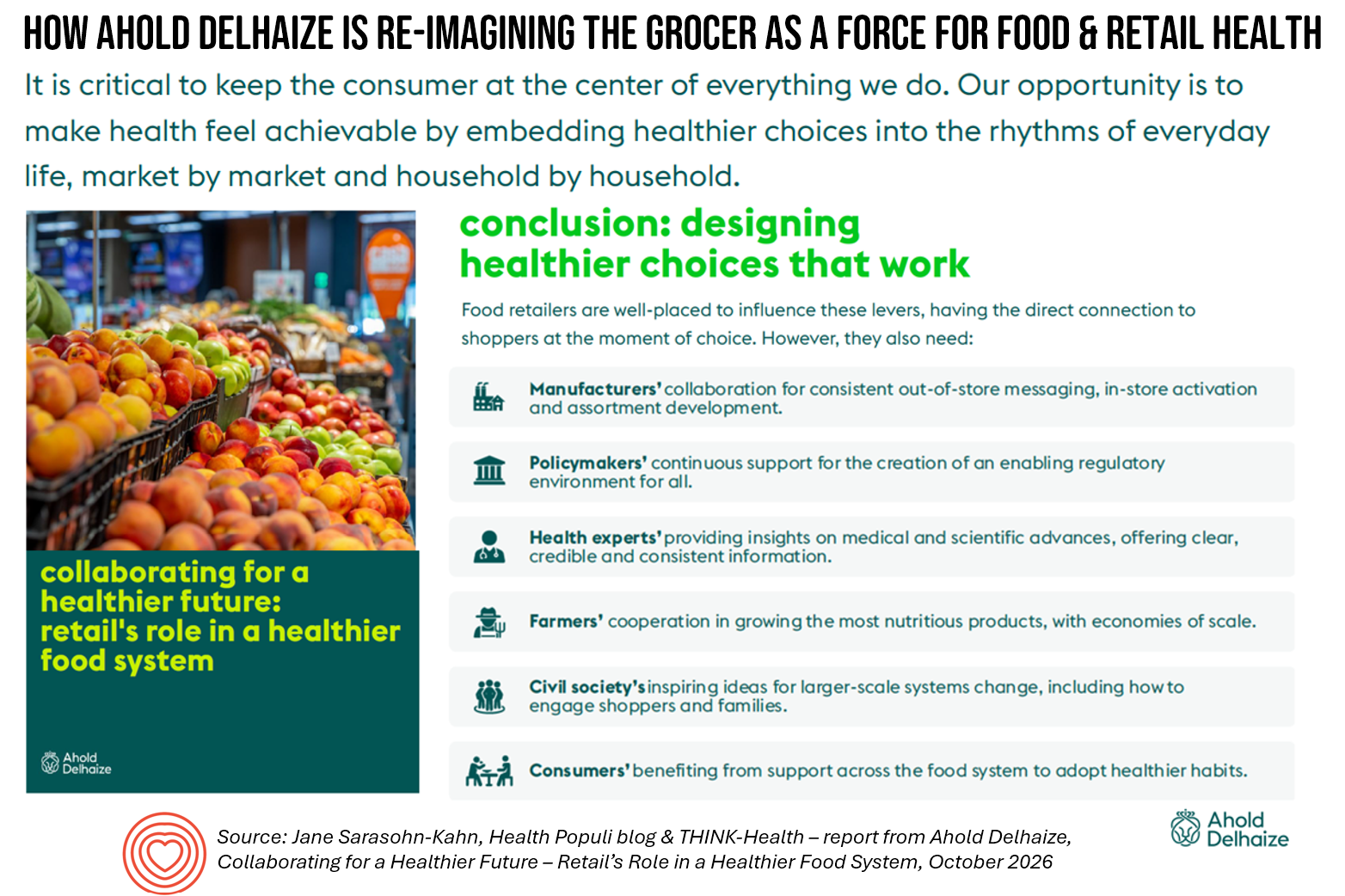
92% of consumers, globally, want to change their diet to be healthier; 8 in 10 global health citizens are actively trying to be healthier.
But these health-intentioned people share challenges and frustrations in meeting these well-intentioned goals.
Having spent the last month of living and working in 4 cities in Europe, I’ve had the opportunity to experience many dimensions of health and medical care in four European countries. One universal truth in the “I-know-what-I-know” category of evidence-based health is that (good) food bolsters, sustains, and assures health for individuals, families, communities, and nations.
I saw evidence of this in conversations and work situations throughout my Euro-month in Italy, the Netherlands, Belgium, and the United Kingdom.
These experiences and data points have been, serendipitously timing-wise, captured in a report published by Ahold-Delhaize, the food chain which operates grocery stores in Europe and the United States. My personal case study-experience, which I’ve written about here in Health Populi, has been with the small-format urban grocer Proxy (Toison D’Or location) in Brussels located in my old neighborhood of St. Gilles in Brussels, Belgium,. This is where I shopped for groceries earlier this month while in Brussels (and during my time living in Brussels during the COVID and after-pandemic-era). My first entry through the Proxy front door was akin to meeting up with an old trusted friend as I am a dedicated home cook who loves to hunt-and-gather fresh and locally-sourced food.
To bolster their understanding of consumers, health, and food, Ahold Delhaize collaborated with GlobeScan and the Consumer Goods Forum to conduct consumer research between February and March 2026 in seven national markets in which the company operates supermarkets: Belgium. the Czech Republic, Greece, the Netherlands, Romania, Serbia, and the U.S (oversampling here to reflect the large population and regional differences across the country).
The results of this study were published this month in the report, Collaborating for a healthier future: retail’s role in a healthier food system. Ahold Delhaize served up the implications and key themes emerging from the research:
- Closing the intention-action gap on healthier eating, especially the opportunity to create environments that support healthy choices
- Layering solutions which combine interventions that together maximize impact
- Scaling what works through collaboration by implementing multiple approaches driving changed at-scale
- Considering products, meals, and lifestyles to support healthier eating patterns through everyday habits and routines, and,
- Dealing with the role of AI in healthier diets, exploring the potential for trusted, personalized nutrition support.
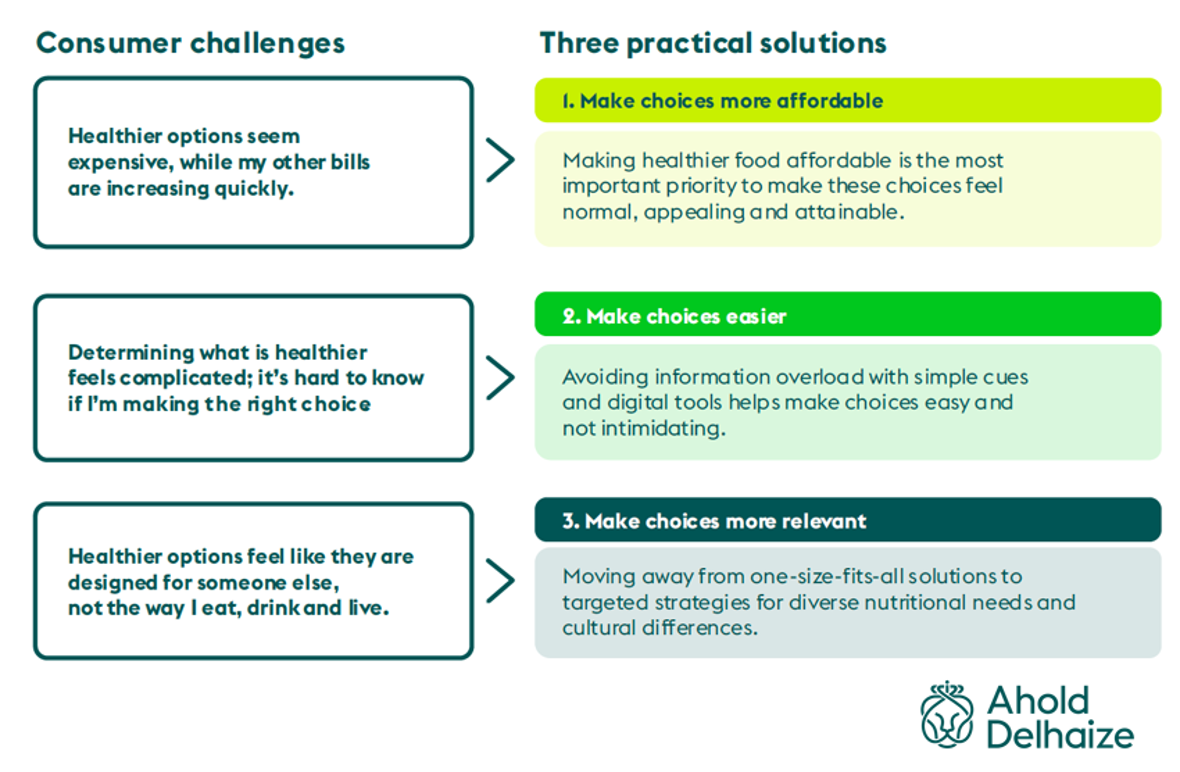
The research found that consumers, globally, face three key challenges when it comes to healthier eating: the affordability issue, where healthier food options compete with other household spending costs; facing complicated decisions about healthier food where consumers questions about the information on nutrition and food-for-health; and, a lack of personalization when considering healthier food options – not fitting, “the way I eat, drink and live,” in the words of the study.
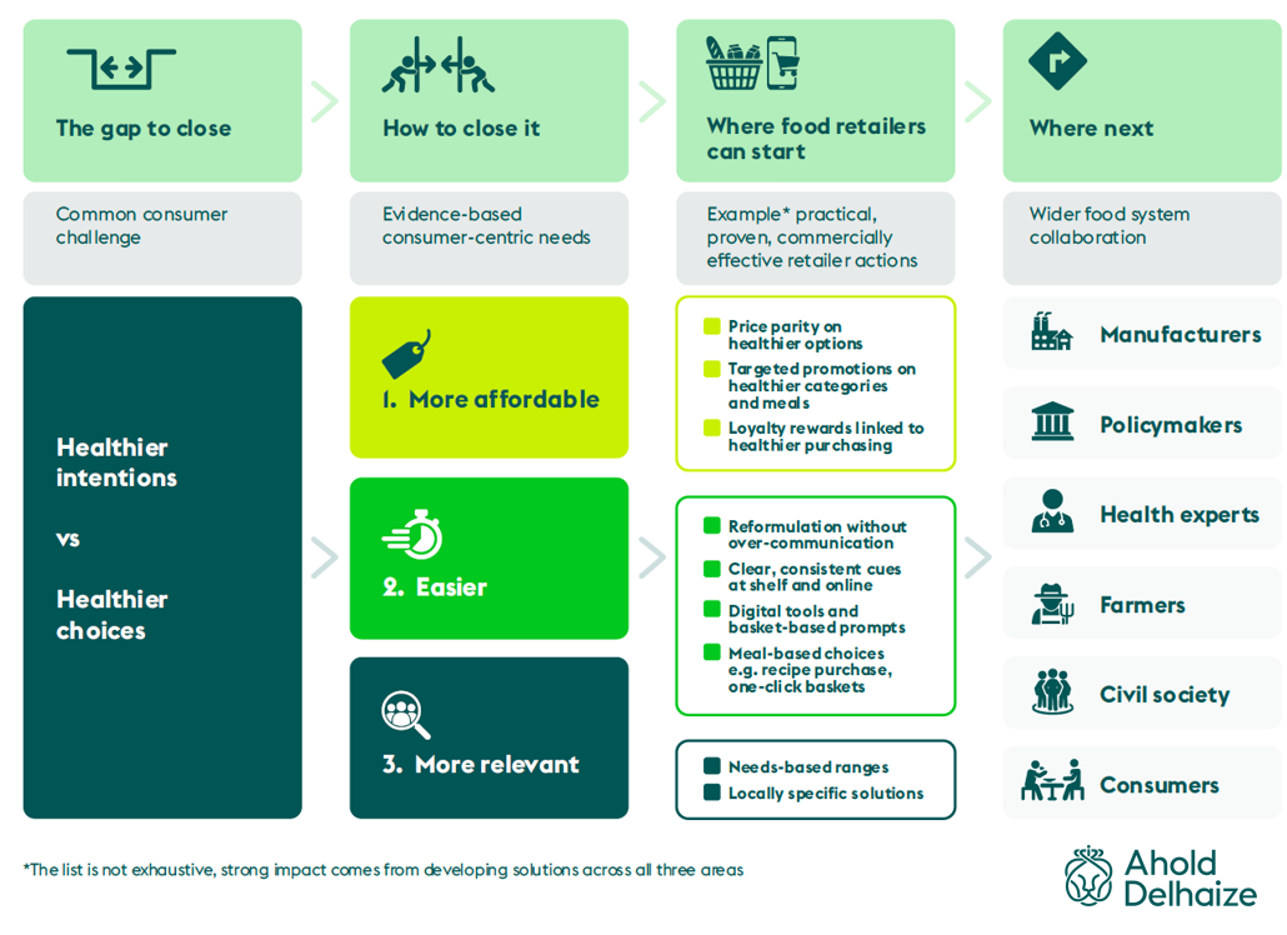
How to address these challenges? Ahold Delhaize recommends closing the gap between consumers’ healthier intentions versus making the healthier choices by making the decisions evidence-based via,
- Affordability.
- Ease in decision making, and
- Making offerings more relevant and personalized to peoples’ lifestyle and values.
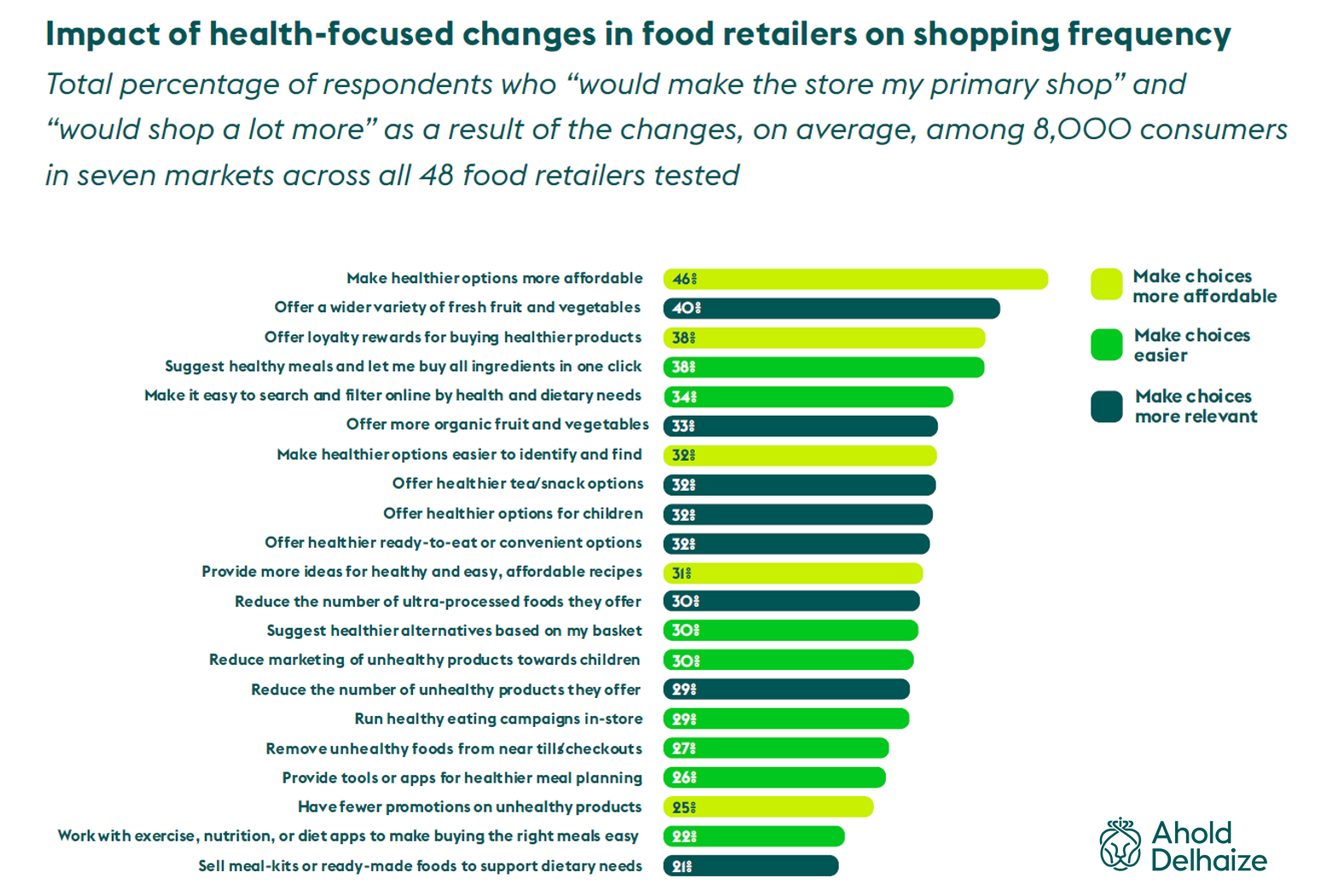

There is a solid ROI for food retailers who endeavor to close the gaps between consumer intent and purchase of healthier foods: the bar chart details options retailers could implement to attract consumers’ greater engagement in healthier food spending: most impactful, globally, would be making healthier options more affordable, offering a greater array of fresh fruit and veg, suggesting healthy meals making up recipe ingredients in “one-click,” and making it easy to search and filter online by health and dietary needs — both a personalization and ease/convenience tactic.
Health Populi’s Hot Points: Ahold Delhaize’s call-to-action emphasizes keeping the consumer at the center of all the company does….”embedding healthier choices into the rhythms of everyday life….”
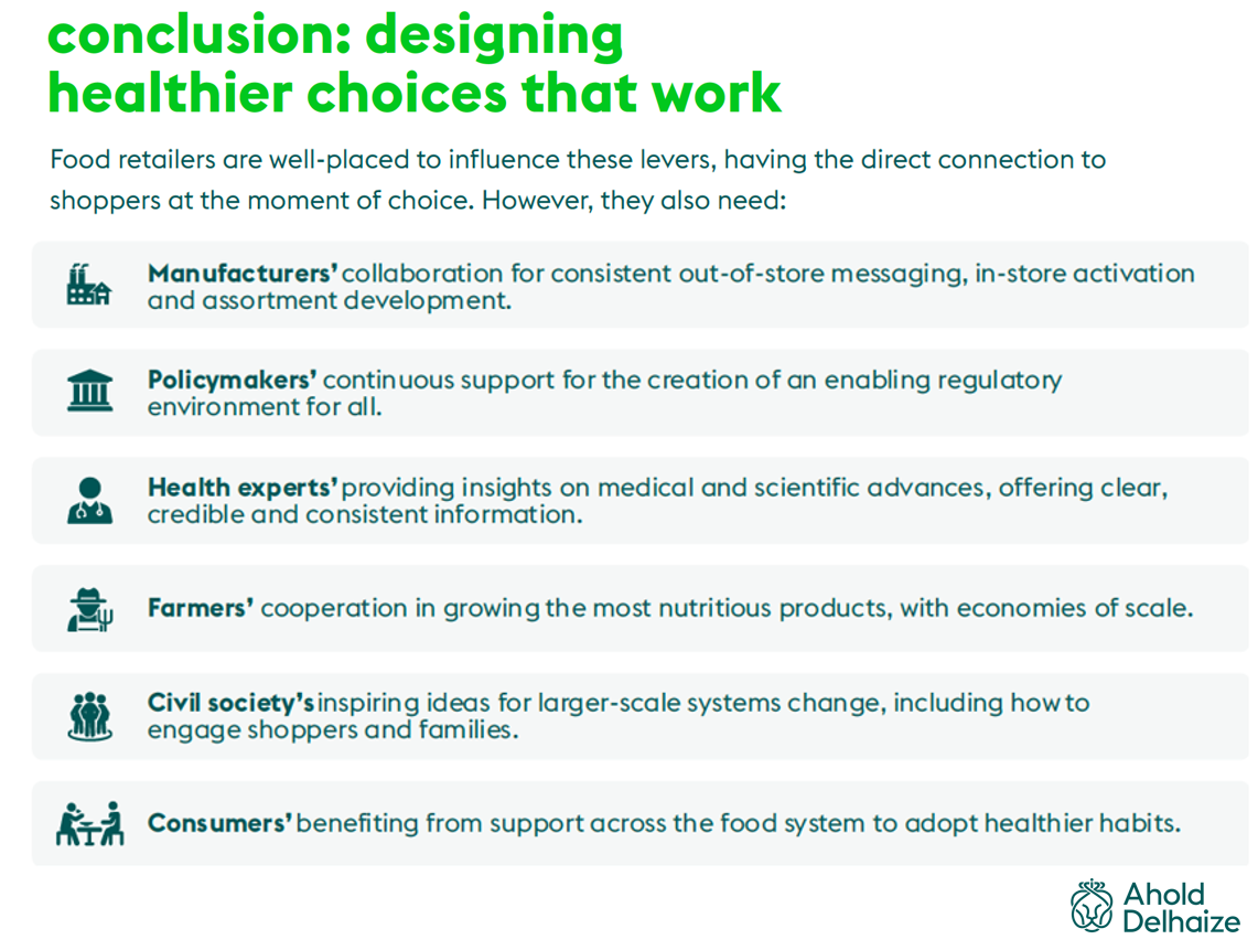
Such a focus on health, of the individual, for the community, and for national markets, requires collaboration: making health is a team sport.
Check out the company’s concluding recommendations on how to design healthier choices through a pragmatic lens of “what works.” The collabs for this audacious (and laudable!) goal address roles across the health/care stakeholder ecosystem, including food manufacturers, policymakers, health experts (it’s the evidence-base that counts), farmers’ cooperation, consumers themselves for self-care focusing on healthier habits — and a civil society.
As consumers around the world gain more sense of self-agency for acting on their health and well-being — many taking on greater out-of-pocket costs for medical care. insurance, and prescription drugs — health care looks increasingly “retail,” and so the retail health ecosystem has the opportunity to meet people and their personal “rhythms” to partner in co-making health and well-being with individuals, communities, and indeed the public’s health.
This report and the research informing it represents the best current view of how large grocery chains and commercial food channels can be relevant and impactful on helping build a healthier world, one health citizen at a time, at scale.

 Jane will be working with EU- and UK-based clients in September and October 2026, collaborating with stakeholders in digital health, public/community health, retail health, and growing opportunities for health-at-home. Stay tuned to her updates here on Health Populi on-the-ground as she lives the digital nomadic work-life in Italy, Belgium, the Netherlands, and in London.
 I was grateful to be Jasmine's first conversation-guest on her new podcast,
 Jane joined host Dr. Geeta "Dr. G" Nayyar and colleagues to brainstorm the value of vaccines for public and individual health in this challenging environment for health literacy, health politics, and health citizen grievance.