

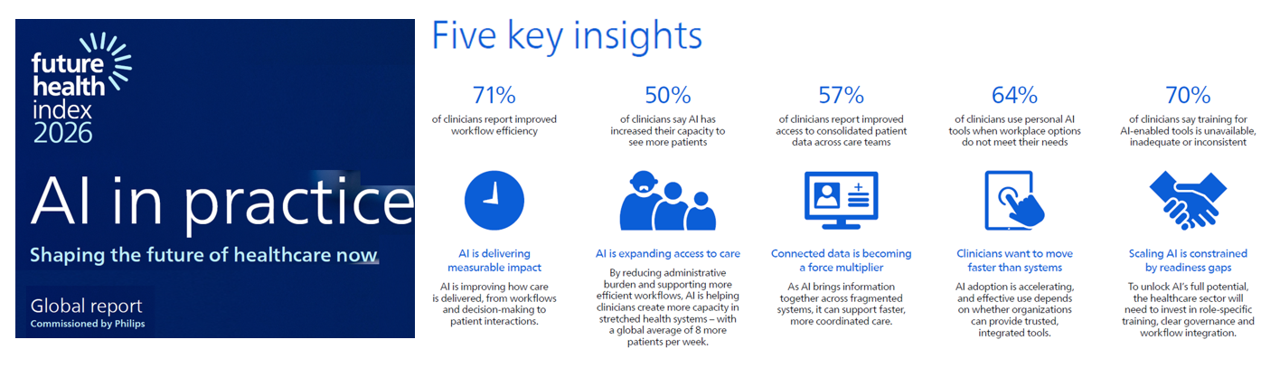
AI is already transforming healthcare delivery for clinicians, patients, and their clinical partnerships, we learn in The Philips Future Health Index 2026.
For this year’s annual futures report, Philips conducted two surveys among 2,011 healthcare professionals and 20,085 patients, spanning ten countries and fielded between February and April 2026.
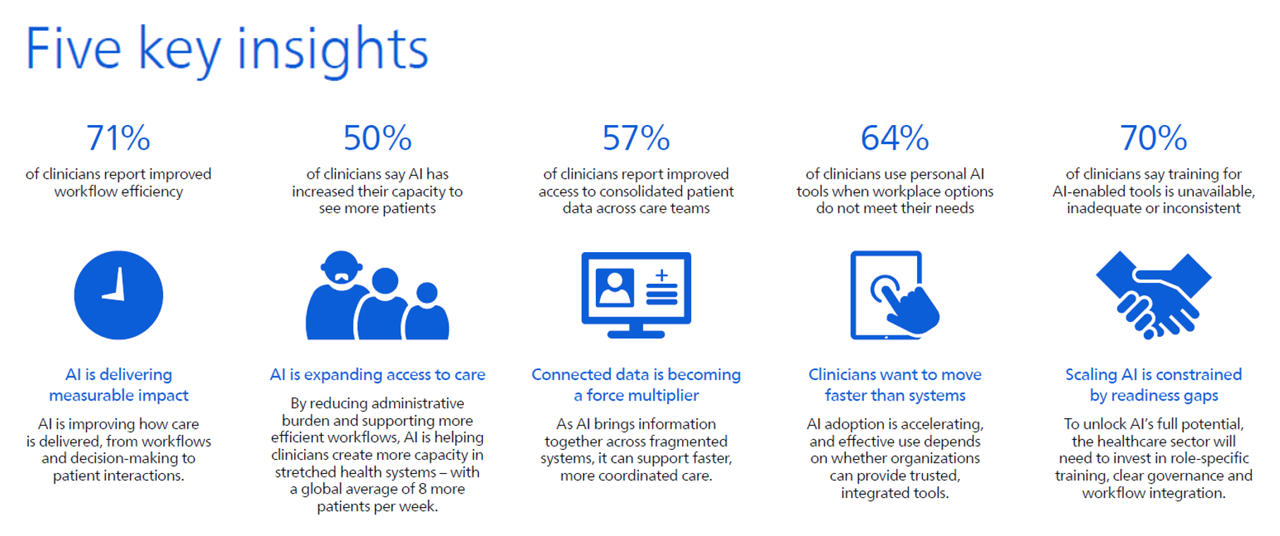
AI adoption among healthcare providers and patients in this early phase is showing benefits translating into greater productivity, clinician well-being, improved data workflows, and expanded access and capacity for clinicians to see more patients.
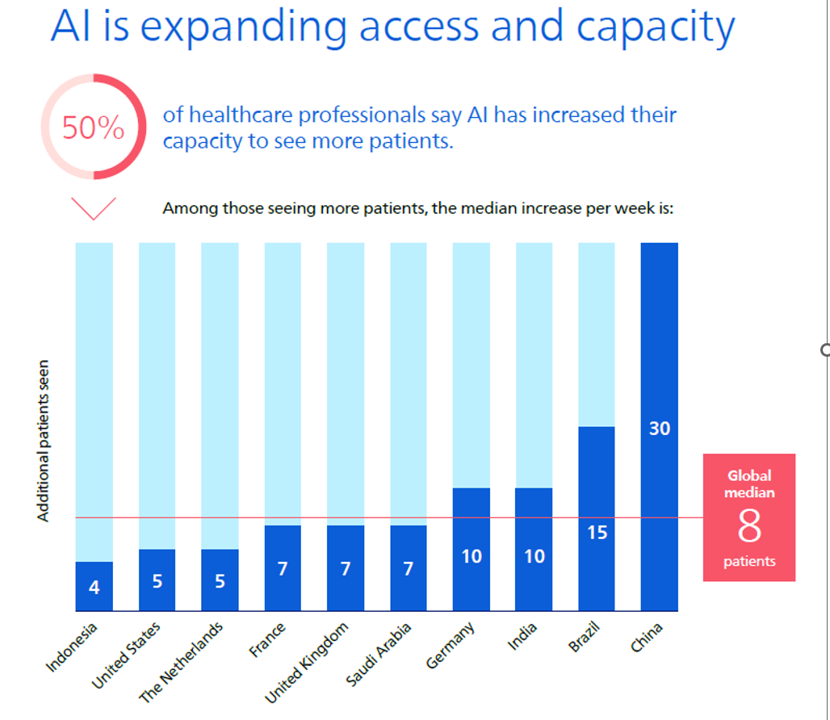
Health systems the world over are feeling under-resourced in the midst of rising prices, labor supply constraints, and demographic challenges. The bar chart presents the granular data for each of the ten countries Philips assessed in terms of AI’s expanding access and capacity. On average across the ten national health systems, clinicians saw eight more patients per week as a median increase: this ranged as high as 30 more patients a week for clinicians in China; 15 more in Brazil, 10 in India and Germany; 7 in Saudi Arabia, the U.K., and France; 5 in the Netherlands and the U.S.,; and, 4 in Indonesia.
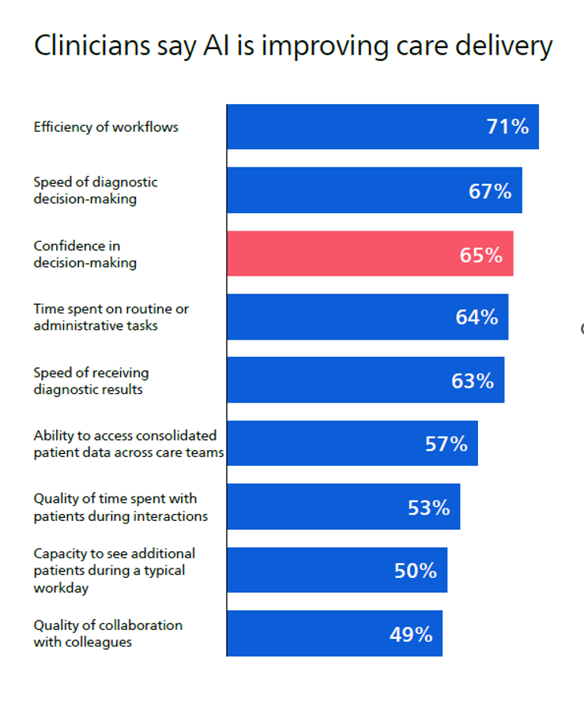
Clinicians identified areas in their work-lives where AI was improving care delivery — such as improving workflow efficiency (71%), speeding diagnostic decision-making (67%), improving clinicians’ confidence in that decision-making (65%), benefiting time spent on routine and administrative tasks (64%), and speeding the receipt of diagnostic results (for 63%).
Over one-half of clinicians also cited improvements in their ability to access patient data across care teams, quality of time spent with patients during encounters, and capacity to see additional patients in the workday.
Four in 10 clinicians also said that AI supports safer care such as identifying or preventing a potential medical error at least three times in the past three months.
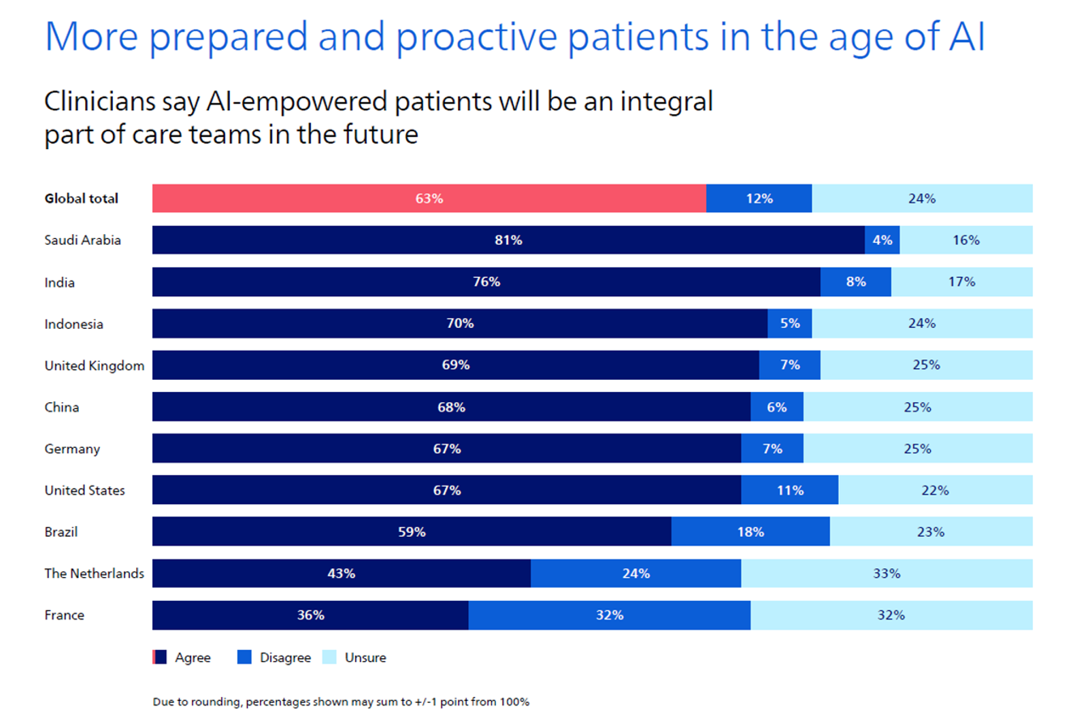
AI-empowered patients will be an integral part of the healthcare team, most physicians agree in 8 of the 10 countries — with an average of 63% across the ten nations studied.
Roughly one-fourth to one-third of clinicians are unsure about this point, outside of Saudi Arabia and India where clinicians are most bullish on AI-empowered patients as part of future care teams.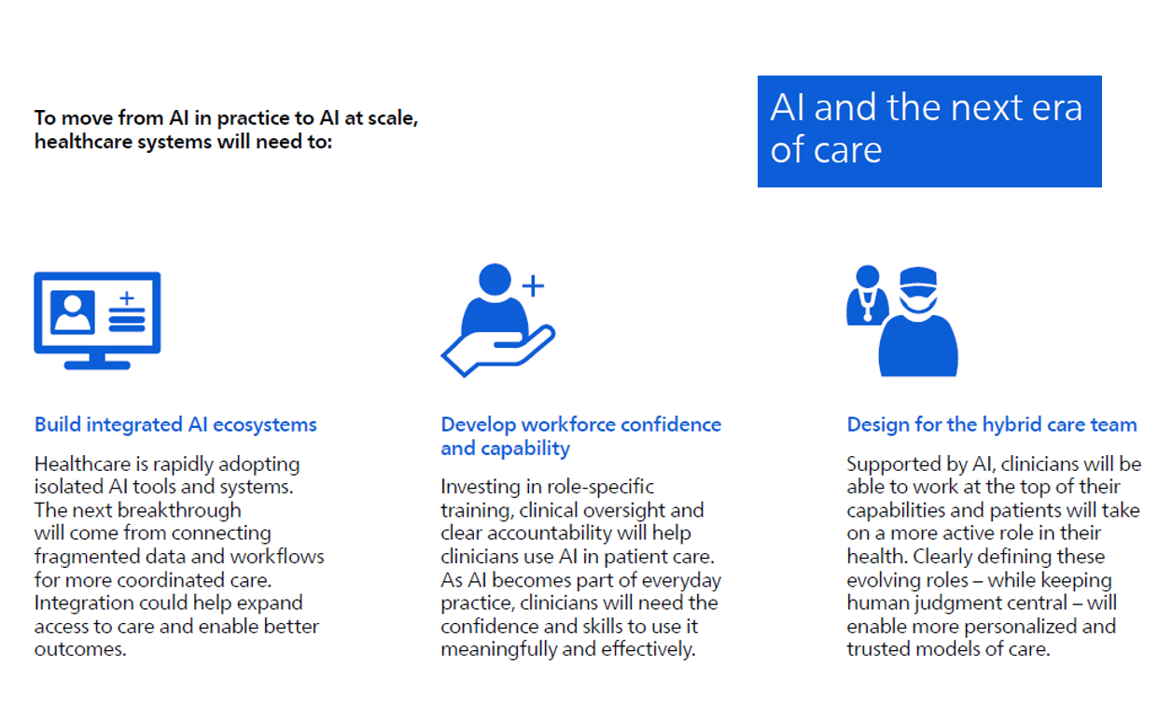
Health Populi’s Hot Points: Looking to the future, Philips points to three key challenges to move AI at scale:
- To build integrated AI ecosystems, bridging fragmented data and workflows to deliver better coordinated care
- To develop workforce confidence and capabilities, leveling up clinicians’ AI literacy and skills, and,
- To design for the hybrid care team — calling out patients’ more active roles in care conversations and care at home.
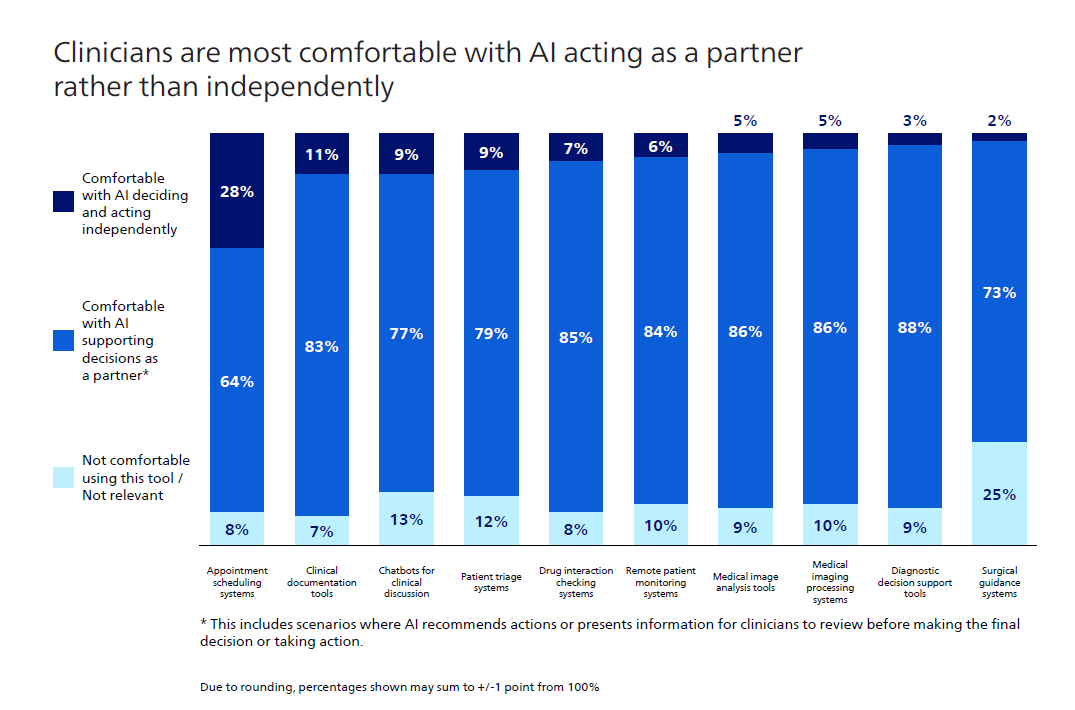
Here’s a key unifying data point among clinicians: that is that providers are most comfortable with AI acting as a partner rather than independently across the many workflows and applications across the care continuum: the greatest consensus was found for diagnostic decision support tools, medical imaging, drug interaction checks, remote patient monitoring, clinical documentation, and patient triage systems. 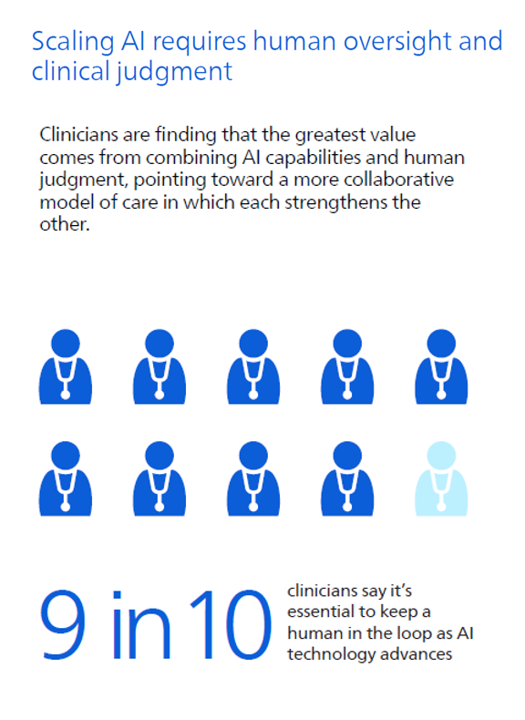
Think about “hybrid health care” where AI enables patient and clinician participatory health delivery, scaling human oversight and clinical judgment — that clinical human and patient in the loop to build a more collaborative model of care in which, as Philips envisions, “each strengthens the other.”
Nine in 10 clinicians told this year’s Index research that it is essential to keep a human in the loop as AI technology advances — which will be critical for building trust-bridges between health citizens and the clinicians who care for and with them.
As Shez Partovi, Chief Innovation Officer, and Carla Goulart Peron, Chief Medical Officer, assert in the report’s Foreword,
“Today, AI has a clear role in healthcare. The next step is integrating it responsibly into care, so that together we can deliver better care for more people.”

 Jane will be working with EU- and UK-based clients in September and October 2026, collaborating with stakeholders in digital health, public/community health, retail health, and growing opportunities for health-at-home. Stay tuned to her updates here on Health Populi on-the-ground as she lives the digital nomadic work-life in Italy, Belgium, the Netherlands, and in London.
 I was grateful to be Jasmine's first conversation-guest on her new podcast,
  Jane joined host Dr. Geeta "Dr. G" Nayyar and colleagues to brainstorm the value of vaccines for public and individual health in this challenging environment for health literacy, health politics, and health citizen grievance.