

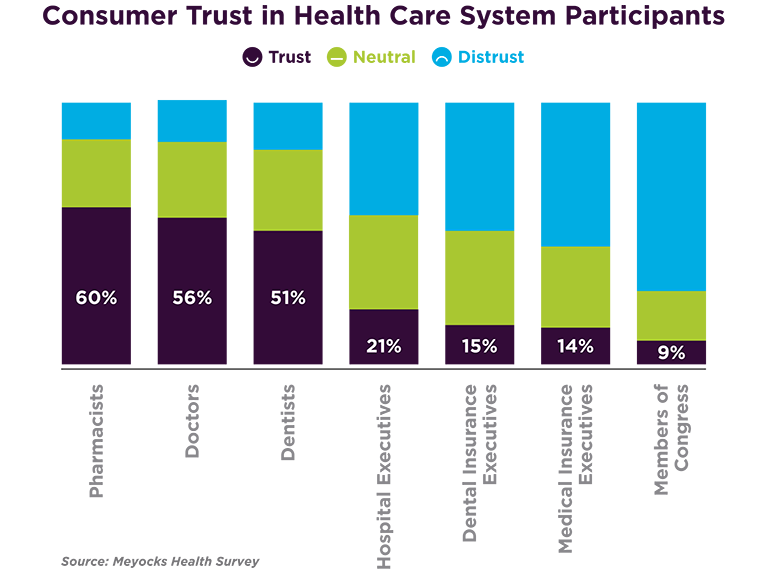
 When consumers consider the many stakeholder organizations in healthcare, a majority trust pharmacists first, then doctors and dentists. Hospital and health insurance execs, and members of Congress? Hardly, according to a survey from Meyocks, a marketing consultancy.
Meyocks conducted the survey via email among 1,170 US adults, 18 years of age and older.
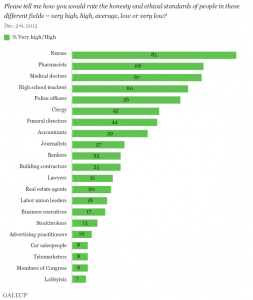 This survey correspondends well with the most recent Gallup Poll on most ethical professions, conducted in December 2015. In that study, pharmacists, nurses and doctors come out on top, with advertisers (“Mad Men”), car salespeople, and members of Congress at the bottom, as shown in the second chart.
Health Populi’s’ Hot Points: Poor Congressfolk: their cred when it comes to American healthcare needs help from the likes of Meyocks to re-brand their trust levels among US health citizens. This, at a time when the Democratic platform has moved to the left, incorporating the issue of healthcare as a human right which was part of Senator Sanders’ Presidential campaign mantra.
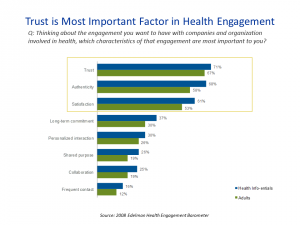 Trust and authenticity are precursors to consumer/patient health engagement, we found in the Edelman Health Engagement Barometer.
Pharmacists are under-utilized for consumer health engagement, yet these professionals are highly trusted by consumers, patients and caregivers, and they are readily found in the community where people live and shop in their everyday lives. The likes of CVS health, Walgreens, Walmart, Costco, Target, and pharmacies co-located in grocery stores have the opportunity to effectively engage consumers in their health in sustainable ways through well-designed programs. Increasingly, these retail health touch points will be partners in everyday peoples’ health, wellness, and chronic disease management. Information technology — that is, data liquidity supported by standards-based health IT between health care providers’ electronic health records and the retailers’ own digital health records systems — must underpin this scenario for it to be meaningful.
 Thank you
  Jane joined host Dr. Geeta "Dr. G" Nayyar and colleagues to brainstorm the value of vaccines for public and individual health in this challenging environment for health literacy, health politics, and health citizen grievance.
  I'm grateful to be part of the Duke Corporate Education faculty, sharing perspectives on the future of health care with health and life science companies. Once again, I'll be brainstorming the future of health care with a cohort of executives working in a global pharmaceutical company.