

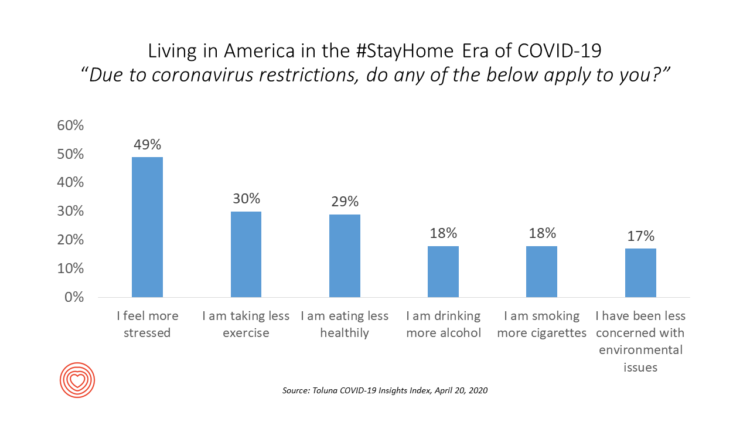
 Stress is up, smoking increasing, drinking more alcohol….Americans are tapping into a variety of coping mechanisms in the coronavirus outbreak, with health on their collective minds.
Toluna and Harris Interactive are collaborating on the COVID-19 Barometer, publishing biweekly data on consumers’ views on the coronavirus pandemic.
The data here are a snapshot of consumers taken through the Toluna-Harris poll conducted among 1,047 U.S. adults between 9-20 April 2020.
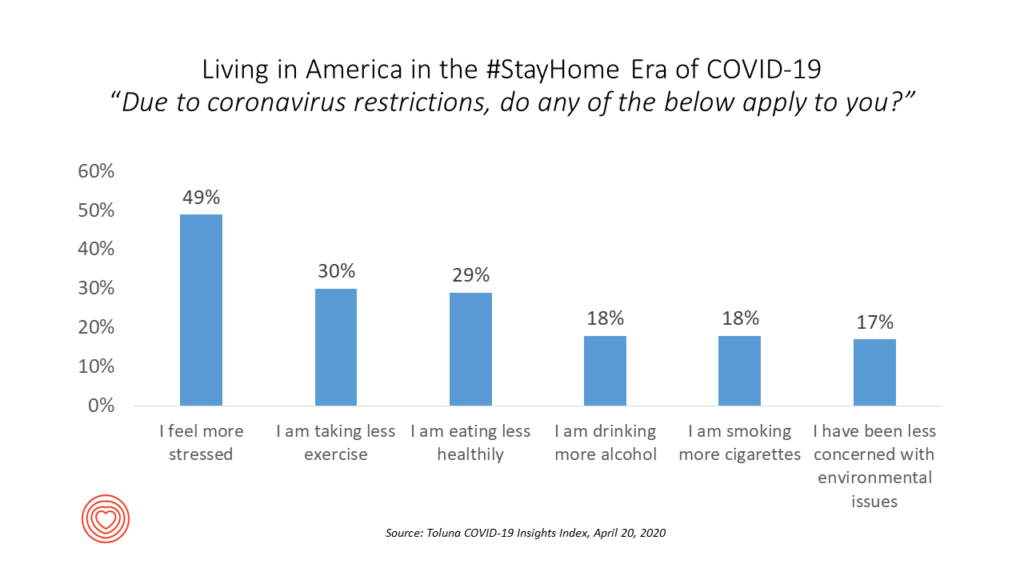
The first chart shows various life-flows Americans have adopted in April, all risk factors impacting peoples’ overall health status and mental well-being.
There were demographic differences across these factors: more women felt more stressed than men, younger people were drinking and smoking more, and men exercising less and drinking more, as well.
COVID-19 consumers have also taken on actions to bolster health in the pandemic including:
- 75% washing hands more frequently
- 62% using products to prevent spread of germs
- 50% taking vitamins or supplements
- 35% exercising more frequently, and
- 31% consuming food and drink with health benefits.
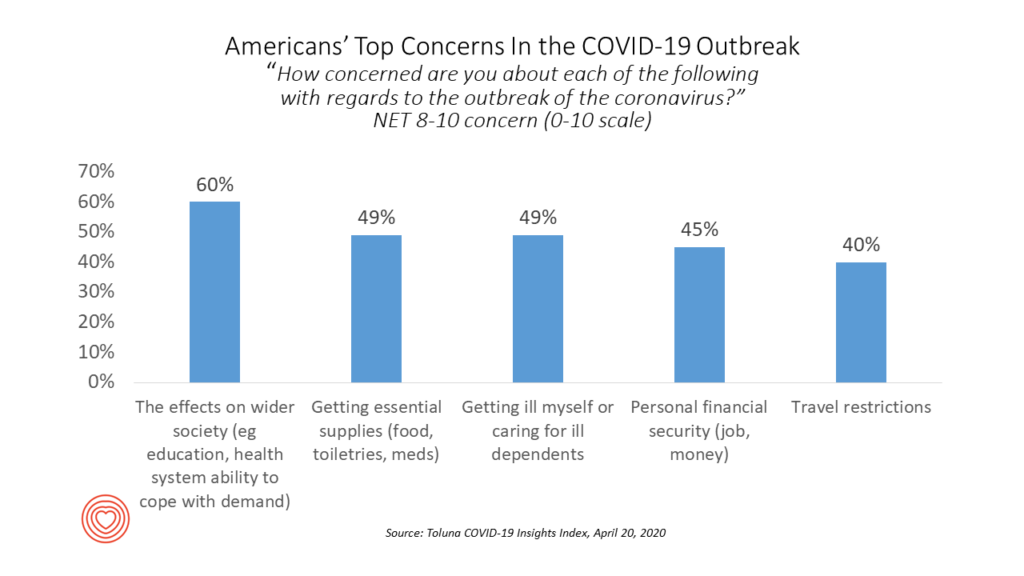 The second chart illustrates Americans’ top concerns in the COVID-19 era, top among these the impacts on society — such as effects on children’s education and the health system’s ability to withstand growing demands and pressures borne by the coronavirus pandemic. For this chart, I show the “NET concern” where I aggregated the top 3 “concern” scores from the range of 0 to 10, from “not at all concerned” to “extremely concerned”
The “hunter-gatherer” stress of getting essential supplies like food, hygiene products and medicines were top concerns for 1 in 2 people as well as the concern for getting ill or caring for a loved one who would be ill. Finally, nearly one-half of people were concerned about personal financial security.
Looking to the future, the post-COVID-19 consumer would look forward to being more health conscious (39%), going out more to eat or to the movies (36%), saving money (35%), being more optimistic (35%), treating themselves to a holiday (domestic 23%, abroad 15%), being more environmentally conscious (23%), spending more money (21%), being less materialistic (20%), or buying something of significant value (16%).
Health Populi’s Hot Points: It’s no surprise that in a pandemic, consumers have health on their minds across a range of issues. Following the coronavirus outbreak, nearly one-half of Americans believe the U.S. health system should be improved to handle future crises; dovetailing into that sentiment, 38% of Americans said the health care system was not prepared to handle a health crisis.
On the personal level 38% believe personal health will be a bigger issue for them in the future. And, 28% plan to improve personal self-care to be better prepared.
One in four consumers also said that hospitals and physicians should offer more care via telehealth platforms.
The Toluna COVID-19 Barometer gives us a snapshot of health consumers in April 2020, with 40,000 Americans having succumbed to the virus and over 800,000 fellow health citizens having been diagnosed positive with COVID-19. The pandemic and mandate to #StayHome is re-shaping consumers as health citizens in ways we can only begin to understand personally, politically, emotionally, socially, and certainly in terms of health and well-being. The growth in smoking rates, eating more comfort foods, and exercising less will undoubtedly erode Americans’ overall health status in the short-to-midterm — while people continue to lose access to health insurance and face growing financial stress.
 Thanks to Jennifer Castenson for
  Jane joined host Dr. Geeta "Dr. G" Nayyar and colleagues to brainstorm the value of vaccines for public and individual health in this challenging environment for health literacy, health politics, and health citizen grievance.
  I'm grateful to be part of the Duke Corporate Education faculty, sharing perspectives on the future of health care with health and life science companies. Once again, I'll be brainstorming the future of health care with a cohort of executives working in a global pharmaceutical company.