

A new study in Circulation, published 10 August 2026 found that home delivery of healthy groceries significantly improved blood sugar levels for people dealing with Type 2 diabetes. Now an alliance between the major grocery chain Kroger working with Instacart can scale such an effort for consumers embracing their own approaches to food-as-medicine, combining the delivery of groceries with prescriptions by enrolling in Kroger’s My Prescriptions and Online Pay apps.
Kroger operates some 2,800 grocery stores serving 11 million people a day. The banners of Kroger include at least one name you would know, such as Baker’s, City Market, Dillons, Fred Meyer, Fry’s, Gerbes, Harris Teeter, Jay C., King Soopers, Mariano’s, Metro Market, Owen’s, Pay Less, Pick ‘n Save. QFC, Ralphs. Smith’s, and the mothership-moniker “Kroger” itself.
Kroger launched Kroger Health in 2017 when the grocery giant integrated the fast-growing retail pharmacy operation with existing in-store clinics (under The Minute Clinic branding) along with its staff of registered dietitians. The food chain has been very visible in its mission to bolster Food-as-Medicine, which I’ve often written about here in Health Populi such as in this post exploring Kroger’s growing role in the expanding retail health ecosystem.
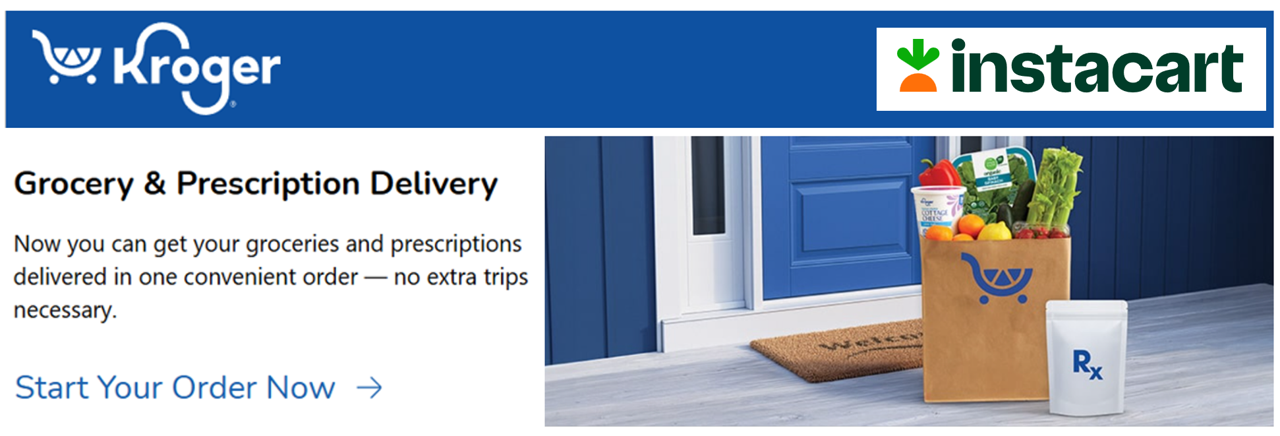
With Instacart, Kroger further consolidates its leadership position among competing grocers under the food-as-medicine umbrella, which grew like topsy during the COVID-19 pandemic when grocery stores became trusted touchpoints among health consumers for safe places to source food, consult with retail pharmacists, and find social health while queueing up with other consumers, masked and distanced.
Here’s a short video from one of Kroger’s retail store markets discussing the Instacart tie-in.
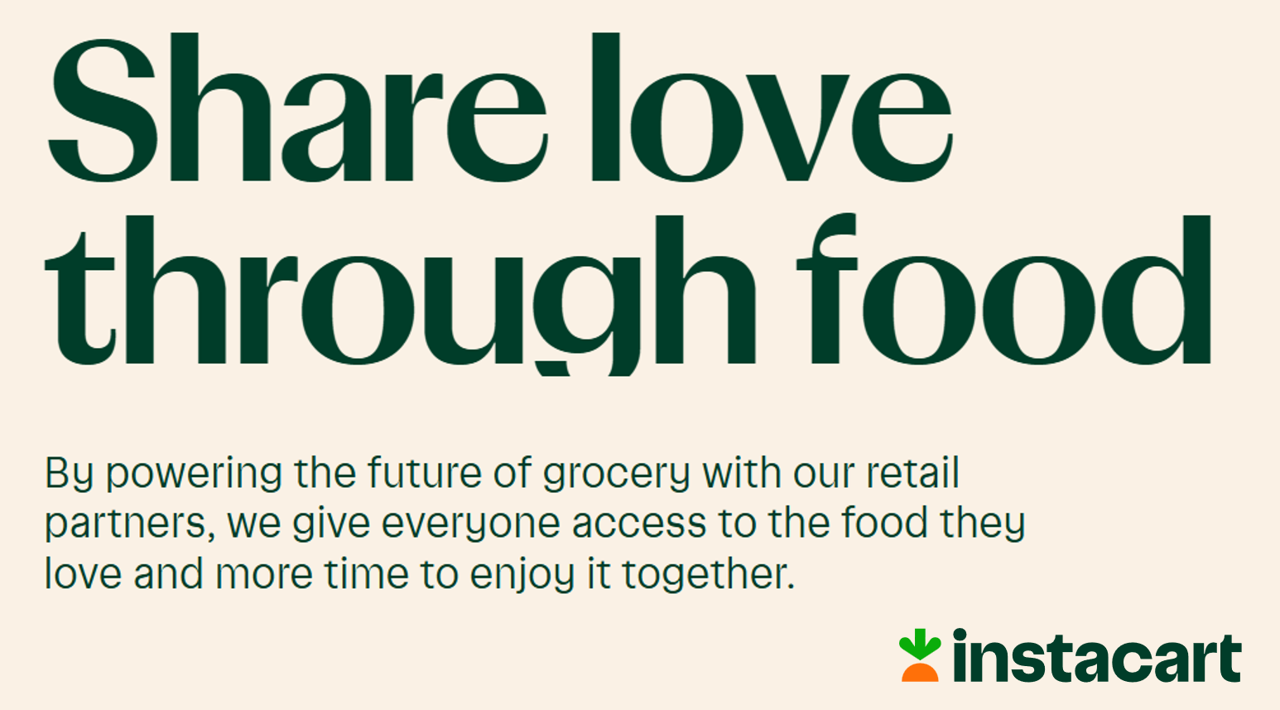
Health Populi’s Hot Points: Instacart’s overall corporate messaging bundles grocery delivery with social health: that is, “sharing love through food” by enabling people to enjoy the food and more time to enjoy it together.
Some of that love has to do with convenience and service-design, too — as the 2026 IFIC Food & Health Survey found that convenience surpassed healthfulness as a top purchase driver for food & bev.
The pharmacy-and-food connection continues to merge as a powerful force in health consumers’ minds for their own health and the health of their families and communities. You can find examples of this among major grocery chains beyond Kroger, calling out Giant, Hy-Vee, Stop & Shop, Wakefern, and Walmart among them.
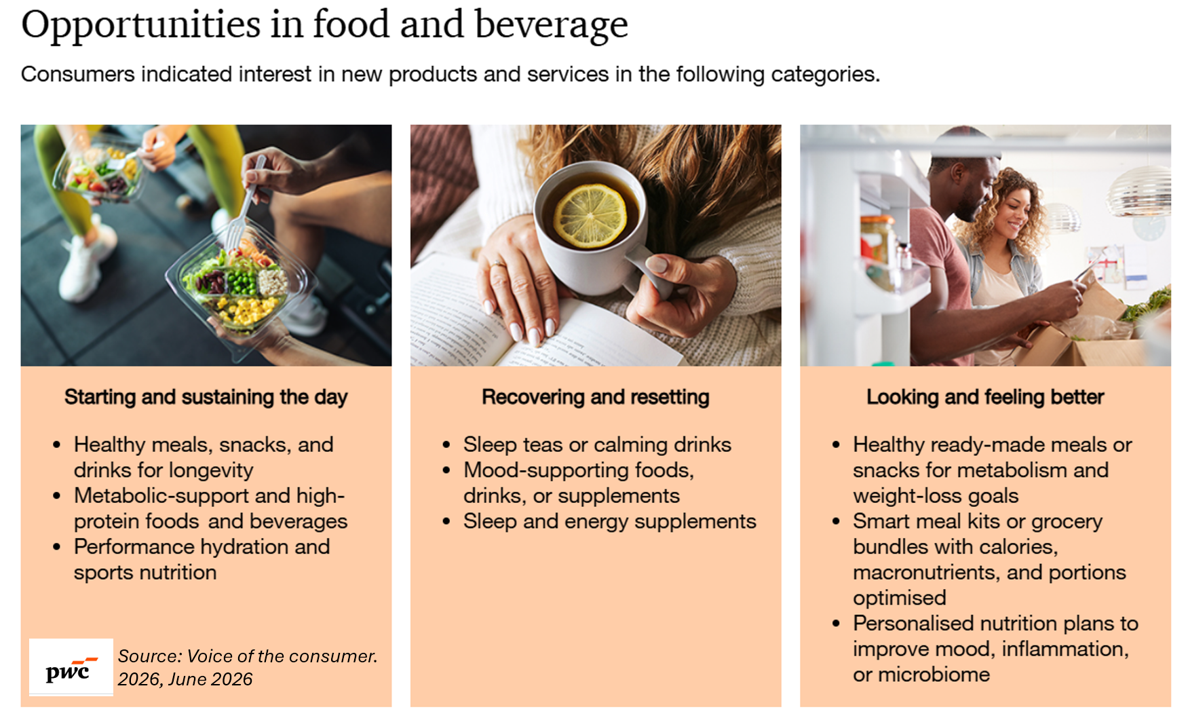
PwC’s Voice of the Consumer study for 2026 featured food throughout the report on the consumer study, noting that,
“Food and beverage companies are already in the health occasions market….As claims become more specific, the proposition can lean away from products and towards services. Products can be wrapped in data, guidance, subscriptions, and personalised prompts to help consumers achieve health outcomes in a convenient and budget-friendly way.”
Leveraging AI and data generated from consumers’ wearable devices, from smartwatches and rings to glucose monitors and smart patches, is moving us closer toward precision nutrition that can scale across food and pharmacy deserts.
 Jane will be working with EU- and UK-based clients in September and October 2026, collaborating with stakeholders in digital health, public/community health, retail health, and growing opportunities for health-at-home. Stay tuned to her updates here on Health Populi on-the-ground as she lives the digital nomadic work-life in Italy, Belgium, the Netherlands, and in London.
 I was grateful to be Jasmine's first conversation-guest on her new podcast,
  Jane joined host Dr. Geeta "Dr. G" Nayyar and colleagues to brainstorm the value of vaccines for public and individual health in this challenging environment for health literacy, health politics, and health citizen grievance.