

“The consumer response to a world out of control is to invest in self,” and that has inspired peoples’ search for longevity beyond lifespan itself. Ipsos’s latest research into this phenomenon is presented in the firm’s report, Winning the Longevity Market, published in late June 2026.
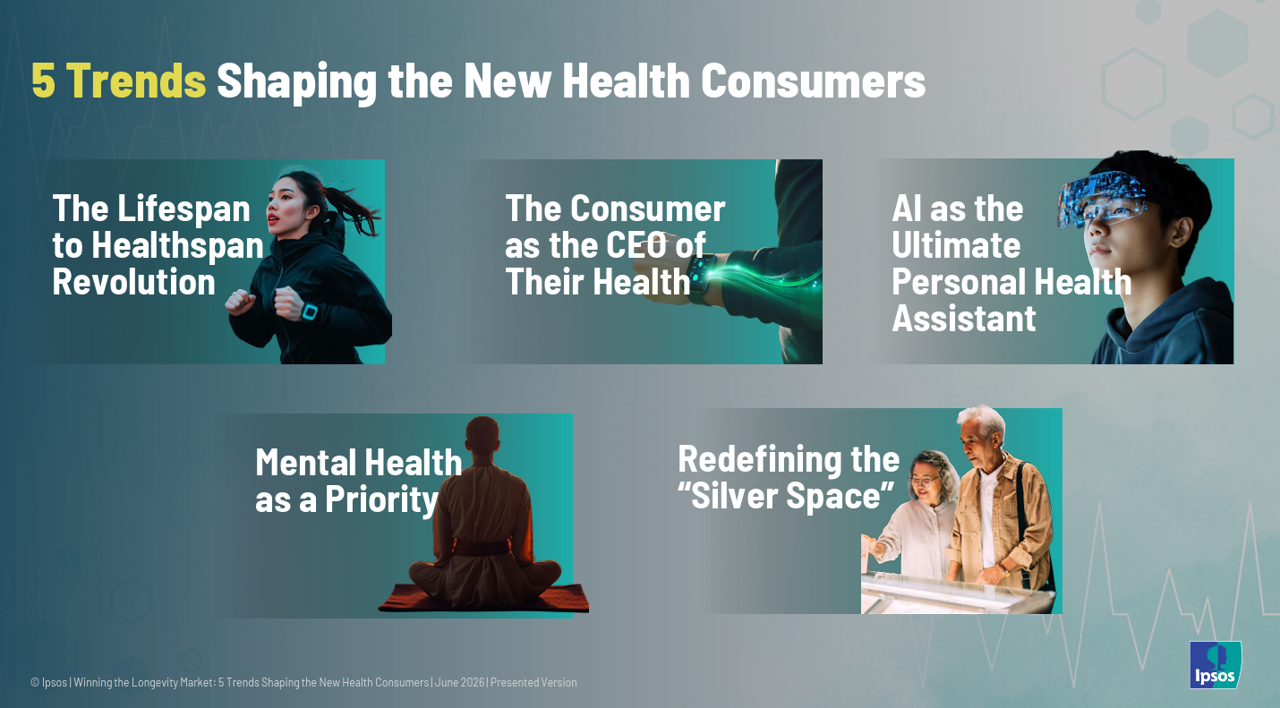
Five factors are shaping these increasingly self-caring health consumers, including,
- A shifting perspective from lifespan to healthspan
- Consumers as CEOs of their health
- AI as ultimate personal health assistant
- Prioritizing mental health, and,
- Redefining the “Silver Space.”
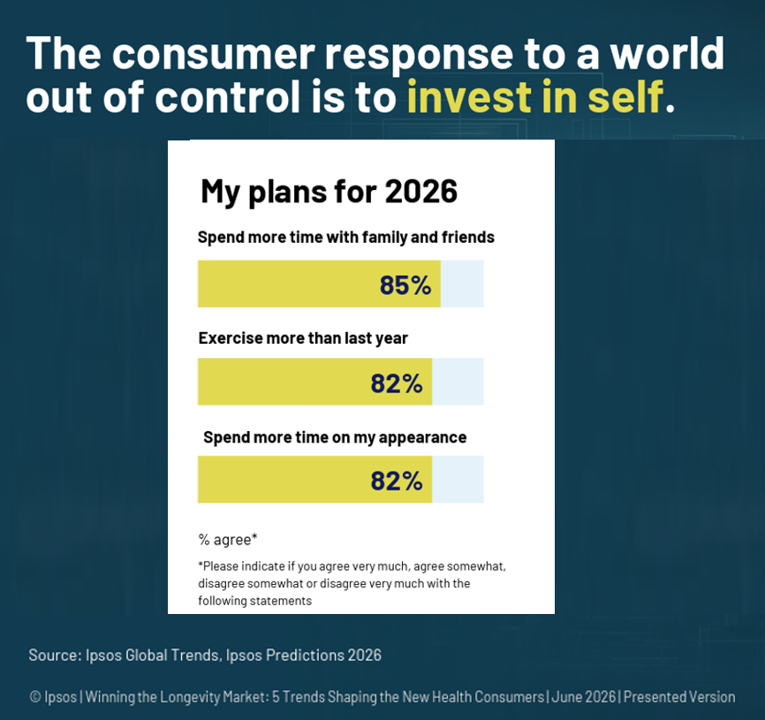
“The world feels out of control,” Ipsos quantifies — with 83% of people in Thailand saying the world is changing too fast, and 72% feeling overwhelmed facing too many life choices.
Thus, consumers are turning to investing in themselves: 85% spending more time with family and friends (social health!), 82% exercising more than they did last year, and 82% spending more time (and resources) on their appearance.
Longevity isn’t about living longer in itself: it’s about bolstering vitality, energy, and function over the course of a lifetime, Ipsos explains in the paper.
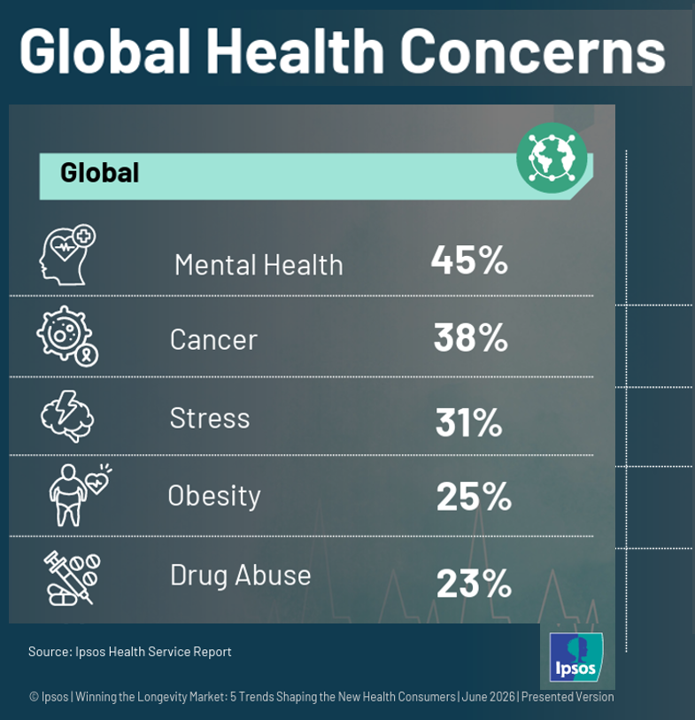
Globally, the consumer’s top health concern is mental health, cited by nearly one-half of all people. Cancer follows as the second-most concerning health issue (among 38% of global citizens), then stress (for 31%), obesity (25%), and drug abuse (23%).
“Emotional and cognitive wellbeing is the defining health priority of our time,” the Ipsos analysis points out — and that is inseparable from longevity.
In conclusion, Ipsos cites 3 opportunities for the longevity economy:
- To make self-care easy, tangible, and available on a daily basis
- To become the trusted voice in the channel where consumers already learn (that is, to be where people “are”); and,
- To speak to vitality today, “not just survival tomorrow.”
Importantly consumers are becoming more self-directed — in the words of Ipsos, people “are not waiting for the system. They are building their own.”
Health Populi’s Hot Points: As I’m gone on and on about in Health Populi for years and years, people have been morphing into health/care consumers gaining agency and empowerment, ever-more-supported by AI and digital tools and data. People seek solutions and support for their well-being inside of the legacy healthcare system, and to be sure, in many retail and community touchpoints they encounter in daily life — with consumer goods, food and grocery, financial services, hospitality and travel, and technology.
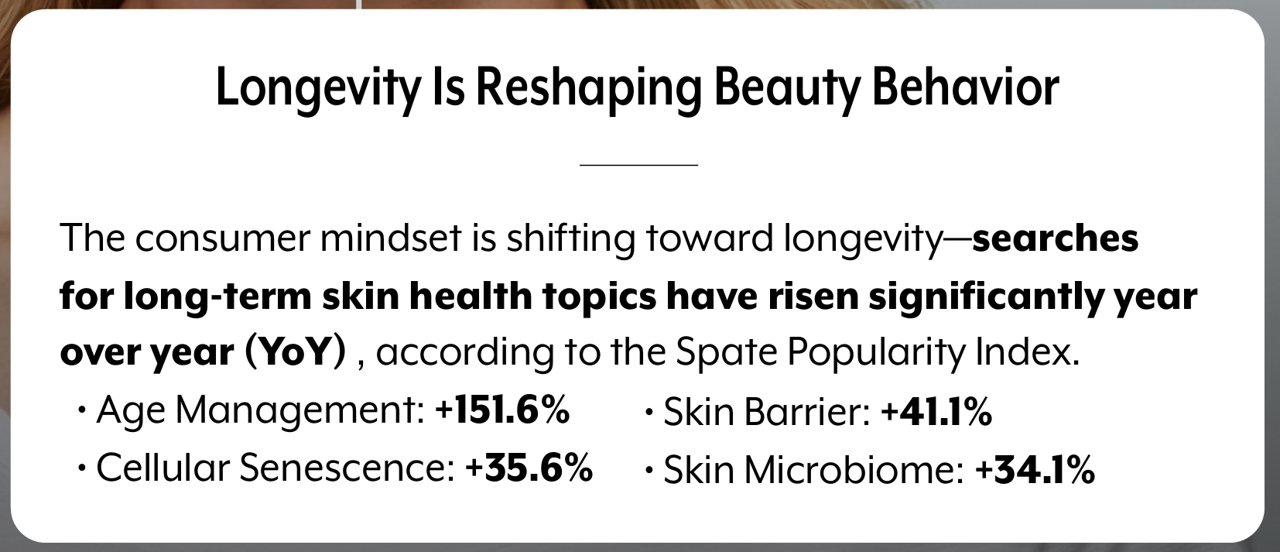
As consumers define longevity across a range of well-being and health/care factors, self-care ranks high — and increasingly includes skin care and beauty across the life and health-span.
Research from the PERFECT Corporation confirms that “The Modern Aesthetics Consumer” mindset is indeed shifting to longevity — with online searches for “age management” for skin health increasing by 151% in the past year (2025-26).
“Consumers (are taking an) active, empowered aesthetic stance,” PERFECT’s report calls out, with aesthetic (cosmetic) treatments part of an ongoing beauty and self-care strategy — not a reactive solution. One of the top three motivations among these aesthetic-seeking consumers is to prevent the visible signs of aging.
Coupled with this is PERFECT’s pointing to enhancing confidence and self-image — which is associated with positive mental well-being. This brings us full circle to the Ipsos key finding that globally, mental health rises to the top of consumers’ health/medical concerns.
 One of the best aspects of my work is collaborating across the health/care ecosystem to address how health citizens can deal with health care costs and and care for families. I'm grateful to have collaborated with Fidelity on their research into this issue,
  Jane joined host Dr. Geeta "Dr. G" Nayyar and colleagues to brainstorm the value of vaccines for public and individual health in this challenging environment for health literacy, health politics, and health citizen grievance.
  I'm grateful to be part of the Duke Corporate Education faculty, sharing perspectives on the future of health care with health and life science companies. Once again, I'll be brainstorming the future of health care with a cohort of executives working in a global health care enterprise.