

Financial stress and debt take are now an American public health problem, we realize in the report, Rising debt is taking a toll on Americans’ financial and mental health from the Achieve Center for Consumer Insights.
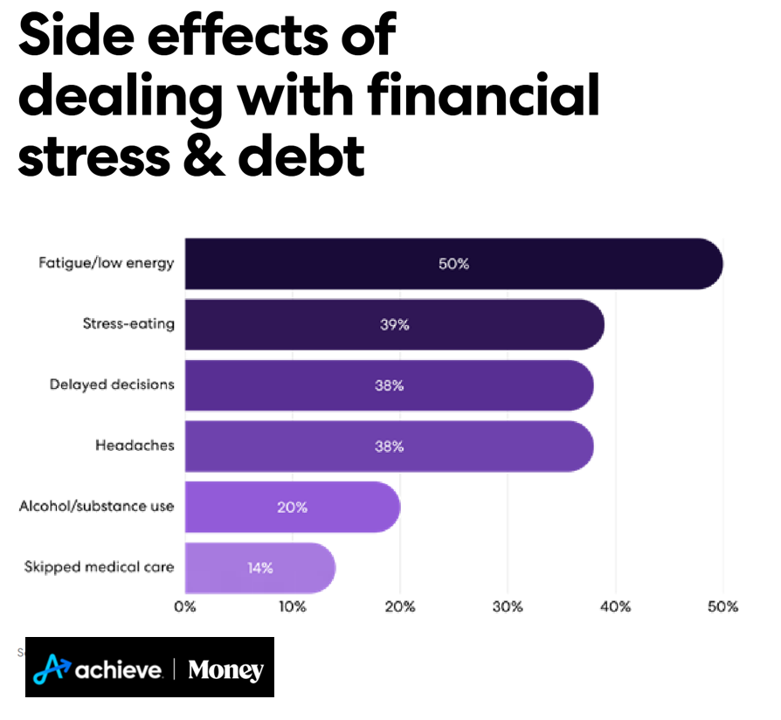
A joint survey conducted by Achieve and Money.com assessed the fiscal health perspectives of 2,000 U.S. consumers ages 18 and over, fielded in February 2026.
This first chart from the study report arrays various “side effects” of Americans dealing with financial stress and debt, most commonly feelings of fatigue and low energy, stress-eating, delayed decision making, and headaches. A further 1 in 5 people admitted to alcohol and substance use as a result of their financial stress.
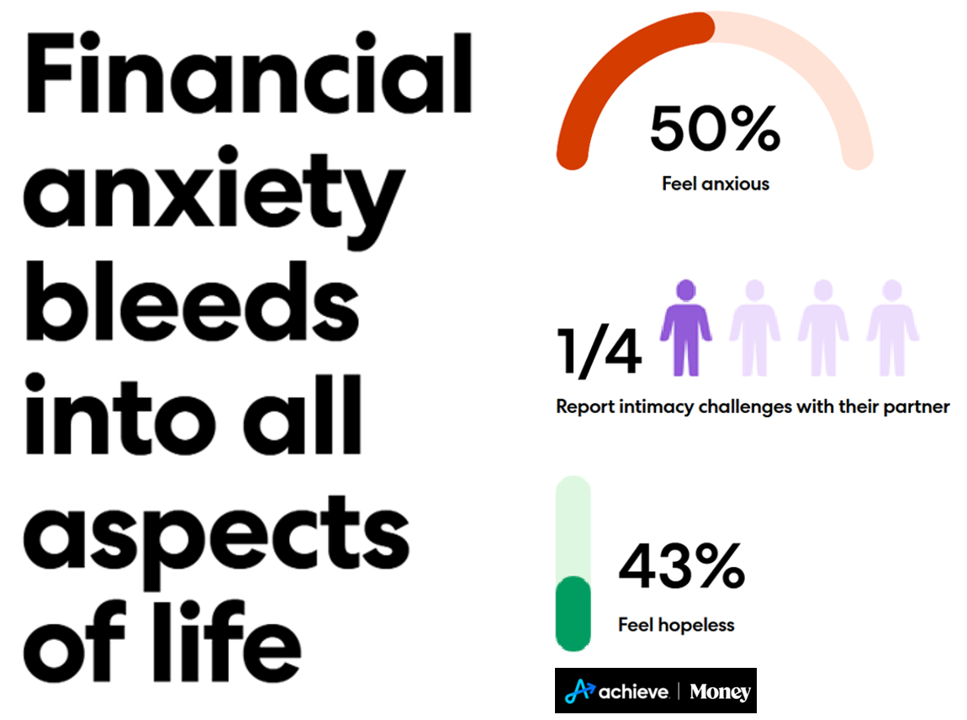
Furthermore, 1 in 4 financially stressed Americans admitted to having intimacy challenges with their partner — I read this as an erosion in peoples’ sex lives — and some 43% feel hopeless, as personal financial stress “bleeds into all aspects of life,” the report calls out.
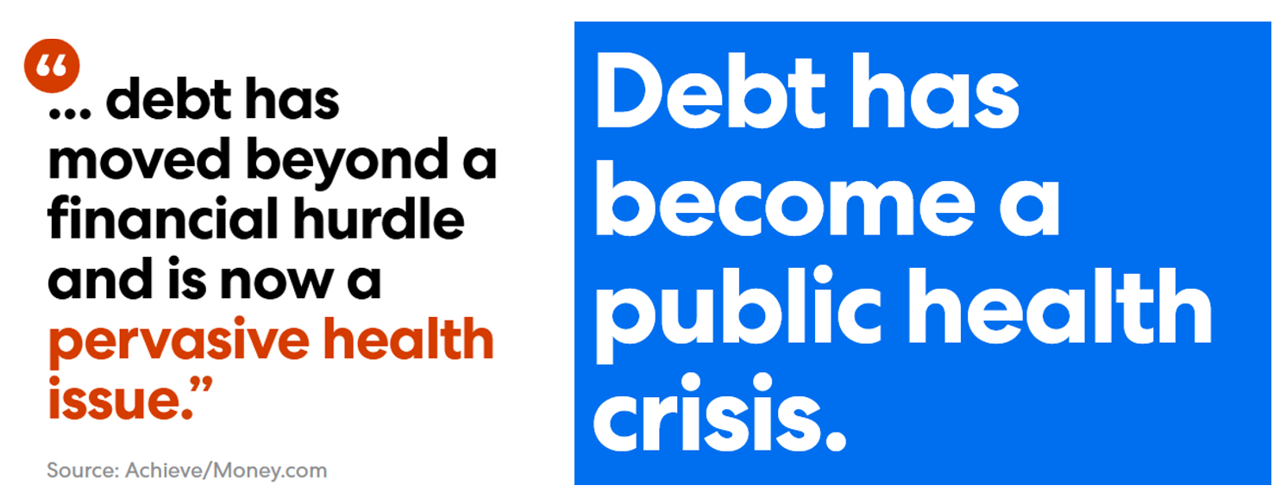
“Debt has moved beyond a financial hurdle and is now a pervasive health issue,” Achieve and Money.com assert.
And these debt problems are growing and getting harder to manage, the report tells us.
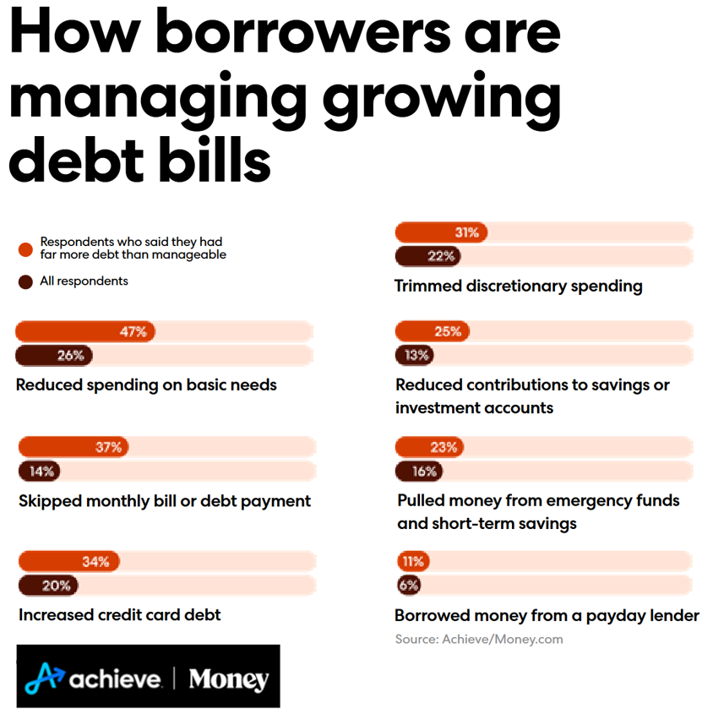
Health consumers are taking on a variety of strategies to address growing debt bills. Among people who say they have far more debt than is manageable, the top strategies are to reduce spending on basic needs (for 47% of people financially stressed), skipping monthly bill payments (among 37% of people), increasing credit card debt (further exacerbating their debt problems, for 34%), trimming discretionary spending (for 31%), and reducing contributions to savings and investment accounts (among 1 in four consumers).
Nearly 1 in 4 people also pulled money from emergency funds and short-term savings to manage their growing debt bills.
Health Populi’s Hot Points: With 3 in 10 people in financial stress tapping into retirement savings prematurely, and one-third increasing debt on their credit cards, the state of debt and fiscal stress in America is getting worse and compounding among those already under financial water.
People under fiscal stress are keen to dig themselves out of the situation, yet aren’t sure where to turn, this study found. In the meantime, at least one-fifth of these folks would consider filing for bankruptcy in the moment.
Contributing to the health-specific aspects of financial stress is many insured peoples’ loss of the ACA Marketplace premium support, resulting in about 17.5 million people losing health insurance coverage in 2026, according to the most recent analysis from the Kaiser Family Foundation.
Financial health in America is embedded in peoples’ overall health and well-being in the nation, compounded by medical bills and debt. In this inflationary time, with the costs of daily living pushing American households to the toughest of decisions in terms of which basic needs to cover — whether health care or transportation to work, putting food on the table or, indeed, paying off a long-overdue hospital bill — debt is a uniquely American public health crisis raising the issue of health care costs and the economy to the top-of-mind among U.S. health citizens.
 Jane will be working with EU- and UK-based clients in September and October 2026, collaborating with stakeholders in digital health, public/community health, retail health, and growing opportunities for health-at-home. Stay tuned to her updates here on Health Populi on-the-ground as she lives the digital nomadic work-life in Italy, Belgium, the Netherlands, and in London.
 I was grateful to be Jasmine's first conversation-guest on her new podcast,
  Jane joined host Dr. Geeta "Dr. G" Nayyar and colleagues to brainstorm the value of vaccines for public and individual health in this challenging environment for health literacy, health politics, and health citizen grievance.