

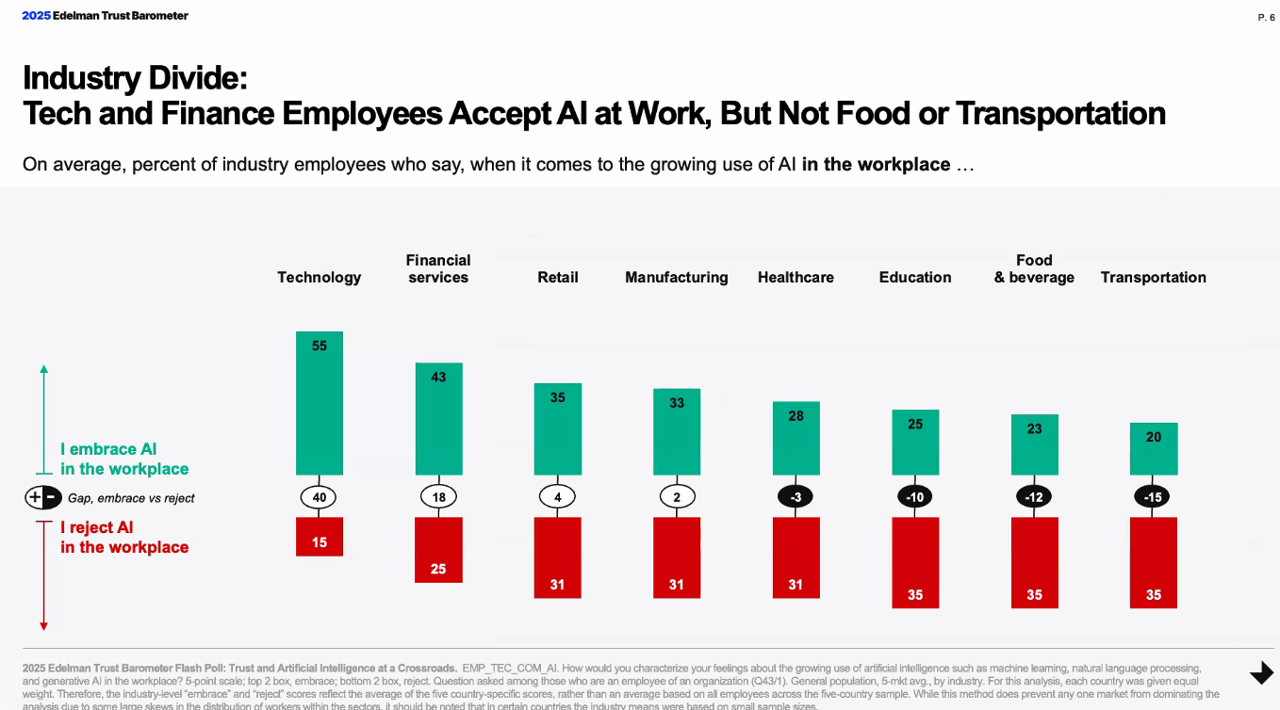
Enthusiasm for innovation is not a guaranteed thing; furthermore, trust in AI lags trust in the overall technology sector, we find in the 2025 Edelman Trust Barometer research through a Flash Poll: Trust and Artificial Intelligence at a Crossroads, discussed in a webcast on 3 December. People in the U.S. are more than twice as likely to reject the growing use of AI than embrace it, with the embrace of AI much lower than peoples’ enthusiasm for it.
Edelman conducted the poll in five countries — Brazil, China, Germany, the UK and the US — with sample sizes at least 1,000+ strong in each nation. Ths study was fielded in October 2025.
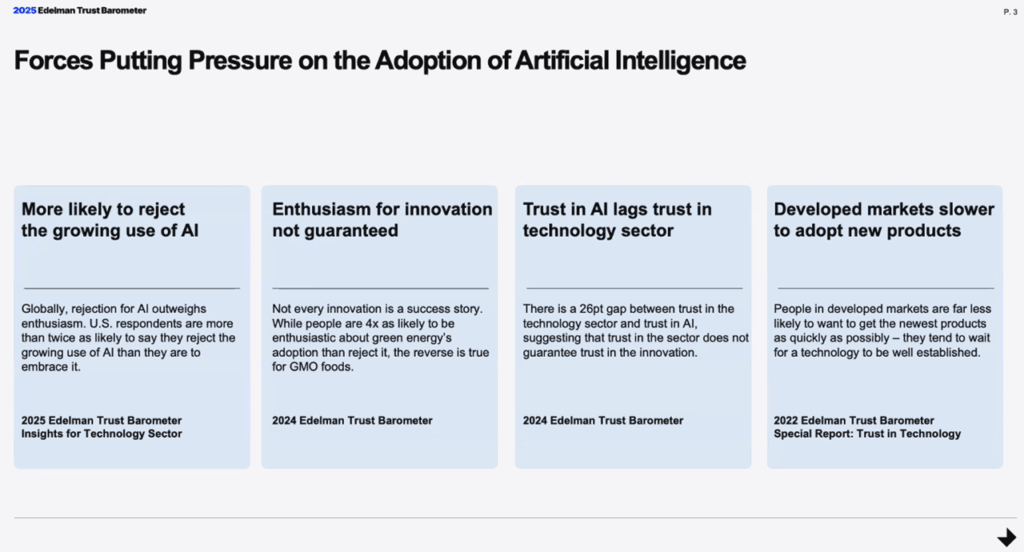
Globally and across all industries, Edelman identified four forces shaping the adoption of AI — that is the global rejection for AI outweighing enthusiasm as noted, that innovation is not always welcome (think: green energy versus GMO foods), that trust in AI lags overall trust in tech, and that people living in wealthier economies are more leery about adopting AI versus people living in developing countries. Among the five countries studied, the U.S. ranks last in the percent of people who say when it comes to the growing use of AI, they reject it.
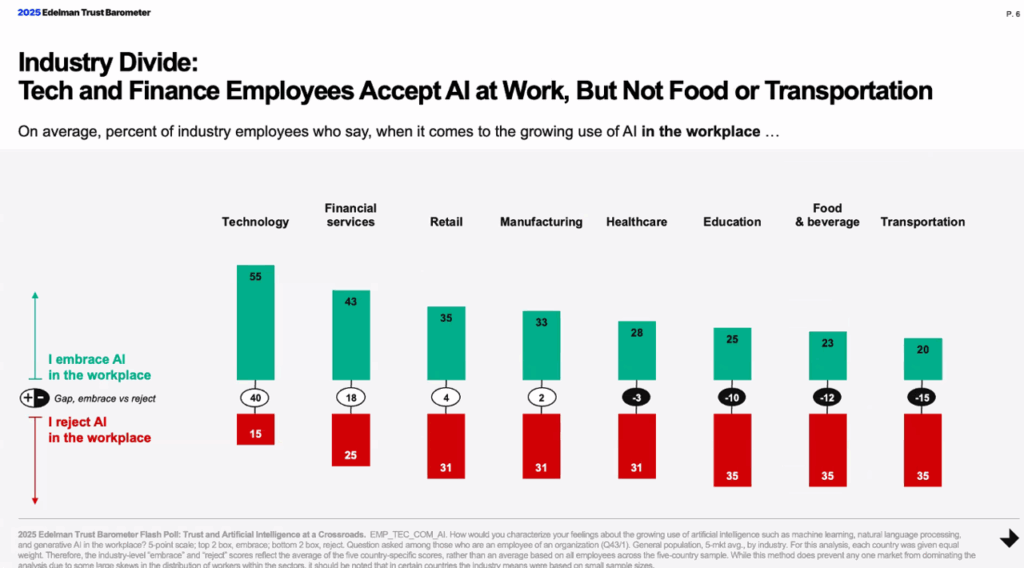
With employers continuing to be the most-trusted institution compared with government, NGOs, and media, Edelman allocated time to explore employees’ attitudes toward AI. Here we see those sentiments broken out by the industry in which a person earns a living.
We can see that folks working in technology and financial services are more likely to accept AI at the workplace. When it comes to health care workers, we note that more employees reject AI in the workplace than embrace it (33 versus 31%).
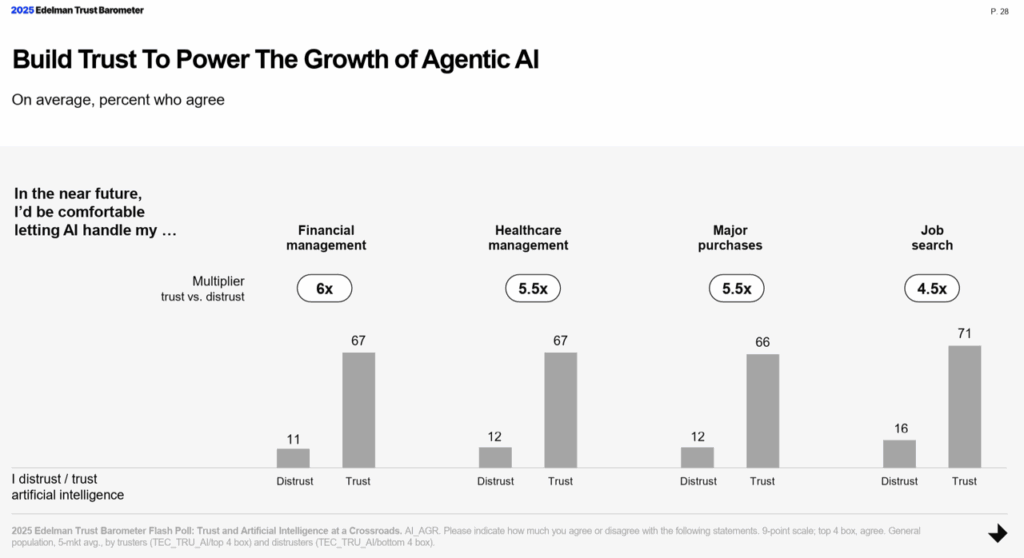
Trust is more of an enabler nudging AI adoption than motivation, access, or intimidation, the survey found.
For health care, there is a huge chasm between those people who distrust AI and their comfort letting AI handle their healthcare management )a low 12%, globally), compared with citizens who trust AI — 67% of whom would be comfortable letting AI handle their healthcare management.

Health Populi’s Hot Points: The health/care industry has been adopting AI across segments, from provider organizations to health plans, clinicians, biopharma, and indeed patients for self-care and research. Ironically, we’ve entered an era of AI-anxiety among health citizens.
Another recent survey informs us here, from The Harris Poll, on how The Future Feels Out of Tune: How Americans Are Navigating AI, Anxiety, and Change, published November 24.
The broader report is titled The Age of Dissonance.
Harris found U.S. consumers’ relationship with AI at this early juncture features both innovation and insecurity — captured as “AI Hope vs. AI Obsolescence” when people consider AI’s threat to jobs and employment. This is an especially acute concern among younger people — noting that 65% of Gen Z consumers report “FOBO,” the Fear of Being Obsolete. Nearly one-half of Gen Z respondents told Harris that seeking a job made them feel their college education was irrelevant. 
With respect to health care, the social drivers of health — our social cohesion, loneliness, financial and food security, and so on — bolster what Harris would call “the steady life.”
As health care stakeholders continue to embrace AI in care delivery, diagnosis, administration, and finance, it will behoove organizations to build with trust, equity, and empathy. Trust is a local phenomenon, Edelman has previously noted, so working through the workplace and employers, and trusted local touchpoints (faith communities, retail, community centers, community colleges, and the like) will be key collaborators as we seek to move from the Age of Dissonance to a world of civility, health and well-being, flourishing, and love.

 Hackathons are intense, fast-paced events where interdisciplinary teams come together to solve complex problems. In this SEE YOU NOW Insight from
  I'm once again pretty gobsmackingly happy to have been named a judge for
  Stay tuned to Health Populi in early January as I'll be attending Media Days and meeting with innovators in digital health, longevity, and the home-for-health during