

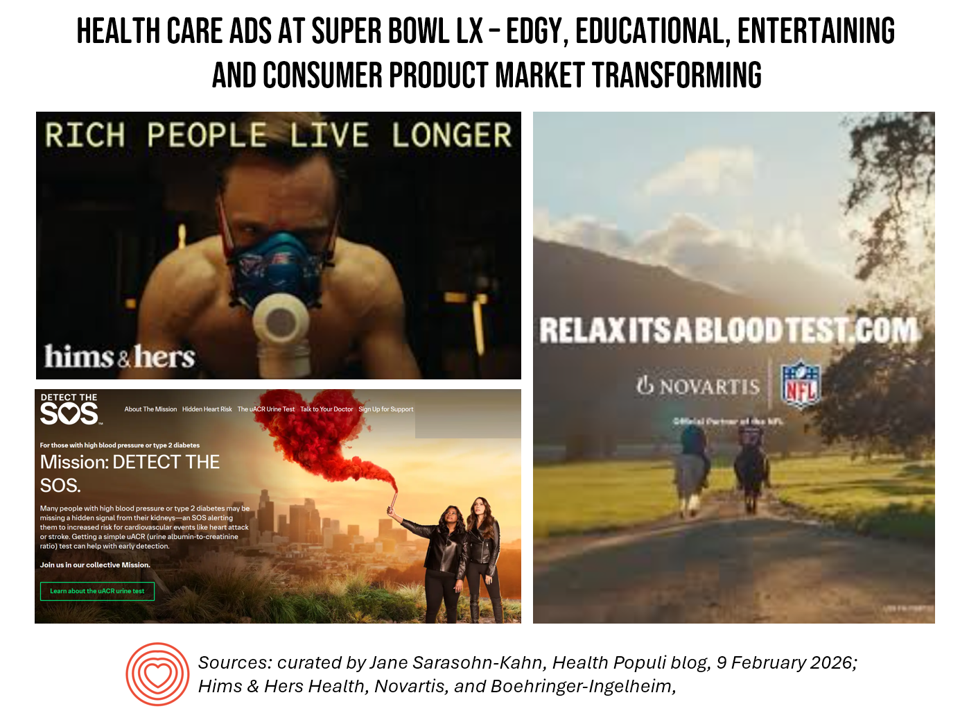
“When Weight Watchers dared to run an ad in 2015, it was likened to a record scratch,” AdAge noted in its preview of ads planned for broadcasting during Super Bowl LX.
A decade+ later, healthcare and health-related promotions are part of the Big Game’s financial lifeblood, where a 30-second spot can cost $8 million according to AdMeter
And on the aesthetics/design front, some of the ads this year are downright edgy — entertainment-intended, but also educational in their own way.
Take “Rich People Live Longer,” this year’s ad from Hims & Hers Health. The company advertised at last year’s game with a vignette titled, “Sick of the System,” receiving criticism from certain political leaders as well as bioethics and consumer advocates. In the company’s press release on the ad,
This time around, Hims & Hers explains,
“The campaign centers on the uncomfortable truth that America’s healthcare is a tale of two systems: one elite, proactive tier for the wealthy, and a broken, reactive one for everyone else. Recent research shows that people living in the top 1% live 7 years longer, on average, than those living in the bottom 50%, based on median household income.1 This campaign is more than just a commercial; it is a conversation starter to help bridge the information gap that has kept high-quality, preventive healthcare behind a velvet rope. Hims & Hers believes that everyone needs the awareness – and the tools – to demand the same level of healthcare as the wealthy.
Then there is “Detect the SOS,” featuring Octavia Spencer and Sofia Vergara in an ad from Boehringer-Ingelheim with a health educational message about the importance of a uACR urine test as part of a comprehensive chronic kidney disease screening to assess risks for heart attack or stroke.
In this action-packed plotline, our women are on a mission. “Octavia Spencer and Sofía Vergara ride through the city on a motorcycle, spotting SOS signals, silent warnings from bodies such as Type 2 Diabetes, high blood pressure, or heart attack. They head to their lab, turning these alerts into action; with a simple urine test, hidden health risks can be detected early. Together they’re transforming the city into a network of awareness,” the story goes in this cinematic tableau of a pharma commercial.
In describing Novartis’s cleverly creative, football-casted commercial, Adweek graphically explained,
“Novartis gets cheeky with Super Bowl Ad About Men’s Tight Ends. After going viral in Super Bowl 59, Novartis trades breasts for backsides to raise awareness for prostate cancer in Big Game.”
The commercial features famous tight-ends in relaxing life-modes, from painting to relaxing in a pool, birding and hanging out with a horse — promoting a “finger-free” PSA blood test to diagnose prostate cancer.
A fourth example of a richly-produced health care ad comes from Ro, featuring Serena Williams who is a Ro consumer user of a GLP-1 medicine (FYI, Serena’s husband Alexis O’Hanian is on the board of Ro). In the “Healthier on Ro” ad, Serena talks about the health benefits she’s has on the medicine, such as losing 34 pounds over a year and reducing knee joint stress, lowering her cholesterol, and reducing heart disease risks.
She says, “I feel better now than I have in years…For me, this journey has been about feeling strong, energized, and healthy in my body; I feel like myself again. Being on Ro helped me focus on my health in a way that actually worked for me, and I’m excited to share how great I feel with millions of people during the Super Bowl.”
Eli Lilly will also be promoting their GLP-1 medicines as well in a pregame spot as well as streaming on Peacock, rounding out medicines marketed at Super Bowl LX — what MM&M magazine has called “The Pharma Bowl.”
Health Populi’s Hot Point: Of course, Bowl games are watched by many viewers as much for the creative advertising as for the game and half-time show. Each year, both long-standing iconic food brands as well as start-up food companies promote on Big Game Day. But this year with the plethora of weight-loss/GLP-1 ads, Adweek’s Craig Elimeliah critiqued, “Food brands are in denial as GLP-1s come out swinging.”
Craig explained the irony of weight-loss drugs promoting health and well-being benefits versus the many ads for high-calorie and carb-laden snacks and beverages.
“Sharing the same broadcast are Doritos, Pringles, Budweiser, Bud Light, Pepsi, Mountain Dew, Uber Eats, and the full roster of consumption-dependent brands that have dominated Super Bowl advertising for decades,” he called out. “Despite these shifts, legacy advertisers are largely running the same playbook….The creative isn’t acknowledging the shift. These campaigns were built for a consumer with a reliable appetite, predictable cravings and a wholly permissive attitude toward indulgence. That consumer is disappearing, and advertising pretends otherwise.,” concluding that, “Hardly anyone is rethinking the brand positioning built on top of the old appetite.”
Through watching the ad plotline at Superbowl LX, we are witnessing in real-time the fast-changing and profound impact that the GLP-1 consumer-driven health economy is having on consumer goods. Pay attention: it will be fascinating….and economy-transformational.
 Thanks to Jennifer Castenson for
 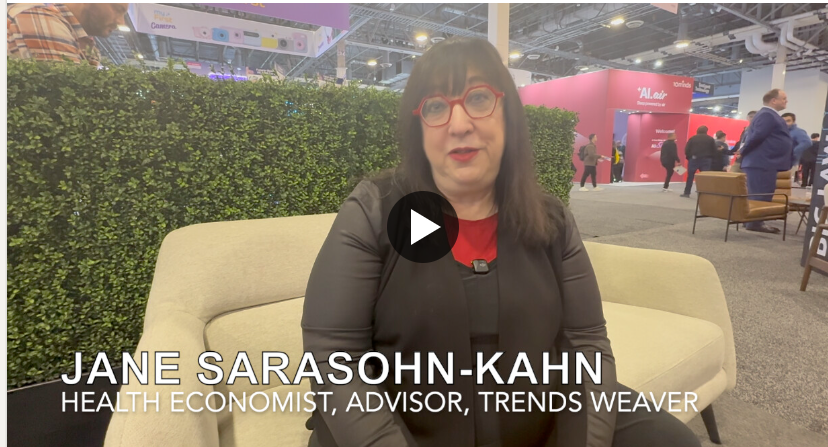 yeva, digital storyteller, for engaging in
  Jane joined host Dr. Geeta "Dr. G" Nayyar and colleagues to brainstorm the value of vaccines for public and individual health in this challenging environment for health literacy, health politics, and health citizen grievance.