

So wrote Frank Sonnenberg, prolific author and commentator about morals and life.
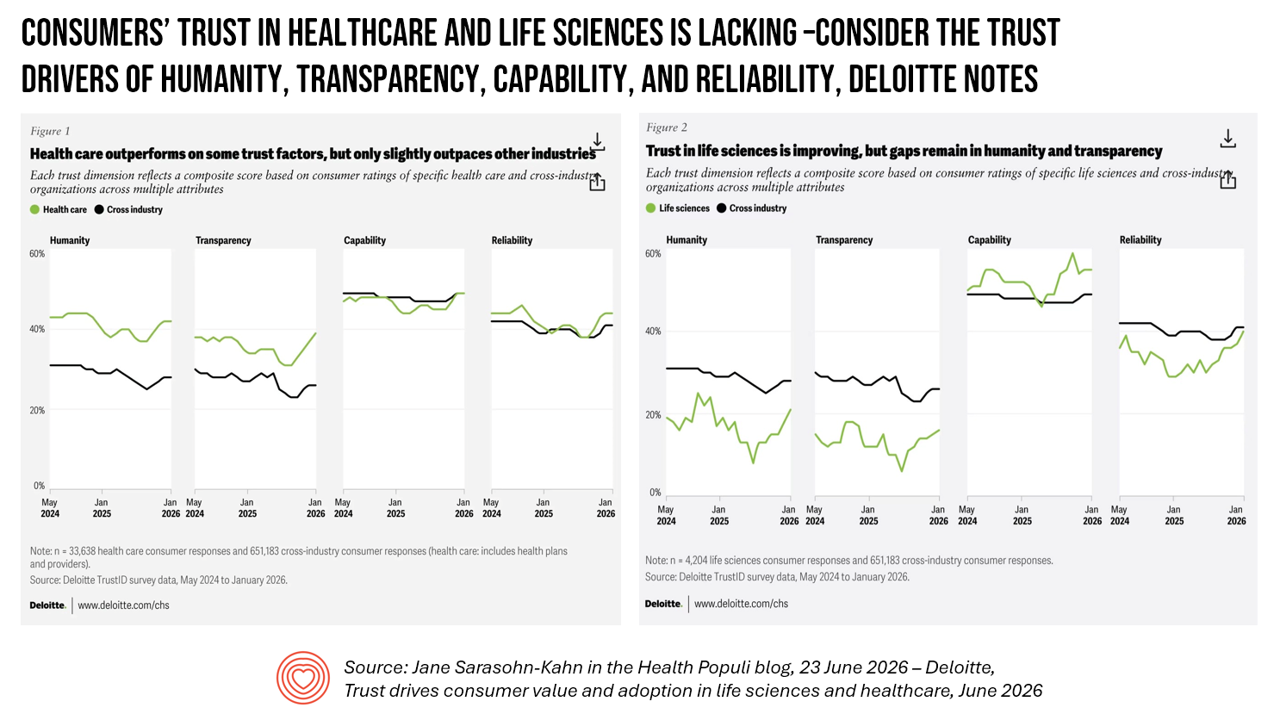
We can broaden Sonnenberg’s observation on trust beyond “health” itself to healthcare. Trust is indeed vital to healthcare, and to the health care industry, we learn from research from Deloitte discussed in the paper, Trust drives consumer value and adoption in life sciences and health care.
Deloitte assessed consumers’ ratings of health care delivery systems (hospitals, providers) and life science companies (pharma, biotech, med-tech) across four drivers of trust:
- Humanity, assessing whether the consumer felt the experience was caring and attentive to personal needs.
- Transparency, addressing whether the consumer understood the flows of the patient experience, from the exam room to the billing process.
- Capability, dealing with whether the provider or supplier delivered high quality clinical outcomes and experiences.
- Reliability, whether a consumer could depend on care, products, and support services that delivered a consistent experience.
The failure of any one of these pillars can erode a patient’s trust with the health care organization, whether provider or supplier.
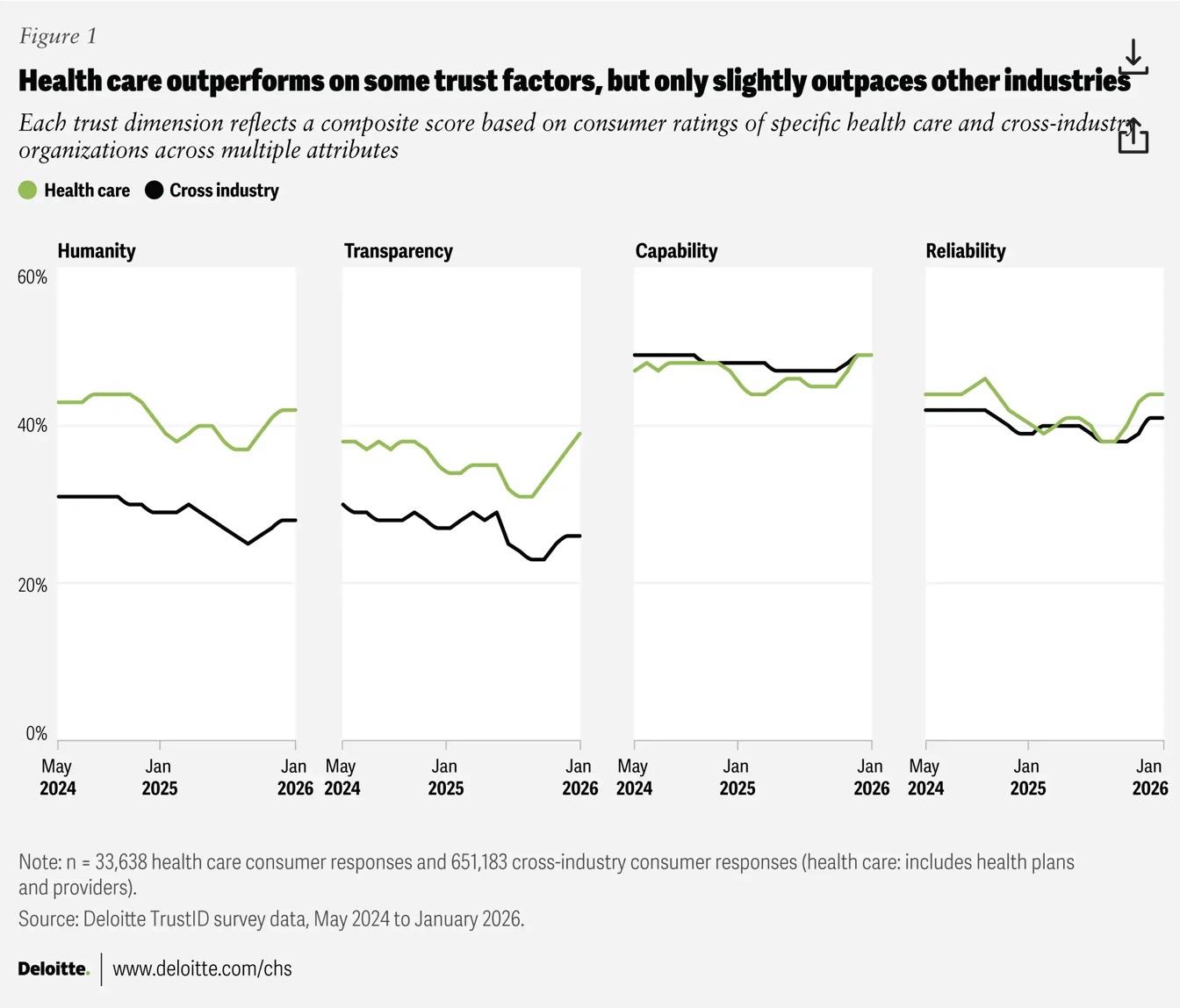
Here’s Deloitte’s assessment of U.S. consumers’ trust with health care delivery organizations. We can see that health care providers score higher on humanit8y and transparency compared with other industries — but still, below a 50% mark which for healthcare as a consumer experience is low — particularly on the “humanity” front, which covers empathy, communication, and sensitivity to a patient’s needs.
The capability and reliability scores for health care are on par with other industries — again, nowhere near mass-love among health consumers.
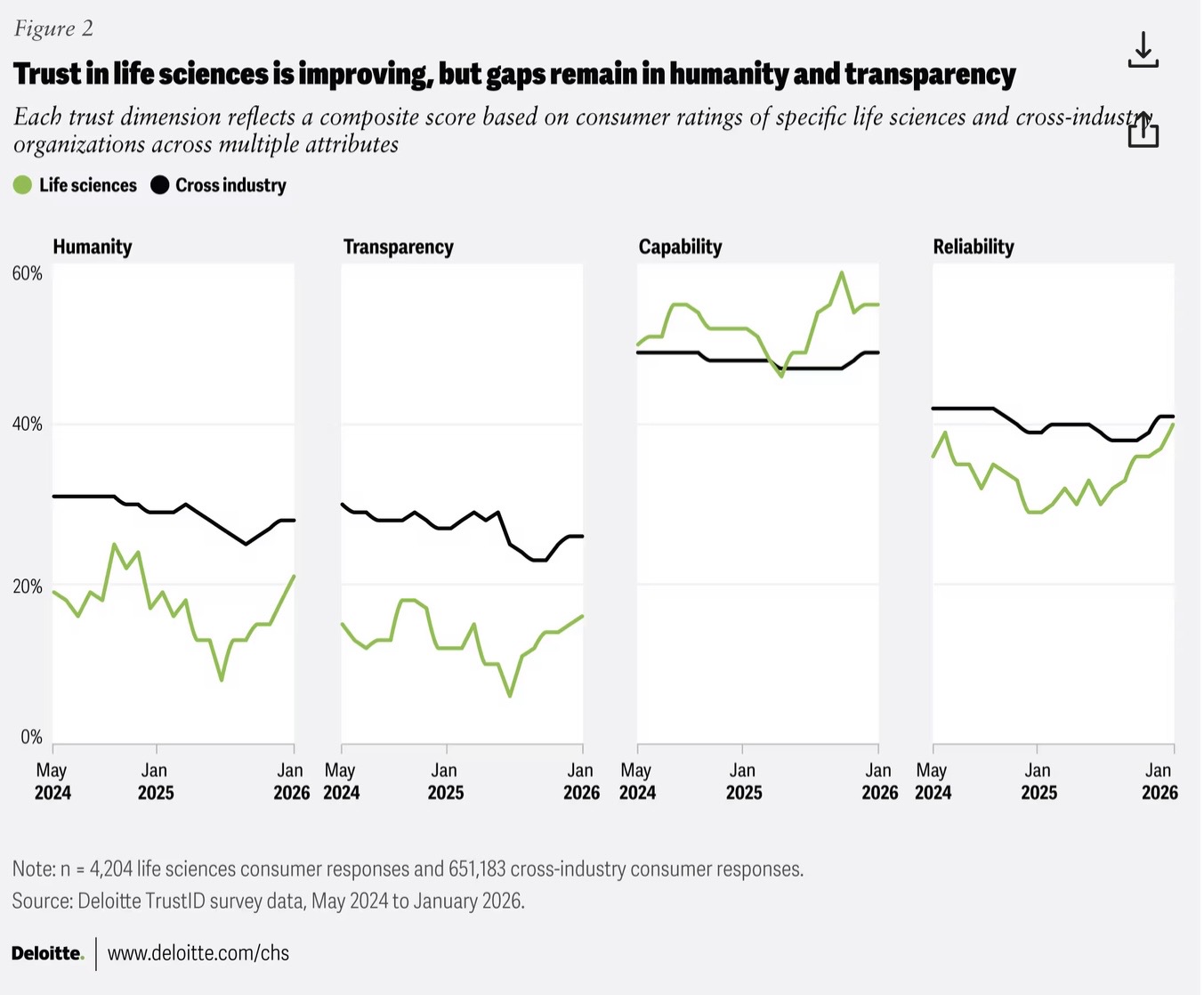
This second chart from the Deloitte report covers life science organizations. Clearly, that green life sciences line is very low for humanity and transparency drivers, compared with other industries.
Capability for these science-based organizations is higher relative to other sectors, noting this driving force of trust has to do with clinical outcomes.
Reliability for life science companies was roughly at the same level as other industries at the start of 2026.
Deloitte’s concluding advice recommends that we shift thinking about “trust” as a “sentiment” and instead consider it as an “operating system for value creation” that can be measured, designed-with-intention, and managed.
Health Populi’s Hot Points: “Trust deficits could undermine growth as consumers seek simpler, more accessible care,” Deloitte warns. They note that consumers are leaning into more choice, paying attention to (and paying more out of pocket dollars to) new market entrants and novel care models that are designed with less friction and more integrated workflows.
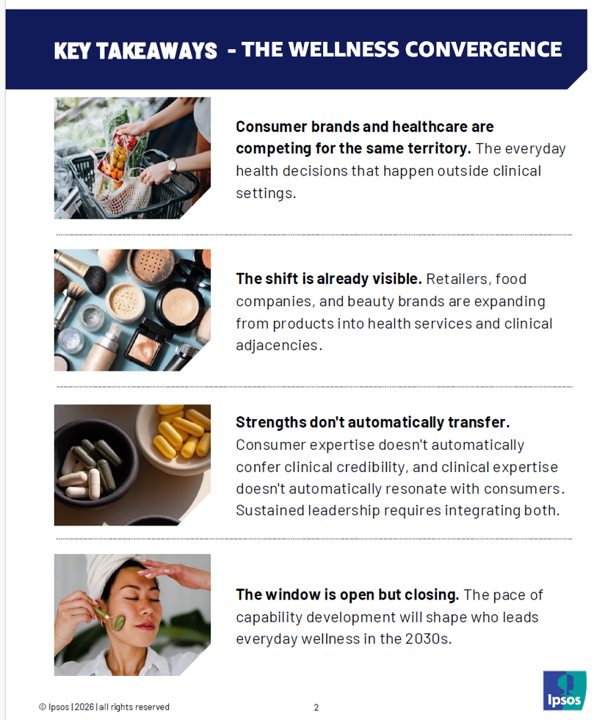
“As people have taken on self-agency for their health and health care decisions, two sides of a coin are responding to market forces to meet health-inspired consumers where they are, and where they want to “be:” consumer brands on one side of that coin, and healthcare companies on the other,” I wrote here in Health Populi in May 2026 learning from the Ipsos report, Consumer Brands Are Becoming Healthcare’s Next Leader.
From direct-to-patient platforms serving up GLP-1 medicines to retail pharmacies providing medication therapy support and grocery stores supporting Medicare choices and nutrition advice for gut health, there are opportunities to re-build trust by healthcare providers and life science companies alike, aligning and cooperating with consumer-design-ful organizations delivering the promise of enchanting experience.
A CVS Health virtual program announced on 22 June to support consumers using GLP-1 medicines is an example of a service designed to reduce friction, enhance engagement, and improve outcomes — in this case, for patients prescription these medications for weightloss — and to enhance trust between patient and industry provider, in this case a retail pharmacy channel.
Trust-building has a solid ROI in health care: it will benefit all stakeholders, and especially health consumers, for alliances to be forged that cross industry sectors to help deliver on that promise and profit.
Or as perfectly put in a recent editorial in Medscape by Dr John Whyte, CEO of the American Meducal Association, “Trust is becoming the most important medicine we have.”
 Jane joined host Dr. Geeta "Dr. G" Nayyar and colleagues to brainstorm the value of vaccines for public and individual health in this challenging environment for health literacy, health politics, and health citizen grievance.
  I'm grateful to be part of the Duke Corporate Education faculty, sharing perspectives on the future of health care with health and life science companies. Once again, I'll be brainstorming the future of health care with a cohort of executives working in a global health care enterprise.
 Jane will be working with EU- and UK-based clients in September and October 2026, collaborating with stakeholders in digital health, public/community health, retail health, and growing opportunities for health-at-home. Stay tuned to her updates here on Health Populi on-the-ground as she lives the digital nomadic work-life in Italy, Belgium, the Netherlands, and in London.