

When the mainstream media food magazine Food & Wine devotes a long article to the concept of food-as-medicine, it calls to me….loudly. Here’s another proof-point for tying together public and individual health while boosting local economies.
F&W featured Stacey Leasca’s essay, What Happens When Doctors Start Prescribing Food Instead of Pills?, online this month, and Stacey did her homework.
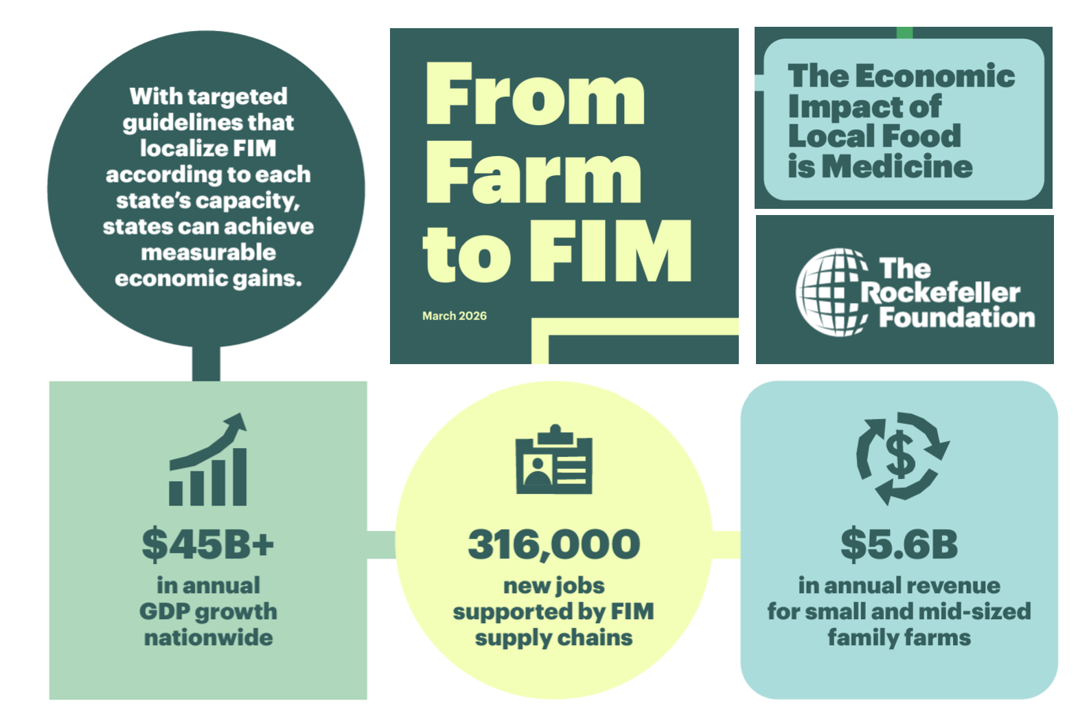
One of Stacey’s go-to evidence-based resources for her column was the recently-released Rockefeller Foundation report, From Farm to FIM: The Economic Impact of Local Food is Medicine.
The Foundation studied several local Food-Is-Medicine (FIM) programs around the U.S. to understand the clinical and economic benefits of the projects, in California, Massachusetts, and Oklahoma – three quite diverse states in terms of cultures, demographics, and health care delivery.
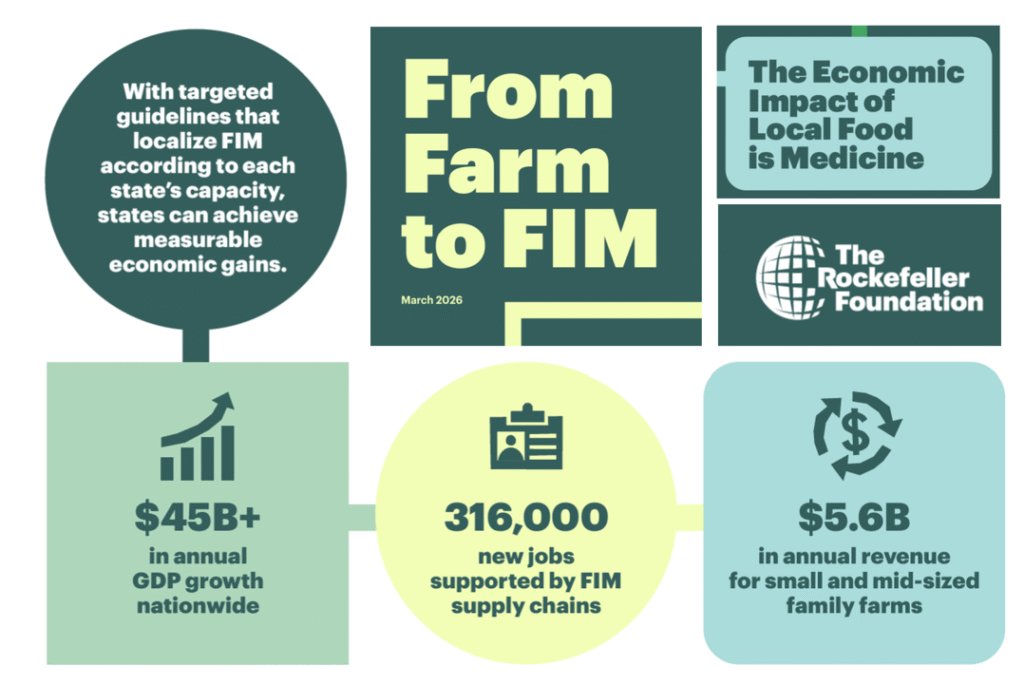
Quantifying the economic impact of the programs on a macro-national U.S. basis, the Foundation calculated that scaling FIM programs could add over $45 billion to the nation’s GDP every year, add 316,000 new jobs supported by FIM supply chains, and enhance small and mid-sized family (local) farms to the tune of $5.6 billion annual revenue.
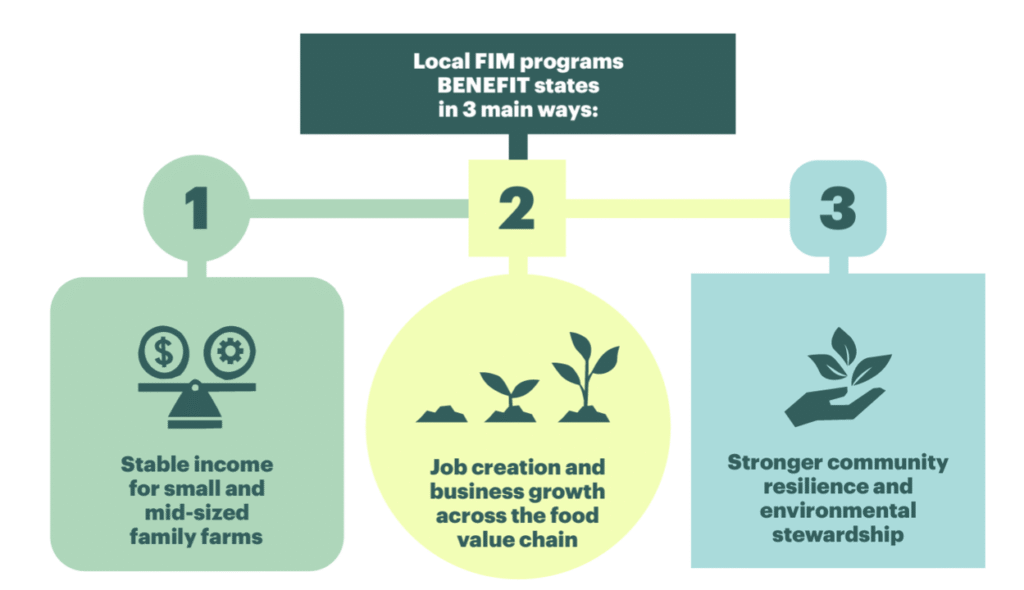
Scaling FIM nationally would generate three major benefits to the U.S. health and national economy:
- On the local/family farm front, FIM programs would help to stabilize these farms’ incomes — which have been at-risk for many years and most recently, due to tariffs and currently the rising cost of oil.
- Scaling FIM nationally would boost job creation and business growth across the food industry’s value chain; and,
- FIM programs when deployed through local farm enterprises supply the food strengthen community resilience and environmental stewardship.
Scaling FIM would not be starting from-scratch. The Rockefeller Foundation estimates that over one-half of U.S. states are already pursuing some form of public policy change for FIM, with bipartisan support.
The key to forging economic development that benefits the small and mid-sized farmers and their communities and states is to go local in sourcing the food — which creates a virtuous cycle of co-dependence between the family farms and communities physical and fiscal health.
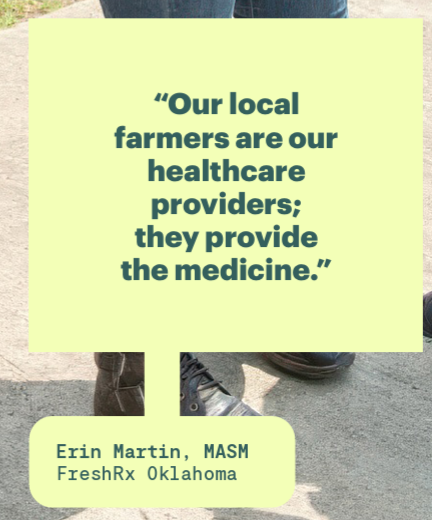
Health Populi’s Hot Points: Welcome, local farmers, to your local health care team. As Erin Martin, MASM, founder of the prescription food organization FreshRx in Oklahoma was quoted in the report, local farmers “provide the medicine” in the FIM process.
Specifically: with one-half of America’s health citizens living with a diet-related chronic condition, the U.S. expends resources downstream on these diseases which are amenable to self-care through nutrition, medically-tailored meals, and personalized nutrition guidance.
This is not only a supply-side strategy — because on the demand-side, 4 in 5 U.S. adults believe that food-as-medicine programs should be covered by health insurance. And we know since the COVID-19 pandemic, American consumers have looked at food in new ways to bolster energy, sleep health, brain health, and disease management.
There are calls-to-action for those of us who work in the broad health/care ecosystem, from financing it to providing care and services. Our local communities are ready for FIM programs that can be tailored to local tastes and preferences, and local and regional family farmers would welcome the opportunity to serve up their produce and products to benefit their communities — and their bottom-lines.
 Jane joined host Dr. Geeta "Dr. G" Nayyar and colleagues to brainstorm the value of vaccines for public and individual health in this challenging environment for health literacy, health politics, and health citizen grievance.
  I'm grateful to be part of the Duke Corporate Education faculty, sharing perspectives on the future of health care with health and life science companies. Once again, I'll be brainstorming the future of health care with a cohort of executives working in a global pharmaceutical company.